

Mysore
Home to the Mysore Palace, Dussehra celebrations, and some of Karnataka's finest Hoysala-era temples close by.
Things To See
Explore Mysore
 UNESCO Heritage Temple
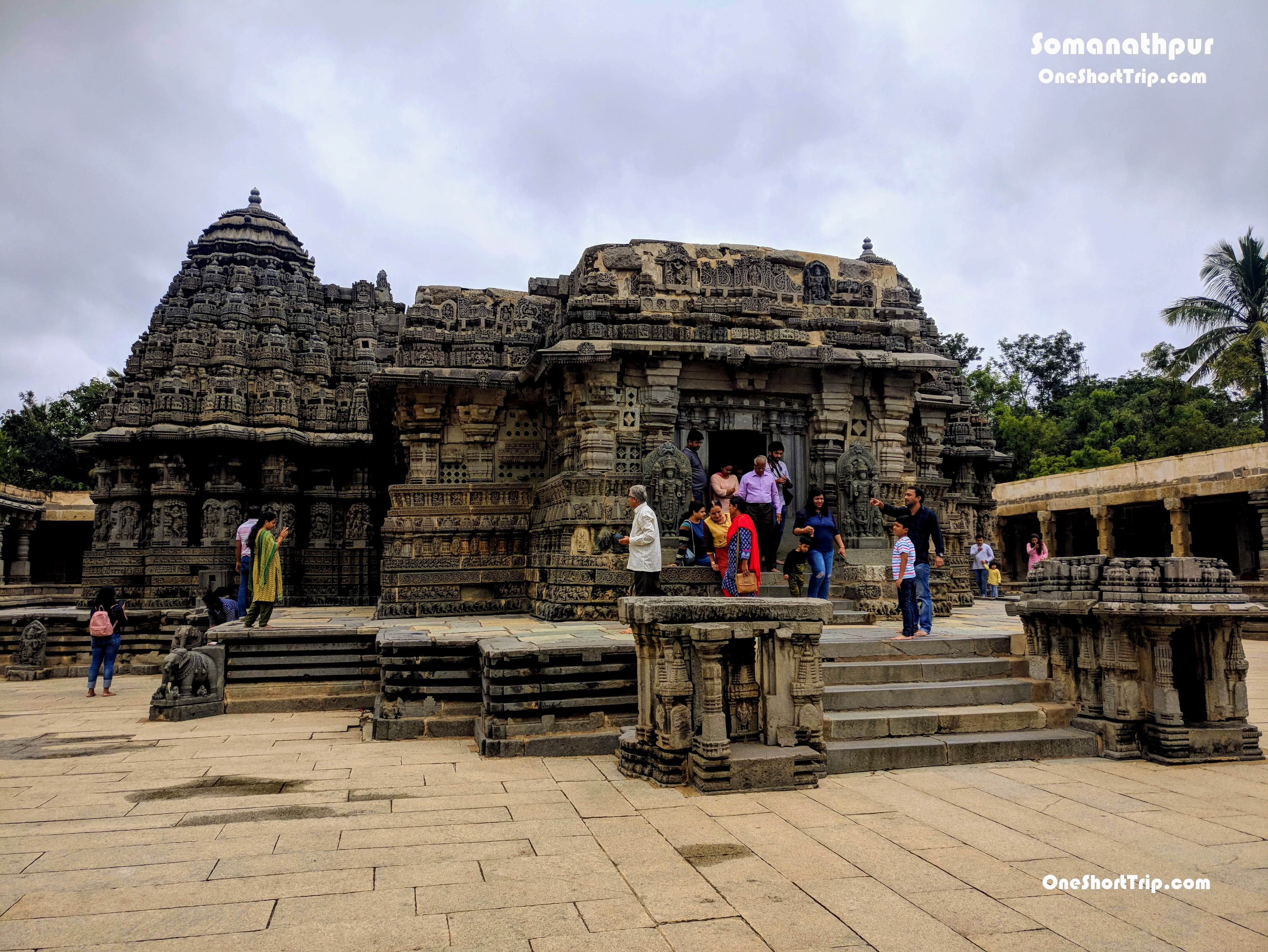
Somnathpura
A 13th-century Hoysala masterpiece with UNESCO status.
Explore → Temple
Sri Tripurasundari Temple
A goddess temple believed to embody the united Shakti of the Trimurti.
Explore → Family Attraction
Planet Earth Aquarium
150+ species of fish alongside farm and animal activities.
Explore →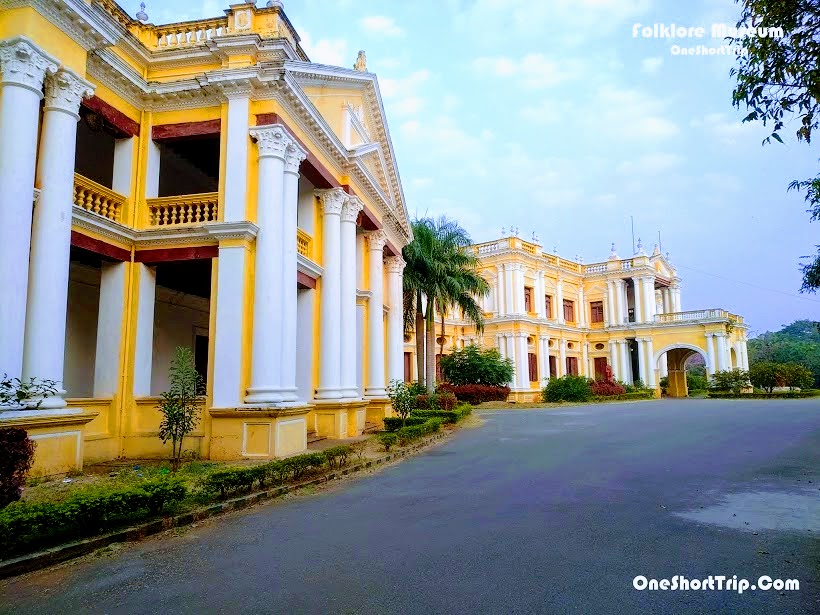 Museum
Folk Lore Museum
One of India's largest folklore collections, 6,500+ artefacts strong.
Explore → Heritage Museum
Jayalakshmi Vilas Palace
A 1905 royal mansion restored as a folklore and history museum.
Explore → Heritage Site
Talakadu
A sand-buried temple town wrapped in a centuries-old royal curse.
Explore → Temple
Nanjundeshwara Temple
A riverside Shiva temple dedicated to his poison-swallowing form.
Explore →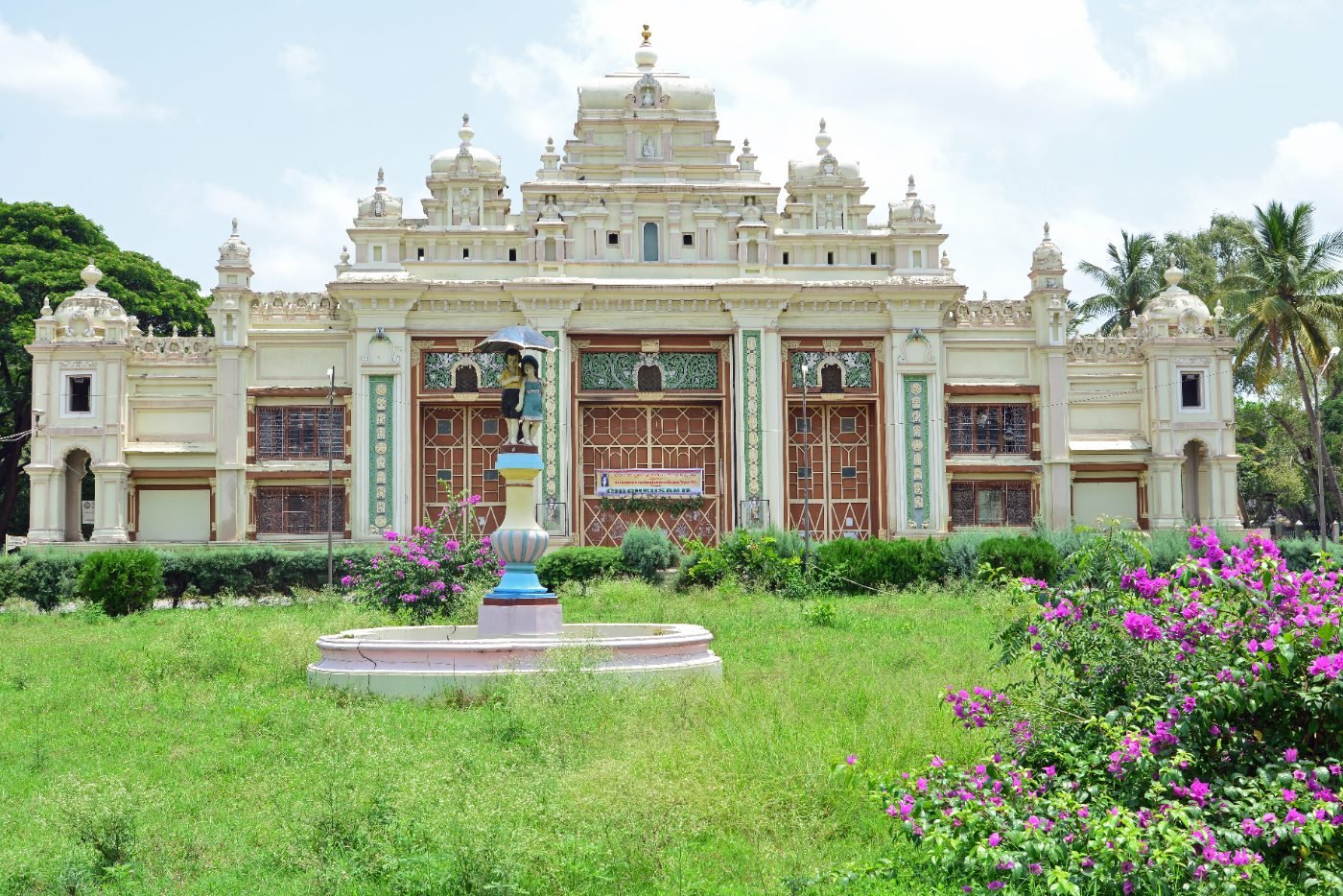 Palace
Jaganmohan Palace
A Wadiyar-era palace turned art gallery with nearly 2,000 paintings.
Explore →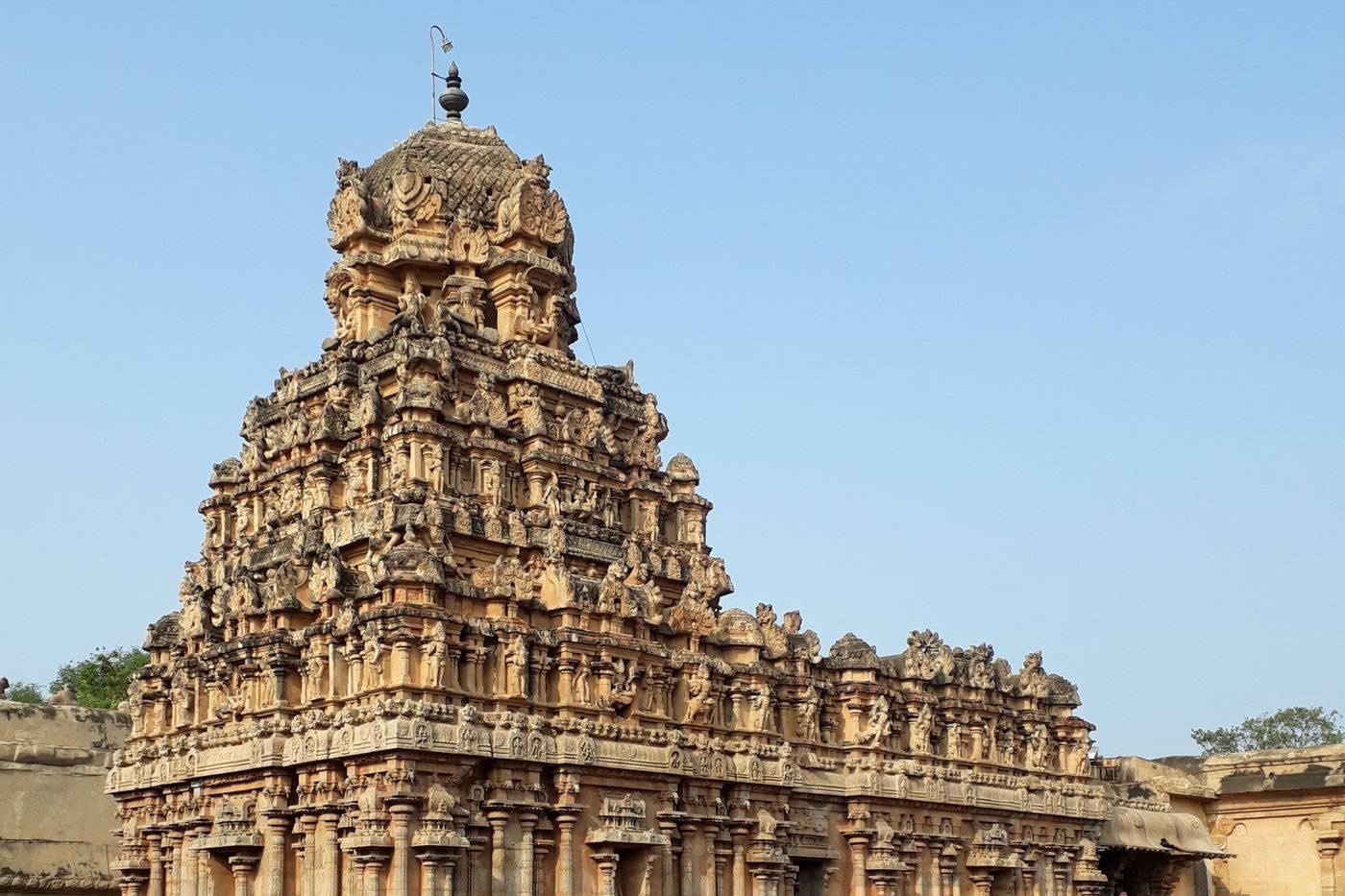 Temple
Sri Lakshmi Venkataramanaswamy Temple
A 1937 Vaishnavite shrine whose rituals follow the Tirumala Tirupati Agama tradition.
Explore →Mysuru – The Royal City of Karnataka
Mysuru, formerly known as Mysore, is one of Karnataka's most celebrated heritage destinations and one of the finest cities in South India for experiencing royal history, grand architecture, temples, traditional arts and Karnataka's distinctive cultural heritage. Often called the City of Palaces and the Cultural Capital of Karnataka, Mysuru combines the grandeur of the Wadiyar dynasty with wide avenues, historic markets, gardens, museums and sacred landmarks.
Located at the foothills of the Chamundi Hills, Mysuru has a calmer and more traditional character than many larger Indian cities. Its identity is closely connected with the Wadiyar royal family, the magnificent Mysuru Palace, the Chamundeshwari Temple, the internationally famous Mysuru Dasara celebrations, Mysore silk, sandalwood, traditional sweets and the city's long association with music, painting, literature and the performing arts.
For travellers, Mysuru offers much more than the famous palace. A complete Mysuru sightseeing experience can include royal residences, historic temples, churches, museums, markets, lakes, gardens, viewpoints and wildlife destinations. The city also makes an excellent base for exploring nearby attractions such as Srirangapatna, Ranganathittu, Nanjangud, Somnathapura, Talakadu, Shivanasamudra and the Kabini region.
Why Is Mysuru Famous?
Mysuru is famous primarily for its royal heritage and the Wadiyar dynasty, whose centuries-long association with the city shaped its architecture, culture and public institutions. The city is also renowned for the magnificent Mysuru Palace, Chamundi Hills, Mysuru Dasara, traditional Mysuru paintings, silk sarees, sandalwood products, incense, Mysuru Pak and its historic temples and palaces.
The city is particularly attractive to travellers who enjoy heritage tourism. Unlike destinations where historical monuments are concentrated in one fort or archaeological complex, Mysuru's heritage is spread throughout the city, creating a distinctive urban landscape of palaces, parks, markets, churches, temples and grand public buildings.
Mysuru at a Glance
| Destination | Mysuru, Karnataka |
| Former Name | Mysore |
| Known As | City of Palaces, Cultural Capital of Karnataka, Heritage City |
| State | Karnataka |
| Region | Southern Karnataka |
| Elevation | Approximately 770 metres above sea level |
| Distance from Bengaluru | Approximately 140 km |
| Major Landmark | Mysuru Palace |
| Sacred Landmark | Chamundeshwari Temple, Chamundi Hills |
| Major Festival | Mysuru Dasara |
| Famous Products | Mysuru silk, sandalwood products, incense, traditional handicrafts and Mysuru Pak |
History of Mysuru
Mysuru's history combines mythology, ancient inscriptions, regional kingdoms and the long political and cultural influence of the Wadiyar dynasty. The name Mysuru is traditionally connected with the story of Mahishasura, the buffalo-headed demon who was defeated by Goddess Chamundeshwari on Chamundi Hill. The Mysuru District Administration associates the city's name with this ancient legend.
Historical evidence shows that the region has a much longer history than the Wadiyar period. Inscriptions and archaeological references connect Mysuru and the surrounding region with several South Indian dynasties, including the Gangas, Cholas, Hoysalas and Vijayanagara rulers. The Wadiyar dynasty rose to prominence in Mysuru in the late medieval period and became the defining royal house of the city.
The Wadiyar Dynasty
The Wadiyars established their rule in Mysuru in 1399. Over the centuries, they transformed Mysuru into an important political and cultural centre. Their patronage supported temples, palaces, music, literature, painting, education and public institutions, helping create the distinctive cultural identity for which Mysuru is known today.
During the reign of Krishnaraja Wadiyar III, Mysuru expanded beyond the older fort area. Later, Krishnaraja Wadiyar IV played a major role in developing the city into a carefully planned urban centre with broad roads, elegant buildings, parks and public infrastructure. The city's heritage streetscape today is strongly influenced by this period.
Mysuru Under British Influence
The history of Mysuru is also closely linked with the rise of British power in South India and the Anglo-Mysore conflicts involving rulers such as Hyder Ali and Tipu Sultan. After Tipu Sultan's defeat in 1799, the Wadiyar dynasty was restored to power, while British influence over the Kingdom of Mysuru increased significantly.
The royal administration, Dewans and public institutions contributed to Mysuru's development during the nineteenth and early twentieth centuries. Many of the city's historic buildings, educational institutions and civic spaces reflect this period of growth.
Mysuru Palace – The Heart of the City
Mysuru Palace, also known as Amba Vilas Palace, is the city's defining landmark and one of India's most famous royal residences. The present palace was constructed between 1897 and 1912 after the earlier wooden palace was destroyed by fire. It was designed by English architect Henry Irwin in an elaborate Indo-Saracenic style incorporating Islamic, Rajput, Hindu and Gothic influences.
The palace is known for its monumental façade, domed towers, ornate interiors, stained glass, decorative ceilings, carved doors, paintings and richly decorated halls. The Durbar Hall and Kalyana Mantapa are among its most notable spaces. The palace complex also contains temples and other historic structures.
During Mysuru Dasara, the palace becomes the centre of the city's celebrations. The royal throne, ceremonial traditions, decorated elephants and grand illumination make the palace especially spectacular during the festival. The palace is also illuminated on Sundays and public holidays. Current district tourism information lists regular visitor hours as 10:00 AM to 5:30 PM.
Chamundi Hills and Chamundeshwari Temple
Rising above Mysuru, Chamundi Hills is both a major religious landmark and one of the city's best-known viewpoints. At the summit stands the Chamundeshwari Temple, dedicated to Goddess Chamundeshwari, the tutelary deity of the Mysuru royal family.
According to the traditional legend, Goddess Chamundeshwari defeated Mahishasura on this hill. The story is central to Mysuru's identity and is one of the reasons the city's name is traditionally associated with Mahishasura.
The hill is approximately 3,489 feet above sea level. Visitors can also see the enormous stone Nandi on the route to the summit. The colossal Nandi is one of the most recognisable sculptures associated with Chamundi Hill.
Mysuru Dasara – The City's Grandest Celebration
Mysuru Dasara is the most famous festival associated with the city and is celebrated as Karnataka's state festival. The ten-day celebration centres on the worship of Chamundeshwari and commemorates the victory of good over evil.
The festival transforms Mysuru into a spectacular cultural destination, with the palace illuminated, cultural performances taking place across the city, exhibitions, traditional arts, sporting events and the famous Dasara procession. The decorated elephants that participate in the procession are among the festival's most recognisable symbols.
The celebration has deep royal roots, and the relationship between the Wadiyar dynasty, Chamundeshwari and Dasara remains central to Mysuru's cultural identity. The city administration describes the illuminated palace, cultural programmes, procession, torchlight parade and exhibition among the major attractions of Dasara.
Jaganmohan Palace and Art Heritage
Jaganmohan Palace is another important royal-era landmark in central Mysuru. Built in 1861 by Mummadi Krishnaraja Wadiyar, the building reflects traditional Hindu architectural influences and later became an important cultural and artistic institution.
Today, Jaganmohan Palace is associated with art, painting and cultural programmes. Its collection and heritage make it an important stop for travellers interested in Mysuru's artistic traditions, particularly the development of the distinctive Mysuru style of painting.
Lalitha Mahal Palace
Lalitha Mahal Palace stands near the foothills of Chamundi Hills and is one of Mysuru's most elegant palace buildings. Built as a royal guesthouse, the palace reflects European architectural influences and was designed to resemble London's St Paul's Cathedral in its overall inspiration.
The palace's location, grand staircase, domes and formal architecture make it a popular stop for travellers interested in royal-era Mysuru. It forms part of the city's wider collection of historic palaces beyond the main Mysuru Palace. The district administration lists Lalitha Mahal among Mysuru's important heritage buildings.
Mysuru Zoo
Sri Chamarajendra Zoological Gardens, popularly known as Mysuru Zoo, is one of the city's most popular attractions and one of the oldest zoological gardens in India. The zoo was established in 1892 during the reign of Chamaraja Wadiyar X.
The zoo is particularly popular with families and children, while wildlife enthusiasts can spend several hours exploring its enclosures and landscaped pathways. It can be combined conveniently with other central Mysuru attractions on a full-day sightseeing plan.
St. Philomena's Cathedral
St. Philomena's Cathedral is one of Mysuru's most distinctive landmarks and an important example of Neo-Gothic church architecture. Its tall twin spires make it one of the city's most recognisable buildings.
The cathedral adds another dimension to Mysuru's heritage because the city's architectural landscape includes Hindu temples, royal buildings, churches, markets and public institutions from different periods and traditions. Karnataka Tourism identifies St. Philomena's Church as one of Mysuru's major architectural attractions.
Karanji Lake and Nature Attractions
Karanji Lake Nature Park offers a quieter side of Mysuru away from the city's palaces and busy heritage areas. Located near the Mysuru Zoo and the Chamundi Hills, the lake and surrounding natural landscape provide opportunities for birdwatching, walking and enjoying the city's greenery.
Other green spaces and water bodies associated with Mysuru include Kukkarahalli Lake, which is popular with walkers and birdwatchers, as well as several parks and gardens spread throughout the city.
Mysuru Railway Museum
The Mysuru Railway Museum provides an insight into the history of railways in the former Mysore State. Located on Princess Road, the museum displays historic railway equipment, coaches, photographs and artefacts connected with the development of rail transport.
It is a useful addition to a Mysuru itinerary for families, children and travellers interested in engineering, transport and industrial heritage. The district tourism department identifies the Railway Museum as one of the city's established attractions.
Other Museums and Cultural Attractions
Mysuru has a surprisingly diverse collection of museums and cultural institutions. Depending on your interests, you can explore royal history, traditional art, natural history, folklore, railway heritage and unusual collections.
Regional Museum of Natural History
A useful attraction for families and visitors interested in biodiversity, ecology and the natural environment.
Folklore Museum
An opportunity to explore Karnataka's traditional folk culture, objects, costumes and artistic heritage.
Mysuru Sand Sculpture Museum
A distinctive attraction showcasing large-scale sculptures created from sand.
Sukavana
A bird-focused attraction that can be especially interesting for families and children.
Historic Temples in and Around Mysuru
Mysuru is also an important destination for temple tourism. The city's religious heritage extends from the Chamundeshwari Temple on Chamundi Hills to historic temples within the city and major pilgrimage centres in the surrounding region.
Chamundeshwari Temple
The most important temple associated with Mysuru, dedicated to Goddess Chamundeshwari and closely connected with the Wadiyar royal family and Mysuru Dasara.
Nanjangud Srikanteshwara Temple
Located on the banks of the Kapila River at Nanjangud, this major Shiva temple is one of the most important pilgrimage destinations around Mysuru. The district tourism department identifies it as a significant nearby attraction.
Somanathapura
The Chennakeshava Temple at Somanathapura is one of the finest Hoysala monuments in Karnataka and an excellent excursion from Mysuru for travellers interested in temple architecture and medieval South Indian history.
Mysuru's Royal and Heritage Neighbourhoods
One of the pleasures of visiting Mysuru is simply exploring the city itself. The central heritage area around the palace contains historic streets, markets, public buildings and traditional neighbourhoods that reflect the city's planned royal-era character.
Devaraja Market is particularly important for experiencing everyday Mysuru. The historic market is known for flowers, fruits, vegetables, spices, traditional products and the lively atmosphere of central Mysuru. It is also a good place to observe the city's relationship with flowers, incense, sandalwood and local commerce.
Mysuru's Famous Food
Food is an important part of the Mysuru experience. The city is particularly associated with traditional Karnataka cuisine, South Indian breakfast dishes and the famous Mysuru Pak.
Mysuru Pak
The city's most famous sweet, traditionally prepared using gram flour, ghee and sugar.
Mysuru Masala Dosa
A popular South Indian breakfast and meal option found across traditional eateries in the city.
Idli and Vada
Classic Karnataka breakfast staples that are easy to find in traditional Mysuru restaurants.
Traditional Karnataka Meals
Rice-based meals, sambar, rasam, vegetables, curd and traditional accompaniments form an important part of local cuisine.
What to Buy in Mysuru
Mysuru has a long association with traditional crafts and luxury products. The city is especially famous for Mysuru silk, sandalwood, incense and traditional handicrafts.
- Mysuru silk sarees
- Sandalwood products
- Traditional incense and agarbatti
- Mysuru paintings
- Rosewood and traditional handicrafts
- Traditional wooden and decorative artefacts
- Mysuru Pak and other local sweets
The Mysuru District Administration specifically identifies sandalwood and rosewood artefacts, stone sculptures, incense, inlay work and Mysuru silk sarees among the products for which the city is known.
Mysuru Painting and Cultural Heritage
Mysuru developed a distinctive artistic tradition under royal patronage. The Mysuru style of painting is recognised for its detailed compositions, devotional themes, delicate lines and the use of gold leaf and rich colours. The royal family's support for music, literature, painting and performing arts helped establish Mysuru as an important cultural centre.
This cultural legacy remains visible in the city's museums, palaces, music performances, Dasara programmes, traditional crafts and annual cultural events.
Wildlife and Nature Around Mysuru
Mysuru is also an excellent base for exploring the wildlife and natural landscapes of southern Karnataka. Travellers can extend their trip beyond the city towards Ranganathittu Bird Sanctuary, Kabini, Nagarahole National Park, Bandipur and other nature destinations.
This combination of royal heritage and wildlife makes Mysuru especially useful for travellers planning a longer Karnataka holiday. A trip can begin with palaces and temples in Mysuru and continue towards forests, rivers and wildlife reserves.
Best Experiences in Mysuru
Explore Mysuru Palace
Walk through the grand royal halls, courtyards and architectural spaces of the city's most famous monument.
Visit Chamundi Hills
Visit the Chamundeshwari Temple, see the giant Nandi and enjoy panoramic views over Mysuru.
Experience Mysuru's Food
Try Mysuru Pak, traditional breakfast dishes, Karnataka meals and local snacks.
Explore the Markets
Visit Devaraja Market and explore flowers, spices, handicrafts, incense and traditional products.
Discover the Palaces
Go beyond Mysuru Palace and explore Jaganmohan Palace, Lalitha Mahal and other royal-era buildings.
Enjoy the Heritage City
Take time to explore the city's historic roads, markets, temples, churches, parks and public buildings.
Why Mysuru Is Different from Other Karnataka Destinations
Mysuru's greatest strength is the way its attractions connect into one coherent cultural experience. The palace tells the story of royalty; Chamundi Hills connects the city with mythology and devotion; Jaganmohan Palace represents art; Devaraja Market represents everyday city life; Mysuru's food and handicrafts reflect local traditions; and Dasara brings these different elements together on a spectacular scale.
The result is a destination that works equally well for a short weekend from Bengaluru, a family holiday, a temple-focused journey, a heritage trip, a senior-friendly Karnataka tour or as part of a longer South India itinerary.
Mysuru for Different Types of Travellers
For Families
Families can combine Mysuru Palace, Mysuru Zoo, Karanji Lake, Railway Museum and selected palace and temple visits without making the itinerary overly demanding.
For Senior Citizens
Mysuru is particularly suitable for senior travellers because many major attractions are accessible by road and the city does not require long trekking or strenuous activities. A slower itinerary with fewer attractions per day is ideal.
For Couples
Couples can combine palace visits, heritage walks, gardens, viewpoints, cafés, cultural experiences and an evening visit to the illuminated Mysuru Palace.
For History and Architecture Lovers
Mysuru offers an unusually rich concentration of royal architecture, temples, churches, museums, markets and heritage buildings, making it one of Karnataka's strongest destinations for heritage tourism.
For Spiritual Travellers
Chamundeshwari Temple, Nanjangud, Somanathapura and the many historic temples around Mysuru make the region suitable for pilgrimage and spiritual travel.
Mysuru as a Base for Exploring Southern Karnataka
One of Mysuru's biggest advantages is its location. The city can serve as a comfortable base for exploring several important destinations across southern Karnataka. Depending on the length of your trip, Mysuru can be combined with Srirangapatna, Ranganathittu, Nanjangud, Somnathapura, Talakadu, Shivanasamudra, Kabini, Nagarahole and Bandipur.
This makes Mysuru more than a single-city destination. It can form the cultural and heritage centre of a larger Karnataka itinerary, with the surrounding region providing temples, waterfalls, wildlife, rivers, historical sites and traditional villages.
Mysuru – A City Where Royal Heritage Still Feels Alive
Mysuru's appeal lies in the fact that its royal history is not confined to museums. The palace still dominates the city skyline, Chamundi Hills continues to shape its spiritual identity, Dasara remains a major annual celebration, traditional crafts continue to be produced and sold, and the city's historic streets still connect many of its most important landmarks.
For anyone travelling through Karnataka, Mysuru deserves more than a quick palace stop. Give the city enough time to experience its royal architecture, sacred hills, markets, food, museums, gardens and cultural atmosphere, and Mysuru becomes one of the most rewarding heritage destinations in South India.
Frequently Asked Questions
What is Mysuru famous for?+
Why is Mysuru called the City of Palaces?+
Why is Mysuru called the Cultural Capital of Karnataka?+
What is the old name of Mysuru?+
Where is Mysuru located?+
How far is Mysuru from Bengaluru?+
How many days are enough for Mysuru?+
Can Mysuru be covered in one day?+
Is Mysuru good for a weekend trip?+
What are the best places to visit in Mysuru?+
What is the most famous attraction in Mysuru?+
What is special about Mysuru Palace?+
What is Mysuru Palace also called?+
When was the present Mysuru Palace built?+
What architectural style is Mysuru Palace?+
Can I see Mysuru Palace illuminated at night?+
What is Chamundi Hills famous for?+
How many steps are there to Chamundi Hills?+
Who is the deity of Chamundeshwari Temple?+
What is the story behind Mysuru's name?+
What is Mysuru Dasara?+
When is Mysuru Dasara celebrated?+
Is Mysuru worth visiting during Dasara?+
Is Mysuru crowded during Dasara?+
What are the best things to do in Mysuru besides sightseeing?+
Is Mysuru good for families with children?+
Is Mysuru suitable for senior citizens?+
Is Mysuru good for couples?+
What food is Mysuru famous for?+
What should I buy in Mysuru?+
Where can I shop in Mysuru?+
What is Devaraja Market famous for?+
What is Mysuru's famous sweet?+
Is Mysuru famous for silk?+
Is Mysuru famous for sandalwood?+
What are the best museums to visit in Mysuru?+
Is Mysuru Zoo worth visiting?+
Is St. Philomena's Cathedral worth visiting in Mysuru?+
What is Jaganmohan Palace famous for?+
What is Lalitha Mahal famous for?+
What is Karanji Lake famous for?+
What are the best places near Mysuru for a day trip?+
Is Srirangapatna near Mysuru?+
Can I visit Ranganathittu Bird Sanctuary from Mysuru?+
Can I visit Brindavan Gardens from Mysuru?+
Can I combine Mysuru with Kabini?+
Is Mysuru a good base for Bandipur National Park?+
What is the best time to visit Mysuru?+
Is Mysuru very hot in summer?+
Is Mysuru good to visit during monsoon?+
How can I reach Mysuru from Bengaluru?+
Does Mysuru have a railway station?+
How do I get around Mysuru?+
Is Mysuru easy to explore by car?+
What should I wear when visiting temples in Mysuru?+
Is Mysuru safe for tourists?+
Is Mysuru suitable for a temple tour?+
Can Mysuru be combined with a Karnataka heritage tour?+
What is the ideal Mysuru itinerary for two days?+
Can Mysuru be covered in two days with family?+
What is the best way to experience Mysuru?+
Is Mysuru worth visiting if I have already visited Bengaluru?+
Is Mysuru a good destination for first-time visitors to Karnataka?+
Planning A Trip Here?
Get help planning your visit — call or WhatsApp us and we will help you book a tour.