


Talakadu – The Sand-Covered Temple Town on the Kaveri
Talakadu, also known as Talakad, is one of the most unusual heritage destinations in Karnataka. Situated on the banks of the Kaveri River, around 45 km from Mysuru, the historic town is known for its vast sandy landscape, ancient temples, Shaiva pilgrimage traditions and the remarkable story of a once-flourishing settlement that became progressively covered by sand.
What makes Talakadu special is that its history cannot be understood by looking at a single monument. The destination is an entire cultural landscape. Ancient temples, sandy paths, the Kaveri riverbank, archaeological remains and centuries-old religious traditions all exist together here. Karnataka Tourism currently describes Talakadu as both a spiritual and archaeological destination and highlights its sand dunes and buried temples.
A Historic Town Shaped by the Kaveri
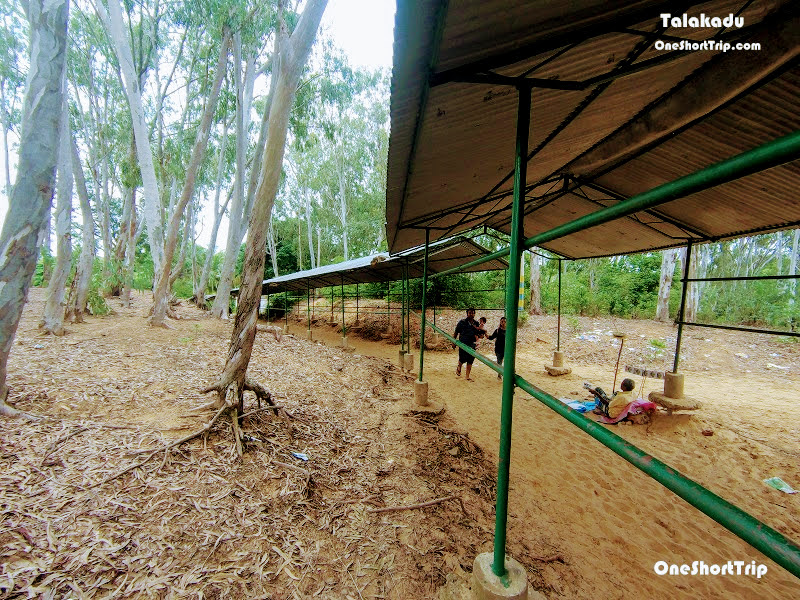
The geographical setting is fundamental to understanding Talakadu. The Kaveri makes a pronounced bend beside the town, and the river has shaped both the physical landscape and the settlement's history. Today, broad stretches of sand surround the temple area, giving Talakadu an appearance unlike most other historic towns in Karnataka. The Mysuru district administration identifies the site as being on the left bank of the Kaveri at this bend.
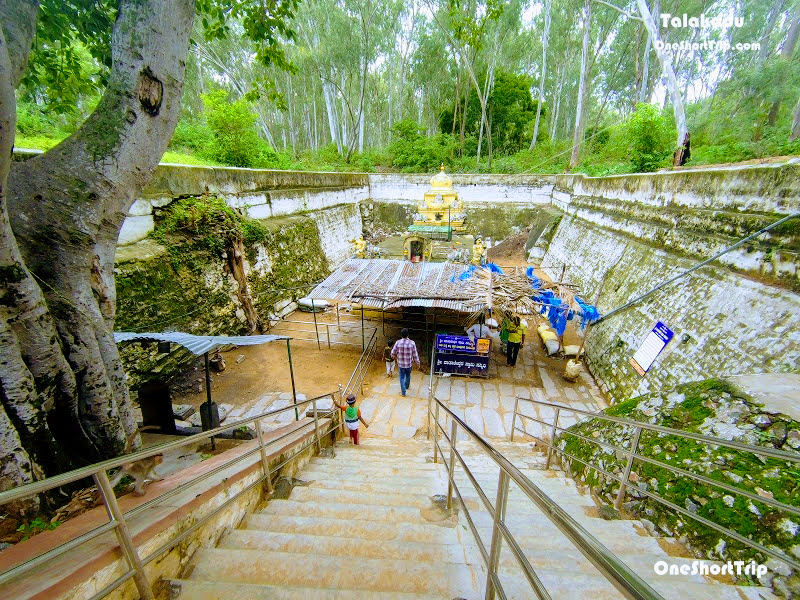
The sand is not simply a scenic feature. It is part of Talakadu's archaeological story. Several historic structures became buried or partially covered over time, creating the unusual impression of temples emerging from a sandy landscape. This is why Talakadu is often described as a lost or buried city rather than merely a temple town.
Talakadu Through the Centuries
Talakadu has experienced several important phases of South Indian history. The Western Ganga dynasty established a powerful presence in southern Karnataka and ruled from approximately the 4th century until the 11th century. Talakadu became an important centre during the Ganga period.
The Cholas subsequently defeated the Gangas and brought Talakadu under their influence. In the 12th century, the town came under the Hoysalas. Later, the Vijayanagara rulers and the Maharajas of Mysuru controlled the region. These successive political phases are important because Talakadu's heritage reflects more than one dynasty or architectural tradition.
The town's importance was therefore not only religious. Its position beside the Kaveri and its role as a settlement in the historic Mysuru region gave it political, cultural and economic significance as well.
The Lost City Beneath the Sand
One of the strongest impressions visitors take away from Talakadu is the feeling that they are walking through the remains of a much larger historic town. The present landscape is considerably quieter than the settlement that once occupied this area.
Local tradition speaks of a much larger temple city, while the Mysuru district administration notes that Talakadu was once associated with around 30 temples and that many of them became covered by sand during the 16th century. The surviving shrines provide only part of the picture of the historic settlement.
This is what makes exploring Talakadu different from visiting a conventional monument. The surroundings themselves become part of the heritage experience.
The Famous Talakadu Curse – Legend and History
Talakadu's history is inseparable from one of Karnataka's best-known legends: the curse of Alamelamma.
According to the traditional story, Alamelamma was associated with the royal family of Srirangapatna during the period of Raja Wodeyar. She is said to have been pursued after refusing to surrender her jewellery and, before her death, pronounced a curse that Talakadu would become covered in sand, Mysuru would face political misfortune and the Wadiyar dynasty would suffer a lack of heirs.
The story has become deeply embedded in the cultural memory of the region and is frequently used to explain Talakadu's sandy landscape. However, the curse belongs to the realm of local tradition and should not be presented as the scientific cause of the sand deposits. The physical landscape is better understood through the Kaveri's riverine environment and long-term changes in the area.
The Pancha Linga Tradition
Talakadu's most important religious identity comes from its five principal Shiva temples, collectively associated with the Pancha Linga tradition. The five shrines are Vaidyanatheshwara, Arkeshwara, Pataleshwara, Maruleshwara and Mallikarjuna.
The five Lingas are traditionally understood as representing the five aspects or faces of Shiva. For devotees, the importance of Talakadu therefore lies not simply in individual temples but in the relationship between these shrines and the pilgrimage tradition that connects them.
Vaidyanatheshwara Temple
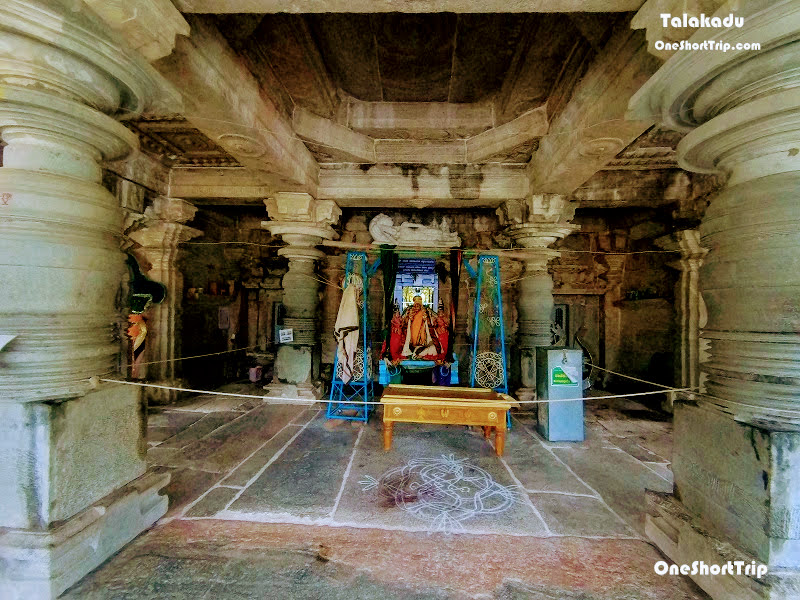
Vaidyanatheshwara is the most prominent of the Pancha Linga temples and is generally the first shrine that comes to mind when Talakadu's temple heritage is discussed. The temple remains part of the living religious landscape rather than functioning solely as an archaeological monument.
Arkeshwara Temple
Arkeshwara is one of the five sacred Shiva shrines forming the Pancha Linga circuit. Its significance becomes clearer when the temple is viewed as one part of the wider pilgrimage sequence rather than as an isolated structure.
Pataleshwara Temple
Pataleshwara is another of Talakadu's five principal Shiva temples. Its name and traditional association contribute to the sacred geography of the town and the broader Pancha Linga pilgrimage.
Maruleshwara Temple
Maruleshwara completes another part of the five-temple Shaiva landscape. The temple is traditionally included in the prescribed sequence followed during the major Pancha Linga pilgrimage.
Mallikarjuna Temple
Mallikarjuna is the fifth of the principal Pancha Linga shrines. Together, these five temples give Talakadu an unusually concentrated Shaiva identity within the Kaveri region.
Pancha Linga Darshana – Talakadu's Rare Pilgrimage
The Pancha Linga Darshana is the most distinctive religious observance associated with Talakadu. It is traditionally held once every 12 years, making it one of the rare pilgrimage events in Karnataka that travellers may encounter only occasionally in their lifetime.
According to the Mysuru district administration, the observance takes place on a particular new-moon day in the month of Karthika when the prescribed astronomical combination occurs. The traditional pilgrimage begins with a sacred bath at Gokarna Theertha, followed by worship at Gokarneshwara and Chandikadevi and then the five Shiva temples. The sequence concludes with Kirtinarayana.
The importance of the festival is therefore not just the number of temples involved. The prescribed order turns the entire town into a sacred circuit, connecting water, shrines, ritual movement and pilgrimage into one experience.
Keerthinarayana Temple – Talakadu's Vaishnava Heritage
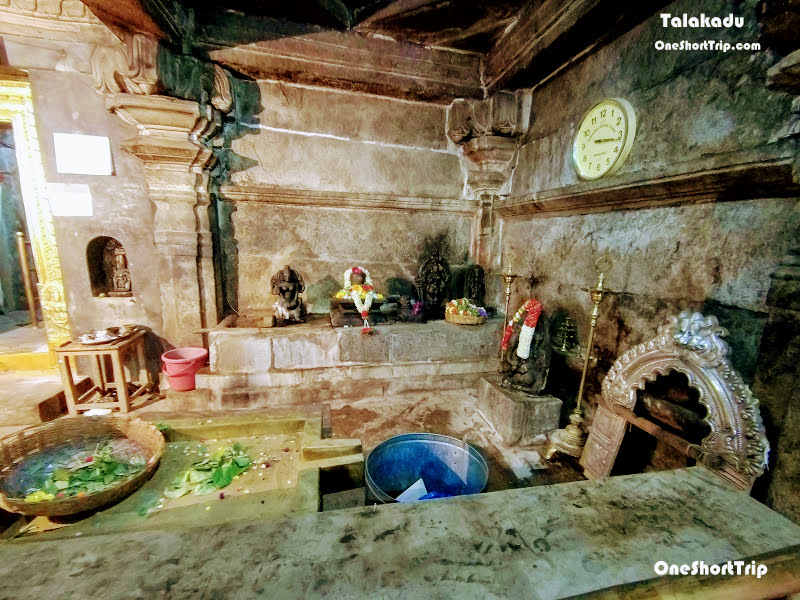
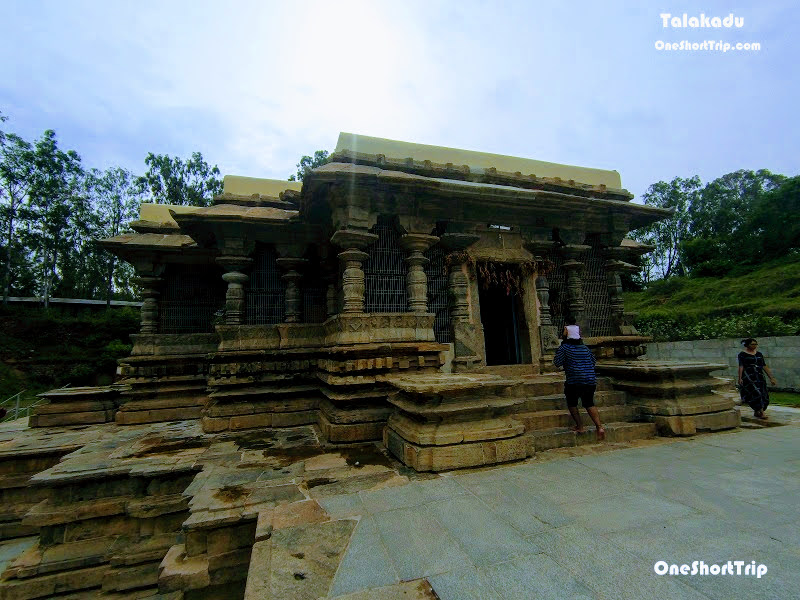
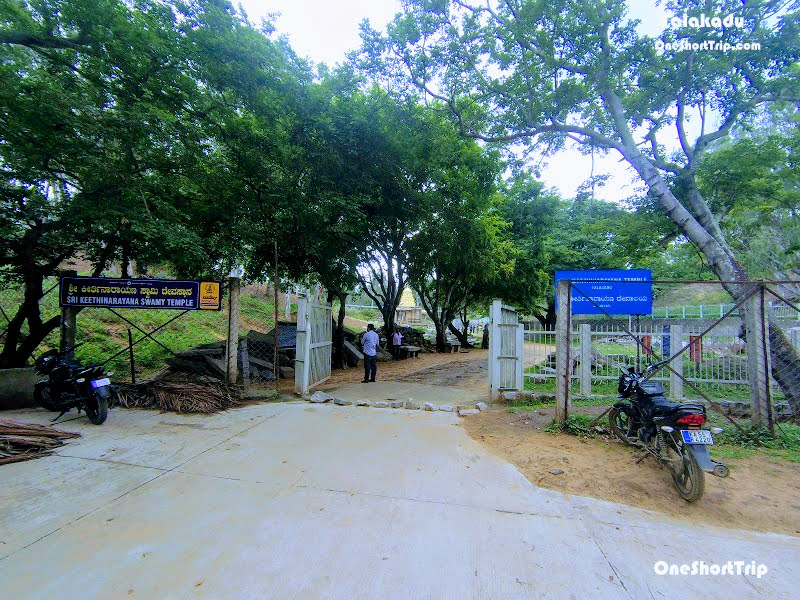
Although Talakadu is strongly associated with Shiva worship, the town also has an important Vaishnava monument in the Keerthinarayana Temple. The temple is especially significant because it demonstrates that Talakadu's religious history was broader than the Pancha Linga tradition alone.
The presence of Keerthinarayana alongside the Shiva temples adds another layer to the historical landscape and makes Talakadu valuable for travellers interested in the development of different Hindu traditions in medieval Karnataka. The Mysuru district administration includes Keerthinarayana among Talakadu's important temples.
Architecture and the Talakadu Temple Landscape
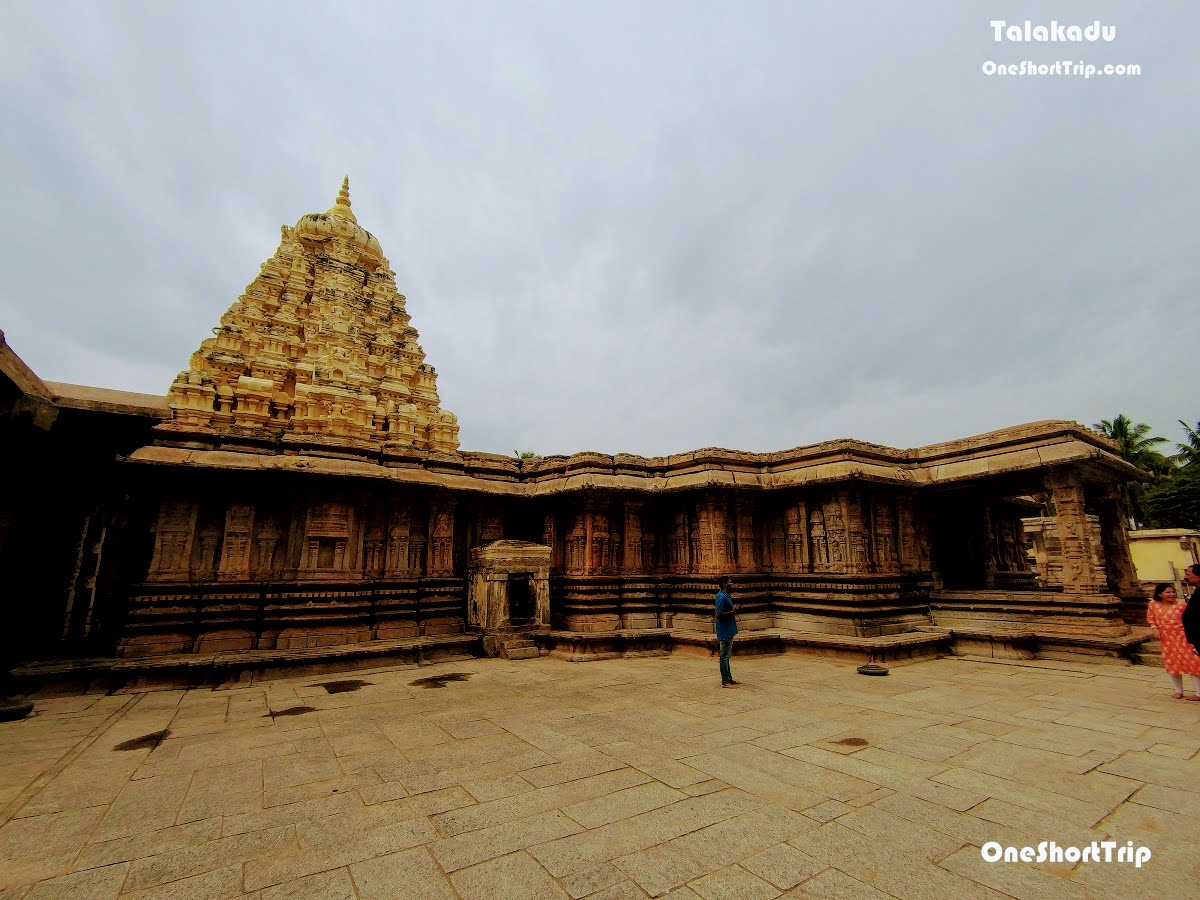
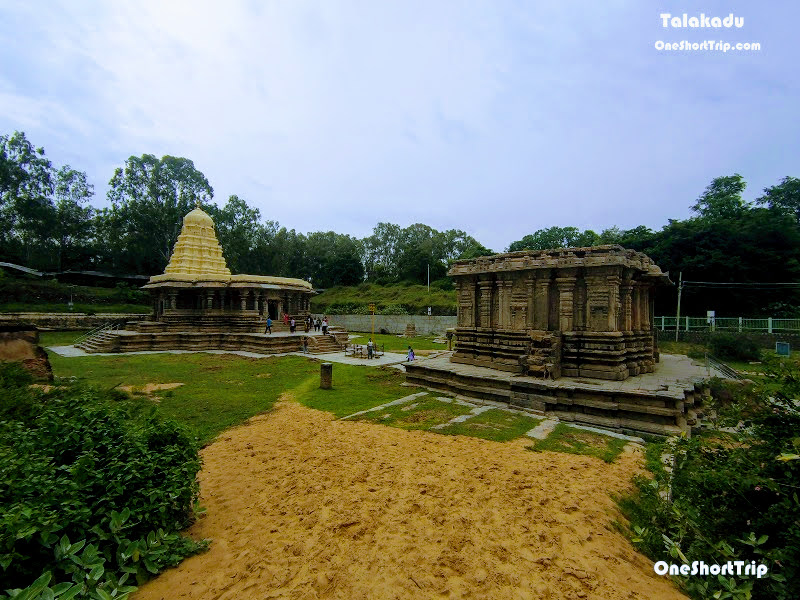
Talakadu should not be judged by the scale of one monumental gopura or palace-like structure. Its architectural value comes from the concentration of historic temples within an unusual natural setting. The temples belong to different periods of Karnataka's history, reflecting the changing political and religious importance of the town.
The sandy surroundings also alter the way the architecture is experienced. Instead of approaching a temple through a dense modern settlement, visitors often arrive along open sandy paths, making the relationship between the structures and their environment immediately visible.
Talakadu as a Living Heritage Destination
One of Talakadu's greatest strengths is that it has not become merely an archaeological display. Its temples continue to carry religious meaning for devotees, while the town's legends and pilgrimage traditions remain part of local culture.
For travellers, this creates two different ways of experiencing Talakadu. A visitor interested in history can examine the temples, dynasties and archaeological landscape, while a pilgrim can approach the same destination through its Shiva temples, sacred water bodies and religious traditions. Both perspectives are important to understanding the place.
The Kaveri Adds Another Dimension
The Kaveri is more than a geographical landmark at Talakadu. Rivers have historically shaped settlement, agriculture, trade and pilgrimage in South India, and Talakadu's location beside a major river helps explain why the town developed into an important centre.
The riverbank also changes the mood of the destination. After exploring the temples, the open landscape beside the Kaveri provides a quieter contrast to the concentrated religious activity around the shrines.
Why Talakadu Is Worth Visiting
Talakadu is worth visiting because it offers something few destinations can combine in one place: an ancient temple town, a living pilgrimage tradition, a fascinating royal legend, a multi-dynasty history, an archaeological landscape and the unmistakable presence of the Kaveri. It is not simply a stop for seeing an old temple. It is a destination where the landscape itself is part of the story.
Planning Your Visit to Talakadu
Talakadu is best planned as a heritage and pilgrimage circuit rather than a quick stop at one temple. The principal shrines are distributed across the historic settlement, and the sandy terrain becomes part of the experience as you move between them. Give yourself enough time to walk, explore and pause at the temples instead of treating Talakadu as a checklist of monuments.
For most travellers, 2 to 3 hours is a sensible minimum for seeing the principal temple area. Visitors with a strong interest in history, architecture or photography can comfortably spend longer, particularly if they want to explore more of the surrounding heritage landscape.
Talakadu Temple Timings
Talakadu does not have one common opening time because it is a historic settlement containing several individual temples. Each active shrine can follow its own daily puja and darshan schedule, and timings may change on festival days.
There is currently no single dependable official timetable covering all of Talakadu's temples. If your visit is primarily for darshan, confirm the relevant temple's timings locally before travelling. This is especially important if you intend to arrive late in the afternoon or visit several shrines in sequence.
Entry Fee for Talakadu
Talakadu is a collection of temples and heritage areas rather than one centrally ticketed attraction. Entry arrangements can therefore differ between individual temples and facilities. There is no reliable current official source establishing one universal Talakadu entry fee.
Carry some cash for local temple offerings, parking or small purchases, but do not assume that every shrine has the same payment arrangement. If a temple is conducting a special festival or ritual, local arrangements may also differ.
How to Reach Talakadu from Mysuru
Talakadu is approximately 45 km from Mysuru. This makes Mysuru the most convenient major city from which to visit the destination. A private car or taxi is particularly useful because it allows you to move between Talakadu's temples and combine the visit with other attractions in the region.
The Mysuru district administration places the nearest major railway station at Mysuru, approximately 49 km from Talakadu. From the railway station, the remaining journey has to be completed by road.
How to Reach Talakadu from Bengaluru
Talakadu is approximately 185 km from Bengaluru, making it possible as a long day trip, although an early start is recommended. Travellers who want a slower experience can combine Talakadu with an overnight stay in Mysuru or another nearby town rather than returning to Bengaluru late at night.
For a Bengaluru-based trip, having your own vehicle or hiring a cab is generally more convenient than relying on multiple public-transport connections, particularly if you plan to combine Talakadu with Shivanasamudra or Somanathapura.
Getting Around Talakadu
The most rewarding way to experience the historic core is partly on foot. The sandy landscape is one of the defining characteristics of Talakadu, but it also makes walking more tiring than walking on a normal paved street.
Keep your vehicle as close as reasonably possible to the sightseeing area and avoid carrying unnecessary luggage while exploring. Comfortable footwear is especially useful for the approach to the temples, although footwear must be removed wherever individual temple rules require it.
Best Time to Visit Talakadu
October to February is currently recommended by Karnataka Tourism as the best period to visit Talakadu. The cooler conditions make walking through the sandy temple landscape considerably more comfortable.
If visiting outside winter, plan your sightseeing for the morning or later afternoon. The open sandy areas can become uncomfortable under strong midday sunlight, particularly during the hotter months.
When Is Talakadu Most Crowded?
Ordinary weekends can be busier than weekdays, but the largest crowds are associated with important religious occasions. The Pancha Linga Darshana, held traditionally once every 12 years, transforms Talakadu into a major pilgrimage destination.
During major religious gatherings, expect heavier traffic, limited parking, longer queues and significantly more people moving through the temple area. The Mysuru district administration identifies the Pancha Linga Darshana as a special observance connected with the five Shiva temples.
Is Talakadu Suitable for Senior Citizens?
Yes, but the sandy terrain should be taken seriously. Loose sand can make walking difficult for visitors with knee, balance or mobility concerns. A senior-friendly visit should focus on the principal temples rather than attempting to cover every possible shrine on foot.
Visit during the cooler part of the day, keep water available and allow plenty of time between temples. A private vehicle is particularly useful for families travelling with elderly members.
Is Talakadu Good for Families With Children?
Talakadu can be an enjoyable family destination because it feels very different from a conventional city attraction. Children can see historic temples, walk across the unusual sandy landscape and learn how a once-important settlement changed over time.
Parents should supervise children around the Kaveri and avoid letting them wander independently through unfamiliar areas. The temple surroundings are also active religious spaces, so children should be encouraged to behave respectfully.
Talakadu for Photography
Talakadu offers a distinctive photographic setting because architecture, sand and river landscape appear together. Wide views of the temple surroundings can communicate the unusual character of the town better than close-up photographs alone.
Early morning and late afternoon are particularly good for photography because the softer light adds texture to the stonework and sandy landscape. Inside active temples, always follow the individual shrine's photography rules and avoid photographing devotees during private or sensitive religious moments.
Dress Code and Temple Etiquette
Talakadu is an active pilgrimage destination, so modest and comfortable clothing is the safest choice. Visitors should remove footwear where required, maintain cleanliness around the shrines and follow instructions from temple staff.
Do not climb on historic structures, touch carvings unnecessarily or treat the buried-temple landscape as a recreational playground. The temples are simultaneously places of worship and important heritage structures.
What to Carry for a Talakadu Trip
- Drinking water, especially during warmer months.
- Comfortable footwear suitable for sandy and uneven surfaces.
- Sun protection such as a hat, sunglasses and sunscreen.
- Basic medicines and personal essentials.
- A small bag for footwear when entering temples.
- Some cash for local expenses and temple-related offerings.
- A phone power bank if spending several hours away from the city.
Talakadu + Shivanasamudra
Talakadu and Shivanasamudra make one of the strongest combinations for a day trip. Both are connected to the Kaveri but offer completely different experiences: Talakadu is centred on temples, history and archaeology, while Shivanasamudra is known for the river's dramatic waterfalls.
Karnataka Tourism currently places Talakadu about 28 km from Shivanasamudra, making the combination particularly practical.
Talakadu + Somanathapura
Travellers interested in Karnataka's temple architecture can combine Talakadu with Somanathapura. The contrast is valuable: Talakadu tells the story of a changing temple town shaped by the Kaveri and centuries of burial, while Somanathapura presents an exceptionally refined Hoysala architectural composition.
Talakadu + Mysuru
Because Talakadu is only about 45 km from Mysuru, it works very well as a half-day excursion from the city. Travellers staying in Mysuru can visit Talakadu in the morning and return to the city for the rest of their sightseeing.
A Practical Talakadu Day Trip
7:00–9:00 AM: Leave Mysuru or begin the journey from your accommodation.
Morning: Explore the principal temples and begin with the most important shrines while temperatures are comfortable.
Late morning: Walk through the sandy heritage area and visit additional temples according to your interest and mobility.
Afternoon: Have lunch and continue towards Shivanasamudra, Somanathapura or return towards Mysuru.
Evening: Return to Mysuru or Bengaluru, depending on the day's route.
Food and Stay Near Talakadu
Talakadu is a relatively small heritage destination, so accommodation and restaurant choices are more limited than in Mysuru. For families, senior citizens and travellers looking for a wider range of hotels, Mysuru is the more convenient base.
For a day trip, carrying water and a few basic refreshments is sensible. If combining Talakadu with Shivanasamudra or another rural destination, do not leave meals until very late in the journey.
Things to Avoid at Talakadu
- Do not visit in the hottest part of the day without adequate water and sun protection.
- Do not assume every temple has the same opening hours.
- Do not enter the river at unfamiliar or unsafe stretches.
- Do not climb on temple structures or archaeological remains.
- Do not photograph restricted areas inside active temples.
- Do not rush senior citizens across loose sand.
- Do not plan an extremely late return to Bengaluru after combining several destinations.
Why Talakadu Deserves a Place on Your Karnataka Itinerary
Talakadu is one of those destinations that becomes more interesting the longer you stay. The temples are only one part of the experience; the sand, Kaveri landscape, archaeological remains, royal history and living pilgrimage traditions explain why this unusual town has survived in Karnataka's cultural memory for centuries. If you are travelling from Mysuru or planning a Bengaluru weekend circuit, Talakadu is best experienced slowly, with enough time to understand the landscape rather than simply photograph the temples and leave.