

Gumbaz-e-Shahi, Srirangapatna – Tomb of Tipu Sultan and Hyder Ali
The Gumbaz-e-Shahi is one of the most important historical monuments in Srirangapatna, Karnataka. Located at Ganjam on the eastern side of the historic island town, this magnificent mausoleum is the final resting place of Tipu Sultan, his father Hyder Ali and his mother Fakhr-un-Nisa. Set within a landscaped garden, the monument combines an imposing domed structure with elegant Islamic architectural details and a peaceful historic setting.


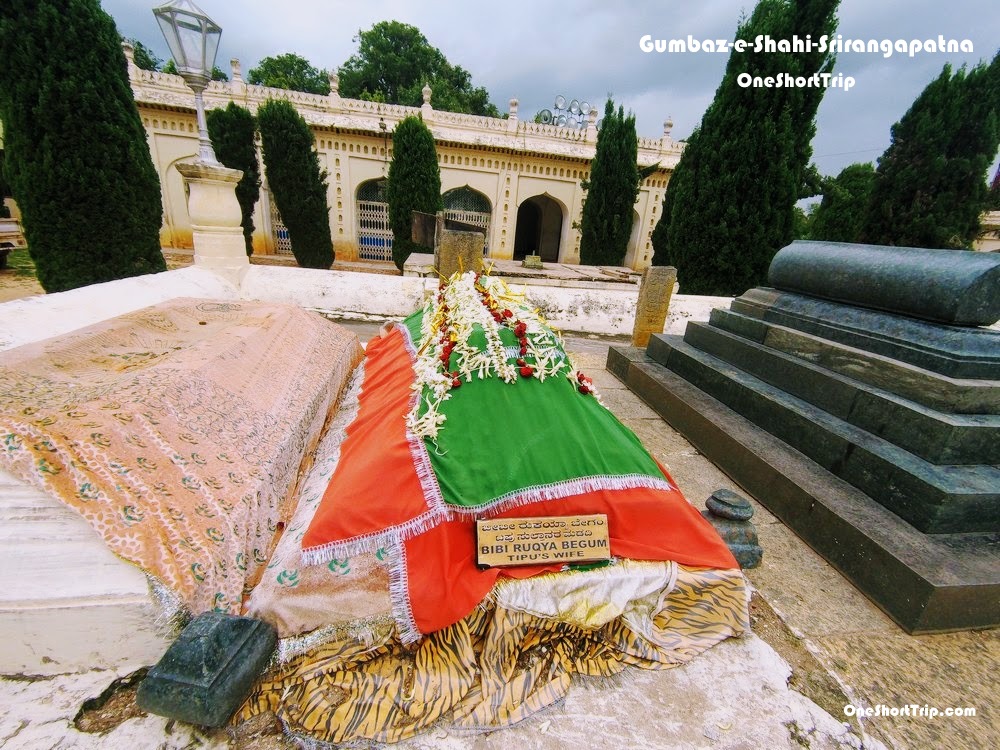
A Monument Built by Tipu Sultan
The Gumbaz was constructed between 1782 and 1784 during the reign of Tipu Sultan. Following the death of his father Hyder Ali in 1782, Tipu commissioned the mausoleum as a place for his parents to be buried. His mother, Fakhr-un-Nisa, was also laid to rest here. After Tipu Sultan died during the fall of Srirangapatna in 1799, he was buried beside his parents, giving the Gumbaz its enduring association with the Mysore ruler.
The monument therefore represents more than a historic tomb. It is closely connected with the final years of the Mysore Kingdom under Tipu Sultan and with the dramatic history of Srirangapatna during the Anglo-Mysore Wars. Karnataka Tourism describes Srirangapatna as the former capital associated with Tipu Sultan and highlights the Gumbaz among the town's major heritage monuments.

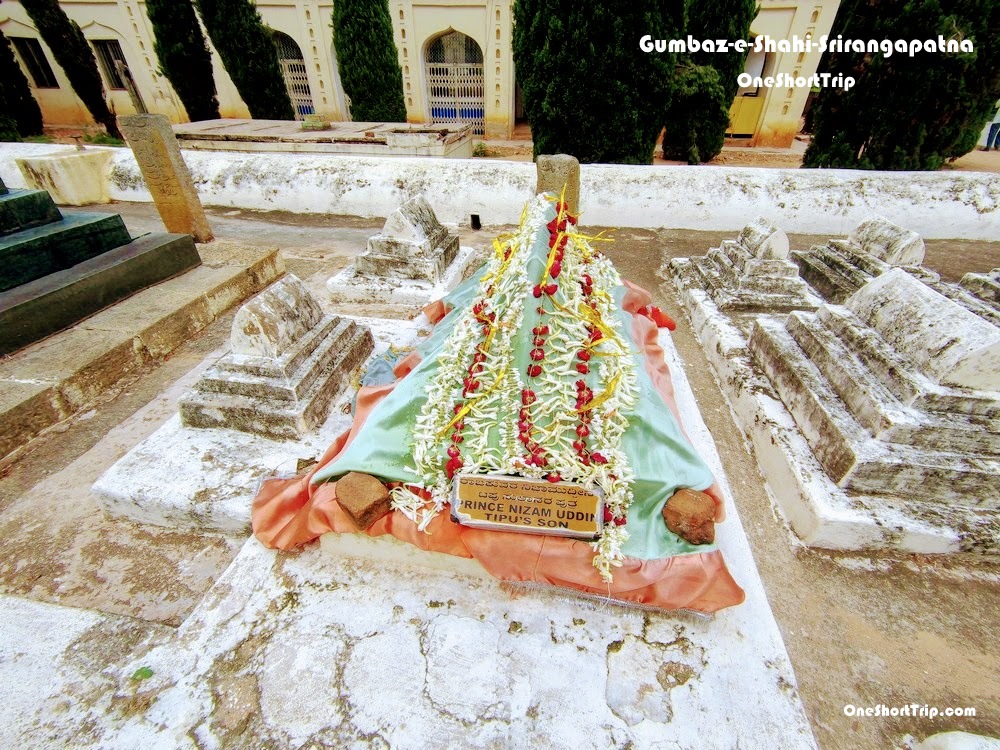
The Tombs of Tipu Sultan and His Parents
At the heart of the mausoleum are the cenotaphs associated with Hyder Ali, Fakhr-un-Nisa and Tipu Sultan. Hyder Ali's cenotaph occupies the central position, with those of his wife and son placed beside it. The three graves make the Gumbaz one of the most significant surviving sites connected directly with the ruling family of late-18th-century Mysore.
The wider garden also contains numerous graves belonging to members of Tipu Sultan's family and close circle. Persian inscriptions and historic grave markers add another layer of information for visitors interested in the social and political history of the Mysore court.
Striking Islamic Architecture
The Gumbaz is particularly recognisable for its large dome rising above a square mausoleum. The structure stands on an elevated platform and is surrounded by a covered corridor supported by 36 polished black granite pillars. Stone latticework, pointed arches, ornamental details and the monumental dome give the building a distinctive visual character.
Its architecture reflects the Islamic traditions that influenced the Mysore court while also showing regional characteristics. Heritage sources commonly compare aspects of the design with the mausoleums of the Deccan, particularly the architectural traditions associated with Bijapur and Golconda.
Visiting Gumbaz-e-Shahi, Srirangapatna – Timings, Entry, How to Reach and Nearby Places
Gumbaz-e-Shahi is one of the easiest heritage attractions to include in a Srirangapatna sightseeing itinerary. The mausoleum lies in the Ganjam area on the eastern side of the historic island and can be combined with other important sites connected with Tipu Sultan, the Mysore Kingdom and the history of Srirangapatna.


Gumbaz-e-Shahi Timings
Current travel listings commonly report visiting hours of approximately 8:00 AM to 6:30 PM on all days. Since opening hours at heritage monuments can change because of maintenance, local arrangements or special occasions, visitors should confirm the day's timings before travelling.
Best practical time: Early morning or late afternoon is generally more comfortable for exploring the outdoor garden and photographing the monument, particularly during warmer months.
Gumbaz-e-Shahi Entry Fee
Published visitor information is not completely consistent about the current admission charge. Some listings mention a nominal entry fee, while recent visitor reports describe free entry. It is therefore best not to rely on an old online ticket price; confirm the current fee at the entrance when you visit.
How to Reach Gumbaz-e-Shahi
By road: Srirangapatna is located between Bengaluru and Mysuru and is easily accessible via the Bengaluru–Mysuru highway. From Srirangapatna town, Gumbaz-e-Shahi can be reached by local taxi, auto-rickshaw or private vehicle.
By train: Srirangapatna has its own railway station, making rail travel a convenient option for visitors arriving from Mysuru and other connected cities.
From Mysuru: Srirangapatna is around 20 km from Mysuru, making the Gumbaz a convenient addition to a Mysuru–Srirangapatna day trip. Karnataka Tourism currently describes Srirangapatna as approximately 20 km from Mysuru.
How Much Time Do You Need at Gumbaz?
Allow around 1 to 1.5 hours for a comfortable visit. This gives enough time to see the mausoleum, graves, architectural details, surrounding garden and associated structures without rushing.
History enthusiasts and photographers may prefer to spend longer exploring the complex and observing its architectural details.

The Lal Bagh Garden Around the Gumbaz
The Gumbaz stands within a landscaped garden historically known as Lal Bagh. The greenery creates a peaceful contrast to the monument's imposing stone architecture and makes the complex more than just a tomb to be viewed from a distance.
Take time to walk around the garden and observe the mausoleum from different angles. The dome, corner minarets, colonnade and surrounding trees create some of the best photographic perspectives of the monument.
Masjid Associated with the Gumbaz
The Gumbaz complex is also associated with a historic mosque. The presence of the mosque alongside the mausoleum reflects the religious and architectural character of the royal complex created during Tipu Sultan's period. Incredible India notes the mosque's twin minarets and decorative stonework as part of the heritage setting.
Visitors should remember that the mosque remains a place of worship and should behave respectfully, particularly during prayer times.
Photography at Gumbaz-e-Shahi
Gumbaz-e-Shahi is particularly rewarding for architectural photography. The central dome, black granite pillars, arches, minarets, stone details and garden provide several different compositions.
Morning and late afternoon light can produce softer shadows on the stonework. Avoid obstructing visitors or worshippers while taking photographs, and follow any restrictions displayed inside the monument.
Dress and Visitor Etiquette
Gumbaz-e-Shahi is a historic mausoleum and religiously significant site, so modest and respectful clothing is recommended. Avoid loud behaviour and maintain a respectful atmosphere around the graves and mosque.
If entering a prayer area or mosque section, follow the instructions provided by the site staff and observe local customs regarding footwear and dress.
Gumbaz-e-Shahi for Families and Senior Citizens
The Gumbaz is suitable for families and senior citizens who are interested in history and architecture. Much of the experience involves walking through the garden and viewing the monument rather than undertaking a demanding climb.
Comfortable footwear is recommended because visitors may spend considerable time walking over outdoor paths and around the landscaped grounds.
Places to Visit Near Gumbaz-e-Shahi
Gumbaz-e-Shahi is best experienced as part of a wider Srirangapatna heritage circuit. Nearby attractions include Daria Daulat Bagh, Srirangapatna Fort, Sri Ranganathaswamy Temple, Jama Masjid, Nimishamba Temple, Captain Bailey's Dungeon and other sites connected with the island's history.
Karnataka Tourism highlights Srirangapatna as a heritage destination where monuments connected with Tipu Sultan stand alongside major Hindu religious sites, making it possible to experience several layers of the town's history in a single day.
A Good Srirangapatna Heritage Circuit
A practical sightseeing route can combine Gumbaz-e-Shahi → Daria Daulat Bagh → Srirangapatna Fort → Tipu Sultan's historical sites → Sri Ranganathaswamy Temple. Depending on available time, visitors can also add Nimishamba Temple or Ranganathittu Bird Sanctuary.
For travellers coming from Mysuru, Gumbaz can be included as part of a full-day Mysuru–Srirangapatna excursion. Srirangapatna's compact heritage landscape makes it possible to cover several major attractions in one trip.
Best Time to Visit Gumbaz-e-Shahi
The cooler months from October to February are generally the most comfortable for exploring Srirangapatna. Karnataka Tourism currently recommends October to February as the best period for visiting the destination.
During the hotter months, visiting in the morning or later afternoon can make walking around the outdoor garden more comfortable.


