
About Shree Achaleshwar Mahadev Temple, Mount Abu
Shree Achaleshwar Mahadev Temple is one of the most unusual Shiva temples around Mount Abu, standing near the historic Achalgarh Fort in Rajasthan's Sirohi district. Unlike an ordinary Shiva shrine where the principal object of worship is a conventional Shiva Lingam, this temple is famous for a sacred natural formation traditionally identified with the impression of Lord Shiva's right toe. Rajasthan Tourism itself highlights the temple's association with this remarkable local belief, along with its naturally occurring Shiva Lingam, Nandi figures and distinctive setting in the Aravalli hills.
The name Achaleshwar comes from the Sanskrit idea of the "immovable Lord" — an especially meaningful name for a shrine whose mythology is directly connected with the stability of Mount Abu. According to local tradition, Lord Shiva pressed his toe against the mountain and made it firm. The story gives a religious explanation for the name Achalgarh and connects the temple's identity with the sacred landscape rather than treating the shrine as an isolated monument.
The Legend of Shiva's Toe
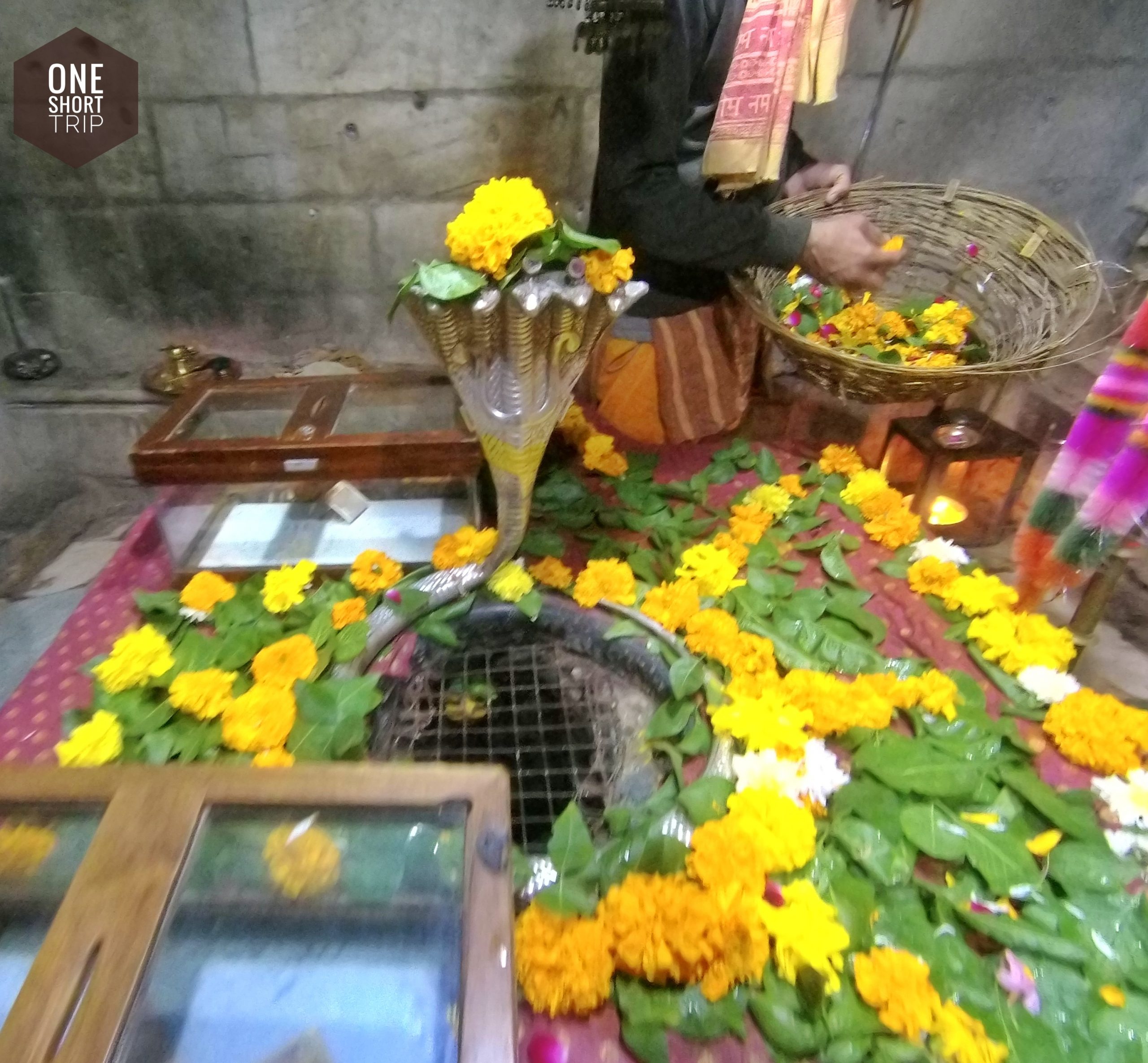
The most distinctive feature of Achaleshwar Mahadev is the sacred depression associated with the footprint or toe of Lord Shiva. This is a matter of religious tradition rather than an archaeological claim, and it is best understood in that context. Devotees believe that Shiva's toe made the mountain stable and that the sacred feature preserved inside the shrine represents that divine connection.
The story is closely tied to the wider mythology of Mount Abu. Rajasthan Tourism records several ancient traditions surrounding the mountain, including legends of Arbuda, Nandi and sages associated with the sacred landscape. Achaleshwar therefore makes more sense when visited as part of Mount Abu's larger religious geography rather than simply as another temple on a sightseeing list.
A Shiva Shrine with an Unusual Sanctum
The sanctum is associated with a naturally occurring sacred stone formation regarded as a Shiva Lingam. What makes the shrine particularly interesting is the combination of this sacred object with the separate tradition surrounding Shiva's toe impression. The result is a temple in which geology, mythology and worship become closely intertwined.
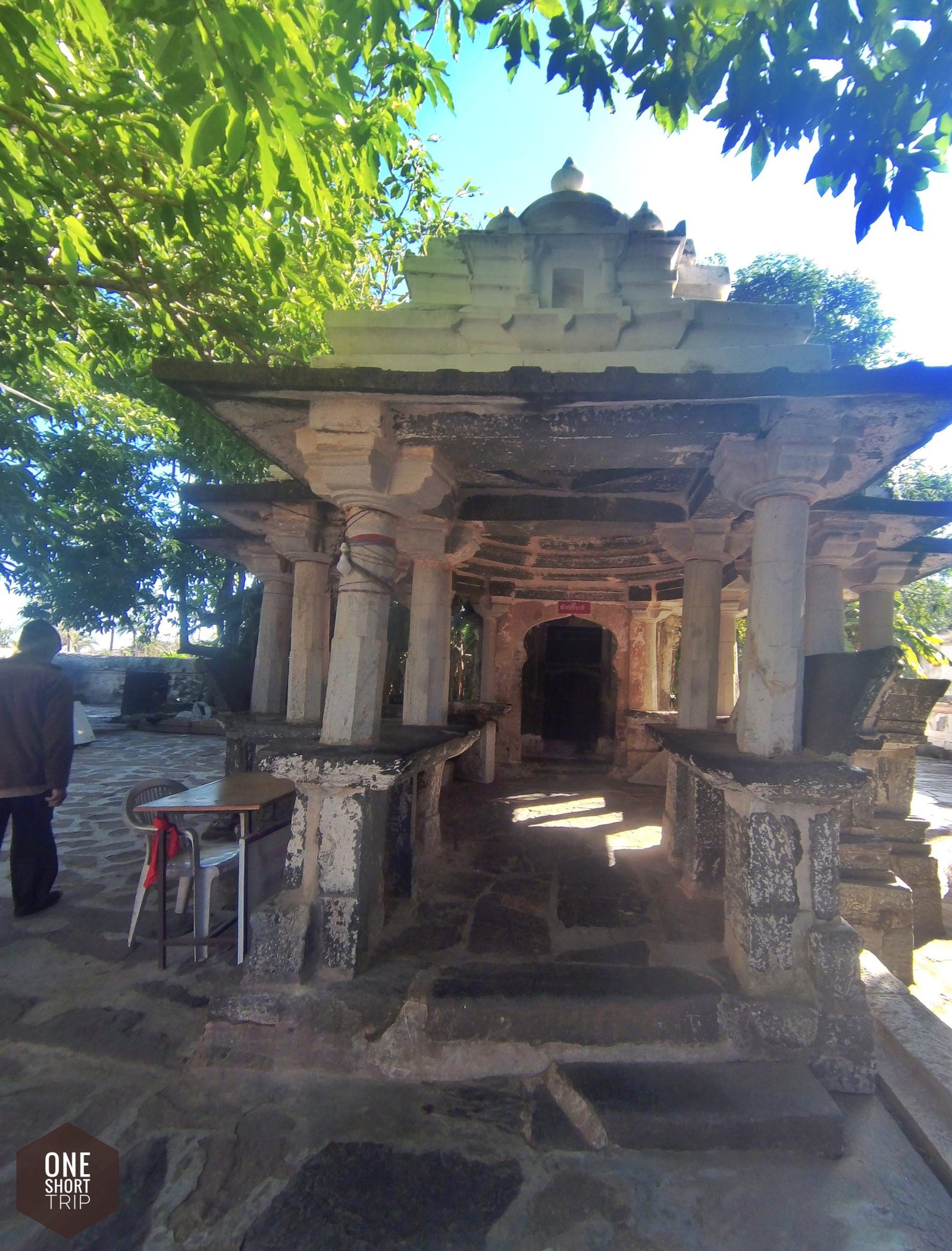
The heritage documentation available for the temple describes it as a small Shiva temple in the Nagara architectural tradition, with a curvilinear sanctum and Nandi facing the principal shrine. The scale is relatively modest compared with the grand temples of Rajasthan, but the unusual sacred features give the temple a strong identity.
The Famous Panchadhatu Nandi
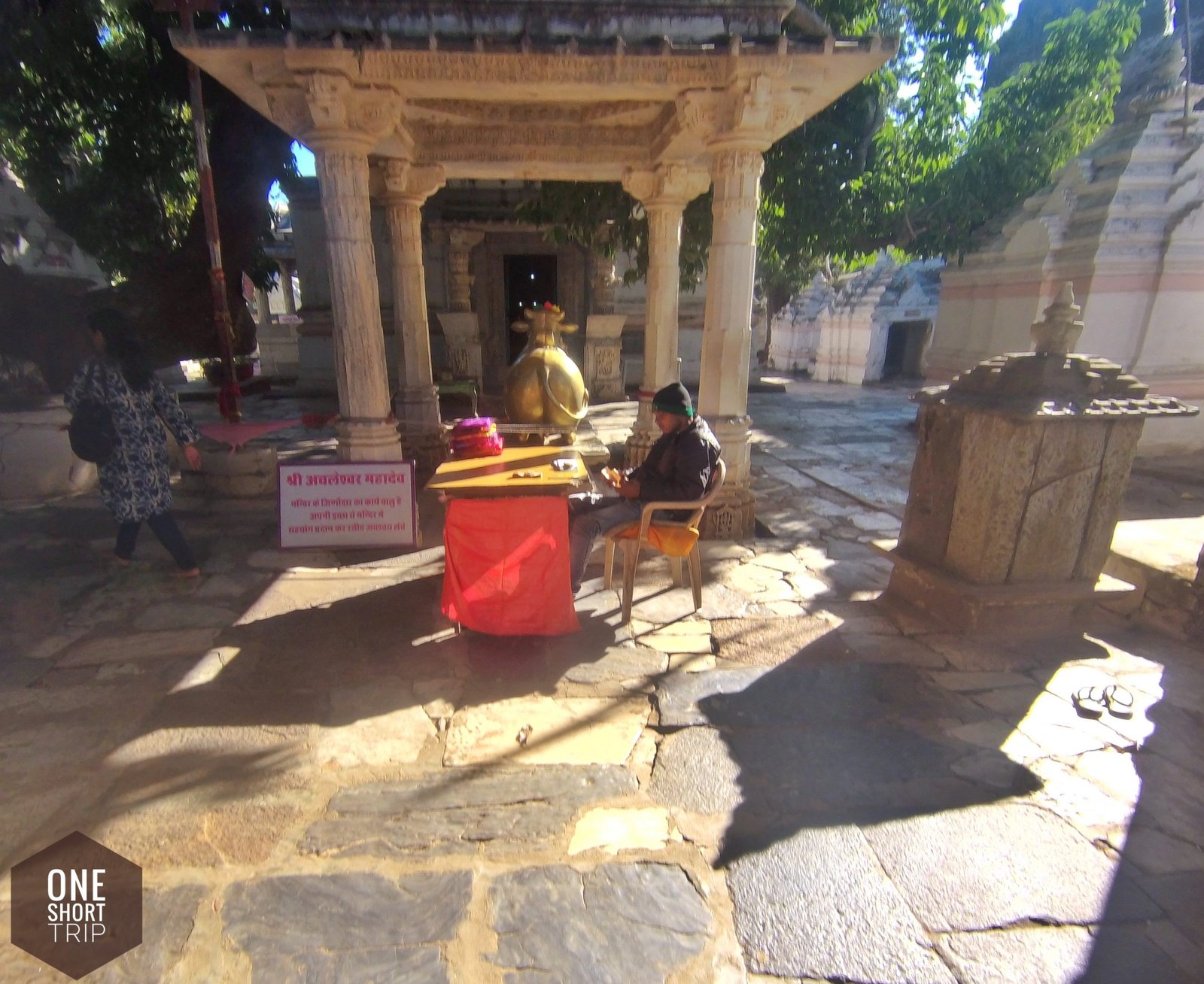
One of the most striking objects associated with the temple is its enormous Nandi, Shiva's sacred bull. The traditional account describes the principal Nandi as being made from Panchadhatu, an alloy of five metals. Historical descriptions place an inscription associated with the Nandi in the Vikrama Samvat 1464 period, corresponding to 1407 CE.
The Nandi is more than a decorative sculpture. In Shaiva temple tradition, Nandi is Shiva's vehicle and devotee, normally positioned facing the sanctum. At Achaleshwar, the scale and material of the sculpture make it one of the temple's most memorable visual features.
The Nandi and the Legend of the Bumblebees
A popular local legend gives the Panchadhatu Nandi an additional role in the temple's history. According to the story, when attackers approached the shrine, swarms of bumblebees emerged and drove them away, protecting the temple. This is a traditional account and should be regarded as folklore rather than a documented military event.
Stories such as this are part of what makes Achaleshwar different from a purely architectural monument. The temple continues to be understood through living religious memory, where sculptures, landscape and legends are woven together.
The Three Buffalo Sculptures and the Sacred Pond
Near the temple is a small water body surrounded by three large stone buffalo figures. Local tradition connects these buffaloes with a story involving Raja Adi Pal and demons who are said to have taken buffalo form. According to the legend, the pond was associated with ghee rather than ordinary water and became the setting for the king's confrontation with them.
The sculptures are best appreciated as part of the temple's storytelling landscape. Rather than existing independently, the Nandi, buffalo figures, sacred water body and Shiva shrine collectively preserve layers of religious folklore that have developed around Achalgarh over generations.
Sphatik Images and Other Sacred Objects
Descriptions of the temple also mention images carved from sphatik, or crystalline quartz. Such material has a distinctive translucent quality under suitable lighting and is traditionally valued in Hindu worship. These smaller sacred images add another layer of interest to a temple whose importance is based as much on unusual devotional objects as on its architecture.
Architecture and the Character of the Temple
The temple's architecture is considerably more restrained than the elaborate marble temples for which Mount Abu is internationally known. Heritage documentation describes a compact structure with a curvilinear sanctum, pointed openings and decorative detailing. The contrast is important: Achaleshwar is not primarily visited for monumental scale but for the relationship between its small architectural setting and its unusual sacred traditions.
The temple also carries evidence of restoration. Accounts of earlier conservation work describe layers of lime obscuring fine marble and decorative work. During restoration, artisans carefully removed the covering and repaired architectural elements rather than simply replacing the old structure with a new one. This process helped reveal details that had been hidden for years.
Achaleshwar Mahadev and Achalgarh Fort
The temple should ideally be visited together with Achalgarh Fort. The fort is a later historic layer in the landscape, associated with Maharana Kumbha, who reconstructed and renamed Achalgarh in the 15th century. The temple therefore sits within a landscape where religious history and military history overlap.
This combination gives the visit a distinctive character. Within a relatively short distance, travellers can move from an active Shiva shrine and its ancient traditions to the remains of a hill fort and then continue towards the higher landscapes of Mount Abu.
Why Achaleshwar Mahadev Temple Is Worth Visiting
Achaleshwar Mahadev is worth including in a Mount Abu itinerary if you enjoy places where history, mythology and landscape overlap. Its appeal comes from details that are difficult to find together elsewhere: the tradition of Shiva's toe, the naturally occurring sacred stone, the monumental Panchadhatu Nandi, the buffalo sculptures and the nearby remains of Achalgarh Fort.
It is not a temple that needs hours of sightseeing to appreciate. Instead, it rewards a slower visit in which you look closely at the sacred objects, listen to the local traditions and understand how the temple fits into the religious landscape of Mount Abu.
Visiting Shree Achaleshwar Mahadev Temple
Shree Achaleshwar Mahadev Temple is best experienced as part of the Achalgarh area of Mount Abu rather than as a standalone temple stop. The shrine sits just outside the historic Achalgarh Fort, in a quieter part of the hill station away from the busy streets around Nakki Lake. That location makes it particularly suitable for travellers who want to combine religious heritage, old fort architecture and the natural scenery of the Aravalli hills in one outing.
Rajasthan Tourism specifically lists Achaleshwar Mahadev and Achalgarh Fort together among Mount Abu's attractions. The fort lies around 26 km north of Mount Abu according to the state's tourism information, although the actual road distance can vary depending on the starting point and route.
How to Reach Achaleshwar Mahadev Temple
From Mount Abu
The easiest way to visit the temple is by road from Mount Abu town. A private car, taxi or local sightseeing vehicle is the most convenient option because Achalgarh lies away from the central tourist area. The approach takes you through the hill roads of Mount Abu and the surrounding Aravalli landscape.
The final approach includes winding hill roads, so allow additional time rather than planning the visit around a very tight schedule. During the monsoon, fog, wet roads and reduced visibility can make the drive slower.
By Train
Abu Road Railway Station is the main railhead for Mount Abu and is approximately 28 km from Mount Abu town. Rajasthan Tourism confirms that buses and taxis are available from Abu Road towards the hill station. From Mount Abu, continue by taxi or local sightseeing vehicle towards Achalgarh.
By Air
Mount Abu does not have its own commercial airport. Rajasthan Tourism currently identifies Maharana Pratap Airport at Udaipur as the nearest airport, around 176 km from Mount Abu, while Ahmedabad is another major airport option for travellers approaching from Gujarat.
Temple Timings and Entry
There is no consistently published official temple timetable that can be relied upon for every day of the year. Local listings may show different opening and closing hours, particularly around festivals and special पूजा days. For this reason, travellers should confirm the day's darshan timings locally if visiting specifically for worship.
There is no separate tourist-style monument ticket highlighted by Rajasthan Tourism for Achaleshwar Mahadev Temple. Normal temple visits are generally treated as devotional visits rather than ticketed sightseeing. If any special seva, puja or offering has a charge, it should be considered separately from ordinary darshan.
How Much Time Should You Spend?
For most travellers, 45 minutes to 1 hour is sufficient for the temple itself. This allows time to enter peacefully, see the principal sacred features, observe the Nandi and surrounding structures, and spend a few quiet minutes inside the shrine.
If you are also exploring Achalgarh Fort and the surrounding landscape, keep approximately 2 to 3 hours for the entire Achalgarh–Achaleshwar visit. Travellers interested in photography, architecture or the history of the area may want additional time.
Best Time to Visit
October to March is generally the most comfortable period for exploring Mount Abu and its surrounding heritage sites. The cooler weather makes the drive to Achalgarh more pleasant and allows visitors to combine the temple with outdoor sightseeing without dealing with intense heat.
Mount Abu remains relatively attractive outside winter as well because of its elevation. During the monsoon, the surrounding hills can become especially green, but wet weather may affect road conditions and visibility. Rajasthan Tourism describes Mount Abu as a year-round hill destination, while noting that some outdoor exploration can be affected by monsoon conditions.
Morning or Afternoon: When Should You Visit?
For a peaceful temple experience, morning is preferable. The cooler temperature also makes the surrounding fort area easier to explore. If your priority is combining the visit with sightseeing rather than spending time in prayer, late afternoon can work well, particularly when the surrounding hills begin to soften in the evening light.
Avoid arriving immediately before an important puja or festival if you prefer a quiet visit. Conversely, devotees interested in experiencing the temple at its most vibrant may deliberately choose a festival period and accept the additional crowds.
Is the Temple Suitable for Senior Citizens?
The temple can be included in a Mount Abu itinerary for senior citizens, particularly when travelling by car. However, visitors should remember that this is a historic hill-site temple rather than a modern, fully accessible tourist attraction. Uneven surfaces, steps and the general terrain around old structures may require some care.
Senior travellers should avoid rushing between the temple and Achalgarh Fort. A relaxed visit with suitable footwear, drinking water and enough time is considerably more comfortable than trying to cover the entire area quickly.
Is Achaleshwar Mahadev Temple Good for Families?
Yes. Families interested in mythology, temples and historic places can easily include Achaleshwar in a Mount Abu sightseeing day. Children may particularly enjoy the unusual stories associated with Shiva's toe, the Nandi and the surrounding fort rather than seeing the temple simply as another religious stop.
Parents should supervise younger children around steps, uneven stone surfaces and any water bodies or edges in the surrounding historic area.
Temple Etiquette and Dress Code
Achaleshwar Mahadev is an active religious shrine, so visitors should dress respectfully. Comfortable, modest clothing is appropriate, particularly if you intend to enter the inner worship areas. Footwear should be removed wherever temple rules require it.
Keep voices low inside the temple, avoid blocking devotees during darshan and follow instructions from temple staff. Do not touch sacred objects, idols or ritual items unless specifically permitted.
Photography at Achaleshwar Mahadev
Photography of the exterior and surrounding landscape may be possible, but rules inside the shrine can be different. Temple instructions should always take priority. Avoid photographing devotees during worship without permission, and never use flash where it could disturb prayer or rituals.
The surrounding Achalgarh landscape is particularly attractive for photography because the temple sits within the Aravalli hills and close to the historic fort complex.
What to Carry
- Comfortable walking footwear
- Drinking water
- Sun protection during warmer months
- A light jacket during winter mornings and evenings
- Any personal medicines required during the trip
- Modest clothing suitable for temple entry
- Rain protection during the monsoon
Combine Achaleshwar Mahadev with Achalgarh Fort
The most logical combination is Achaleshwar Mahadev Temple + Achalgarh Fort. Rajasthan Tourism describes Achalgarh as a historic fort originally associated with the Paramara dynasty and later reconstructed and renamed by Maharana Kumbha in 1452 CE. The temple is situated immediately outside the fort, making the two attractions naturally connected.
The combination also helps explain why the area is important. Achaleshwar represents the sacred landscape, while Achalgarh represents the region's later political and defensive history. Visiting both provides a much fuller understanding of this corner of Mount Abu than visiting either one independently.
Other Places to Combine Nearby
Guru Shikhar: Continue towards the highest point of the Aravalli range and visit the Dattatreya shrine at the summit. Rajasthan Tourism identifies Guru Shikhar at 1,722 metres above sea level.
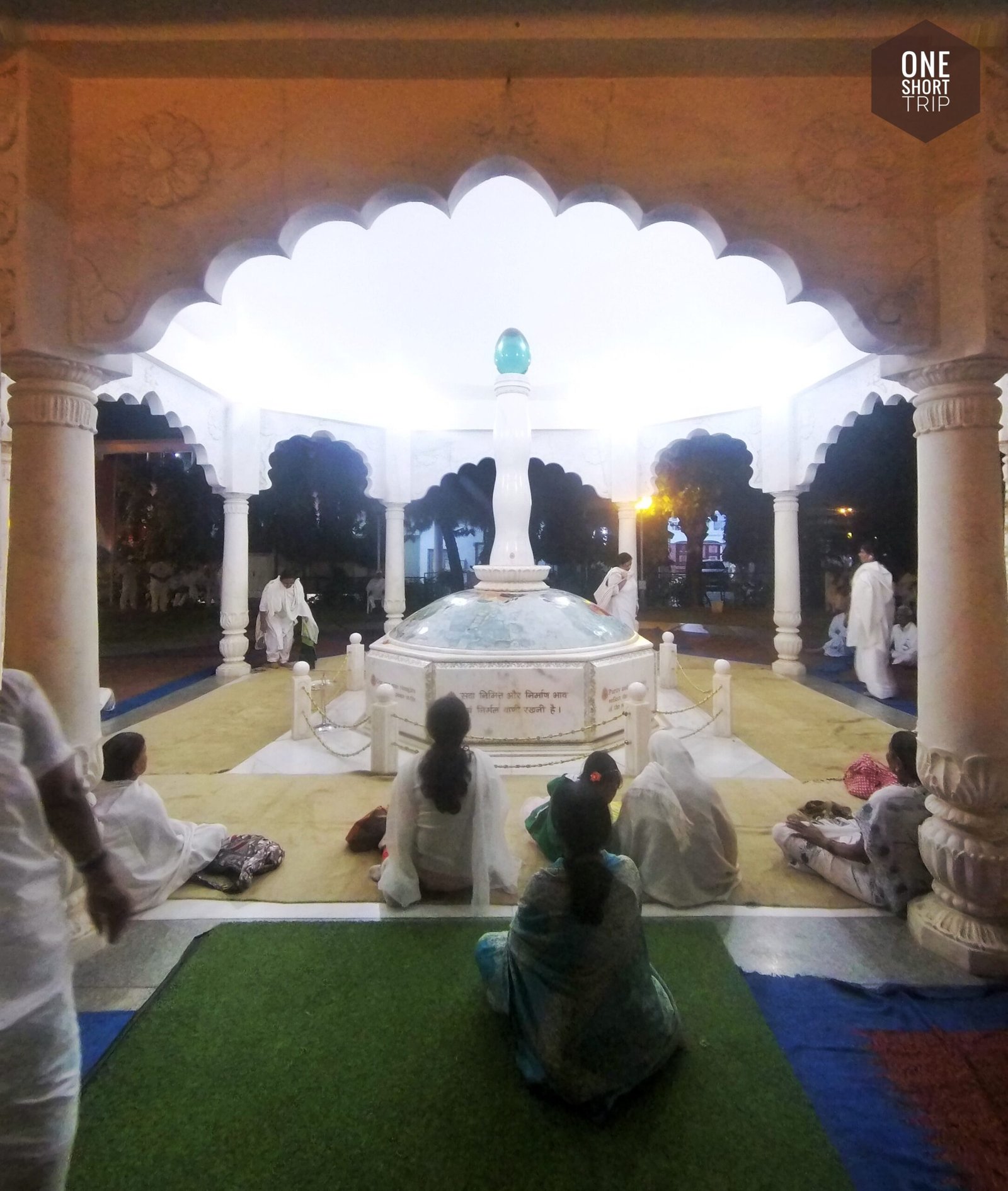
Peace Park: Located between Guru Shikhar and Achalgarh, this Brahma Kumaris establishment offers a very different experience, centred on gardens, quiet spaces and meditation.
Nakki Lake: This is a natural next stop if returning towards central Mount Abu. Rajasthan Tourism highlights boating, sunset views and Toad Rock around the lake.
Dilwara Jain Temples: For travellers interested in architecture, the highly detailed marble Jain temples provide a striking contrast to the comparatively modest Achaleshwar shrine. Rajasthan Tourism dates the principal Dilwara temple group to the 11th–13th centuries.
Suggested Mount Abu Temple and Heritage Circuit
A practical full-day route is Mount Abu → Achaleshwar Mahadev Temple → Achalgarh Fort → Peace Park → Guru Shikhar → Dilwara Jain Temples → Nakki Lake. The exact order can be adjusted according to temple timings, opening conditions and the time of sunset.
If your priority is religious heritage, spend more time at Achaleshwar and Guru Shikhar. If architecture is the main interest, give additional time to Dilwara. For families wanting a slower day, Achaleshwar, Peace Park and Nakki Lake make a less strenuous combination.
Where to Stay
Most visitors should stay in Mount Abu town, where the widest choice of hotels, restaurants and transport is available. Staying in the central area also makes it easier to combine Achaleshwar with Nakki Lake, Dilwara, Guru Shikhar and other attractions without changing accommodation.
Travellers arriving by train can also plan their onward transfer from Abu Road. Rajasthan Tourism confirms that Abu Road is approximately 28 km from Mount Abu and has bus and taxi connections.
Things to Keep in Mind
- Do not assume online timings are fixed; confirm temple timings before travelling specifically for darshan.
- Achaleshwar is an active temple, so religious etiquette matters more than sightseeing convenience.
- Allow extra driving time on the winding approach roads.
- Do not rush elderly travellers through the historic area.
- During monsoon, be careful on wet stone and road surfaces.
- Do not enter restricted areas around the temple or fort.
- Follow local instructions regarding photography and worship.
- Combine the temple with Achalgarh Fort to make the journey worthwhile.
Why Include Achaleshwar Mahadev in a Mount Abu Trip?
Achaleshwar Mahadev is not simply another temple to tick off a Mount Abu sightseeing list. Its value comes from the unusual way its religious traditions are tied to the mountain itself. The Shiva-toe legend, naturally occurring sacred formation, Nandi traditions and the nearby fort create a layered experience that combines faith, folklore, history and landscape.
For travellers who have already seen the better-known attractions around Nakki Lake, a visit to Achaleshwar and Achalgarh offers a quieter side of Mount Abu — one where the hills, old fortifications and living religious traditions remain closely connected.