
Dilwara Jain Temples, Mount Abu – A Masterpiece Carved in Marble
The Dilwara Jain Temples are among the most remarkable sacred monuments of Mount Abu and one of Rajasthan's finest examples of detailed marble craftsmanship. Set among the forested hills of the Aravalli Range, the temple complex looks relatively restrained from the outside. Its real character appears only after entering, where pillars, ceilings, doorways, arches, domes and ornamental panels reveal an extraordinary level of hand-carved detail.
The complex consists of five principal Jain temples developed between the 11th and 16th centuries. They are associated with the first, 22nd, 23rd and 24th Jain Tirthankaras: Adinatha or Rishabhanatha, Neminatha, Parshvanatha and Mahavira. Together, the temples form a remarkable record of Jain religious patronage, western Indian temple architecture and the evolution of marble carving over several centuries.


A Jain Pilgrimage Centre in the Aravallis
Dilwara is not simply an architectural attraction. These are living Jain places of worship and pilgrimage, maintained by the Jain community and still used for religious practices. Their location in the wooded hills of Mount Abu adds another dimension to the experience: the quiet surroundings and relatively understated exterior create a sharp contrast with the intensely detailed interiors.
The temple complex is administered by the Seth Shri Kalyanji Parmanandji Pedhi, Sirohi. The official temple organisation describes the five shrines as distinct places within one complex, each associated with a different Tirthankara and a different chapter in the history of Jain temple building.
The Five Dilwara Jain Temples
One of the easiest ways to understand Dilwara is to look at the complex as five individual temples rather than as a single monument. Each has its own patronage, period, principal Tirthankara and architectural personality.
1. Vimal Vasahi – Temple of Adinatha
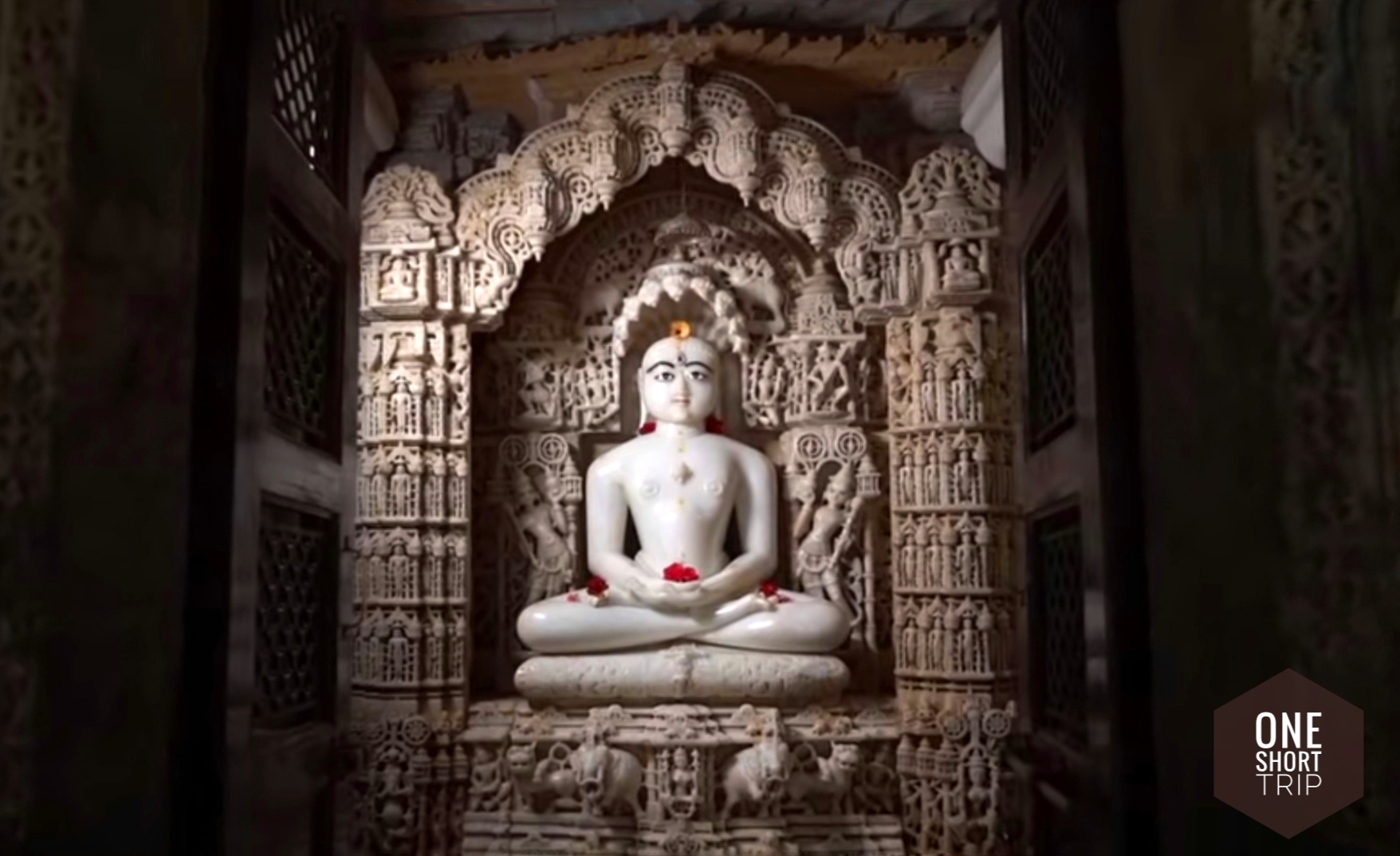
Vimal Vasahi is the oldest major temple in the complex and is dedicated to Lord Adinatha, also known as Rishabhanatha, the first Tirthankara of Jainism. It was commissioned in the early 11th century by Vimal Shah, a minister associated with the Chaulukya ruler Bhima I of Gujarat.
The temple established the architectural language that later Dilwara builders developed further. Its central halls, marble pillars and surrounding devotional spaces demonstrate how an apparently simple material could be transformed into an exceptionally elaborate sacred interior. The white marble is not merely structural here; it becomes the surface on which the temple's visual storytelling is created.
2. Luna Vasahi – Temple of Neminatha
Luna Vasahi is dedicated to Neminatha, the 22nd Tirthankara. It was built in 1230 by the brothers Vastupal and Tejpal, influential ministers in the Vaghela court of Gujarat. The temple was created in memory of their brother Luniga, giving the shrine its familiar name, Luna Vasahi.
Its principal attraction is the extraordinary carving of the Rang Mandap and its ceiling. Here, marble is worked into layered geometric and floral forms, suspended-looking pendants and finely detailed figures. The result is not simply decoration; the ceiling draws the eye inward and upward, making the central hall feel more intricate the longer you look at it.
3. Pittalhara – The Temple with the Metal Image
Pittalhara is associated with Adinatha and is distinguished from the other Dilwara temples by its principal image, which is made predominantly from brass and other metals. The name itself is connected with pittal, the Hindi term for brass.
This temple is an important reminder that Dilwara's artistic achievement is not limited to white marble. Metal image-making, sacred sculpture and architectural craftsmanship exist alongside one another within the complex, creating a wider picture of Jain artistic patronage in western India.


4. Parshvanatha Temple – Khartar Vasahi
The Parshvanatha Temple is dedicated to Parshvanatha, the 23rd Tirthankara. It was constructed in the 15th century and is notable for its larger vertical presence within the complex. The temple is a useful example of how Dilwara architecture continued to develop after the construction of Vimal Vasahi and Luna Vasahi.
Its multi-level form and detailed exterior and interior work give it a distinct identity among the five shrines. Decorative figures and architectural elements demonstrate the continued refinement of western Indian temple craftsmanship during the later medieval period.
5. Mahavir Swami Temple
The Mahavir Swami Temple is dedicated to Mahavira, the 24th and last Tirthankara of the current Jain tradition. It is the latest of the five principal temples, completed in 1582, and is smaller than the two great early shrines.
Despite its smaller scale, the temple contributes another layer to the history of the complex. Its decorative programme includes carved floral and figurative work, while later painted artwork adds evidence of artistic activity that continued long after the temple itself was constructed.


Why the Marble Work at Dilwara Is Extraordinary
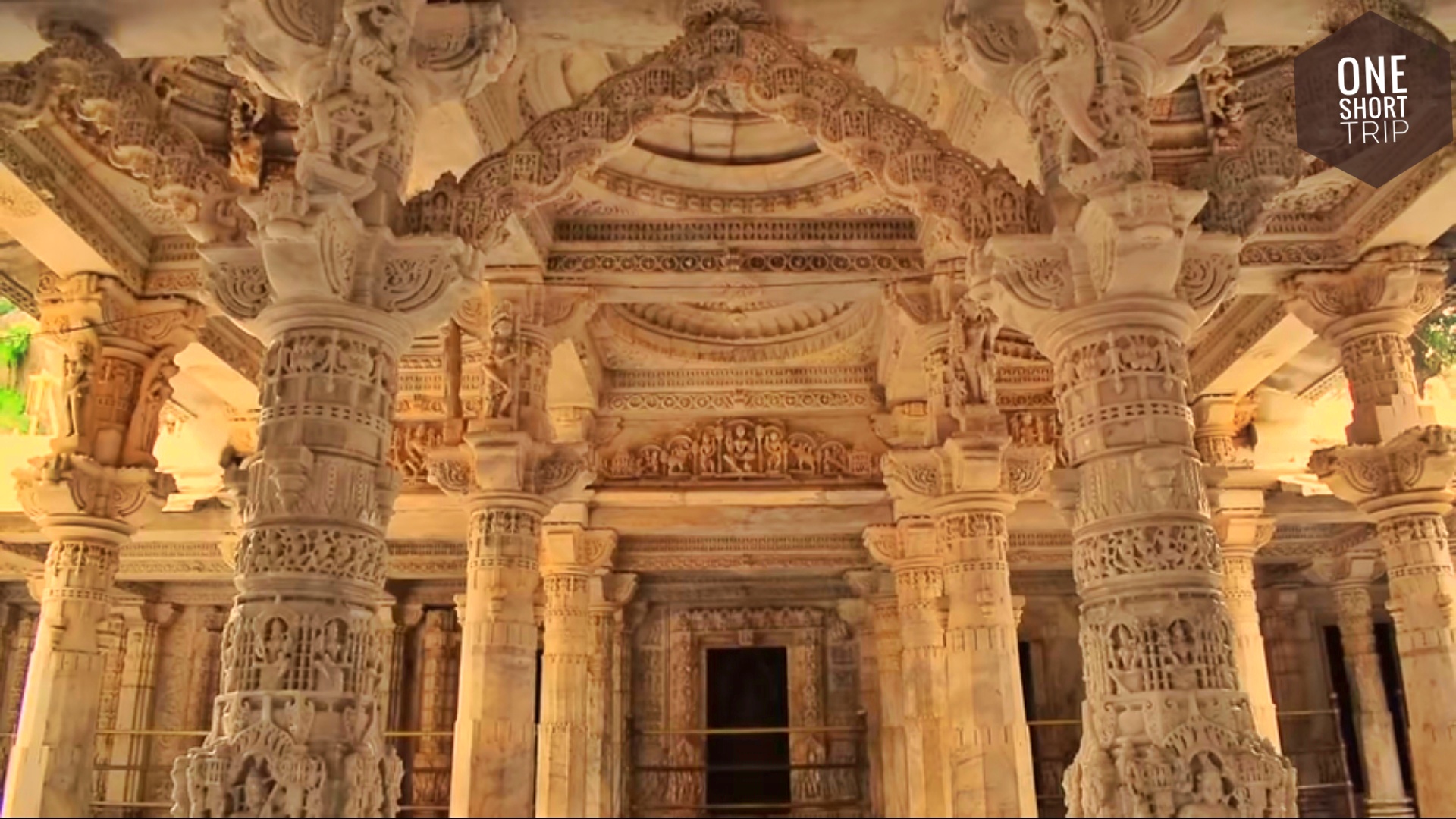
The most memorable feature of Dilwara is the sheer density of detail. Instead of relying on a heavily decorated exterior to announce its importance, the complex directs much of its artistic energy towards the interiors. Pillars, brackets, arches, ceilings, doorways, friezes and ornamental panels are treated almost like individual works of sculpture.
The craftsmanship becomes especially impressive when viewed up close. Large architectural surfaces are divided into smaller compositions, allowing geometric patterns, foliage, celestial and devotional figures, dancers, animals and other motifs to coexist without making the overall design feel chaotic. This controlled complexity is one of the reasons Dilwara is regarded as a landmark of western Indian marble architecture.
Dilwara and the Development of Jain Temple Architecture
The five temples should also be understood as a long architectural sequence rather than five unrelated buildings. Vimal Vasahi established an influential early model. Luna Vasahi expanded the scale and intricacy of the interior carving, while the later temples show how the tradition continued to adapt through the medieval and early modern periods.
For travellers interested in architecture, this makes Dilwara particularly rewarding. The experience is not just about seeing beautiful marble; it is about noticing how different generations of patrons and craftsmen worked within an established Jain architectural tradition and pushed the possibilities of stone carving further.
A Sacred Monument, Not Just a Tourist Attraction
Dilwara remains a functioning Jain religious complex. Visitors therefore experience the temples differently from a purely archaeological monument. The atmosphere is deliberately quiet and devotional, and the architectural beauty is closely connected with the religious purpose for which these buildings were created.
The complex is also an important destination for anyone trying to understand Jain heritage in Rajasthan. Its five shrines bring together centuries of religious patronage, sculpture, architecture and craftsmanship in one compact location near Mount Abu.


What to Expect When You Visit Dilwara Jain Temples
A visit to Dilwara is different from visiting a conventional sightseeing monument. The complex is an active Jain religious centre, so the experience is quieter and more disciplined than a typical tourist attraction. The most rewarding approach is to slow down and observe the craftsmanship rather than trying to finish all five temples quickly.
From the outside, the buildings do not immediately reveal the level of decoration found within. Once inside, look beyond the obvious central shrine. The pillars, ceiling panels, brackets, arches, smaller chambers and repetitive geometric patterns gradually reveal themselves as you move through the complex.
Give the ceilings time
The ceilings are among the most rewarding details at Dilwara. Instead of viewing them from a distance, stand beneath the central halls and look upwards. Concentric patterns, lotus-like forms, pendant details and layers of carving create an effect that is easy to miss if the visit is rushed.


Visitor Timings and Entry
Dilwara follows a different access pattern for worshippers and general tourists. The Government of India's Incredible India portal currently states that Jain devotees can enter for worship during the morning period, while tourist access is generally provided from around noon into the afternoon. Published timings vary slightly between sources, so visitors should confirm the day's schedule before travelling.
Entry is generally described as free. The important point is that visitors should not treat the temple like a monument where unrestricted sightseeing is possible throughout the day. The tourist visiting window and religious use of the complex are different.
Photography and Mobile Phone Rules
One of the biggest practical points to know before visiting is that photography is not permitted inside the temple complex. Mobile phones and cameras may also need to be deposited outside, along with items that are not permitted within the sacred area. Because enforcement can be strict, it is better to arrive prepared rather than assuming you can take photographs once inside.
This restriction also changes the way the visit feels. Instead of moving through the temples looking for photographs, visitors can concentrate on the actual carving, proportions and atmosphere of the interiors.
Dress Code and Temple Etiquette
Dilwara is a Jain place of worship, so modest clothing is appropriate. Shoulders and knees should be covered, and visitors should avoid clothing that may be considered unsuitable for a religious setting. Shoes must be removed before entering the temple areas.
Leather articles are also restricted within the temple complex. Visitors should avoid carrying leather belts, wallets, bags or similar items into the sacred areas where possible. Speak softly, follow instructions from temple staff and do not touch carvings or sculptures.

How Long Does a Visit to Dilwara Take?
Allow around 1.5 to 2.5 hours if you want to experience the complex without rushing. The exact time depends on crowd levels, access arrangements and how much attention you give to the individual carvings.
A quick visit can cover the principal temples relatively fast, but that misses much of what makes Dilwara special. Architecture enthusiasts and travellers interested in Jain heritage should allow additional time to compare the five temples and notice how their design and decorative programmes differ.
How to Reach Dilwara Jain Temples
From Mount Abu
The temples are approximately 2.5 kilometres from Mount Abu town, making them an easy addition to a Mount Abu sightseeing day. Local taxis and other local transport can be used to reach the temple complex.
From Abu Road Railway Station
Abu Road is the principal railway gateway for Mount Abu. From the station, travellers can continue by taxi or bus up the approximately 28-kilometre hill road to Mount Abu and then travel onward to Dilwara.
By Air
For air travellers, Maharana Pratap Airport at Udaipur is the commonly used airport for Mount Abu. The onward journey is by road, making Mount Abu better suited to a road-based Rajasthan itinerary rather than a quick airport transfer.
Best Time to Visit Dilwara Jain Temples
October to March is generally the most comfortable period for exploring Mount Abu because the hill station has cooler weather than the surrounding plains. Winter is particularly suitable when Dilwara is combined with a full day of Mount Abu sightseeing.
The temples themselves are a year-round destination, but the wider Mount Abu experience changes with the seasons. Monsoon brings greenery to the Aravalli landscape, while summer can still be a useful escape from Rajasthan's hotter plains. Rajasthan Tourism describes Mount Abu as Rajasthan's only hill station and highlights its combination of forested hills, lakes and religious heritage.
Is Dilwara Suitable for Families and Senior Citizens?
Yes, provided everyone is comfortable with the temple's walking and entry requirements. The visit does not involve a long mountain trek, making it considerably easier than several of Mount Abu's hill temples. Seniors should nevertheless wear comfortable footwear for the approach and allow enough time to move slowly through the complex.
For children, Dilwara can be particularly interesting when the visit is explained as a story of craftsmanship rather than simply another temple stop. Pointing out repeating patterns, animal figures, flowers, pillars and ceiling designs can make the architecture easier for younger visitors to appreciate.
What to Carry
Keep the visit simple. Carry water for the journey, modest clothing, comfortable footwear and only the essentials needed for the temple visit. Avoid carrying leather articles and unnecessary electronic equipment because of the temple's restrictions.
Places to Combine with Dilwara Jain Temples
Dilwara works best as part of a broader Mount Abu circuit rather than as a standalone trip. A well-planned day can combine the temples with Nakki Lake, Toad Rock, Guru Shikhar, Achalgarh and the Mount Abu Wildlife Sanctuary, depending on the available time and opening arrangements.
For a religiously focused itinerary, Dilwara can also be paired with Mount Abu's other important shrines. For a nature-oriented day, the marble temples provide a useful contrast to the forests, viewpoints and rocky landscape of the Aravalli hills. Rajasthan Tourism currently highlights Nakki Lake, Guru Shikhar, Toad Rock and Mount Abu Wildlife Sanctuary among the principal attractions around the hill station.
A Better Way to Experience Dilwara
Do not judge Dilwara from its exterior. The real experience begins when you start noticing the amount of work concentrated inside relatively compact spaces. Compare Vimal Vasahi with Luna Vasahi, look for changes in decorative treatment, and spend time beneath the central ceilings instead of simply walking from one shrine to the next.
Most importantly, remember that these are living temples. The marble is extraordinary, but the buildings were created for worship, meditation and Jain religious practice. Respecting that atmosphere makes the visit more meaningful and helps preserve the character that makes Dilwara different from an ordinary heritage monument.
Why Dilwara Belongs on a Mount Abu Itinerary
Mount Abu is known for its cool climate, forests and viewpoints, but Dilwara reveals another side of the hill station: a sophisticated Jain artistic tradition developed through centuries of religious patronage. The contrast between the surrounding Aravalli landscape and the intensely detailed marble interiors makes the temples one of the most distinctive experiences in Rajasthan.
For travellers interested in Jain heritage, Indian architecture, medieval craftsmanship or simply places that reward careful observation, Dilwara is far more than a quick sightseeing stop. It is a place to enter quietly, look closely and allow the details to reveal themselves.