


About Goravanahalli Mahalakshmi Temple
Goravanahalli Mahalakshmi Temple is one of the best-known pilgrimage centres in the Koratagere region of Tumakuru district, Karnataka. Set in the countryside near Theetha, the temple is dedicated to Goddess Mahalakshmi and is especially associated with prayers for prosperity, well-being, family welfare and the removal of difficulties. Karnataka's Tumakuru district administration itself lists Goravanahalli Mahalakshmi Temple as an important religious destination and notes the local belief that the image of the goddess is self-originated.
Unlike Karnataka's famous medieval temples whose importance is immediately visible through enormous stone architecture and royal inscriptions, Goravanahalli became prominent through a different route. Its identity has been shaped primarily by devotion, local memory, stories of divine intervention and the continuing participation of ordinary families. That makes it particularly interesting for travellers who want to understand the living religious culture of Karnataka rather than only its monumental heritage.
Goravanahalli Mahalakshmi and the Belief in a Self-Manifested Deity
The central belief surrounding Goravanahalli is that the Mahalakshmi image is Udbhava Murthy or self-originated. In other words, devotees do not regard the deity simply as an image created and installed by a later temple builder; the sacred presence is believed to have revealed itself at Goravanahalli. This belief is one of the main reasons the shrine has acquired such a strong devotional following.
The distinction is important because the temple's significance rests heavily on the idea that the goddess chose the place herself. For devotees, Goravanahalli is therefore not merely a temple where Mahalakshmi is worshipped; it is a place where the goddess is believed to have manifested and subsequently remained accessible to people seeking her blessings.
The Story of Abbayya and the Arrival of Mahalakshmi
The traditional account of Goravanahalli centres on a villager named Abbayya. According to temple tradition, Abbayya heard a mysterious voice asking whether he would allow the goddess to come to his house. Unsure whether the experience was truly divine, he consulted his mother, who advised him to accept the invitation only if the voice belonged to the goddess.
The story then takes a remarkable turn. An image of Mahalakshmi is said to have appeared from water, after which Abbayya began worshipping the goddess at his home. Devotional accounts say that his circumstances improved after he began this worship and that he used his prosperity to help people around him rather than keeping the benefits entirely for himself.
The house where the goddess was worshipped is traditionally remembered as Lakshmi Nivasa. The story therefore connects the goddess not only with personal prosperity but also with the idea that wealth should ultimately support service and community welfare.
These events belong to the temple's devotional tradition rather than independently verified modern historical documentation. They remain important because they explain how devotees understand the origin and character of the shrine.
From a Household Shrine to a Pilgrimage Centre
According to the traditional history of the temple, Abbayya's brother Thotadappa continued the worship and eventually helped establish a more formal shrine for Mahalakshmi. The story of Goravanahalli is therefore closely tied to a progression that can be seen in many Indian pilgrimage traditions: a sacred presence first becomes important within a household, local devotees begin gathering around it, and eventually a larger community develops around the shrine.
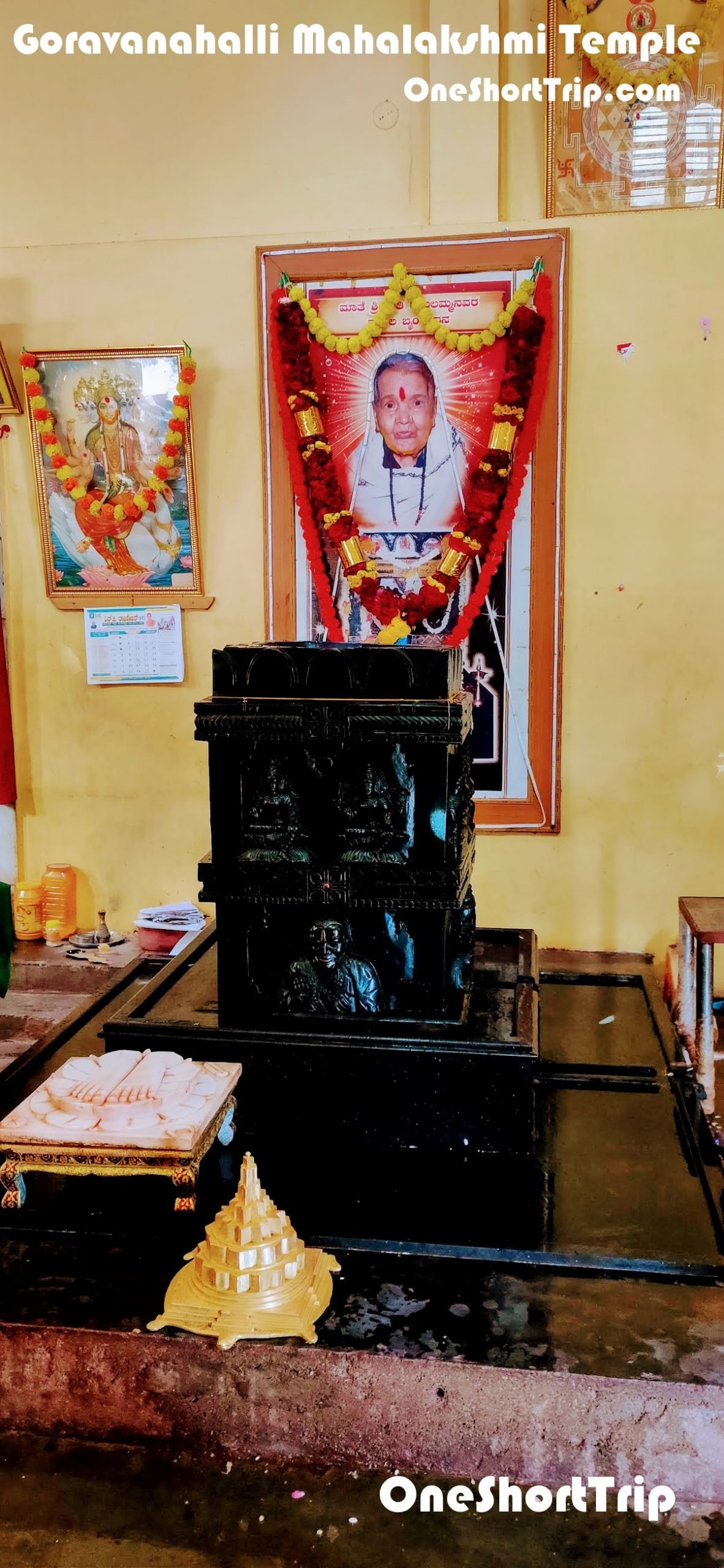
The temple's later history is strongly associated with Kamalamma, whose name occupies an important place in local accounts of the shrine's revival. Traditional accounts describe her taking responsibility for worship, renovating the temple and later returning to resume regular pooja after a period when the shrine had experienced neglect.
Rather than presenting every date attached to these accounts as firmly established architectural history, it is safer to understand the early history of Goravanahalli through its preserved oral and devotional tradition. The current temple trust itself emphasises the continuing religious and social role of the shrine rather than claiming an ancient dynastic origin.
Why Goravanahalli Is Sometimes Compared With Kolhapur
Goravanahalli is sometimes referred to by devotees and travel writers as the Kolhapur Lakshmi of Karnataka. The comparison comes from the temple's strong association with Mahalakshmi and the goddess's perceived power to bless devotees with prosperity and well-being.
The comparison should not be interpreted as meaning that the two temples share the same historical status. The Mahalakshmi temple at Kolhapur is an ancient major pilgrimage centre with a very different historical and religious trajectory. Goravanahalli's importance is comparatively recent and is rooted in its own local tradition, devotional reputation and community development.
That difference actually makes Goravanahalli interesting. It demonstrates how a shrine does not necessarily need a thousand-year-old monument or royal patronage to become deeply important to pilgrims. Repeated worship and community belief can create a powerful sacred identity within a relatively short historical period.
Mahalakshmi as the Goddess of Prosperity and Well-Being
Mahalakshmi is traditionally associated with wealth, prosperity, abundance, auspiciousness and well-being. At Goravanahalli, these broader attributes are expressed through a particularly personal form of devotion. Families come to pray for financial stability, health, success in education and work, harmonious family life and relief from difficulties.
It is useful to understand such claims as matters of faith rather than guarantees of a particular outcome. The significance of the temple lies in the devotional relationship people have developed with the goddess and in the role the shrine continues to play in their lives.
Other Deities Within the Temple Complex
Goravanahalli is not limited to the Mahalakshmi shrine alone. The wider temple complex includes worship associated with Marikamba, Manchala Nagappa, Anjaneya and Navagraha traditions. The presence of these shrines gives the complex a broader devotional character and means visitors can encounter several strands of Hindu worship during one visit.
The Naga shrine is particularly relevant to visitors interested in serpent worship, while Marikamba represents another powerful village-goddess tradition. These associated shrines help explain why Goravanahalli functions as a community pilgrimage centre rather than simply a single-deity temple.
A Temple Shaped by Service as Much as Worship
One of the most significant aspects of Goravanahalli today is the extent to which its religious identity is connected with service to the community. The temple trust lists free meals for visiting devotees, free public bathroom and toilet facilities, health and eye-check-up camps, educational support, student awards and large-scale free marriage programmes among its charitable activities.
The trust states that it conducts roughly 1,000 to 1,500 free marriages every year, along with educational initiatives for students from surrounding schools and colleges. These activities give practical meaning to the temple's wider devotional message: prosperity is not only something to be requested from the goddess but something that can also be shared with society.
This charitable dimension is one of the strongest reasons to include Goravanahalli in a detailed Tumakuru travel guide. A visitor is not simply seeing a shrine; they are encountering an institution whose religious activity is intertwined with food service, education, healthcare and social welfare.
The Living Tradition of Goravanahalli
The most useful way to understand Goravanahalli is as a living pilgrimage centre. Its importance cannot be measured only by the age of its buildings. Devotees continue to return because of family traditions, personal experiences, faith in Mahalakshmi and the belief that the goddess responds to sincere prayer.
The temple's festivals, daily worship, community meals and charitable programmes keep that tradition active. For travellers, this makes Goravanahalli very different from an archaeological monument that is primarily visited to admire stonework. Here, the people, rituals and continuing faith are an essential part of what the visitor is actually experiencing.
In short: Goravanahalli Mahalakshmi Temple is important not because it belongs to Karnataka's oldest architectural period, but because a comparatively recent shrine has developed into a major regional centre of devotion, service and community life.
Architecture & Sevas at Goravanahalli Mahalakshmi Temple
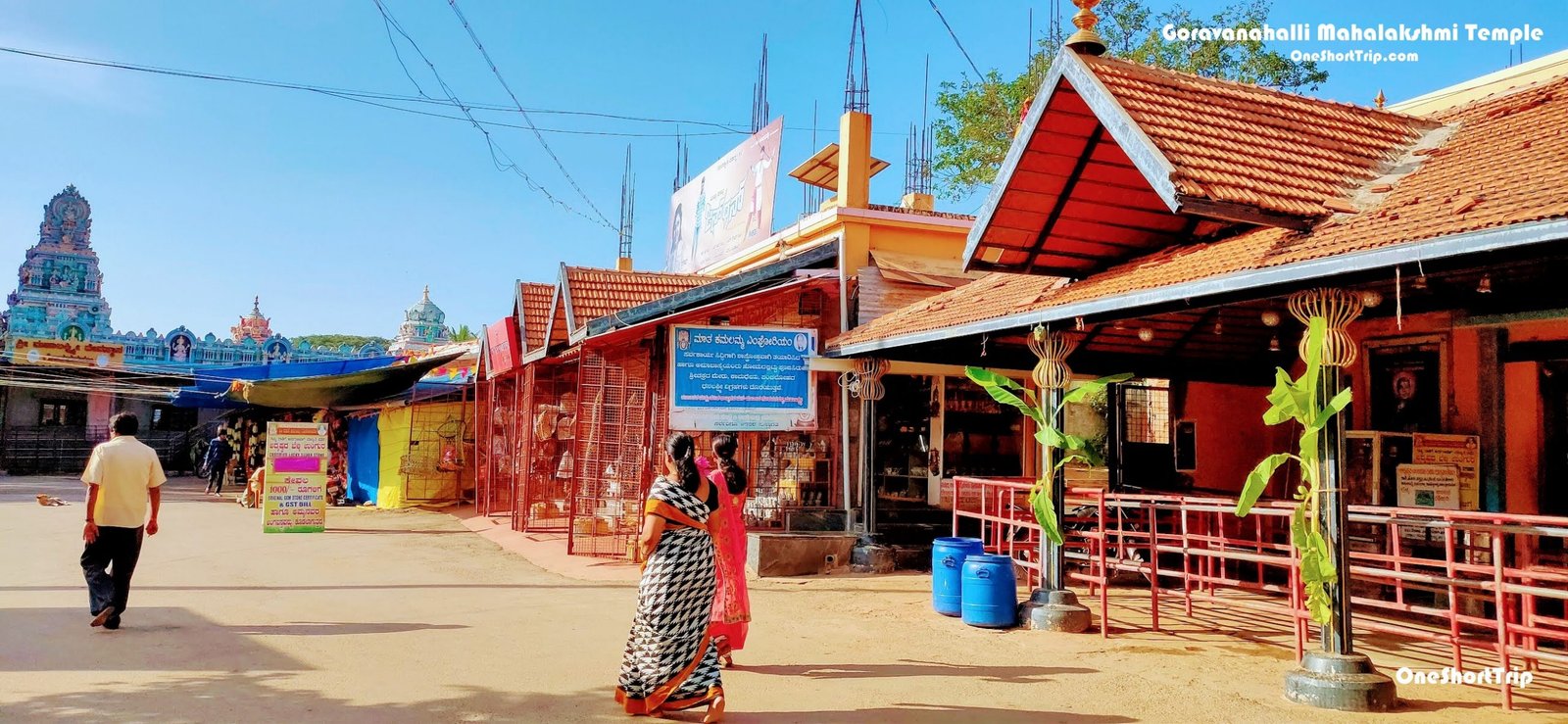
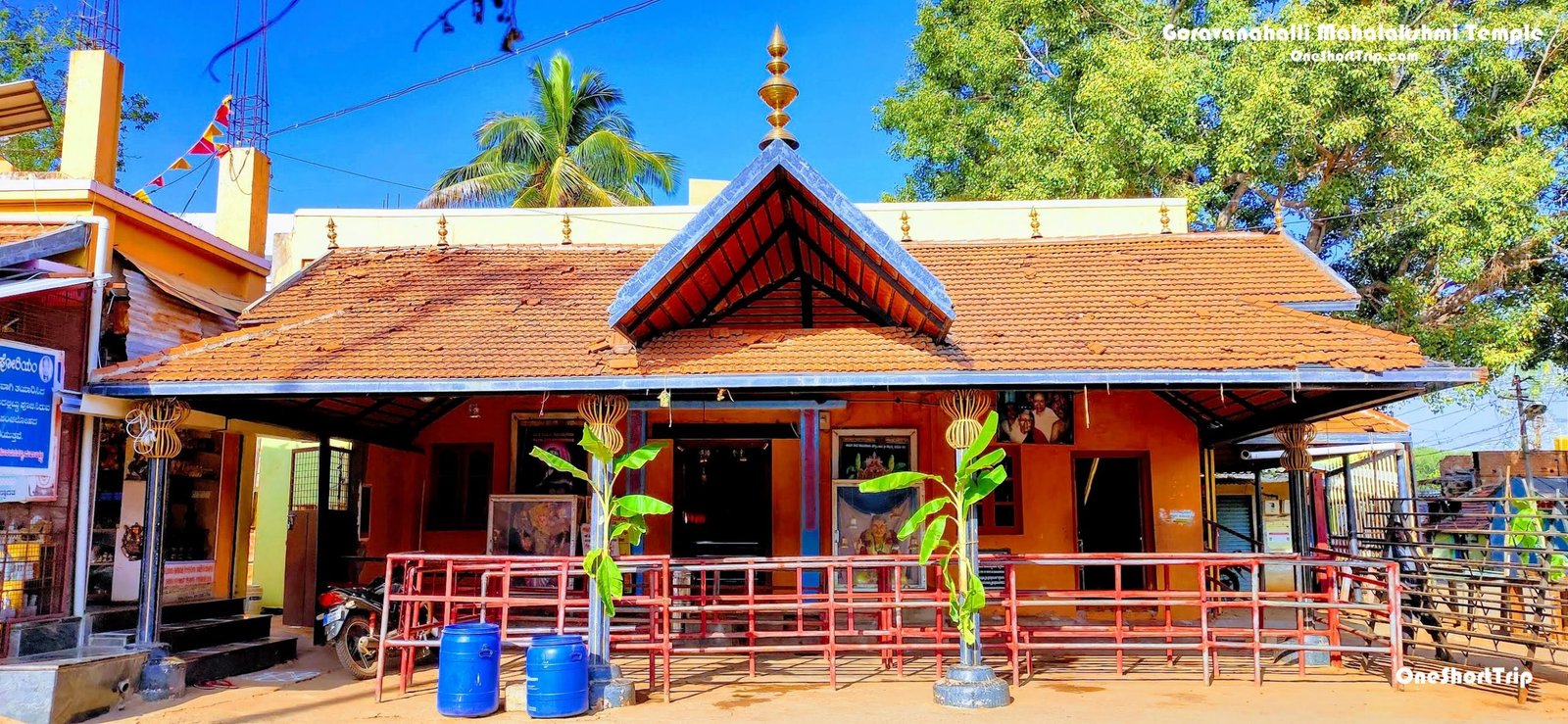
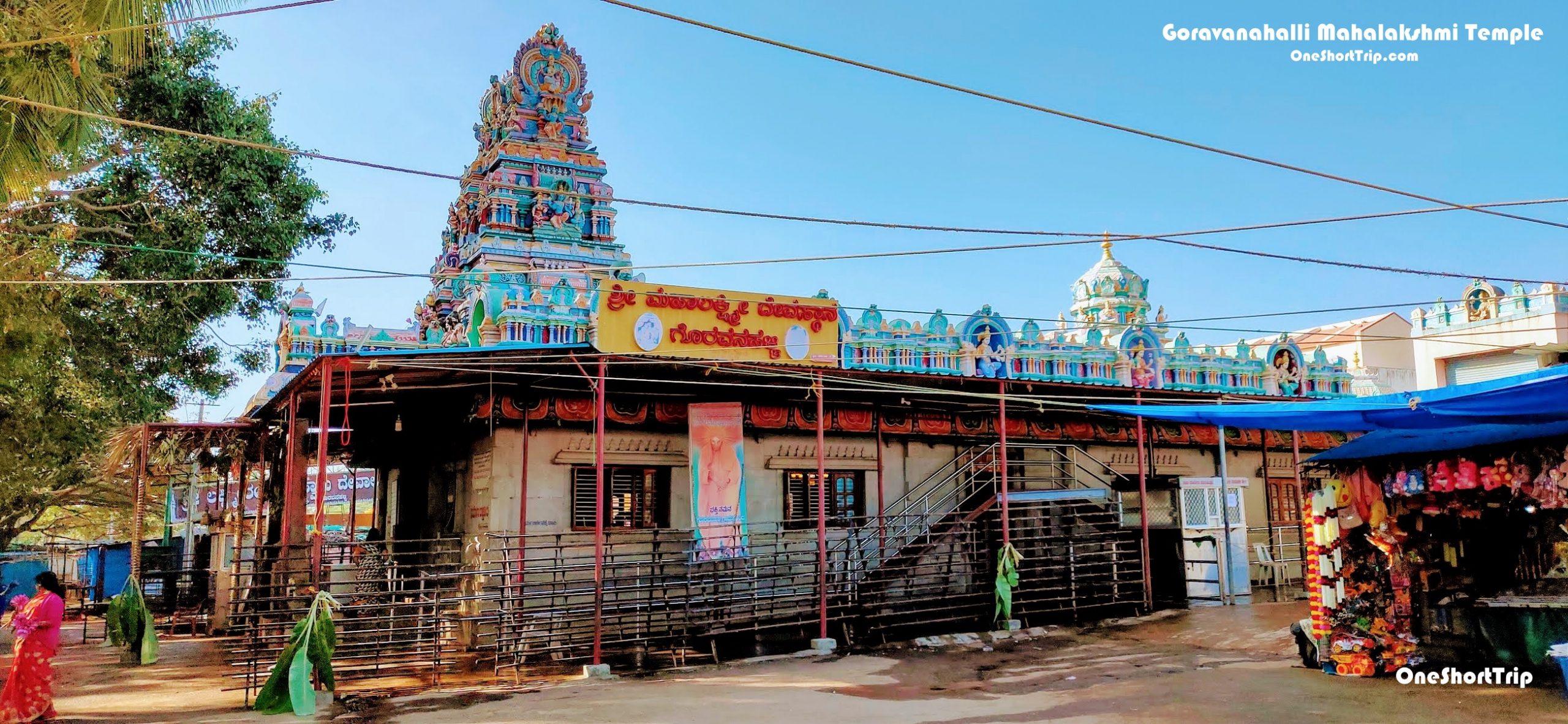
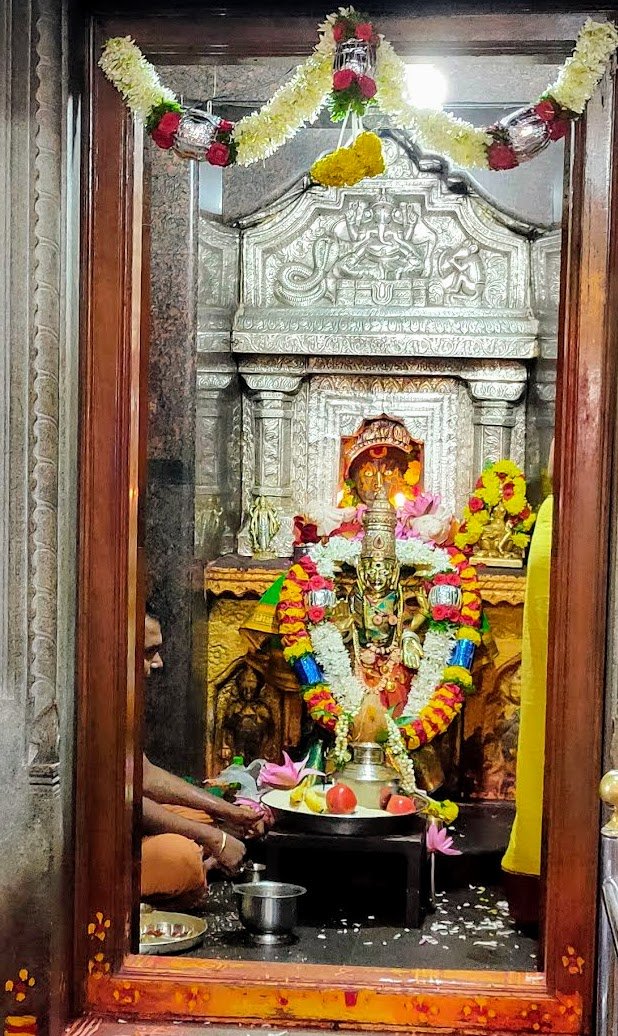
Architecturally, the temple follows a South Indian style, topped with a tall gopura painted in the bright, multicoloured scheme typical of temples from this region. Inside, Goddess Mahalakshmi is enshrined in the garbhagudi, the innermost sanctum, where she receives a full calendar of sevas throughout the year.
Seva/Pooja list: Mahalakshmi Homa; Kumkumarchane; Shashvatha Pooja; Chandi Homa; Panchamruta Abhisheka Seva; Tulabhara Seva; Namakarana Seva; Akshara Abhyasa Seva.
Darshan: Normal Entry ₹0; Special Darshan Ticket ₹50.
Timings: Mon–Sun 6:00 AM–12:30 PM, 5:30 PM–8:30 PM.
Pooja Timings: Abhisheka & Kumkumarchane 8:00–9:30 AM; Mahamangalarathi 9:30 AM, 12:30 PM, 7:30 PM daily.
Best time: Laksha Deepotsava — literally “the festival of a hundred thousand lamps” — when the temple and its grounds are lit with rows of oil lamps (Kartika masa, Oct–Nov); Tuesday and Friday are considered auspicious.
Between the Homa and Abhisheka sevas listed here, most visiting families opt for something specific to their occasion, Tulabhara for a weight-based offering tied to a particular wish, or Namakarana and Akshara Abhyasa for the naming and first-learning ceremonies of small children, both traditionally considered auspicious to perform in the presence of Mahalakshmi rather than at home.
If you are planning around any one of these sevas, it is worth calling ahead, since availability and exact procedure can shift slightly depending on the day and the size of the crowd expected.
Planning Your Visit to Goravanahalli Mahalakshmi Temple
Goravanahalli Mahalakshmi Temple is an active pilgrimage centre rather than a monument that is simply viewed from the outside. A visit revolves around darshan, prayer, pooja and the atmosphere created by devotees arriving from different parts of Karnataka. The temple is especially popular on Fridays, when special worship of Mahalakshmi traditionally attracts a larger number of devotees.
The current temple trust lists the shrine as open from 6:30 AM to 8:30 PM. The office operates separately from 9:00 AM to 6:00 PM. Because special religious occasions can alter the normal schedule, visitors travelling specifically for a seva or festival should confirm the day's programme before setting out. The temple is located at Goravanahalli, Theetha Post, Koratagere Taluk, Tumakuru District, Karnataka – 572129.
Temple Timings and Choosing the Right Time to Visit
The published daily temple timing is 6:30 AM to 8:30 PM. This gives pilgrims considerable flexibility, but arriving early is generally preferable if you want a calmer experience and cooler weather. The first part of the day can also work particularly well for families and senior citizens who would rather avoid the heavier crowds that develop around popular worship periods.
There is no need to arrive immediately at opening time unless you have a particular ritual in mind. A normal darshan visit can be comfortably planned around the temple's daily rhythm. During major festivals, however, the normal experience changes considerably, with larger crowds, special decorations and additional ceremonies.
Friday Visits
Friday is one of the most important days to consider when planning a Goravanahalli pilgrimage. The Tumakuru district administration specifically notes that special poojas are conducted on Fridays, while the temple's own information highlights Mahalakshmi worship during important Friday observances.
If your priority is a peaceful darshan with less waiting, choose an ordinary weekday instead. If you want to experience Goravanahalli as a major local pilgrimage centre, Friday provides a more representative atmosphere, although you should be prepared for greater footfall.
Pooja and Seva Options
The temple provides several forms of devotional service beyond ordinary darshan. The current temple information lists Sankalpa Seva, Special Darshan, Sankashtahara Ganapati Puja, Satyanarayana Puja, Prakara Utsava, Panchamrita Abhisheka, Namakarana Seva, Akshara Abhyasa Seva, Tulabhara Seva and Sri Mahalakshmi Homa.
This range of services also explains why different families visit Goravanahalli for different reasons. Some come simply for darshan, while others return for family ceremonies, children's religious milestones, special prayers or particular offerings. If you want to perform a specific seva, check its availability and procedure with the temple office rather than assuming that every service is conducted continuously throughout the day.
Varamahalakshmi Vrata and Navaratri
Goravanahalli becomes particularly active during major Lakshmi and Devi festivals. The temple trust identifies the second Friday of Shravana, associated with Varamahalakshmi worship, as an occasion for special floral decoration, homa-havana and elaborate worship.
Navaratri is another major period, with nine days of special decoration, homa and worship dedicated to the goddess. For visitors interested in the ritual and cultural side of the temple, these occasions offer a much more elaborate experience than an ordinary weekday, but they also require patience because the number of devotees can increase substantially.
Laksha Deepotsava and Kartika Celebrations
The temple's most visually distinctive annual celebrations are associated with Kartika masa. The trust's current information describes a major programme around the final Friday of Kartika, including Panchamrita Abhisheka, Ganapati Homa, Navagraha Homa, Mahalakshmi Homa, village-deity Durga Homa and Rathanga Homa, followed by Brahmarathotsava, Deepotsava and Muthina Pallakki Utsava.
The Deepotsava is especially memorable because lamps become an important part of the visual character of the temple. Travellers who want to photograph or experience the festival should plan around the official festival announcement rather than relying on a generic October or November date, since Kartika celebrations follow the Hindu lunar calendar.
Dasoha and Free Food for Devotees
Food service is one of the most important practical and cultural aspects of Goravanahalli. The temple trust operates a Dasoha programme providing meals to visiting devotees. Current information published by the temple lists breakfast from 8:00 AM to 9:30 AM, lunch from 10:30 AM to 4:00 PM and dinner from 7:00 PM to 8:30 PM.
This is more than a convenience for travellers. Dasoha forms part of the temple's broader service tradition and means that pilgrims can combine worship with a community meal. Festival-day arrangements can be different, so visitors travelling specifically for Dasoha should verify the day's schedule when they arrive.
Accommodation at Goravanahalli
The temple trust also provides Yatri Nivasa accommodation for pilgrims. Its current information describes three accommodation blocks with attached bathrooms, while hot-water facilities are provided through solar systems. The published inventory lists ten rooms in Block 1, three in Block 2 and seven in Block 3, with some rooms within Block 1 used for administrative or storage purposes.
This can be useful for devotees who want to stay close to the temple rather than returning to Tumakuru after darshan. Availability should be confirmed directly with the temple because pilgrim accommodation can become busy during festivals and special occasions.
How to Reach Goravanahalli Mahalakshmi Temple
By road: Driving is the most convenient option, particularly for families and groups travelling from Bengaluru or Tumakuru. Goravanahalli lies in Koratagere taluk, around 30 km from Tumakuru according to the Tumakuru district administration.
By bus: The temple is connected through the regional road network, but public transport frequency can be more limited than in Tumakuru city. If you are travelling by bus, check both the onward connection and the return service before starting the trip, especially on weekends or later in the evening.
By train: There is no major railway station directly at Goravanahalli. Travellers using rail should plan the final road leg from a suitable station in the Tumakuru region.
How Long Should You Spend at the Temple?
For a straightforward visit covering darshan and a look around the temple premises, 1 to 2 hours is a practical allowance. If you intend to participate in a seva, eat at the Dasoha facility, visit on a Friday or travel during a major festival, allow considerably more time.
Travellers staying at the Yatri Nivasa can take a slower approach, combining morning darshan with the surrounding countryside instead of trying to complete the entire pilgrimage as a quick day-trip stop.
For Families With Children
Goravanahalli is suitable for a family pilgrimage because the main experience does not require a strenuous trek. Children can accompany parents for darshan, participate in age-appropriate religious activities and experience the temple's food-service tradition.
During crowded Fridays and festivals, however, parents should keep young children close, particularly around queues and busy entrances. A quieter weekday morning is the better choice for families who want a relaxed visit.
For Senior Citizens
Senior citizens who want to visit Goravanahalli can generally plan it as a conventional temple visit rather than a physically demanding pilgrimage. The most important consideration is crowd level. Early mornings and ordinary weekdays are preferable for anyone who finds prolonged standing or dense queues uncomfortable.
If a senior traveller has specific mobility requirements, contact the temple in advance to confirm the current access arrangements rather than assuming that every part of the complex will be equally accessible.
Temple Dress and Etiquette
Goravanahalli is a functioning Hindu temple, so modest and comfortable clothing is appropriate. Visitors should follow local instructions concerning footwear, queues, offerings and access to the sanctum. During active rituals, it is important not to obstruct priests or devotees simply for photography.
The best approach is to treat the entire visit as a pilgrimage first and a sightseeing experience second. Temple instructions can change during special ceremonies, so signs and staff directions should always take precedence over general travel information.
Photography
Photography should be limited to areas where it is permitted. Rules may be stricter near the sanctum and during special worship. Ask temple staff before photographing the deity, rituals or devotees, and avoid using flash where it may disturb worship.
Health, Water and Practical Preparation
Carry drinking water for the journey, particularly when travelling during the warmer months. Comfortable footwear is useful for the journey even though it will need to be removed before entering the appropriate temple areas. Families travelling with elderly people or children should also carry any regular medicines they may need during a full-day outing.
If you are combining Goravanahalli with outdoor destinations such as Theetha Reservoir or Namada Chilume, prepare for both temple and outdoor conditions rather than treating the entire itinerary as an indoor pilgrimage.
Contact and Current Information
The temple trust currently lists the contact number as 08138-237509 and the email address as goravanalakshmi.co.in@gmail.com. These details are particularly useful before a festival visit or when enquiring about accommodation, seva availability, Dasoha arrangements or temporary changes in temple timings.
The Best Type of Visit
If this is your first visit, a weekday morning is the easiest way to understand Goravanahalli without the pressure of festival crowds. Arrive for darshan, spend time within the temple complex, learn about the Mahalakshmi tradition, and have the Dasoha meal if the timing works for you.
For a more energetic pilgrimage experience, choose Friday or one of the major festival periods. The crowds are part of the character of the place on these days, and the special decorations, rituals and community participation reveal another side of Goravanahalli that a quiet weekday visit cannot fully reproduce.
The Surroundings of Goravanahalli Mahalakshmi Temple
Goravanahalli is best experienced as part of the wider countryside of Koratagere taluk rather than as an isolated temple stop. The journey gradually moves away from the urban environment of Tumakuru into a quieter agricultural landscape, making the temple particularly suitable for travellers looking for a combination of pilgrimage and rural Karnataka scenery.
The surrounding region also contains reservoirs, springs, forested areas, historic temples and hill destinations. This gives travellers several options for extending a Goravanahalli visit into a half-day or full-day outing instead of returning immediately after darshan.
Theetha Reservoir
Theetha Reservoir is one of the most useful nearby additions for travellers who want to combine Goravanahalli's religious atmosphere with an open natural setting. Karnataka Tourism has included Theetha Reservoir among the destinations of the Koratagere region, describing it as a lake and picnic area roughly 30 km from Tumakuru.
The reservoir is more about landscape and relaxation than a structured tourist attraction. Water, open countryside and the surrounding vegetation provide a different experience from the temple, making it a reasonable place to pause after a pilgrimage. Conditions around reservoirs can change seasonally, so visitors should stay away from unsafe edges and avoid entering the water unless an area has been officially designated as safe.
Namada Chilume and Devarayanadurga
Namada Chilume and Devarayanadurga make a particularly good combination for travellers interested in both religious traditions and nature. Namada Chilume is a sacred spring associated with the traditional story of Lord Rama creating a water source by shooting an arrow into the rock. The story is a local religious tradition rather than something that can be independently established as historical fact.
Devarayanadurga adds a completely different dimension: forested hills, viewpoints, trekking routes and the Bhoga and Yoga Narasimha temples. Karnataka Tourism currently identifies Namada Chilume as being about 6 km from Devarayanadurga and recommends the wider area for nature and spiritual travel.
Siddara Betta
Siddara Betta is another option for travellers interested in combining temple visits with a hill and cave experience. The destination is associated with ascetic traditions and is part of Tumakuru district's broader collection of pilgrimage and trekking destinations.
It is better treated as a separate outdoor excursion rather than something to squeeze into the same short temple visit. If you intend to include Siddara Betta, allow additional travel and walking time and plan the day around daylight hours.
Other Places to Explore in the Koratagere–Tumakuru Region
Travellers building a broader Tumakuru itinerary can also consider destinations such as Devarayanadurga, Namada Chilume, Siddara Betta, Yadiyur Siddhalingeshwara Temple and other historic temples of the district. The region is particularly rewarding for travellers who enjoy discovering smaller religious sites rather than concentrating only on major city attractions.
Tumakuru district's official tourism material itself presents Goravanahalli alongside a wider network of religious, historical and natural destinations. This makes the temple a useful anchor for a regional circuit rather than merely a standalone stop.
Suggested Goravanahalli Day Trip From Bengaluru
For travellers starting from Bengaluru, Goravanahalli can form the religious centrepiece of a day trip into the Tumakuru countryside. A comfortable itinerary is to leave early, reach Goravanahalli for morning darshan, spend time at the temple and have the Dasoha meal if the timing suits the day's schedule.
The afternoon can then be used for a nearby nature or heritage destination. Goravanahalli → Namada Chilume → Devarayanadurga works particularly well for travellers who want to finish the day among hills and forest rather than another urban attraction. The exact order should be adjusted according to current road conditions, temple schedules and daylight.
Suggested Tumakuru Circuit
If you are already staying in Tumakuru, a shorter regional circuit can be built around Goravanahalli Mahalakshmi Temple + Theetha Reservoir + another nearby religious or natural attraction. This keeps the travel relatively relaxed and avoids spending the entire day inside a vehicle.
Travellers with more time can extend the route towards Devarayanadurga and Namada Chilume. Because Tumakuru district contains several hill and temple destinations spread across different directions, checking the road sequence before departure is more useful than simply collecting as many attractions as possible.
Best Time to Visit Goravanahalli
Goravanahalli can be visited throughout the year because the main attraction is an active temple rather than a seasonal natural phenomenon. For a more comfortable sightseeing day, however, the cooler months are generally preferable, especially when the visit is combined with outdoor places in the Tumakuru countryside.
If your priority is the temple itself, choose an ordinary weekday morning. If your priority is experiencing the devotional atmosphere, consider Friday or a major festival period. The Tumakuru district administration specifically notes special Friday poojas, while the temple trust identifies Varamahalakshmi, Navaratri and Kartika celebrations among its important annual observances.
When the Temple Is Especially Busy
Expect greater visitor numbers on Fridays, during Varamahalakshmi celebrations, throughout Navaratri and around the Kartika Deepotsava period. Festival days can also involve special poojas, processions, decorations and cultural programmes, so the normal rhythm of the temple may be quite different from an ordinary day.
The temple trust publishes special festival programmes and can make temporary changes to access or timings for exceptional religious events. Checking the temple's current announcement before travelling is therefore particularly important for festival visits.
What to Carry
- Drinking water for the journey.
- Comfortable, modest clothing suitable for temple visits.
- Comfortable footwear for the road and surrounding sightseeing.
- Any personal medicines required during a full-day trip.
- A small bag for personal belongings and offerings.
- Sun protection during the hotter months.
- Rain protection if travelling during the monsoon.
If you are combining the temple with Devarayanadurga, Namada Chilume or another outdoor destination, add suitable walking shoes and extra water rather than preparing only for a conventional temple visit.
Food and the Dasoha Experience
One of the easiest ways to make the visit feel less rushed is to include the temple's Dasoha meal in your itinerary. The temple trust provides free meals to visiting devotees and publishes separate breakfast, lunch and dinner service periods.
Because the food service is part of the temple's charitable activity, visitors should approach it respectfully rather than treating it simply as a free tourist meal. During major events, the serving arrangements and timings may be adjusted to accommodate the larger number of devotees.
A Good Place for a Slow Pilgrimage
Goravanahalli works particularly well for travellers who prefer a slower pilgrimage style. There is no need to rush through the complex simply to collect another destination for a checklist. The temple's significance comes from the living relationship between devotees, worship, community service and the Mahalakshmi tradition.
For first-time visitors, the most rewarding approach is to allow enough time for darshan, observe the temple's daily rhythm, understand the story behind the goddess and, if appropriate, participate in the Dasoha service. Adding one nearby outdoor destination afterward creates a much more balanced day.
Why Goravanahalli Mahalakshmi Temple Is Worth Visiting
Goravanahalli is worth visiting because it represents a different side of Karnataka's temple heritage. Instead of an ancient royal monument dominated by monumental stone architecture, it is a comparatively recent but deeply established pilgrimage centre whose reputation has grown through devotion and community participation.
Its self-manifestation tradition, Mahalakshmi worship, Friday poojas, annual festivals, free Dasoha and extensive charitable activities give the temple an identity that extends well beyond the sanctum itself. The temple trust's work includes healthcare camps, education, free marriages and other community initiatives, making service an important part of the institution's present-day character.
For a traveller exploring Tumakuru district, Goravanahalli is therefore best understood as both a pilgrimage destination and a window into living rural religious culture. Pair it with the surrounding reservoirs, springs, hills or temples and it becomes a meaningful full-day experience rather than simply a quick darshan stop.
Quick Planning Summary
Goravanahalli, Theetha Post, Koratagere Taluk, Tumakuru District
6:30 AM – 8:30 PM, subject to special-event changes
Devotion, family pilgrimage, community and cultural experience
Theetha Reservoir, Namada Chilume, Devarayanadurga and other Tumakuru attractions
For the latest temple schedule, festival arrangements, Dasoha information or accommodation availability, it is best to confirm directly with the temple trust before travelling. The current published contact number is 08138-237509.