

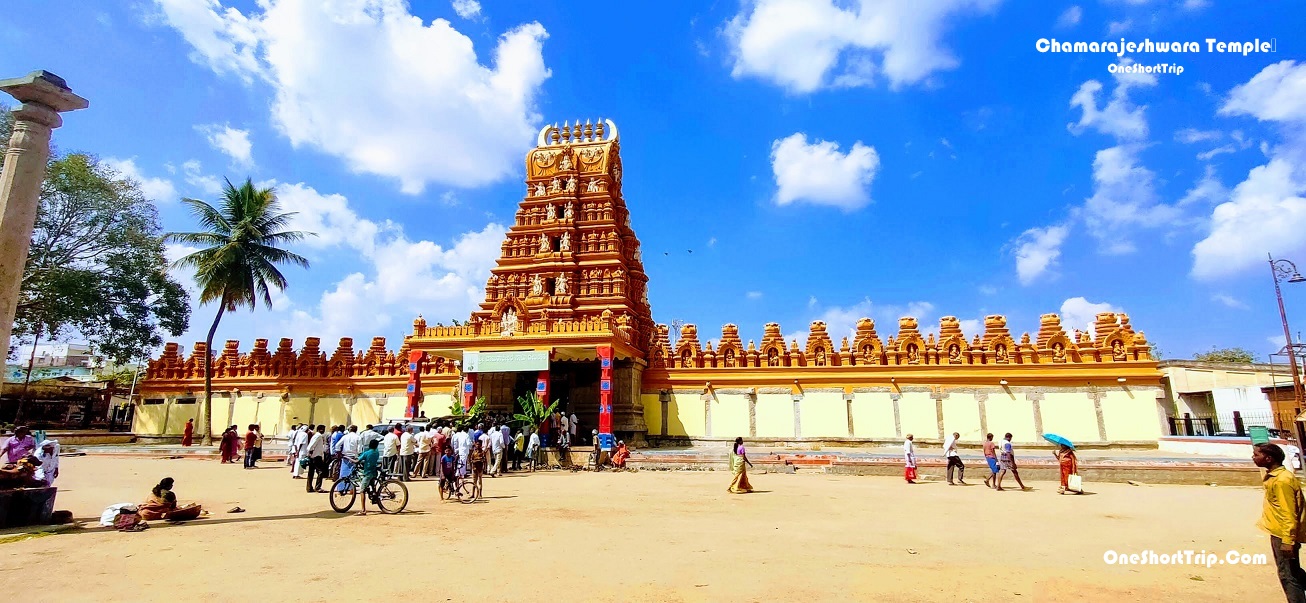
Chamarajanagar
Karnataka's southern edge, bordering Tamil Nadu — home to the Chamarajeshwara temple and the forests of B.R. Hills.
Things To Do
Things To See In Chamarajanagar


About Chamarajanagar District
Chamarajanagar is the southernmost district of Karnataka and one of the state's most interesting destinations for travellers who enjoy wildlife, forests, sacred hills, temples and peaceful road trips. Located close to the borders of Tamil Nadu and Kerala, the district forms an important transition zone between different landscapes and ecosystems of southern India.
Unlike destinations that depend on one major attraction, Chamarajanagar offers several different travel experiences within the same district. You can explore the forests of Bandipur and BRT Tiger Reserve, visit the sacred Biligiri Ranganatha Swamy Temple, travel into the hills of Male Mahadeshwara, visit historic temples in Chamarajanagar town, discover waterfalls around the Kollegala region and experience the cultural heritage of communities that have lived closely with these forests for generations.
The district is particularly suitable for travellers looking beyond crowded tourist destinations. Depending on your interests, a Chamarajanagar trip can be planned as a wildlife holiday, temple and pilgrimage journey, hill escape, family road trip, photography trip or a longer southern Karnataka itinerary.
Chamarajanagar town is also an important starting point for exploring several attractions spread across the district. Because these places are separated by considerable distances, planning the route in advance is important if you want to cover multiple destinations comfortably.
Location
Southern Karnataka, bordering Tamil Nadu and close to Kerala.
Distance from Bengaluru
Approximately 190 km by road to Chamarajanagar town, depending on the route.
Best Time to Visit
October to February is generally comfortable for sightseeing, while forest landscapes can be especially attractive during and after the monsoon.
Known For
Wildlife reserves, BR Hills, MM Hills, temples, forests, waterfalls and tribal heritage.
Why Visit Chamarajanagar?
Chamarajanagar offers a combination of experiences that is difficult to find in a single destination. The district has dense forests, wildlife reserves, hill temples, pilgrimage centres, rivers, waterfalls and historic places of worship, making it suitable for several types of travellers.
Wildlife enthusiasts can explore destinations such as Bandipur National Park and BRT Tiger Reserve. Travellers interested in spirituality can visit Biligiri Ranganatha Swamy Temple, Male Mahadeshwara Hills and Chamarajeshwara Temple. Those looking for scenic landscapes can explore BR Hills, MM Hills, Kollegala and the waterfall country around Shivanasamudra.
The district is also an excellent choice for a road trip from Bengaluru or Mysuru because the journey itself passes through changing landscapes, countryside and forested stretches. Rather than treating Chamarajanagar as a single sightseeing spot, it is better understood as a large travel region with several distinct destinations.
Top Places to Visit in Chamarajanagar District
BRT Tiger Reserve
A major wildlife destination spread across the Biligiri Hills, known for forests, birds, elephants, gaur, deer and other wildlife.
BR Hills
A scenic hill region combining forest landscapes, wildlife, trekking opportunities and the Biligiri Ranganatha Swamy Temple.
Male Mahadeshwara Hills
A major pilgrimage centre dedicated to Sri Male Mahadeshwara and surrounded by the forests of the Eastern Ghats.
Bandipur National Park
One of southern India's important tiger landscapes and a popular destination for wildlife safaris.
Himavad Gopalaswamy Betta
A mist-covered hill and sacred temple destination located in the Bandipur landscape.
Chamarajeshwara Temple
An important historic Shiva temple in Chamarajanagar town from which the district derives its present name.
Bharachukki Falls
A spectacular waterfall on the Cauvery associated with the Shivanasamudra region and popular for scenic sightseeing.
Kollegal
An important town and gateway towards several forest, hill, temple and waterfall destinations in the district.
BRT Tiger Reserve and BR Hills
Biligiri Ranganatha Swamy Temple Wildlife Sanctuary, commonly known as BRT Tiger Reserve or BRT Wildlife Sanctuary, is one of the defining attractions of Chamarajanagar. The reserve covers about 539.52 square kilometres and protects an important forest landscape around the Biligiri Hills.
The Biligiri Rangana Betta rises to approximately 5,091 feet above sea level. Its location is particularly important because the Biligiri Hills form a natural ecological link between the Eastern Ghats and Western Ghats. This creates an important wildlife corridor and supports a remarkable variety of habitats.
The forests include scrub, dry deciduous forests, moist deciduous forests, shola vegetation and montane grasslands. The area supports elephants, gaur, deer, wild dogs, sloth bears, leopards and other wildlife, while tigers also inhabit the larger forest ecosystem. Sightings of wild animals are never guaranteed and depend entirely on nature and forest conditions.
BRT is also an important birding destination, with hundreds of bird species recorded in the wider landscape. For travellers interested in nature, photography and birdwatching, the combination of hills, forest and wildlife makes BR Hills one of the most rewarding areas of Chamarajanagar.
Biligiri Ranganatha Swamy Temple
At the heart of BR Hills stands the Biligiri Ranganatha Swamy Temple, a sacred hilltop shrine dedicated to Lord Ranganatha. The deity is worshipped as a form of Lord Venkatesha, and the temple gives the surrounding hills and wildlife sanctuary their name.
The temple occupies a dramatic setting on the hill and provides a completely different experience from temples located inside towns. The surrounding forest, elevated landscape and distant views make the journey as memorable as the temple visit itself.
The wider BR Hills landscape also contains other places of religious and cultural interest, including the Kanakadasa Cave, Brindavana and remnants associated with the historic Kanchikote fort.
Visitors should remember that the temple lies within a sensitive forest environment. Forest regulations, road restrictions and access conditions may apply, particularly during adverse weather or conservation-related closures.
Wildlife Safari in Chamarajanagar
Wildlife is one of the strongest reasons to visit Chamarajanagar. The district contains some of Karnataka's most important forest landscapes, including BRT Tiger Reserve and the Bandipur National Park and Tiger Reserve.
Safari experiences provide opportunities to explore the forest in a controlled and regulated manner. Depending on the reserve and season, visitors may encounter elephants, gaur, spotted deer, sambar, wild boar, langurs, Malabar giant squirrels, wild dogs and other forest species. Tigers and leopards are present but sightings are unpredictable.
BRT also supports a rich bird population, making the region interesting for birdwatchers. The mix of Eastern and Western Ghats habitats creates opportunities to observe different forest and hill species in the same broad landscape.
Safari timings, vehicle availability, permits and entry conditions can change. If wildlife is the main purpose of your trip, always check the current arrangements before travelling and allow enough time for the safari rather than trying to fit it between several distant sightseeing stops.
K. Gudi and Forest Experiences
K. Gudi, also known as Kyathadevarayana Gudi, is another important forest destination associated with the BRT landscape. The area is particularly appealing to travellers who want a quieter wildlife experience surrounded by dense forest rather than a conventional tourist town.
The region is known for wildlife experiences, birdwatching, nature walks and forest surroundings. Accommodation and organised activities in the area are generally designed around nature and wildlife rather than city-style tourism.
K. Gudi can therefore be considered when planning a dedicated wildlife stay in Chamarajanagar, especially for travellers who want to spend more than one day exploring the BRT forest landscape.
Soliga Culture and Forest Heritage
The forests of BR Hills are closely associated with the Soliga community, whose traditional way of life has developed around the forest environment. Their knowledge of plants, wildlife, seasons and forest resources forms an important part of the cultural heritage of the region.
The Soligas also have a strong spiritual connection with the landscape. The relationship between the community and the forest is one of the reasons BR Hills is more than simply a wildlife destination. It is a cultural landscape where nature, spirituality and traditional knowledge exist together.
One notable natural landmark is the Dodda Sampige Mara, a large and culturally significant Michelia champaca tree associated with local worship. The surrounding region also contains places where visitors can learn more about tribal culture and the biodiversity of the Biligiri Hills.
Travellers visiting forest and community areas should respect local traditions, avoid disturbing wildlife and follow all instructions issued by forest authorities and local communities.
Male Mahadeshwara Hills
Male Mahadeshwara Hills, popularly called MM Hills, is one of the most important pilgrimage destinations in Chamarajanagar district. The hill is associated with Sri Male Mahadeshwara Swamy, who is worshipped as a manifestation of Lord Shiva.
The Sri Male Mahadeshwara Temple stands amid a forested hill landscape and attracts devotees throughout the year. The spiritual importance of the shrine is closely connected with the life and traditions associated with Male Mahadeshwara Swamy.
The surrounding Male Mahadeshwara Wildlife Sanctuary adds another dimension to the journey. The forested hills provide habitat for elephants, deer, leopards and many other species, although wildlife sightings are never guaranteed.
The winding road to MM Hills is itself scenic, particularly as the landscape changes from open countryside to forested hills. During major festivals and special religious occasions, the pilgrimage centre can become extremely busy, so travellers seeking a quieter experience should plan their visit accordingly.
Himavad Gopalaswamy Betta
Himavad Gopalaswamy Betta is one of the prominent hill destinations in the Bandipur landscape of Chamarajanagar district. The name Himavad refers to the mist that frequently surrounds the hill, creating a distinctive atmosphere, particularly during cooler and wetter periods.
At the summit stands the historic Gopalaswamy Temple, dedicated to Lord Krishna. The temple's elevated location provides a beautiful contrast between spirituality and the surrounding forest landscape.
Because the hill lies within a sensitive wildlife landscape, access to the upper section is controlled and visitors must follow the current forest department rules. Weather can also affect visibility and road access, so checking the latest conditions before travelling is advisable.
Bandipur National Park
Bandipur National Park and Tiger Reserve is one of the most famous wildlife destinations in southern India and lies within Chamarajanagar district. It forms part of a larger interconnected forest landscape extending towards Mudumalai in Tamil Nadu, Wayanad in Kerala and Nagarahole in Karnataka.
The park is known for its populations of tigers, elephants, gaur, spotted deer, sambar, wild dogs, sloth bears and numerous other species. The dry deciduous forests and open woodland can make wildlife viewing particularly rewarding during suitable seasons.
Bandipur is best planned as a dedicated wildlife experience rather than a quick sightseeing stop. Safari availability, entry points, timings and regulations can change, so advance planning is recommended.
Chamarajeshwara Temple
Chamarajeshwara Temple is located in Chamarajanagar town and is one of the most important religious landmarks in the district headquarters. Dedicated to Lord Shiva in the form of Chamarajeshwara, the temple is closely connected with the history and identity of the town.
The district itself was renamed Chamarajanagar in honour of Chamaraja Wodeyar. As a result, the temple has both religious importance and a strong connection with the historical identity of the region.
The temple is an easy addition to a Chamarajanagar town visit and can be combined with other attractions while travelling through the district.
Kollegal and the Southern Chamarajanagar Region
Kollegal is one of the important towns in Chamarajanagar district and acts as a gateway towards several hill, forest, temple and waterfall destinations. The town is particularly useful when planning journeys towards MM Hills, Shivanasamudra and other attractions in the eastern and southeastern parts of the district.
Because the attractions around Kollegal are spread over a large area, travellers should check road distances carefully and avoid trying to combine too many distant places into a single day.
Bharachukki Falls and Shivanasamudra Region
Bharachukki Falls is one of the major waterfall attractions associated with the Chamarajanagar side of the Shivanasamudra region. The Cauvery River drops dramatically through the rocky landscape, creating a spectacular natural setting during periods of good water flow.
The waterfall is especially attractive during and after the monsoon, although water levels can vary significantly depending on rainfall and upstream releases. During periods of heavy rain, access and viewing conditions can also change.
Bharachukki can be included in a broader road trip covering Shivanasamudra, Kollegala and other attractions of southern Karnataka.
Nature and Adventure Activities
Chamarajanagar is not limited to temple visits and wildlife safaris. The hills and forests also provide opportunities for nature walks, birdwatching, trekking and photography. Activities available at individual locations depend on forest regulations, weather and local operators.
BR Hills is particularly attractive for travellers interested in trekking and birdwatching. The landscape supports a large variety of birds and offers scenic hill views, while the forest roads provide opportunities for wildlife observation.
Outdoor activities should always be undertaken responsibly. Stay on permitted routes, follow forest instructions, avoid loud music and never attempt to approach, feed or photograph wild animals from an unsafe distance.
Best Time to Visit Chamarajanagar
The best time to visit Chamarajanagar depends on what you want to experience. October to February is generally comfortable for sightseeing, temple visits and road trips because temperatures are more pleasant than during the hotter months.
The post-monsoon and winter months can be especially attractive for exploring the hills and forests. The landscape becomes greener after rainfall, while cooler weather makes long drives and outdoor sightseeing more comfortable.
The monsoon months can bring lush greenery and impressive water levels at waterfalls. However, heavy rain may affect forest roads, hill travel and outdoor activities. Travellers should check local conditions before setting out.
For wildlife safaris, there is no single month that guarantees sightings. Wildlife movement depends on weather, water availability, vegetation and natural behaviour. Safari availability and forest entry rules should always be checked before travel.
How to Reach Chamarajanagar
By Road
Road travel is one of the most convenient ways to reach Chamarajanagar, especially for travellers planning to visit several attractions within the district. From Bengaluru, the journey generally passes through Mysuru before continuing towards Chamarajanagar.
The road network also makes Chamarajanagar suitable for private-car and cab trips because places such as BR Hills, Bandipur, MM Hills and other attractions are spread across different parts of the district.
By Train
Chamarajanagar has its own railway station, making rail travel an option for visitors travelling from Bengaluru and other connected cities. Train travel can be convenient if your itinerary is focused on Chamarajanagar town.
By Bus
Regular bus services connect Chamarajanagar with Bengaluru, Mysuru and other towns in Karnataka. For sightseeing beyond the town, however, a private vehicle or hired cab is generally more practical because the major attractions are widely distributed.
Distance from Bengaluru, Mysuru and Other Cities
Bengaluru to Chamarajanagar
Approximately 190 km by road, generally via Mysuru.
Mysuru to Chamarajanagar
Approximately 60 km by road, making Mysuru a convenient gateway.
Chamarajanagar to BR Hills
Roughly 40 km to the BRT landscape, with the exact distance depending on the destination within the hills.
Chamarajanagar to MM Hills
The distance varies by route, and the hill journey takes considerably longer than a simple town-to-town drive.
Where to Stay in Chamarajanagar
Accommodation depends largely on the type of trip you are planning. Chamarajanagar town is suitable for travellers who want convenient access to basic services, restaurants and transport connections.
For wildlife-focused trips, forest stays and nature camps around BRT, K. Gudi and Bandipur can provide a more immersive experience. These stays are particularly useful when the purpose of the trip is safari, birdwatching or spending time inside the forest landscape.
Accommodation around pilgrimage centres such as MM Hills can be useful for devotees who want to stay close to the temple. During festivals and peak pilgrimage periods, availability can become limited, so advance planning is advisable.
Food and Local Travel Experience
Chamarajanagar is not primarily known as a food destination, but visitors can find traditional Karnataka meals, South Indian breakfast dishes, snacks and everyday local cuisine in the towns and roadside establishments.
Travellers staying in forest camps may have a more limited food selection, while town accommodation generally provides easier access to restaurants. When travelling into remote forest and hill areas, it is sensible to carry drinking water and a few essential snacks.
The district also has connections with traditional crafts, forest products and regional produce. Visitors should purchase forest or tribal products only through legitimate and permitted channels.
Places to Visit Near Chamarajanagar
Mysuru
A major heritage and cultural city that works naturally as the gateway for a Chamarajanagar road trip.
Bandipur
A major tiger reserve and wildlife destination in the southern Karnataka forest landscape.
BR Hills
A combination of wildlife, hill scenery, trekking and pilgrimage centred around Biligiri Ranganatha Swamy Temple.
MM Hills
A sacred forested hill destination associated with Sri Male Mahadeshwara Swamy.
Shivanasamudra
A scenic Cauvery destination known for Gaganachukki and Bharachukki waterfalls.
Gundlupet
A useful stop on routes towards Bandipur and the Nilgiri-side forest landscape.
Is Chamarajanagar Good for a One-Day Trip?
Yes, but the answer depends on which part of the district you want to explore. Chamarajanagar town and a small number of nearby attractions can be covered as a day trip, particularly from Mysuru.
Trying to cover BR Hills, MM Hills, Bandipur, Chamarajanagar town and waterfalls in a single day is not recommended. The attractions are spread across a large geographical area, and rushing between them can leave very little time to actually enjoy the places.
For a meaningful experience, a two-day or longer itinerary is better when combining wildlife, temples and hill destinations.
Chamarajanagar for a Weekend Trip from Bengaluru
Chamarajanagar can make an excellent weekend road trip from Bengaluru, particularly for travellers who want a combination of nature and spirituality. A two-day plan can be structured around one major forest or hill destination along with selected temples and viewpoints.
A wildlife-focused weekend can include Bandipur or BRT, while a pilgrimage-oriented journey can combine BR Hills and MM Hills. Travellers who prefer waterfalls and scenic drives can instead explore the Shivanasamudra and Kollegala side of the district.
The most important part of planning a Chamarajanagar weekend is choosing one geographical route rather than trying to cover the entire district. This saves driving time and gives you more time at each destination.
Tips for Planning a Chamarajanagar Trip
Plan the route before leaving Bengaluru or Mysuru because Chamarajanagar district is geographically large. Attractions that appear close together on a general map can take considerably longer to reach because of winding hill roads and forest routes.
If wildlife is your priority, book or confirm the safari before finalising the rest of your itinerary. Do not assume that a safari will always be available when you arrive.
Carry comfortable footwear, sun protection, drinking water and basic medicines. For forest trips, insect repellent and binoculars can also be useful. Weather can change quickly in the hills, so a light rain layer is helpful outside the dry season.
Avoid travelling through restricted forest roads at night. Follow speed restrictions and wildlife crossing signs, and never stop unnecessarily in forest corridors.
Most importantly, treat Chamarajanagar as a destination to experience slowly. The district's greatest attractions are its forests, hills, wildlife and spiritual atmosphere rather than a long list of monuments that can be rushed through.
Responsible Tourism in Chamarajanagar
Much of Chamarajanagar's appeal comes from environmentally sensitive landscapes. The forests support wildlife populations and also provide an important cultural and traditional environment for local communities.
Visitors can help protect the region by avoiding plastic waste, carrying back everything they bring into forest areas, staying on authorised routes and following the instructions of forest officials and guides.
Do not feed animals, play loud music, chase wildlife for photographs or attempt to get close to wild animals. Respect temples, local traditions and tribal communities, and choose authorised operators whenever activities or forest experiences are involved.
Why Chamarajanagar Is Worth Exploring
Chamarajanagar represents a quieter and more natural side of Karnataka. It brings together some of the state's most important wildlife landscapes, sacred hills and forest temples while retaining the character of a relatively less urbanised region.
From the misty heights of Himavad Gopalaswamy Betta and the forests of Bandipur to the sacred landscapes of BR Hills and MM Hills, the district offers experiences for nature lovers, pilgrims, families, photographers and road-trip travellers.
Its proximity to Bengaluru and Mysuru makes it particularly convenient for a southern Karnataka road trip, while its location near Tamil Nadu and Kerala allows it to be combined with wider journeys towards the Nilgiris and neighbouring states.
Whether you are looking for a wildlife safari, a peaceful temple visit, a forest escape, a hill drive or a weekend road trip from Bengaluru, Chamarajanagar offers enough variety to build an itinerary around your own travel interests. The best way to experience the district is not to rush from one attraction to another, but to choose a route, slow down and enjoy the forests, hills, temples and landscapes that make this part of Karnataka special.
Frequently Asked Questions
What is Chamarajanagar famous for?+
Where is Chamarajanagar located?+
How far is Chamarajanagar from Bengaluru?+
What are the best places to visit in Chamarajanagar?+
Is Chamarajanagar good for a weekend trip from Bengaluru?+
What is the best time to visit Chamarajanagar?+
Is Chamarajanagar good for wildlife tourism?+
Can I go on a safari in Chamarajanagar?+
What is BRT Tiger Reserve known for?+
What is there to see in BR Hills?+
What is special about Male Mahadeshwara Hills?+
What is special about Himavad Gopalaswamy Betta?+
Is Chamarajeshwara Temple worth visiting?+
How many days are enough for Chamarajanagar?+
Can Chamarajanagar be covered in one day?+
How do I reach Chamarajanagar from Bengaluru?+
Is Chamarajanagar suitable for families?+
Is Chamarajanagar safe for tourists?+
What is Chamarajanagar's connection with the Soliga community?+
What should I carry for a Chamarajanagar trip?+
Can I combine Chamarajanagar with Bandipur and Mysuru?+
Planning A Trip Here?
Get help planning your visit — call or WhatsApp us and we will help you book a tour.