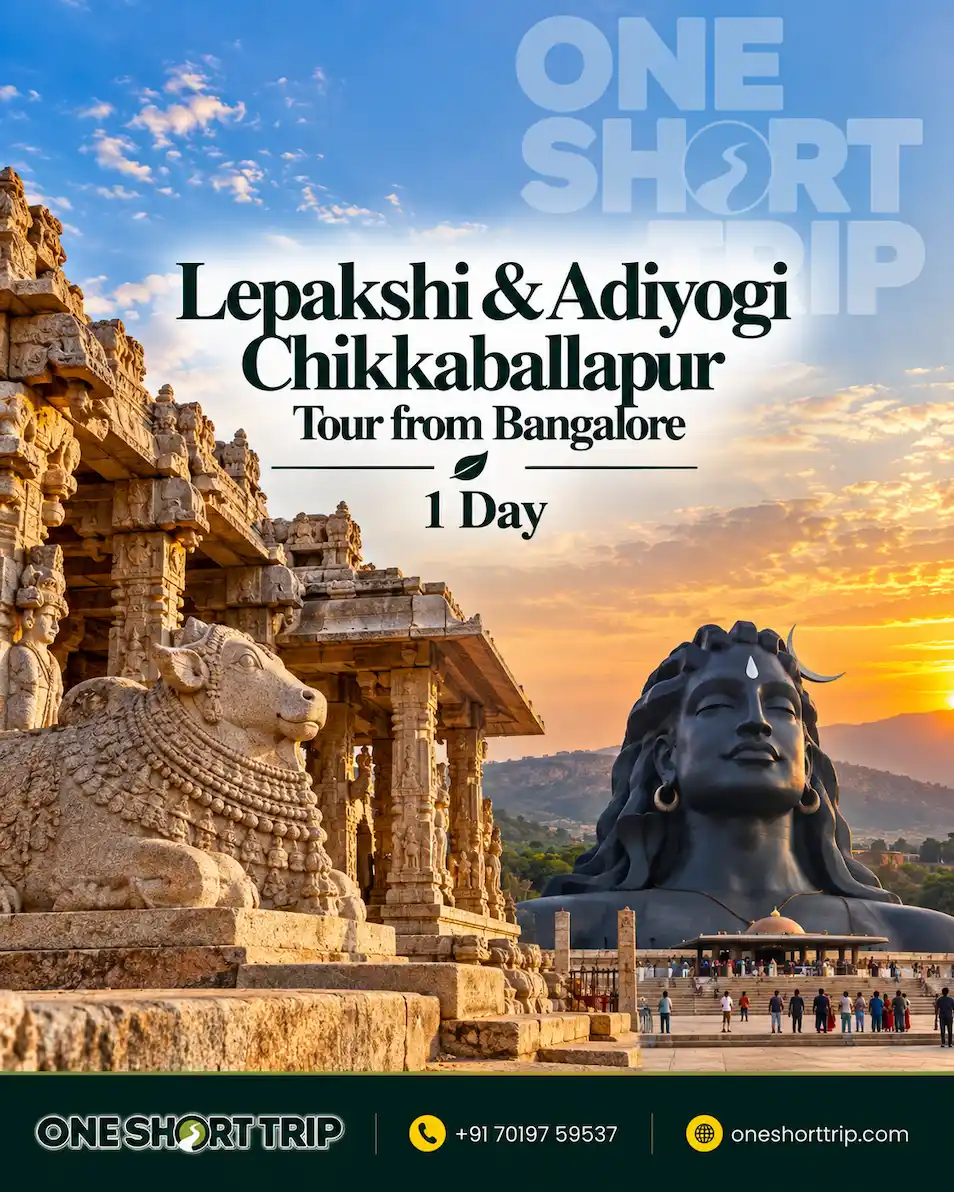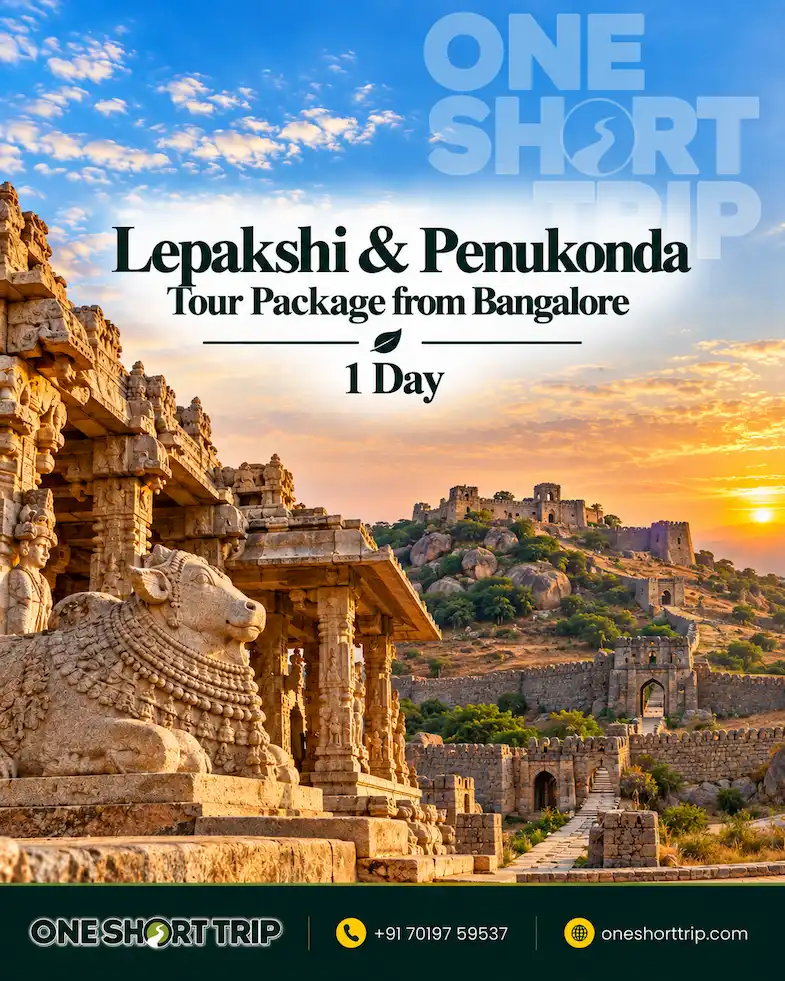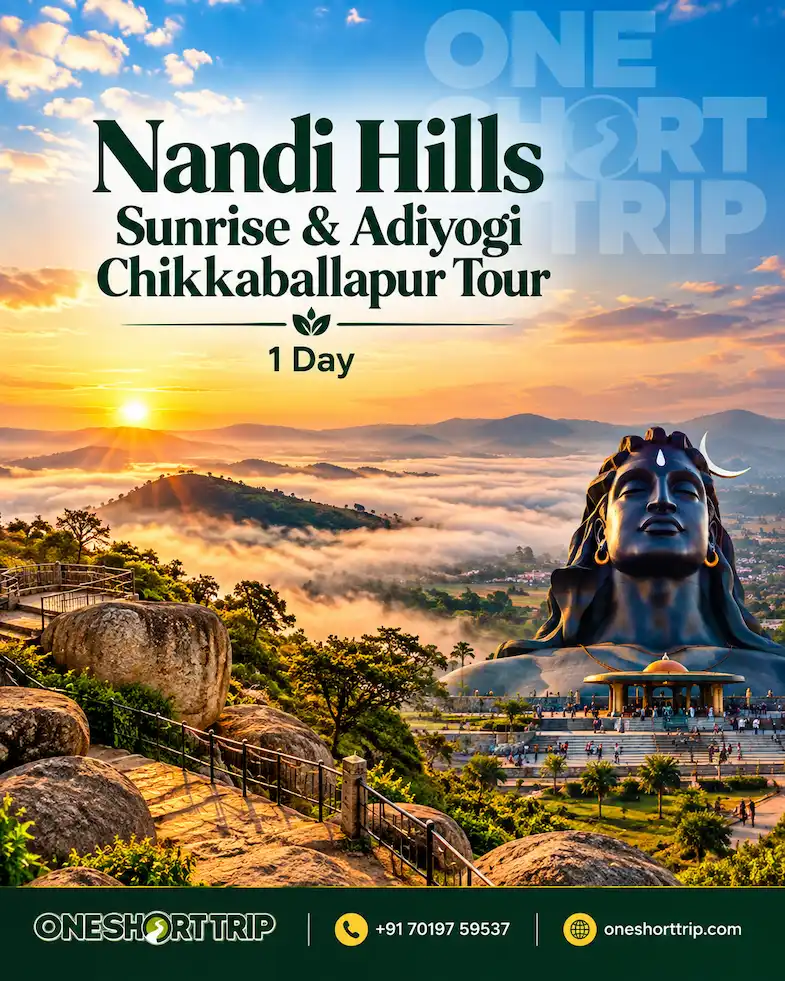
Bangalore – Penukonda Fort – Lepakshi – Adiyogi One Day Trip
Bangalore to Penukonda, Lepakshi and Adiyogi One Day Trip
Looking for a one day trip from Bangalore that goes beyond the usual sightseeing experience? This carefully planned journey takes you from Bangalore to Penukonda, Lepakshi and Adiyogi Chikkaballapur, bringing together Vijayanagara history, remarkable temple architecture, mythology, art and spirituality in a single day.

The journey begins at around 6:00 AM from Bangalore and heads towards Penukonda, a historically important centre associated with the Vijayanagara Empire. Here, the journey introduces you to Penukonda Fort, Gagan Mahal, the Timmarusu memorial and other historic temples and structures that reflect the region's rich past.
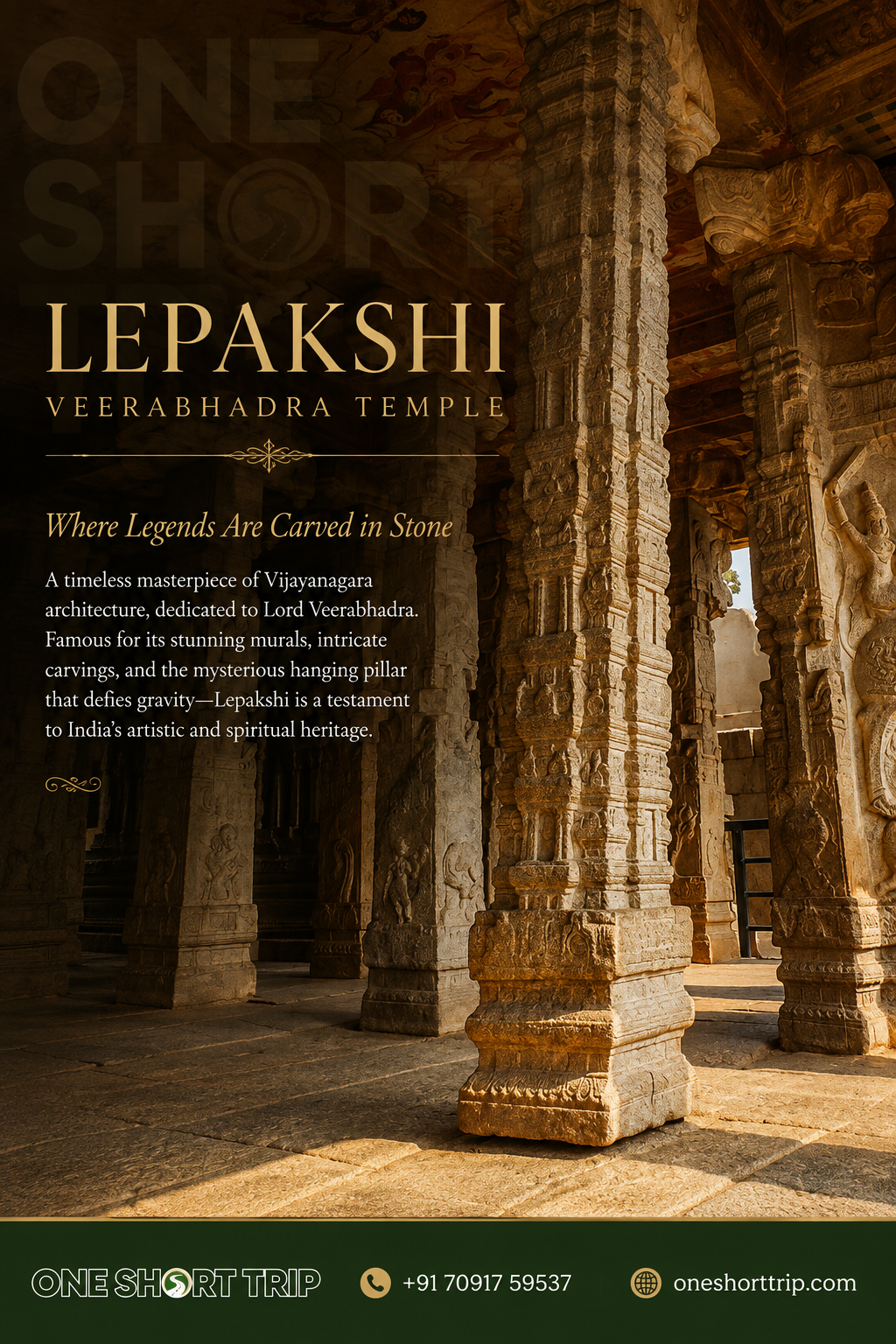
From Penukonda, the journey continues to Lepakshi after lunch. Lepakshi is renowned for the magnificent Veerabhadra Temple and its exceptional Vijayanagara-era craftsmanship. During the visit, you can explore the temple's intricate stone carvings, colourful ceiling murals, famous Hanging Pillar, Natya Mantapa, enormous monolithic Nandi, spectacular Nagalinga, Sita's footprint and the unfinished Kalyana Mantapa.
The afternoon then continues towards Adiyogi Chikkaballapur, where the character of the journey changes completely. Standing 112 feet tall, Adiyogi provides a striking modern spiritual experience after a day spent exploring historic forts, temples, sculptures and mythology.
Jatayu Theme Park near Lepakshi is an optional stop and is included only if the day's schedule permits. The priority is to complete Penukonda and Lepakshi comfortably and reach Adiyogi by around 6:00 PM for the evening experience and the scheduled Adiyogi Divya Darshanam.
This Bangalore to Penukonda, Lepakshi and Adiyogi one day trip is designed around one simple idea: three completely different experiences in one day — the history of Penukonda, the architecture and mythology of Lepakshi, and the spiritual experience of Adiyogi before returning to Bangalore at night.
Why Choose This One Day Trip from Bangalore?
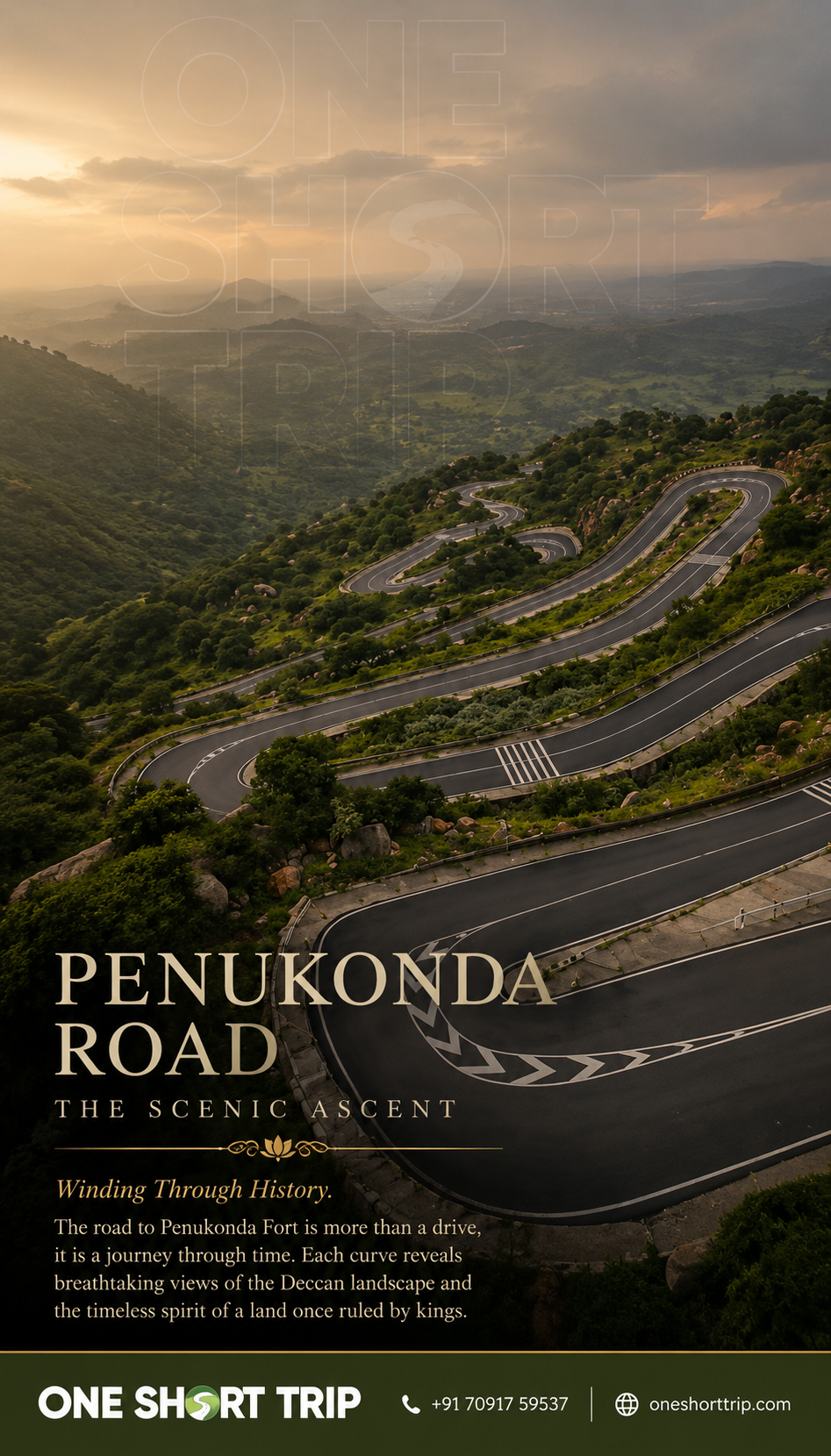
This is not a conventional Bangalore one day trip built around visiting one attraction and returning home. It is a carefully sequenced journey through three destinations that offer completely different experiences. Penukonda takes you into the history of the Vijayanagara Empire and its historic fort landscape. Lepakshi reveals extraordinary temple architecture, sculpture, murals and stories connected with Hindu mythology. Adiyogi at Chikkaballapur brings the day to a close with a modern spiritual landmark and its evening Divya Darshanam.
The route is planned around an early 6:00 AM departure from Bangalore because there is a lot to experience in one day. Penukonda and Lepakshi are given dedicated sightseeing time, while Jatayu Theme Park remains an optional stop if time permits. The most important timing of the day is reaching Adiyogi by around 6:00 PM, allowing enough time to enter the premises before the evening programme.
Trip Highlights
Detailed Bangalore to Penukonda, Lepakshi and Adiyogi One Day Itinerary
Bangalore → Penukonda → Lepakshi → Adiyogi Chikkaballapur → Bangalore
🚌6:00 AM — Depart from Bangalore▾
The journey begins at 6:00 AM from Bangalore. An early departure is important because this is a full-day route covering Penukonda, Lepakshi and Adiyogi Chikkaballapur before returning to Bangalore at night.
The starting point for the trip will be communicated approximately two days before the journey. The early departure also gives the group a better chance of reaching Penukonda in the morning and preserving enough time for the later stages of the itinerary.
As the city gradually gives way to the countryside, the landscape changes from Bangalore's urban surroundings to open roads, villages, agricultural fields and the rocky terrain characteristic of this part of southern India.
🍽️Breakfast En Route — Approximately 7:15–7:45 AM▾
Breakfast will be taken at a convenient stop along the route towards Penukonda. The exact restaurant or breakfast stop will depend on the day's travel conditions and will be finalized separately.
A simple South Indian breakfast is recommended so that the group can eat comfortably without spending too much time at the stop. Typical options may include:
- Idli
- Vada
- Dosa
- Pongal
- Poori
- Upma
- Tea or coffee
The breakfast break is intentionally kept short so that the group can continue towards Penukonda and protect the sightseeing time available later in the day.
🏰Approximately 9:15 AM — Penukonda: The Historic Vijayanagara Stronghold▾
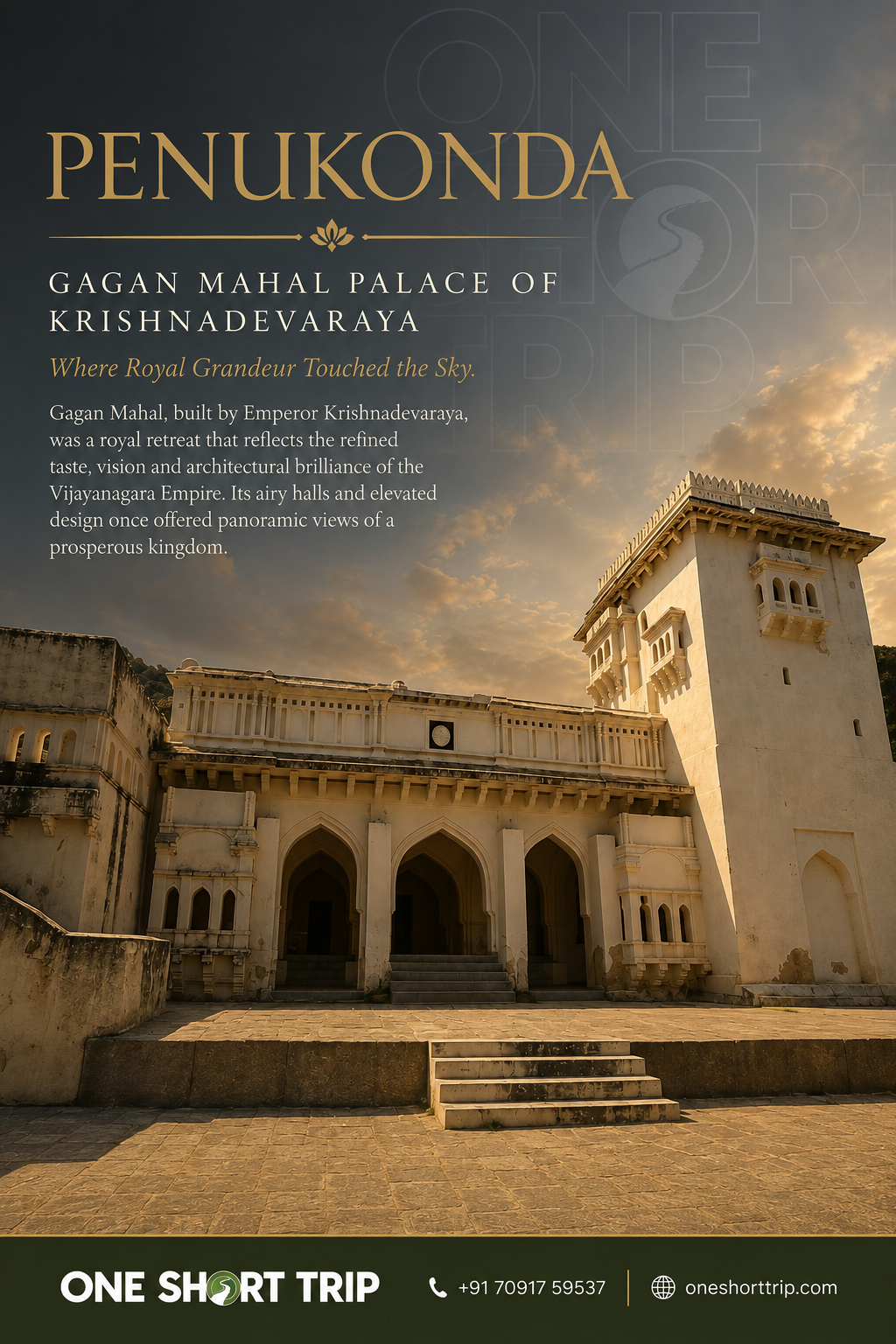
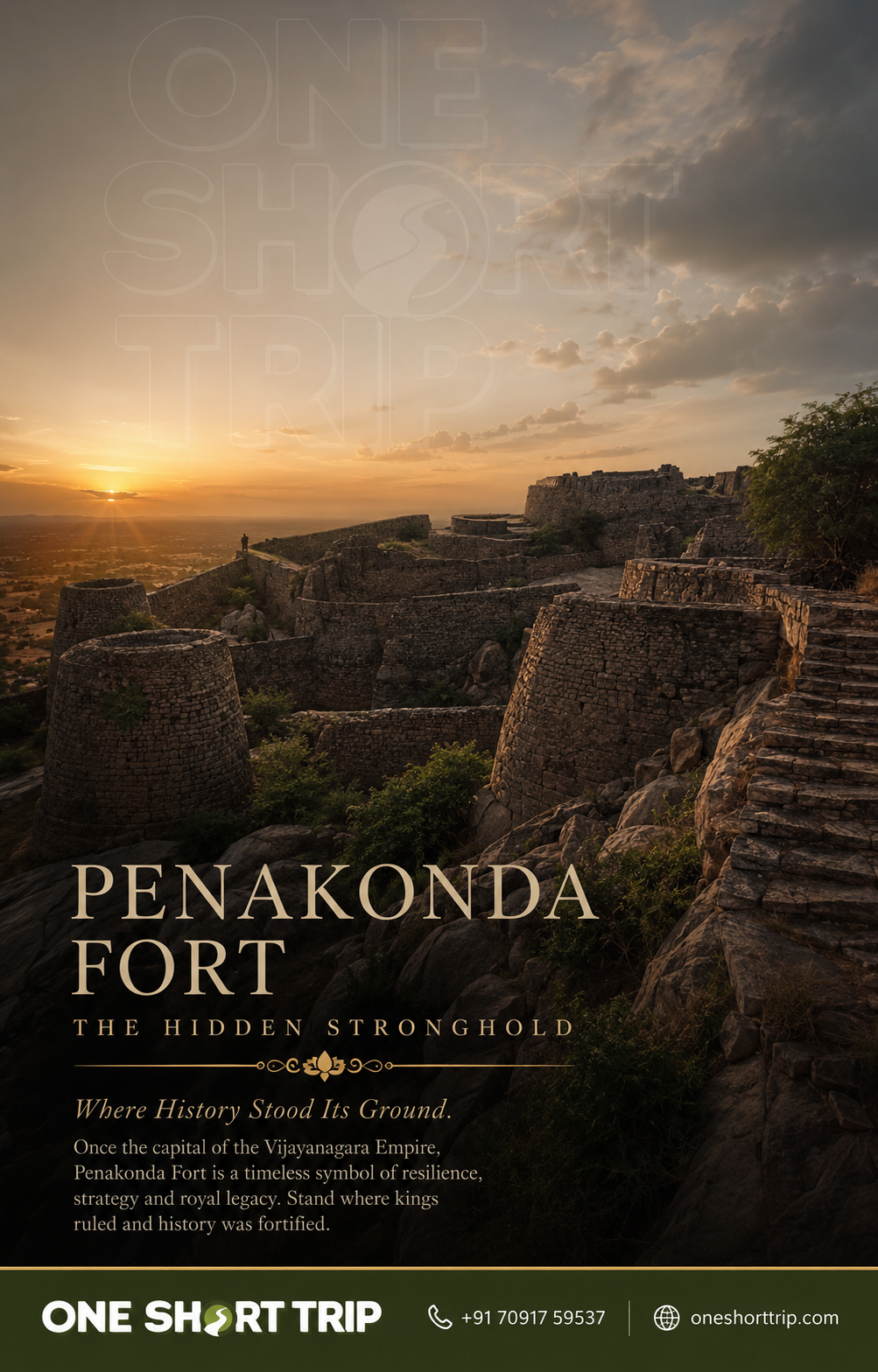
Penukonda is one of the important historical centres associated with the Vijayanagara Empire. The town developed around a naturally defensible rocky landscape and later became an important political centre of the empire. It is widely described as the second capital of the Vijayanagara Empire after Hampi.
The Penukonda Fort area contains a collection of historic structures, religious monuments, gateways and remnants of the old settlement. Rather than viewing the fort simply as a ruined defensive wall, the visit helps travellers understand Penukonda as a historic royal and administrative centre.
During the approximately 1½-hour Penukonda visit, the focus will be on the principal heritage attractions that can realistically be covered without compromising the rest of the day's schedule.
Penukonda Fort: The fort takes advantage of the natural rocky terrain surrounding the town. Its elevated positions and defensive landscape helped protect the historic settlement and contributed to Penukonda's importance during the Vijayanagara period.
Within and around the historic fort area, visitors can encounter:
- Historic gateways and fortifications
- Royal and administrative structures
- Temples and religious monuments
- Historic residential and settlement remains
- Rocky hill landscapes
- Other surviving monuments associated with Penukonda's past
The goal of this stop is not to rush through every monument, but to experience the most important surviving elements of Penukonda's heritage before continuing towards Lepakshi.
🏛️Gagan Mahal▾
Gagan Mahal is one of the notable historic structures associated with Penukonda and forms an important part of the town's royal heritage. Its surviving architectural elements provide a glimpse into the historic character of the region.
Rather than seeing Gagan Mahal in isolation, it is worth understanding it as part of the larger historic landscape of Penukonda. The fort, royal structures, temples and surrounding settlement together reflect the importance of the town during its period as a major Vijayanagara centre.
The visit is kept relatively concise because this is a one-day itinerary with a fixed evening commitment at Adiyogi. This allows travellers to experience Penukonda's most important heritage features without allowing the morning stop to consume the time required for Lepakshi.
🕌Penukonda's Religious & Cultural Heritage▾
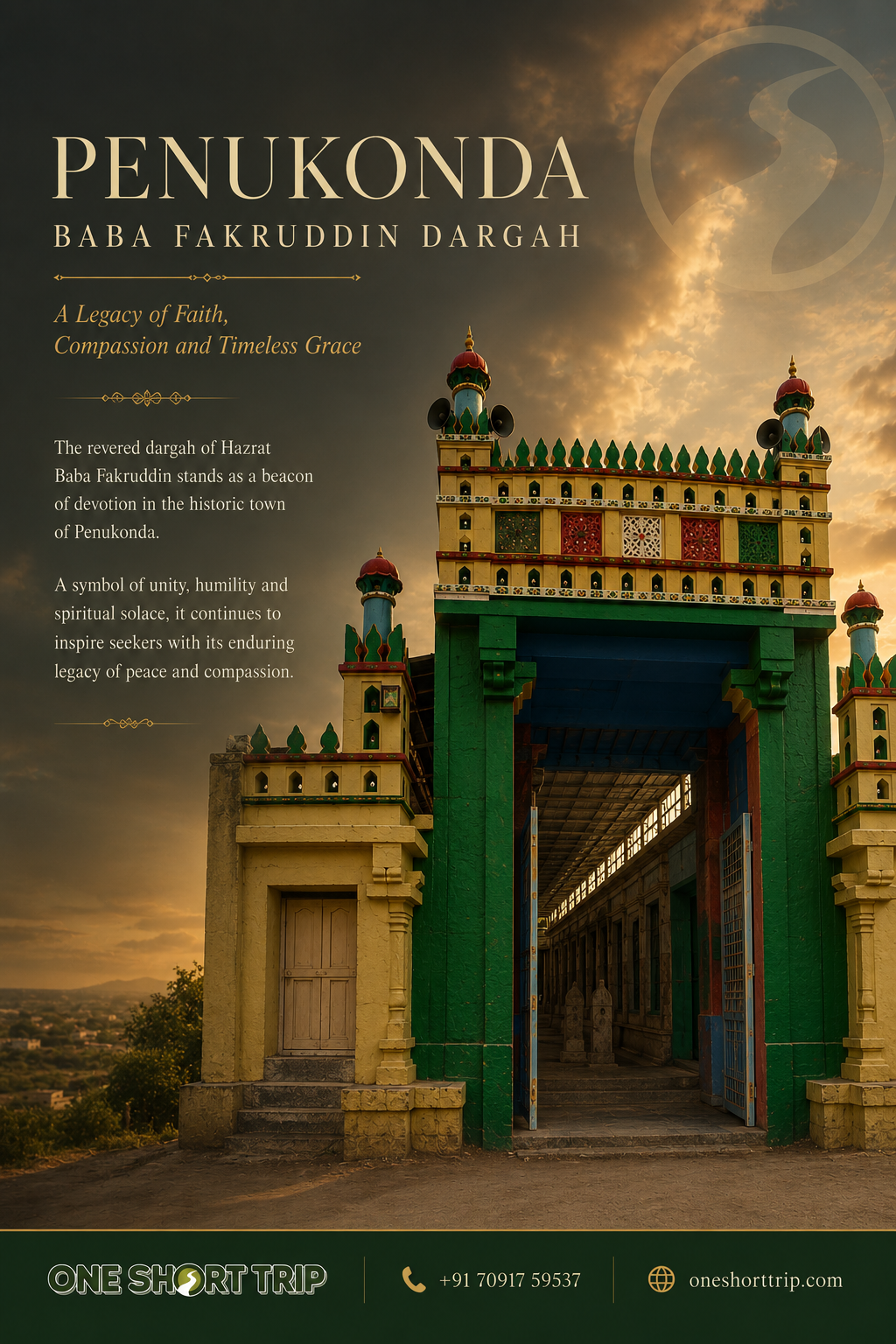
Penukonda's historic landscape is not limited to its fortifications and royal structures. The wider area contains several temples and religious monuments representing different traditions that developed around the historic settlement.
The religious heritage of Penukonda adds another dimension to the visit. Temples, sacred sites, fort structures and royal buildings existed within the same broader cultural landscape, reflecting the close relationship between religion, society and political life in medieval South India.
The group will visit selected temples and important monuments according to the available time. This is especially important because Penukonda is being covered as the first major sightseeing stop of a much longer one-day journey.
👤Timmarusu Memorial & Other Historic Monuments▾
The Penukonda visit also includes the Timmarusu memorial/tomb and other selected historic monuments where practical. Timmarusu is remembered in South Indian history as a highly influential statesman associated with the reign of the Vijayanagara ruler Krishnadevaraya.
These smaller heritage sites are important because they help move the Penukonda experience beyond simply seeing a fort. Together, the monuments tell a broader story about the people, rulers, religious traditions and political history connected with the region.
The exact order of the Penukonda stops may change according to local access, traffic and the condition of the roads around the historic sites.
🚐10:45–11:00 AM — Depart Penukonda▾
After approximately 1½ hours of sightseeing in Penukonda, the group leaves for the lunch stop. Keeping the departure around this time is important because the afternoon is reserved for Lepakshi and the journey must ultimately reach Adiyogi by approximately 6:00 PM.
The road towards the Lepakshi region passes through rural landscapes, villages, agricultural areas and the rocky terrain characteristic of the Andhra Pradesh–Karnataka border region.
🍛Approximately 12:00–12:45 PM — Vegetarian Lunch▾
Lunch will be planned before the Lepakshi sightseeing session. A simple vegetarian South Indian meal is ideal for a long one-day road trip and allows the group to take a proper break before the afternoon heritage visit.
The exact lunch location will be finalized separately based on the route, road conditions and the day's operating requirements. The target lunch window is approximately 12:00 to 12:45 PM.
Keeping lunch earlier in the day is intentional. Lepakshi is the major heritage experience of the afternoon, and completing lunch before the visit gives the group a clear sightseeing window without creating unnecessary pressure later in the day.
🛕Approximately 1:30 PM — Lepakshi: A Masterpiece of Vijayanagara Art▾
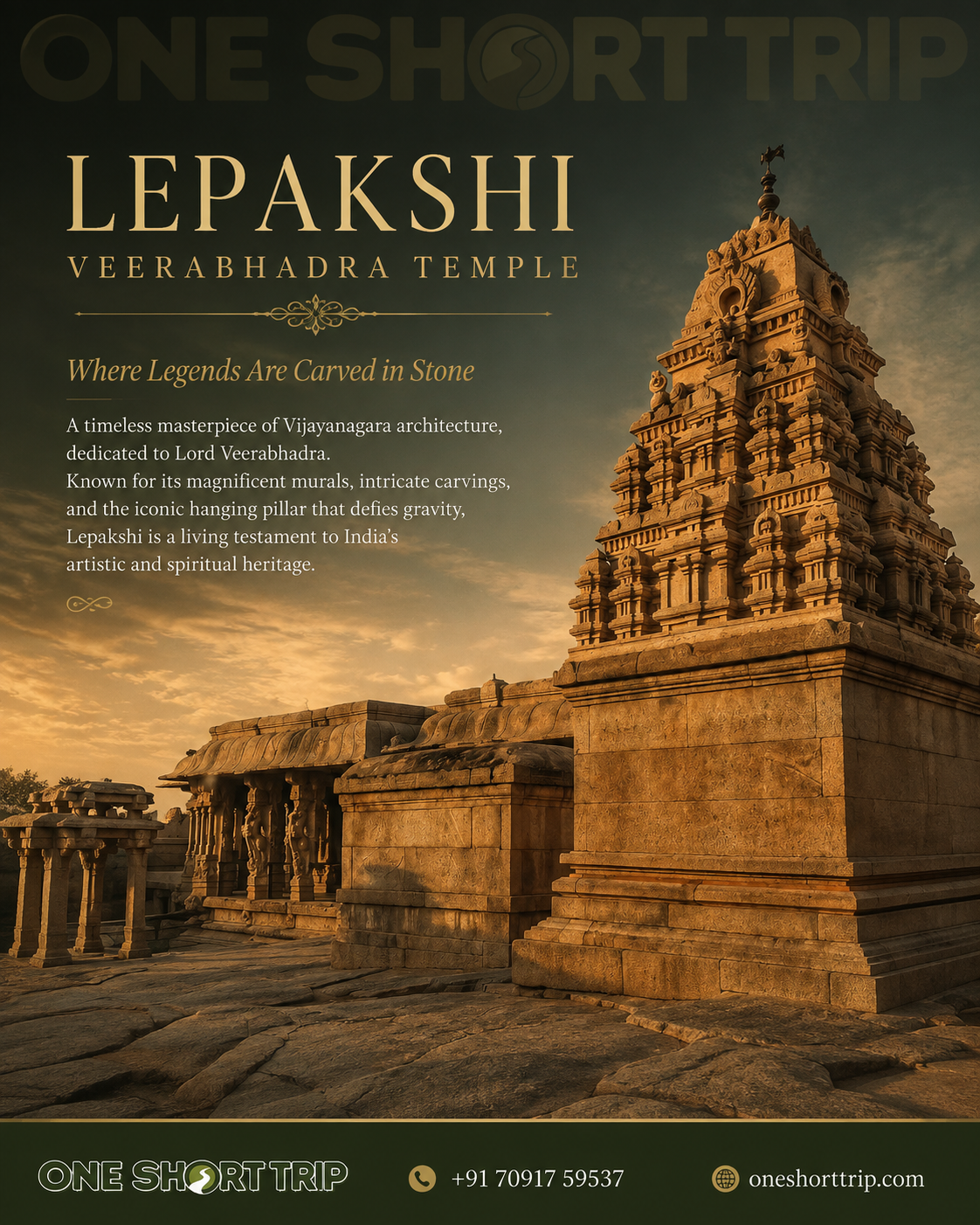
Lepakshi is one of the most remarkable heritage destinations on this Bangalore one-day trip. The village is famous for the Veerabhadra Temple, a major example of Vijayanagara architecture known for its sculptures, stone craftsmanship, murals and unusual architectural features.
The present temple complex belongs primarily to the Vijayanagara period and is traditionally associated with the brothers Virupanna and Veeranna. The site combines architecture, sculpture, painting, mythology and engineering in a remarkably compact heritage complex.
The temple stands on a low rocky hill traditionally known as Kurmasaila, associated with the shape of a tortoise. As you explore the complex, look carefully at the pillars, ceilings, sculptures and carvings because many of the most interesting details can easily be missed during a quick visit.
The Lepakshi visit is planned for approximately 1½ to 1¾ hours. This is long enough to experience the principal attractions while still protecting the journey to Adiyogi later in the afternoon.
💃Natya Mantapa▾
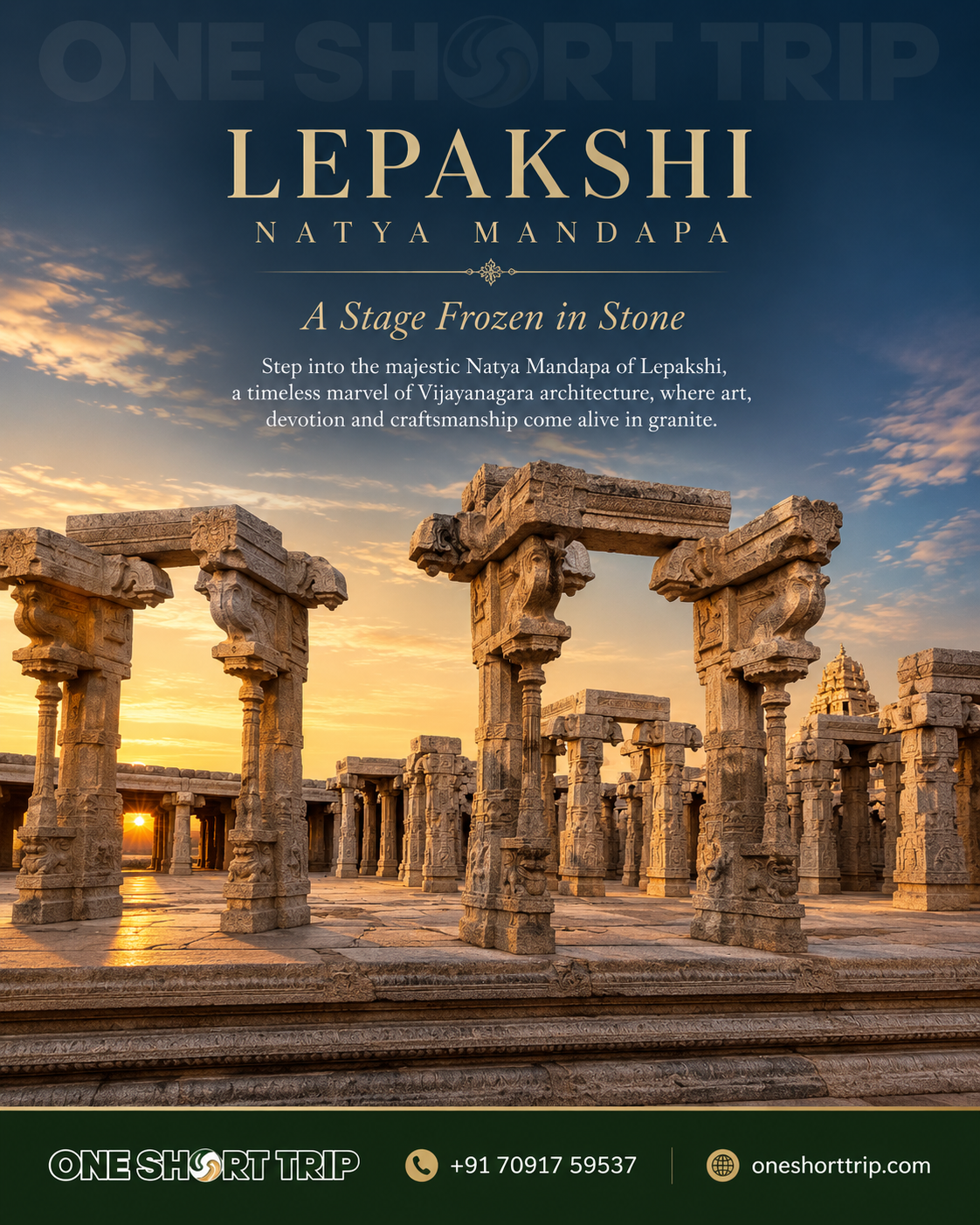
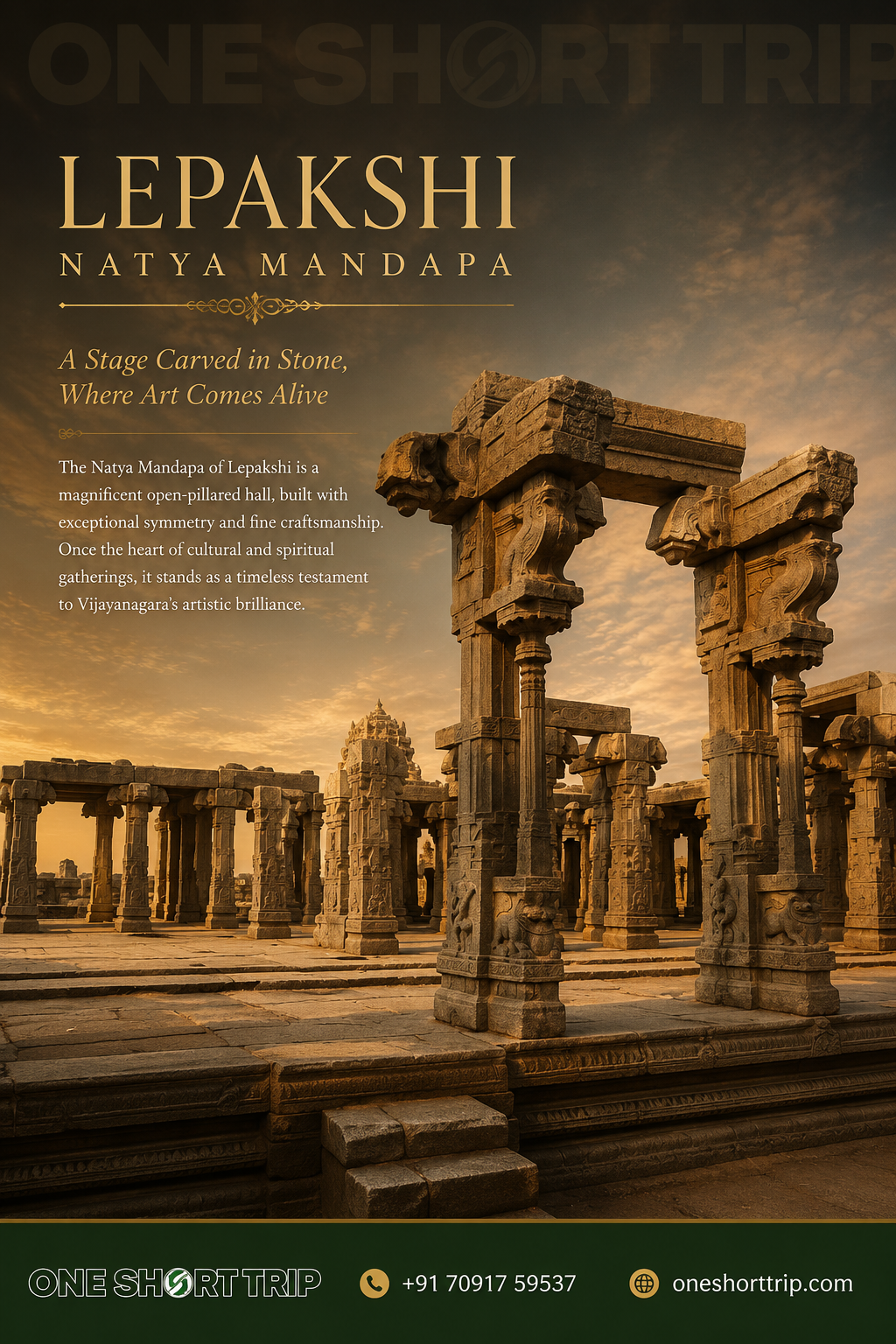
The Natya Mantapa, or dance pavilion, is one of the architectural highlights of the Lepakshi Veerabhadra Temple. Its richly carved pillars display figures and decorative details associated with the artistic traditions of the Vijayanagara period.
Among the details visitors can look for are representations of:
- Deities and divine figures
- Dancers
- Musicians
- Mythological characters
- Animals
- Decorative motifs
The mandapa helps demonstrate that Vijayanagara temple architecture was not only about structural grandeur. Music, dance, sculpture, storytelling and religious practice were all represented within the temple environment.
🎨Lepakshi Murals & Ceiling Paintings▾
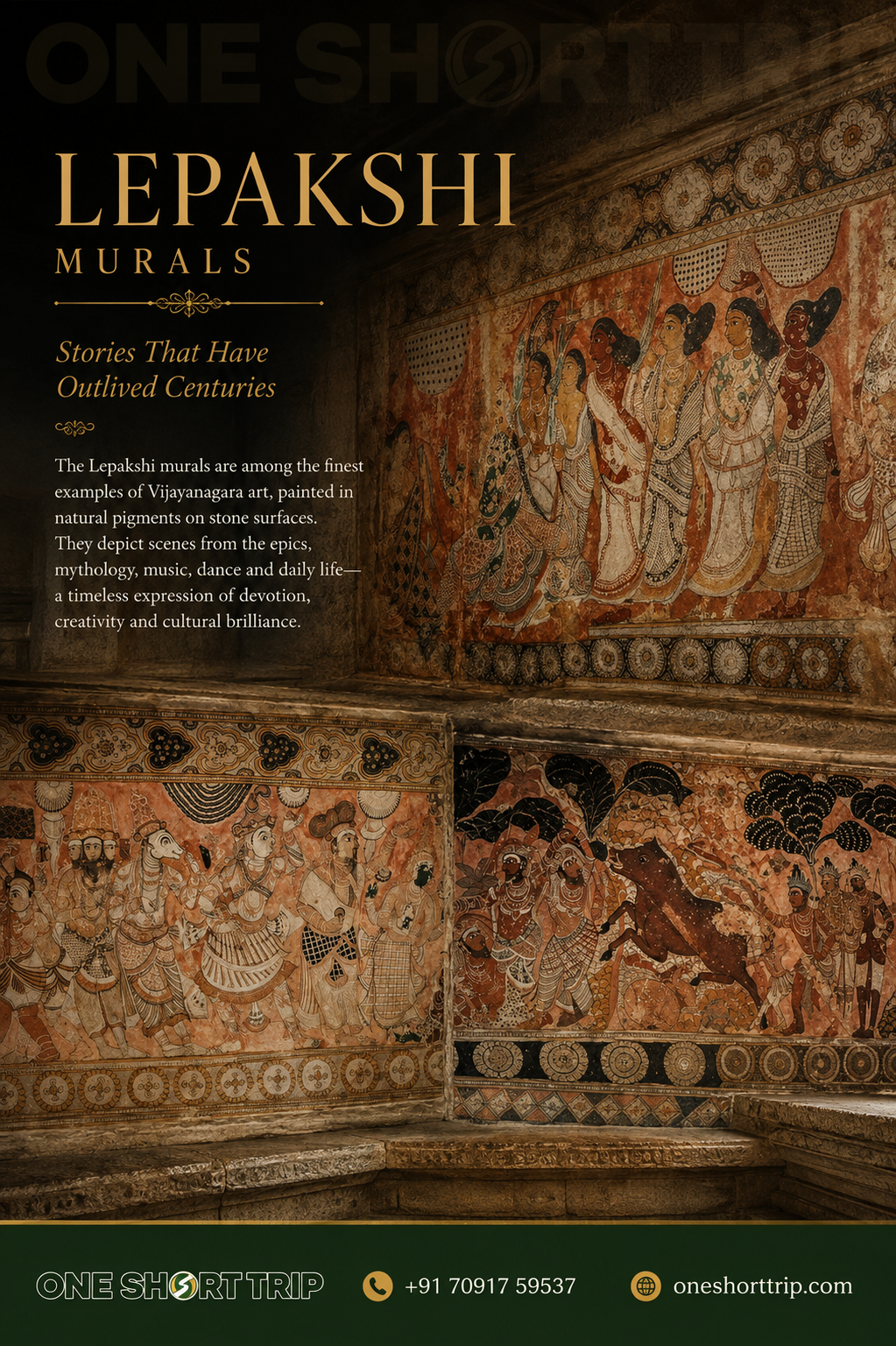
The Lepakshi murals are among the most important artistic features of the temple. The ceilings contain large painted compositions depicting religious and mythological themes, including stories connected with Hindu epics and traditions.
Visitors should remember to look upward while walking through the mandapas. The paintings can easily be overlooked when attention is focused on the stone pillars and sculptures below.
The murals provide an important complement to the stone architecture. While the pillars and sculptures demonstrate the skill of Vijayanagara craftsmen working in granite, the ceiling paintings reveal another side of the artistic traditions that flourished at Lepakshi.
🪨The Famous Hanging Pillar▾
The Lepakshi Hanging Pillar is perhaps the most famous architectural curiosity in the temple. The pillar appears to remain slightly above the floor, creating a visible gap beneath part of its base.
The feature has fascinated visitors for generations and is often demonstrated by passing a thin object underneath it. Beyond the popular mystery surrounding the pillar, it is worth observing the entire mandapa and understanding how the numerous stone pillars and structural members work together.
The Hanging Pillar is one of the reasons Lepakshi has become such a popular one day trip from Bangalore for travellers interested in architecture, history and engineering.
🐂The Monolithic Nandi▾
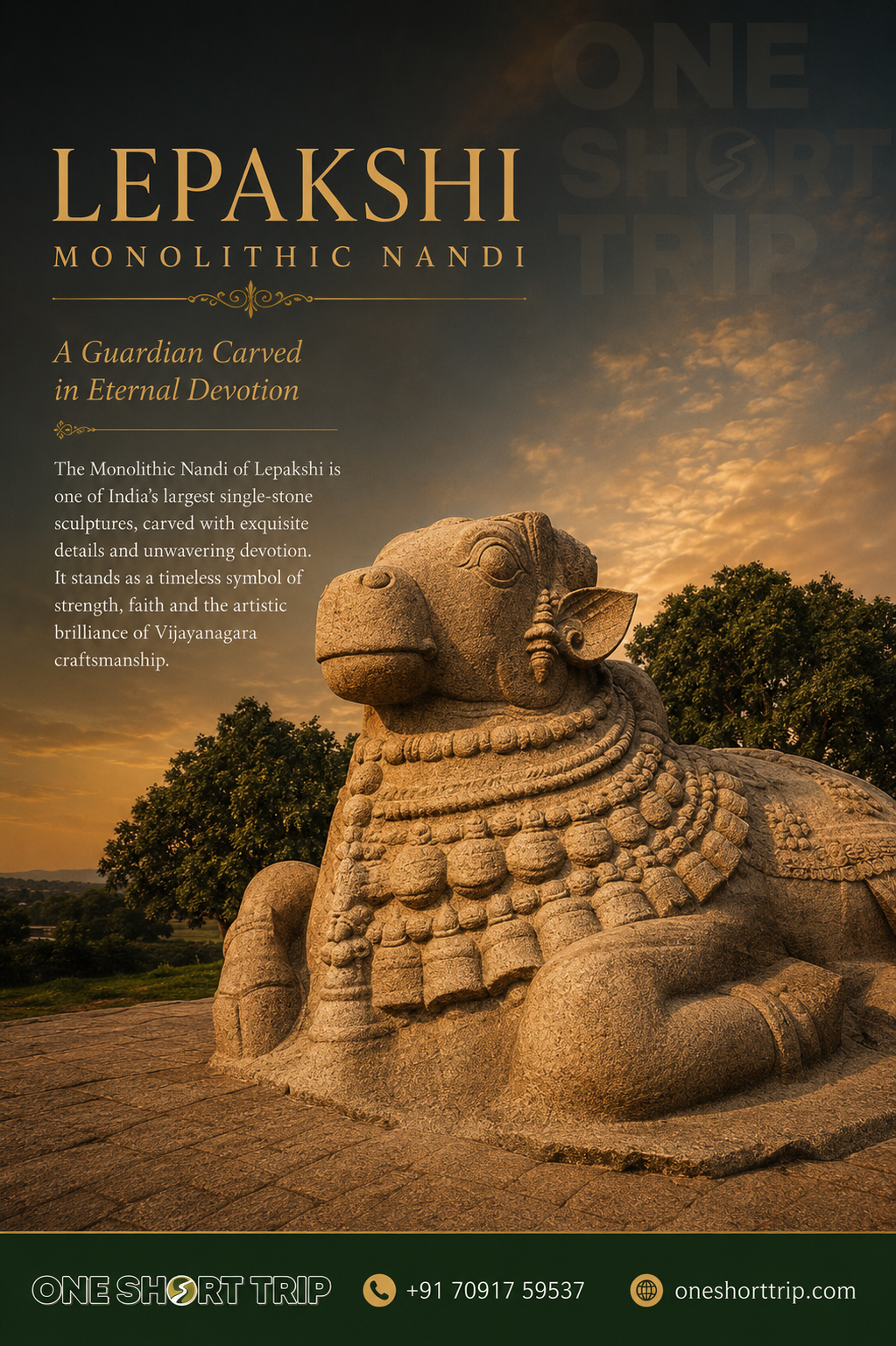
One of the most recognisable sights at Lepakshi is the enormous monolithic Nandi, carved from a single block of granite. Nandi is the sacred bull associated with Lord Shiva and is traditionally regarded as his vehicle and devotee.
The sculpture is remarkable not only because of its scale but also because of the amount of detail carved into the stone. Look closely at the ornaments, chains, bells and decorative features that cover the figure.
The Nandi stands outside the main temple complex and is one of the essential stops on a first visit to Lepakshi.
🐍The Nagalinga▾
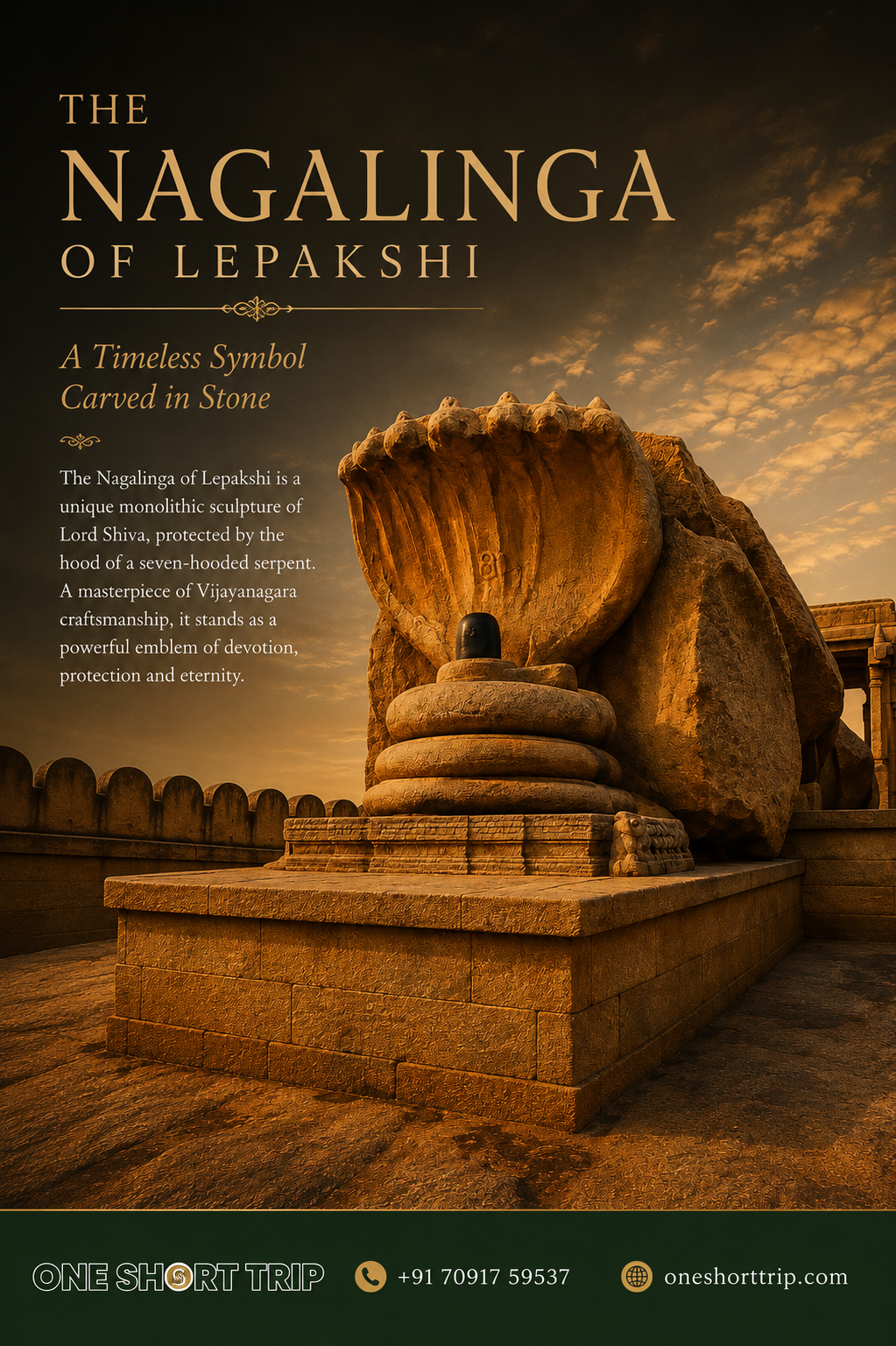
The Nagalinga at Lepakshi is another spectacular example of monumental stone sculpture. A large multi-hooded serpent forms a dramatic canopy over a Shiva Linga, creating one of the most photographed sculptures within the temple complex.
The combination of the serpent and Linga demonstrates the importance of sacred symbolism in the temple's sculptural programme. Its size and composition also show the extraordinary ability of Vijayanagara craftsmen to work with massive blocks of stone.
👣Sita's Footprint, Kalyana Mantapa & Lepakshi Legends▾
Sita's Footprint: A large footprint-shaped impression on the temple floor is traditionally associated with Sita. The attribution belongs to local sacred tradition and forms part of the Ramayana stories connected with Lepakshi.
The Kalyana Mantapa: The unfinished Kalyana Mantapa is one of the most intriguing structures in the temple complex. Its richly carved pillars are traditionally associated with the celestial wedding of Lord Shiva and Goddess Parvati. The fact that the structure remains unfinished has contributed to several popular stories about the temple's construction.
The Virupanna Legend: Local tradition tells a dramatic story about Virupanna, one of the brothers associated with the construction of the temple. According to the legend, he was accused of misusing royal funds and, fearing punishment, blinded himself. The reddish marks associated with the unfinished structure are traditionally linked with this story. This should be understood as a local legend rather than established historical fact.
The Jatayu Connection: Lepakshi is also strongly associated with the Ramayana through the local tradition that Jatayu fell here after fighting Ravana while attempting to save Sita. According to the popular legend, Lord Rama found the wounded bird and said “Le Pakshi”, meaning “Rise, bird”, giving the place its traditional name. This story is an important part of Lepakshi's cultural identity.
🎡Jatayu Theme Park — Optional, Only If Time Permits▾
Jatayu Theme Park is an optional stop. It will be considered only if the group is running comfortably ahead of schedule after the main Lepakshi visit.
The attraction builds on the area's traditional connection with the Ramayana and Jatayu and offers a more contemporary visitor experience. However, it is not a fixed part of the itinerary.
If there is any delay at Penukonda, lunch, Lepakshi or on the road, Jatayu will be skipped. The priority is to leave the Lepakshi area in sufficient time to reach Adiyogi by approximately 6:00 PM. This makes the itinerary more realistic and avoids rushing the most important parts of the day.
🚐Approximately 3:15–3:45 PM — Depart Lepakshi Area▾
The group leaves Lepakshi after completing the main temple visit. If Jatayu Theme Park has been included, the departure will be adjusted accordingly, but the intention is to leave the Lepakshi area by approximately 3:45 PM at the latest.
This is one of the most important operational points of the entire itinerary. The afternoon schedule is deliberately protected so that the group has sufficient travel and traffic buffer before reaching Adiyogi.
🧘Approximately 5:30–5:45 PM — Arrive at Adiyogi Chikkaballapur▾
The final major destination is Adiyogi at Chikkaballapur. The aim is to reach the premises around 5:30–5:45 PM, leaving a practical buffer before the 6:00 PM target.
This buffer is intentional. Traffic, parking, walking time and group movement can affect the actual arrival at the visitor area. Reaching slightly early is far better than arriving at the last minute after a long day of travel.
Adiyogi provides a completely different atmosphere from the historic monuments of Penukonda and Lepakshi. After spending the morning and afternoon around forts, temples, sculptures and murals, the evening becomes the spiritual chapter of the journey.
🙏Adiyogi, Yogeshwara Linga & Naga▾
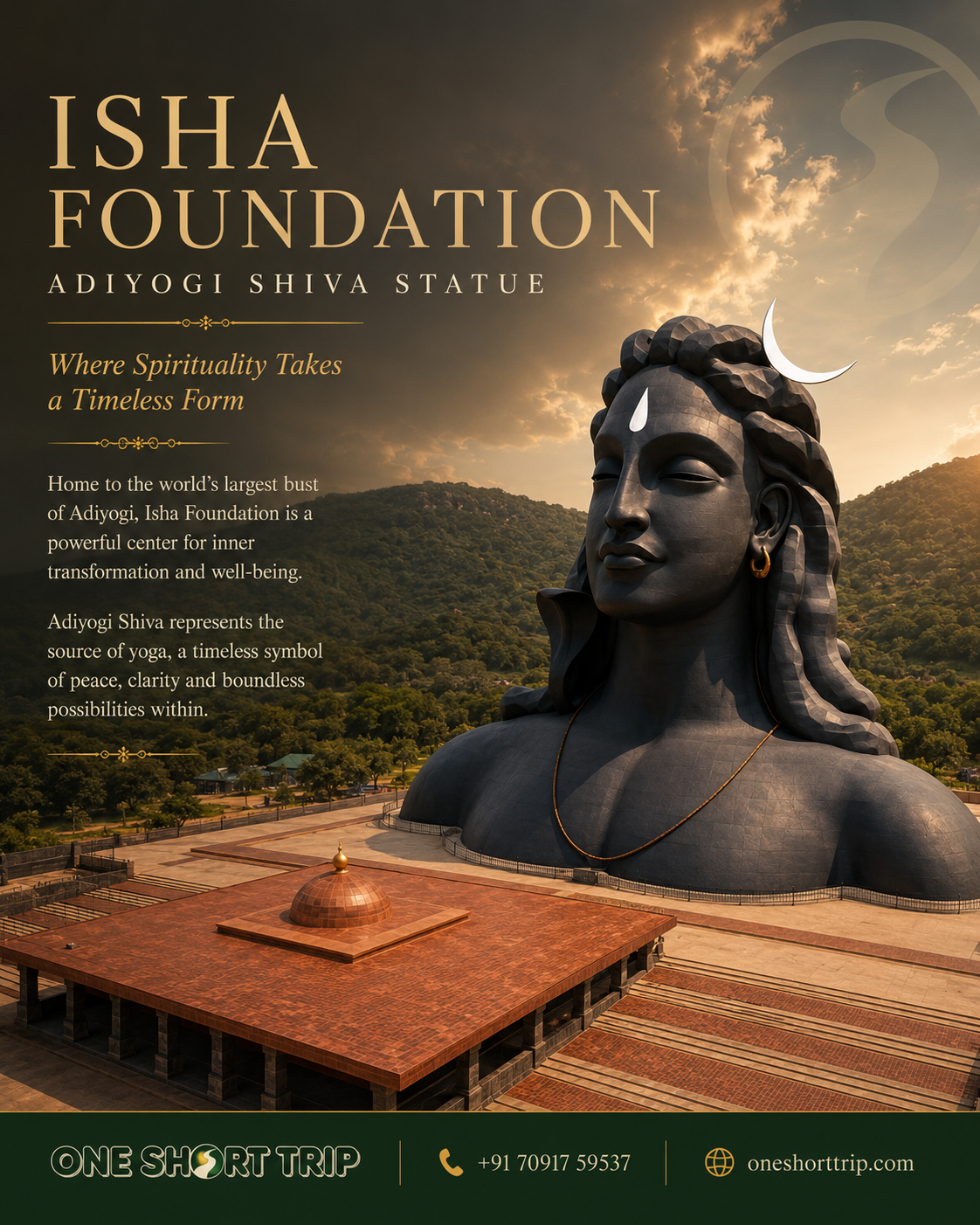
The 112-foot Adiyogi is the central landmark of the Sadhguru Sannidhi complex near Chikkaballapur. In the yogic tradition, Adiyogi refers to Shiva as the first yogi and the source from whom the science of yoga was transmitted.
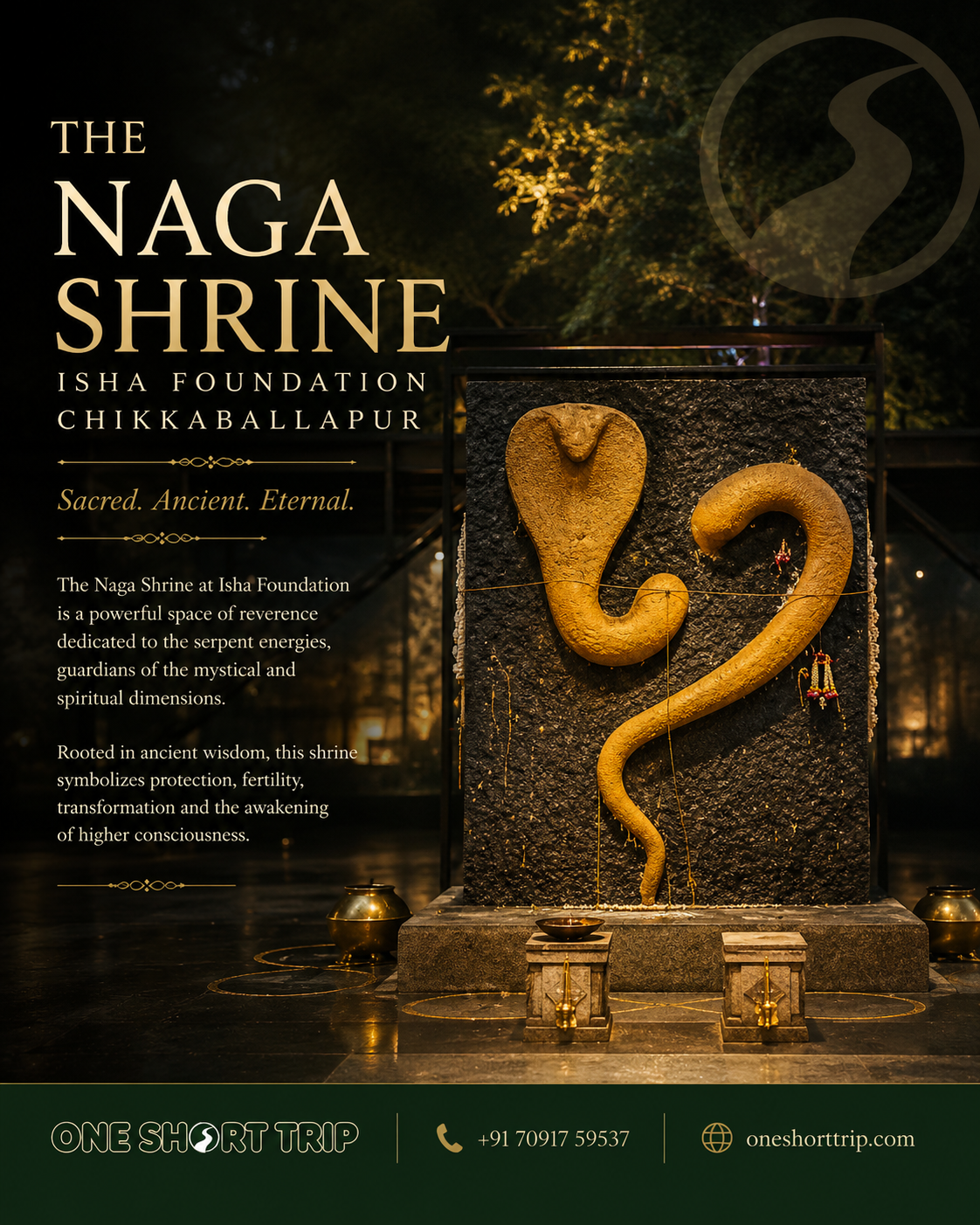
The centre also includes consecrated spaces such as the Yogeshwara Linga and Naga. Visitors can spend time in the surroundings, experience the atmosphere of the centre and prepare for the evening presentation.
The scale and setting of Adiyogi make this a striking contrast to the centuries-old architecture experienced at Penukonda and Lepakshi earlier in the day.
✨Adiyogi Divya Darshanam▾
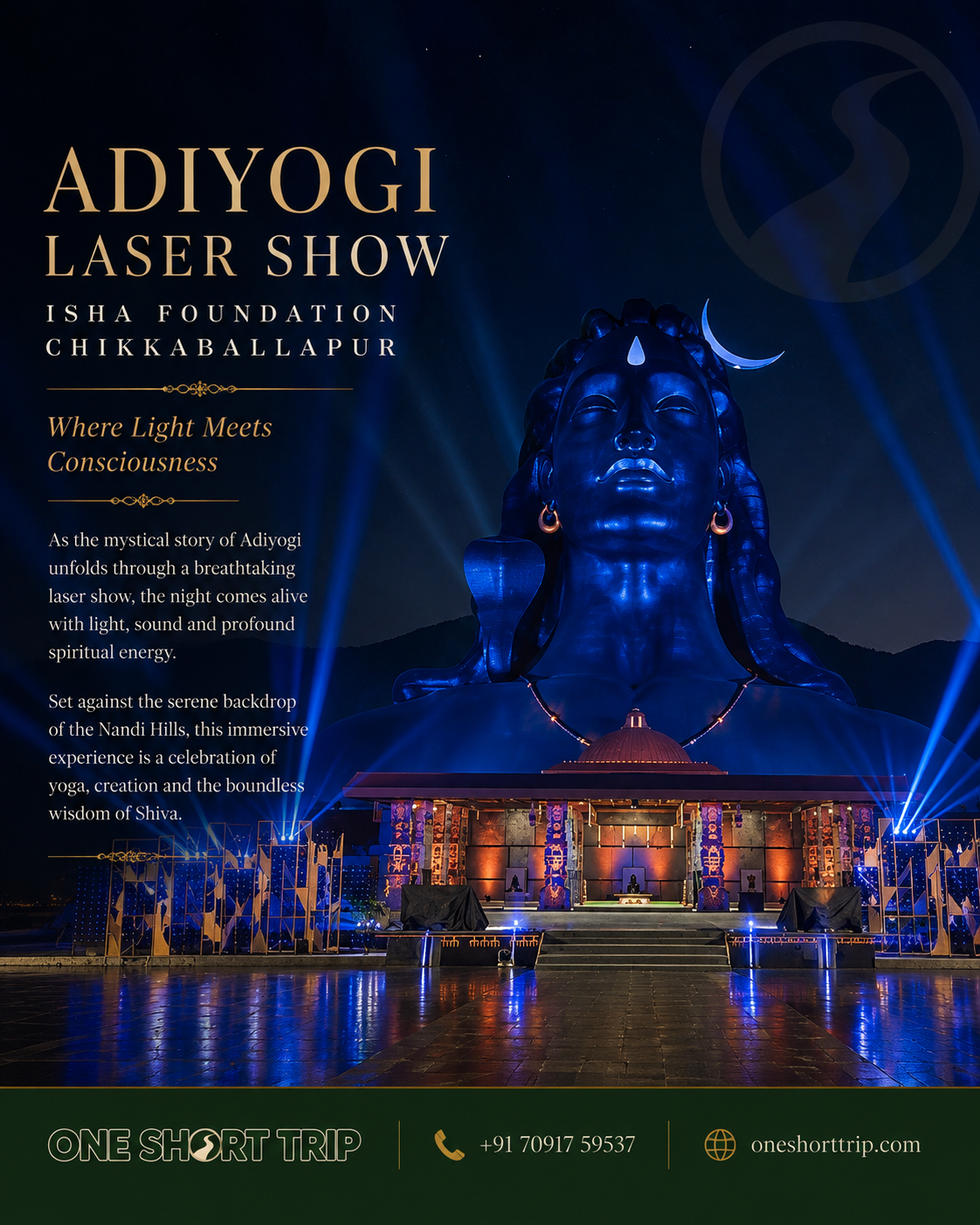
Adiyogi Divya Darshanam is a video-imaging presentation projected onto the Adiyogi statue. The presentation tells the story of Adiyogi and his contribution to the transmission of yogic sciences.
The evening presentation is one of the key reasons this itinerary is structured around reaching Adiyogi before 6:00 PM. Rather than treating Adiyogi as a quick final photo stop, the schedule allows the group time to enter, settle down and experience the evening programme without unnecessary rushing.
Show timings and visitor arrangements can change, so they should be reconfirmed before the trip date.
🌆7:00 PM — Evening Adiyogi Divya Darshanam▾
The group attends the scheduled evening Adiyogi Divya Darshanam. The illuminated Adiyogi and large-scale visual presentation create a very different experience from the historic architecture visited earlier in the day.
This is the final major experience of the itinerary and completes the journey's progression from history at Penukonda, to architecture and mythology at Lepakshi, and finally to spirituality at Adiyogi.
🚗After the Evening Show — Return Journey to Bangalore▾
After completing the Adiyogi visit, the group begins the return journey to Bangalore. Dinner can be taken during the return journey depending on the day's schedule and traffic conditions.
The return journey is expected to take place during the evening, when traffic conditions can vary significantly. For this reason, the final Bangalore arrival time is deliberately given as an approximate range rather than a fixed promise.
🏙️Approximately 10:00–11:00 PM — Arrival in Bangalore▾
The trip concludes with the group's return to Bangalore. The exact arrival time will depend on traffic, road conditions, dinner arrangements and the final drop-off locations.
It is therefore best to treat 10:00–11:00 PM as an approximate arrival window rather than a guaranteed time.
Suggested Timeline at a Glance
| Time | Activity |
|---|---|
| 6:00 AM | Depart Bangalore |
| 7:15–7:45 AM | Breakfast en route |
| ~9:15 AM | Arrive Penukonda |
| 9:15–10:45 AM | Penukonda Fort, Gagan Mahal & selected heritage sites |
| 10:45–11:00 AM | Depart Penukonda |
| 12:00–12:45 PM | Vegetarian lunch |
| ~1:30 PM | Arrive Lepakshi |
| 1:30–3:15 PM | Lepakshi Veerabhadra Temple & major attractions |
| 3:15–3:45 PM | Jatayu Theme Park — optional, only if time permits |
| 3:45 PM latest | Leave Lepakshi area |
| 5:30–5:45 PM | Target arrival at Adiyogi |
| 6:00 PM | Be inside Adiyogi for the evening experience |
| 7:00–7:15 PM | Adiyogi Divya Darshanam |
| After the show | Depart for Bangalore |
| 10:00–11:00 PM | Approximate Bangalore arrival |
Places Covered on This Bangalore One Day Trip
Practical Trip Information
📋Quick Trip Information & Travel Details▾
| Route | Bangalore → Penukonda → Lepakshi → Adiyogi Chikkaballapur → Bangalore |
|---|---|
| Starting City | Bangalore |
| Starting Time | 6:00 AM |
| Duration | 1 Day |
| States Covered | Karnataka & Andhra Pradesh |
| Penukonda Visit | Approximately 1.5 to 2 hours |
| Lepakshi Visit | Approximately 1.5 to 2 hours |
| Main Attractions | Penukonda Fort, Gagan Mahal, historic temples and monuments, Lepakshi Veerabhadra Temple, Natya Mantapa, Lepakshi murals, Hanging Pillar, Monolithic Nandi, Nagalinga, Kalyana Mantapa & Adiyogi |
| Optional Stop | Jatayu Theme Park, only if time permits |
| Adiyogi Arrival | Planned by approximately 6:00 PM |
| Evening Highlight | Adiyogi Divya Darshanam / light and video-imaging show |
| Show Timing | Currently scheduled around 7:00–7:15 PM; timing should be reconfirmed before the trip |
| Trip Theme | History, Heritage, Architecture, Art, Mythology & Spirituality |
| Transportation | AC vehicle |
| Meals | Breakfast and simple vegetarian lunch as per package |
| Return | Bangalore at night, approximately 10:00–11:00 PM depending on traffic and road conditions |
| Suitable For | Families, senior citizens, couples, friends, solo travellers and groups |
☀️Best Time to Take the Trip▾
This Bangalore to Penukonda, Lepakshi and Adiyogi one day trip can be taken throughout the year, but the overall experience is generally more comfortable during the cooler months.
October to February: This is one of the most comfortable periods for the itinerary. Pleasant mornings and relatively cooler weather make walking around Penukonda Fort and Lepakshi more enjoyable, while the evening visit to Adiyogi is also comfortable.
March to May: The afternoons can become hot, particularly while exploring open areas and heritage structures. Starting from Bangalore at 6:00 AM helps complete the outdoor sightseeing before the hotter part of the day. Carry sufficient drinking water, wear comfortable clothing and use sun protection.
Monsoon: The landscape around Penukonda and Lepakshi can become greener and more scenic. However, rain may make stone surfaces and uneven heritage areas slippery. Travellers should walk carefully and allow some flexibility in the schedule because weather and road conditions can affect travel time.
🧓Is This Trip Suitable for Senior Citizens?▾
Yes, but it is important to understand that this is a long one-day road trip from Bangalore. The itinerary covers multiple destinations and involves walking at Penukonda and Lepakshi, followed by an evening visit to Adiyogi.
Comfortable footwear is recommended because some heritage areas have uneven stone surfaces and require walking. Senior citizens should carry their regular medicines, stay hydrated and take short breaks whenever required. If anyone has mobility limitations, it is advisable to inform the trip coordinator in advance so the day's movement can be planned comfortably.
The early 6:00 AM departure is also important because it allows more sightseeing time without unnecessarily rushing through the major attractions.
🧒Is This Trip Suitable for Children?▾
Yes. This itinerary offers several experiences that can be interesting for children, especially those who enjoy history, architecture, stories and unusual landmarks.
At Penukonda, children can see a historic fort and royal structures. Lepakshi adds enormous sculptures, the giant Nandi, the Nagalinga, the Hanging Pillar, colourful murals and fascinating stories connected with the Ramayana and Vijayanagara period. If time permits, Jatayu Theme Park can provide an additional family-friendly experience.
The visit to the 112-foot Adiyogi and the evening Divya Darshanam presentation provides a completely different experience and is often one of the most memorable parts of the day for families.
Dress Code, What to Carry & Photography Tips
What to Carry
- Government ID
- Some cash for personal expenses
- UPI-enabled mobile phone
- Water bottle
- Sunglasses
- Cap or hat
- Sunscreen
- Comfortable walking footwear
- Light cotton clothing
- Compact umbrella / rain protection during monsoon
- Mobile phone
- Power bank
- Small backpack
- Light snacks
- Camera, if required
- Personal medicines
Photography Tips by Location
- Penukonda Fort gateways
- Historic stone walls
- Gagan Mahal
- Rocky hill landscape
- Historic temples and monuments
- Wide views of the heritage landscape
- Monolithic Nandi
- Hanging Pillar
- Natya Mantapa
- Carved temple pillars
- Lepakshi ceiling murals
- Nagalinga
- Kalyana Mantapa
- Detailed stone sculptures
- 112-foot Adiyogi
- Wide landscape views
- Yogeshwara Linga
- Surrounding Naga sculpture
- Sunset and evening sky
- Illuminated Adiyogi
- Divya Darshanam
Responsible Heritage Tourism & Travel Etiquette
Penukonda and Lepakshi are more than sightseeing destinations — they are important parts of South India's cultural, architectural and religious heritage. The forts, temples, sculptures, murals and historic structures have survived for generations, and every visitor has a responsibility to help protect them. Travellers should also respect the religious environment at temples and follow the instructions provided at each site.
- Start the trip on time, as this is a long one-day itinerary
- Follow the planned sightseeing schedule
- Stay with the group and return to the vehicle on time
- Wear comfortable walking footwear
- Carry sufficient drinking water
- Dress respectfully when visiting temples
- Follow photography and visitor instructions at each site
- Maintain cleanliness throughout the journey
- Give senior citizens and children sufficient time and assistance
- Listen to the trip coordinator, especially when moving between destinations
- Allow flexibility if traffic or weather affects the schedule
- Do not damage, scratch or mark historic structures
- Do not write names or messages on temple walls
- Do not touch ancient murals unnecessarily
- Do not climb sculptures, pillars or protected structures
- Do not enter restricted areas
- Do not litter at temples, forts or roadside stops
- Do not disturb prayers, religious activities or other visitors
- Do not use flash where photography is restricted
- Do not leave valuables unattended
- Do not delay the group unnecessarily, particularly at Penukonda and Lepakshi
Why Visit Penukonda, Lepakshi and Adiyogi Together?
What makes this Bangalore one day trip different is the contrast between its three major destinations. Penukonda takes you into the history of the Vijayanagara Empire and its royal strongholds. Lepakshi brings together extraordinary temple architecture, sculpture, murals and mythology. Adiyogi Chikkaballapur then offers a completely different experience through a modern spiritual landmark dedicated to the yogic tradition.
Individually, each destination is worth visiting. Together, they create a journey that moves through different chapters of South Indian history, culture and spirituality in a single day. The route is especially appealing to travellers who want more than a conventional sightseeing trip from Bangalore and would like to combine heritage, architecture, art, mythology and a memorable evening spiritual experience.
Penukonda, Lepakshi & Adiyogi Chikkaballapur: A Detailed Guide
1. Penukonda Fort — A Historic Vijayanagara Stronghold
Penukonda is one of the most historically important destinations on this Bangalore to Penukonda, Lepakshi and Adiyogi one day trip. Located in present-day Sri Sathya Sai district of Andhra Pradesh, Penukonda developed around a dramatic rocky landscape that naturally supported the construction of a fortified settlement.
The town is particularly important because of its connection with the Vijayanagara Empire. Vijayanagara was one of the most powerful empires of medieval South India, and its influence extended across large parts of present-day Karnataka, Andhra Pradesh and neighbouring regions. Penukonda became an important political and military centre of the empire, particularly during the period when the imperial court moved away from the traditional capital at Hampi.
Following the Battle of Talikota in 1565, the political situation of the Vijayanagara Empire changed dramatically. Hampi was devastated and the imperial centre gradually shifted. Penukonda subsequently became one of the important seats of Vijayanagara power. This historical connection is one of the main reasons Penukonda is sometimes described as the second capital of the Vijayanagara Empire.
Penukonda Fort is not simply an isolated defensive wall. The historic fortified landscape incorporated a much larger settlement containing royal buildings, religious structures, gateways, residential areas, water systems and defensive positions. The natural rocky terrain and elevated areas around Penukonda added another layer of protection to the settlement.
As you explore the area, the landscape helps explain why Penukonda was strategically valuable. Rocky hills provided natural defensive advantages, while the fortified settlement controlled important routes through the region. The surviving remains therefore provide an opportunity to understand how a major medieval South Indian political centre was organised.
Gagan Mahal is one of the best-known historic structures associated with Penukonda. The palace is an important reminder that Penukonda was not merely a military outpost. Royal and administrative life once existed alongside temples, markets, residences and other institutions. Its architectural character also reflects the interaction of different artistic influences that existed across the Deccan.
Penukonda is also home to several historic temples and religious monuments. Structures associated with Vishnu, Shiva, Narasimha, Rama and Hanuman, along with other historic religious traditions, form part of the broader cultural landscape. This mixture of royal, military and religious heritage makes Penukonda particularly interesting for travellers who enjoy history beyond the better-known monuments of Hampi.
The Penukonda visit on this itinerary is intentionally focused on the principal heritage areas rather than attempting to cover every monument in the region. With approximately 1.5 to 2 hours available, travellers can experience the character of Penukonda Fort, Gagan Mahal and important surrounding structures before continuing towards Lepakshi.
For visitors travelling from Bangalore, Penukonda provides an important historical introduction to the journey. Before reaching Lepakshi's famous temple sculptures and murals, you first encounter the political world of the Vijayanagara period through its fortifications, royal architecture and surviving heritage landscape.
2. Lepakshi — A Masterpiece of Vijayanagara Temple Art
Lepakshi is the artistic and architectural centrepiece of this one day trip. Located in Andhra Pradesh near the Karnataka border, the village is famous for the Veerabhadra Temple, one of the finest surviving examples of Vijayanagara-period temple architecture and sculpture.
The present temple complex belongs primarily to the sixteenth-century Vijayanagara period. Its development is traditionally associated with two brothers, Virupanna and Veeranna, who served during the reign of Vijayanagara ruler Achyuta Deva Raya. Virupanna is particularly associated with the construction of the temple, and inscriptions within the complex provide valuable historical evidence about its development.
The temple is dedicated to Lord Veerabhadra, a powerful form of Lord Shiva. However, the importance of Lepakshi extends far beyond the principal shrine. The complex combines monumental stone sculpture, intricately carved pillars, elaborate mandapas, large-scale ceiling paintings and stories from Hindu mythology.
The temple stands on a rocky elevation traditionally associated with Kurma Saila, meaning a hill resembling a tortoise. The granite architecture provides an extraordinary display of the skills of Vijayanagara craftsmen. Almost every part of the complex contains details worth examining, from pillars and ceilings to sculptures and architectural elements.
The Natya Mantapa is one of the most visually impressive areas of the temple. Its richly carved pillars feature dancers, musicians, deities, mythological figures, animals and decorative motifs. The pavilion provides an insight into the importance of music and dance within the cultural and religious life of South Indian temples.
The Lepakshi murals are equally significant. The ceilings contain large-scale paintings depicting episodes and figures associated with the Ramayana, Mahabharata, Puranic traditions and Shaiva and Vaishnava themes. Their colours, costumes, jewellery, expressions and compositions make the paintings an important part of Vijayanagara artistic heritage.
One of the most famous attractions is the Hanging Pillar. The stone pillar appears to have a small gap beneath its base, creating the impression that it is suspended above the floor. The feature has fascinated visitors for generations and has become one of the defining symbols of Lepakshi's remarkable architectural craftsmanship.
Outside the main temple complex stands the enormous monolithic Nandi. Carved from a single block of granite, the monumental sacred bull is associated with Lord Shiva and is renowned for its size and intricate decorative details. The sculpture is one of the most recognisable landmarks of Lepakshi.
Inside the temple complex, the Nagalinga is another spectacular example of Vijayanagara stone sculpture. A large multi-hooded serpent forms a dramatic canopy over a Shiva Linga. The scale and composition of this sculpture make it one of the most photographed features of the temple.
The Kalyana Mantapa, or marriage pavilion, is another important part of the complex. The structure remains unfinished, but its richly carved pillars provide evidence of the ambitious architectural programme planned for the site. Local tradition associates the unfinished pavilion with the celestial marriage of Lord Shiva and Goddess Parvati.
Lepakshi is also surrounded by powerful Ramayana traditions. According to local belief, Jatayu fought Ravana while attempting to rescue Sita and later fell at this location. When Rama encountered the wounded bird, tradition says he called out “Le Pakshi”, meaning “Rise, bird”, which is popularly associated with the origin of the name Lepakshi. This is a sacred tradition rather than an established historical explanation, but it remains an important part of the cultural identity of the place.
Another famous local tradition concerns Virupanna and the construction of the temple. According to the legend, Virupanna was accused of using royal funds for the temple's construction and, fearing punishment, blinded himself. Reddish marks on the walls are traditionally associated with this story. The account should be understood as folklore rather than established historical fact.
Because the itinerary allows approximately 1.5 to 2 hours at Lepakshi, the sightseeing is planned around the principal highlights: the Veerabhadra Temple, Natya Mantapa, murals, Hanging Pillar, Nagalinga, Kalyana Mantapa and the famous monolithic Nandi. Jatayu Theme Park is optional and will be visited only if the day's schedule and traffic conditions allow sufficient time.
Lepakshi therefore provides the artistic heart of the journey. After experiencing the political history of Penukonda, travellers move into a world of temple architecture, sculpture, painting and mythology before continuing towards Chikkaballapur.
3. Isha Foundation — Adiyogi Shiva Statue at Chikkaballapur
The final major destination on the journey is Adiyogi at Chikkaballapur, a striking modern spiritual landmark located near Nandi Hills in Karnataka. After spending the day exploring medieval forts and Vijayanagara temple architecture, the arrival at Adiyogi creates a dramatic change in atmosphere, landscape and experience.
The centre is associated with the Isha Foundation and is built around the enormous 112-foot Adiyogi Shiva statue. The monument represents Shiva as Adiyogi, or the “first yogi”, in the yogic tradition.
In the yogic tradition, Shiva is revered as Adiyogi because he is regarded as the source of yoga. The concept goes beyond physical exercise and presents yoga as a broader system concerned with human wellbeing, awareness and inner transformation.
Why is Adiyogi 112 feet tall? The number 112 has symbolic significance in the spiritual philosophy associated with Adiyogi. It refers to 112 possibilities or pathways described in the yogic tradition for a human being to move beyond limitations and experience higher states of awareness. The height of the statue was therefore intentionally chosen as 112 feet.
The Adiyogi statue at Chikkaballapur was unveiled in January 2023 and has become a prominent landmark for visitors travelling from Bangalore and other parts of Karnataka. Its enormous scale makes it particularly striking when viewed against the open landscape surrounding the centre.
Near the statue is the Yogeshwara Linga, an important consecrated element of the centre. The surrounding space provides visitors with an opportunity to pause after the long road journey and experience the quieter spiritual atmosphere of the destination.
The centre also contains prominent Naga symbolism, which has a long association with Indian spiritual traditions. Together with the Adiyogi statue and Yogeshwara Linga, these elements form part of the visual and spiritual character of the site.
The most important reason for timing the visit carefully is the evening Adiyogi Divya Darshanam. The large-scale video-imaging presentation is projected onto the Adiyogi statue after sunset, transforming the enormous face into the centre of a dramatic evening experience.
For this itinerary, the group aims to enter Adiyogi by approximately 6:00 PM so there is sufficient time to reach the viewing area and experience the evening programme. The current planned Divya Darshanam timing is approximately 7:00 PM to 7:15 PM, subject to changes by the venue.
The Adiyogi visit therefore serves as the final chapter of the journey. Penukonda represents the history of an empire, Lepakshi represents the artistic achievements of Vijayanagara South India, and Adiyogi introduces a contemporary spiritual experience. The contrast between these destinations is what makes this route unusual among one day trips from Bangalore.