

Built
1861
Ruler
Krishnaraja Wadiyar III
Now Known As
Sri Jayachamarajendra Art Gallery
Collection
~2,000 paintings
Jaganmohan Palace, Mysuru – A Royal Palace Turned Art Treasure House
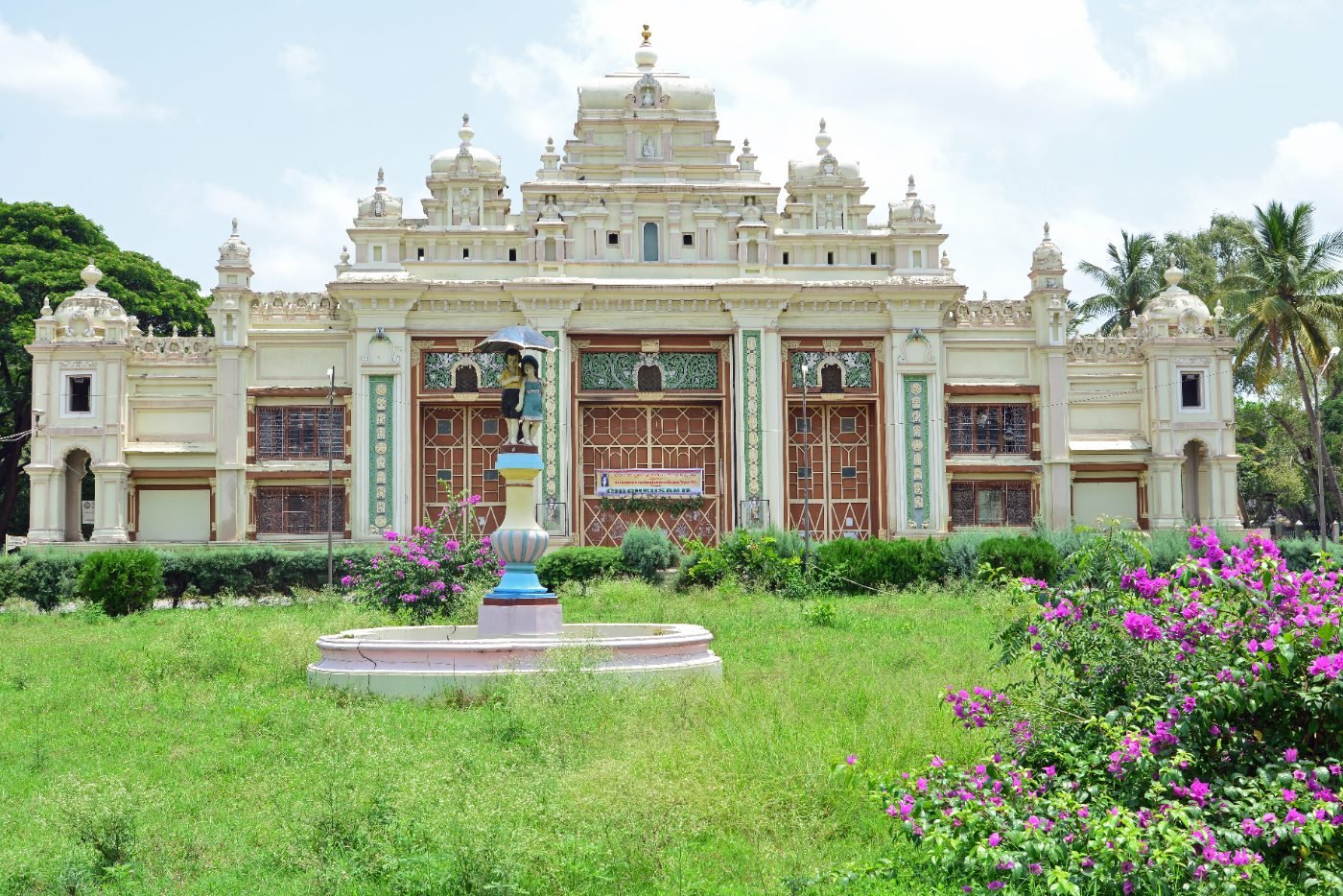
Jaganmohan Palace is one of the most important heritage attractions in Mysuru, Karnataka. Built in 1861 during the reign of the Wodeyar dynasty, the palace combines traditional Hindu-style architecture with an exceptional collection of Indian art, royal artefacts and historical objects.
Today, the palace is home to the Sri Jayachamarajendra Art Gallery, making it especially interesting for travellers who want to experience Mysuru beyond its famous royal palace. The gallery contains more than 2,000 paintings and includes works associated with renowned artists such as Raja Ravi Varma and Nicholas Roerich, along with Mysuru paintings, traditional gold-leaf artwork, sculptures, musical instruments, antique furniture and other royal collections.
Its location in the heart of Mysuru also makes Jaganmohan Palace easy to combine with the city's other major heritage attractions, particularly Mysuru Palace, Devaraja Market and the historic city centre.
Why Is Jaganmohan Palace Famous?
Jaganmohan Palace is famous for two reasons: its royal history and its remarkable art collection. Although it is not as visually vast as the famous Mysuru Palace, the palace offers a much deeper experience for visitors interested in paintings, traditional art, royal objects and Mysuru's cultural history.
- Built in 1861 by the Wodeyar rulers.
- Served as a royal residence during the period when the main Mysuru Palace was unavailable.
- Converted into a museum in 1915.
- Home to the Sri Jayachamarajendra Art Gallery.
- Contains more than 2,000 paintings and artworks.
- Displays works associated with Raja Ravi Varma, Roerich and other renowned artists.
- Known for traditional Mysuru gold-leaf paintings.
- Contains royal photographs, clocks, musical instruments and antique furniture.
- Its architecture features detailed carvings, ornate doors and decorative interiors.
- The palace auditorium continues to support cultural performances and events.
History of Jaganmohan Palace
Jaganmohan Palace was constructed in 1861 during the reign of Krishnaraja Wodeyar III. It was originally developed as a royal residence and became particularly significant after the old Mysuru Palace was damaged by fire in 1897.
During the reconstruction of the present Mysuru Palace, Jaganmohan Palace served as a residence for the royal family. This period gave the building an important place in the modern history of Mysuru's Wodeyar dynasty.
After its royal residential role, the palace developed into an important cultural institution. It was converted into a museum in 1915 and eventually became home to the Sri Jayachamarajendra Art Gallery.
The palace therefore represents more than just an architectural landmark. It connects Mysuru's royal history with the city's long-standing tradition of supporting painting, music, literature and the performing arts.
Architecture of Jaganmohan Palace
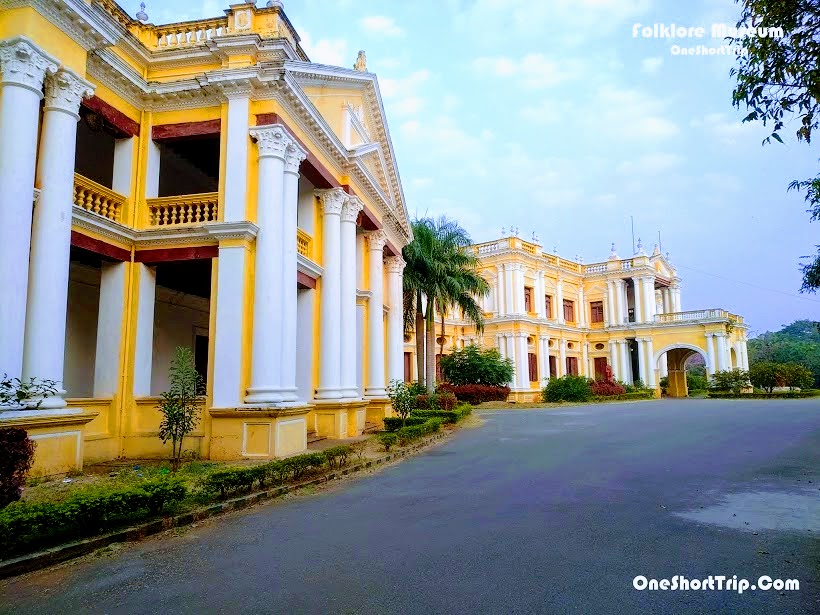
Jaganmohan Palace is an excellent example of traditional Hindu-style palace architecture. The exterior is distinguished by ornate decorative work, domes, carved elements and detailed entrances.
One of the most striking features is the main wooden entrance. The carvings include representations associated with the Dashavatara, the ten incarnations of Lord Vishnu. The palace also contains decorative motifs, miniature temple forms and religious imagery that reflect the artistic traditions of the period.
The walls and interiors also contain murals connected with Mysuru's royal history, including depictions related to the Dasara festival and the Wodeyar lineage.
Sri Jayachamarajendra Art Gallery
The Sri Jayachamarajendra Art Gallery is the principal attraction inside Jaganmohan Palace. It houses an extensive collection representing different Indian artistic traditions as well as works influenced by European painting.
The collection includes more than 2,000 paintings and artworks. Visitors can see traditional Mysuru paintings, Tanjore and Mughal works, miniature paintings and paintings by celebrated Indian and international artists.
Raja Ravi Varma Paintings
The gallery is particularly known for its collection associated with Raja Ravi Varma, one of India's most celebrated painters. His works are significant for their combination of Indian subjects with European academic painting techniques.
For visitors interested in Indian art history, seeing these works inside a historic royal setting makes Jaganmohan Palace considerably different from a conventional art museum.
Roerich and Other Artists
The collection also includes works associated with Nicholas Roerich and other notable artists. Together, these works provide a broad view of Indian and international artistic traditions collected and preserved by the Mysuru royal family.
What Can You See Inside Jaganmohan Palace?
The palace is not limited to paintings. Its collection includes a wide range of objects connected with art, culture and royal life.
- Traditional Mysuru gold-leaf paintings
- Paintings by Raja Ravi Varma
- Works associated with Nicholas Roerich
- Indian miniature paintings
- Tanjore and Mughal-style artwork
- Royal portraits and old photographs
- Antique clocks
- Musical instruments
- Ivory and sandalwood carvings
- Traditional sculptures
- Antique furniture
- Decorative objects and royal memorabilia
Why Jaganmohan Palace Is Important to Mysuru's Culture
Mysuru is widely associated with the Wodeyar dynasty, Dasara celebrations, classical music, traditional painting and royal craftsmanship. Jaganmohan Palace brings many of these cultural traditions together in one place.
The art gallery preserves paintings and objects that help visitors understand how art was supported and collected by the Mysuru royal household. The palace auditorium also continues the building's cultural role through performances, exhibitions and other programmes.
For this reason, Jaganmohan Palace is best understood not simply as another palace in Mysuru, but as a heritage museum and cultural centre that connects the city's royal past with its artistic traditions.
Jaganmohan Palace Auditorium
The palace complex also includes an auditorium that has played an important role in Mysuru's cultural life. The space has been used for music, dance, drama, cultural programmes and other performances.
This makes Jaganmohan Palace different from many historic buildings that survive only as monuments. It remains associated with active cultural life in Mysuru.
Jaganmohan Palace – Quick Visitor Information
| Location | Jagan Mohan Palace Road, Subbarayanakere, Chamrajpura, Mysuru, Karnataka 570004 |
|---|---|
| Established | 1861 |
| Major Attraction | Sri Jayachamarajendra Art Gallery |
| Art Collection | More than 2,000 paintings and artworks |
| Best Known For | Royal heritage, Indian paintings, Mysuru art, Raja Ravi Varma works and traditional artefacts |
| Ideal Visit Duration | Approximately 1.5 to 2.5 hours |
| Suitable For | History lovers, art enthusiasts, families, senior citizens, photographers and cultural travellers |
Who Should Visit Jaganmohan Palace?
For History Lovers
The palace provides an opportunity to understand an important period of Mysuru's royal history, particularly the Wodeyar era and the period when Jaganmohan Palace functioned as a royal residence.
For Art Lovers
Art enthusiasts should consider Jaganmohan Palace one of the essential stops in Mysuru. The extensive collection of paintings, traditional Mysuru artwork and works by renowned artists makes the gallery one of the city's most valuable cultural attractions.
For Families
Families can combine the palace with Mysuru Palace and other nearby attractions. Children who enjoy history, paintings or architecture can also find the collection interesting.
For Senior Citizens
Jaganmohan Palace can be a comfortable cultural attraction for senior travellers because it is centrally located and does not require the extensive outdoor walking associated with some of Mysuru's larger sightseeing destinations.
How Long Does It Take to Visit Jaganmohan Palace?
Most visitors should allow around 1.5 to 2.5 hours to appreciate the palace and art gallery without rushing.
Art enthusiasts may want to spend longer examining the paintings and historical objects, while travellers following a packed Mysuru sightseeing itinerary can cover the main highlights in a shorter visit.
Best Time to Visit Jaganmohan Palace
Jaganmohan Palace can be visited throughout the year because the main experience takes place indoors. For a more comfortable Mysuru sightseeing day, start early and combine the palace with nearby attractions before the afternoon heat.
The palace is particularly useful during a Mysuru heritage itinerary because its central location allows travellers to combine several attractions without spending significant time travelling between them.
Jaganmohan Palace and Mysuru's Royal Heritage
Jaganmohan Palace should ideally be understood as part of a larger royal heritage circuit in Mysuru. The city was the seat of the Wodeyar dynasty for centuries and developed a distinctive tradition of architecture, painting, music and royal celebrations.
A visit to Jaganmohan Palace adds an artistic dimension to the more grand-scale royal experience offered by Mysuru Palace. While Mysuru Palace is known for its enormous royal interiors and ceremonial grandeur, Jaganmohan Palace allows visitors to focus more closely on paintings, craftsmanship and preserved royal collections.
Why Add Jaganmohan Palace to Your Mysuru Itinerary?
If your Mysuru trip includes only the most famous attractions, it is easy to overlook Jaganmohan Palace. However, travellers interested in understanding the city's art and royal culture should make time for it.
The combination of a historic palace, traditional architecture, an extensive art gallery and royal artefacts makes it one of the most rewarding cultural experiences in central Mysuru.
Its location also makes it easy to combine with Mysuru Palace, Devaraja Market, St. Philomena's Church and other attractions depending on the time available.
Jaganmohan Palace Timings
According to the current Mysuru District Government tourism listing, Jaganmohan Palace is open every day from 10:00 AM to 5:30 PM. Since timings can occasionally change during special events, maintenance or government arrangements, it is sensible to verify the latest information before travelling.
| Opening Days | All days |
|---|---|
| Opening Time | 10:00 AM |
| Closing Time | 5:30 PM |
| Recommended Arrival | Morning or early afternoon |
Jaganmohan Palace Entry Fee
The current Mysuru District Government listing gives the entry fee as ₹20 for adults and ₹10 for children aged 5 to 10 years.
How to Reach Jaganmohan Palace
Jaganmohan Palace is located in the central part of Mysuru, making it one of the easier heritage attractions to include in a city sightseeing itinerary. The Mysuru District Government lists the palace at approximately 2 km from Mysuru Railway Station and around 2 km from the Suburban Bus Stand.
By Train
Mysuru Junction Railway Station is approximately 2 km from Jaganmohan Palace. Visitors arriving by train can reach the palace by auto-rickshaw, taxi or other local transport.
By Bus
The Mysuru Suburban Bus Stand is also approximately 2 km away. Local buses, autos and taxis make the final part of the journey convenient.
By Road
Jaganmohan Palace is centrally located within Mysuru and can be reached easily by car, taxi or auto-rickshaw. If you are travelling by car, allow extra time for city-centre traffic and parking.
By Air
Mysuru Airport is approximately 14.5 km from Jaganmohan Palace according to the current Mysuru District Government tourism listing.
Best Time to Visit Jaganmohan Palace
Jaganmohan Palace can be visited throughout the year because much of the experience is centred around the palace interiors and art gallery. For a more comfortable sightseeing experience, mornings are a good choice, particularly if you want to combine the palace with several other attractions in central Mysuru.
Visitors travelling to Mysuru during the Dasara season can also consider adding Jaganmohan Palace to their heritage itinerary. The palace itself contains murals depicting aspects of Mysuru's Dasara tradition, making the visit particularly relevant for travellers interested in the city's royal culture.
How Much Time Do You Need at Jaganmohan Palace?
Plan for approximately 1.5 to 2.5 hours for a comfortable visit.
- 1 hour: Suitable for a quick look at the major exhibits.
- 1.5–2 hours: Good for most visitors who want to explore the palace and art gallery properly.
- 2–3 hours: Recommended for art enthusiasts and visitors who want to spend more time studying the paintings and royal collections.
Photography at Jaganmohan Palace
Photography rules inside Jaganmohan Palace can vary according to the gallery's current regulations. Karnataka Tourism notes that photography is generally restricted inside the gallery, while some material refers to photography being permitted with permission. It is therefore best to follow the instructions displayed at the palace rather than assuming that photography is allowed throughout the interiors.
The exterior of the palace is particularly worthwhile for photography because of its ornate façade, carved entrance and traditional architectural details.
Jaganmohan Palace for Families
Jaganmohan Palace can be a good family attraction, especially when children are introduced to the visit through the palace's paintings, royal objects, clocks, musical instruments and architectural details rather than treating it only as a historical building.
Families can combine the palace with nearby attractions to create a varied day covering history, culture, shopping and food.
Jaganmohan Palace for Senior Citizens
The palace can work well for senior travellers who enjoy history and art. Its central city location also makes it convenient to combine with other nearby attractions without spending long periods travelling between destinations.
Allowing sufficient time for a relaxed visit is preferable to trying to cover the entire Mysuru sightseeing circuit in a hurry.
What Should You Look for Inside Jaganmohan Palace?
Visitors should pay attention to more than just the famous paintings. The palace itself is part of the attraction, and several smaller details can easily be missed.
- The elaborately carved main entrance.
- Dashavatara carvings on the entrance doors.
- Decorative miniature temple motifs.
- Murals connected with Mysuru's royal history and Dasara.
- Traditional Mysuru gold-leaf paintings.
- Raja Ravi Varma paintings.
- Works associated with Roerich.
- Antique clocks and musical instruments.
- Ivory and sandalwood objects.
- Old photographs of royal occasions.
- Antique furniture and royal memorabilia.
Karnataka Tourism specifically highlights the palace's collection of clocks, Mysuru gold-leaf paintings, ivory and sandalwood sculptures, musical instruments, antique furniture, royal photographs and works by Raja Ravi Varma and Roerich.
Jaganmohan Palace and Mysuru Palace – Are They the Same?
No. Jaganmohan Palace and Mysuru Palace are two different royal buildings.
Mysuru Palace, also known as Amba Vilas Palace, is the city's grand principal royal palace and is famous for its enormous interiors, royal ceremonies and Dasara celebrations. Jaganmohan Palace is a smaller historic royal palace that now functions primarily as an art gallery and cultural venue.
Both are located in central Mysuru and can easily be included in the same sightseeing itinerary.
Best Places to Visit Near Jaganmohan Palace
1. Mysuru Palace
Mysuru Palace is the obvious companion attraction. It provides the larger royal experience, with grand halls, ornate interiors and important royal artefacts. The two palaces together provide a much more complete picture of Mysuru's royal heritage.
2. Devaraja Market
Devaraja Market is one of the historic commercial areas of Mysuru and is a good place to experience the city's local atmosphere, flowers, spices, fruits and traditional shopping.
3. St. Philomena's Church
St. Philomena's Church is one of Mysuru's most recognisable religious landmarks and is known for its Neo-Gothic architecture and tall twin spires.
4. Mysuru Railway Museum
The Railway Museum offers a different perspective on Mysuru's history through locomotives, railway equipment, coaches and exhibits connected with the development of rail transport in the region.
5. Karanji Lake
Karanji Lake is a good choice for travellers who want to add a nature-focused attraction after exploring Mysuru's heritage buildings.
6. Chamundi Hill
Chamundi Hill and the Sri Chamundeshwari Temple are among Mysuru's major attractions and can be added to a full-day city sightseeing plan.
Best Jaganmohan Palace Sightseeing Combinations
Because of its central location, Jaganmohan Palace works particularly well as part of a wider Mysuru heritage circuit.
Option 1 – Royal Mysuru Circuit
Jaganmohan Palace → Mysuru Palace → Devaraja Market → St. Philomena's Church
This is a good choice for first-time visitors who want to focus on Mysuru's history and architecture.
Option 2 – Palace and Culture Circuit
Jaganmohan Palace → Mysuru Palace → Devaraja Market → Mysuru Railway Museum
This combination works well for families and travellers interested in history, art and heritage.
Option 3 – Full Mysuru Day
Mysuru Palace → Jaganmohan Palace → Devaraja Market → St. Philomena's Church → Chamundi Hill
This route combines royal heritage, art, local culture, architecture and one of Mysuru's most important hilltop attractions.
Tips for Visiting Jaganmohan Palace
- Check the latest timings and entry fee before leaving.
- Visit earlier in the day if you are combining the palace with several other attractions.
- Allow at least 1.5 hours if you want to appreciate the art collection properly.
- Do not rush past the palace entrance and exterior carvings.
- Follow all photography instructions inside the gallery.
- Wear comfortable footwear if combining the palace with a walking-heavy Mysuru itinerary.
- Keep sufficient time for nearby Mysuru Palace, particularly if visiting both on the same day.
- During Dasara and major holidays, expect larger crowds around central Mysuru.
- Respect the palace and gallery rules while viewing the artworks.
- Art enthusiasts should allow additional time for the Mysuru and Raja Ravi Varma collections.
Is Jaganmohan Palace Worth Visiting?
Yes. Jaganmohan Palace is particularly worthwhile for travellers who want to understand the artistic and cultural side of Mysuru's royal heritage.
The palace combines traditional architecture, Wodeyar history, Mysuru painting, major Indian artworks, royal objects and a continuing cultural role. Its central location also makes it easy to add to a Mysuru sightseeing itinerary.
For a first-time visitor, it is best paired with Mysuru Palace. While Mysuru Palace showcases the grandeur of royal life, Jaganmohan Palace provides a closer look at the art, craftsmanship and cultural traditions that developed around the Mysuru royal court.
Jaganmohan Palace – A Useful Stop on a Mysuru Heritage Tour
Jaganmohan Palace is one of those Mysuru attractions that can be easy to overlook when planning a trip around the city's better-known landmarks. Yet its combination of royal history and art makes it an important part of the city's heritage story.
Whether you are interested in Jaganmohan Palace history, Jaganmohan Palace timings, Jaganmohan Palace entry fee, Sri Jayachamarajendra Art Gallery, Raja Ravi Varma paintings, Mysuru paintings or places to visit near Jaganmohan Palace, the palace offers a compact but rewarding cultural experience in the centre of Mysuru.
For travellers building a Mysuru itinerary, adding Jaganmohan Palace between the city's major royal and heritage attractions is an excellent way to experience a different side of the cultural capital of Karnataka.
Why Jaganmohan Palace Is Worth The Visit
Jaganmohan Palace, Mysuru – Frequently Asked Questions
1. Where is Jaganmohan Palace located?
2. What is Jaganmohan Palace famous for?
3. When was Jaganmohan Palace built?
4. Who built Jaganmohan Palace?
5. Why was Jaganmohan Palace built?
6. Did the Wodeyar royal family live in Jaganmohan Palace?
7. When was Jaganmohan Palace converted into a museum?
8. What is inside Jaganmohan Palace?
9. What is the Sri Jayachamarajendra Art Gallery?
10. How many paintings are in Jaganmohan Palace?
11. Does Jaganmohan Palace have Raja Ravi Varma paintings?
12. Does Jaganmohan Palace have Roerich paintings?
13. What are Mysuru gold-leaf paintings?
14. What is special about the architecture of Jaganmohan Palace?
15. What is carved on the main entrance of Jaganmohan Palace?
16. Are there murals inside Jaganmohan Palace?
17. What other things can be seen at Jaganmohan Palace?
18. What are the timings of Jaganmohan Palace?
19. Is Jaganmohan Palace open every day?
20. What is the entry fee for Jaganmohan Palace?
21. Can children visit Jaganmohan Palace?
22. Is Jaganmohan Palace suitable for families?
23. Is Jaganmohan Palace suitable for senior citizens?
24. How much time is needed to visit Jaganmohan Palace?
25. What is the best time to visit Jaganmohan Palace?
26. Can Jaganmohan Palace be visited throughout the year?
27. Can I take photographs inside Jaganmohan Palace?
28. Is photography allowed outside Jaganmohan Palace?
29. How far is Jaganmohan Palace from Mysuru Railway Station?
30. How far is Jaganmohan Palace from Mysuru Bus Stand?
31. How far is Jaganmohan Palace from Mysuru Airport?
32. How do I reach Jaganmohan Palace from Mysuru Railway Station?
33. Is Jaganmohan Palace close to Mysuru Palace?
34. Can I visit Jaganmohan Palace and Mysuru Palace on the same day?
35. What is the difference between Jaganmohan Palace and Mysuru Palace?
36. What places can I visit near Jaganmohan Palace?
37. Can I visit Devaraja Market after Jaganmohan Palace?
38. Can Jaganmohan Palace be included in a Mysuru one-day itinerary?
39. Is Jaganmohan Palace worth visiting?
40. Is Jaganmohan Palace good for art lovers?
41. Is Jaganmohan Palace good for history lovers?
42. Is Jaganmohan Palace a museum or a palace?
43. Does Jaganmohan Palace have an auditorium?
44. Is Jaganmohan Palace connected to Mysuru Dasara?
45. What should I not miss at Jaganmohan Palace?
46. Is Jaganmohan Palace good for a half-day Mysuru sightseeing plan?
47. What should I wear when visiting Jaganmohan Palace?
48. Is Jaganmohan Palace suitable for first-time visitors to Mysuru?
49. What makes Jaganmohan Palace different from other Mysuru attractions?
50. What is the best way to explore Jaganmohan Palace?
You May Also Like


Planning A Trip Here?
Get help planning your visit — call or WhatsApp us and we will help you book a tour.