
About Mehrangarh Fort
Towering 410 feet above Jodhpur behind walls 118 feet tall and 69 feet thick, Mehrangarh Fort ranks among the largest forts in India, spanning roughly 5 km across 26 acres. It was built around 1459 by Rao Jodha, the ruler after whom Jodhpur itself is named. The name 'Mehrangarh' comes from the Sanskrit 'Mihir' (sun) and 'Garh' (fort) — a fitting name for the Rathore rulers of Marwar, who traced their lineage to the Sun God and arrived as refugees from Kanauj in central India some 800 years ago, founded here by Rao Siyyaji. The hilltop the fort now occupies was not empty ground before Rao Jodha arrived: a hermit named Cheeria Nathji, whose name literally means 'lord of the birds' and who is remembered for his devotion to them, lived there and had to be forcibly relocated to make way for construction. He is said to have cursed the new fort with perpetual scarcity of water, refusing even the temple and dwelling Jodha built nearby to placate him. Unsettled by the curse, Jodha reportedly went further still, having a man named Rajaram Meghwal buried alive within the foundations as an offering meant to secure the fort's fortune, in exchange for a promise that the Rathores would look after his descendants — a grim origin story still recounted alongside the fort's more celebrated architecture and views.
The fort sits atop Bhaurcheeria, the 'Mountain of Birds', formed from inactive volcanic rock. Skilled rock-cutters known as 'Khandwaliya' carved the stone, while 'Chouwaliyas' engineered the heavy blocks up the mountainside using little more than chains and rods. Seven gates guard the approach to the fort, each carrying its own significance — Jaipol, the grandest of them, remains the main entrance.
Museum: Houses palanquins, royal costumes, weapons, paintings, musical instruments and furniture of the Rathore rulers.
Life Inside a Living Fort
Unlike many Rajasthani forts that stand largely as empty shells today, Mehrangarh has always kept a working relationship with the Jodhpur royal family, and that continuity shows in how well it has been maintained. The Mehrangarh Museum Trust, set up under the current custodian Gaj Singh II, has run the fort's conservation and museum programme for decades, and its careful restoration work is part of why Mehrangarh is often cited as one of the best-preserved forts in the country. Walking through the ramparts, visitors pass ceremonial cannons still positioned along the walls, watchtowers that once tracked movement across the Thar plains, and courtyards that hosted everything from royal weddings to war councils.
Zenana Deodi and the Women's Quarters
Tucked away from the more public palaces is the Zenana Deodi, the secluded courtyard that once housed the royal women. Built largely of sandstone with delicately carved sandstone-lattice (jaali) windows, it allowed the women of the court to observe courtyard proceedings and the world outside without being seen themselves — a common feature of Rajput palace architecture rooted in the purdah system of the era. The stonework here is generally considered among the finest in the fort, with perforated screens filtering both light and heat into cooler, shaded interiors.
Chamunda Devi Temple
At the southern end of the fort complex stands a small temple dedicated to Chamunda Devi, the family deity of the Rathore rulers, installed by Rao Jodha himself when he shifted his capital to Mehrangarh in the 15th century. The temple remains an active place of worship today and is closely associated with a tragic 2008 stampede during Navratri celebrations, after which safety measures around the temple approach were reworked. It is a reminder that Mehrangarh is not simply a monument frozen in the past — it remains woven into Jodhpur's living religious calendar.
The View From the Ramparts
Perhaps the single most photographed vantage point in Jodhpur is the view from Mehrangarh's walls out over the "Blue City" below, where a dense cluster of indigo-washed houses spreads beneath the fort. The blue tint is popularly linked to Brahmin households that traditionally painted their homes this color, though over time it also spread more widely as a heat-reflecting, insect-repelling whitewash additive. Early morning and late afternoon are considered the best times to catch this view, both for the light and for slightly thinner crowds along the rampart walkway.
Visiting Tips
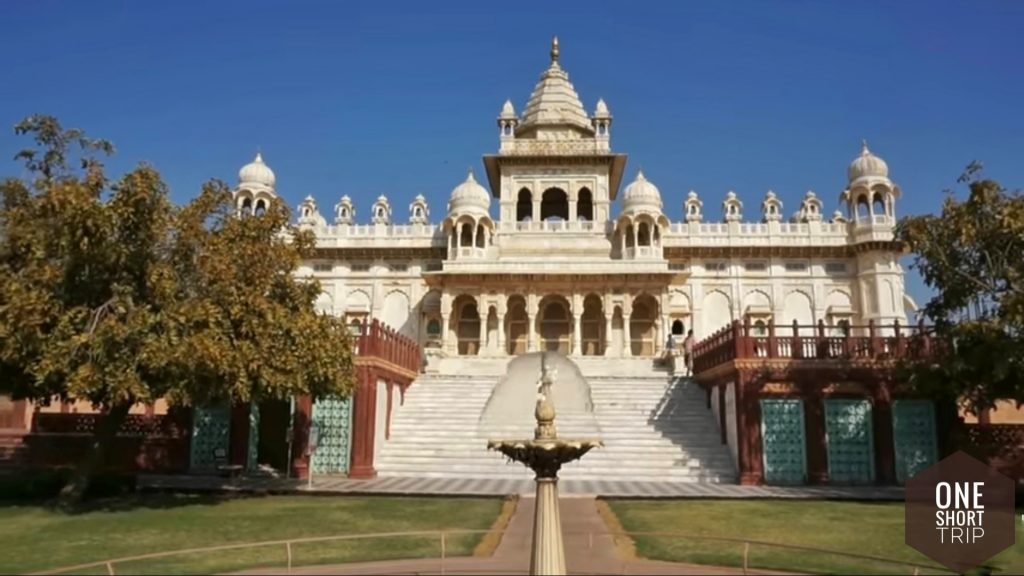
An audio guide is included with the entry ticket and is genuinely worth using, since it covers each palace and courtyard in useful depth, including details a casual walk-through would miss. The fort involves a fair amount of walking and some inclines, so comfortable footwear is recommended; there is also a lift/elevator option near the entrance for visitors who prefer not to climb the initial ramp on foot. Photography is generally permitted, though a separate camera fee may apply for professional equipment, and some interior sections restrict flash photography to protect old paintings and fabrics. Combining a Mehrangarh visit with nearby Jaswant Thada in the same morning works well, since the two sit close together and share a similar Jodhpur skyline backdrop.
The Legend of Cheeria Nathji's Curse
Local memory in Jodhpur still keeps alive the story of the water scarcity that has long troubled the region around Mehrangarh, and it is almost always traced back to the hermit Cheeria Nathji's displeasure at being moved off the hill. Whether or not every detail of the legend can be verified, the belief itself has shaped how the fort is talked about locally — some residents point to the historically erratic rainfall of the Marwar region as a rational explanation, while others prefer the older story passed down through generations. Either way, the temple Rao Jodha built in an attempt to placate the hermit still stands within the fort premises today, a small but telling detail for visitors interested in the human stories layered beneath the architecture.
Getting There and Around
Most visitors reach Mehrangarh via a short taxi or auto-rickshaw ride from anywhere in Jodhpur city, since the fort sits centrally above the old town and is hard to miss on the skyline. A ropeway option also connects the base of the hill to a point near the fort entrance for those who would rather skip the walk up. Once inside, the self-guided route is well signposted, though the audio guide remains the easiest way to keep track of which courtyard or palace you are standing in, given how interconnected the complex feels on a first visit. Plan for at least two to three hours to see the museum galleries, palace interiors, and ramparts without feeling rushed, and add extra time if visiting during the winter tourist season when the fort tends to be busier.


Frequently Asked Questions

Also In Jodhpur