


New Modern Hotel (NMH), Bangalore
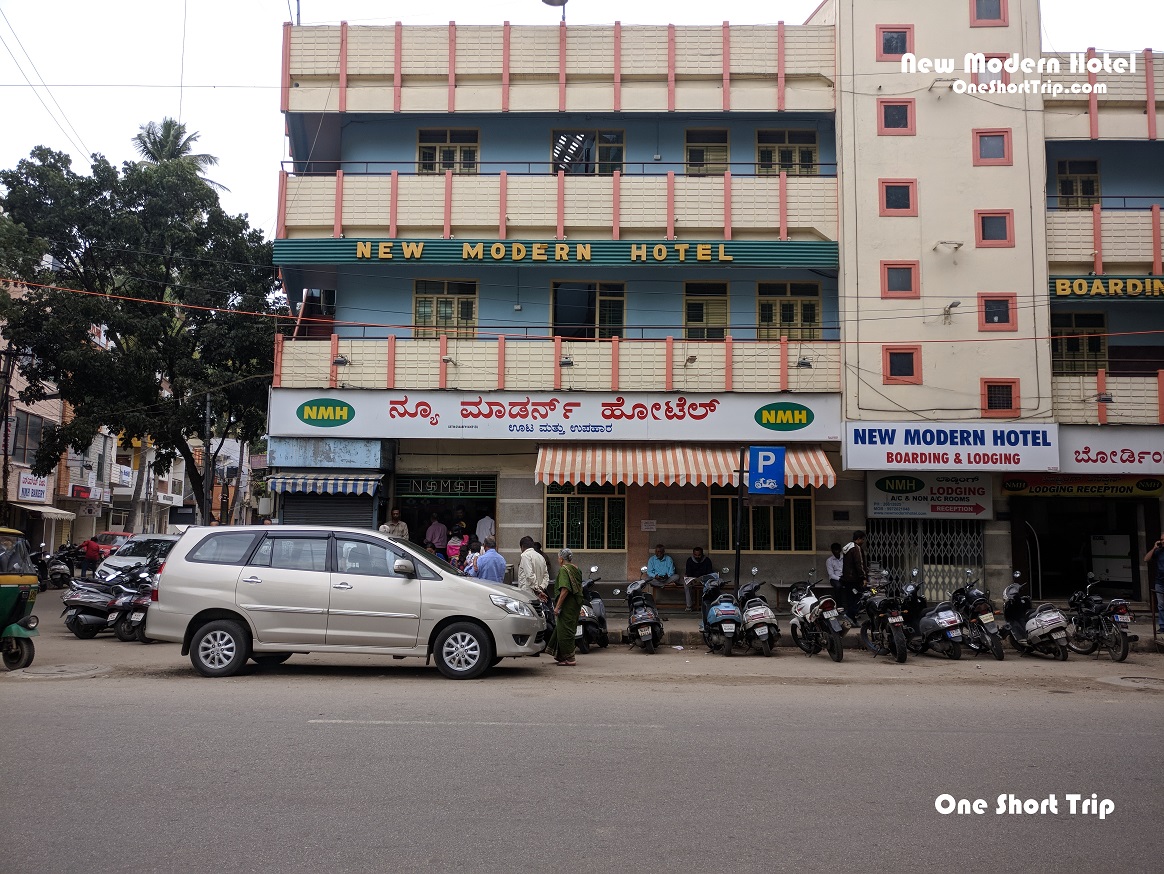
New Modern Hotel, popularly known as NMH, is one of Bangalore's enduring old-school South Indian eateries. Located on Dr A. N. Krishna Rao Road near Minerva Circle in the historic VV Puram and Basavanagudi area, this modest restaurant has been part of Bangalore's food culture since 1959. Despite the name, New Modern Hotel is not primarily a modern hotel in the accommodation sense; in Bangalore's traditional usage, the word "hotel" commonly refers to a restaurant or eating house. NMH is best known for its simple setting, vegetarian South Indian food and the nostalgic character that has remained associated with the establishment for decades.
For visitors exploring old Bangalore, New Modern Hotel offers something different from the city's newer cafés and restaurants. The attraction here is the combination of long-standing history, familiar South Indian breakfast dishes and an atmosphere that feels connected to an earlier era of Bengaluru. The restaurant has become particularly associated with classic breakfast favourites such as idli, vada, masala dosa, plain dosa, khara bath and filter coffee, making it a useful stop for travellers who want to experience a traditional Bangalore breakfast rather than a contemporary interpretation of South Indian cuisine.
A Bangalore Institution Since 1959
New Modern Hotel began in 1959 under its founder Lakshminarayana Rao. Over the years, the restaurant became a familiar part of the VV Puram neighbourhood and developed a loyal following among Bangalore residents. Its story is also connected with Narasimha Adiga, who joined the establishment as a cashier in its early years and eventually became its proprietor. His brother, Padmanabha Adiga, later joined him in running the restaurant, helping carry the business through subsequent generations.
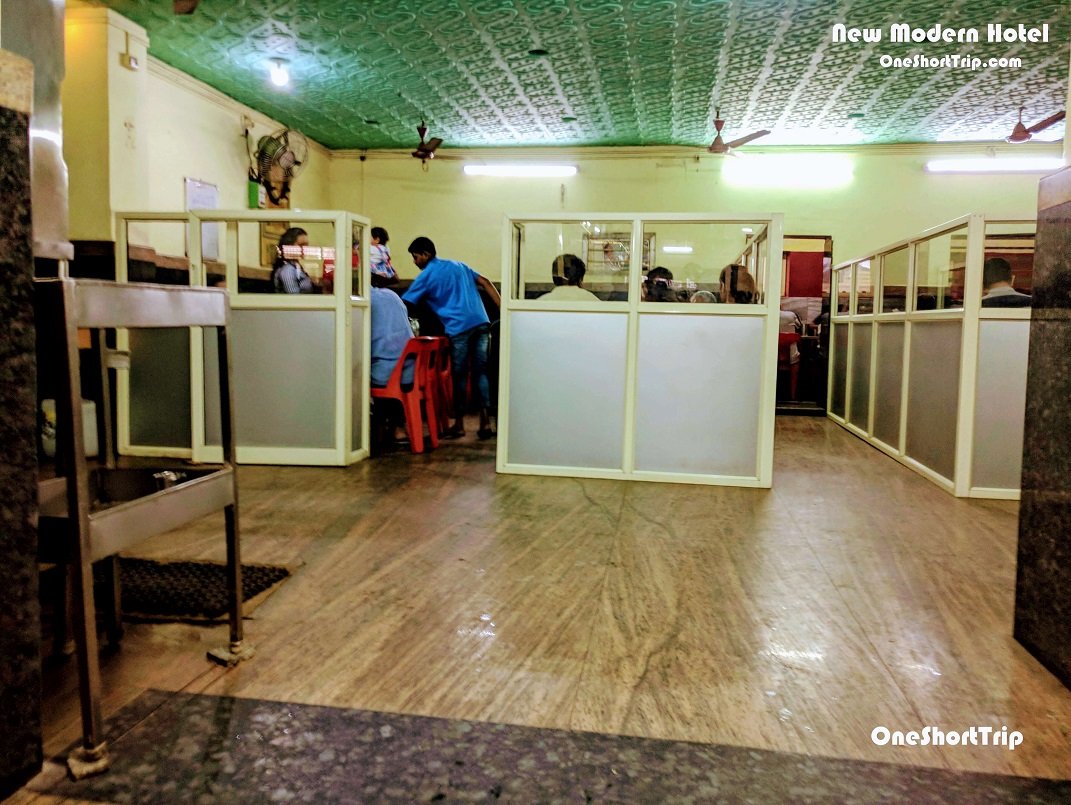
One of the interesting aspects of NMH's history is the relationship between the restaurant's appearance and its regular customers. At one point, efforts were made to give the interiors a more modern appearance, but long-time patrons preferred the familiar old-world character they had associated with the restaurant for years. The interiors subsequently retained much of that simple, traditional identity, which today forms an important part of the experience of visiting New Modern Hotel.
Why New Modern Hotel Is Famous in Bangalore
New Modern Hotel is famous primarily for its traditional vegetarian South Indian breakfast. The food is uncomplicated and familiar, but that is precisely what attracts many visitors. Idli, dosa, vada and other breakfast staples are prepared in the style expected from a long-established Bangalore eatery, while filter coffee provides the classic finishing touch.
Among the dishes commonly associated with NMH are soft idli with sambar and chutney, crisp masala dosa, plain dosa, vada, khara bath, puri, set dosa, thatte idli, rava idli and filter coffee. The menu also includes traditional South Indian sweets and snacks, making the restaurant suitable not only for breakfast but also for a quick snack or simple meal.
The Idli, Dosa and Classic Breakfast Experience
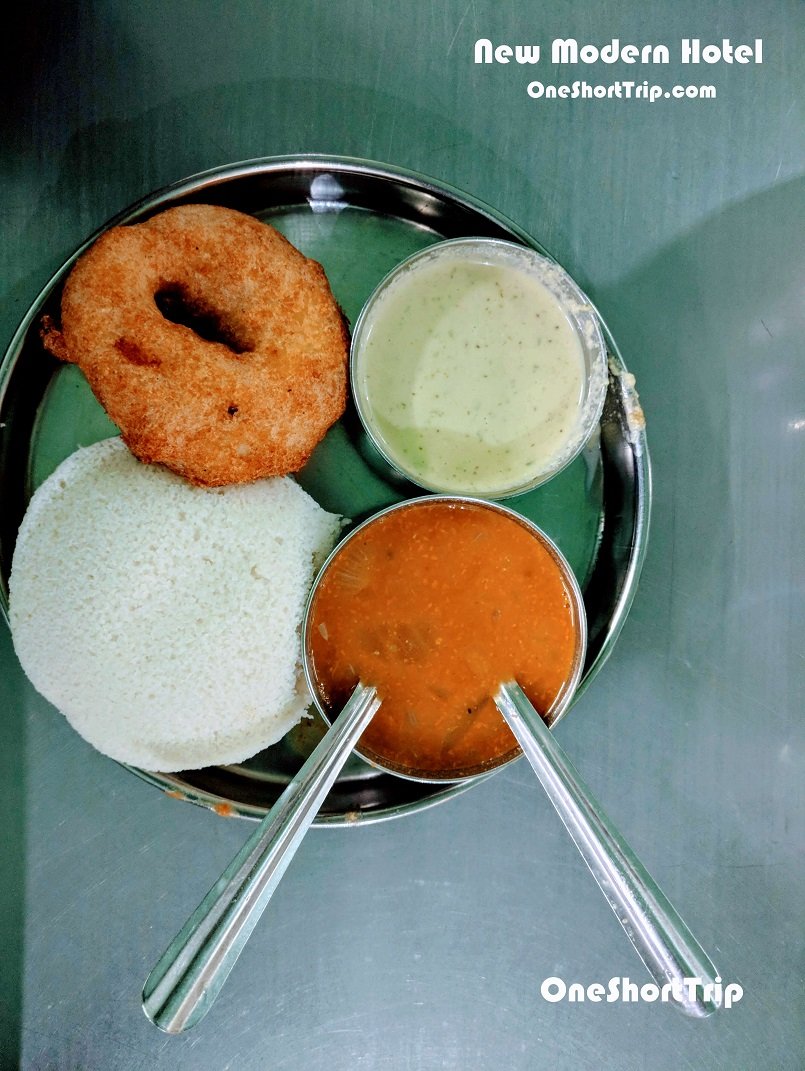
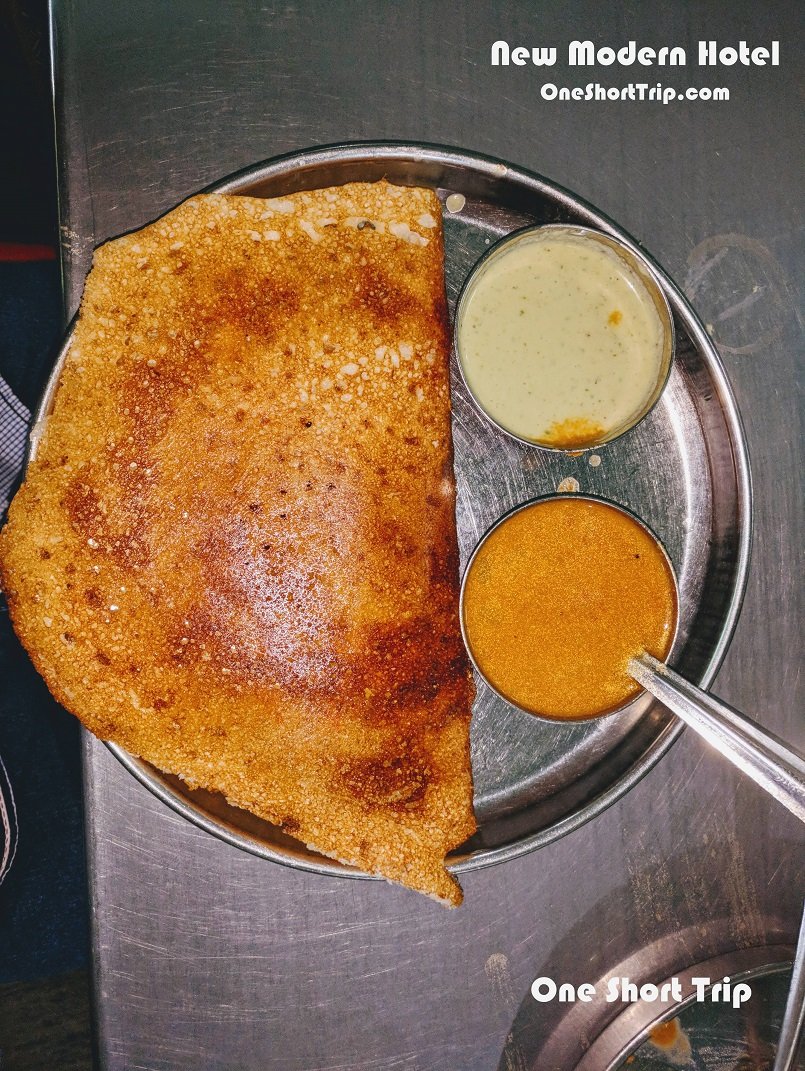
The idli at New Modern Hotel is one of the most recognisable choices for a traditional breakfast. Soft steamed idlis are typically enjoyed with sambar and chutney, providing the simple combination that has remained a staple of Bengaluru's breakfast culture. For travellers looking for something more substantial, the masala dosa is another popular choice, pairing a crisp dosa with a seasoned potato filling.
The restaurant's dosa selection is complemented by other South Indian breakfast favourites, including vada, set dosa, thatte idli and rava idli. Khara bath and puri are also popular options. The emphasis is on familiar vegetarian dishes rather than an elaborate menu, allowing visitors to experience the kind of straightforward breakfast that has long been part of everyday Bangalore life.
The Famous Sambar and Filter Coffee
Sambar is an important part of the NMH experience. It is served alongside several of the restaurant's breakfast dishes and is especially suited to idli, vada and dosa. The combination of freshly prepared South Indian staples with sambar and chutney is one of the reasons the restaurant has remained a familiar name among traditional food lovers.
A meal at New Modern Hotel is often completed with South Indian filter coffee. For many visitors, the coffee is as much a part of the old-Bangalore experience as the food itself. The combination of hot breakfast, traditional coffee and the restaurant's uncomplicated surroundings creates the nostalgic atmosphere for which NMH is remembered.
Traditional Sweets and Snacks
New Modern Hotel is not limited to breakfast dishes. Its traditional offerings have also included South Indian sweets and snacks such as Mysore Pak, ladoo, badam halwa, badam burfi, kesari bath and other familiar preparations. These provide another reason to visit when looking for a quick traditional snack rather than a full meal.
For travellers interested in Bangalore's food heritage, these simple preparations are part of what makes NMH different from newer restaurants. The experience is less about elaborate presentation and more about eating familiar dishes in a place that has been serving generations of customers.
A Taste of Old Bangalore
The location of New Modern Hotel adds considerably to its appeal. VV Puram and Basavanagudi are among the areas most closely associated with Bangalore's traditional food culture, and the neighbourhood has evolved into one of the city's best-known food destinations. The nearby streets are particularly lively around meal times, with restaurants, snack shops and food stalls attracting both residents and visitors.
NMH occupies a slightly different position within this food landscape. While the surrounding area is known for its bustling food scene, New Modern Hotel retains the identity of a traditional neighbourhood eatery. Its simple seating, straightforward service and long history give visitors a glimpse into the everyday food culture of an older Bangalore.
Connection With Bangalore's Cultural Life
During its long history, New Modern Hotel also became associated with Bangalore's wider literary and cultural circles. In its earlier decades, the restaurant was known as an informal meeting point for people involved in the city's creative life, including writers, musicians and theatre personalities. Breakfast and coffee tables could become places for conversation, discussion and exchange of ideas.
This connection with the city's cultural history adds another layer to the restaurant's identity. NMH is therefore more than a place to eat idli or dosa; it represents a small part of the social history of old Bangalore, where neighbourhood restaurants often served as informal gathering places for residents, artists, professionals and regular customers.
Location and How to Reach New Modern Hotel
New Modern Hotel is located at No. 144, Dr A. N. Krishna Rao Road, Visveshwarapuram, Bangalore 560004, near Minerva Circle in the VV Puram/Basavanagudi area. Its central location makes it convenient to combine with a sightseeing trip around old Bangalore.
The restaurant can be reached by taxi, auto-rickshaw, public transport or private vehicle. Visitors travelling by car should be aware that parking can be difficult around the narrow and busy streets of the neighbourhood, particularly during popular breakfast hours.
When to Visit New Modern Hotel
New Modern Hotel is particularly suitable for a traditional Bangalore breakfast. Morning is the natural time to experience the restaurant, when dishes such as idli, dosa, vada and filter coffee fit naturally into the city's breakfast culture. The restaurant is also known for serving food through later parts of the day, making it possible to visit for a simple meal or snack depending on your sightseeing schedule.
If you are exploring Basavanagudi, VV Puram and nearby heritage attractions, NMH can be included as a food stop rather than requiring a separate trip. Its location makes it especially convenient for travellers interested in combining Bangalore sightseeing with local food experiences.
What to Eat at New Modern Hotel
For a first visit, a traditional combination of idli or vada with sambar, followed by masala dosa and filter coffee gives a good introduction to the restaurant's style. Travellers looking for lighter or different options can also consider plain dosa, set dosa, thatte idli, rava idli or khara bath. Those with a sweet tooth can look for traditional sweets such as Mysore Pak, kesari bath, ladoo and badam-based sweets.
New Modern Hotel is best appreciated for what it represents: a long-running Bangalore food institution where familiar South Indian dishes, an uncomplicated setting and decades of local history come together. For visitors who want to discover authentic old Bangalore food culture, NMH remains a memorable stop in the Basavanagudi and VV Puram area.


