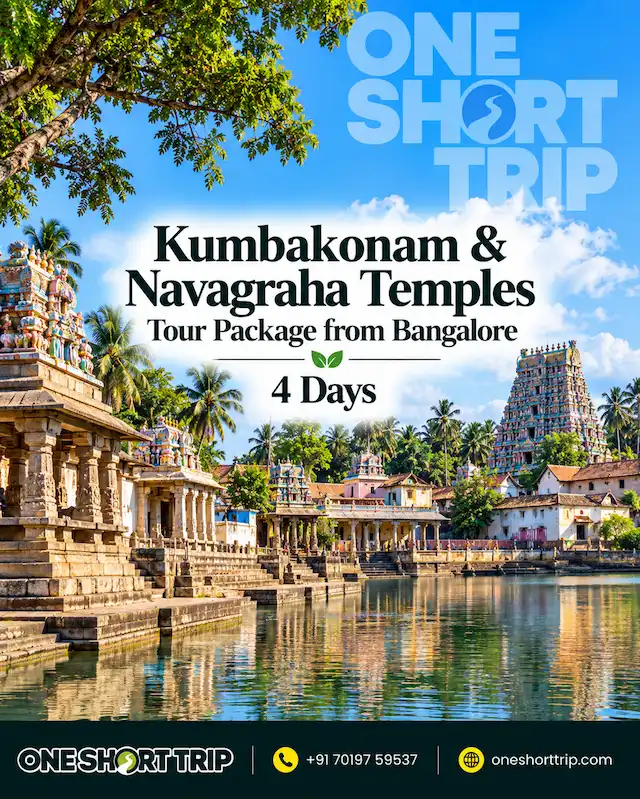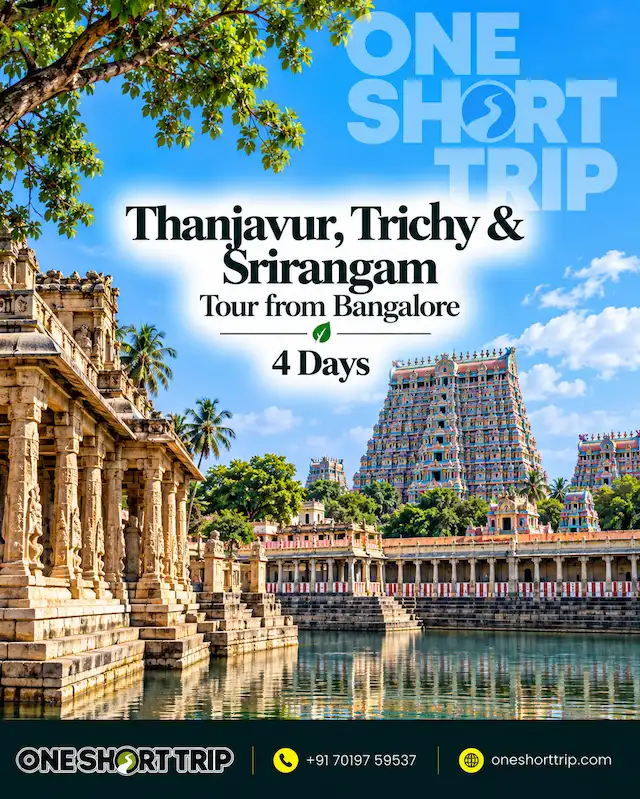
Navagraha Temples Tour Package from Bangalore – 3 Days / 2 Nights
Complete the sacred nine-temple Navagraha circuit around Kumbakonam, visiting the temples associated with Surya, Chandra, Angaraka, Budha, Guru, Shukra, Shani, Rahu and Ketu on a private pilgrimage from Bangalore.
Complete the 9 Navagraha Temples from Bangalore
This 3 Days / 2 Nights Navagraha Temples tour package from Bangalore is designed for travellers who want to complete the traditional nine-temple pilgrimage around Kumbakonam without adding unrelated sightseeing. The circuit covers the temples associated with Surya, Chandra, Angaraka, Budha, Guru, Shukra, Shani, Rahu and Ketu, with Kumbakonam used as the base for both nights.
After travelling from Bangalore to Kumbakonam, the nine Navagraha temples are divided into practical temple circuits to reduce unnecessary backtracking and work around temple darshan hours. Visit Thingalur, Alangudi, Thirunageswaram, Suryanar Kovil and Kanjanur before continuing the pilgrimage through Vaitheeswaran Koil, Thiruvenkadu, Keezhperumpallam and Thirunallar, followed by the return journey to Bangalore.
All 9 Navagraha Temples
Complete the sacred circuit covering the temples associated with all nine Navagrahas in one focused pilgrimage.
Surya to Ketu
Visit the traditional sthalas associated with Surya, Chandra, Mars, Mercury, Jupiter, Venus, Saturn, Rahu and Ketu.
Kumbakonam Base
Stay in Kumbakonam for two nights, providing a practical base for reaching the Navagraha temples across the region.
Planned Temple Circuit
Follow a route designed to reduce unnecessary backtracking while allowing for temple timings, darshan and road travel.
Navagraha Temples Tour Itinerary from Bangalore – 3 Days / 2 Nights
DAY 1 Bangalore → Kumbakonam +
-
Early Morning — Pickup from Bangalore
Begin the Navagraha pilgrimage with an early-morning pickup from Bangalore and start the road journey towards Kumbakonam. -
Breakfast Stop
Stop for breakfast at a convenient restaurant along the route. Meals are at your own cost unless specifically included in your confirmed package. -
Continue towards Kumbakonam
Travel through Tamil Nadu towards Kumbakonam, which serves as the base for visiting the nine Navagraha temples spread across the surrounding region. -
Lunch Stop
Break for lunch at a suitable restaurant during the journey. -
Arrival & Hotel Check-in
Reach Kumbakonam, check in to your accommodation and rest after the long drive from Bangalore. -
Evening at Leisure
Keep the evening relaxed so the Navagraha temple circuit can begin early the following morning without depending on a late Day 1 temple visit. -
Overnight Stay — Kumbakonam
Stay overnight in Kumbakonam.
Please note: Day 1 is primarily a travel day. We do not make a Navagraha temple visit compulsory on arrival because Bangalore traffic, road conditions and travel time can vary. This protects the main nine-temple pilgrimage schedule on Days 2 and 3.
DAY 2 Chandra → Guru → Rahu → Surya → Shukra +
-
Early Morning — Depart from Kumbakonam
Begin the first Navagraha temple circuit early to make effective use of the morning darshan period. -
Thingalur Kailasanathar Temple — Chandra / Moon
Visit the Kailasanathar Temple at Thingalur, traditionally associated with Chandra, the Moon, in the Navagraha pilgrimage. -
Apatsahayesvarar Temple, Alangudi — Guru / Jupiter
Continue to Alangudi and visit the temple associated with Guru Bhagavan, representing Jupiter in the Navagraha circuit. -
Thirunageswaram Naganathaswamy Temple — Rahu
Proceed to Thirunageswaram for darshan at the Naganathaswamy Temple, the Navagraha sthalam traditionally associated with Rahu. -
Meal & Temple-Break Window
Break for lunch and adjust the route around the operating hours of the remaining temples. Many temples in the circuit have separate morning and evening darshan sessions. -
Suryanar Kovil — Surya / Sun
Visit Suryanar Kovil, the Navagraha temple dedicated to Surya, the Sun, and one of the best-known shrines in the nine-temple circuit. -
Agneeswarar Temple, Kanjanur — Shukra / Venus
Continue to Kanjanur for darshan at Agneeswarar Temple, traditionally associated with Shukra, representing Venus. -
Return to Kumbakonam
After completing the day's five Navagraha temples, return to Kumbakonam. -
Overnight Stay — Kumbakonam
Rest overnight before beginning the second temple circuit and return journey the following morning.
Please note: The exact temple order may be adjusted according to current opening hours, darshan queues, special poojas, festival crowds, traffic and local conditions. The priority is to complete the planned five temples without unnecessary backtracking.
DAY 3 Mars → Budha → Ketu → Shani → Bangalore +
-
Early Morning — Hotel Check-out
Check out early from Kumbakonam and begin the second Navagraha temple circuit before starting the return journey to Bangalore. -
Vaitheeswaran Koil — Angaraka / Sevvai / Mars
Visit Vaitheeswaran Koil, the Navagraha sthalam traditionally associated with Angaraka or Sevvai, representing Mars. -
Swetharanyeswarar Temple, Thiruvenkadu — Budha / Mercury
Continue to Thiruvenkadu and visit Swetharanyeswarar Temple, traditionally associated with Budha, representing Mercury. -
Naganathaswamy Temple, Keezhperumpallam — Ketu
Proceed to Keezhperumpallam for darshan at the temple associated with Ketu in the Navagraha circuit. -
Dharbaranyeswarar Temple, Thirunallar — Shani / Saturn
Complete the nine-temple Navagraha pilgrimage with darshan at Thirunallar, traditionally associated with Shani Bhagavan, representing Saturn. -
Complete the 9 Navagraha Temple Circuit
With the Thirunallar visit, all nine Navagraha temples planned in the itinerary are completed. -
Lunch / Meal Stop
Stop for a meal at a convenient location before or during the return journey, depending on the temple schedule and darshan time. -
Return Journey to Bangalore
Begin the long road journey back to Bangalore after completing the Navagraha circuit. -
Bangalore Drop
Arrive in Bangalore and complete the 3 Days / 2 Nights Navagraha Temples tour at the agreed drop-off point.
Please note: Day 3 combines four temple visits with the return journey to Bangalore and will be a long travel day. Temple timings, darshan queues, festival days, traffic and road conditions can affect the schedule. The temple sequence may be adjusted when required to keep the pilgrimage practical.
Navagraha Temples Covered on This Tour
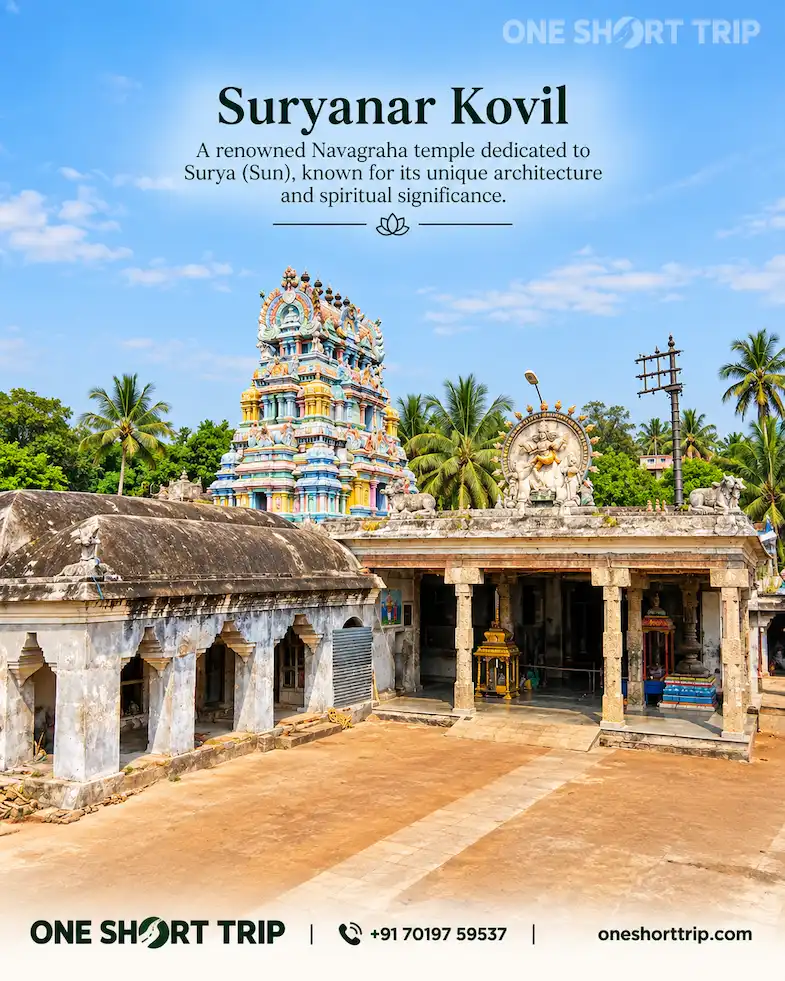
Suryanar Kovil — Surya / Sun
Visit Suryanar Kovil, the Navagraha shrine associated with Surya, the Sun, and one of the most distinctive temples in the traditional nine-temple circuit.
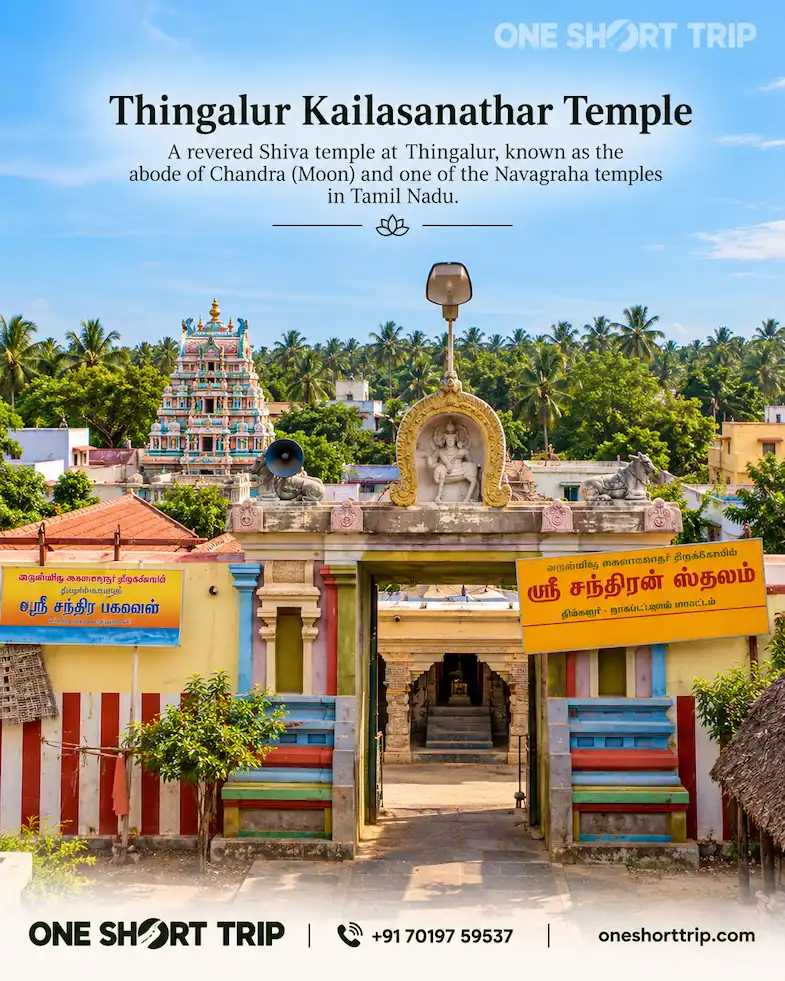
Thingalur — Chandra / Moon
Visit Kailasanathar Temple at Thingalur, traditionally associated with Chandra, the Moon, in the Navagraha pilgrimage around Kumbakonam.
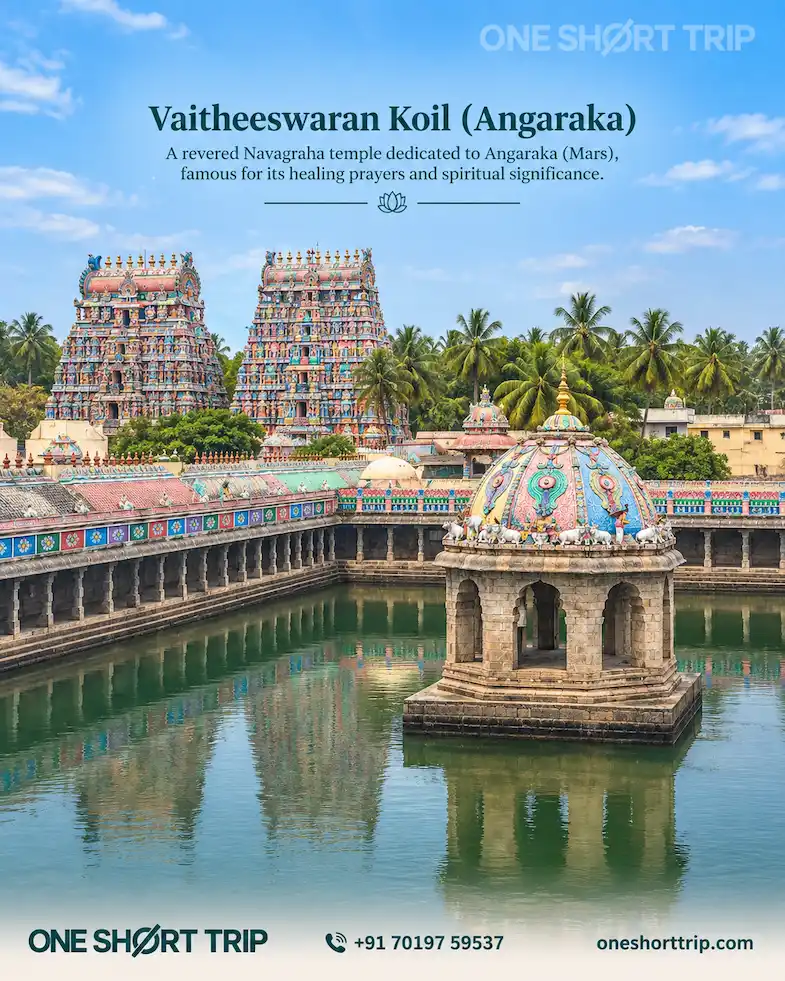
Vaitheeswaran Koil — Angaraka / Mars
Visit Vaitheeswaran Koil, the Navagraha sthalam traditionally associated with Angaraka or Sevvai, representing Mars.
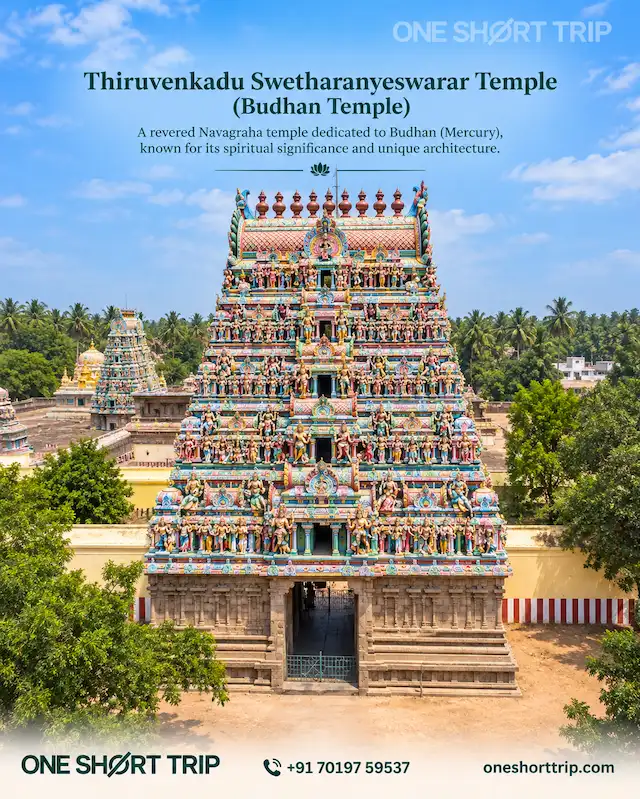
Thiruvenkadu — Budha / Mercury
Explore Swetharanyeswarar Temple at Thiruvenkadu, the Navagraha sthalam traditionally associated with Budha, representing Mercury.
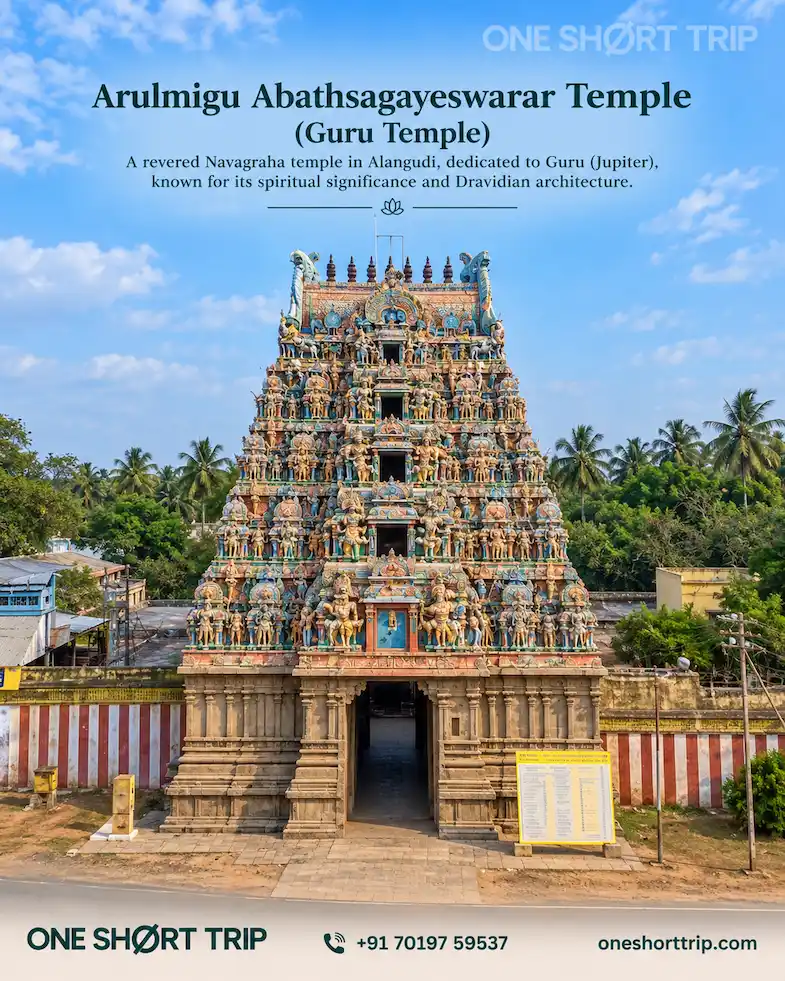
Alangudi — Guru / Jupiter
Visit Apatsahayesvarar Temple at Alangudi, the celebrated Guru Sthalam associated with Guru Bhagavan, representing Jupiter.
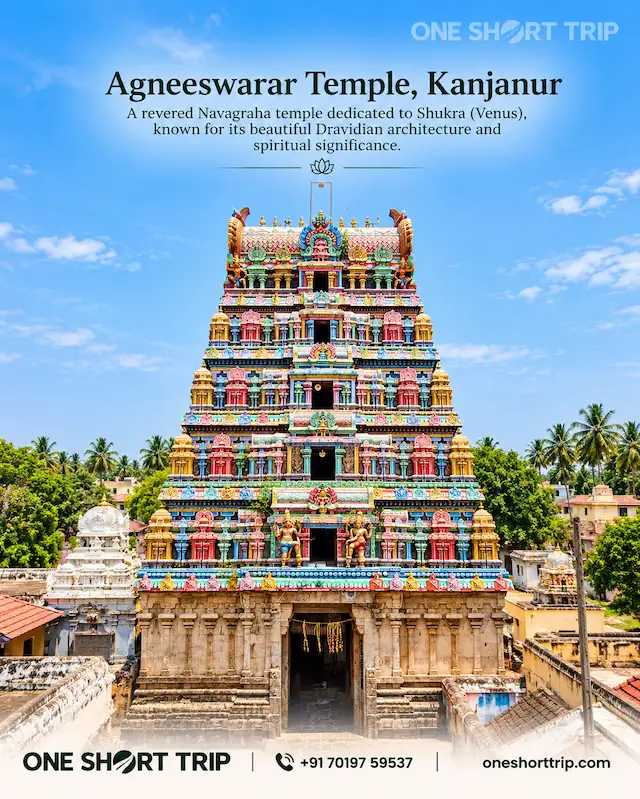
Kanjanur — Shukra / Venus
Visit Agneeswarar Temple at Kanjanur, traditionally associated with Shukra or Sukran, representing Venus in the Navagraha circuit.
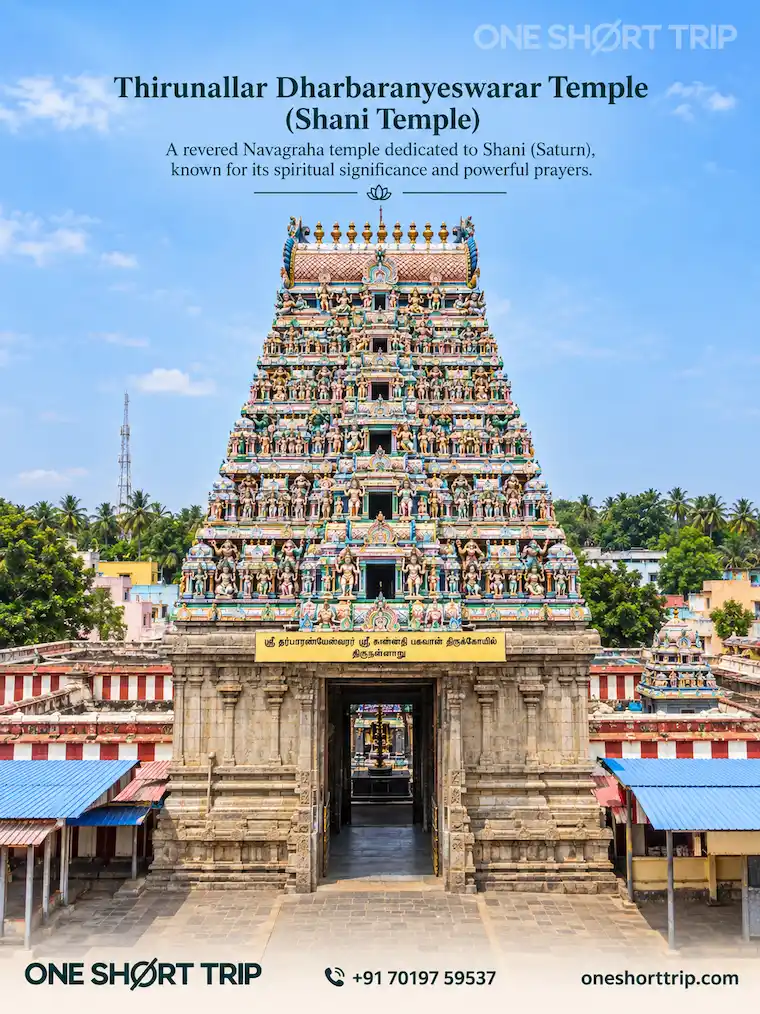
Thirunallar — Shani / Saturn
Visit Dharbaranyeswarar Temple at Thirunallar, one of the best-known Navagraha pilgrimage sites and traditionally associated with Shani Bhagavan.
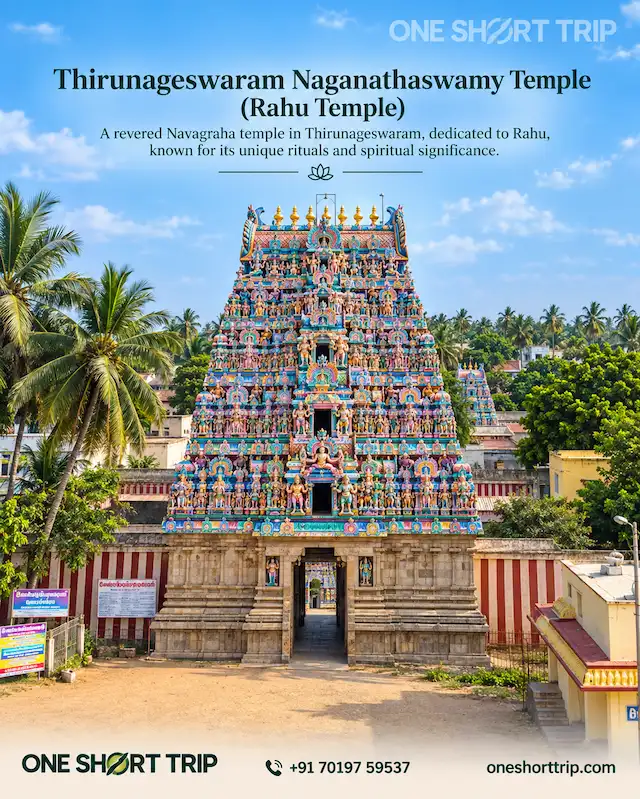
Thirunageswaram — Rahu
Visit Naganathaswamy Temple at Thirunageswaram, the Navagraha sthalam traditionally associated with Rahu and located close to Kumbakonam.
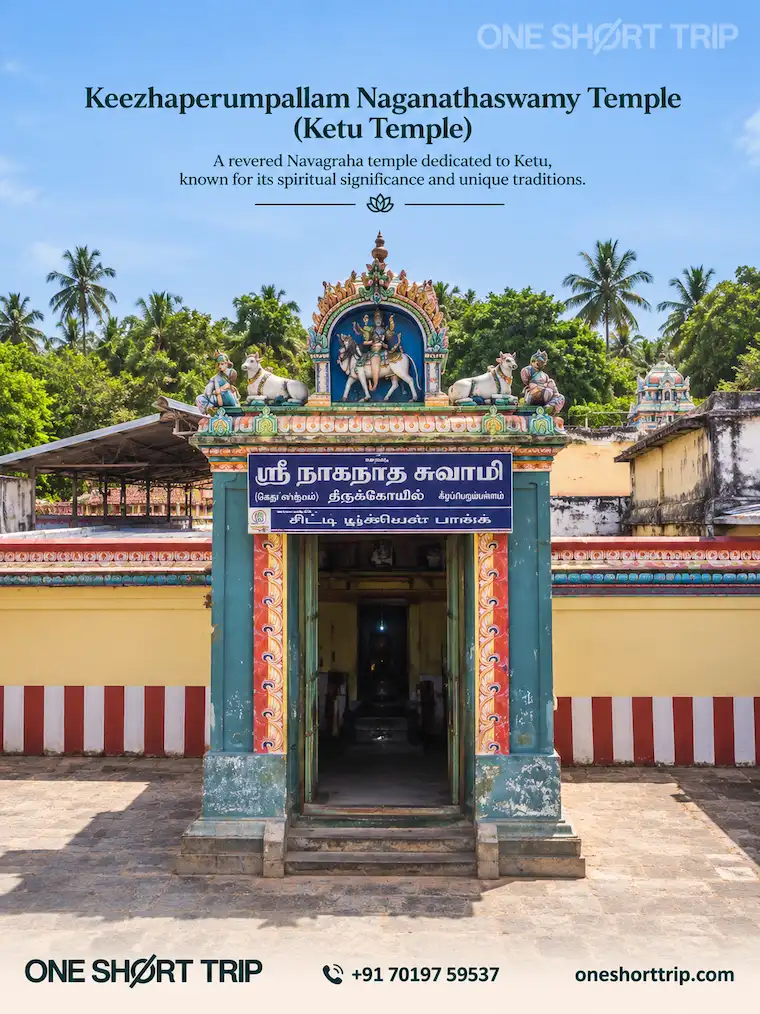
Keezhperumpallam — Ketu
Complete the planetary circuit at Naganathaswamy Temple in Keezhperumpallam, traditionally associated with Ketu in the Navagraha pilgrimage.
The 9 Navagraha Temples in Tamil Nadu
The Navagraha temple circuit around Kumbakonam brings together nine historic Shiva temples traditionally associated with the nine planetary deities of Hindu tradition — Surya, Chandra, Angaraka, Budha, Guru, Shukra, Shani, Rahu and Ketu. Each temple has its own presiding deity, architectural character and religious significance, making the journey much more than simply visiting nine planetary shrines.
Suryanar Kovil — Surya / Sun
Suryanar Kovil is the Navagraha temple associated with Surya, the Sun, and is distinctive within the circuit because Surya is worshipped prominently here along with the other planetary deities. The temple is dedicated to Surya Narayana and is traditionally visited by devotees seeking blessings connected with health, vitality, confidence and overall well-being. Its location near Kumbakonam also places it close to Kanjanur, allowing the Surya and Shukra temples to be conveniently combined within the same route.
Thingalur Kailasanathar Temple — Chandra / Moon
Kailasanathar Temple at Thingalur is the Navagraha sthalam associated with Chandra, the Moon. Lord Shiva is worshipped here as Kailasanathar, while Chandra has special significance within the temple tradition. Devotees commonly associate worship here with emotional balance, peace of mind, family well-being and relief from difficulties traditionally linked with the Moon. Thingalur lies west of Kumbakonam and is generally combined with the Alangudi Guru temple while planning the circuit.
Vaitheeswaran Koil — Angaraka / Sevvai / Mars
Vaitheeswaran Koil is associated with Angaraka, also known as Sevvai or Mangala, representing Mars. The principal deity is Lord Shiva as Vaidyanathaswamy, the divine healer, which gives the temple an important identity beyond its role in the Navagraha circuit. Devotees traditionally visit for prayers connected with health and relief from difficulties attributed to Mars. The temple is also one of the larger and more prominent pilgrimage centres included in the Navagraha journey.
Swetharanyeswarar Temple, Thiruvenkadu — Budha / Mercury
Swetharanyeswarar Temple at Thiruvenkadu is the Navagraha sthalam associated with Budha, representing Mercury. The principal deity is Lord Shiva as Swetharanyeswarar, while Budha receives special worship within the temple complex. In traditional belief, Mercury is associated with intelligence, learning, communication and analytical ability, making this an important pilgrimage stop for students and devotees seeking blessings connected with education and knowledge.
Apatsahayesvarar Temple, Alangudi — Guru / Jupiter
Apatsahayesvarar Temple at Alangudi is the celebrated Guru Sthalam of the Navagraha circuit and is associated with Jupiter. Lord Shiva is worshipped here as Apatsahayesvarar, while Dakshinamurthy holds particular importance in the temple's Guru tradition. Devotees traditionally pray here for wisdom, education, prosperity, marriage and spiritual guidance. Alangudi lies south of Kumbakonam and forms an important part of the western side of the pilgrimage route.
Agneeswarar Temple, Kanjanur — Shukra / Venus
Agneeswarar Temple at Kanjanur is traditionally associated with Shukra or Sukran, representing Venus. Unlike a separate prominent planetary shrine, Shukra is traditionally understood to be represented through the presiding Shiva lingam itself. Venus is associated in Hindu astrological tradition with relationships, marriage, comforts, prosperity and artistic qualities. Kanjanur is located close to Suryanar Kovil, making the two temples a natural combination during the Navagraha circuit.
Dharbaranyeswarar Temple, Thirunallar — Shani / Saturn
Dharbaranyeswarar Temple at Thirunallar is one of the most widely known temples in the Navagraha circuit and is especially associated with Shani, representing Saturn. Lord Shiva is the principal deity, while the shrine for Shani Bhagavan attracts large numbers of devotees. In traditional belief, worship here is associated with seeking relief from difficulties attributed to Saturn and praying for patience, stability and protection. Crowds can be particularly heavy on Saturdays and important festival days.
Naganathaswamy Temple, Thirunageswaram — Rahu
Naganathaswamy Temple at Thirunageswaram is the Navagraha sthalam associated with Rahu. The temple is dedicated principally to Lord Shiva as Naganathaswamy, with Rahu receiving special worship within the complex. The temple is particularly known for Rahu-related rituals and its traditional milk abhishekam. Devotees commonly visit seeking relief from difficulties associated with Rahu and for blessings connected with stability and progress. Its location close to Kumbakonam makes it one of the most accessible stops in the circuit.
Naganathaswamy Temple, Keezhperumpallam — Ketu
Naganathaswamy Temple at Keezhperumpallam is traditionally associated with Ketu and forms one of the eastern stops of the Navagraha pilgrimage. Lord Shiva is worshipped as Naganathaswamy, with a separate shrine connected with Ketu worship. In Hindu astrological tradition, Ketu is associated with spirituality, detachment and karmic influences, and devotees visit the temple for prayers connected with difficulties attributed to Ketu. It is conveniently combined with Thiruvenkadu and other temples on the eastern side of the circuit.
Know Before Your Navagraha Temple Tour
Bangalore Pickup & Long-Distance Travel
Why the Tour Is Planned for 3 Days / 2 Nights
Temple Opening Hours & Midday Closures
Darshan Time & Temple Queues
Temple Route & Visiting Order
Accommodation in Kumbakonam
Private Transportation
Pooja, Abhishekam & Special Darshan
Thirunageswaram Rahu Abhishekam
Thirunallar Shani Temple Crowds
Temple Dress & Etiquette
Meals & Drinking Water
Temple Fees & Personal Expenses
Walking & Accessibility
Festival Days & Special Religious Dates
Day 3 Return to Bangalore
What to Carry
What's Included & Excluded
✅ Inclusions
- Private AC cab for the complete 3 Days / 2 Nights Navagraha temple tour
- Bangalore pickup and drop
- Transportation for the Bangalore → Kumbakonam → Navagraha temples → Bangalore route
- Driver allowance for the complete trip
- Tolls and parking charges for the planned itinerary
- Visits to all 9 Navagraha temples listed in the itinerary
❌ Exclusions
- Hotel accommodation unless specifically included in your confirmed package
- Breakfast, lunch, dinner and other meals unless specifically included
- Special darshan tickets, pooja, archana, abhishekam and other temple-related charges
- Offerings, donations and other religious expenses
- Personal expenses, shopping and purchases
- Any sightseeing, activities or additional temple visits not mentioned in the confirmed itinerary
- Additional charges arising from route or itinerary changes requested during the trip
Safety & Temple Travel Tips
- Start the Navagraha temple circuit early and keep the day's schedule flexible. Temple opening hours, midday closures, darshan queues, special poojas and festival crowds can affect the planned visiting order.
- Wear modest, temple-appropriate clothing and follow the dress, footwear and entry rules displayed at each temple. Requirements can differ between temples, so follow the instructions of temple authorities during every visit.
- Choose comfortable footwear that can be removed and worn easily. The pilgrimage involves repeated temple visits, walking through temple complexes and standing in darshan queues over two consecutive days.
- Photography may be restricted inside sanctums and certain areas of the temples. Do not photograph deities, rituals or restricted interiors unless photography is clearly permitted by the respective temple authorities.
- Saturdays, festival days and important religious occasions can bring significantly larger crowds, particularly at temples such as Thirunallar. Allow additional time for queues and avoid depending on a tightly fixed schedule on busy pilgrimage dates.
- Special darshan, archana, abhishekam and other rituals should be undertaken according to the procedures and timings specified by the respective temples. Travellers planning a particular pooja should inform us before the trip so additional time can be considered in the itinerary.
- Day 3 combines four Navagraha temple visits with the long return journey to Bangalore. An early start is important, and travellers should avoid scheduling time-sensitive commitments immediately after the expected return.
- Carry sufficient drinking water, essential medicines and light refreshments for the road journey. Travellers with diabetes, blood-pressure concerns or medicines that must be taken at fixed times should keep their medication and suitable food easily accessible.
- Senior citizens and travellers with limited mobility should allow additional time for walking, footwear removal and darshan queues. Inform us before booking if a slower pilgrimage pace or additional rest stops are required.
- Keep phones, wallets, jewellery, cash and other valuables secure while moving through crowded temple areas. Avoid leaving valuables unattended inside the vehicle or around footwear stands and public areas.
- Carry some cash in addition to digital-payment options. Small temple-related payments, offerings, parking areas or local establishments may not always have reliable digital-payment connectivity.
- Follow local road and weather conditions throughout the journey. The Bangalore–Kumbakonam route and the temple circuit involve substantial driving, so rest stops and the daily sequence may be adjusted when necessary for a safer and more comfortable trip.
Why Book Your Navagraha Temple Tour With Us
🛕 Complete 9-Temple Circuit
The itinerary is planned specifically to cover all nine Navagraha temples without adding unrelated sightseeing to the pilgrimage.
🚗 Private AC Cab
Travel privately from Bangalore through the complete Navagraha circuit, with the vehicle selected according to your group size.
🧭 Practical Temple Route
The temples are grouped into practical daily circuits to reduce unnecessary backtracking and work around darshan hours and temple closures.
💬 Easy Booking
Enquire directly over WhatsApp or a call to discuss your travel date, group size, accommodation and pilgrimage requirements.
Navagraha Temples Tour from Bangalore – FAQs
How many days are needed for a Navagraha temple tour from Bangalore?
We plan this Navagraha pilgrimage from Bangalore as a 3 Days / 2 Nights tour. Day 1 is mainly for travelling from Bangalore to Kumbakonam, Day 2 covers five Navagraha temples, and Day 3 covers the remaining four temples before the return journey to Bangalore. This provides a more practical schedule than trying to combine all nine temples with both long-distance journeys in 2 Days / 1 Night.
Which 9 Navagraha temples are covered in this tour?
The tour covers Suryanar Kovil for Surya, Thingalur Kailasanathar Temple for Chandra, Vaitheeswaran Koil for Angaraka or Sevvai, Swetharanyeswarar Temple at Thiruvenkadu for Budha, Apatsahayesvarar Temple at Alangudi for Guru, Agneeswarar Temple at Kanjanur for Shukra, Dharbaranyeswarar Temple at Thirunallar for Shani, Naganathaswamy Temple at Thirunageswaram for Rahu and Naganathaswamy Temple at Keezhperumpallam for Ketu.
Can all 9 Navagraha temples be visited in one day?
Attempting all nine temples in a single day can make the pilgrimage extremely rushed because the shrines are spread across different towns and many temples have separate morning and evening darshan sessions. Our itinerary divides the circuit across two temple-visiting days so there is more practical time for road travel, darshan and possible queues.
Can the Navagraha tour from Bangalore be completed in 2 Days / 1 Night?
A 2 Days / 1 Night plan would require combining the long Bangalore journey with a substantial portion of the temple circuit and completing the remaining temples before another long return drive. It can become very rushed and is vulnerable to temple closures, traffic and darshan queues. For this package, 3 Days / 2 Nights provides a more practical schedule.
Where do we stay during the Navagraha temple tour?
Kumbakonam is used as the base for both nights because of its convenient location for the Navagraha temple circuit. The exact hotel, room category and meal plan depend on the package selected. Accommodation is included only when specifically mentioned in your confirmed quotation.
What is the Day 2 Navagraha temple route?
The planned Day 2 circuit covers Thingalur for Chandra, Alangudi for Guru, Thirunageswaram for Rahu, Suryanar Kovil for Surya and Kanjanur for Shukra before returning to Kumbakonam. The exact sequence can be adjusted according to current temple timings, queues, special poojas and road conditions.
What is the Day 3 Navagraha temple route?
Day 3 is planned around Vaitheeswaran Koil for Angaraka or Mars, Thiruvenkadu for Budha or Mercury, Keezhperumpallam for Ketu and Thirunallar for Shani or Saturn. After completing the temple circuit, the journey continues back to Bangalore. This is the longest day of the itinerary.
What is special about Suryanar Kovil?
Suryanar Kovil is the Navagraha temple associated with Surya, the Sun. It is distinctive within the circuit because Surya Narayana is worshipped prominently here along with shrines connected with the other planetary deities. Devotees traditionally visit for prayers associated with health, vitality, confidence and overall well-being.
Which Navagraha temple is for Chandra or the Moon?
Kailasanathar Temple at Thingalur is traditionally associated with Chandra, the Moon. Lord Shiva is worshipped as Kailasanathar, while Chandra has special significance within the temple tradition. Devotees commonly associate worship here with peace of mind, emotional balance and family well-being.
Which Navagraha temple is associated with Mars?
Vaitheeswaran Koil is associated with Angaraka, also known as Sevvai or Mangala, representing Mars. The principal deity is Lord Shiva as Vaidyanathaswamy, the divine healer. The temple therefore has significance both as the Mars sthalam of the Navagraha circuit and as an important Shiva pilgrimage centre.
Which Navagraha temple is for Budha or Mercury?
Swetharanyeswarar Temple at Thiruvenkadu is traditionally associated with Budha, representing Mercury. Lord Shiva is worshipped as Swetharanyeswarar, while Budha receives special worship within the temple complex. Mercury is traditionally associated with learning, communication, intelligence and analytical ability.
Which Navagraha temple is for Guru or Jupiter?
Apatsahayesvarar Temple at Alangudi is the Guru Sthalam associated with Jupiter. Lord Shiva is worshipped as Apatsahayesvarar, while Dakshinamurthy has particular importance in the temple's Guru tradition. Devotees traditionally visit for prayers connected with wisdom, education, prosperity, marriage and spiritual guidance.
Which Navagraha temple is associated with Shukra or Venus?
Agneeswarar Temple at Kanjanur is traditionally associated with Shukra or Sukran, representing Venus. Shukra is traditionally understood to be represented through the presiding Shiva lingam rather than through a separate prominent planetary shrine. Devotees associate Venus with marriage, relationships, prosperity, comforts and artistic qualities.
Which Navagraha temple is for Shani or Saturn?
Dharbaranyeswarar Temple at Thirunallar is the Navagraha pilgrimage site traditionally associated with Shani Bhagavan or Saturn. Lord Shiva is the principal deity, while the Shani shrine attracts large numbers of devotees. Saturdays and important religious occasions can be particularly busy, so additional time may be required for darshan.
Which Navagraha temple is associated with Rahu?
Naganathaswamy Temple at Thirunageswaram is traditionally associated with Rahu. The temple is dedicated principally to Lord Shiva as Naganathaswamy, while Rahu receives special worship within the complex. It is particularly known for Rahu-related rituals and is conveniently located near Kumbakonam.
Which Navagraha temple is associated with Ketu?
Naganathaswamy Temple at Keezhperumpallam is traditionally associated with Ketu. Lord Shiva is worshipped as Naganathaswamy, with Ketu having a dedicated place in the temple's worship tradition. The temple is conveniently combined with Thiruvenkadu and the other eastern Navagraha shrines.
Do the Navagraha temples close during the afternoon?
Many temples in the circuit operate separate morning and evening darshan sessions and may close for several hours around midday. Timings can vary between temples and can change on festival days or special occasions. For this reason, the route should remain flexible and current temple timings should be reconfirmed before travel.
Does the Navagraha temple visiting order matter?
Travellers may encounter different religious traditions and preferences regarding the order in which the Navagraha temples should be visited. From a tour-planning perspective, our route groups the temples geographically to reduce unnecessary driving and work around available darshan hours. If your family or priest follows a particular religious sequence, tell us before booking so the route can be reviewed accordingly.
Is Suryanar Kovil always the first temple that must be visited?
Some pilgrims prefer to begin the Navagraha circuit with Suryanar Kovil, while other traditions may follow a different sequence. Our standard itinerary is designed around geography, temple timings and travel efficiency rather than presenting one sequence as compulsory. Travellers following a specific religious custom can request a suitable route before the trip.
Are special poojas and abhishekams included in the package?
No, unless they are specifically listed in your confirmed package. Special poojas, archana, abhishekam, special darshan and other temple rituals are controlled by the respective temples and may have separate timings, procedures and charges. Inform us before booking if you want to allow additional time for a particular ritual.
Can we attend the Rahu abhishekam at Thirunageswaram?
Travellers who specifically want to attend a Rahu-related abhishekam or pooja at Thirunageswaram should mention this before the trip. Ritual timings, tickets and waiting periods are determined by the temple and can affect the sequence of the other Navagraha visits planned for that day.
Is Thirunallar more crowded on Saturdays?
Saturdays and important religious occasions associated with Shani can attract significantly larger numbers of devotees to Thirunallar. Longer queues and additional traffic are possible, so the Day 3 schedule may need more flexibility when the pilgrimage falls on a busy date.
Are Kumbakonam sightseeing places included in this package?
No. This itinerary is intentionally focused on completing the nine Navagraha temples rather than adding general Kumbakonam sightseeing. This keeps the route practical and gives the Navagraha pilgrimage sufficient time. Additional temples or sightseeing can be discussed separately if you want a customised or extended itinerary.
Is Chidambaram included in this Navagraha tour?
No. Chidambaram is not part of the standard 3 Days / 2 Nights Navagraha itinerary. The package focuses specifically on the nine traditional Navagraha temples around the wider Kumbakonam region so that the pilgrimage remains manageable within the available time.
Is this Navagraha temple tour suitable for senior citizens?
It can be suitable for many senior travellers, but the pilgrimage involves long road journeys, repeated temple entry and exit, walking through temple complexes and standing in darshan queues. Travellers with mobility limitations should mention their requirements while enquiring so a suitable pace and additional rest time can be considered.
Is this Navagraha pilgrimage suitable for families with children?
Yes, families can undertake the pilgrimage, but parents should consider the long driving distances and repeated temple visits when travelling with young children. Carry water, snacks, essential medicines and anything children may need during extended periods on the road.
What should we wear for the Navagraha temple tour?
Wear modest clothing appropriate for Hindu temple visits and follow the dress requirements of each temple. Comfortable clothing is useful because the tour involves long driving hours and multiple temple visits. Footwear that is easy to remove and wear again is particularly convenient.
Is photography allowed inside the Navagraha temples?
Photography rules vary between temples and may also differ between outer temple areas and sanctum interiors. Photography of deities, rituals or restricted areas may not be permitted. Always follow the signs and instructions provided by the respective temple authorities.
Are meals included in the Navagraha tour package?
Meals are included only when specifically mentioned in your confirmed quotation. Meal stops are planned around the temple route, but breakfast and lunch timings may need to change according to darshan hours and midday temple closures.
Is hotel accommodation included in the package?
Accommodation is included only when specifically stated in your confirmed package. If accommodation is requested, the hotel category, room type, occupancy and meal plan will be discussed while preparing the quotation. The standard route uses Kumbakonam as the base for both nights.
Are special darshan and temple charges included?
Special darshan tickets, pooja charges, abhishekam charges, offerings and other temple-related expenses are included only when specifically mentioned in the final package. These services and their charges are determined by the respective temples and can change.
What type of vehicle is provided for the Navagraha tour?
A suitable private AC vehicle is selected according to the number of travellers, luggage and comfort requirements. The vehicle category will be confirmed when you share your travel date and group size.
How much does the Navagraha Temples tour from Bangalore cost?
The final cost depends on the number of travellers, vehicle category, travel date, accommodation requirements, room configuration and any additional services or special arrangements requested. Share your travel date and group size to receive a customised quotation.
Can the Navagraha temple itinerary be customised?
Yes. Reasonable changes can be discussed based on temple timings, your family's religious preferences, accommodation requirements and available travel time. If you want to add other temples or sightseeing places, extending the duration may be more practical than adding too many stops to the standard 3 Days / 2 Nights route.
What should we carry for the Navagraha temple pilgrimage?
Carry temple-appropriate clothing, comfortable easy-to-remove footwear, drinking water, personal medicines, identification, a power bank and some cash for temple-related or local expenses. Light refreshments can also be useful because meal times may need to fit around temple darshan schedules.
What happens if a temple is closed or the darshan schedule changes?
Temple timings, special poojas, festival arrangements, crowds, traffic and local conditions can occasionally affect the planned schedule. When possible, the visiting order will be adjusted to complete the nine-temple circuit. Current temple timings and any important operational changes should be reconfirmed close to the travel date.
How do I book the Navagraha Temples Tour Package from Bangalore?
Share your preferred travel date, number of travellers, accommodation requirements and any special pooja or pilgrimage preferences with One Short Trip. We can then confirm the suitable vehicle, package details and final quotation. Pickup points will be discussed and confirmed 2 days prior to the trip date.