

One Short Trip

📍 NALLAMALA HILLS, ANDHRA PRADESH · NAVA NARASIMHA PILGRIMAGE

Ahobilam Tour Package from Bangalore – 2 Days / 3 Nights

Overnight Bus Both Ways · Full Day at Upper Ahobilam · Full Day at Lower Ahobilam
Bangalore (overnight departure 9:00 PM) → Ahobilam → Upper Ahobilam → Lower Ahobilam → Ahobilam (overnight departure 9:00 PM) → Bangalore
Duration
2 Days / 3 Nights
Pickup
Bangalore
Tour Type
Pilgrimage + Nature
Stay
1 Night at Ahobilam
Best Season
Oct – Feb
The Journey

Bangalore to Ahobilam – A 3-Day Nava Narasimha Pilgrimage with Overnight Travel

Ahobilam is one of the most sacred and fascinating pilgrimage destinations in South India, located in the Nallamala Hills of Andhra Pradesh. Revered as the Nava Narasimha Kshetra, Ahobilam is traditionally associated with the divine manifestation of Lord Narasimha, the man-lion incarnation of Lord Vishnu who appeared to protect his devotee Prahlada and defeat the demon king Hiranyakashipu.

Unlike a conventional pilgrimage where the principal deity is worshipped within one temple complex, the sacred landscape of Ahobilam extends across hills, forests, caves, rocky paths and natural surroundings. The pilgrimage centres around the nine Nava Narasimha temples – Ahobila, Jwala, Malola, Kroda or Varaha, Karanja, Bhargava, Yogananda, Chatravata and Pavana Narasimha. Visiting these shrines is therefore both a spiritual journey and an exploration of the ancient landscape associated with the Narasimha tradition.

This Ahobilam tour from Bangalore is planned for travellers who want to experience all nine Nava Narasimha temples with organised transportation, accommodation and meals. The journey begins from Bangalore at 9:00 PM, allowing travellers to travel overnight and reach the Ahobilam region without using the first daytime hours for the long road journey. The pilgrimage covers both Upper Ahobilam and Lower Ahobilam, with local jeep transportation arranged by One Short Trip for the forest and hill routes wherever access and weather conditions permit.
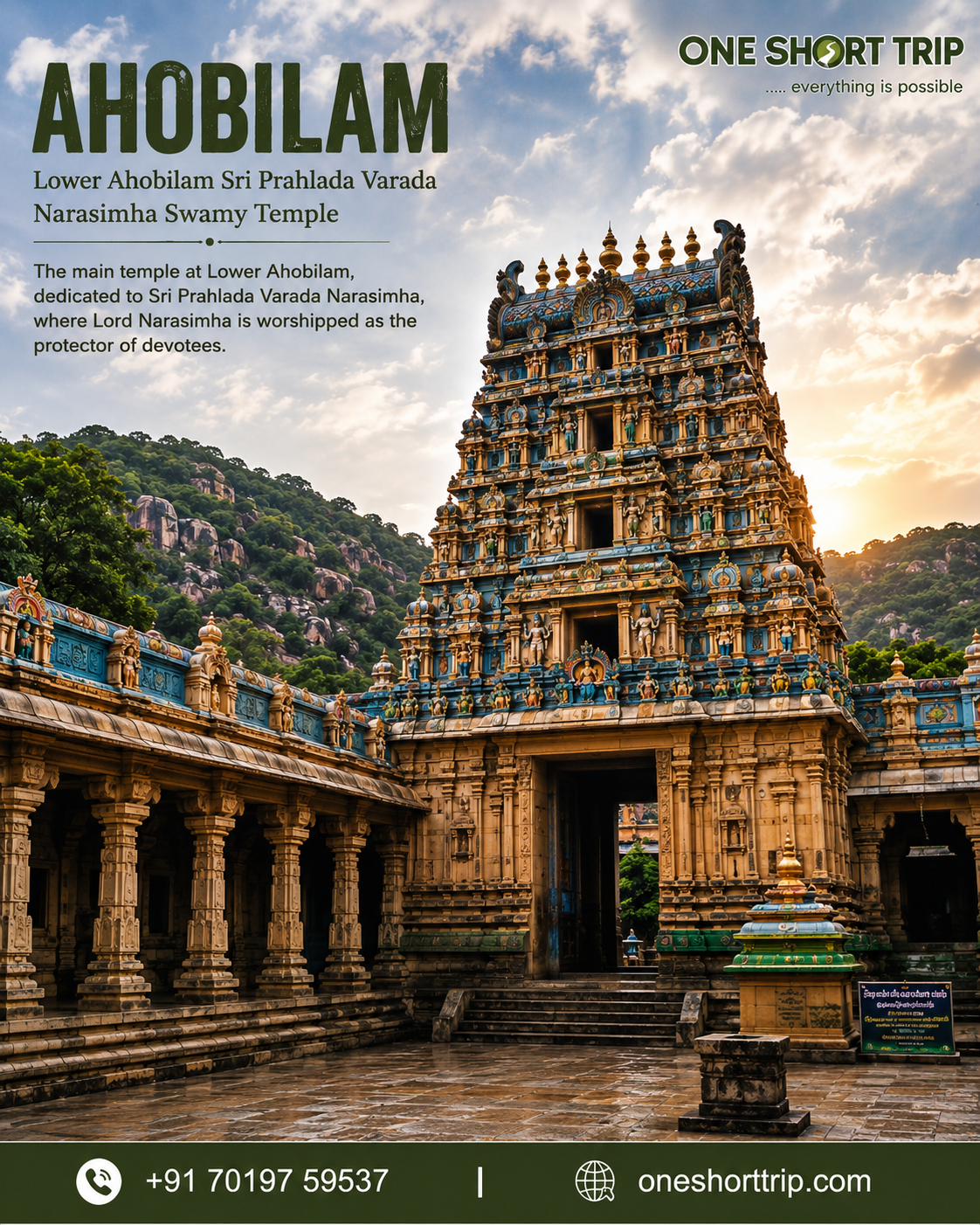
Ahobilam Narasimha Swamy Darshan and Nava Narasimha pilgrimage from Bangalore
Ahobilam Narasimha SwamyA sacred pilgrimage through the Nava Narasimha shrines

Why Is Ahobilam So Famous?

Ahobilam is famous for its deep association with Lord Narasimha and the nine principal Narasimha shrines spread across the Ahobilam region. According to the traditional Sthala Purana, this is the sacred landscape connected with the manifestation of Narasimha after Lord Vishnu appeared to protect Prahlada and destroy Hiranyakashipu. The nine forms of Narasimha worshipped here are Ahobila Narasimha, Jwala Narasimha, Malola Narasimha, Kroda or Varaha Narasimha, Karanja Narasimha, Bhargava Narasimha, Yogananda Narasimha, Chatravata Narasimha and Pavana Narasimha.

The importance of Ahobilam goes beyond the temples themselves. The shrines are associated with caves, hills, forests, streams and sacred places connected with the traditional Narasimha story. Some temples are comparatively easier to access, while others involve walking, climbing or travelling through forest terrain. This combination of pilgrimage, mythology, ancient temples, hills and nature is one of the reasons Ahobilam is considered a unique spiritual destination in Andhra Pradesh.

The Story of Lord Narasimha, Prahlada and Hiranyakashipu

The sacred story behind Ahobilam begins with Hiranyakashipu, the powerful asura king who performed severe penance and received a boon that made him extremely difficult to kill. Believing himself to be almost invincible, he demanded that everyone worship him. His son Prahlada, however, remained devoted to Lord Vishnu from childhood and refused to abandon his faith.

Hiranyakashipu repeatedly tried to destroy Prahlada, but according to the traditional account, the young devotee remained protected by his unwavering devotion to Vishnu. In anger, Hiranyakashipu finally questioned Prahlada about the presence of Vishnu and challenged him to show where the Lord existed. Prahlada declared that Vishnu was present everywhere. When Hiranyakashipu struck a pillar, Lord Narasimha emerged from it in a form that was neither completely human nor completely animal.

Narasimha appeared at twilight, neither day nor night, and killed Hiranyakashipu on the threshold, neither inside nor outside. He placed him on his lap, neither on the ground nor in the sky, and used his claws rather than a conventional weapon. In this way, the conditions surrounding Hiranyakashipu's boon were overcome. The Narasimha manifestation therefore represents the protection of devotion, righteousness and dharma and the destruction of arrogance and tyranny.

Ahobilam is traditionally revered as one of the sacred landscapes associated with this divine manifestation. The nine Narasimha shrines preserve different aspects and moods of the Lord, making the journey through Ahobilam a pilgrimage through the many dimensions of the Narasimha tradition.

Why Is Ahobilam Called Nava Narasimha Kshetra?

The word Nava means nine, while Narasimha refers to the man-lion manifestation of Lord Vishnu. Ahobilam is therefore known as the Nava Narasimha Kshetra because nine principal forms of Lord Narasimha are worshipped across the sacred region. Each shrine has its own name, legend, iconography and spiritual significance.

The nine forms are Ahobila Narasimha, Jwala Narasimha, Malola Narasimha, Kroda or Varaha Narasimha, Karanja Narasimha, Bhargava Narasimha, Yogananda Narasimha, Chatravata Narasimha and Pavana Narasimha. Some are situated around Upper Ahobilam, while others are reached through roads, forest routes and walking trails in the wider Ahobilam area. Because the temples are geographically dispersed, completing the Nava Narasimha pilgrimage requires proper planning rather than simply visiting one temple.

The pilgrimage also includes the experience of Upper Ahobilam and Lower Ahobilam. Upper Ahobilam is the more rugged hill and forest region and includes some of the shrines associated with trekking and difficult terrain. Lower Ahobilam is more accessible and is centred around the important Prahlada Varada Narasimha temple and other associated shrines. Local jeep transportation arranged by One Short Trip helps travellers reach the more remote shrine areas, subject to weather and local access conditions.

Travel DetailInformation
DestinationAhobilam, Andhra Pradesh
Starting CityBangalore
Departure9:00 PM from Bangalore
Duration3 Days / 2 Nights including overnight travel
Overnight TravelBangalore → Ahobilam and Ahobilam → Bangalore
Accommodation1 Night in a comfortable AC room at Ahobilam
Main RegionNallamala Hills, Upper Ahobilam & Lower Ahobilam
Nava Narasimha TemplesAll 9 temples included, subject to weather and local access conditions
Local TransportationLocal jeep transportation arranged by One Short Trip
VehicleComfortable AC vehicle
Meals2 Breakfasts, 2 Lunches & 2 Dinners
Trip ThemeTemple, Pilgrimage, Spirituality, Mythology, Hills & Nature
Main AttractionNava Narasimha Kshetram
ReturnAhobilam → Bangalore overnight; arrival around 6:00 AM depending on traffic
Suitable ForFamilies, devotees, senior citizens and groups
Sacred Geography

The Nine Nava Narasimha Temples of Ahobilam

The heart of the Ahobilam pilgrimage is the Nava Narasimha Kshetra – the sacred circuit of nine principal forms of Lord Narasimha. These nine temples are spread across the hills, forests and surrounding areas of Ahobilam in Andhra Pradesh. Each shrine has its own name, legend, form of Narasimha and spiritual significance, making the journey very different from visiting nine temples within a single complex.

The nine forms are Ahobila Narasimha, Jwala Narasimha, Malola Narasimha, Kroda or Varaha Narasimha, Karanja Narasimha, Bhargava Narasimha, Yogananda Narasimha, Chatravata Narasimha and Pavana Narasimha. Some shrines are associated with Upper Ahobilam and its hill and forest landscape, while others are reached through roads, local transportation and walking routes. One Short Trip includes all nine Nava Narasimha temples in the pilgrimage plan, whenever weather conditions and local access permit.

Nava Narasimha temples in Ahobilam Andhra Pradesh
Ahobilam Nava NarasimhaThe sacred nine-temple pilgrimage across Upper and Lower Ahobilam
Nine forms of Lord Narasimha at Ahobilam Nava Narasimha Kshetra
Nava NarasimhaNine Sacred Forms of Lord Narasimha
No.Narasimha FormTraditional Association
1Ahobila NarasimhaThe principal fierce manifestation associated with Upper Ahobilam
2Jwala NarasimhaFierce form traditionally associated with the destruction of Hiranyakashipu
3Malola NarasimhaGraceful form of Narasimha accompanied by Goddess Lakshmi
4Kroda / Varaha NarasimhaVaraha-associated manifestation of Lord Narasimha
5Karanja NarasimhaForm associated with the Karanja tree and the tradition of Hanuman's worship
6Bhargava NarasimhaAssociated with Bhargava or Parashurama and his penance
7Yogananda NarasimhaPeaceful yogic form traditionally associated with Prahlada
8Chatravata NarasimhaForm associated with the sacred tree canopy and the musical tradition of the Gandharvas
9Pavana NarasimhaForest shrine associated with the Pavana River and one of the more remote approaches

Ahobila Narasimha

Ahobila Narasimha is the principal Narasimha shrine of Upper Ahobilam and is traditionally associated with the Lord's fierce Ugra manifestation. The sacred tradition connects this region with the appearance of Lord Narasimha and the protection of Prahlada. The name Ahobilam is itself traditionally connected with the awe-inspiring manifestation of the Lord.

Kroda Narasimha

Also known as Varaha Narasimha, this form combines the Narasimha tradition with associations of Varaha, another incarnation of Lord Vishnu. The deity is traditionally represented with features connected to the boar form, and the shrine is part of the sacred Upper Ahobilam pilgrimage landscape.

Malola Narasimha

Malola Narasimha represents a more graceful and compassionate aspect of the Lord. The name is traditionally interpreted as “beloved of Lakshmi,” and the deity is worshipped together with Goddess Lakshmi. Malola provides a striking contrast to the fierce forms of Narasimha encountered elsewhere in Ahobilam.

Jwala Narasimha

Jwala Narasimha is traditionally associated with the most intense phase of the Narasimha manifestation and the destruction of Hiranyakashipu. The shrine lies in the rugged Upper Ahobilam landscape. Reaching this area can involve walking over rocky terrain, climbing steps and negotiating uneven or wet surfaces, making weather an important factor in the visit.

Karanja Narasimha

Karanja Narasimha is associated with the Karanja tree under which the deity is worshipped. Traditional accounts connect the shrine with Hanuman. According to the sacred tradition, Hanuman was performing his worship of Lord Rama when Narasimha appeared before him, acknowledging the devotion of Hanuman while revealing his own divine form.

Bhargava Narasimha

Bhargava Narasimha is associated with Bhargava, a name traditionally connected with Parashurama, the warrior-sage and sixth incarnation of Lord Vishnu. The local sacred tradition associates this shrine with Parashurama's penance and worship of Lord Narasimha. The temple is located away from the main Lower Ahobilam temple complex and requires careful route planning.

Yogananda Narasimha

Yogananda Narasimha represents the Lord in a peaceful and yogic aspect. Traditional accounts associate this form with the period after Hiranyakashipu's destruction, when Lord Narasimha imparted spiritual knowledge to Prahlada. The shrine therefore represents the transition from the fierce manifestation to a calmer, instructive form of the Lord.

Chatravata Narasimha

Chatravata Narasimha takes its name from the sacred tree canopy associated with the shrine. Traditional accounts connect the location with music and the Gandharvas, giving this shrine a distinctive character within the Nava Narasimha circuit. It is generally considered one of the more accessible stops compared with the demanding forest and hill routes.

Pavana Narasimha

Pavana Narasimha is one of the more remote Nava Narasimha shrines and is situated in the forest region associated with the Pavana River. Its location makes it particularly dependent on local road, forest and weather conditions. One Short Trip includes Pavana Narasimha in the nine-temple pilgrimage, with local jeep access arranged where conditions permit. On weekends, the shrine generally operates around 9:00 AM to 5:00 PM; weekday timings can be unpredictable because of its forest location.

Rakta Kunda

Rakta Kunda is a sacred water body associated with the traditional Narasimha story and is located in the Jwala Narasimha region. Local sacred tradition connects the site with the aftermath of Narasimha's battle with Hiranyakashipu and the washing away of the blood from the Lord's hands. The name “Rakta Kunda” is therefore closely connected with the traditional story of Narasimha's fierce manifestation.

For pilgrims, Rakta Kunda is more than a natural water feature: it forms part of the sacred landscape surrounding Jwala Narasimha and helps visitors understand how the mythology of Ahobilam is connected with the hills, streams, caves and natural features of the region.

Ugra Stambham – The Sacred Pillar of Ahobilam

Ugra Stambham is one of the most famous sacred landmarks in Ahobilam. According to traditional belief, the dramatic rocky formation is associated with the pillar from which Lord Narasimha emerged when Hiranyakashipu challenged Prahlada's declaration that Vishnu existed everywhere. The location is therefore deeply connected with the central Narasimha story.

The route towards Ugra Stambham is considerably more demanding than many of the regular temple visits. The terrain can involve steep, rocky and uneven sections, and conditions can become more difficult during or after rain. Because this One Short Trip pilgrimage is designed for a wide range of travellers, including families and senior citizens, Ugra Stambham is treated as an optional activity rather than a compulsory stop. Travellers attempting the route should be physically prepared and follow local safety guidance.

Important Trip Planning Note: All 9 Nava Narasimha temples are included in the One Short Trip pilgrimage plan. However, Ahobilam is a hill and forest pilgrimage destination, so access to individual shrines can be affected by rain, weather, road conditions, forest access and local circumstances. Local jeep transportation is arranged by One Short Trip wherever applicable, but jeep rides are subject to weather and access conditions. Ugra Stambham is an additional, physically demanding activity and is not compulsory for completing the Nava Narasimha pilgrimage.

Prahlada Mettu

Prahlada Mettu is another sacred location associated with the Prahlada tradition in Ahobilam. The name refers to Prahlada and the hill or rocky setting associated with his devotion. The site adds another dimension to the pilgrimage because Ahobilam is not simply a collection of temples – its caves, hills, streams and natural formations are deeply woven into the traditional stories of Lord Narasimha and his devotee Prahlada.

For visitors exploring Ahobilam, understanding locations such as Prahlada Mettu, Ugra Stambham and Rakta Kunda helps put the nine Narasimha shrines into their wider sacred context. Together, these locations create the distinctive Ahobilam Nava Narasimha pilgrimage experience.

Day 1

Upper Ahobilam – Exploring the Hill Shrines of the Nava Narasimha Kshetra

After travelling overnight from Bangalore, the first full day of the pilgrimage is dedicated primarily to Upper Ahobilam, the rugged and spiritually significant hill region of the Nava Narasimha Kshetra. Located in the Nallamala Hills, Upper Ahobilam is surrounded by forests, rocky slopes, caves, streams and ancient pathways. The landscape is very different from a conventional temple town, and some of the shrines require walking or climbing over uneven terrain.

The day's plan is deliberately organised around the actual operating pattern of the Upper Ahobilam temples. Most shrines in this hill region generally open around 9:00–10:00 AM and close around 5:00 PM. Because darshan time, crowd levels, walking speed, weather and local access can vary, the sequence and exact timings may change during the journey. The objective is to cover as many of the included Nava Narasimha shrines as safely and comfortably as possible.
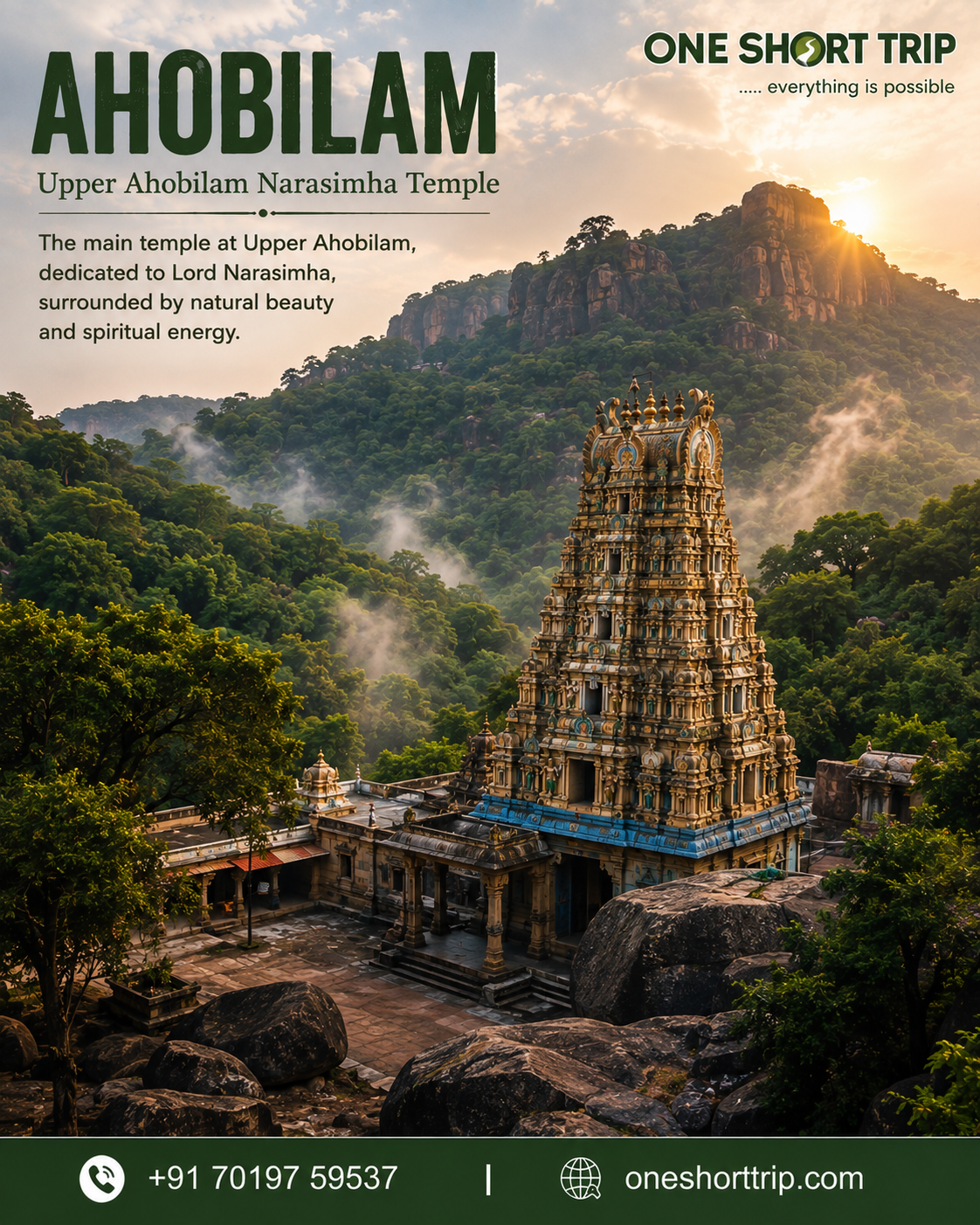
Upper Ahobilam Nava Narasimha temples pilgrimage from Bangalore
Upper AhobilamThe hill and forest landscape of the Nava Narasimha pilgrimage
5:00 – 6:00 AM
Arrival at Ahobilam
The overnight journey from Bangalore is expected to reach the Ahobilam region around 5:00–6:00 AM, depending on road and traffic conditions. After arrival, the group proceeds for freshening up and prepares for the pilgrimage. Since the previous night has been spent travelling, the morning is kept comfortable rather than rushing directly into strenuous activity.
6:00 – 8:00 AM
Fresh-Up, Breakfast & Morning Preparation
Time to freshen up, have breakfast and prepare for the day. Travellers should carry drinking water, wear comfortable footwear and keep essential belongings to a minimum for the hill and forest portions of the pilgrimage. This is also a useful time to rest briefly after the overnight journey before beginning the day's temple visits.
8:00 – 9:00 AM
Proceed Towards Upper Ahobilam
The group begins the journey towards Upper Ahobilam. As the road moves deeper into the Nallamala landscape, the surroundings change from the settlement around Lower Ahobilam to hills, forest, rocky terrain and natural formations. Local transportation and access arrangements may vary according to the day's conditions.
Around 9:00 AM
Begin the Upper Ahobilam Temple Circuit
The Nava Narasimha pilgrimage begins after the relevant Upper Ahobilam shrines open. The exact order of the temples can be adjusted according to temple operations, local route conditions, crowd levels and the most practical movement for the group.
Morning
Ahobila Narasimha
Ahobila Narasimha is one of the most important shrines of Upper Ahobilam and is traditionally associated with the fierce manifestation of Lord Narasimha. The group spends time for darshan and prayer while understanding the significance of the shrine and its connection with the sacred Narasimha tradition.
Morning
Kroda / Varaha Narasimha
The pilgrimage continues to Kroda Narasimha, also known as Varaha Narasimha. This distinctive form combines associations with the Varaha manifestation of Lord Vishnu. The surrounding natural landscape is an important part of the experience, as the Nava Narasimha shrines are closely connected with the hills and forest environment.
Late Morning
Malola Narasimha
Malola Narasimha represents a more graceful aspect of the Lord and is traditionally associated with Goddess Lakshmi. The name Malola is commonly understood in the tradition as referring to the beloved of Lakshmi. After the more intense forms of Narasimha, this shrine offers a contrasting and peaceful dimension to the pilgrimage.
Late Morning – Afternoon
Jwala Narasimha – Subject to Access & Fitness
Jwala Narasimha is traditionally associated with the intense manifestation of Lord Narasimha during the destruction of Hiranyakashipu. Reaching this shrine can involve rocky, uneven and physically demanding terrain. The visit is therefore planned according to weather, local access, temple timing and the physical ability of the travellers. The group should move carefully and follow local instructions, particularly when the rocks or pathways are wet.
During the Day
Local Jeep Transportation for Remote Routes
For the forest and hill routes where local jeep transportation is required, One Short Trip arranges the local jeep access as part of the trip. Jeep rides are included in the itinerary but are always subject to weather conditions, road conditions, forest access and local circumstances. If conditions become unsafe, the route or sequence may need to be modified.
1:00 – 2:00 PM
Lunch & Rest
After the morning's temple visits and walking, the group takes a proper lunch break and gets time to rest and rehydrate. The combination of overnight travel, hill terrain and temple visits can be tiring, so maintaining energy throughout the day is more important than rushing from one shrine to another.
Afternoon
Continue the Nava Narasimha Pilgrimage
The remaining Upper Ahobilam shrines that are practical to visit are covered according to temple timings and local access. The exact sequence is intentionally flexible because Ahobilam is a forest and hill pilgrimage destination rather than a fixed urban sightseeing circuit. All nine Nava Narasimha temples are included in the overall One Short Trip pilgrimage whenever weather and access conditions permit.
By 5:00 PM
Complete Upper Ahobilam Temple Visits
Most Upper Ahobilam temples generally close around 5:00 PM. The itinerary therefore gives priority to reaching the relevant shrines well before closing time rather than attempting late visits. Actual completion time can vary according to darshan queues, walking pace, weather, temple operations and road conditions.
5:00 – 6:30 PM
Return to Accommodation & Rest
After completing the Upper Ahobilam visits, the group returns to the accommodation. Travellers can freshen up, rest and recover after the day's hill and temple exploration.
Evening
Relaxed Evening at Ahobilam
The evening is intentionally kept relaxed after a physically active day. Depending on temple timings, energy levels and local conditions, travellers may spend time in prayer or explore nearby areas around Lower Ahobilam. No strenuous activity is required in the evening.
7:30 – 8:30 PM
Dinner & Overnight Stay
Dinner is followed by an overnight stay in a comfortable AC room at Ahobilam. This is the one included hotel night of the pilgrimage. Travellers should rest well because the following day continues the Nava Narasimha circuit, including the more accessible Lower Ahobilam shrines and the remaining temples as planned.
Important Day 1 Note: Upper Ahobilam is a hill and forest pilgrimage area. Temple opening and closing times, darshan duration, walking requirements and road access can change. Most Upper Ahobilam temples generally operate around 9:00–10:00 AM to 5:00 PM. The sequence shown above is therefore a planning framework rather than a guarantee of exact minute-by-minute temple visits. All nine Nava Narasimha temples remain part of the overall pilgrimage, subject to weather and local access conditions.
Day 2

Lower Ahobilam – Prahlada Varada Temple & the Nava Narasimha Pilgrimage

The second day of this Ahobilam tour from Bangalore continues the pilgrimage through Lower Ahobilam and the surrounding sacred landscape. After exploring the hill and forest region of Upper Ahobilam on Day 1, the second day focuses on the important temples and Nava Narasimha shrines that can be accessed from the Lower Ahobilam region.

Lower Ahobilam is the more accessible gateway to the Ahobilam pilgrimage and is home to the important Prahlada Varada Narasimha Temple. The temple is traditionally associated with Lord Narasimha blessing Prahlada after the destruction of Hiranyakashipu. The surrounding region also contains several of the other Nava Narasimha shrines, making this an essential part of a complete Ahobilam Nava Narasimha temple tour.

The exact order of visits is kept flexible because temple timings, darshan queues, road conditions, weather and local access can change. All 9 Nava Narasimha temples are included in the One Short Trip itinerary whenever weather and local access conditions permit.
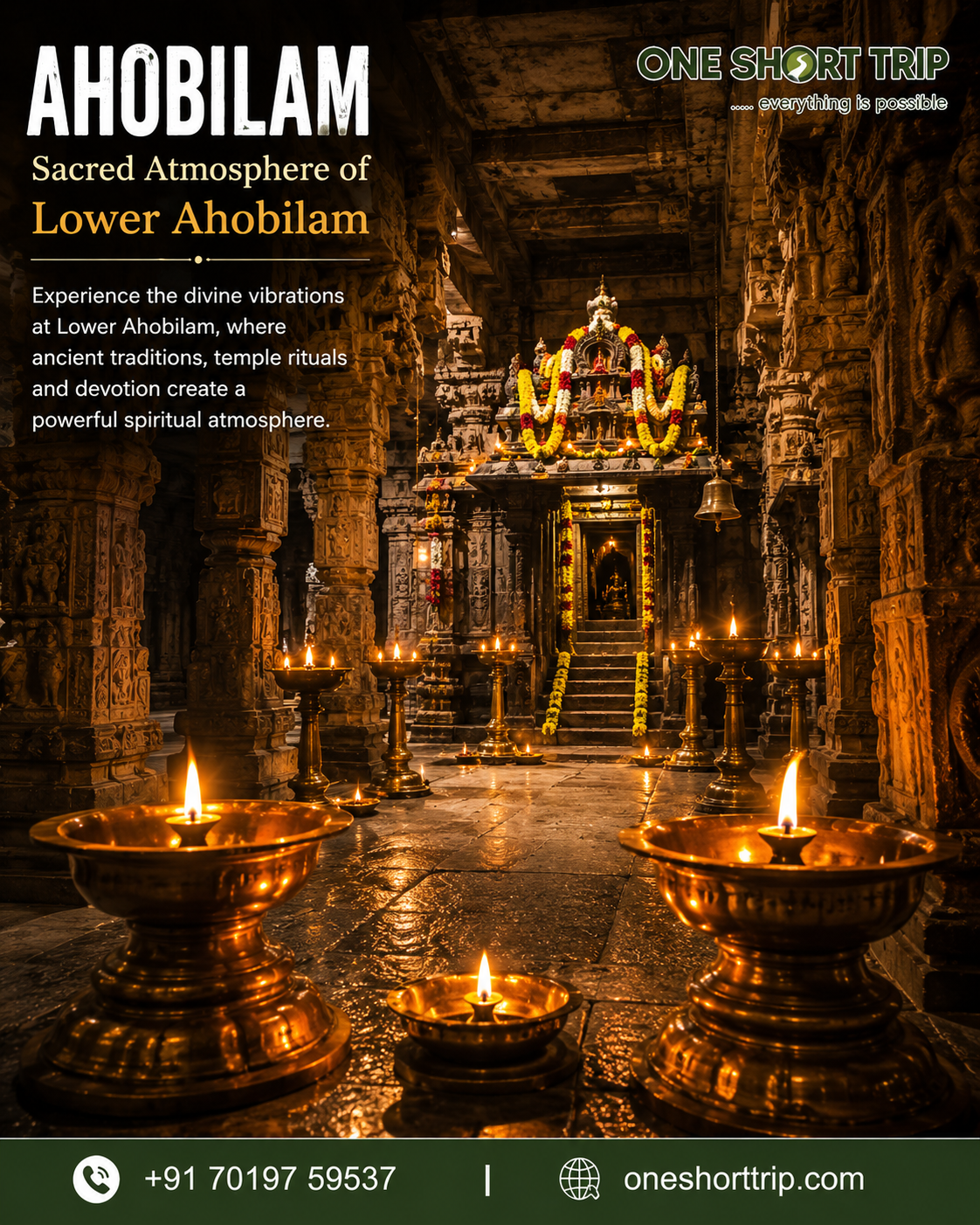
Lower Ahobilam Prahlada Varada Narasimha Temple and Nava Narasimha pilgrimage
Lower AhobilamPrahlada Varada Narasimha Temple and the sacred Nava Narasimha pilgrimage region
6:30 AM
Wake Up & Prepare for the Pilgrimage
Begin the morning after a comfortable overnight stay at Ahobilam. Freshen up, prepare for the day's temple visits and keep essential items such as water, medicines, mobile phones and personal belongings ready. An early start provides greater flexibility for completing the remaining Nava Narasimha shrines.
7:00 AM
Breakfast
Enjoy the included breakfast before beginning the day's pilgrimage. Since several temples may be covered during the day, it is advisable to have a proper breakfast and carry drinking water for the journey.
Morning
Prahlada Varada Narasimha Temple
Begin the Lower Ahobilam temple circuit at the important Prahlada Varada Narasimha Temple. This is one of the principal temples of Ahobilam and is traditionally associated with Lord Narasimha's protection and blessing of Prahlada. The temple complex also includes the shrine of Amritavalli Thayar, Goddess Lakshmi, and the sacred temple water body known as Sannidhi Pushkarini. Spend time for darshan, prayer and understanding the history and significance of this important Ahobilam temple.
Morning
Yogananda Narasimha
Continue to Yogananda Narasimha, one of the nine principal forms of Lord Narasimha. According to the traditional account, this peaceful yogic form is associated with the Lord teaching Prahlada after the destruction of Hiranyakashipu. The shrine represents a calmer aspect of Narasimha and adds another dimension to the complete Nava Narasimha pilgrimage.
Late Morning
Chatravata Narasimha
The pilgrimage continues to Chatravata Narasimha. The shrine is traditionally associated with the sacred tree canopy and stories connected with music and the Gandharvas. The peaceful setting makes it a memorable stop while travelling through the sacred landscape surrounding Lower Ahobilam.
Late Morning – Afternoon
Bhargava Narasimha
Visit Bhargava Narasimha, another important shrine in the Nava Narasimha circuit. The shrine is traditionally associated with Bhargava, or Parashurama, and his worship and penance towards Lord Narasimha. Visiting this shrine is an important part of completing the traditional nine-form pilgrimage.
Afternoon
Pavana Narasimha – Forest Shrine
If weather and local access permit, the journey continues towards Pavana Narasimha, one of the more remote Nava Narasimha shrines. The temple is situated in the forest region associated with the Pavana River and is therefore different from the more accessible temples around Lower Ahobilam. Local jeep transportation is arranged by One Short Trip where required. Jeep rides are subject to weather, road conditions, forest access and local circumstances.
During the Day
Local Jeep Access for Remote Temples
The remote portions of the Ahobilam pilgrimage may require local jeep transportation. Local jeep charges are included in the One Short Trip package, so travellers do not have to separately arrange the standard jeep access for the planned pilgrimage. However, jeep operations and forest routes remain subject to weather and local conditions. Safety takes priority if heavy rain or unsuitable road conditions affect access.
1:30 – 2:30 PM
Lunch & Rest
Take a proper lunch break and allow time for rest and hydration. Two lunches are included in the package. The timing may shift depending on the temple sequence and the time required for the more remote shrine visits.
Afternoon
Complete the Nava Narasimha Circuit
The remaining planned Nava Narasimha temples are covered during the available afternoon window. The itinerary is designed to include all nine Nava Narasimha temples, rather than limiting the trip to only the easily accessible shrines. The actual sequence depends on temple timings, weather, road conditions, forest access, darshan time and the operating conditions on the day of travel.
By 5:00 PM
Complete Remote & Hill-Dependent Temple Visits
Shrines with earlier closing times are prioritised during the day's route. Upper Ahobilam temples generally operate during the daytime and commonly close around 5:00 PM. Pavana Narasimha generally opens around 9:00 AM and closes around 5:00 PM on weekends. Weekday timings can be unpredictable because of its forest location. The schedule is therefore planned around the actual operating conditions of the temples.
5:00 – 6:30 PM
Return, Freshen Up & Collect Luggage
After completing the day's temple visits, return to the accommodation or designated refreshment point. Freshen up, collect luggage and make sure all personal belongings are accounted for before the overnight journey to Bangalore.
6:30 – 7:30 PM
Dinner
Have the included dinner before beginning the return journey. A comfortable meal before departure helps travellers avoid depending entirely on roadside stops during the overnight drive.
8:00 – 8:30 PM
Final Preparation for the Return Journey
Complete the final luggage check and prepare for departure. Check your mobile phone, wallet, identification documents, medicines, chargers, water bottles and other personal belongings. The Bangalore pickup and drop locations are shared with travellers approximately 2 days before departure.
Around 9:00 PM
Depart Ahobilam for Bangalore
The AC vehicle begins the overnight journey back to Bangalore. After two days of temple visits, hill landscapes, forest routes and the Nava Narasimha pilgrimage, travellers can rest during the return journey.
Around 5:00 – 6:00 AM
Arrival in Bangalore
The group is expected to reach Bangalore in the early morning, generally around 6:00 AM, depending on traffic, road conditions, rest stops, weather and other journey conditions. The Ahobilam tour from Bangalore concludes with drop-off at the designated Bangalore location.
Important Nava Narasimha Access Note: One Short Trip includes all 9 Nava Narasimha temples in the planned Ahobilam pilgrimage. However, Ahobilam is a combination of temples, hills, forests, rocky routes and remote shrines. Access to individual temples can therefore be affected by weather, forest conditions, road conditions, temple operations and local restrictions. Local jeep transportation is arranged and included wherever required, but jeep rides are subject to weather and local access conditions. The itinerary may be rearranged during the trip to maximise the possibility of completing all nine temples safely.

Suggested Timed Schedule – Complete Ahobilam Pilgrimage

TimeActivity
Night 1 – 9:00 PMDepart Bangalore in an AC vehicle
5:00–6:00 AMArrive at Ahobilam, depending on traffic and road conditions
6:00–8:00 AMFresh-up and breakfast
8:00–9:00 AMProceed towards the planned temple circuit
MorningPrahlada Varada Narasimha Temple
MorningYogananda Narasimha
Late MorningChatravata Narasimha
Late Morning–AfternoonBhargava Narasimha
AfternoonPavana Narasimha, subject to weather and forest access
AfternoonComplete remaining Nava Narasimha temple visits according to the day's route
1:30–2:30 PMLunch and rest
By 5:00 PMPrioritised completion of temples with earlier closing times
5:00–6:30 PMReturn, freshen up and collect luggage
6:30–7:30 PMDinner
8:00–8:30 PMFinal preparation for departure
Around 9:00 PMDepart Ahobilam for Bangalore
Around 5:00–6:00 AMArrive in Bangalore and complete the pilgrimage

All timings are approximate. Temple timings, darshan queues, weather, forest access, road conditions, local jeep availability and the actual time required at each shrine can affect the sequence. Most Lower Ahobilam temples generally open earlier, while Upper Ahobilam and certain forest shrines have different operating patterns. The itinerary is designed to cover all 9 Nava Narasimha temples whenever weather and local access permit.

```
Landscape & Culture

Ahobilam and the Nallamala Hills – Where Temple, Forest & Mythology Meet

Ahobilam is located in the Nallamala Hills of Andhra Pradesh, within a landscape of forests, rocky hills, valleys, streams and natural formations. Unlike many major pilgrimage destinations where temples are concentrated inside one town or temple complex, the Ahobilam Nava Narasimha pilgrimage extends across a much larger natural landscape. The journey between the shrines can take travellers through forest roads, hill slopes, rocky paths and remote areas.

This unique combination of Lord Narasimha temples, Nallamala forest, hills, caves, streams and sacred locations is one of the main reasons Ahobilam feels different from an ordinary temple tour. Here, the natural landscape forms an important part of the pilgrimage itself. The surroundings help visitors understand why the traditions of Ahobilam are so closely connected with mountains, forests and the divine manifestation of Narasimha.
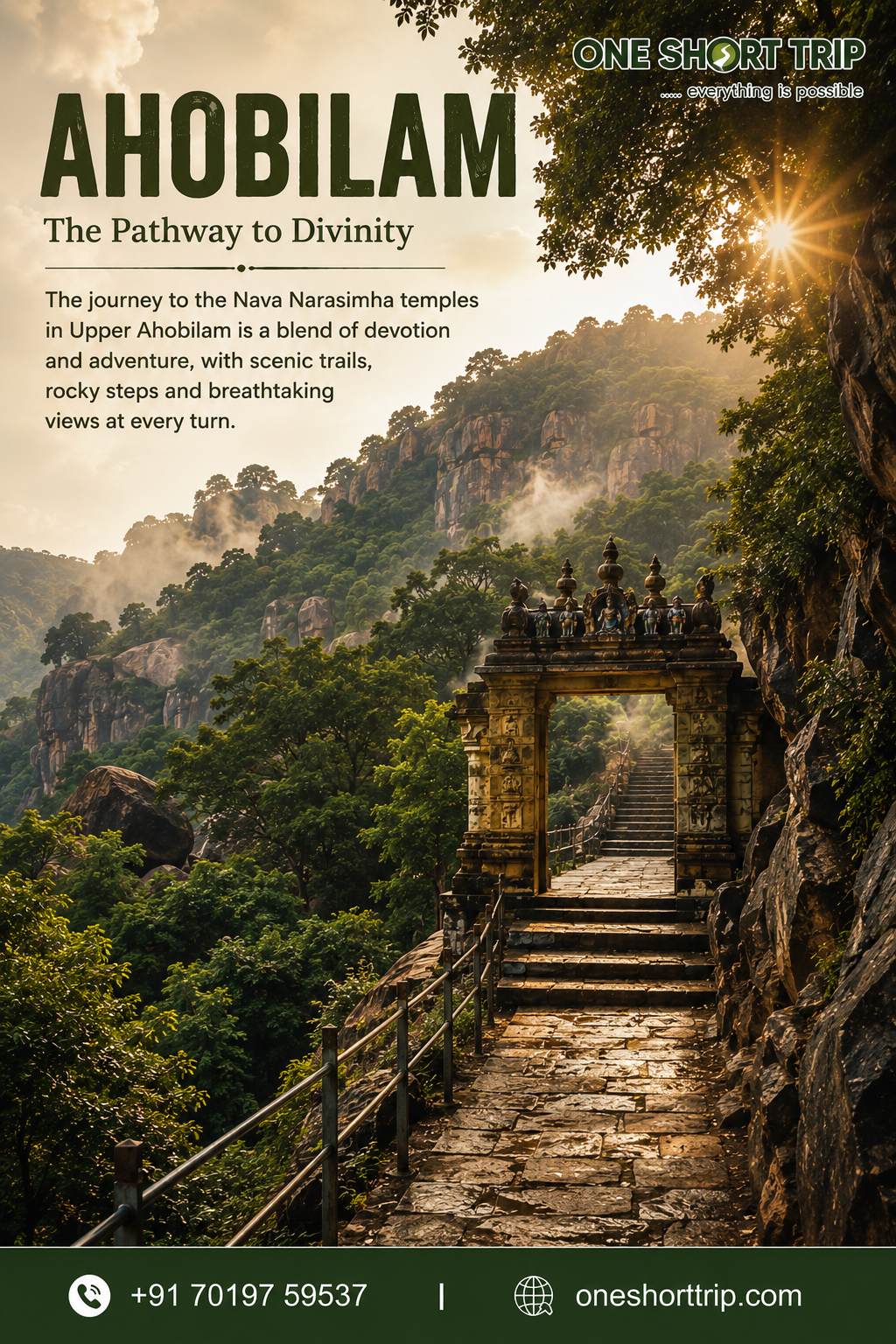
Ahobilam Narasimha temple surrounded by the Nallamala Hills and forest landscape
Ahobilam & Nallamala HillsSacred Narasimha temples surrounded by forests, hills and natural landscapes

Where Is Ahobilam Located?

Ahobilam is located in Andhra Pradesh, in the Nallamala hill region of the Eastern Ghats. The destination is known primarily as a major pilgrimage centre dedicated to Lord Narasimha. The sacred area is broadly experienced through Lower Ahobilam and Upper Ahobilam, with several Nava Narasimha shrines distributed across the surrounding landscape.

For travellers coming from Bangalore, Ahobilam is a popular choice for a weekend temple trip from Bangalore, especially for devotees looking for a meaningful pilgrimage rather than a conventional sightseeing holiday. The overnight journey allows travellers to leave Bangalore at night and use the following daytime hours for temple visits and exploration.

Why Are the Nallamala Hills Important to Ahobilam?

The Nallamala Hills are an important part of the identity of Ahobilam because several sacred shrines are located within or around the hill and forest landscape. The terrain varies considerably between locations. Some temples can be reached relatively easily, while others require walking, climbing, travelling on forest roads or using local jeep transportation.

The combination of Nallamala Hills and Nava Narasimha temples creates a pilgrimage experience in which geography and mythology are closely connected. Streams, caves, rocks, trees and hill formations are not simply scenic attractions; many locations are associated with traditional stories relating to Lord Narasimha, Prahlada, sages and other figures from Hindu tradition.

Ahobilam and Chenchu Tradition

Ahobilam also has an important connection with the Chenchu community, an indigenous tribal community traditionally associated with the forests of the Nallamala region. Ahobilam's sacred traditions include the story of Lord Narasimha and Chenchu Lakshmi, giving the pilgrimage a distinctive cultural dimension.

The traditional story of Chenchu Lakshmi connects the fierce Lord Narasimha with the local forest culture and Chenchu tradition. In the broader sacred narrative, Narasimha's presence in the forest landscape is not separated from the people and traditions of the region. This makes Ahobilam particularly interesting for travellers who want to understand not only the temple history but also the cultural traditions surrounding the pilgrimage.

What Is the Connection Between Narasimha and Chenchu Lakshmi?

According to local and traditional accounts, after Lord Narasimha emerged in his fierce form, his connection with the forest region became associated with Chenchu Lakshmi, traditionally described as a Chenchu woman. This story is an important part of the cultural traditions of Ahobilam and is remembered through local religious practices and narratives. It is one of the distinctive traditions that sets Ahobilam apart from many other Narasimha pilgrimage centres.

Why Is Ahobilam Considered Powerful?

For devotees, Ahobilam is considered one of the most powerful Narasimha pilgrimage centres because of its direct association with the Narasimha avatar of Lord Vishnu. The traditional belief is that this is the sacred region connected with the manifestation of Narasimha to protect Prahlada and destroy Hiranyakashipu.

The spiritual significance goes beyond the story of the demon king and Prahlada. Narasimha represents the protection of devotees, the triumph of righteousness over arrogance and the idea that divine protection can appear in an unexpected form. For this reason, devotees visit Ahobilam to offer prayers, seek protection, fulfil vows, express gratitude and spend time in spiritual reflection.

Why Do People Visit Ahobilam?

People travel to Ahobilam for many different reasons. Devotees come to worship the nine forms of Lord Narasimha, families visit to experience an important pilgrimage together, and travellers interested in heritage and mythology come to explore the temples and sacred landscape. The destination is also attractive to people looking for a combination of temples, mythology, hills, forests, caves and nature.

Ahobilam for Families

Ahobilam can be a memorable family pilgrimage because children and adults can experience temple architecture, Hindu mythology, sacred stories, hills and natural surroundings together. Families should remember that some routes are uneven or rocky and that certain shrines require more physical effort.

Ahobilam for Senior Citizens

Senior citizens can participate in the Ahobilam pilgrimage, particularly at the more accessible temples. Lower Ahobilam and easier shrine visits can be comfortable with a sensible pace, while Jwala Narasimha, Ugra Stambham and some remote forest locations may require greater physical effort. Travellers should choose their walking and trekking activities according to their individual comfort and ability.

Ahobilam for Narasimha Devotees

For devotees of Lord Narasimha, Ahobilam offers the opportunity to experience the Nava Narasimha Kshetra and visit the nine traditional forms of Narasimha in their individual sacred settings. The pilgrimage provides a deeper experience than visiting a single Narasimha temple because every shrine has its own story, form and traditional association.

Ahobilam for History & Heritage Travellers

The destination offers an interesting combination of temple architecture, Vaishnava tradition, religious history, mythology and the cultural heritage of the Nallamala region. Travellers interested in South Indian temples can explore different architectural settings rather than one single temple complex.

Ahobilam for Nature Lovers

The Nallamala landscape adds a strong nature element to the pilgrimage. Forest roads, hills, rocks, streams and valleys make the journey visually different from a conventional city temple tour. Weather conditions can significantly change the character and accessibility of the landscape.

Ahobilam for Spiritual Seekers

The combination of secluded shrines, forest surroundings, ancient traditions and the story of Prahlada makes Ahobilam suitable for travellers seeking quiet prayer and spiritual reflection. The journey encourages visitors to experience the pilgrimage at a meaningful pace rather than treating the temples simply as sightseeing checkpoints.

Upper Ahobilam vs Lower Ahobilam

Lower Ahobilam is the more accessible gateway and has the atmosphere of a traditional temple settlement, with the important Prahlada Varada Narasimha Temple and other nearby religious sites. Upper Ahobilam extends deeper into the hill and forest landscape and contains some of the most dramatic sacred locations associated with the Nava Narasimha pilgrimage.

The difference between the two areas is important when planning an Ahobilam trip from Bangalore. Travellers should not assume that all nine Narasimha temples are located close together. Some require additional road travel, local jeep access, walking or climbing. One Short Trip therefore plans the pilgrimage around actual access conditions rather than treating Ahobilam as a single compact temple complex.

Is Ahobilam Only a Temple Destination?

No. Although the primary purpose of visiting Ahobilam is the Nava Narasimha pilgrimage, the destination also offers a distinctive combination of mythology, forest landscape, hills, caves, streams, traditional culture and temple heritage. The natural environment is one of the reasons the journey feels more like a pilgrimage through a sacred landscape than a conventional temple-hopping itinerary.

Travel Note: Ahobilam is a natural hill and forest pilgrimage destination, not a conventional city sightseeing circuit. Weather can affect road conditions, walking routes and local jeep operations. One Short Trip arranges local jeep access where required, but jeep rides are subject to weather and local conditions. Travellers should be prepared for walking, uneven surfaces and changes to the temple sequence when necessary for safety and access.
Plan Smart

Ahobilam Travel Guide – Practical Information, Temple Timings, Weather & Trekking Tips

Best Time to Visit Ahobilam

The best time to visit Ahobilam depends on what you want from the pilgrimage. Since the Nava Narasimha temples are spread across hills, forest areas and different access routes, comfortable weather is particularly important. The cooler months are generally more suitable for temple visits, walking and exploring the Nallamala landscape.

October – February

This is generally one of the most comfortable periods for an Ahobilam temple tour. Temperatures are more suitable for walking and outdoor sightseeing, making it easier to spend longer periods exploring the Nava Narasimha shrines and surrounding landscape.

March – May

Temperatures can become considerably warmer, particularly during the afternoon. Travellers should prefer early morning temple visits, stay hydrated and avoid unnecessary exposure to the afternoon heat. Hill walking can feel more strenuous during this period.

Monsoon – June to September

The Nallamala Hills can become particularly green and scenic during the rainy season. However, rain can make rocks and walking paths slippery, increase water flow in streams and affect forest roads. Jeep access and trekking routes are subject to weather and local conditions.

Is Ahobilam Open Throughout the Year?

Ahobilam can generally be visited throughout the year, but the experience and accessibility of individual shrines can vary by season. The main consideration is not simply whether Ahobilam is open, but whether all nine Nava Narasimha temples can be safely accessed on the day of travel.

During heavy rain, forest routes, rocky sections and streams can become difficult. Temple access may also depend on local conditions. One Short Trip therefore keeps the temple sequence flexible and prioritises safety while making every reasonable effort to cover all 9 Nava Narasimha temples whenever weather and local access permit.

Ahobilam Temple Timings

Temple timings at Ahobilam are important when planning a complete Nava Narasimha pilgrimage because the nine shrines do not all follow exactly the same operating schedule. Timings can also change due to festivals, special rituals, local circumstances and the location of the shrine.

Lower Ahobilam Temples

Most temples in the Lower Ahobilam area generally open around 6:00 AM on weekends and around 8:00 AM on weekdays, and many remain open until approximately 8:00 PM. Actual darshan and pooja timings can vary, so travellers should allow flexibility.

Upper Ahobilam Temples

Temples in Upper Ahobilam generally operate during the daytime, commonly opening around 9:00–10:00 AM and closing around 5:00 PM. Because these shrines are located in the hill and forest region, the day's route needs to prioritise them appropriately.

Pavana & Bhargava Narasimha

Pavana Narasimha and other remote shrines require special planning. On weekends, Pavana Narasimha generally operates around 9:00 AM to 5:00 PM. Weekday operation can be unpredictable because of its forest location. Access should therefore always be confirmed locally on the day.

Important: Temple timings shown here are planning guidance and should not be treated as a guaranteed daily timetable. Darshan queues, pooja timings, festivals, local administration, weather and forest access can affect the actual visiting sequence.

What Is the Best Time of Day to Visit Ahobilam Temples?

For a complete Nava Narasimha temple tour, the day should generally begin early enough to accommodate temples with shorter daytime operating windows. Lower Ahobilam temples may be accessible from the early morning, while Upper Ahobilam and remote forest shrines generally need to be planned within their daytime operating hours.

One Short Trip does not follow a rigid sequence simply because a timetable says so. The actual order can be adjusted based on temple timings, darshan queues, weather, forest access, road conditions, local jeep availability and the pace of the group.

Dress Code for Ahobilam Temples

Ahobilam is an important Hindu pilgrimage destination, so travellers should dress modestly and respectfully while visiting the temples. Comfortable clothing is also important because the pilgrimage can involve walking, steps and uneven terrain.

Recommended: traditional Indian clothing, saree, salwar/churidar, kurta, full-length trousers and other modest, comfortable clothing. Avoid: very short clothing, shorts, sleeveless clothing and clothing that may be considered inappropriate inside temples.

What to Carry for an Ahobilam Trip

  • Government-issued ID
  • Mobile phone
  • Power bank and charging cable
  • Water bottle
  • Comfortable walking or trekking shoes
  • Extra socks
  • Small backpack
  • Personal medicines
  • Sunglasses
  • Cap or hat
  • Sunscreen
  • Light snacks
  • Torch or phone light
  • Rain protection during monsoon
  • Small towel
  • Extra set of clothes
  • Personal toiletries
  • Basic first-aid supplies

For the trekking and forest sections, carry only what you need for the day. Avoid carrying heavy luggage while visiting the hill and remote shrines.

How Difficult Is the Ahobilam Trek?

Ahobilam is not a conventional sightseeing destination. The difficulty of the pilgrimage varies considerably from one shrine to another. Some temples are relatively accessible, while others involve walking, steps, rocky surfaces, uneven paths, slopes and forest terrain.

The most physically demanding sections should not be treated as compulsory trekking challenges. Travellers should participate according to their fitness, age and comfort level. The purpose of the Ahobilam pilgrimage is to experience the sacred temples and traditions, not to prove physical endurance.

Local Jeep Transportation at Ahobilam

Local jeep access will be arranged by One Short Trip for the planned remote portions of the pilgrimage, and the local jeep charges are included in the package. This is particularly useful for reaching remote shrines where ordinary vehicle access may not be suitable.

Jeep rides are subject to weather conditions. Heavy rain, slippery roads, forest conditions, road damage or local restrictions can affect jeep operations. If access becomes unsafe, the itinerary may have to be rearranged. Safety will always take priority over completing a particular route at any cost.

Important Trekking & Forest Safety Advice

Stay with the group during trekking and forest sections. Wear footwear with a good grip, carry sufficient drinking water and follow the instructions of the trip coordinator and local personnel. Do not walk alone into forest areas, attempt dangerous rock climbs, approach wildlife or enter restricted areas.

During monsoon and immediately after heavy rain, extra caution is necessary because rocks, steps and pathways may become slippery. Streams and water crossings can also change rapidly. Never attempt a route simply because it was accessible on a previous visit.

Responsible Pilgrimage at Ahobilam

Ahobilam's importance comes from the combination of sacred temples, ancient traditions and the natural Nallamala landscape. Visitors have a responsibility to protect both the spiritual and environmental character of the destination.

Never: throw plastic or food waste into the forest, damage trees, write on rocks, scratch temple walls, disturb wildlife, enter restricted forest areas, leave waste on trekking paths, damage ancient structures or disturb other devotees.

Do's

  • Start early and follow the planned schedule
  • Wear comfortable footwear with a good grip
  • Carry sufficient drinking water
  • Dress respectfully for temple visits
  • Follow temple rules and local instructions
  • Stay together during trekking and forest travel
  • Allow senior citizens enough time to walk and rest
  • Inform the trip coordinator about mobility concerns
  • Keep emergency contacts accessible
  • Dispose of waste responsibly
  • Respect the sanctity of the temples
  • Follow instructions regarding photography

Don'ts

  • Do not trek alone
  • Do not climb unsafe rocks or attempt dangerous shortcuts
  • Do not enter restricted forest areas
  • Do not approach or feed wildlife
  • Do not litter the hills, forests or temple surroundings
  • Do not damage trees, rocks or temple structures
  • Do not force senior citizens to undertake difficult routes
  • Do not ignore weather warnings or local instructions
  • Do not delay the group unnecessarily
  • Do not assume that yesterday's route conditions will be the same today
  • Do not treat sacred locations merely as photography spots
  • Do not attempt remote routes without proper local access
Important: Ahobilam is a hill-and-forest pilgrimage destination. Weather, temple operating hours, road conditions, forest access, darshan queues and local jeep operations can change the day's schedule. One Short Trip plans the route to cover all 9 Nava Narasimha temples whenever weather and local access permit, while keeping traveller safety as the first priority.
Good to Know

Accommodation, Meals & Transportation

Accommodation at Ahobilam

This Ahobilam tour from Bangalore includes one night of comfortable AC accommodation at Ahobilam. The stay is selected with the needs of pilgrims and families in mind, considering cleanliness, comfort, location, accessibility and availability on the travel date. Staying at Ahobilam allows the group to begin the temple pilgrimage without having to travel back to another city after the first day. Room availability can vary during festivals, weekends and periods of heavy pilgrim crowds, so the exact property may depend on availability at the time of booking.

Meals

The package includes 2 breakfasts, 2 lunches and 2 dinners during the Ahobilam pilgrimage. Meals are planned around the sightseeing schedule so that travellers can concentrate on the Nava Narasimha temple visits without having to spend unnecessary time arranging food. Vegetarian and South Indian-style meals are generally preferred for this pilgrimage, particularly because the journey involves temple visits, walking and trekking in parts of the Ahobilam region.
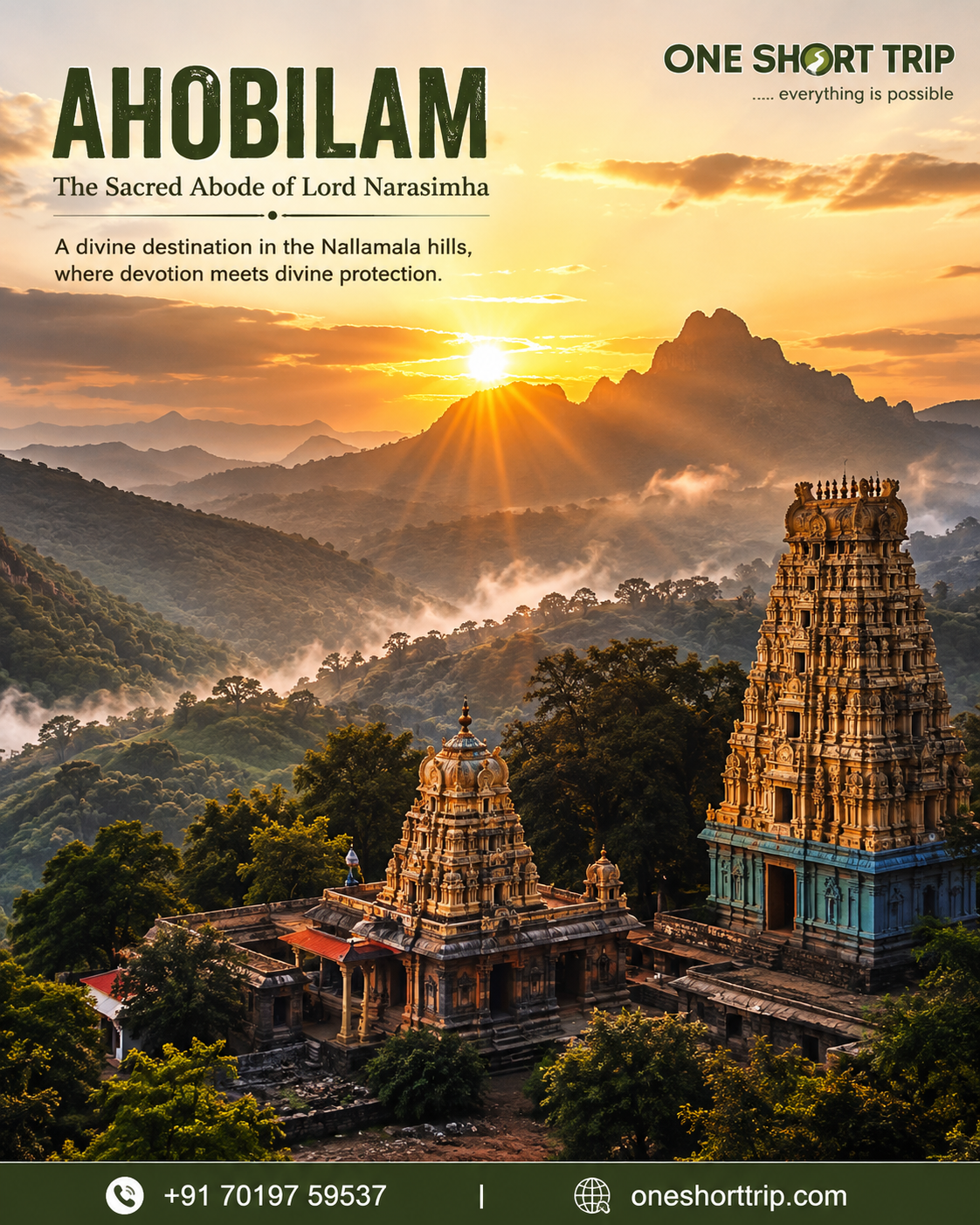
Bangalore to Ahobilam Spiritual Journey
Bangalore to AhobilamA spiritual overnight journey through the Nallamala Hills

Transportation

The Ahobilam trip begins from Bangalore at approximately 9:00 PM, allowing the group to travel overnight and reach Ahobilam in the early morning. A comfortable AC vehicle is used for the journey and local sightseeing. The vehicle remains available for the planned movement between Ahobilam, Upper Ahobilam, Lower Ahobilam and the surrounding Nava Narasimha shrines. Local jeep transportation is also arranged and included wherever required for the pilgrimage. Jeep access to remote shrines such as Pavana Narasimha and other difficult sections is subject to weather, road and local conditions. The return journey begins from Ahobilam at night, with arrival in Bangalore expected around 6:00 AM, depending on traffic, road conditions and rest stops.

Places Covered

Ahobilam

One of the most important Lord Narasimha pilgrimage centres in South India, set amidst the Nallamala Hills of Andhra Pradesh and traditionally associated with the appearance of Narasimha to protect Prahlada.

Upper Ahobilam

The forested and hilly part of the Ahobilam pilgrimage, where several important Nava Narasimha shrines are reached through rocky paths, steps and natural hill surroundings.

Ahobila Narasimha

The principal Upper Ahobilam shrine, traditionally associated with the fierce Ugra manifestation of Lord Narasimha and the divine appearance connected with the Prahlada and Hiranyakashipu story.

Karanja Narasimha

One of the Nava Narasimha shrines, traditionally associated with the Karanja tree and the story of Hanuman's devotion. The distinctive form of the deity makes this an important stop on the Ahobilam temple circuit.

Kroda / Varaha Narasimha

Also known as Kroda Narasimha or Varaha Narasimha, this form combines the Narasimha tradition with the Varaha aspect of Lord Vishnu and is traditionally associated with Goddess Lakshmi.

Malola Narasimha

Malola is traditionally understood as the beloved form of Lord Narasimha accompanied by Goddess Lakshmi. The shrine represents a comparatively gentle and graceful aspect of the Lord.

Jwala Narasimha

One of the most significant and physically demanding Nava Narasimha shrines, traditionally associated with the fierce moment when Lord Narasimha defeated Hiranyakashipu. Access involves walking and uneven terrain and depends on local conditions.

Ugra Stambham

A dramatic natural rock formation and sacred landmark traditionally identified with the pillar from which Lord Narasimha emerged. Reaching the area can be considerably more demanding, so it is treated as optional rather than compulsory.

Prahlada Mettu

A sacred hill and cave-like location traditionally associated with Prahlada. The site connects the natural landscape of Upper Ahobilam with the story of Prahlada's unwavering devotion to Lord Vishnu.

Lower Ahobilam

The more accessible temple area of Ahobilam, centred around the important Prahlada Varada Narasimha Temple and serving as the main base for several surrounding shrines.

Prahlada Varada Narasimha

The principal temple of Lower Ahobilam, where Lord Narasimha is worshipped as Prahlada Varada, meaning the Lord who blessed Prahlada. The temple complex is an important starting point for exploring Lower Ahobilam.

Amritavalli Thayar

The shrine of Goddess Amritavalli Thayar, the divine consort of Lord Narasimha, forms an important part of the worship and temple tradition at Lower Ahobilam.

Sannidhi Pushkarini

The sacred temple water body associated with the Prahlada Varada Narasimha Temple and the traditional ritual environment of Lower Ahobilam.

Bhargava Narasimha

One of the nine Nava Narasimha forms, traditionally connected with Bhargava or Parashurama and his penance and worship of Lord Narasimha.

Yogananda Narasimha

The peaceful yogic manifestation of Lord Narasimha, traditionally associated with the Lord teaching Prahlada after the destruction of Hiranyakashipu.

Chatravata Narasimha

A distinctive Nava Narasimha shrine traditionally associated with a sacred tree canopy and stories connected with music and the Gandharvas.

Pavana Narasimha

A remote forest shrine associated with the Pavana River and considered one of the nine Nava Narasimha temples. Access is particularly dependent on weather, forest conditions, road conditions and local jeep availability.

Rakta Kunda

A sacred water body near the Jwala Narasimha area, traditionally associated with the story of Lord Narasimha washing away the blood after defeating Hiranyakashipu.

Ahobilam Pilgrimage A Journey of Faith
Ahobilam PilgrimageA journey of faith through the land of Nava Narasimha
Questions?

Frequently Asked Questions

How far is Ahobilam from Bangalore?

Ahobilam is a long road journey from Bangalore, and the actual distance and travel time can vary depending on the route, traffic and starting point in Bangalore. One Short Trip therefore plans the journey as an overnight trip, departing Bangalore at around 9:00 PM and returning from Ahobilam at night so that most of the daytime can be used for the pilgrimage.

How can I travel from Bangalore to Ahobilam?

You can travel from Bangalore to Ahobilam by car, bus or organised tour. For this Ahobilam tour from Bangalore, One Short Trip provides an AC vehicle, local jeep access where required and a planned two-day pilgrimage covering Upper and Lower Ahobilam. The journey starts from Bangalore at approximately 9:00 PM.

How many days are required for an Ahobilam trip?

At least two sightseeing days are recommended if you want to experience Upper Ahobilam, Lower Ahobilam and the Nava Narasimha pilgrimage without rushing. A one-day Ahobilam trip can be difficult because several shrines are spread across hills, forest areas and different parts of the region. This itinerary uses overnight travel from Bangalore and one night of accommodation at Ahobilam.

How many Narasimha temples are there in Ahobilam?

The principal pilgrimage of Ahobilam is centred around the nine Nava Narasimha temples. These are Ahobila, Jwala, Malola, Kroda or Varaha, Karanja, Bhargava, Yogananda, Chatravata and Pavana Narasimha. Ahobilam also has other important sacred places and temples, including the Prahlada Varada Narasimha Temple at Lower Ahobilam.

What are the nine Nava Narasimha temples of Ahobilam?

The nine principal forms are Ahobila Narasimha, Jwala Narasimha, Malola Narasimha, Kroda or Varaha Narasimha, Karanja Narasimha, Bhargava Narasimha, Yogananda Narasimha, Chatravata Narasimha and Pavana Narasimha. Each form has its own traditional story, location and spiritual significance.

Why is Ahobilam famous?

Ahobilam is famous for its association with Lord Narasimha, the man-lion incarnation of Lord Vishnu, and for the nine Nava Narasimha shrines spread across its hills and surrounding landscape. The region is traditionally connected with the story of Narasimha protecting Prahlada and defeating Hiranyakashipu. Its combination of temples, forests, hills, caves, streams and sacred sites makes Ahobilam a distinctive pilgrimage destination in Andhra Pradesh.

Why is Ahobilam considered an important Narasimha pilgrimage?

Ahobilam is traditionally regarded as one of the most important sacred places associated with Lord Narasimha. The pilgrimage is significant because devotees can worship nine principal manifestations of Narasimha in their individual sacred settings rather than visiting only one temple. The landscape itself is closely connected with the traditional Narasimha and Prahlada stories.

What is the story of Lord Narasimha and Prahlada at Ahobilam?

According to the traditional Hindu narrative, Prahlada remained devoted to Lord Vishnu despite his father Hiranyakashipu's opposition. When Hiranyakashipu challenged Prahlada about where Vishnu existed, Prahlada declared that the Lord was everywhere. Narasimha then appeared in a form that was neither fully human nor fully animal and defeated Hiranyakashipu while overcoming the conditions of his boon. Ahobilam is traditionally associated with this divine manifestation and the sacred events surrounding Narasimha and Prahlada.

What is Upper Ahobilam?

Upper Ahobilam is the hill and forest region of Ahobilam where several important Nava Narasimha shrines are located. The area has rocky terrain, hill paths, steps, caves, streams and forest surroundings. Ahobila Narasimha and some of the more physically demanding pilgrimage routes are associated with this region.

What is Lower Ahobilam?

Lower Ahobilam is the more accessible temple area and the main gateway for exploring the Ahobilam pilgrimage. It is home to the important Prahlada Varada Narasimha Temple, along with the Amritavalli Thayar shrine and Sannidhi Pushkarini. Several other Nava Narasimha shrines can also be reached from the Lower Ahobilam area.

What is Ahobila Narasimha Temple?

Ahobila Narasimha is one of the principal Nava Narasimha shrines and is located in the Upper Ahobilam region. The deity is traditionally associated with the fierce Ugra manifestation of Lord Narasimha and the sacred story of his appearance to protect Prahlada and defeat Hiranyakashipu.

What is Jwala Narasimha Temple?

Jwala Narasimha is one of the most significant and traditionally fierce forms among the Nava Narasimha shrines. It is associated with the intense manifestation of Narasimha during the destruction of Hiranyakashipu. Reaching the shrine can involve uneven terrain, walking and climbing, so access depends on weather, local conditions and the fitness of the traveller.

What is Malola Narasimha?

Malola Narasimha is traditionally understood as the graceful form of Lord Narasimha accompanied by Goddess Lakshmi. The name is commonly explained through the association of Lakshmi with the Lord as his beloved, and the shrine represents a gentler aspect of Narasimha compared with the fierce forms associated with Jwala and Ahobila.

What is Kroda Narasimha?

Kroda Narasimha, also called Varaha Narasimha, is one of the Nava Narasimha forms. The deity is traditionally associated with the Varaha aspect of Lord Vishnu and represents a distinctive form within the Ahobilam pilgrimage.

What is Karanja Narasimha?

Karanja Narasimha is traditionally worshipped beneath or associated with a Karanja tree. The shrine has a strong connection with the Hanuman tradition, and the form of the deity has distinctive iconographic features that make this shrine an important stop on the Nava Narasimha circuit.

What is Bhargava Narasimha?

Bhargava Narasimha is one of the nine Nava Narasimha forms and is traditionally associated with Bhargava, or Parashurama. The sacred tradition connects the shrine with his penance and worship of Lord Narasimha.

What is Yogananda Narasimha?

Yogananda Narasimha represents the peaceful and yogic aspect of Lord Narasimha. Traditional accounts associate this form with the Lord teaching Prahlada after the destruction of Hiranyakashipu, giving the shrine a strong connection with spiritual discipline and devotion.

What is Chatravata Narasimha?

Chatravata Narasimha is one of the Nava Narasimha shrines and is traditionally associated with a sacred tree canopy. Local sacred traditions also connect the location with music and the Gandharvas, giving this shrine a different character from the more fierce forms of Narasimha.

What is Pavana Narasimha?

Pavana Narasimha is one of the nine Nava Narasimha shrines and is located in a more remote forest setting associated with the Pavana River. Because of its location, access can be affected by weather, forest conditions, road conditions, local jeep availability and other local restrictions. It is therefore visited whenever safe and practical conditions permit.

What is Ugra Stambham in Ahobilam?

Ugra Stambham is a dramatic natural rock formation in the Upper Ahobilam landscape that tradition identifies with the pillar from which Lord Narasimha emerged. It is an important sacred landmark, but the route is more demanding than ordinary temple sightseeing and is therefore treated as an optional activity on this itinerary.

Is Ugra Stambham difficult to reach?

Ugra Stambham involves considerably more challenging walking and uneven hill terrain than the easier temple visits. It should only be attempted by physically prepared travellers when weather, local conditions and access are suitable. One Short Trip does not make the visit compulsory, particularly for families travelling with senior citizens.

What is Prahlada Mettu in Ahobilam?

Prahlada Mettu is a sacred hill and cave-like location traditionally associated with Prahlada. It forms part of the Upper Ahobilam sacred landscape and helps connect the physical geography of the hills with the traditional story of Prahlada's devotion to Lord Vishnu.

What is Prahlada Varada Narasimha Temple?

Prahlada Varada Narasimha is the principal temple of Lower Ahobilam. The name refers to Lord Narasimha as the one who blessed Prahlada. The temple complex also includes the Amritavalli Thayar shrine and the sacred Sannidhi Pushkarini, making it an important centre of worship during an Ahobilam pilgrimage.

What are the temple timings in Ahobilam?

Temple timings can vary by shrine, day, season, festivals and local administration. As a general planning guide, many Lower Ahobilam temples open around 6:00 AM on weekends and around 8:00 AM on weekdays and may remain open until around 8:00 PM. Upper Ahobilam temples generally open later, often around 9:00 or 10:00 AM, and commonly close around 5:00 PM. Pavana Narasimha and Bhargava Narasimha can have more variable access, particularly on weekdays because of their forest locations. These timings should be treated as planning guidance rather than a guarantee, and the day's route is adjusted according to actual local conditions.

Can I visit Pavana Narasimha on an Ahobilam trip?

Pavana Narasimha is included in the planned Nava Narasimha circuit whenever access is possible. It is located in a forest area and its accessibility can depend on weather, road conditions, forest conditions, local jeep availability and local restrictions. One Short Trip arranges local jeep transportation, but safe access cannot be guaranteed in unsuitable conditions.

Are local jeeps required in Ahobilam?

Local jeeps are useful for reaching some of the more remote Nava Narasimha shrines and forest-side locations. For this One Short Trip package, local jeep transportation is arranged and included. Jeep access remains subject to weather, road conditions, local restrictions and the operating conditions on the day of the pilgrimage.

Can all nine Nava Narasimha temples be covered in two days?

A carefully planned two-day pilgrimage can cover the nine principal Nava Narasimha shrines when temple timings, weather, road conditions, local access and group fitness allow. However, the nine shrines are spread across different locations and some involve forest travel, walking or hill terrain. One Short Trip plans for all nine whenever conditions permit, but does not make an unrealistic guarantee that every remote shrine will be accessible in every departure.

Is Ahobilam a trekking destination?

Ahobilam is primarily a Hindu pilgrimage destination rather than a dedicated trekking destination. However, some temples and sacred landmarks are reached through hill paths, steps, rocky terrain and forest routes. Travellers should therefore be prepared for walking, while understanding that the difficulty varies significantly between shrines.

Is Ahobilam suitable for senior citizens?

Yes. Ahobilam can be visited by senior citizens, especially when the itinerary is planned without forcing everyone to complete the difficult trekking sections. Lower Ahobilam and the more accessible temples can be enjoyed comfortably, while demanding routes such as Jwala Narasimha or Ugra Stambham can be skipped when necessary. Senior citizens should inform the trip coordinator about mobility limitations before departure.

Is Ahobilam suitable for families and children?

Yes. Ahobilam can be a meaningful family pilgrimage because it combines temples, Hindu mythology, the story of Prahlada and Narasimha, forests, hills and natural landscapes. Children should remain under adult supervision, particularly around rocky paths, steps, streams, forest areas and remote shrine routes.

What is the best time to visit Ahobilam?

The cooler months are generally more comfortable for visiting the temples and walking through the hill areas. October to February is particularly favourable for outdoor pilgrimage. Summer afternoons can be hot, while monsoon conditions can make rocks, streams, forest roads and trekking routes more difficult. Since several Ahobilam shrines are located in natural and forest environments, the actual suitability of a route should always be assessed according to current local conditions.

Can I visit Ahobilam during the monsoon?

Yes, but extra caution is required. Rain can make rocky paths slippery, increase water flow in streams and affect forest roads and access to remote shrines. The decision to proceed to difficult or remote temples should depend on current weather, road conditions, local instructions and safe access rather than following a fixed itinerary at all costs.

How long does an Ahobilam temple trip from Bangalore take?

The overall journey uses overnight travel from Bangalore to maximise sightseeing time at Ahobilam. The group departs Bangalore at approximately 9:00 PM, spends two days on the pilgrimage with one night of accommodation at Ahobilam, and departs Ahobilam at night. Arrival back in Bangalore is generally expected around 6:00 AM, although traffic, road conditions and rest stops can change the actual arrival time.

Does the Ahobilam package from Bangalore include accommodation?

Yes. This One Short Trip Ahobilam package includes one night of comfortable AC accommodation at Ahobilam. The property is selected according to availability, cleanliness, comfort, location and suitability for the travelling group.

Are meals included in the Ahobilam tour from Bangalore?

Yes. The package includes 2 breakfasts, 2 lunches and 2 dinners. Meals are planned around the pilgrimage schedule so that travellers can focus on the temple visits and avoid unnecessary delays during the two sightseeing days.

Is an AC vehicle included in the Ahobilam package?

Yes. The package includes an AC vehicle for the Bangalore journey and planned local sightseeing. Local jeep transportation is also arranged and included for locations where it is required, subject to weather, road and local access conditions.

Where is the pickup point in Bangalore?

The exact Bangalore pickup and drop locations are shared with confirmed travellers approximately two days before departure. This allows the pickup plan to be organised according to the final group, route and operational requirements.

How far in advance should I book the Ahobilam trip?

Bookings should ideally be completed at least three weeks before the departure date. Ahobilam can experience increased pilgrim traffic during weekends, festivals and important religious periods, and advance planning helps secure accommodation, transportation and local arrangements.

What is the cancellation and refund policy for the Ahobilam trip?

A 30% advance payment is required to confirm the booking. Cancellation and refund are available only when the cancellation is made before the three-week booking window. Cancellations made within the three weeks before departure are not eligible for a refund under the stated trip policy.

What should I carry for an Ahobilam pilgrimage?

Carry a valid government ID, comfortable walking shoes, water bottle, personal medicines, power bank, sunglasses, cap, sunscreen, a small backpack, an extra set of clothes and rain protection when appropriate. For trekking sections, avoid carrying heavy luggage. Comfortable and respectful clothing is recommended because this is primarily a temple pilgrimage.

What should I wear to Ahobilam temples?

Modest and comfortable clothing is recommended for the Ahobilam pilgrimage. Traditional Indian clothing or comfortable full-length clothing is suitable. Avoid very short or revealing clothing, particularly when visiting temples. Comfortable footwear is equally important because parts of the pilgrimage involve walking on uneven ground and hill paths.

Is Ahobilam worth visiting?

Ahobilam is especially worthwhile for travellers interested in Lord Narasimha, Hindu mythology, temple architecture, pilgrimage, sacred geography and nature. Unlike a pilgrimage centred around one temple, Ahobilam takes visitors through multiple sacred locations across hills, forests, caves and surrounding landscapes, making the journey both spiritually and geographically distinctive.

Why should I choose an Ahobilam tour from Bangalore instead of travelling independently?

An organised Ahobilam tour can simplify a pilgrimage that involves multiple shrines spread across different locations. This package combines overnight Bangalore travel, an AC vehicle, one night of accommodation, meals, local jeep arrangements and a planned two-day route. It is particularly useful for families and groups who want to concentrate on the pilgrimage rather than coordinate every transfer, meal and local transport themselves.

Why Choose This Tour

Why Choose This Ahobilam Tour from Bangalore?

An Ahobilam pilgrimage from Bangalore requires thoughtful planning because the destination is not limited to a single temple. The sacred landscape extends across Upper and Lower Ahobilam, with temples, hill paths, forest surroundings, rocky stretches and different levels of walking involved. This two-day pilgrimage is planned to give travellers meaningful time at Ahobilam instead of trying to complete the journey as a rushed one-day temple visit.

The overnight journey from Bangalore helps preserve the two main sightseeing days for the pilgrimage itself. The itinerary covers the principal areas of Ahobilam, including Upper Ahobilam and Lower Ahobilam, while keeping physically demanding locations such as Jwala Narasimha, Pavana Narasimha and Ugra Stambham dependent on local access, weather, terrain and individual fitness. This approach makes the trip practical for devotees, families and senior citizens without making unrealistic promises about completing every route in every departure.
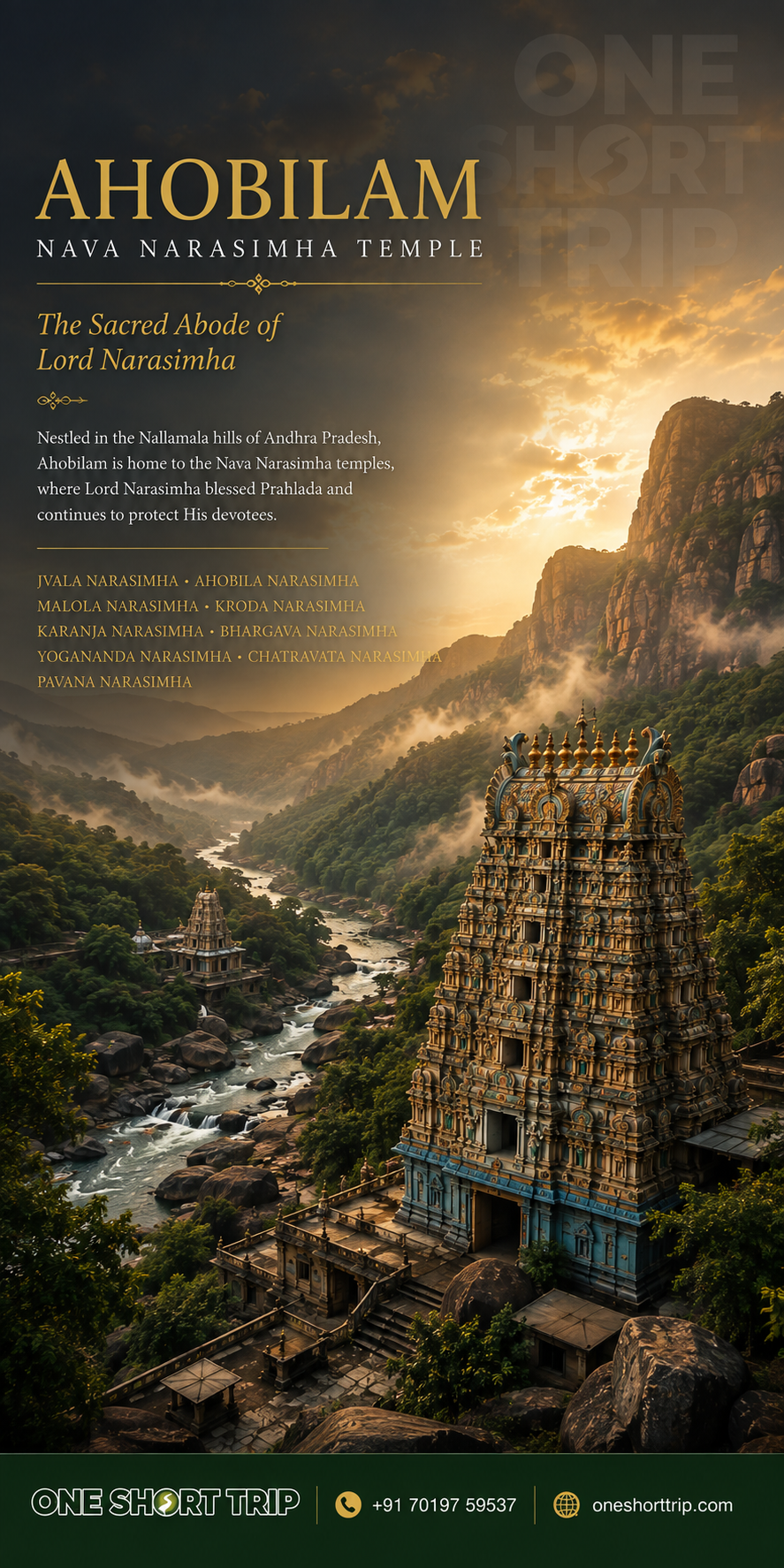
Bangalore to Ahobilam Complete Pilgrimage Experience
Bangalore to AhobilamThe complete two-day pilgrimage experience

The Spiritual Journey

The spiritual significance of Ahobilam is closely connected with the story of Prahlada and Lord Narasimha. The nine Nava Narasimha shrines represent different traditional manifestations of the Lord, each associated with its own story and sacred setting. Ahobila Narasimha represents the fierce manifestation, Jwala Narasimha is associated with the destruction of Hiranyakashipu, and Malola Narasimha presents a more graceful form accompanied by Goddess Lakshmi. At Yogananda Narasimha, the tradition turns towards the Lord's yogic aspect, while Prahlada Varada Narasimha at Lower Ahobilam brings the pilgrimage back to Prahlada, whose devotion is central to the Narasimha story. Moving through these shrines allows travellers to experience Ahobilam not simply as a collection of temples, but as a pilgrimage connected by mythology, devotion and landscape.

Final Experience

An Ahobilam trip from Bangalore is an experience that begins long before reaching the temples. The overnight journey allows you to leave Bangalore in the evening and arrive in the Ahobilam region in the early morning, ready to begin the pilgrimage. As you enter the Nallamala hills, the surroundings change from city roads to rocky hills, forest vegetation and sacred landscapes. Upper Ahobilam introduces you to the hill pilgrimage and several of the Nava Narasimha shrines, while the following day takes you through Lower Ahobilam and the important Prahlada Varada Narasimha Temple and other accessible shrines.

Along the way, the journey brings together the stories of Prahlada, Hiranyakashipu and Narasimha with the physical landscape of Ahobilam. Jwala Narasimha, Malola Narasimha, Karanja Narasimha, Kroda Narasimha, Bhargava Narasimha, Yogananda Narasimha, Chatravata Narasimha and Pavana Narasimha each contribute to the larger Nava Narasimha tradition. Sacred locations such as Rakta Kunda, Prahlada Mettu and Ugra Stambham add further depth to the pilgrimage, although access to the more demanding locations depends on conditions and fitness.

This is what makes the journey different from an ordinary temple tour. Ahobilam combines devotion, mythology, ancient temple traditions and the natural environment of the Nallamala hills. The aim of this One Short Trip itinerary is to give travellers enough time to experience that combination comfortably, while remaining transparent that actual shrine coverage can change according to temple timings, weather, road conditions, local access and the physical ability of the group.

Ready for the Nava Narasimha Pilgrimage?

Two Days. Nava Narasimha Tradition. One Overnight Journey from Bangalore.

Bangalore → Ahobilam → Upper Ahobilam → Lower Ahobilam → Ahobilam → Bangalore