Ahobilam Nava Narasimha Tour Package
from Bangalore
A Sacred 3-Day Journey Through the Narasimha Temples of Ahobilam
Ahobilam is one of those rare pilgrimage destinations where the journey itself becomes part of the spiritual experience. Set amidst the forested Nallamala hills of Andhra Pradesh, Ahobilam is closely associated with Lord Narasimha and the sacred traditions surrounding His manifestation.
Unlike a conventional temple town where the major shrines are concentrated within one compact area, Ahobilam spreads its important shrines across Lower and Upper Ahobilam, with several temples reached through hill paths, forest surroundings and trekking routes. This makes an Ahobilam tour from Bangalore particularly rewarding when planned at a relaxed pace.
Day 1 focuses on the Lower Ahobilam area and covers Prahlada Varada Temple, Bhargava Narasimha and Chatravata Narasimha — an easier first day that lets travellers settle into the pilgrimage environment. Day 2 continues with Yogananda Narasimha and Karanja Narasimha before moving into Upper Ahobilam, covering Ahobila (Ugra) Narasimha and Malola Narasimha.
Day 3 is dedicated to the more adventurous side of the pilgrimage. Travellers visit Jwala Narasimha and, for those physically prepared, can undertake the optional trek towards Ugra Stambham, before continuing to Kroda Narasimha and Pavana Narasimha ahead of the return journey to Bengaluru.
The journey is ideal for devotees, temple enthusiasts, spiritual travellers, families with active members and travellers who enjoy combining heritage with nature. The itinerary clearly identifies the trekking sections so that senior citizens and travellers with mobility limitations can make informed decisions before booking.
This journey is particularly suited to travellers who want:
The result is a balanced three-day journey for travellers who want to experience Ahobilam properly rather than simply arrive, visit one shrine and immediately return.
Why Choose This Tour?
Tour Highlights
🛏
🔐
🌳
🧘
🌿
🦁
🌺
🔥
⛰️
🐗
🌿
Detailed Ahobilam Itinerary from Bangalore
Bangalore to Lower Ahobilam – Begin the Nava Narasimha Pilgrimage
🌙 Departure from Bengaluru ▶
The journey begins from the confirmed pickup point in Bengaluru. Since the drive to Ahobilam is a long road journey, an early start helps maximise the time available at the destination.
Travellers should arrive at the reporting point before the scheduled departure time. The vehicle journey is planned with suitable breaks for breakfast, refreshments and rest.
- AC vehicle from Bengaluru
- Planned pickup and group coordination
- Luggage assistance and seating arrangement
- Comfort and refreshment breaks during the drive
🌅 Breakfast & Refreshment Break ▶
Stop at a suitable restaurant along the route for breakfast and refreshments before continuing towards Ahobilam.
A light South Indian breakfast is recommended on the first morning, particularly because the pilgrimage later includes walking and uneven terrain.
⏰ Approx. 30–45 minutes🛑 Prahlada Varada Narasimha – Lakshmi Narasimha Temple ▶
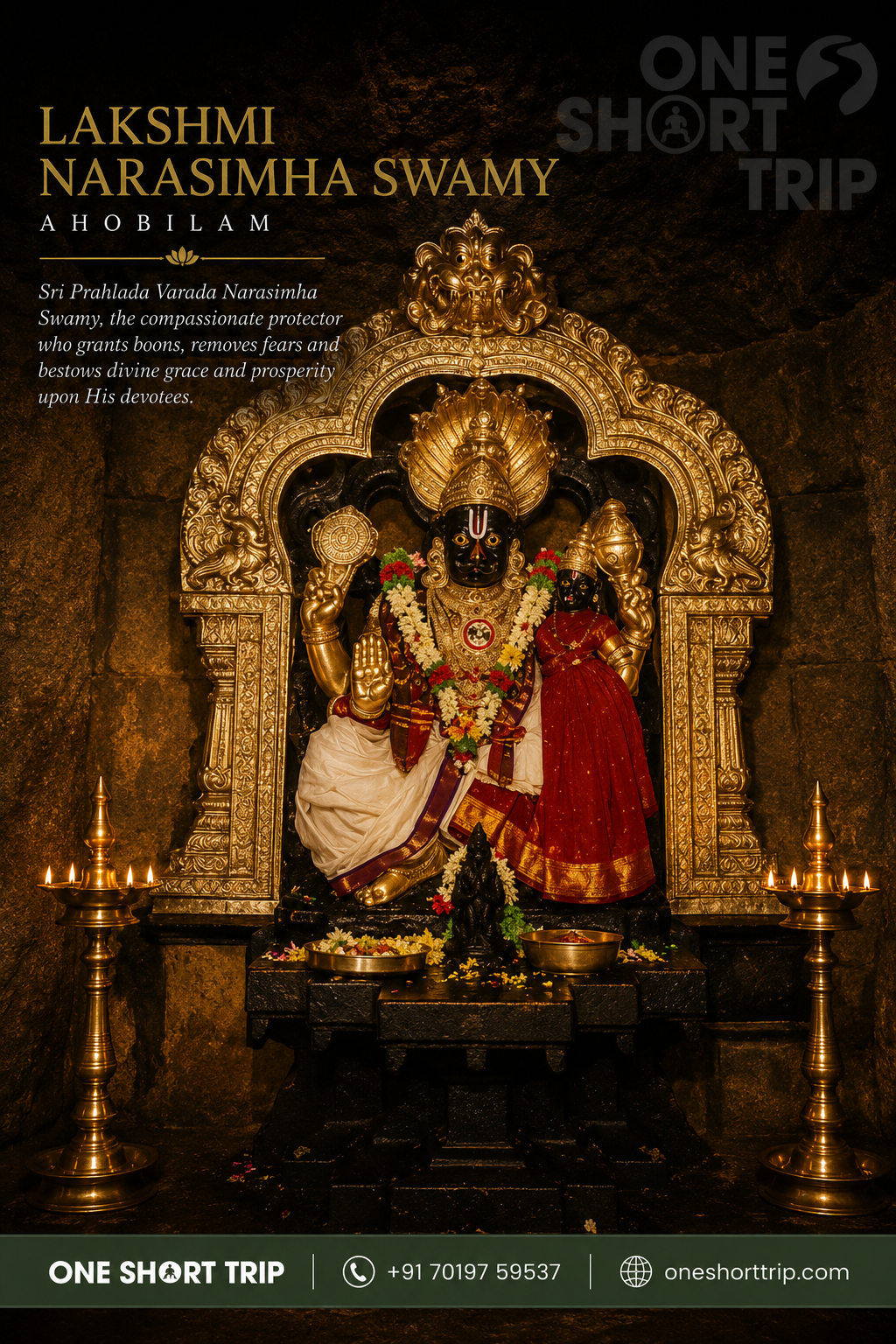
Begin the Ahobilam pilgrimage at the important Prahlada Varada Narasimha Temple in Lower Ahobilam, also widely referred to as the Lakshmi Narasimha temple. This shrine provides an accessible introduction to the sacred traditions of Ahobilam before the route moves deeper into the hills.
The temple is traditionally associated with Prahlada and the benevolent form of Lord Narasimha who is worshipped here with Goddess Lakshmi.
Why visit?
- Important shrine at Lower Ahobilam
- Associated with Prahlada and Lakshmi Narasimha
- Suitable starting point for the pilgrimage
- Less physically demanding than the hill shrines
🛑 Bhargava Narasimha ▶
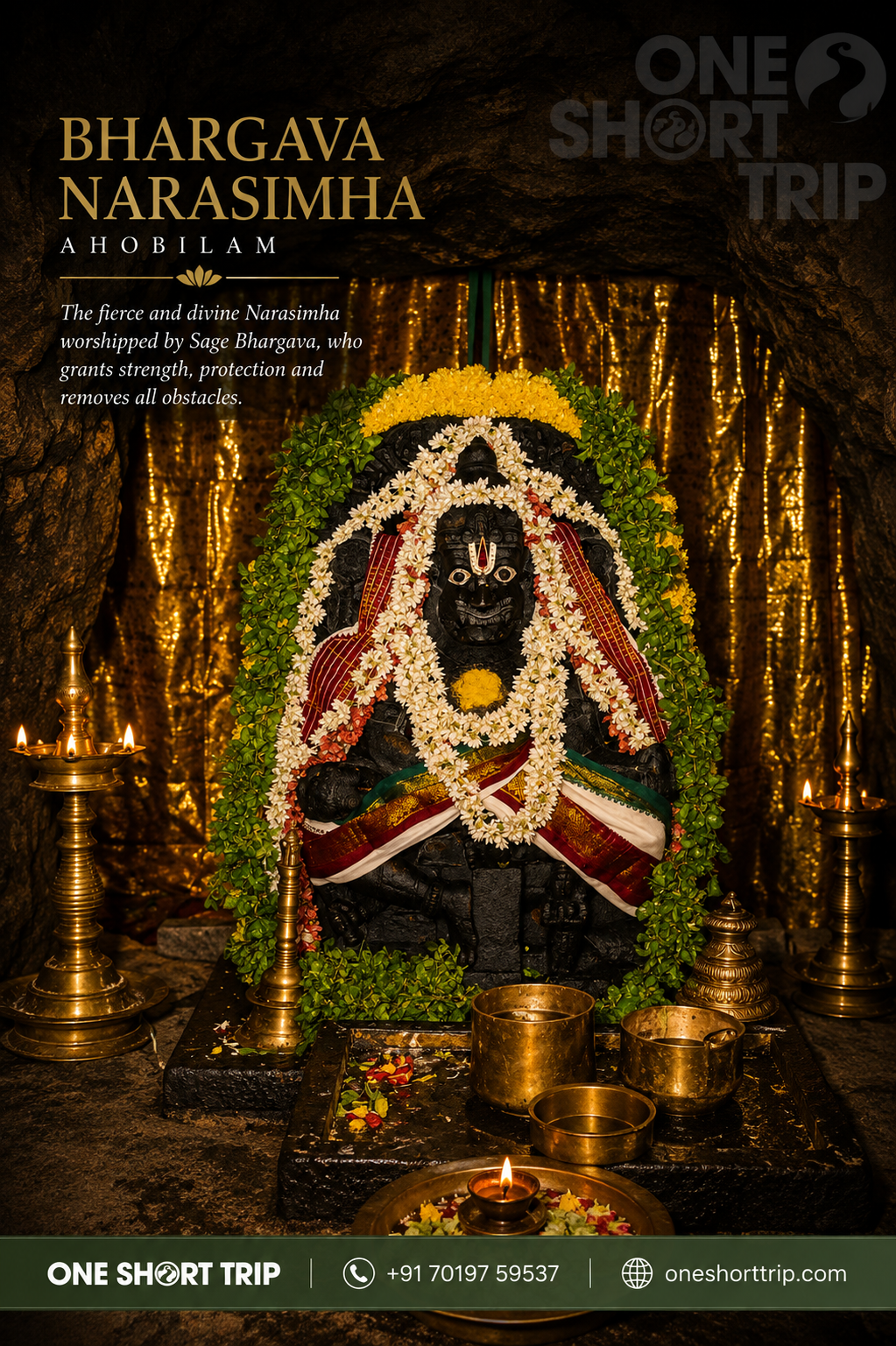
Continue to Bhargava Narasimha, one of the Nava Narasimha shrines of Ahobilam. The shrine is traditionally associated with Bhargava Rama, or Parashurama, and is connected with the sacred Bhargava Theertham.
This visit introduces one of the distinct legends associated with the individual forms of Narasimha rather than treating all nine temples as a single attraction.
⏰ Allow about 30–45 minutes Walking required🌳 Chatravata Narasimha ▶
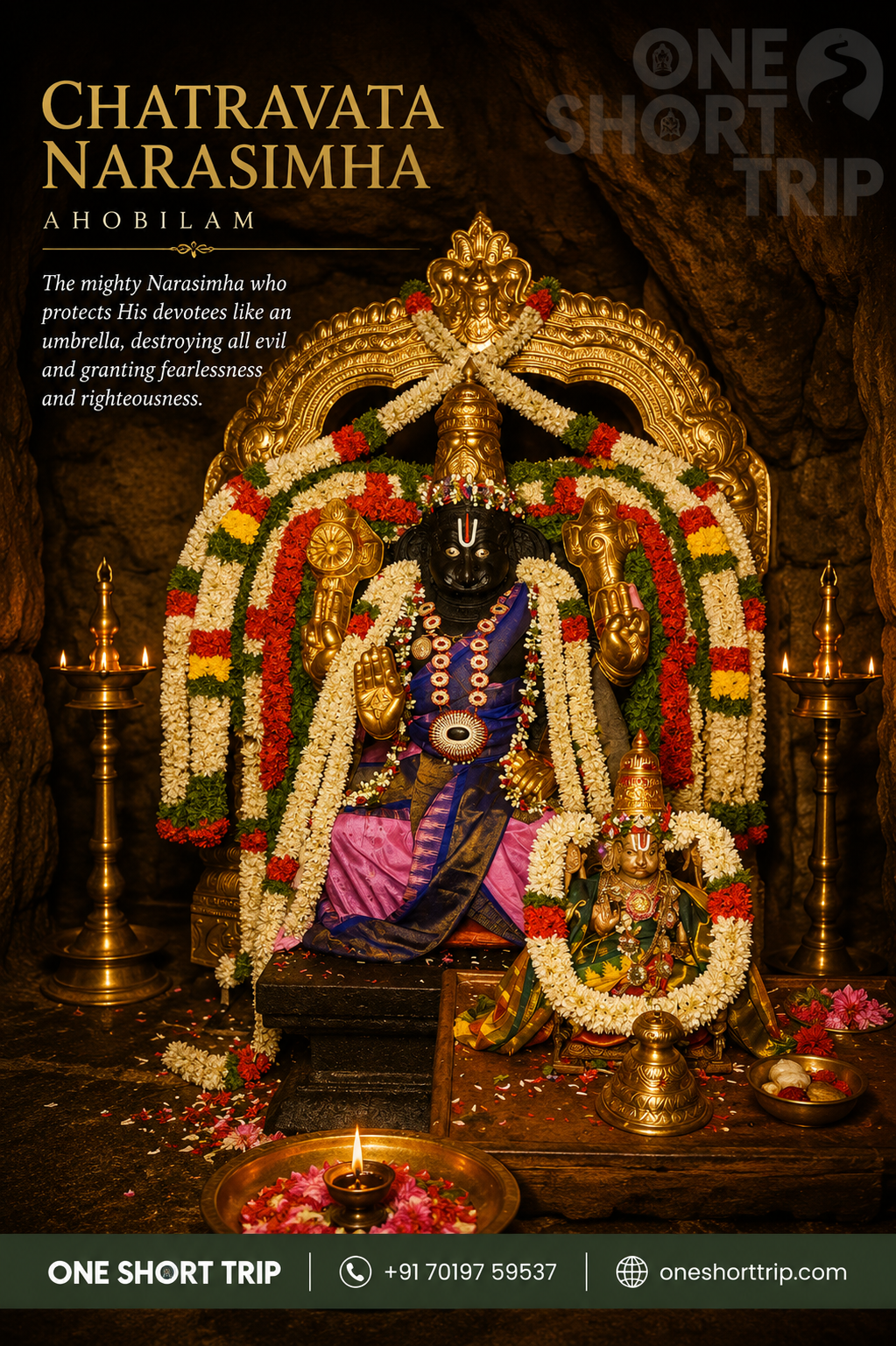
Continue to Chatravata Narasimha, another of the nine sacred forms of Lord Narasimha at Ahobilam. The shrine is traditionally associated with the Chatravata tree and the worship offered by Gandharvas.
Its quieter surroundings provide a contrast to the larger temple environment at Lower Ahobilam.
⏰ Allow about 30–45 minutes🍽️ Lunch & Hotel Check-in ▶
After completing the Lower Ahobilam visits, stop for lunch and proceed to the hotel for check-in.
The afternoon is intentionally kept relaxed. Travellers can rest, freshen up and prepare for the longer walking sections of the following days.
🏠 Overnight: Ahobilam 🛌 Night 1 of 2🍽️ Dinner & Overnight Stay ▶
Dinner at the hotel or a suitable nearby restaurant. Rest early because Day 2 moves into the Upper Ahobilam section and includes additional walking.
🌙 Overnight: AhobilamYogananda & Karanja Narasimha – Upper Ahobilam & Malola Narasimha
🌅 Breakfast at the Hotel ▶
Start the day with breakfast at the hotel. Carry a filled water bottle and keep your day bag light because the Upper Ahobilam section involves more walking than the previous day.
⏰ Start early🧘 Yogananda Narasimha ▶
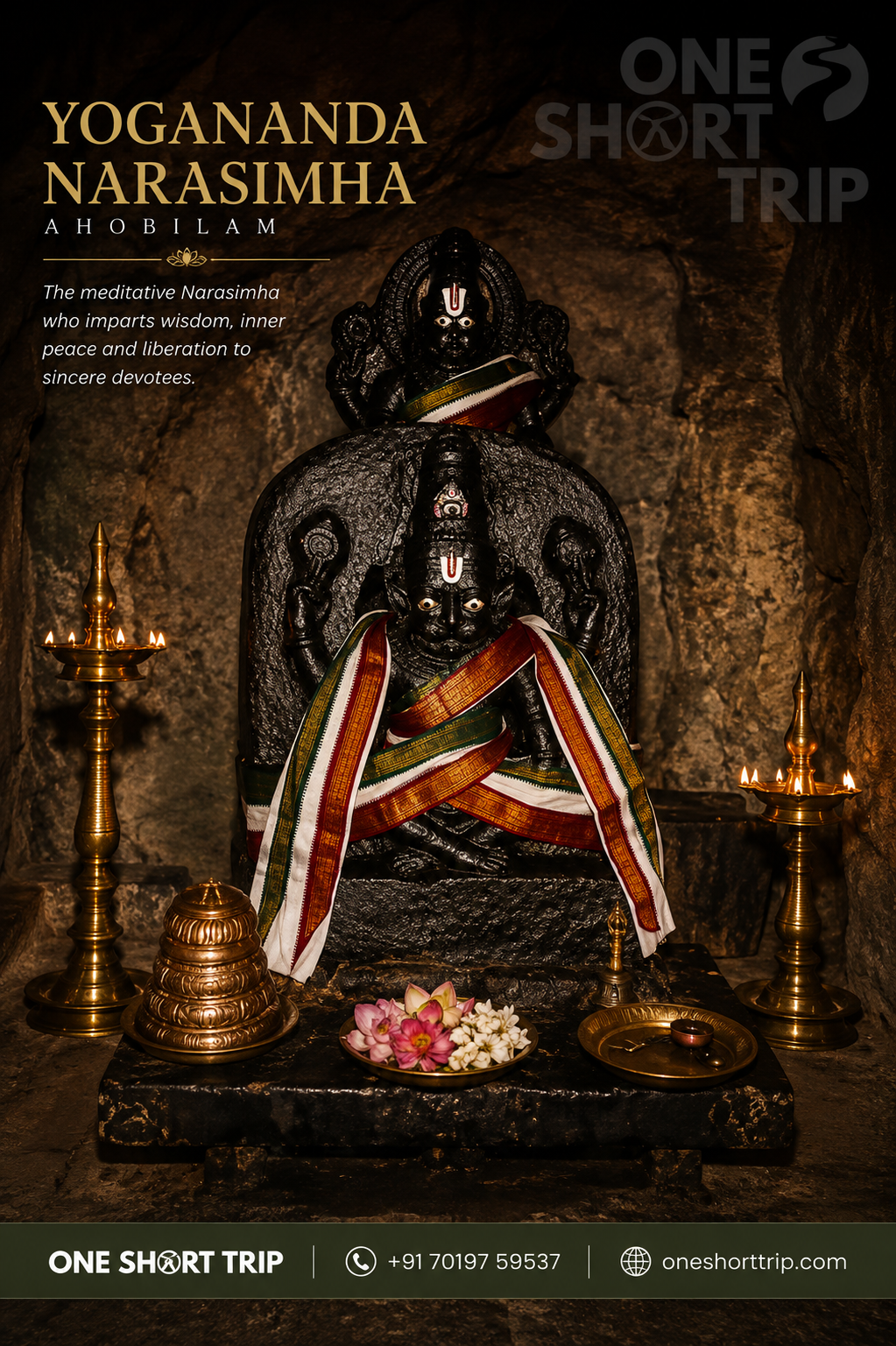
Visit Yogananda Narasimha, one of the Nava Narasimha shrines traditionally associated with Lord Narasimha imparting yogic knowledge to Prahlada.
The form is associated with a calmer and more contemplative aspect of Narasimha, creating a different spiritual atmosphere from the fierce manifestations encountered elsewhere in Ahobilam.
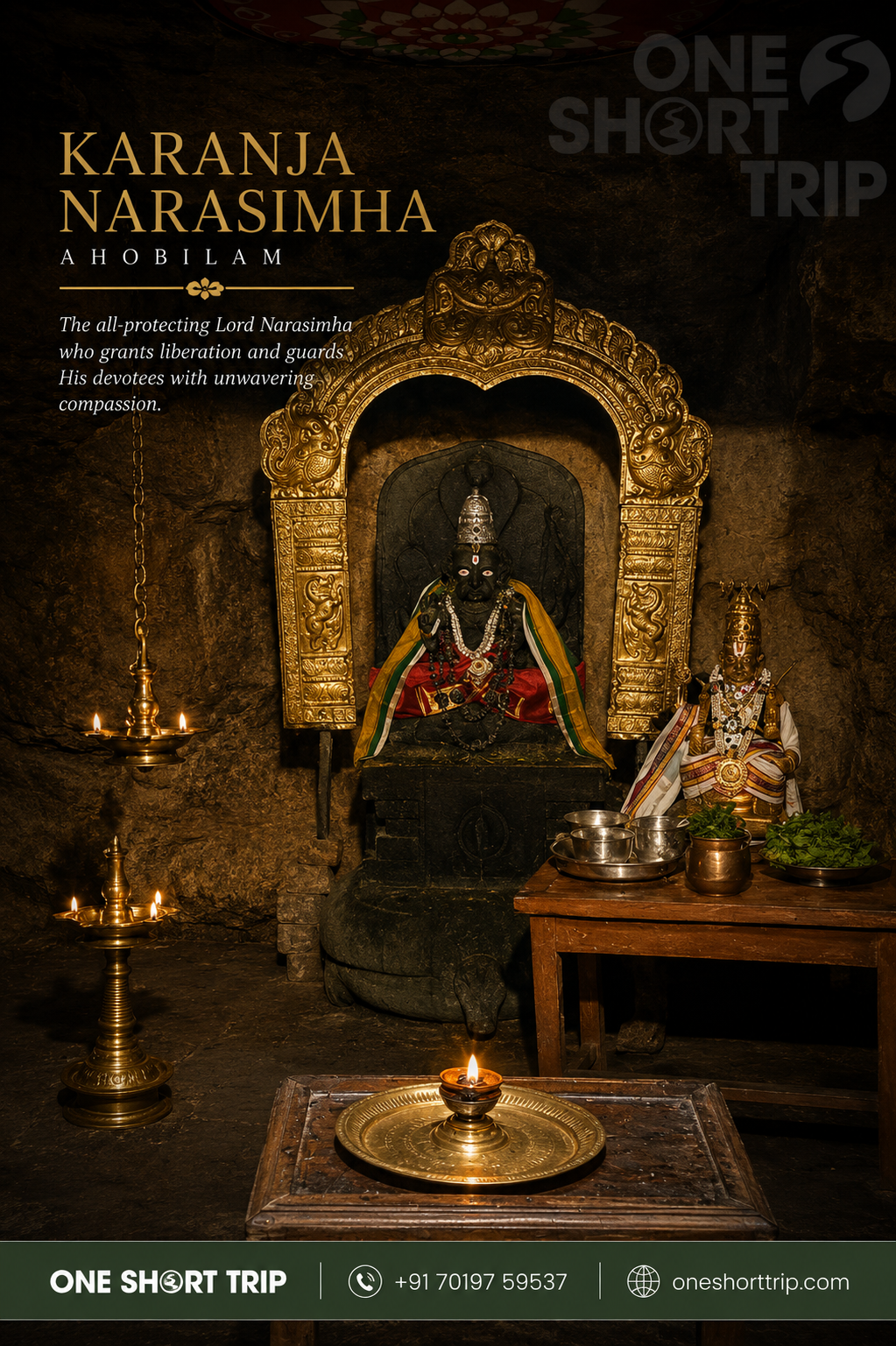
⏰ Allow about 30–45 minutes🌿 Karanja Narasimha ▶
Continue to Karanja Narasimha, traditionally associated with the Karanja tree. The deity is represented with distinctive iconographic features connected with the shrine's local tradition.
⏰ Allow about 30–45 minutes🚗 Continue Towards Upper Ahobilam ▶
Continue towards Upper Ahobilam, where the pilgrimage changes character. The landscape becomes more rugged and the route involves a combination of vehicle movement, walking, steps and uneven terrain depending on the shrine being visited.
- Keep water easily accessible
- Use comfortable walking footwear
- Allow extra time for darshan and walking
- Senior travellers should pace themselves
- Follow local instructions for access to individual shrines
🦁 Ahobila Narasimha – Ugra Narasimha ▶
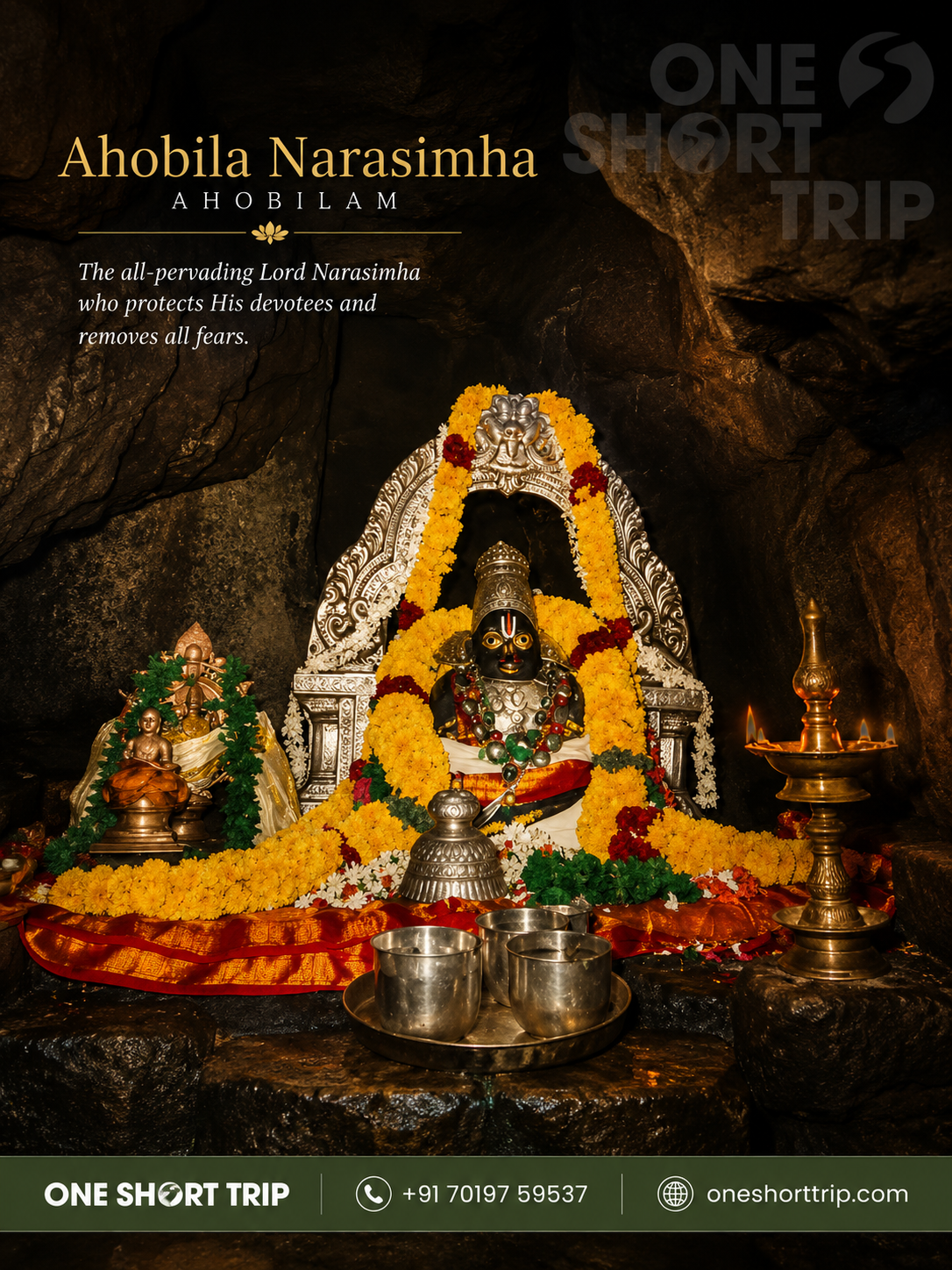
Reach the principal Ahobila Narasimha shrine in Upper Ahobilam, one of the central spiritual highlights of the pilgrimage.
Ahobila Narasimha is traditionally connected with the fierce manifestation of Lord Narasimha and the sacred events surrounding the protection of Prahlada. The surrounding landscape adds to the distinctive character of the Upper Ahobilam pilgrimage.
Why this shrine matters:
- Principal Ahobila Narasimha shrine
- Deep connection with the Narasimha–Prahlada tradition
- Important Upper Ahobilam pilgrimage landmark
- Set within the hill environment of Ahobilam
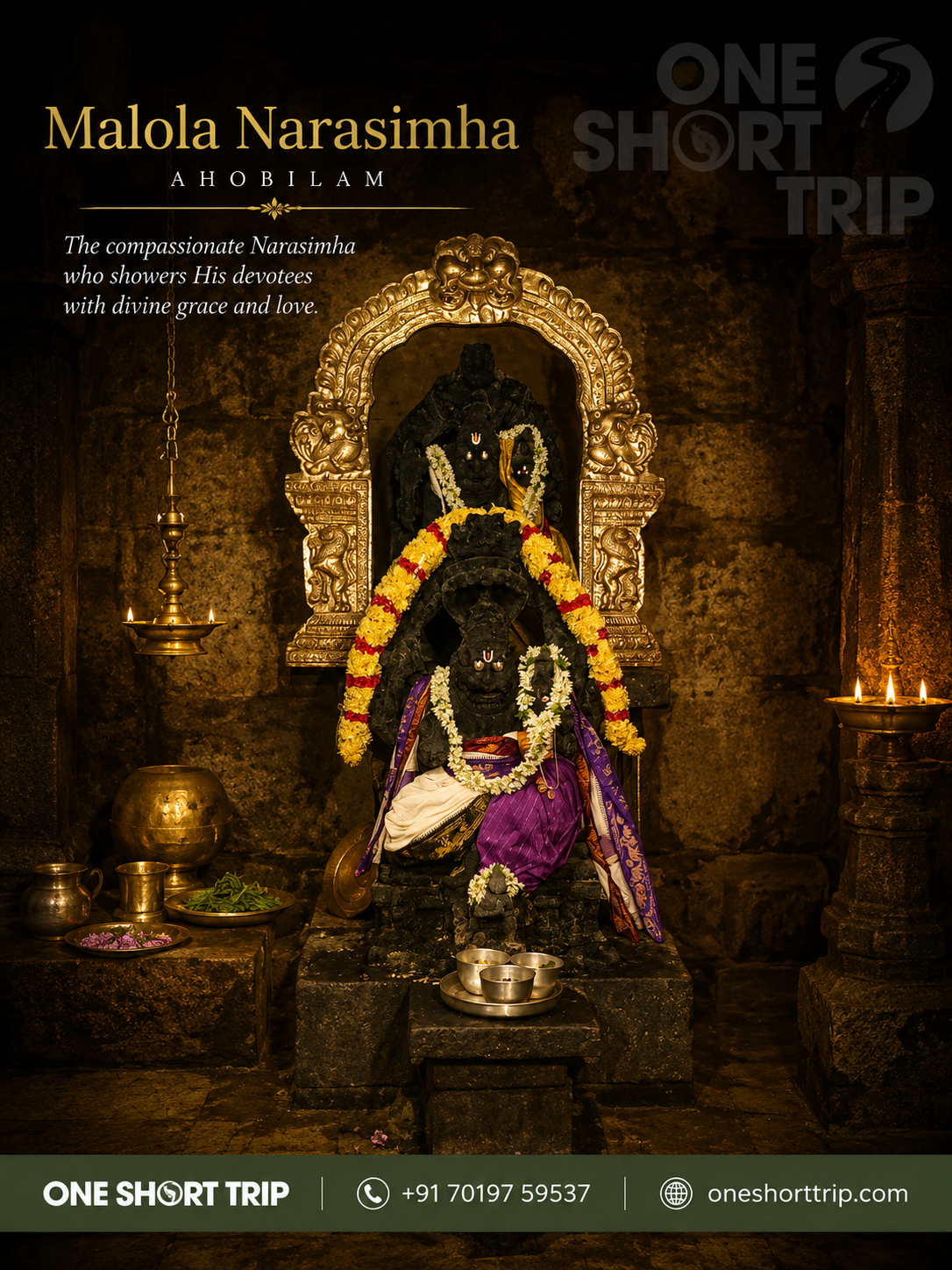
🌺 Malola Narasimha ▶
Continue to Malola Narasimha, the form of Lord Narasimha traditionally associated with Goddess Lakshmi. The name and iconography reflect the gentler, more benevolent aspect of the deity.
The shrine forms an important part of the Upper Ahobilam pilgrimage and is one of the nine Nava Narasimha forms.
⏰ Allow about 45–60 minutes Walking required🍽️ Lunch & Return to Hotel ▶
After the Upper Ahobilam visits, return towards the accommodation for lunch and rest.
Use the afternoon or evening to recover from the day's walking and prepare for the more demanding Jwala Narasimha section planned for Day 3.
🏠 Overnight: Ahobilam 🛌 Night 2 of 2Jwala Narasimha, Ugra Stambham & Remaining Shrines – Return to Bangalore
🌅 Early Morning Breakfast ▶
Begin the final day early with breakfast. Travellers planning to attempt Jwala Narasimha or the optional Ugra Stambham trek should carry only essential items in a small day bag.
- Water bottle
- Comfortable trekking shoes
- Small towel
- Cap or sun protection
- Light snacks where permitted
🔥 Jwala Narasimha ▶
The pilgrimage now reaches one of its more physically demanding stages: Jwala Narasimha, one of the nine Nava Narasimha shrines of Ahobilam.
The approach involves hill terrain and uneven walking, making this visit significantly more demanding than the easier Lower Ahobilam shrines.
Best suited for: Travellers who are comfortable with prolonged walking, uneven paths and a physically active pilgrimage.
⏰ Allow several hours for access, darshan and return Challenging⛰️ Ugra Stambham – Optional Trek ▶
Ugra Stambham is a separate sacred landmark associated with the Narasimha tradition at Ahobilam. It is not one of the nine Nava Narasimha shrines.
The route is considerably more demanding than a normal temple visit and should be treated as an optional trekking experience rather than a compulsory part of the pilgrimage.
Attempt only if:
- You are physically comfortable with demanding terrain
- Weather and local conditions are favourable
- Local guidance permits the attempt
- You have appropriate footwear and sufficient water
Skip it if: you are a senior traveller with mobility limitations, have difficulty with steep or uneven terrain, or simply do not feel comfortable with the conditions.
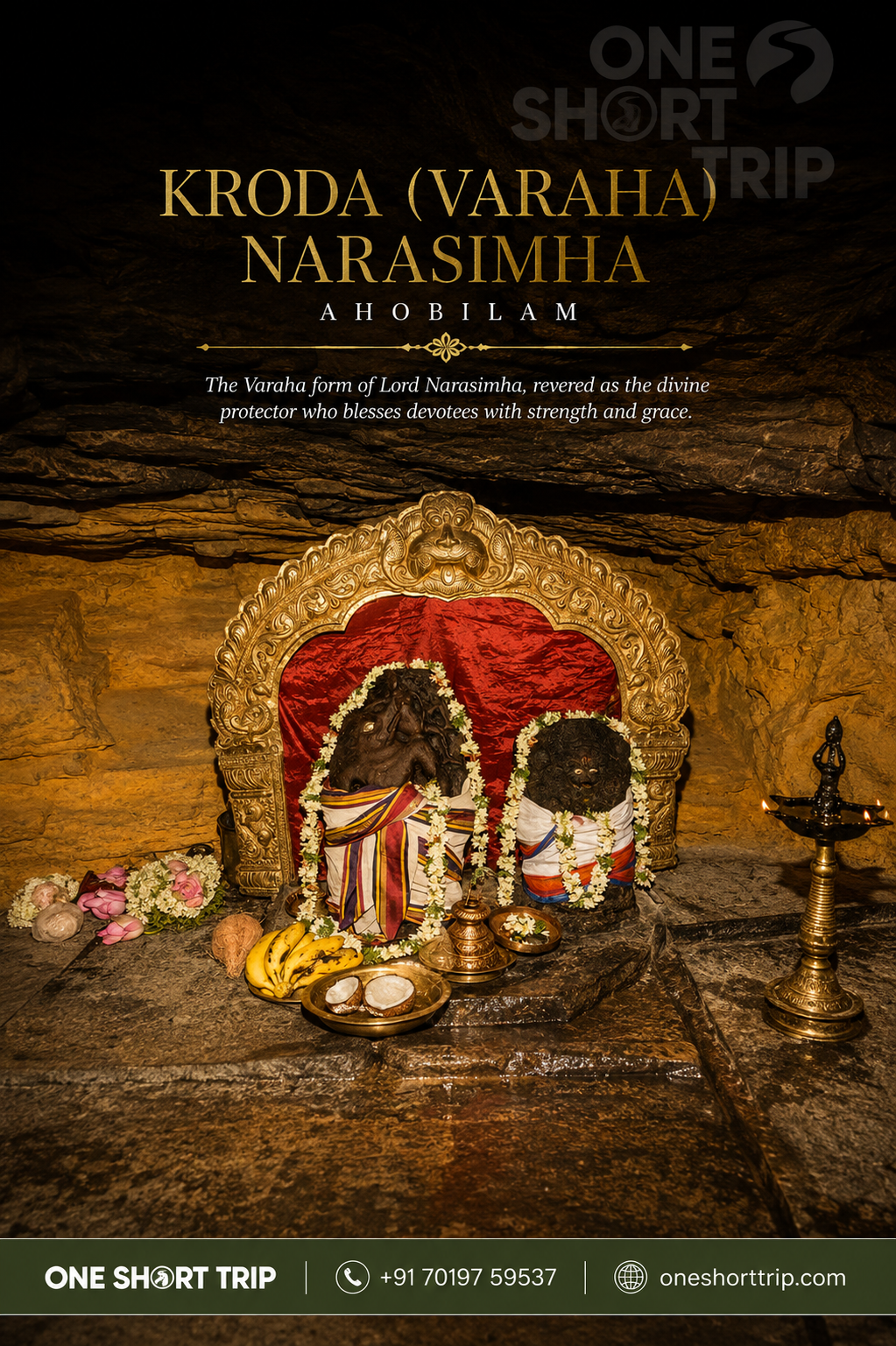
Very challenging Optional🐗 Kroda / Varaha Narasimha ▶
Continue to Kroda Narasimha, also known as Varaha Narasimha. This is one of the nine principal Narasimha forms and is distinguished by its traditional association with the Varaha aspect of Lord Vishnu.
⏰ Allow about 30–45 minutes🌿 Pavana Narasimha ▶
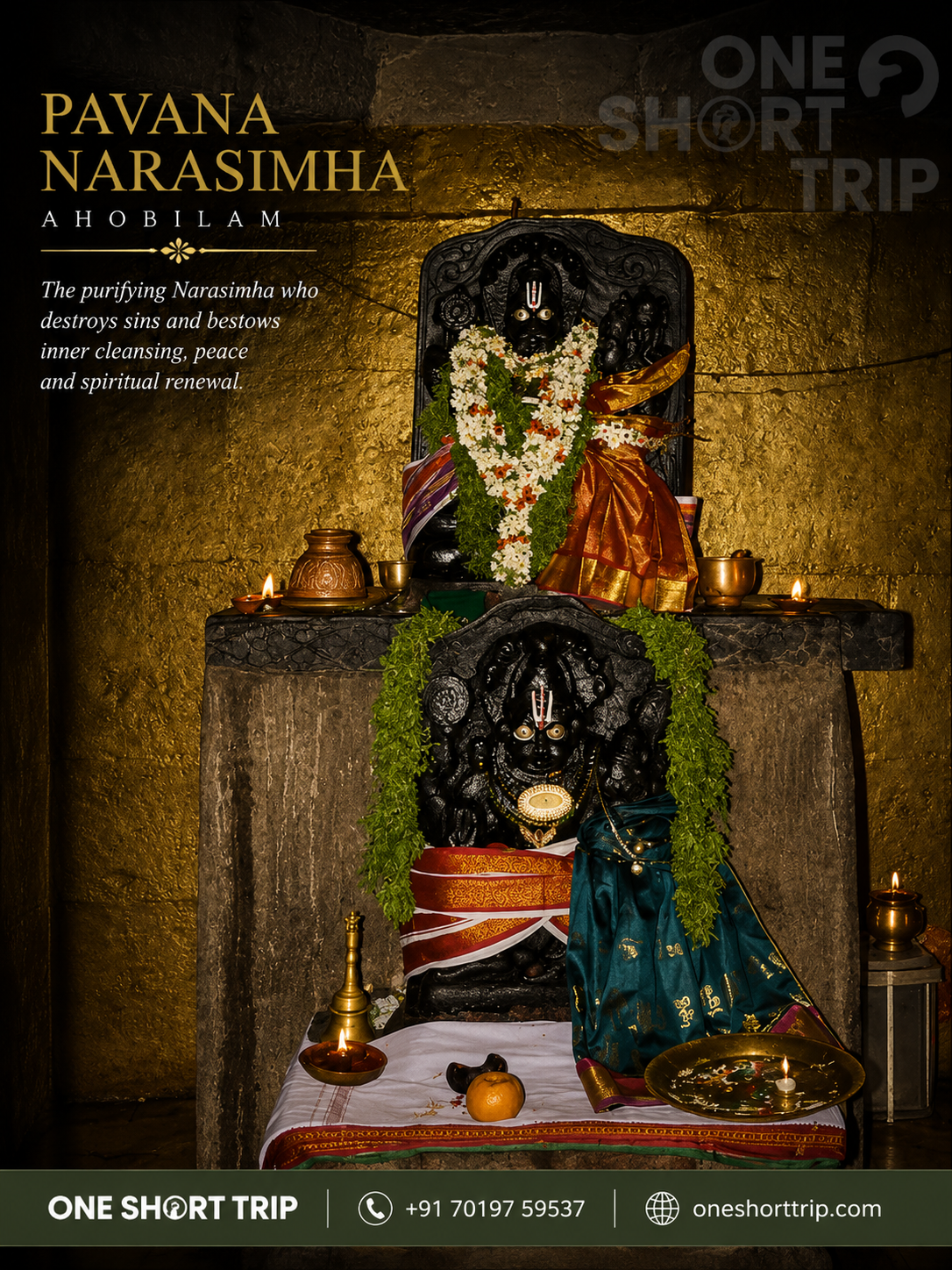
Complete the principal Nava Narasimha circuit with Pavana Narasimha, traditionally associated with the Pavana river and regarded as one of the important shrines of the Ahobilam pilgrimage.
Its natural surroundings provide a quieter setting for the final shrine visit before beginning the return journey.
⏰ Allow about 45–60 minutes🍽️ Lunch & Begin Return Journey ▶
After completing the day's sightseeing, have lunch according to the confirmed travel schedule and begin the road journey back towards Bengaluru.
Planned refreshment and rest breaks are included during the return drive. Arrival time in Bengaluru will depend on traffic, road conditions, weather and the final drop-off route.
🚗 Return journey to Bengaluru🌙 Arrival in Bengaluru ▶
Arrive in Bengaluru after completing the three-day Ahobilam pilgrimage. Drop-offs follow the confirmed vehicle route and may vary depending on traffic and local road conditions.
Nava Narasimha Temples & Ahobilam Attraction Guide
Ahobilam is best known for its Nava Narasimha temples — nine sacred shrines traditionally associated with different forms of Lord Narasimha. They are spread across the Ahobilam region, with the pilgrimage moving between Lower Ahobilam, Upper Ahobilam and forested hill areas.
The nine forms are Ahobila, Jwala, Malola, Kroda, Karanja, Bhargava, Yogananda, Chatravata and Pavana Narasimha. A complete pilgrimage therefore requires more than visiting the main temple at Lower Ahobilam.
Ugra Stambham is different: it is a separate sacred landmark associated with Ahobilam's Narasimha tradition and is not counted among the nine Nava Narasimha shrines.
1. Ahobila Narasimha – Ugra Narasimha
Location: Upper Ahobilam.
Significance: One of the central shrines of the Ahobilam pilgrimage, traditionally associated with the fierce manifestation of Lord Narasimha.
Experience: Temple visit within the Upper Ahobilam hill environment.
Walking & uneven terrain2. Jwala Narasimha
Location: Upper Ahobilam hill region.
Significance: Traditionally regarded as one of the fierce manifestations of Lord Narasimha and an important shrine in the Nava Narasimha circuit.
Experience: One of the more physically demanding shrine visits, involving a hill route.
Challenging trek3. Malola Narasimha
Location: Upper Ahobilam.
Significance: Traditionally associated with Lord Narasimha together with Goddess Lakshmi and regarded as the more graceful and benevolent form.
Experience: An important shrine within the Upper Ahobilam pilgrimage.
Walking required4. Kroda / Varaha Narasimha
Location: Upper Ahobilam pilgrimage region.
Significance: The Narasimha form traditionally associated with the Varaha aspect of Lord Vishnu.
Experience: A distinctive shrine in the Nava Narasimha circuit.
Moderate access5. Karanja Narasimha
Location: Ahobilam region.
Significance: Traditionally associated with the Karanja tree and a distinctive form of Lord Narasimha.
Experience: A relatively accessible shrine compared with the more demanding hill treks.
Easy to moderate6. Bhargava Narasimha
Location: Lower Ahobilam region.
Significance: Traditionally associated with Bhargava Rama, or Parashurama, and the sacred Bhargava Theertham.
Experience: A Lower Ahobilam shrine that can be incorporated before the more demanding hill sections.
Walking required7. Yogananda Narasimha
Location: Ahobilam region.
Significance: Traditionally associated with Lord Narasimha imparting yogic knowledge to Prahlada.
Experience: A quieter and more contemplative shrine in the Nava Narasimha pilgrimage.
Easy to moderate8. Chatravata Narasimha
Location: Lower Ahobilam region.
Significance: Traditionally associated with the Chatravata tree and the worship of Lord Narasimha by Gandharvas.
Experience: A comparatively peaceful shrine surrounded by natural landscape.
Easy to moderate9. Pavana Narasimha
Location: Forested Ahobilam region.
Significance: One of the nine principal Nava Narasimha shrines, traditionally associated with the Pavana river.
Experience: A more secluded shrine and one of the less conventional temple visits on the route.
Moderate to challengingPrahlada Varada Narasimha – Lakshmi Narasimha
Location: Lower Ahobilam.
Importance: The prominent temple at Lower Ahobilam, traditionally worshipped as Prahlada Varada Narasimha with Goddess Lakshmi.
Why visit: It is an important starting point for understanding Ahobilam's temple traditions before entering the hill sections.
Relatively easy accessUgra Stambham
Type: Separate sacred landmark and optional trek.
Significance: Traditionally associated with the Narasimha manifestation and the sacred geography of Ahobilam.
Important: Ugra Stambham is not one of the nine Nava Narasimha temples.
Very challengingNallamala Hills & Sacred Landscape
Known for: Forested hills, rocky terrain, streams, temple paths and a pilgrimage environment closely connected with nature.
Why it matters: The landscape is an important part of what makes an Ahobilam pilgrimage different from a conventional temple-town visit.
Terrain varies by shrineHow the Nava Narasimha Circuit Fits Together
There is no single flat temple complex containing all nine shrines. The pilgrimage involves moving between different locations and combining vehicle travel with walking or trekking. The exact order can be adjusted according to temple access, local conditions, weather and the day's available time.
Practical Information for Your Ahobilam Trip
Planning an Ahobilam trip from Bangalore is easier when you know what to expect from accommodation, road travel, meals and local facilities. Ahobilam is primarily a pilgrimage destination, so travellers should plan around temple visits and hill travel rather than expect the infrastructure of a major tourist city.
🏠 Where to Stay in Ahobilam ▶
This 3 Days 2 Nights Ahobilam itinerary includes two nights of accommodation in Ahobilam, allowing travellers to avoid a rushed same-day return and giving enough time for the Nava Narasimha pilgrimage.
Accommodation in Ahobilam is generally more pilgrimage-oriented than what you would find in a large tourist destination. The final property and room category should therefore be confirmed at the time of booking.
For a comfortable family pilgrimage, useful facilities to look for include:
- Clean and comfortable rooms
- Attached bathroom
- Hot water availability
- Air conditioning where booked
- Suitable space for luggage
- Drinking water
- Dining or nearby meal arrangements
- Convenient access to the day's route
🚗 Transportation: Bangalore to Ahobilam ▶
The most convenient option for a group pilgrimage is a dedicated AC vehicle from Bengaluru. This allows the group to travel together and makes it easier to manage the different shrine locations around Ahobilam.
Vehicle size is selected according to the number of travellers. Depending on the confirmed group size, options can include an AC Tempo Traveller or another suitable vehicle.
The road journey is long, so the travel plan includes suitable breaks for breakfast, refreshments and rest. The final journey duration depends on the chosen route, traffic, road conditions and stops.
Once in Ahobilam, remember that the vehicle cannot simply drive directly to every shrine. Some temple visits involve walking, steps, uneven ground or hill trails. Local transport or access arrangements may also vary according to the shrine, weather and current local conditions.
- AC transportation from Bengaluru
- Planned rest and refreshment breaks
- Luggage space according to vehicle capacity
- Group travel with a dedicated vehicle
- Local movement planned around the shrine route
- Walking and trekking sections identified separately
🍽️ Food & Meals During the Trip ▶
Food on an Ahobilam pilgrimage is best kept simple, filling and easy to digest, particularly on days that involve substantial walking. Meal arrangements are planned around the sightseeing schedule rather than making travellers spend long periods looking for restaurants.
Typical South Indian and vegetarian meal choices may include:
For trekking days: avoid eating a very heavy meal immediately before a demanding walking section. Carry water and small snacks where appropriate.
🛍 What to Buy in Ahobilam ▶
Shopping in Ahobilam is modest because the destination is primarily a pilgrimage centre rather than a commercial shopping destination. The most meaningful purchases are generally devotional or temple-related.
- Narasimha devotional images and idols
- Pooja items
- Religious books
- Devotional souvenirs
- Incense and prayer items
- Small religious gifts for family
If you plan to trek, finish your essential temple visits before carrying bulky or fragile purchases. Keep breakable items safely packed for the return road journey.
🍴 Local Food to Try in Ahobilam ▶
Travellers visiting Ahobilam can expect a mix of South Indian and Andhra-style vegetarian food. Because the destination is centred around pilgrimage, simple traditional meals are often a practical choice during the trip.
- Andhra-style vegetarian meals
- South Indian breakfast dishes
- Pulihora
- Sambar
- Rasam
- Curd rice
- Traditional South Indian sweets
- Payasam
Tea, coffee and buttermilk can also be useful refreshments during the day's travel, particularly in warmer weather.
✓ Quick Planning Checklist ▶
- Book accommodation in advance during peak periods
- Choose a vehicle suitable for your group size
- Plan sufficient time for road travel from Bengaluru
- Keep water accessible throughout the pilgrimage
- Allow extra time for walking between shrine access points
- Keep meals simple on trekking days
- Carry only essential belongings during hill visits
- Keep temple and trekking requirements separate
Ahobilam Trip Inclusions, Exclusions & Packing Guide
A pilgrimage to Ahobilam combines a long road journey with temple visits, walking and, for selected shrines, more demanding hill sections. Knowing what is included in the trip and what to carry helps you prepare comfortably for the Ahobilam Nava Narasimha Yatra from Bangalore.
✅ What's Included
- AC transportation from Bengaluru
- Bengaluru pickup and drop as per the confirmed route
- Accommodation for two nights as specified in the booking
- Room sharing according to the confirmed booking
- Driver allowance and applicable vehicle charges
- Toll and parking charges as specified in the package
- Sightseeing and temple visits listed in the itinerary
- Meals specifically mentioned in the confirmed package
- Planned travel and rest breaks
- Trip coordination during the journey
❌ What's Not Included
- Personal expenses and shopping
- Personal medicines and medical expenses
- Travel insurance
- Food or beverages outside the agreed meal plan
- Room service and other personal hotel expenses
- Special Darshan, Seva or temple charges unless specifically included
- Donations and offerings
- Local porter, doli or personal assistance charges
- Guide charges unless specifically included
- Expenses arising from weather, road closures or unforeseen circumstances
What to Pack for Ahobilam
Pack light enough for temple visits and walking sections, but carry the essentials required for a multi-day road journey. A small day bag is particularly useful when visiting the hill shrines.
📄 Documents
- Government-issued photo ID
- Booking confirmation
- Emergency contact details
- Any required travel documents
👗 Clothing
- Comfortable cotton clothing
- Modest temple-appropriate clothing
- Light jacket or shawl if required
- Rain protection during the wet season
- One extra change of clothes
🧳 Walking & Trekking
- Good-grip walking shoes
- Extra pair of socks
- Small day backpack
- Reusable water bottle
- Cap and sunglasses
📱 Electronics
- Mobile phone
- Phone charger
- Power bank
- Camera if required
💊 Personal Essentials
- Regular personal medicines
- Basic personal first-aid items
- Hand sanitiser
- Tissues or wet wipes
- Personal hygiene products
🛕 Temple Visits
- Modest and comfortable clothing
- Easy-to-remove footwear
- Small cloth bag if useful
- Minimal belongings for shrine visits
👗 Temple Dress Code
Ahobilam is an important Hindu pilgrimage destination, so visitors should dress respectfully when entering the temples.
- ✓ Comfortable, modest clothing
- ✓ Full-length trousers or traditional clothing
- ✓ Saree, salwar suit or chudidhar
- ✓ Clothing suitable for a religious place
🧭 What to Wear for Trekking
The hill sections around Ahobilam can involve uneven ground, steps, rocks and exposed terrain. Comfortable clothing and proper footwear are more important than carrying a large amount of luggage.
- ✓ Good-grip walking shoes
- ✓ Lightweight clothing
- ✓ Small backpack
- ✓ Water bottle
- ✓ Cap and sun protection
📍 Bangalore Pickup & Drop
Pickup and drop arrangements are finalised according to the confirmed vehicle route and the locations of the travellers. Depending on the route and group requirements, pickup may be arranged from convenient areas of Bengaluru.
Travellers should be ready at the confirmed reporting point before departure. Pickup time can vary depending on traffic, route planning, group size and the final vehicle schedule.
Important Notes, Safety & Guidelines for Ahobilam
Ahobilam is a unique pilgrimage destination where temple visits are combined with forested hills, uneven paths, steps and walking sections. A little preparation makes the Ahobilam Nava Narasimha pilgrimage from Bangalore much more comfortable and helps every traveller understand which parts of the journey are suitable for them.
⚠ Important Things to Know Before You Travel
- Ahobilam is a long-distance road journey from Bengaluru and involves substantial travel time.
- The Nava Narasimha shrines are spread across Lower and Upper Ahobilam rather than being located in one compact temple complex.
- Some shrine visits involve walking, steps, uneven ground or hill paths.
- Jwala Narasimha is among the more demanding shrine visits on the circuit.
- The optional Ugra Stambham visit involves a more challenging hill section and should not be treated as an ordinary sightseeing stop.
- Temple Darshan and opening timings can vary according to rituals, temple schedules and crowd conditions.
- Weather can affect walking conditions and access to hill areas.
- Forest or hill access may be subject to local instructions and permissions.
- The sequence of visits may be adjusted when required because of weather, temple timings, road conditions or operational reasons.
- Travellers should follow instructions issued by temple authorities, local authorities and the trip coordinator.
- Senior citizens and travellers with mobility limitations should evaluate the walking sections before attempting them.
- The itinerary is designed to cover the major pilgrimage circuit, but actual visit order can change when local conditions require it.
Safety Guidelines for Different Travellers
The easier temple visits and the more demanding hill sections should be treated differently. Travellers should choose optional trekking activities according to their fitness, mobility, weather conditions and comfort level.
Senior Citizens
- Assess your walking ability before the trip
- Take regular rest breaks
- Carry essential personal medicines
- Use comfortable, supportive footwear
- Skip difficult optional treks if uncomfortable
- Discuss mobility requirements before booking
Families with Children
- Keep children close to the family or group
- Supervise children near steps and uneven terrain
- Carry sufficient drinking water
- Keep light snacks available
- Do not allow children to wander on hill paths
- Follow temple and local safety instructions
Walking & Trekking Sections
- Wear shoes with good grip
- Carry drinking water
- Use established paths
- Watch your footing on rocks and uneven surfaces
- Avoid shortcuts
- Take breaks when required
Forest & Hill Areas
- Stay with your group
- Follow local access instructions
- Do not disturb wildlife
- Do not litter
- Avoid entering restricted areas
- Do not wander away from established routes
Jwala Narasimha Visit
The route to Jwala Narasimha can be considerably more demanding than an ordinary temple visit.
- Wear proper walking footwear
- Carry sufficient water
- Allow enough time
- Take breaks when necessary
- Do not rush the climb
Ugra Stambham
Ugra Stambham is an optional and challenging hill experience, not one of the nine Nava Narasimha shrines.
- Attempt only if physically prepared
- Consider weather and ground conditions
- Follow local guidance
- Do not attempt if unsure of your ability
- Senior citizens should assess this section carefully
Do's & Don'ts at Ahobilam
Do's
- Start the day prepared for walking
- Carry enough drinking water
- Wear suitable footwear
- Dress respectfully for temple visits
- Follow temple rules and local instructions
- Stay with your travel group
- Inform the coordinator about mobility concerns
- Allow sufficient time for Darshan and walking
Don'ts
- Do not litter temple or forest areas
- Do not enter restricted areas
- Do not disturb animals or wildlife
- Do not climb unstable rocks
- Do not take shortcuts on hill routes
- Do not trek alone in unfamiliar areas
- Do not attempt difficult sections beyond your ability
- Do not rush through temple visits
✚ Physical Preparation & Medical Considerations
- Carry your regular personal medicines in your day bag.
- Stay adequately hydrated throughout the journey.
- Wear comfortable walking shoes rather than unsuitable casual footwear.
- Take regular breaks during demanding walking sections.
- Consider your ability to manage stairs, slopes and uneven terrain before attempting hill shrines.
- Avoid strenuous trekking if it is unsuitable for your physical condition.
- Carry basic personal first-aid items where appropriate.
- Keep emergency contact information easily accessible.
- If you have concerns about undertaking strenuous physical activity, seek appropriate medical advice before the trip.
Ahobilam Nava Narasimha Temples – Photo Gallery
Explore the sacred temples and landmarks featured in this Ahobilam pilgrimage itinerary, from the nine Nava Narasimha shrines to Prahlada Varada Narasimha and the challenging Ugra Stambham.
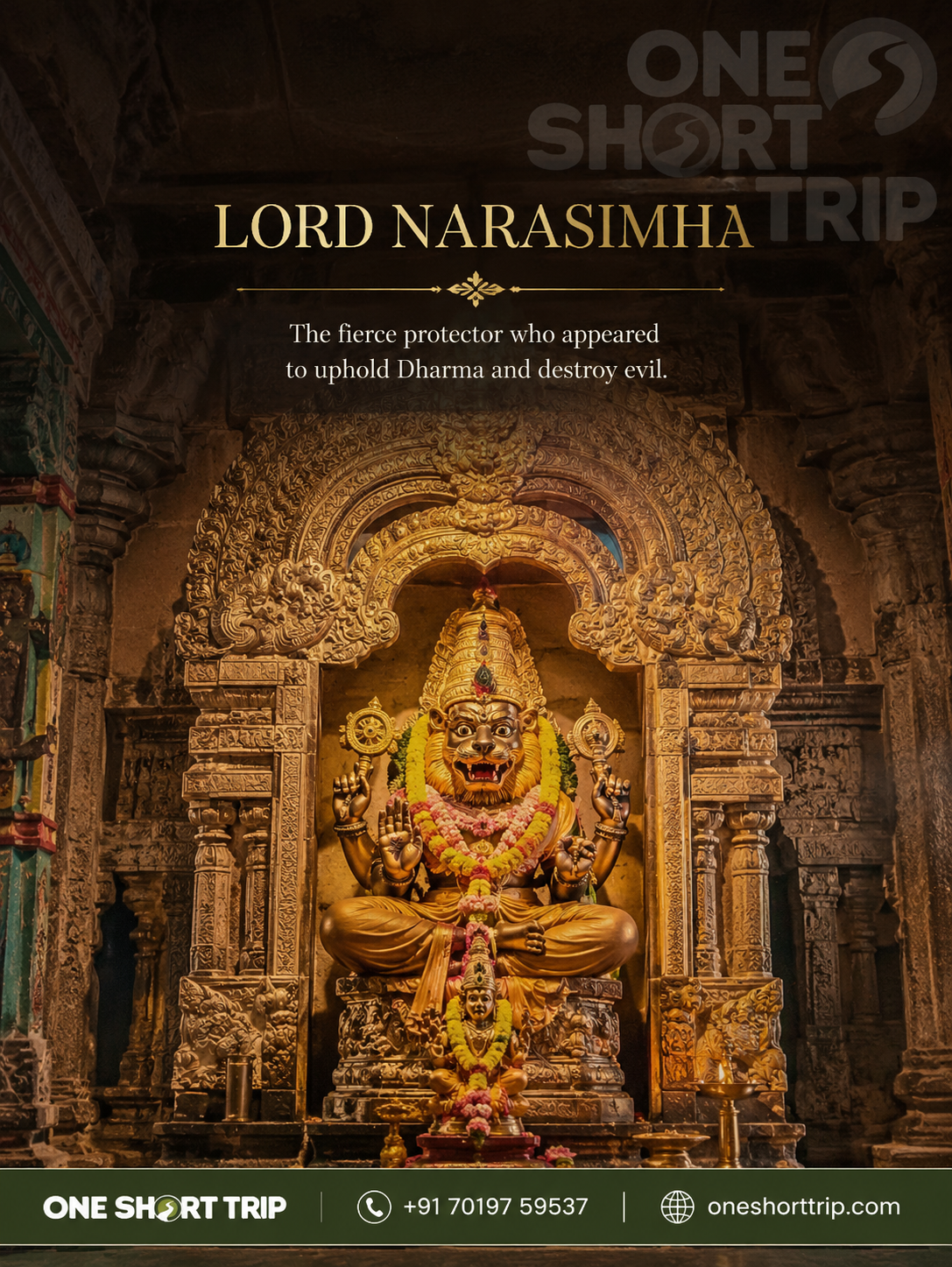
Ahobilam Nava Narasimha
A visual representation of the Nava Narasimha tradition of Ahobilam, featuring the nine sacred forms of Lord Narasimha worshipped across the Lower and Upper Ahobilam region.
Jwala Narasimha
Jwala Narasimha is one of the sacred Nava Narasimha temples of Ahobilam and is associated with the powerful Narasimha tradition of the Upper Ahobilam hills.
Ahobila Narasimha – Ugra Narasimha
Ahobila Narasimha, also known as Ugra Narasimha, is one of the nine Nava Narasimha shrines traditionally associated with the manifestation of Lord Narasimha at Ahobilam.
Malola Narasimha
Malola Narasimha is one of the Nava Narasimha temples of Ahobilam and an important shrine visited during the Upper Ahobilam pilgrimage circuit.
Kroda Varaha Narasimha
Kroda Narasimha, also known as Varaha Narasimha, is one of the nine sacred Narasimha shrines forming part of the Ahobilam pilgrimage circuit.
Karanja Narasimha
Karanja Narasimha is one of the nine Nava Narasimha forms worshipped at Ahobilam and is included in the temple circuit described in this itinerary.
Bhargava Narasimha
Bhargava Narasimha is one of the nine traditional Nava Narasimha shrines of Ahobilam and forms part of the pilgrimage route through the sacred landscape.
Yogananda Narasimha
Yogananda Narasimha is one of the nine sacred forms of Lord Narasimha worshipped at Ahobilam and is visited as part of the wider Nava Narasimha circuit.
Chatravata Narasimha
Chatravata Narasimha, also called Kshatravata Narasimha, is one of the nine traditional Narasimha shrines forming the sacred Ahobilam pilgrimage circuit.
Pavana Narasimha
Pavana Narasimha is one of the nine Nava Narasimha temples of Ahobilam and an important destination for pilgrims completing the sacred Narasimha circuit.
Lakshmi Narasimha – Prahlada Varada Narasimha
The Lakshmi Narasimha or Prahlada Varada shrine at Lower Ahobilam is an important temple at the foothills and a key starting point for the Ahobilam pilgrimage experience.
Ugra Stambham
Ugra Stambham is a significant sacred landmark associated with the Narasimha tradition at Ahobilam. The route is more challenging than a regular temple visit and is treated as an optional experience in this itinerary.
Why Travel With One Short Trip?
Ahobilam deserves more than a rushed temple checklist. The temples are spread across different areas, and some require considerable walking and trekking — we plan the journey around these realities.
Thoughtful Route Planning
The three-day structure separates the easier temple visits from the demanding trekking sections.
Complete Pilgrimage Experience
The route is designed around the principal Narasimha shrines rather than unrelated sightseeing.
Comfortable Travel
The long journey from Bengaluru is handled with AC transportation and planned rest stops.
Comfortable Accommodation
Two nights in a comfortable 3-star property let travellers rest properly between temple circuits.
Family-Friendly Planning
The itinerary considers children, families and group travel requirements.
Senior-Citizen Awareness
Difficult walking sections are clearly identified so travellers can decide what's appropriate for them.
Trekking Preparation
Day 3 is specifically designed around Jwala Narasimha and the optional Ugra Stambham trek.
Trusted Journey Planner
We focus on the complete travel experience — from pickup in Bengaluru to the return journey.
Frequently Asked Questions
What is the Ahobilam tour package from Bangalore? +
Why choose a 3-day Ahobilam tour instead of 2 days? +
How many Narasimha temples are associated with Ahobilam? +
Is Prahlada Varada Temple one of the Nava Narasimha shrines? +
What are the principal Narasimha forms included in the circuit? +
What is Ugra Stambham? +
Is Ugra Stambham included in the package? +
Is Ugra Stambham difficult? +
Is Jwala Narasimha difficult to reach? +
Is Ahobilam suitable for senior citizens? +
Can senior citizens skip the difficult trek? +
Is Ahobilam suitable for children? +
What is the best season to visit Ahobilam? +
What footwear should I carry? +
How many nights are included? +
Is accommodation included? +
Is transportation from Bangalore included? +
Are meals included? +
Can the trip be customised? +
Is Ahobilam only a pilgrimage destination? +
Can I complete all the temples without trekking? +
What should I carry for the trek? +
Are temple timings fixed? +
Can the itinerary change? +
Is a guide recommended? +
Can I skip Ugra Stambham? +
Is the Ugra Stambham trek suitable for elderly travellers? +
Is this trip suitable for families? +
Why is the three-day itinerary better for families? +
How can I book the Ahobilam tour from Bangalore? +
Explore More South India Pilgrimage Journeys
Srisailam Tour Package
Mallikarjuna Swamy Temple, Bhramaramba Devi Temple, Pathala Ganga and the Nallamala landscape.
Mahanandi & Srisailam Tour
Combine the peaceful Mahanandi Temple with the sacred Srisailam pilgrimage.
Tirupati Tour Package
Experience one of South India's most important Vaishnavite pilgrimage destinations.
Kumbakonam Temple Tour
Discover the ancient temple heritage of Kumbakonam and surrounding sacred towns.
Rameswaram Tour Package
Visit Ramanathaswamy Temple, Pamban Bridge and Dhanushkodi.
Madurai – Rameswaram – Kanyakumari
Combine major spiritual, cultural and coastal destinations of Tamil Nadu.