

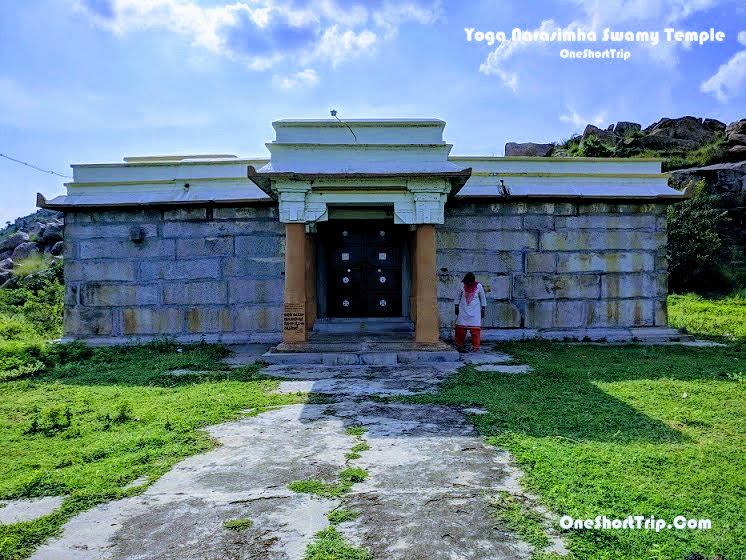
Yoga Narasimha Swamy Temple, Thonnur
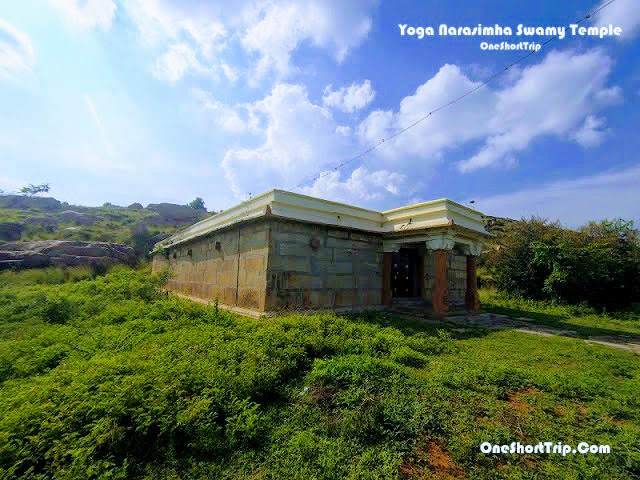
The Yoga Narasimha Swamy Temple at Thonnur, also known as Thondanur, is a small but historically significant Vaishnava shrine in Mandya district, Karnataka. Set on a modest hillock beside the historic Thonnur Kere, the temple forms part of an unusually rich cluster of temples associated with the Sri Vaishnava tradition and the life of Sri Ramanujacharya.
Unlike the famous hilltop Yoga Narasimha Temple at Melukote, this is the Yoga Narasimha shrine of Kere Thonnur. Its importance comes less from monumental scale and more from its connection with Thondanur's medieval religious history, its distinctive image of Narasimha and the traditions surrounding Ramanujacharya's stay in the region.
Location
Kere Thonnur, Pandavapura Taluk, Mandya District, Karnataka
Presiding Deity
Sri Yoga Narasimha Swamy, a yogic form of Lord Narasimha
An Ancient Vaishnava Centre at Thondanur
Thonnur was known historically by several names, including Thondanur, Tonnuru, Tonnanuru and Yadavapura. The present village sits within an old religious and educational landscape that became particularly important during the Hoysala period. Government records for nearby Thonnur Lake also identify the settlement as an ancient centre known as Yadavanarayana Chaturvedi Mangala, while inscriptions from the 12th century refer to Thondanur in connection with the Hoysala period.
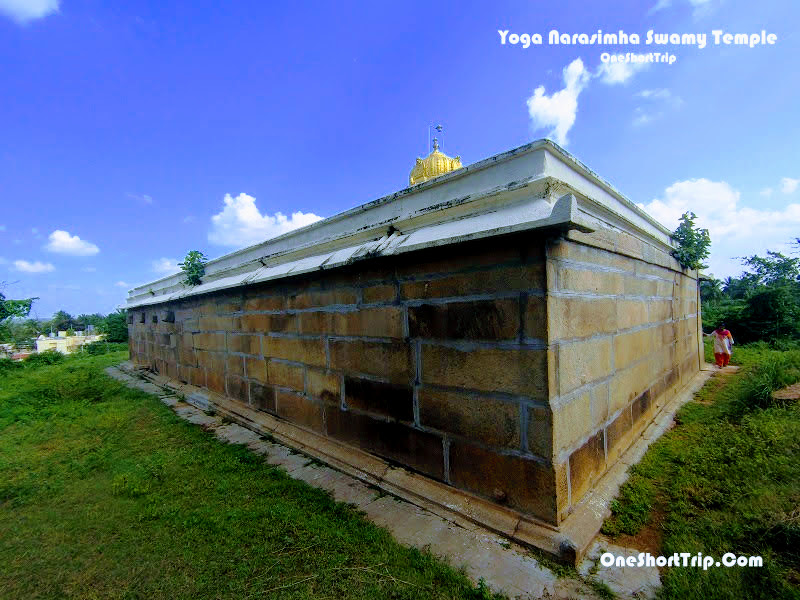
The temple is generally associated with the medieval period, particularly the era in which Sri Ramanujacharya's influence spread through the Hoysala country. Older temple accounts describe the shrine as having Chola architectural characteristics with later Hoysala association or renovation. Because the surviving structure has undergone changes, it is safer to view it as part of the medieval Thondanur temple tradition rather than assigning the entire present building to a single ruler or construction date.
Thondanur
An ancient settlement associated with Vaishnava learning, temples and the Hoysala period.
Thonnur Kere
The large historic lake that gives Kere Thonnur its identity and forms the scenic setting for the temple cluster.
Sri Yoga Narasimha Swamy
The principal deity is Yoga Narasimha, the meditative form of Lord Narasimha. Instead of portraying the deity primarily through the dramatic moment of Hiranyakashipu's destruction, the yogic form conveys a calmer and more contemplative aspect of Narasimha worship.
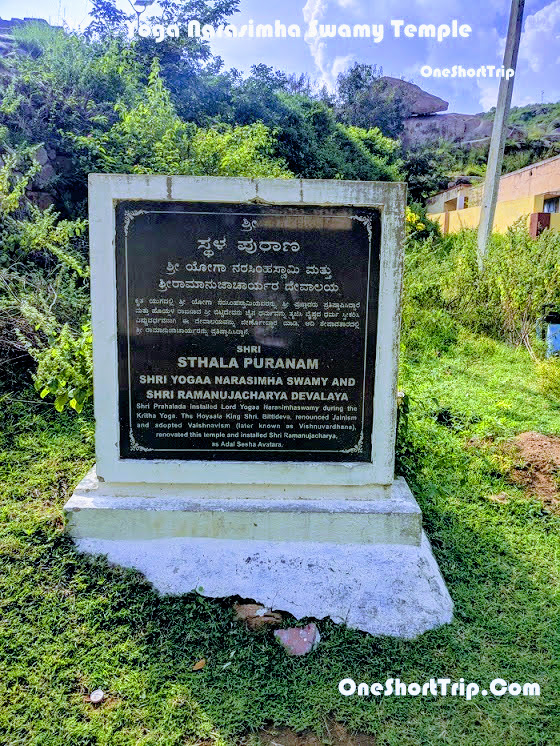
Temple traditions describe the deity as being seated with the Narasimha Dandam or ceremonial staff, while Yadava Nayaki is associated with the shrine as the divine consort. Accounts differ in the details of the temple's earliest history, and the popular belief that Prahlada installed the image belongs to the temple's sacred tradition rather than independently verified archaeology.
The Ramanujacharya Connection
The strongest reason many pilgrims visit this otherwise modest shrine is its association with Sri Ramanujacharya, the influential philosopher who systematized Vishishtadvaita Vedanta and played a major role in the development of Sri Vaishnavism in southern India.
Thondanur is traditionally remembered as one of the important places connected with Ramanujacharya's Karnataka period. Local and Sri Vaishnava accounts describe his presence here before his better-known association with Melukote. The temple therefore forms part of a wider pilgrimage story linking Thondanur, Melukote and the Hoysala ruler Vishnuvardhana.
One of the temple's most unusual features is its representation of Ramanujacharya in association with Adishesha. This image is linked to a traditional account in which Ramanujacharya demonstrated his spiritual and intellectual stature while debating Jain scholars. The story is central to the local religious memory of Thondanur, although the dramatic details of the traditional narrative should be understood as hagiographical tradition rather than straightforward historical documentation.
A Temple Shaped by Legend and Living Tradition
Thondanur's religious history is closely tied to stories about Ramanujacharya and the Hoysala king Bittideva, later known as Vishnuvardhana. Traditional accounts say that Ramanujacharya helped cure the king's daughter and that the king subsequently embraced Sri Vaishnavism. This story is widely repeated within the Sri Vaishnava tradition and forms an important part of the cultural memory surrounding Thondanur and Melukote.
The nearby Nambi Narayana Temple, along with other historic shrines around Thonnur, makes the area particularly interesting for travellers studying the spread of Vaishnavism in medieval Karnataka. The temples should therefore be understood as parts of one historical landscape rather than isolated monuments.
A Small Hillock Temple with a Quiet Setting
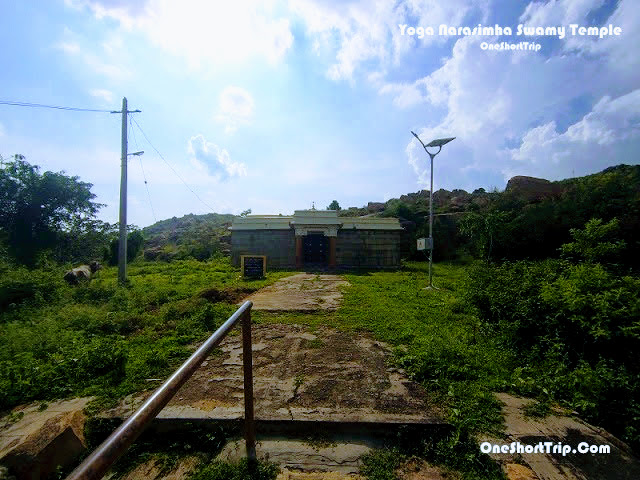
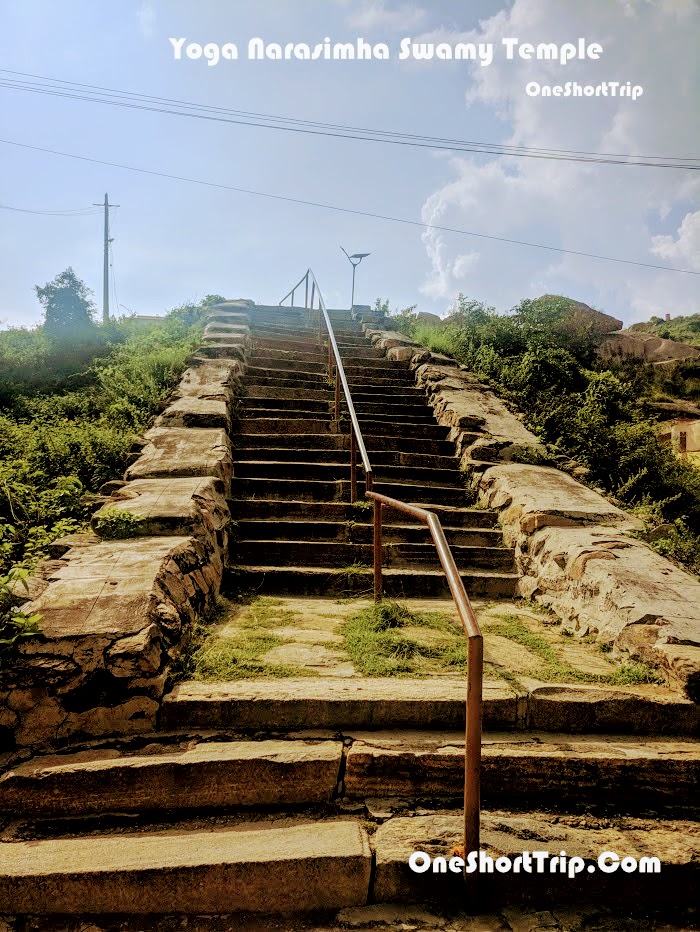
The temple stands on a small hillock and is reached by a short flight of steps. Its modest scale is part of its appeal: the shrine does not feel like a large urban pilgrimage centre, and the surrounding landscape of fields, rocky terrain and Thonnur Lake gives the visit a distinctly rural character.
From the elevated position near the shrine, visitors can appreciate the relationship between the temple and the lake below. The combination of a hillock shrine, historic water body and cluster of Vaishnava temples makes Kere Thonnur one of the more interesting lesser-known heritage stops in the Mandya region.
Why This Temple Matters
Yoga Narasimha Swamy Temple at Thonnur is best understood as a heritage and pilgrimage site connected with the development of Sri Vaishnavism in Karnataka. Its value comes from the combination of the Narasimha shrine, Ramanujacharya traditions, medieval Thondanur and the historic landscape around Thonnur Lake.
For travellers exploring Mandya beyond the better-known attractions, this temple offers a quieter experience and can be naturally combined with Thonnur Kere, Nambi Narayana Temple, the nearby Vaishnava shrines and Melukote. Older accounts place the temple about 20 km from Melukote and roughly 21 km from Srirangapatna, making it particularly suitable for a heritage-focused day circuit.
Planning Your Visit to Yoga Narasimha Swamy Temple
Yoga Narasimha Swamy Temple is best experienced as part of a wider Thonnur heritage and pilgrimage circuit. The temple itself is relatively modest, but its setting beside Thonnur Kere and its relationship with the Nambi Narayana Temple make the journey much more rewarding than treating it as an isolated stop.
Thonnur is about 10 km from Pandavapura and 15 km from Melukote, according to the Mandya district administration. This makes it particularly convenient to combine with Melukote when planning a full-day temple and heritage trip.
What the Visit Feels Like
This is not a large temple complex designed around crowds of tourists. The experience is quieter and more local. You approach the shrine through the rural surroundings of Thonnur, climb towards the temple and gradually gain a better view of the landscape around the historic lake.
That setting is an important part of the attraction. Rather than spending the entire visit inside the shrine, allow some time to look at the relationship between the temple, the hillock and Thonnur Kere. The landscape helps explain why this location developed into a religious centre.
Temple Visit and Darshan
The principal purpose of the visit is darshan of Yoga Narasimha Swamy. As an active place of worship, visitors should approach the temple with the same respect expected at other Vaishnava shrines. Remove footwear where required, dress modestly and follow instructions given by the temple staff or priests.
There is no reliable current official source establishing a fixed daily tourist timetable for this particular shrine. Therefore, it is better not to depend on a generic internet timing when planning a long-distance visit. If darshan at a specific time is important, confirm locally before starting the journey.
Entry
There is generally no separate tourist admission ticket. Religious offerings or sevas, where available, are separate from entry.
Dress
Choose modest, comfortable clothing suitable for an active Hindu temple.
How to Reach Thonnur
For most travellers, road travel is the easiest option. Thonnur lies in Pandavapura Taluk and is particularly convenient to reach by car when combined with Melukote and other Mandya heritage sites.
Mandya district is well connected to Bengaluru and Mysuru by road and rail, while Pandavapura provides a useful local reference point for reaching Thonnur. The district administration currently notes frequent government buses to Mandya from Bengaluru and Mysuru and rail connectivity through Mandya.
For a sightseeing trip, however, a private car or cab is considerably more practical because the temple, lake and surrounding heritage sites are spread across the rural landscape and are easier to combine by road.
Visiting with Senior Citizens
The temple can be included in a family pilgrimage, but senior citizens should be given sufficient time for the approach and steps. Avoid rushing the climb, particularly during hot weather. A morning visit is usually more comfortable than arriving during the strongest afternoon heat.
Because this is a rural heritage destination rather than a major urban temple, visitors should also avoid assuming that every modern accessibility facility will be available on site. Families travelling with elderly members should plan accordingly.
Best Time to Visit
The cooler months are generally the most pleasant for exploring Thonnur and the surrounding Mandya countryside. October to February is a particularly comfortable period for combining temple visits with outdoor sightseeing around the lake and nearby villages.
The monsoon can make the countryside especially attractive, but wet surfaces around steps and outdoor areas require greater care. During summer, start early and carry adequate drinking water.
How Much Time Do You Need?
For the temple alone, 30–45 minutes is generally enough for darshan and a relaxed look around the shrine. However, that would undersell the destination. If you have travelled to Thonnur, allow at least 2–3 hours for the temple, Thonnur Kere and the nearby Nambi Narayana Temple.
A full day works even better when Thonnur is combined with Melukote, particularly for travellers interested in Sri Vaishnava history and the Ramanujacharya tradition. Karnataka tourism information also identifies Tonnur specifically for its Yoga Narasimha and Nambi Narayana temples.
Combine It with Nambi Narayana Temple
The most natural companion to Yoga Narasimha Swamy Temple is the Nambi Narayana Temple at Thonnur. Both shrines belong to the same historic Vaishnava landscape, so visiting them together gives the traveller a more complete understanding of why Thonnur became important.
This is also a better way to structure the visit from an SEO and traveller-information perspective: the destination is not simply a single temple, but a cluster of religious sites, historic traditions and a major water body centred around the old settlement.
Combine It with Thonnur Kere
Thonnur Kere should not be treated merely as a photo stop after the temple. The Mandya district administration describes the lake as part of an ancient settlement known through historical names including Tonnanuru, Tondanuru, Tonnuru and Yadavapura. It also records Thonnur's importance as an ancient educational centre and its association with Ramanujacharya and Hoysala ruler Vishnuvardhana.
Spending time beside the lake therefore adds historical context to the temple visit. The landscape, water body and shrines together form the real Thonnur experience.
Suggested Thonnur–Melukote Circuit
Morning: Start early and travel to Thonnur.
First stop: Yoga Narasimha Swamy Temple for darshan and exploration.
Next: Visit Nambi Narayana Temple and explore the historic Thonnur settlement.
Midday: Spend time around Thonnur Kere before continuing towards Melukote.
Afternoon: Explore Melukote's major temples and heritage sites.
Photography and Visitor Etiquette
The surrounding landscape offers good opportunities for photography, particularly when the lake, hillock and temple are viewed together. Inside the active shrine, however, photography should always depend on the temple's current rules and the instructions of priests or staff.
Avoid turning the temple into a purely photographic stop. Do not disturb worshippers, block the approach to the shrine or use equipment in a way that interferes with religious activities.
What to Carry
- Drinking water, especially during summer.
- Comfortable footwear for the approach and surrounding sightseeing.
- Modest clothing suitable for temple visits.
- Sun protection such as a hat, sunglasses and sunscreen.
- A small amount of cash for local expenses or religious offerings.
Why Visit Yoga Narasimha Swamy Temple, Thonnur?
The attraction of this temple is not its size. It is the historical landscape around it. Here, a relatively quiet Narasimha shrine sits within an old settlement associated with Ramanujacharya, Hoysala history, Nambi Narayana worship and the expansive Thonnur Kere.
For travellers looking beyond Karnataka's famous temple towns, Thonnur offers a more intimate experience of the state's Vaishnava heritage. Visit the temple, spend time around the lake and combine it with Nambi Narayana Temple and Melukote rather than rushing through the area. That is when the significance of Thonnur begins to make sense.