Folklore Museum Mysore – A Journey Through Karnataka’s Folk Culture
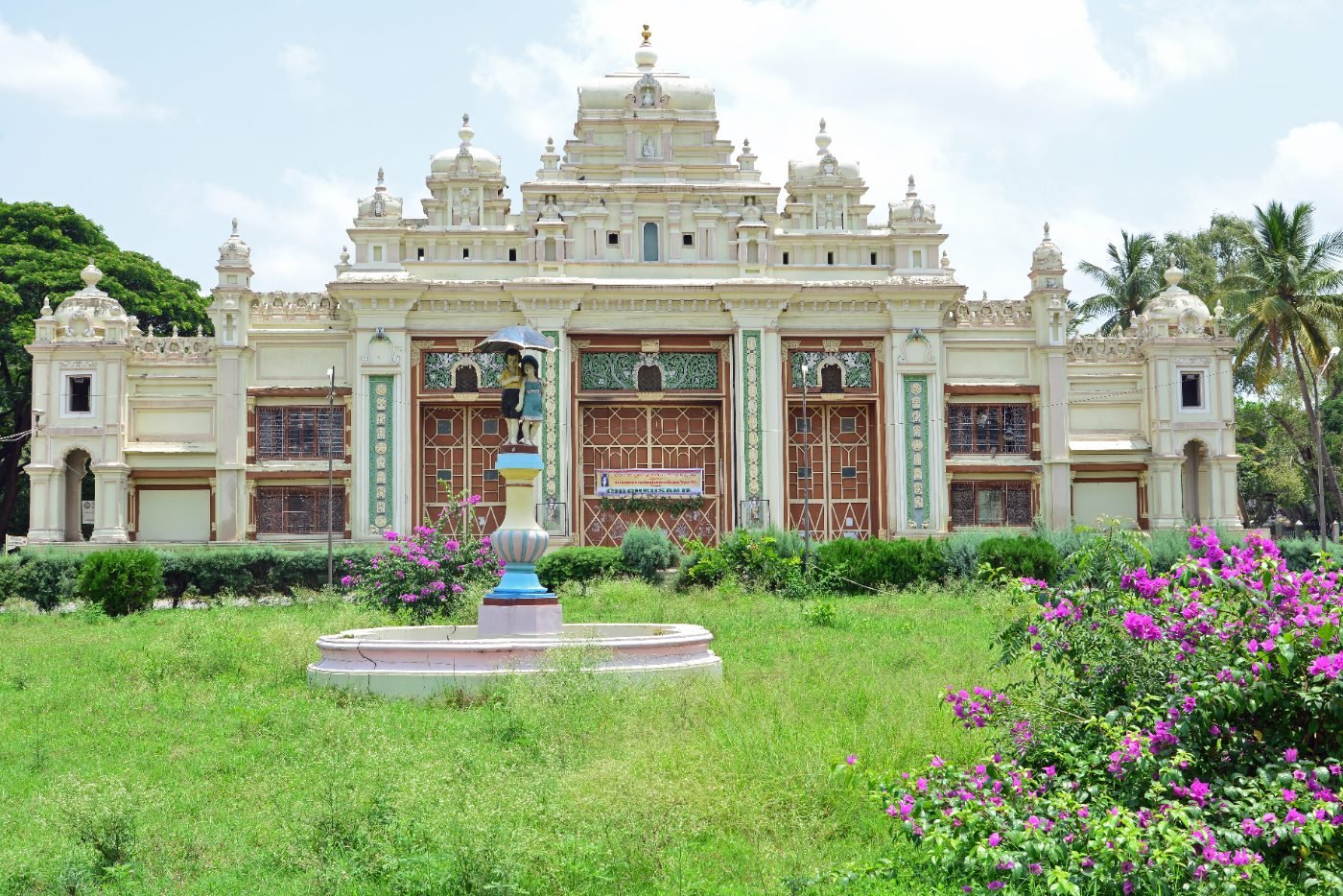
The Folklore Museum Mysore, located inside the historic Jayalakshmi Vilas Mansion on the University of Mysore’s Manasagangotri campus, is one of the most important places in Mysuru to understand the traditional culture of Karnataka. Rather than focusing on royalty alone, the museum brings together objects that reveal how ordinary communities lived, worked, celebrated, worshipped and expressed themselves through art.
Established in 1968, the museum developed through extensive fieldwork and collecting efforts by scholars and folklorists associated with the University of Mysore. Today, it preserves thousands of objects representing the diverse folk traditions of different parts of Karnataka.
A Museum Dedicated to Karnataka’s Living Heritage
The importance of the Folklore Museum lies in the diversity of its collection. Karnataka has an exceptionally rich tradition of folk theatre, music, dance, crafts, religious practices and rural life, and the museum preserves physical examples of many of these traditions.
The exhibits provide a glimpse into the creativity and practical knowledge of communities across the state. Wooden objects, rural clothing, masks, utensils, agricultural implements, ceremonial objects, puppets and decorative pieces help visitors understand Karnataka beyond its famous palaces and temples.
More Than 6,000 Folk Objects
The University of Mysore describes the museum as housing over 6,000 folklore items, while Karnataka Tourism highlights a collection of around 6,500 indigenously made objects from across Karnataka. Together, these collections make the museum an important repository of the state’s material folk heritage.

Traditional Costumes, Masks and Folk Performance
One of the most fascinating aspects of the collection is its connection with Karnataka’s folk performing traditions. The museum preserves masks, crowns, ornaments, costumes and other objects associated with folk theatre and performance traditions.
Visitors can learn about the visual language of traditions such as Yakshagana, where elaborate costumes, headgear, facial decoration and ornaments play an important role in storytelling. The museum also provides insight into the material culture surrounding traditional music, dance and drama.
Wooden Sculptures and Folk Figures
Wood is an important material in many traditional Karnataka crafts, and the museum has an impressive collection of wooden figures, sculptures and decorative objects. Some represent religious or folk traditions, while others reflect everyday artistic practices in rural communities.
The scale and character of some of these objects make the museum particularly interesting for visitors who enjoy traditional craftsmanship, sculpture and visual storytelling.
Puppets and Traditional Storytelling
Traditional puppetry is another important part of Karnataka’s cultural heritage represented in the museum. Leather and wooden puppets demonstrate how stories were historically communicated through performance, movement, music and shadow.
For travellers interested in Indian folk theatre and traditional storytelling, these displays offer a rare opportunity to see the physical objects behind performance traditions that are often passed down through generations.
Objects From Everyday Rural Life
The museum does not limit itself to spectacular artistic objects. It also preserves ordinary articles that once formed part of everyday life in Karnataka. Rural clothes, household utensils, agricultural implements, tools and objects connected with traditional occupations help visitors understand how communities lived and worked.
These seemingly simple objects are valuable because they document traditional knowledge, craftsmanship and ways of life that have changed significantly with modernisation.
A Museum Within a Historic Palace
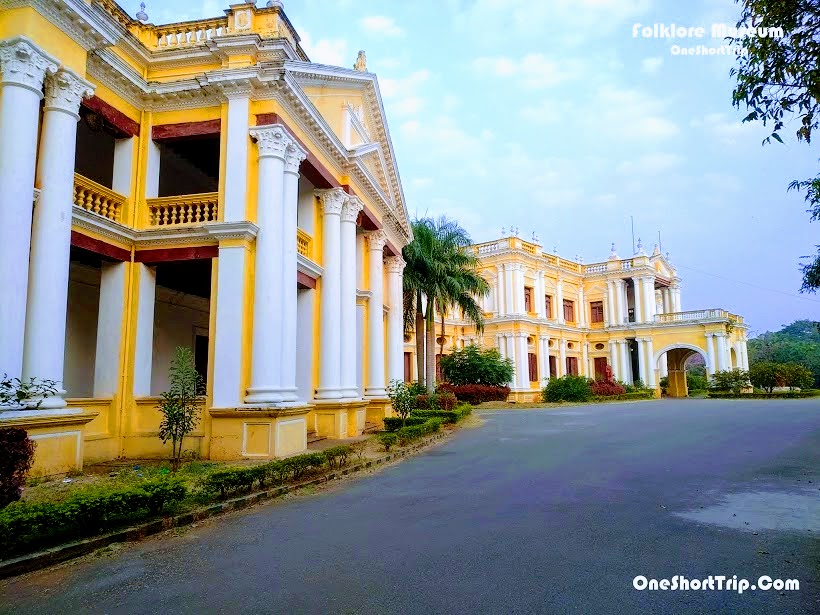
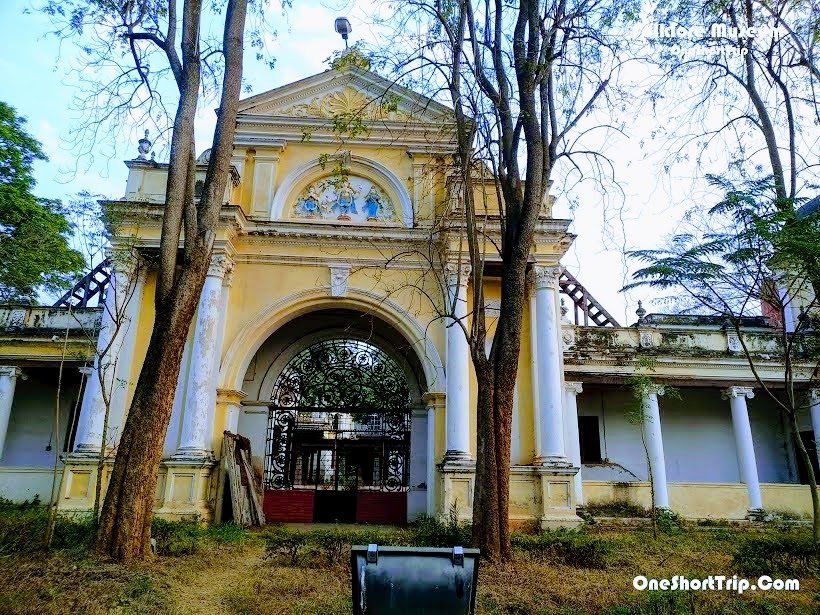
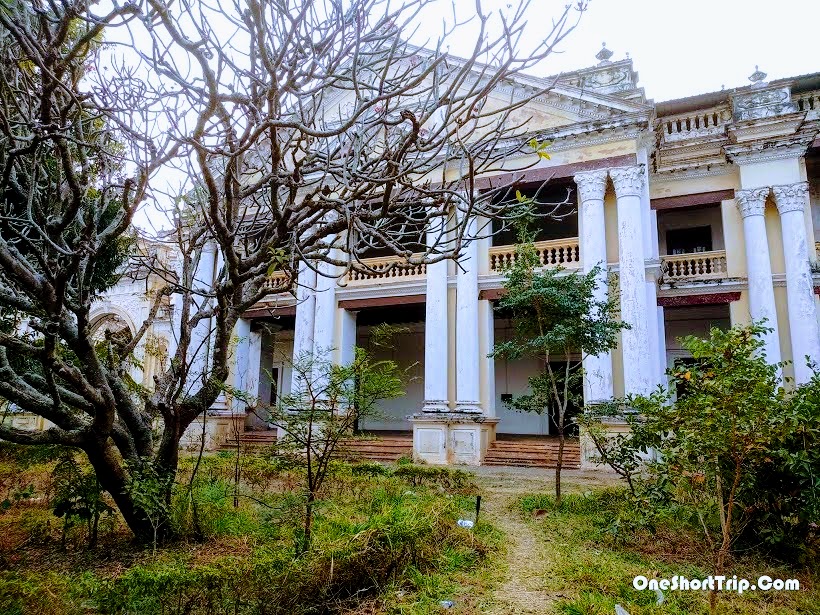
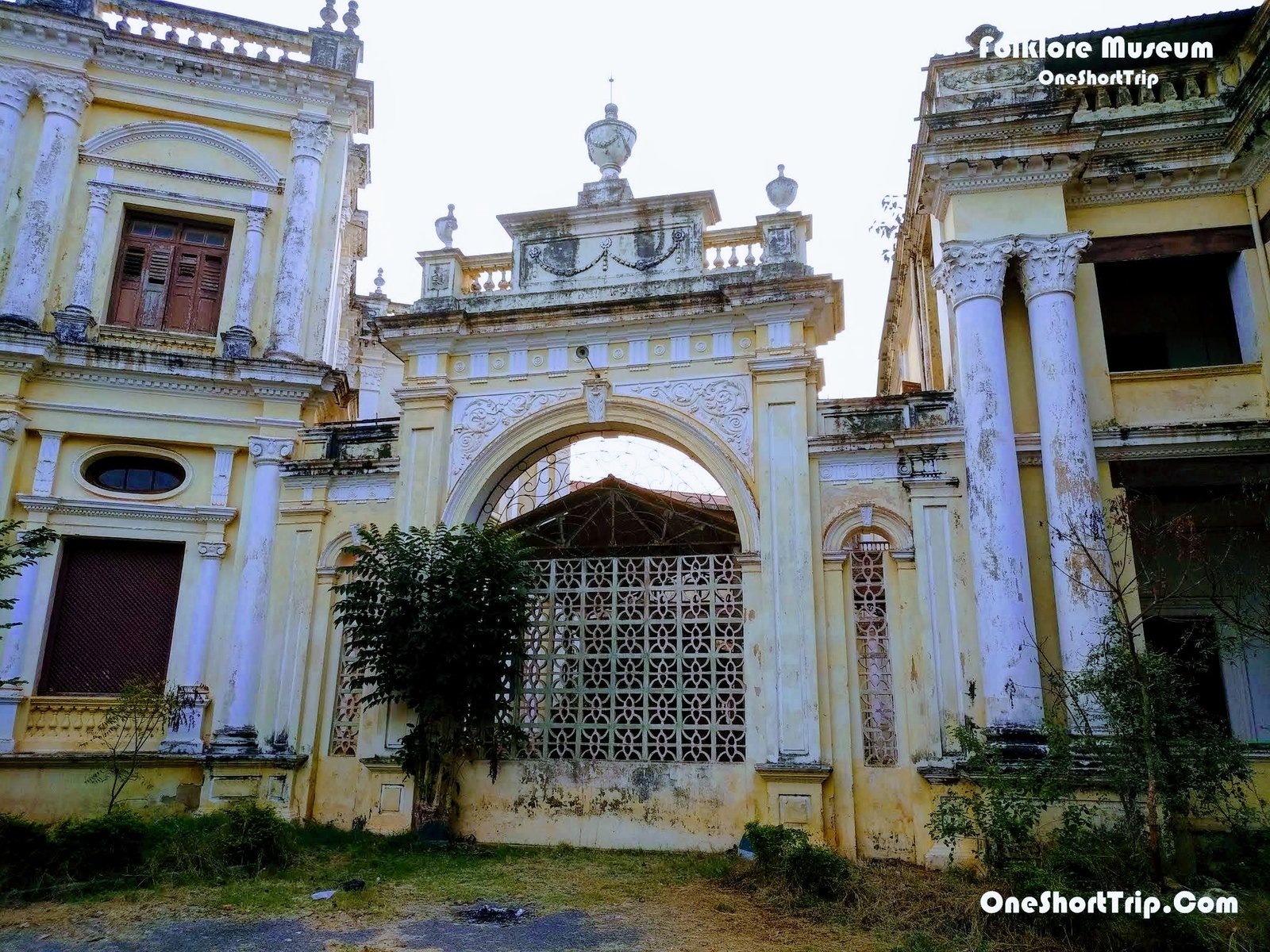
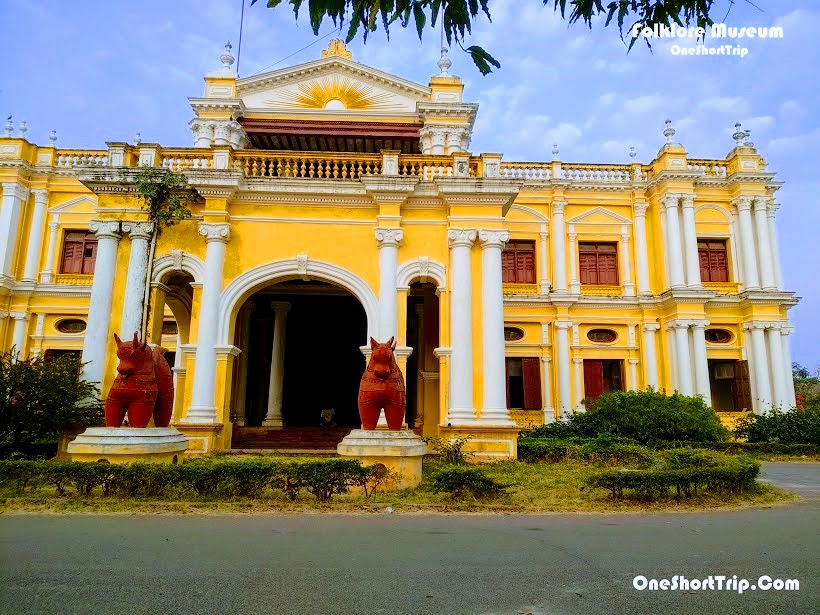
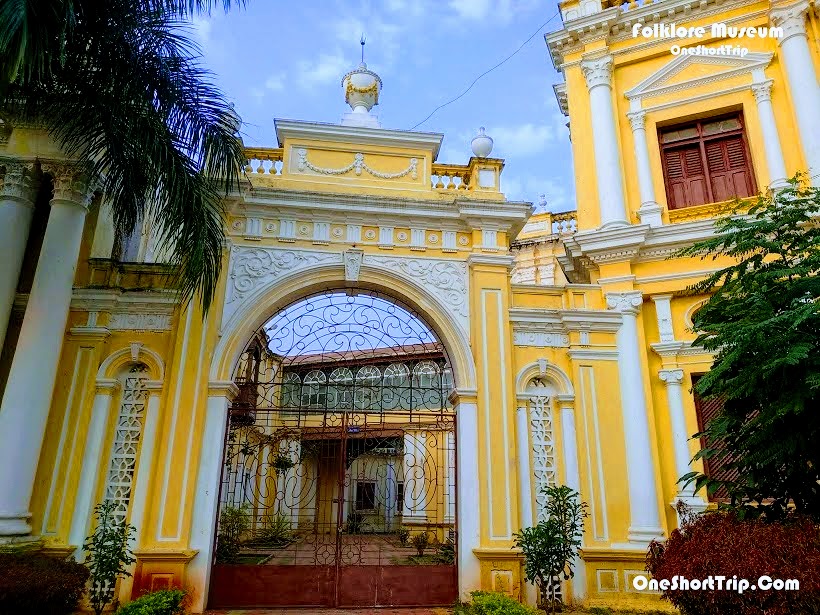
The museum itself is part of the experience. It occupies the historic Jayalakshmi Vilas Mansion, a heritage building constructed in the early 20th century for Princess Jayalakshmammanni, daughter of Maharaja Chamaraja Wadiyar and sister of Maharaja Krishnaraja Wadiyar IV.
The mansion dates to 1905 and combines grand architectural elements with the character of a royal residence. Today, the building provides a remarkable setting for exploring Karnataka’s folk heritage, creating an unusual combination of royal architecture and rural cultural history.
Exploring the Different Sections of the Museum
The museum complex has developed beyond a simple display of folk objects. University of Mysore material describes dedicated collections covering folklore, archaeology, art and architecture, allowing visitors to explore Karnataka’s cultural history from different perspectives.
Folklore Gallery
The main folklore collection is the heart of the museum. It brings together objects representing folk traditions from different regions and communities of Karnataka. Visitors can see the material culture associated with clothing, crafts, religious customs, occupations, performing arts and rural life.
Archaeology and Ancient History
The museum complex also includes archaeological material that helps connect Karnataka’s folk traditions with its deeper historical past. Excavated objects, antiquities and archaeological displays provide another perspective on how people lived and created objects in earlier periods.
Art and Architecture
The art and architecture displays add another dimension to the museum experience, highlighting traditional artistic expression and architectural forms. This makes the museum particularly useful for visitors interested in Karnataka’s visual culture and traditional craftsmanship.

The Jayalakshmi Vilas Mansion Experience
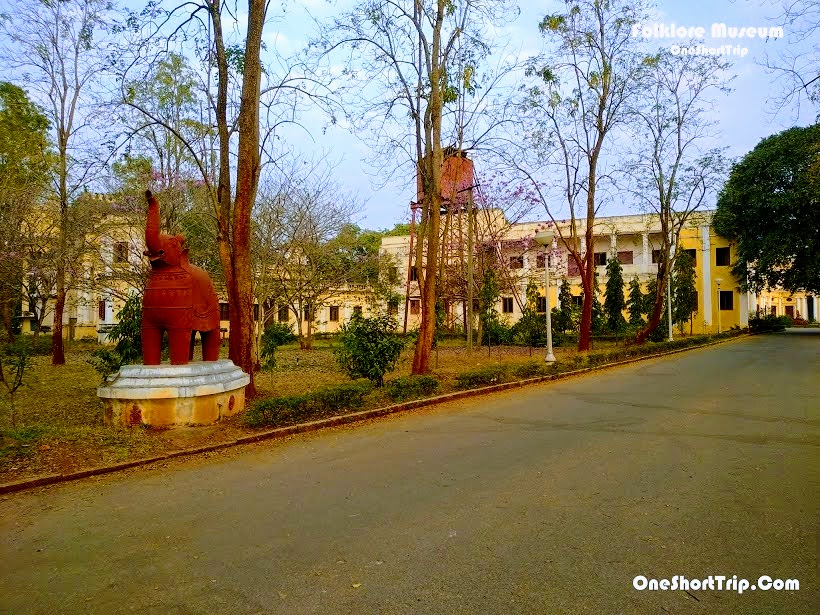
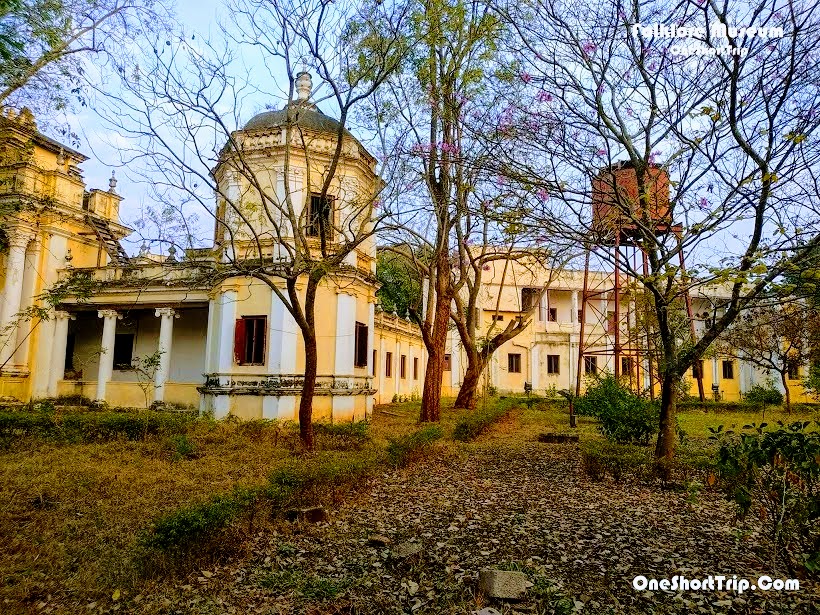
A visit to the Folklore Museum also means exploring one of Mysuru’s important heritage buildings. Jayalakshmi Vilas Mansion is a large historic structure with distinctive columns, wings, courtyards and ornate architectural details.
The mansion was restored and adapted for museum use, allowing visitors to experience the architecture while discovering collections that document Karnataka’s folk and cultural traditions.
Where Is Folklore Museum Mysore Located?
The Folklore Museum is located at Jayalakshmi Vilas Mansion, Manasagangotri, University of Mysore, Mysuru. It is situated within the University of Mysore campus, away from the busiest part of central Mysuru.
Folklore Museum Mysore Timings
Current museum-directory information lists visiting hours of approximately 10:15 AM to 5:00 PM, Monday to Saturday, with a lunch break from around 1:15 PM to 2:30 PM. The museum is listed as closed on Sundays and public holidays. Timings can change, so visitors should confirm before travelling, particularly during university holidays or restoration work.
Entry Fee
The Folklore Museum is currently listed as having free entry. If visiting as part of a larger Mysuru sightseeing plan, it is still worth confirming the latest visitor arrangements before arrival.
How Long Does It Take to Visit?
A quick visit can take around one hour, but visitors interested in the collections, traditional crafts, archaeology and the mansion itself should allow considerably more time. Museum of India currently gives an estimated visit duration of 3–4 hours for a detailed experience.
Photography and Visitor Etiquette
Current Museum of India information lists photography and videography as not permitted inside the museum. Visitors should follow the rules displayed at the museum and avoid touching exhibits or entering restricted areas.
Who Should Visit the Folklore Museum?
The museum is especially rewarding for travellers interested in Karnataka culture, folk art, traditional crafts, history, archaeology, architecture, photography from outside the galleries, students and heritage tourism. Families can also visit because the unusual masks, puppets, costumes and large folk figures make the collection visually engaging.
Best Time to Visit
For a quieter museum experience, weekday mornings are a good choice. The museum can be combined conveniently with other attractions around Manasagangotri and central Mysuru, making it suitable for a heritage-focused sightseeing circuit.
Why Add the Folklore Museum to Your Mysuru Trip?
Mysuru is famous for palaces, royal heritage and grand temples, but the Folklore Museum offers a different side of the region. It shifts the focus from kings and palaces to the people, traditions, skills, stories and everyday objects of Karnataka.
Set inside the historic Jayalakshmi Vilas Mansion, the museum combines architecture, history, folklore and traditional craftsmanship in one destination. For travellers wanting to understand the cultural depth behind Karnataka’s heritage, it is one of the more distinctive museums to include in a Mysuru itinerary.
Contact, Location & How to Reach
Entry Fees: ₹0.
Timings: Mon–Sat 10:30 AM–12:30 PM & 2:00–5:00 PM; Sunday and holidays closed.
Best time: All year except Sundays and holidays.
Note: Cameras and phones must stay away — no photography is allowed anywhere inside the galleries.
Website/Email/Phone: None official.
Address: Folklore Museum, Manasa Gangothiri, Mysuru, Karnataka 570006.
Accommodation nearby: Radisson Blu Plaza Hotel Mysore, Fortune JP Palace, The Quorum, Hotel Ruchi The Prince, Hotel Home Comfort, Rajmahal Inn.
Places to Visit near: Mysore Palace, Lalitha Mahal Palace, Jaganmohan Palace, Jayalakshmi Vilas Palace, Karanji Lake, Planet Earth Aquarium, Railway Museum, St. Philomena Church, Chamundi Hills.
Distance:
Bangalore – 143 km
Mysore city bus stop – 4.2 km
KSRTC bus stop – 4.9 km
Railway station – 3.4 km
Airport – 15 km
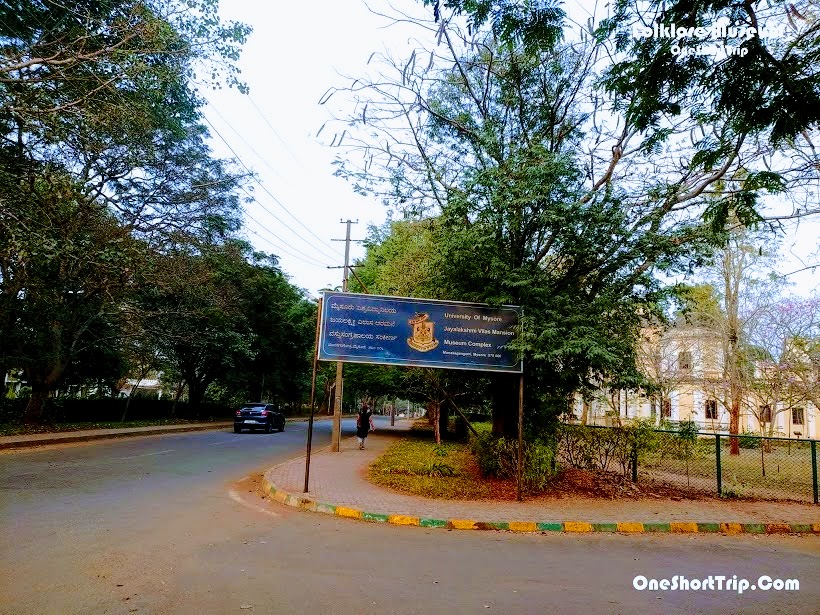
How to reach: The easiest approach for most visitors is by bus — a Bangalore–Mysore service (around ₹125) drops you at the Sub Urban Bus Stand, from where a short auto ride or a Manasagangotri-bound city bus gets you to the university gate in under fifteen minutes. The train works out just as cheap and about as quick door to door. If you are flying in, Mysore's own airport is barely fifteen kilometres away, putting the museum within half an hour of touchdown. Driving down from Bangalore is a straightforward run along the Mysore highway through Ramanagara, Channapatna, Maddur and Srirangapatna, with Manasagangotri clearly signed once you enter the city.