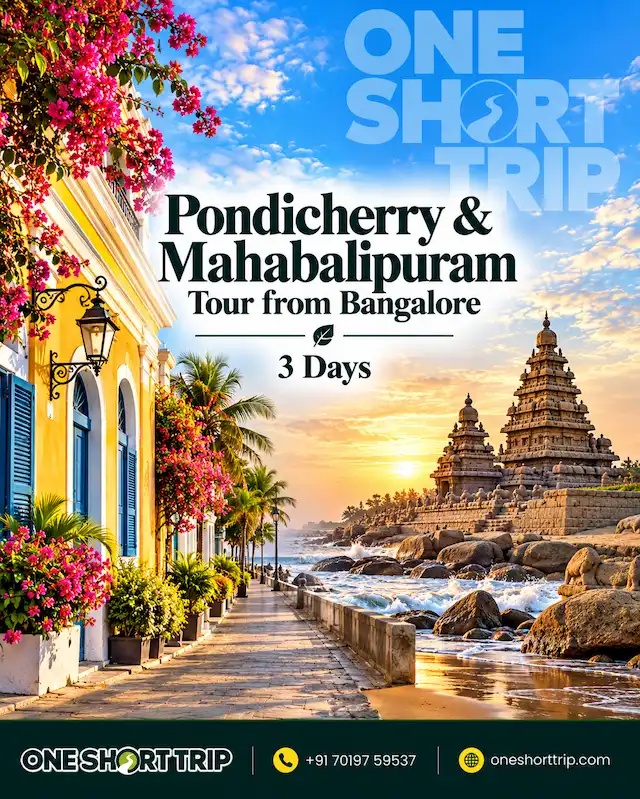
Kanchipuram & Mahabalipuram Tour from Bangalore – 3 Days / 2 Nights
Travel from Bangalore to Kanchipuram to explore its celebrated Shiva, Vishnu and Shakti temples, traditional silk-weaving heritage and historic landmarks, then continue to Mahabalipuram for the Shore Temple, Pancha Rathas, ancient rock-cut caves and UNESCO-listed Pallava monuments.
Sacred Kanchipuram & Pallava Heritage of Mahabalipuram
This 3 Days / 2 Nights tour from Bangalore combines two of Tamil Nadu's most important heritage destinations. Begin in Kanchipuram, an ancient temple city known for its remarkable Shiva, Vishnu and Shakti temples, exploring landmarks such as Ekambareswarar Temple, Kamakshi Amman Temple, Varadharaja Perumal Temple, Kailasanathar Temple and other historic shrines.
Discover another side of Kanchipuram through its traditional silk-weaving heritage and Kanchi Kudil before continuing to Mahabalipuram. Here, explore the UNESCO-listed Pallava monument landscape through the Shore Temple, Pancha Rathas, monumental rock relief, cave temples, mandapas and other remarkable stone monuments before returning to Bangalore.
Kanchipuram Temples
Explore celebrated Shiva, Vishnu and Shakti temples representing Kanchipuram's centuries-old sacred heritage.
Silk Weaving Heritage
Discover Kanchipuram's famous silk tradition and learn about the craftsmanship behind its handwoven sarees.
Pallava Architecture
See rock-cut caves, monolithic rathas, sculpted reliefs and structural temples across Mahabalipuram.
UNESCO Mahabalipuram
Explore the celebrated Group of Monuments at Mahabalipuram along the historic Coromandel Coast.
Kanchipuram & Mahabalipuram Tour Itinerary from Bangalore – 3 Days / 2 Nights
DAY 1 Bangalore → Kanchipuram → Temple Sightseeing +
-
Early Morning — Pickup from Bangalore
Begin your private 3 Days / 2 Nights tour with an early-morning pickup from Bangalore and drive towards Kanchipuram in Tamil Nadu. -
Arrival in Kanchipuram
Arrive in Kanchipuram and begin exploring the city's important temple heritage. Hotel check-in can be completed according to the accommodation and check-in arrangements in your confirmed package. -
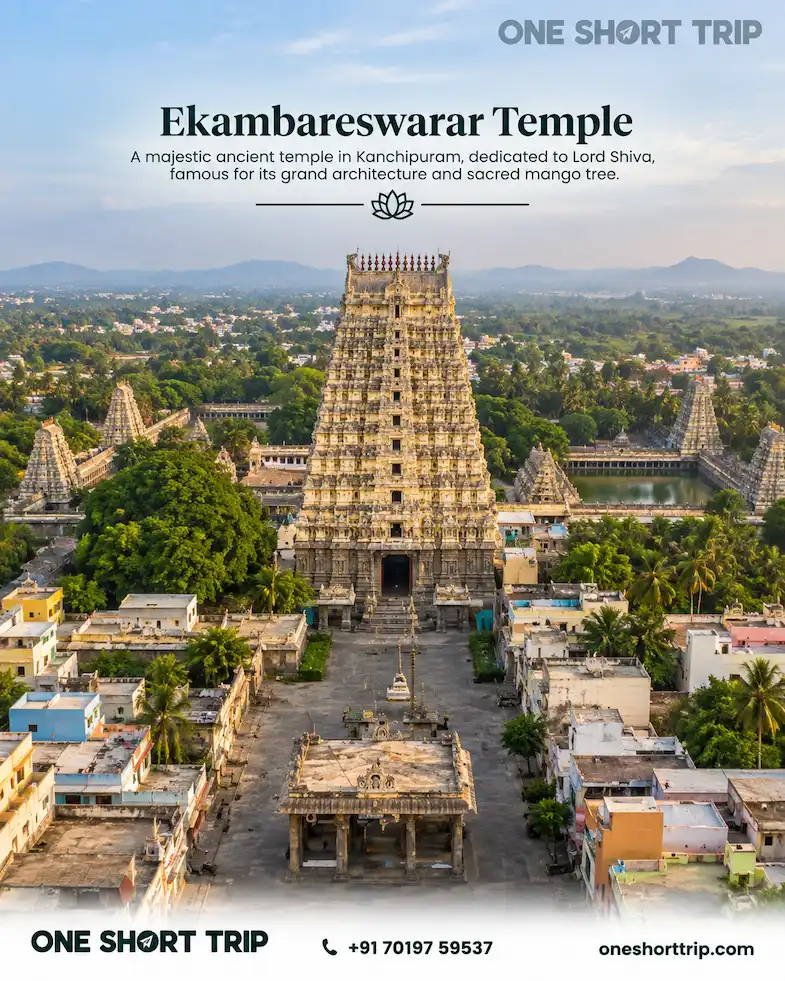
Ekambareswarar Temple
Visit one of Kanchipuram's major Shiva temples, known for its large temple complex, towering gopuram and long-standing religious importance. -
Kamakshi Amman Temple
Continue to the renowned temple dedicated to Goddess Kamakshi, one of the most important spiritual landmarks in Kanchipuram. -
Kumarakottam Murugan Temple
Visit the historic Murugan temple located within Kanchipuram's sacred temple landscape. -
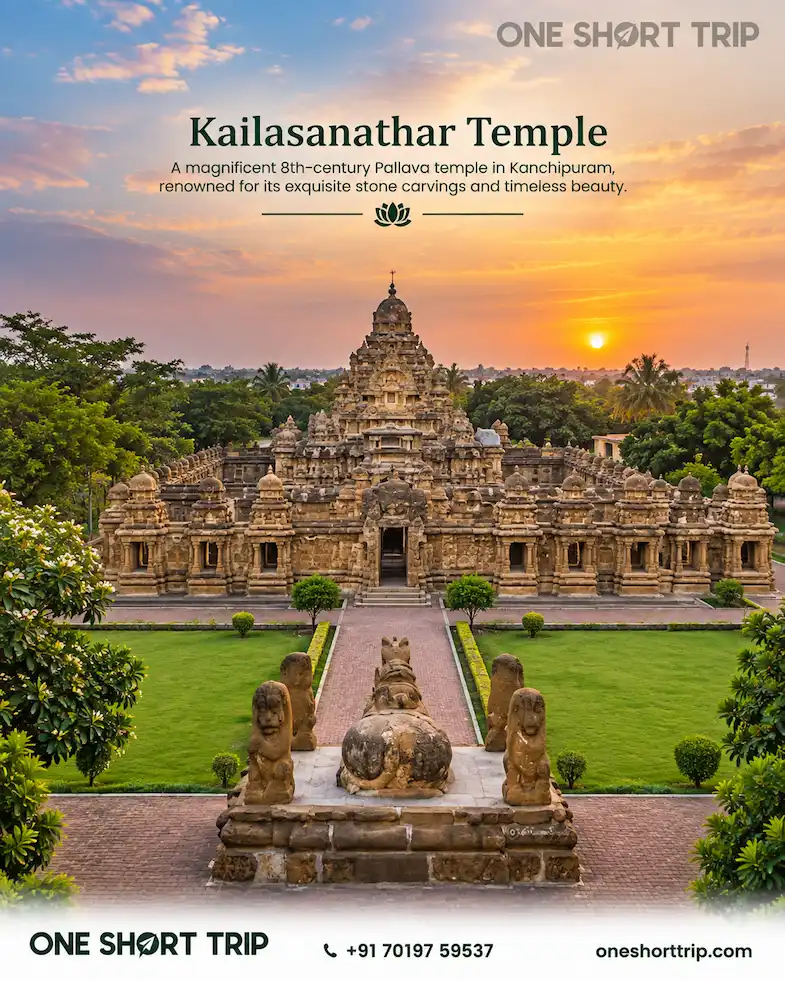
Kailasanathar Temple
Explore one of Kanchipuram's most significant early Pallava temples, particularly notable for its historic stone architecture and sculptural details. -
Varadharaja Perumal Temple
Visit this major Vishnu temple and explore its expansive sacred complex, architecture and important place within Kanchipuram's Vaishnavite tradition. -
Evening — Overnight in Kanchipuram
Complete the first day's temple sightseeing and settle in for the night. Accommodation is included only when specifically mentioned in your confirmed package.
Please note: Temple opening hours often include morning and evening sessions with an afternoon closure. The exact sightseeing order may therefore be adjusted according to current temple timings, traffic, darshan queues and arrival time in Kanchipuram.
DAY 2 Kanchipuram Heritage → Silk Weaving → Mahabalipuram +
-
Morning — Continue Kanchipuram Sightseeing
After breakfast and check-out according to your package arrangements, continue exploring the remaining heritage attractions of Kanchipuram. -
Vaikunta Perumal Temple
Visit this important historic Vishnu temple, valued for its Pallava-period architecture and sculptural heritage. -
Ulagalanda Perumal Temple
Continue to this prominent Vaishnavite temple dedicated to the Trivikrama form of Lord Vishnu. -
Kanchi Kudil
Visit Kanchi Kudil to experience another side of the city beyond its temples, with a setting that reflects aspects of traditional Kanchipuram domestic life and local heritage. -
Kanchipuram Silk Weaving Centre
Discover Kanchipuram's celebrated silk-weaving tradition and see how the city's famous silk sarees are connected to generations of specialised craftsmanship. Shopping can be considered if interested and time permits. -
Afternoon — Drive to Mahabalipuram
Leave Kanchipuram and continue towards Mahabalipuram for the second part of the tour. -
Mahabalipuram Beach
If arrival time, daylight and weather permit, spend some time near the coast and enjoy the seaside atmosphere before concluding the day's sightseeing. -
Evening — Overnight in Mahabalipuram
Settle in for the night and prepare for the following day's Pallava heritage circuit. Accommodation is included only when specifically mentioned in your confirmed package.
Please note: The sequence of Kanchipuram attractions may be adjusted between Day 1 and Day 2 according to temple opening hours, local conditions and the time available. Silk-weaving centre access may also depend on the operating arrangements on your travel date.
DAY 3 Mahabalipuram Heritage Sightseeing → Bangalore +
-
Morning — Shore Temple
Begin Mahabalipuram sightseeing at the iconic Shore Temple overlooking the Bay of Bengal, one of the best-known monuments within the UNESCO-listed Group of Monuments at Mahabalipuram. -
Pancha Rathas
Explore the remarkable group of monolithic rock-cut monuments popularly known as the Five Rathas, each displaying distinctive architectural forms. -
Arjuna's Penance / Descent of the Ganges
See Mahabalipuram's monumental open-air rock relief, widely interpreted through the narratives known as Arjuna's Penance and the Descent of the Ganges. These names refer to alternative interpretations of the same celebrated sculptural composition. -
Krishna's Butter Ball
Visit the enormous naturally balanced granite boulder resting dramatically on a sloping rock surface. -
Krishna Mandapam & Ganesha Ratha
Continue through the heritage zone to see Krishna Mandapam and Ganesha Ratha, adding further examples of Mahabalipuram's rock-cut and monolithic architecture. -
Varaha Cave Temple & Trimurti Cave Temple
Explore selected Pallava rock-cut cave monuments known for their sculptural panels, carved façades and religious themes. -
Mahishasuramardini Cave Temple
Visit another important rock-cut monument featuring notable sculptural compositions from the Pallava period. -
Mahabalipuram Lighthouse
Include the lighthouse area when current opening conditions, weather and available sightseeing time permit. Access to climb the lighthouse is subject to the rules operating on the travel date. -
Afternoon — Begin Return Journey
After completing the Mahabalipuram heritage circuit and a suitable meal break, begin the return drive towards Bangalore. -
Evening / Night — Bangalore Drop
Arrive back in Bangalore and complete the 3 Days / 2 Nights Kanchipuram and Mahabalipuram tour at the agreed drop-off point.
Please note: Timings are approximate and the sightseeing sequence may change depending on traffic, weather, temple and monument opening hours, darshan queues, public access, crowd levels and the time spent at each attraction.
Attractions Covered on This Tour
Ekambareswarar Temple
Visit one of Kanchipuram's major Shiva temples, known for its expansive sacred complex, towering gopuram and long-standing religious importance.
Kamakshi Amman Temple
Experience one of Kanchipuram's most important spiritual landmarks, a celebrated temple dedicated to Goddess Kamakshi.
Kumarakottam Murugan Temple
Visit the historic temple dedicated to Lord Murugan and discover another important part of Kanchipuram's diverse sacred landscape.
Kailasanathar Temple
Explore an important early Pallava temple in Kanchipuram, admired for its historic stone architecture, shrines and sculptural details.
Varadharaja Perumal Temple
Explore one of Kanchipuram's major Vishnu temples, known for its extensive temple complex, architectural features and Vaishnavite importance.
Vaikunta Perumal Temple
Visit a significant Pallava-period Vishnu temple and appreciate its distinctive architecture, sculptural heritage and historical character.
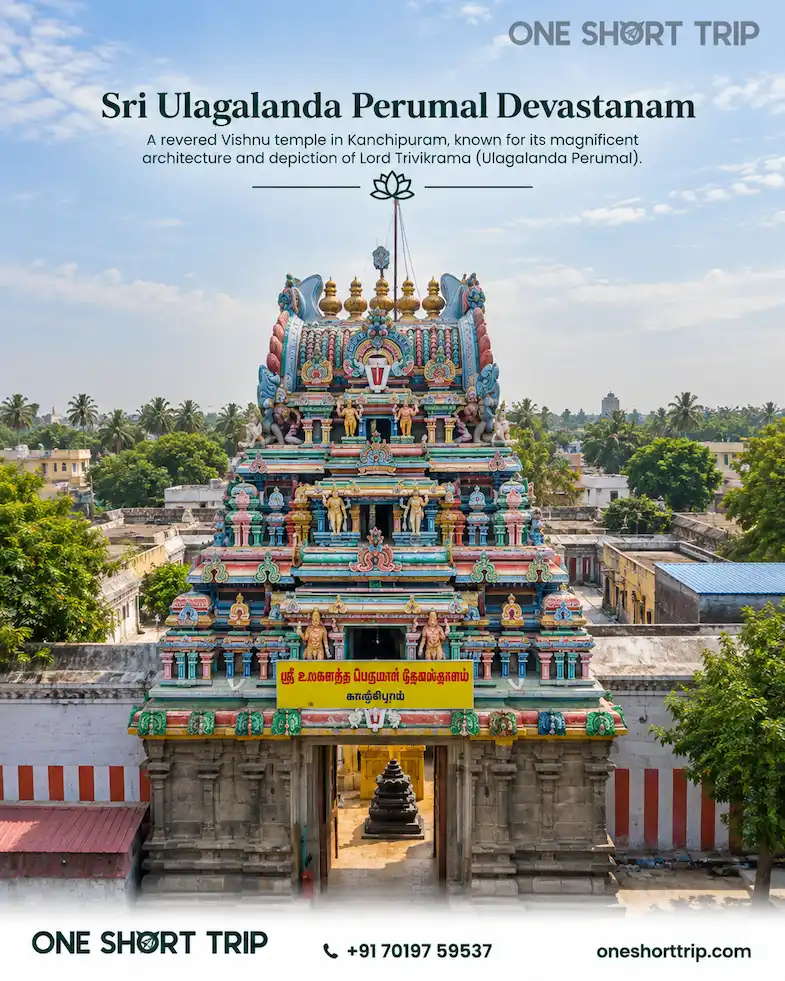
Ulagalanda Perumal Temple
Visit this prominent Vaishnavite temple dedicated to Lord Vishnu in his Trivikrama form and experience another dimension of Kanchipuram's temple heritage.
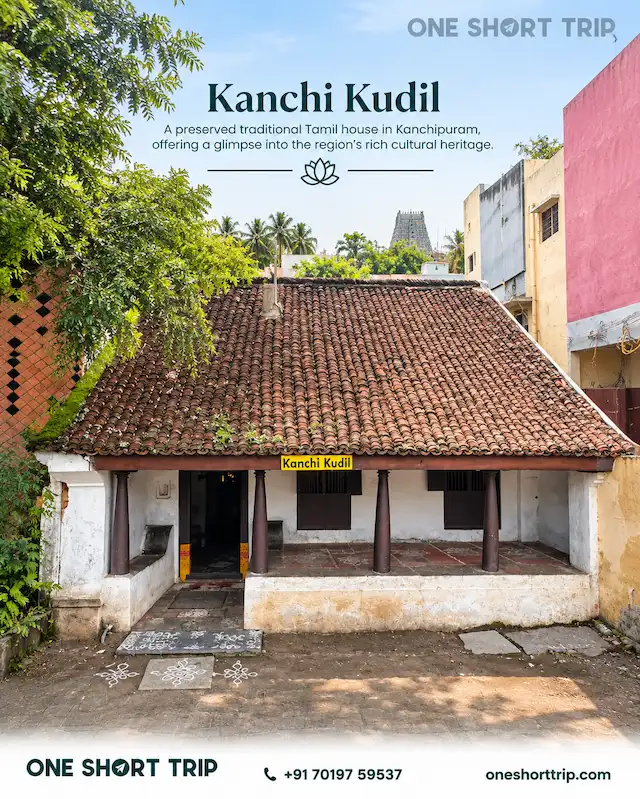
Kanchi Kudil
Step beyond the temple circuit to discover a traditional heritage setting reflecting aspects of Kanchipuram's domestic life, culture and local history.
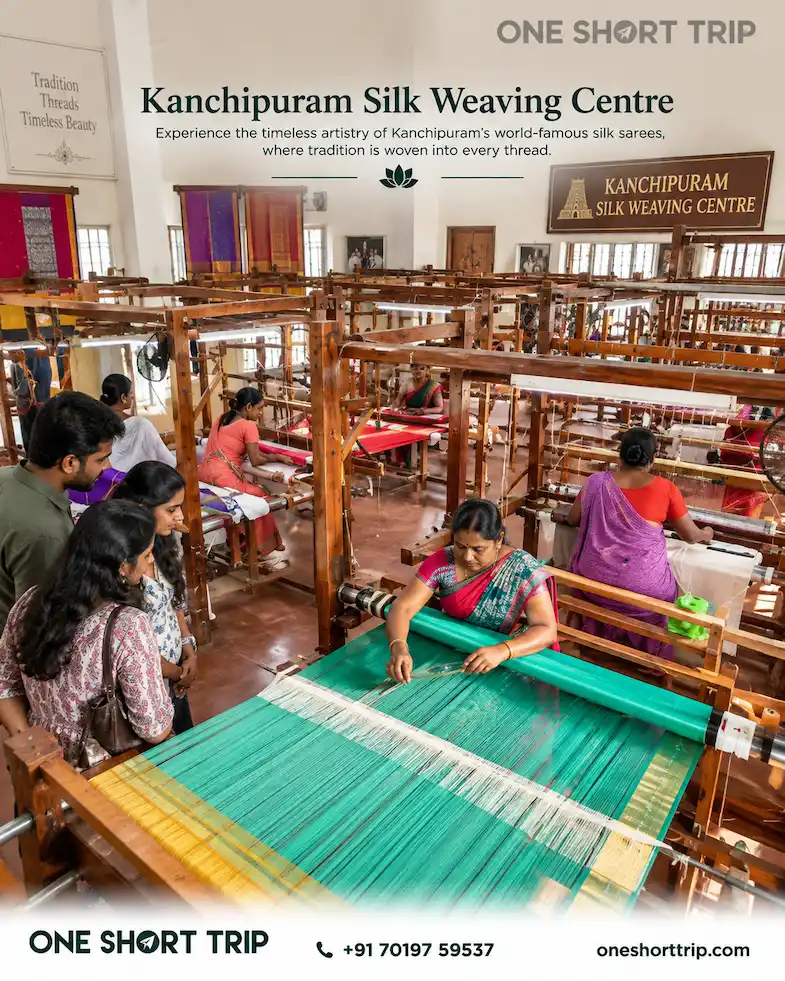
Kanchipuram Silk Weaving Centre
Discover the craftsmanship behind Kanchipuram's famous silk sarees and learn how traditional weaving forms an important part of the city's identity.
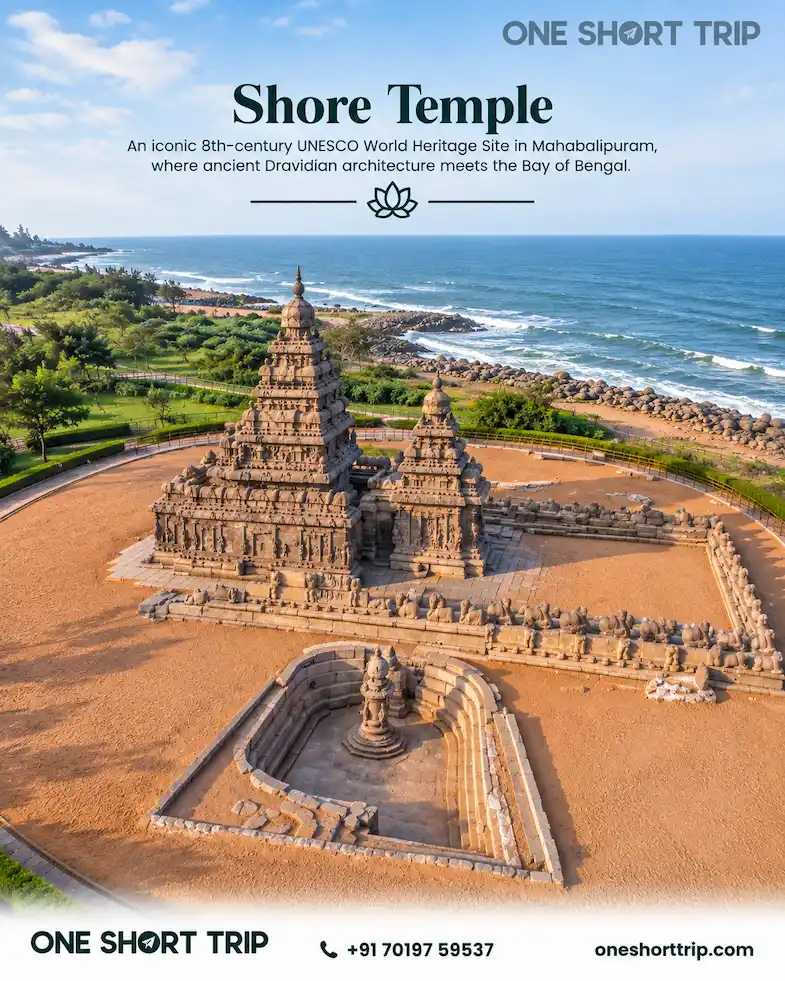
Shore Temple
See Mahabalipuram's iconic seaside structural temple, an important part of the UNESCO-listed Group of Monuments overlooking the Bay of Bengal.
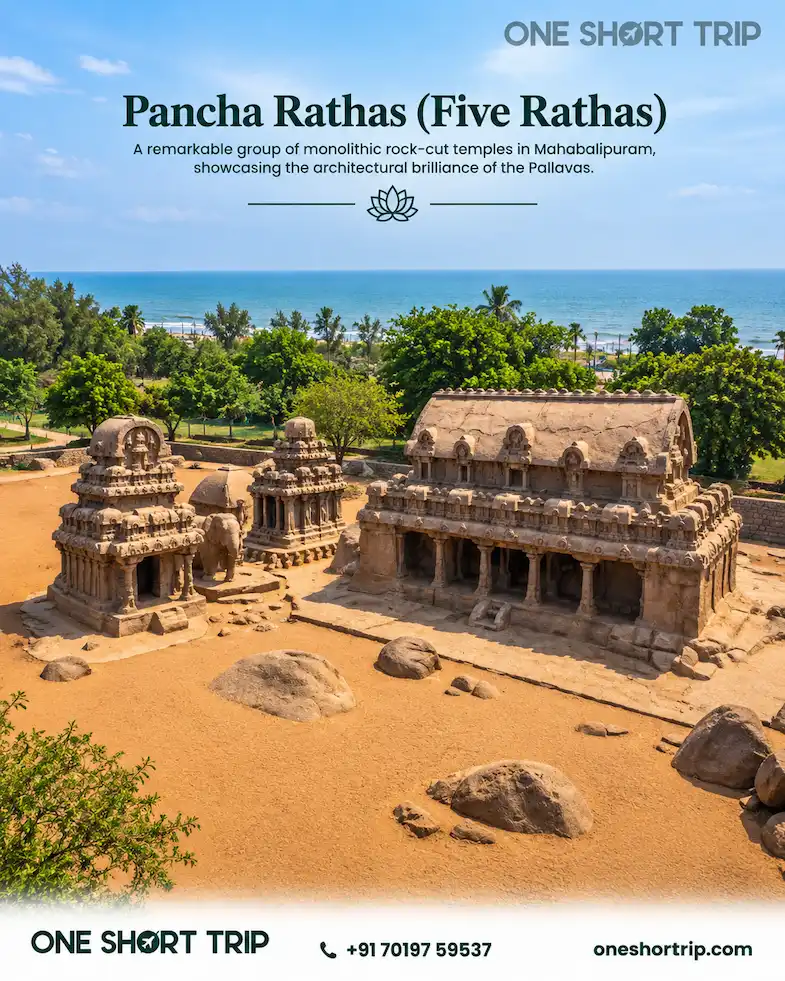
Pancha Rathas
Explore the celebrated Five Rathas, a group of monolithic rock-cut monuments displaying a remarkable variety of architectural forms.
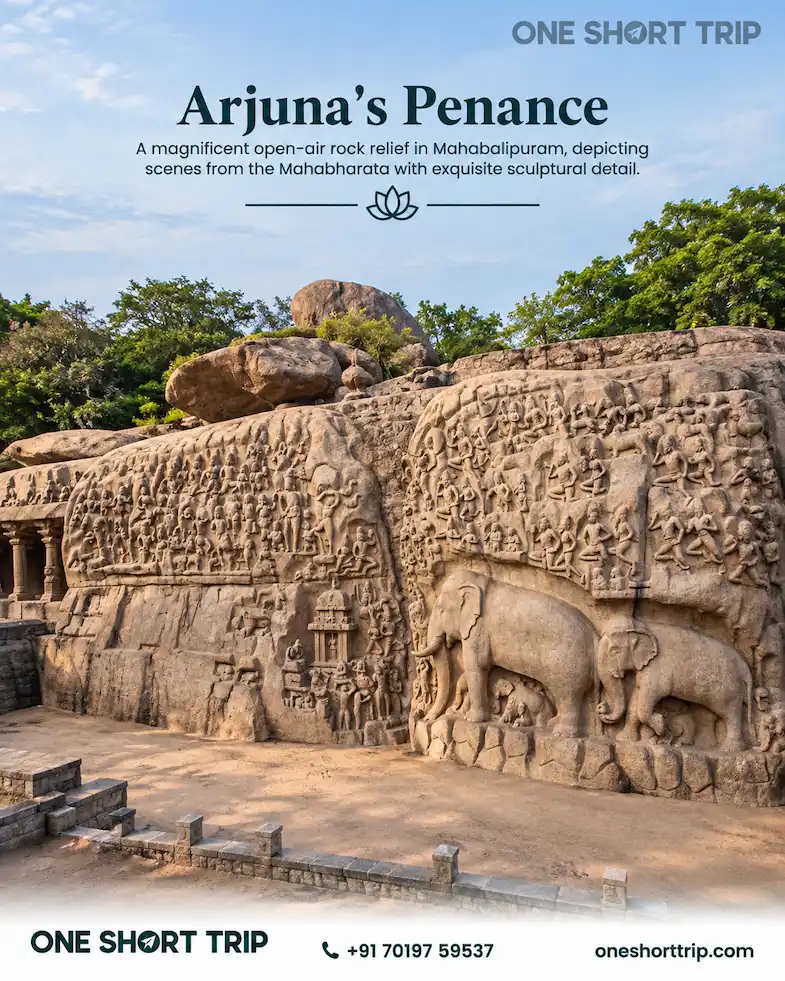
Arjuna's Penance
See Mahabalipuram's monumental open-air rock relief, traditionally interpreted as either Arjuna's Penance or the Descent of the Ganges.
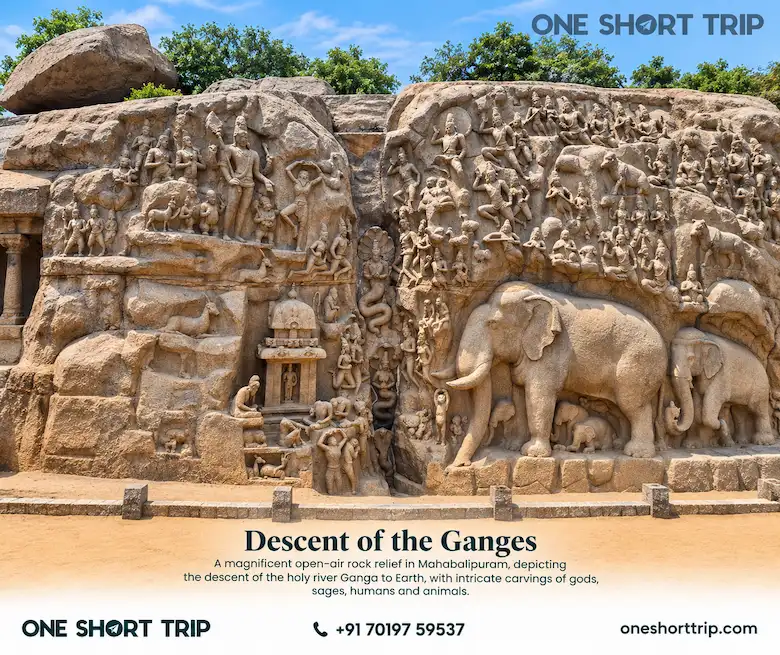
Descent of the Ganges
View another perspective of the same celebrated monumental relief and its richly carved composition of deities, humans, animals and ascetic figures.
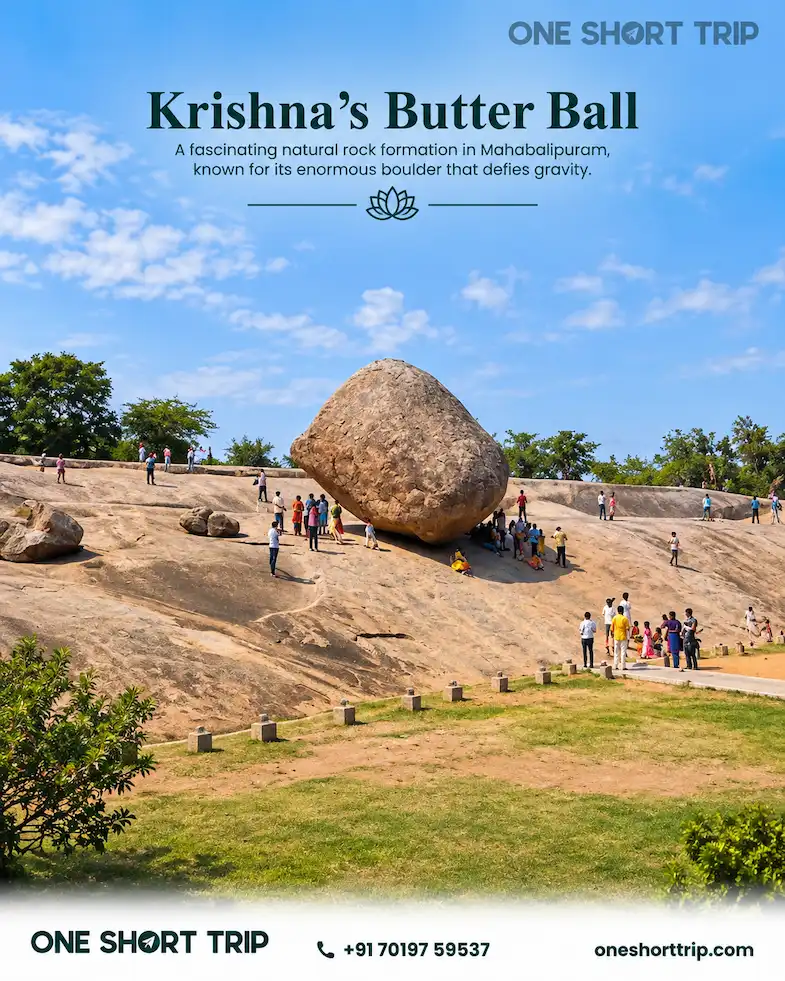
Krishna's Butter Ball
See the enormous naturally balanced granite boulder resting dramatically on a sloping rock surface, one of Mahabalipuram's best-known landmarks.
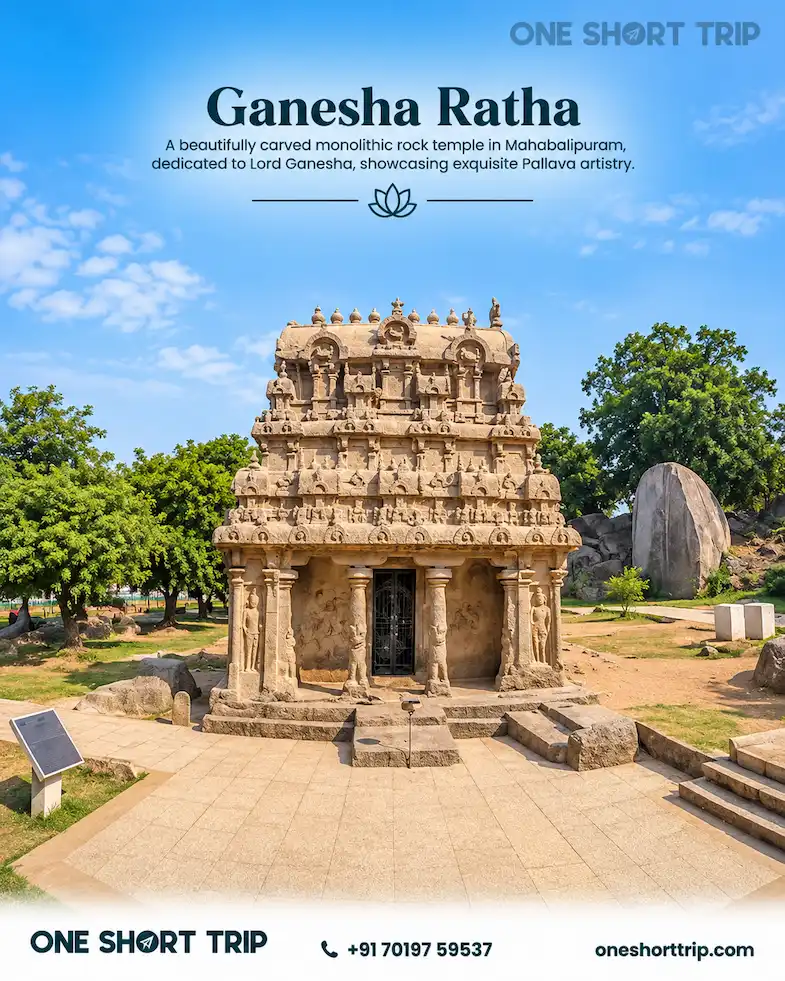
Ganesha Ratha
Explore this compact monolithic monument and see another distinctive example of the stone-carving traditions found across Mahabalipuram.
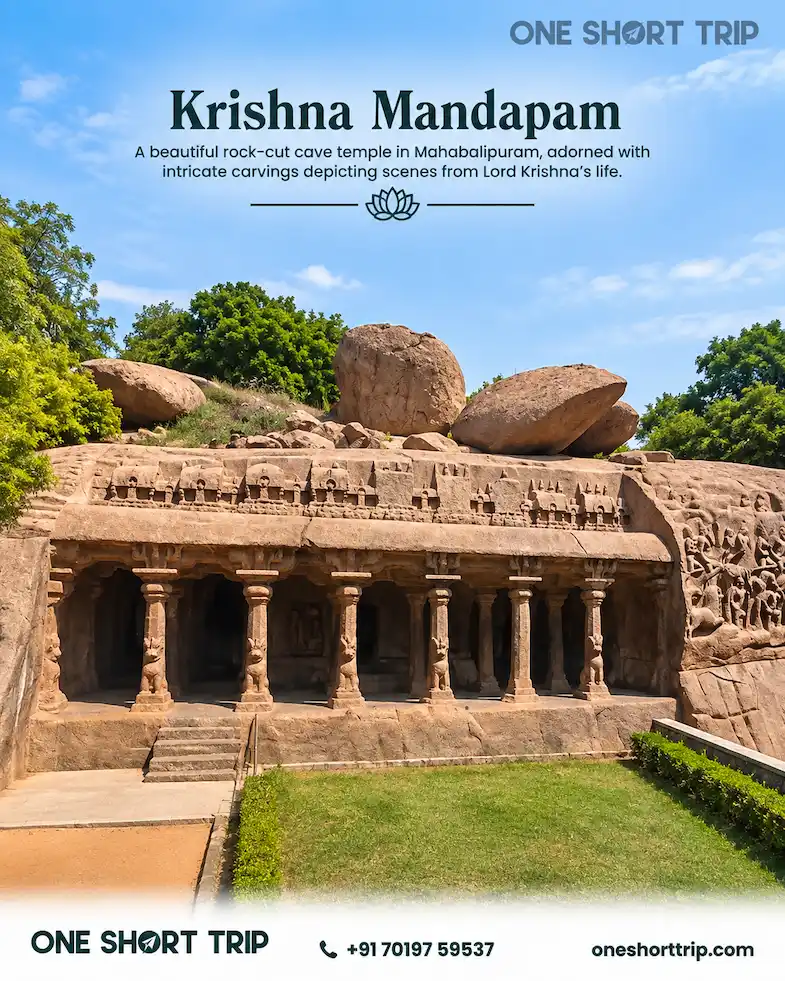
Krishna Mandapam
Visit the rock-cut mandapa known for its sculpted narrative panels and its place within Mahabalipuram's wider Pallava heritage landscape.
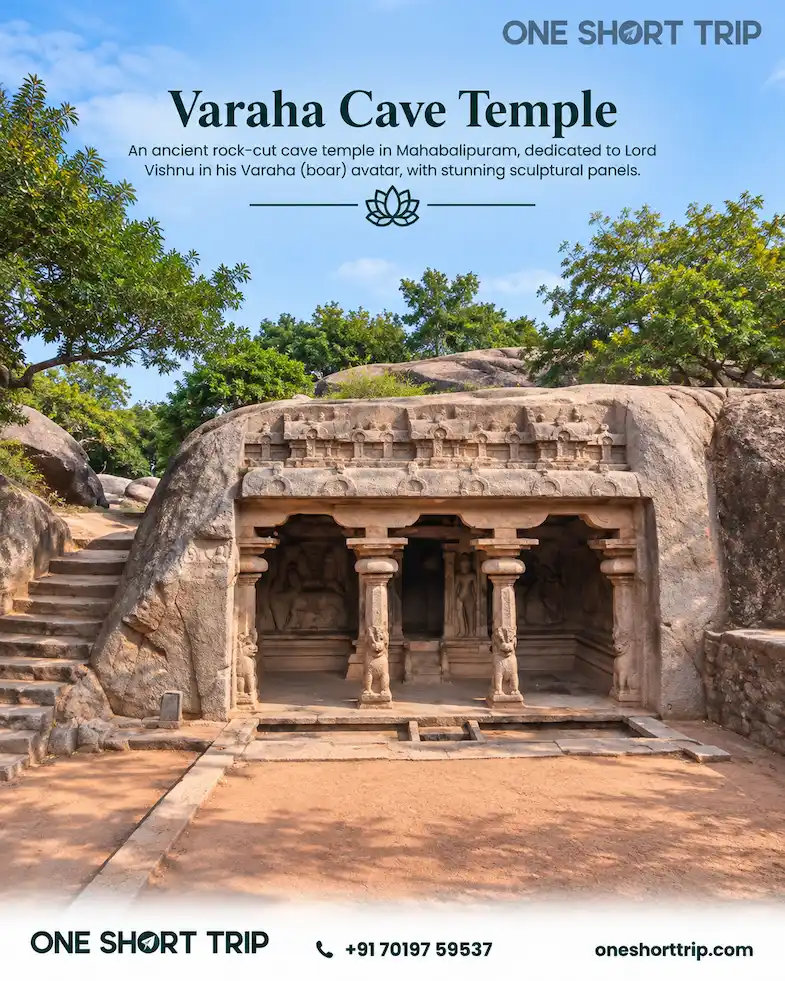
Varaha Cave Temple
Explore a Pallava rock-cut cave temple distinguished by its sculptural panels, carved interior and religious imagery.
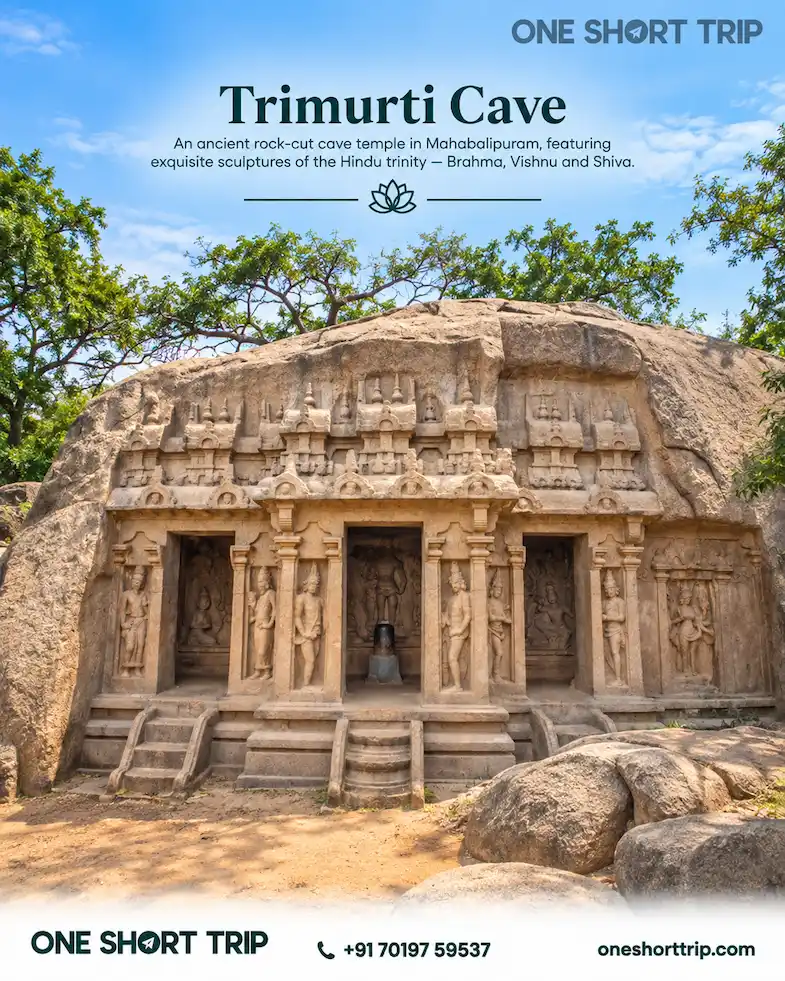
Trimurti Cave Temple
Discover another important rock-cut monument whose carved shrines contribute to the remarkable architectural variety of Mahabalipuram.
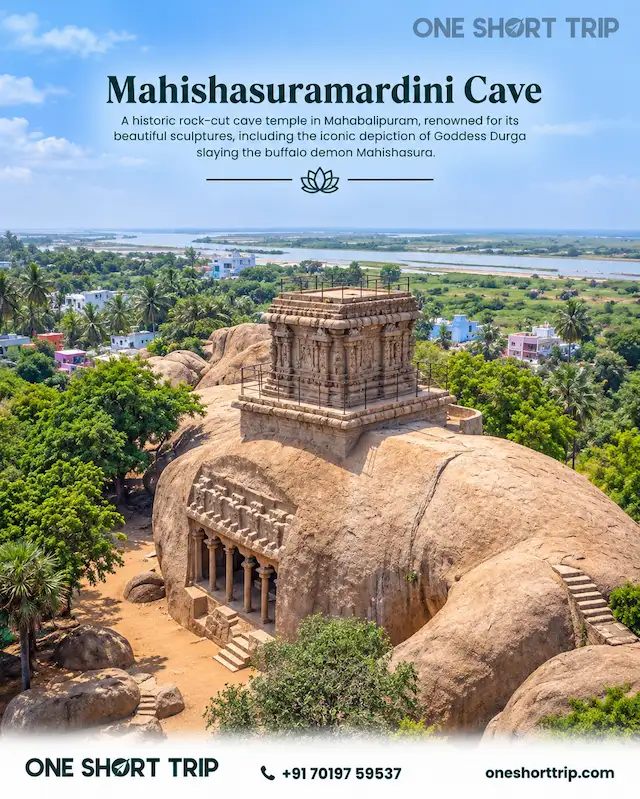
Mahishasuramardini Cave Temple
Visit this significant Pallava rock-cut cave known for dramatic sculptural compositions depicting important Hindu religious themes.
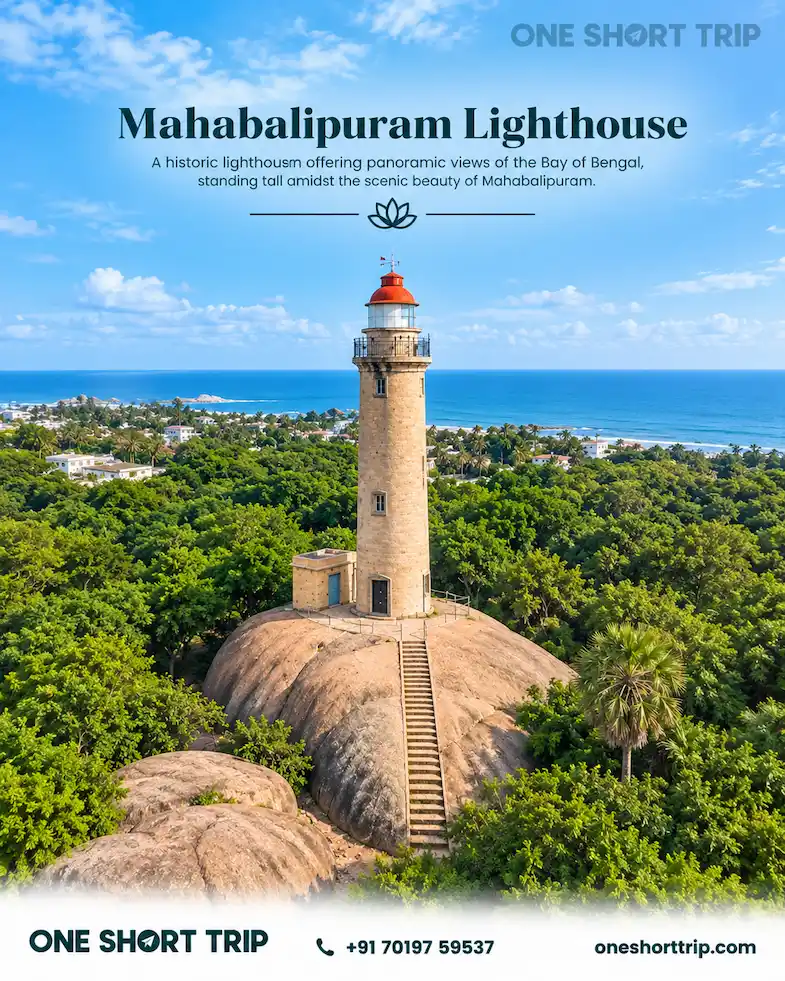
Mahabalipuram Lighthouse
Visit the lighthouse area for a different perspective of Mahabalipuram's rocky coastal landscape, subject to current opening conditions and access.
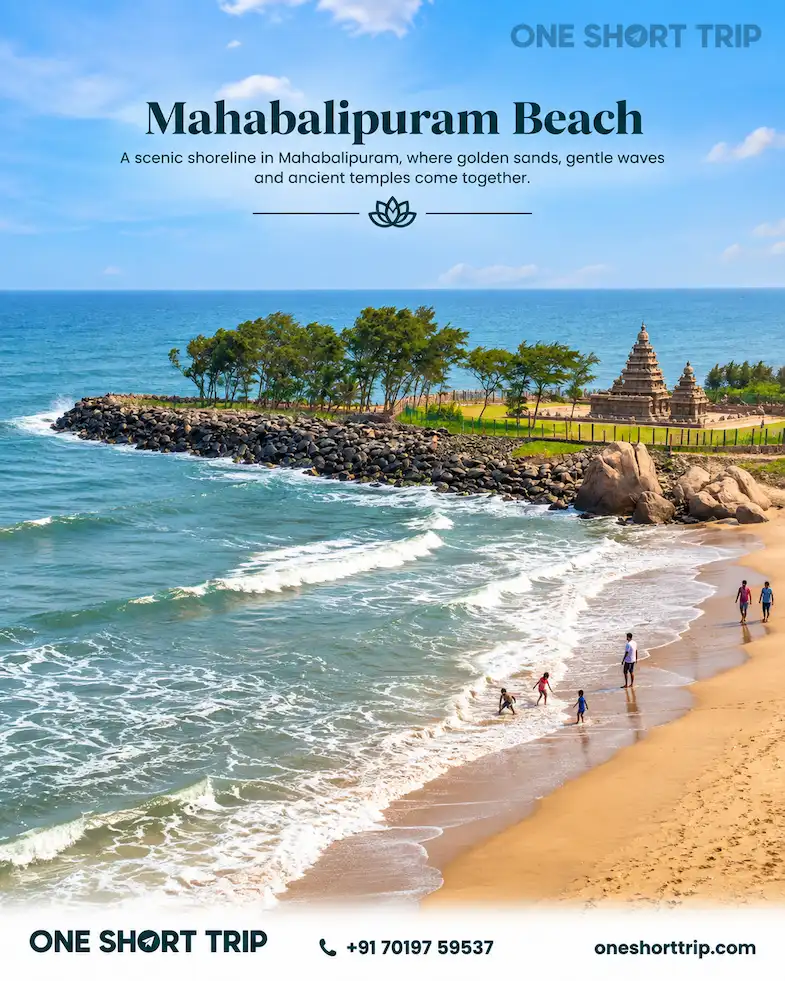
Mahabalipuram Beach
Spend time along the Bay of Bengal and enjoy the coastal setting that gives Mahabalipuram's historic monument landscape its distinctive character.
What to See in Kanchipuram
Kanchipuram is one of Tamil Nadu's great temple cities, with a heritage shaped by centuries of Hindu worship, Pallava architecture and later dynastic patronage. Beyond its celebrated Shiva, Vishnu and Shakti temples, the city is equally famous for traditional Kanchipuram silk weaving. Spending time across its temples, heritage spaces and weaving traditions reveals much more than a simple temple-hopping destination.
Ekambareswarar Temple
Ekambareswarar Temple is one of Kanchipuram's major Shiva temples and one of the city's most impressive sacred complexes. Its towering entrance gopuram, spacious courtyards, pillared halls and long religious history make it an essential stop for travellers interested in South Indian temple architecture and Shaivite traditions.
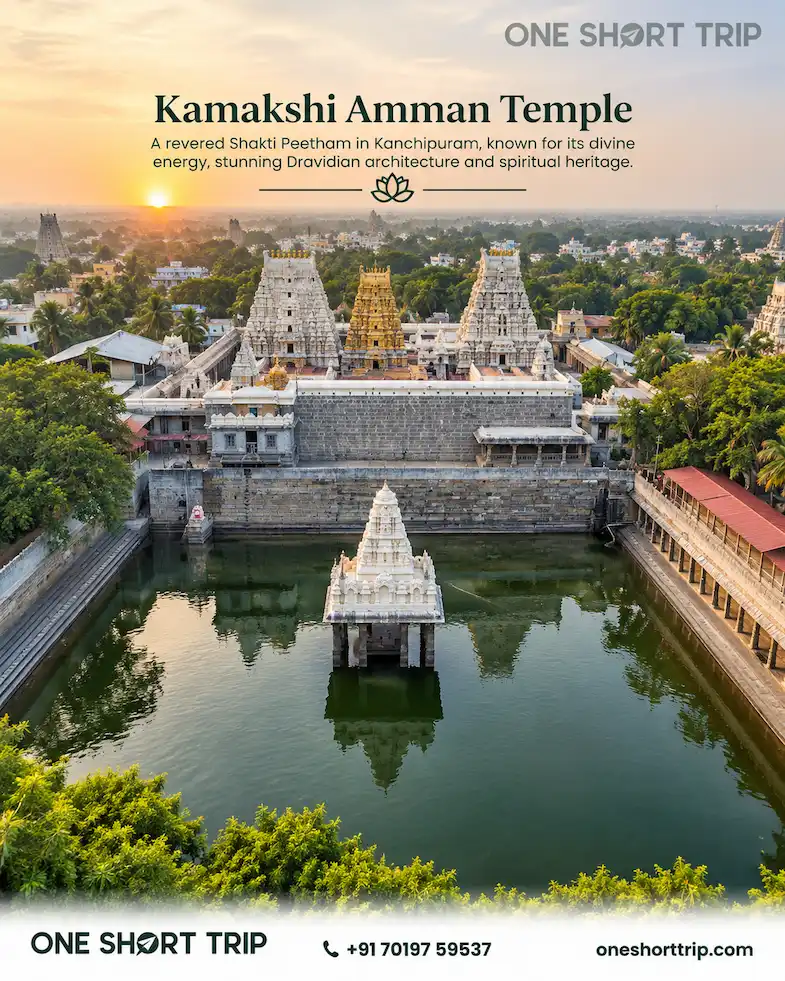
Kamakshi Amman Temple
Dedicated to Goddess Kamakshi, this is one of Kanchipuram's most important places of worship and a major centre of the city's Shakti tradition. It remains an active pilgrimage site, so visitors should dress respectfully, allow sufficient time for darshan and follow current temple rules regarding footwear, photography and restricted areas.
Kailasanathar Temple
Kailasanathar Temple is especially important for understanding Kanchipuram's Pallava heritage. Dedicated to Lord Shiva, the historic stone temple is distinguished by its sculptural details, compact shrines and early Dravidian architectural character, making it particularly rewarding for travellers interested in art and architectural history.
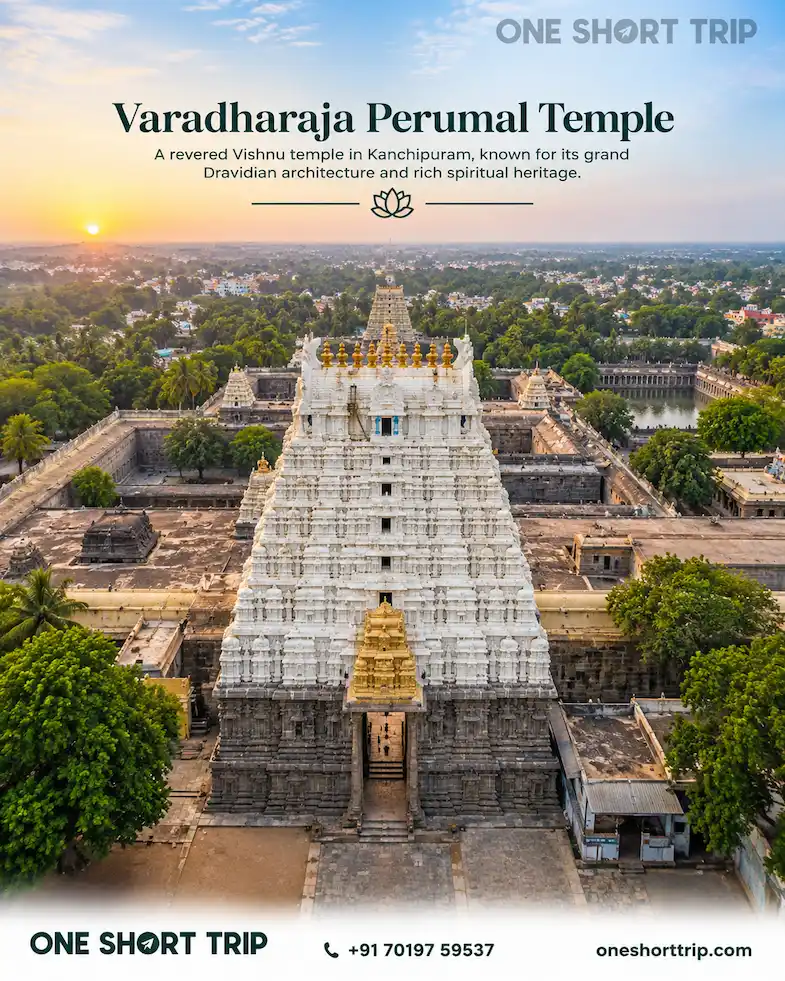
Varadharaja Perumal Temple
Varadharaja Perumal Temple is one of Kanchipuram's major Vaishnavite landmarks. The extensive temple complex contains monumental gateways, pillared spaces and architectural features developed through different historical periods, offering a contrast to the city's Shiva and Shakti temples.
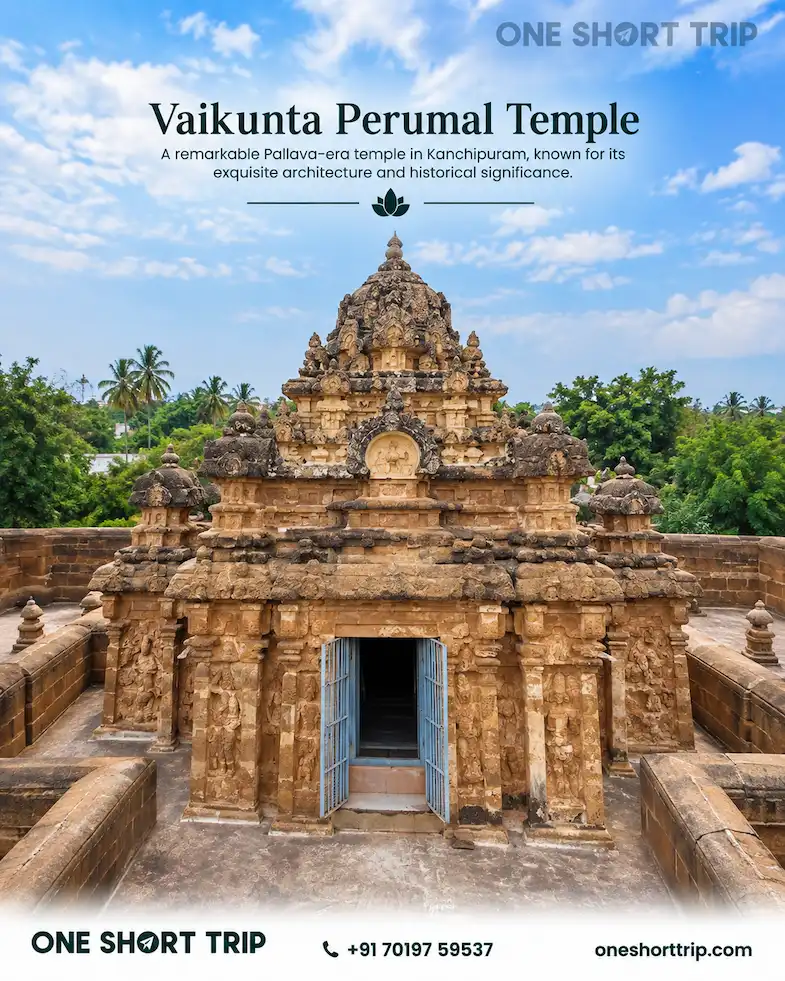
Vaikunta Perumal Temple
Vaikunta Perumal Temple is an important Pallava-period Vishnu temple and provides another perspective on Kanchipuram's early temple architecture. Its historic design and sculptural elements make it especially valuable when explored alongside Kailasanathar Temple and the city's later, much larger temple complexes.
Ulagalanda Perumal Temple
Ulagalanda Perumal Temple is dedicated to Lord Vishnu in his Trivikrama form and forms an important part of Kanchipuram's Vaishnavite temple circuit. Its distinctive religious identity adds further variety to a city where several major Hindu traditions are represented within a relatively compact area.
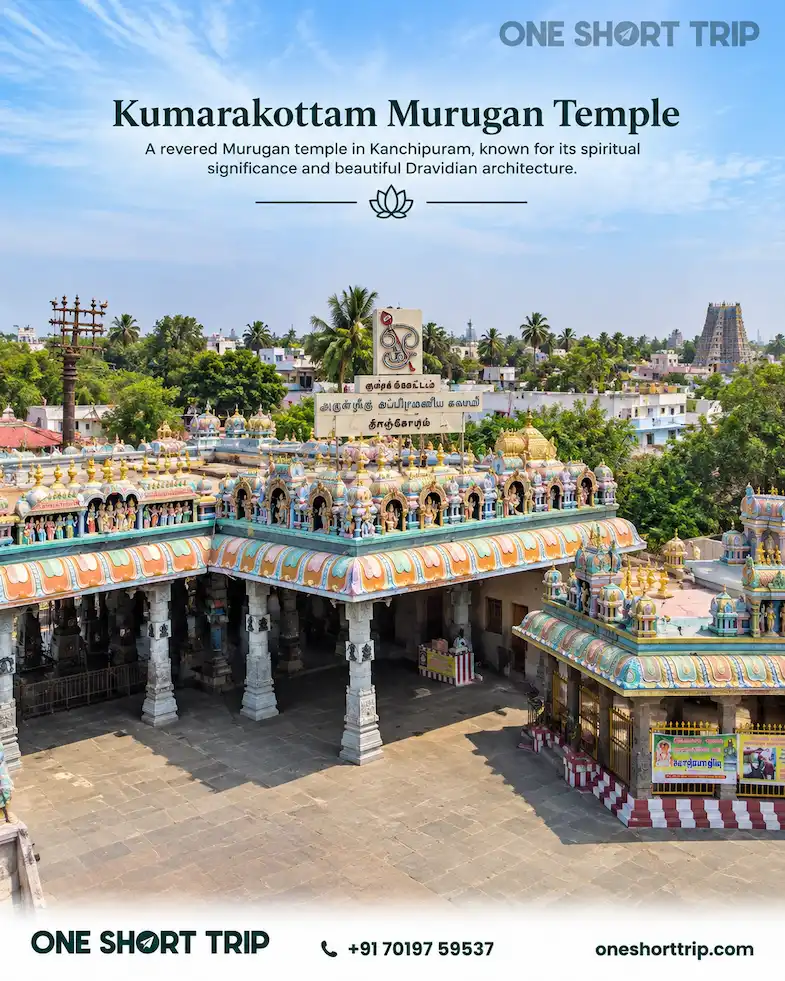
Kumarakottam Murugan Temple
Kumarakottam Murugan Temple is dedicated to Lord Murugan and adds another important tradition to Kanchipuram's sacred landscape. Its location within the historic temple city makes it convenient to combine with other central temples while exploring the religious diversity for which Kanchipuram is known.
Kanchi Kudil
Kanchi Kudil offers a change of pace from the city's temple circuit by presenting aspects of traditional local domestic life and cultural heritage. When open to visitors, it provides useful context for understanding Kanchipuram as a living historic city rather than viewing it only through its monumental temples.
Kanchipuram Silk Weaving Centre
Kanchipuram is internationally associated with its distinctive silk sarees and generations of specialised weaving craftsmanship. A weaving-centre visit can provide insight into the skill and processes behind this tradition, while travellers interested in purchasing silk can also explore suitable outlets when time and operating hours permit.
Know Before You Go
Bangalore Pickup & Travel Time
Private Transportation
Accommodation & Overnight Stays
Kanchipuram Temple Timings & Darshan
Temple Dress Code & Visitor Etiquette
Kanchipuram Silk Weaving Visit
Mahabalipuram Monument Sightseeing
Walking & Footwear
Weather & Best Season
Mahabalipuram Beach & Sea Safety
Meals & Drinking Water
Entry Tickets & Other Charges
Families, Children & Senior Travellers
Itinerary Changes & Attraction Access
What's Included & Excluded
✅ Inclusions
- Private AC cab for the complete 3 Days / 2 Nights tour
- Pickup and drop in Bangalore
- Driver allowance
- Tolls and parking charges
- Kanchipuram and Mahabalipuram sightseeing as listed in the itinerary
❌ Exclusions
- Accommodation unless specifically included in your confirmed package
- Breakfast, lunch, dinner and other meals unless specifically included
- Temple special-darshan charges, monument entry tickets, lighthouse admission and other attraction fees unless specifically included
- Kanchipuram silk purchases, shopping and other personal expenses
- Activities or sightseeing not mentioned in the itinerary
- Any additional charges arising from itinerary changes requested during the trip
Safety & Travel Tips
- Wear comfortable footwear for the Kanchipuram temple circuit and Mahabalipuram heritage sites. Expect stone floors, steps, uneven rock surfaces and considerable walking during sightseeing.
- Carry drinking water, sunscreen, a hat or umbrella and other sun protection. Mahabalipuram's outdoor monuments can become hot and exposed during the middle of the day.
- At temples in Kanchipuram, dress modestly, remove footwear where required and follow all instructions regarding photography, mobile phones and access to restricted areas.
- Avoid climbing on sculptures, monument walls or restricted rock formations at Mahabalipuram. Stay within designated visitor areas and follow Archaeological Survey and local site instructions.
- Take extra care around steps and exposed rocky surfaces at cave temples, the lighthouse area and other elevated locations, particularly during rain or when surfaces are wet.
- At Mahabalipuram Beach, follow local sea-safety instructions and avoid entering rough water. Sea conditions and currents can change quickly, so children should remain closely supervised near the shoreline.
- Lighthouse access, including permission to climb, can depend on current opening conditions, weather and visitor restrictions. Follow instructions from staff and do not enter closed or restricted areas.
- Carry any personal medication you may require during the three-day journey, particularly when travelling with children, senior citizens or travellers who need regular medication.
- Keep phones, wallets, cameras, shopping bags and other valuables with you while visiting busy temples, monuments, markets and public areas.
- Allow flexibility for long road journeys between Bangalore, Kanchipuram and Mahabalipuram. Traffic, temple queues, weather and local conditions can affect travel and sightseeing times.
Why Book With Us
🗺️ Well-Planned Route
A practical 3-day route combining Kanchipuram's temple and silk heritage with Mahabalipuram's Pallava monuments without unnecessary backtracking.
🚗 Private AC Cab
Travel in a private AC vehicle selected according to your group size and luggage requirements for the complete Bangalore round trip.
🛕 Temples & Heritage
Experience Kanchipuram's celebrated temples and silk tradition together with the UNESCO-listed Pallava heritage of Mahabalipuram.
💬 Easy Booking
Discuss your travel dates, group size and package requirements directly over WhatsApp or a call before confirming the trip.
Frequently Asked Questions
How many days are needed for a Kanchipuram and Mahabalipuram tour from Bangalore?
Three days and two nights provides a practical duration for combining Kanchipuram and Mahabalipuram from Bangalore. It allows time for Kanchipuram's major temples and silk-weaving heritage, followed by Mahabalipuram's Pallava monuments and coastal attractions, without trying to fit both destinations into a rushed day trip.
What time does the Kanchipuram and Mahabalipuram tour start from Bangalore?
An early-morning departure is recommended because the first day includes the drive from Bangalore to Kanchipuram followed by temple sightseeing. Pickup points will be discussed and confirmed 2 days prior to the trip date. Final pickup details will be shared with travellers before departure.
How far is Kanchipuram from Bangalore?
Kanchipuram is roughly 280 km from Bangalore by road, although the actual distance depends on your pickup point and the route used. Driving time can vary considerably with Bangalore traffic, highway conditions, meal stops and breaks along the journey.
How far is Mahabalipuram from Kanchipuram?
Mahabalipuram is roughly 65–70 km from Kanchipuram by road. The transfer normally takes around two hours depending on traffic, road conditions and the route used, making it practical to combine the two destinations within a three-day itinerary.
What places are covered in Kanchipuram?
The planned Kanchipuram circuit includes Ekambareswarar Temple, Kamakshi Amman Temple, Kailasanathar Temple, Varadharaja Perumal Temple, Vaikunta Perumal Temple, Ulagalanda Perumal Temple and Kumarakottam Murugan Temple. The itinerary also includes Kanchi Kudil and a Kanchipuram silk-weaving experience, subject to current access and operating hours.
Why is Kanchipuram famous?
Kanchipuram is especially known for its historic Hindu temples and its celebrated silk-weaving tradition. The city contains important Shiva, Vishnu and Shakti temples representing different periods of South Indian history, while Kanchipuram silk sarees remain one of its most recognised cultural traditions.
Which are the most important temples to visit in Kanchipuram?
Important temples on this itinerary include Ekambareswarar Temple, Kamakshi Amman Temple, Kailasanathar Temple, Varadharaja Perumal Temple, Vaikunta Perumal Temple, Ulagalanda Perumal Temple and Kumarakottam Murugan Temple. The exact sightseeing sequence can change according to temple opening hours and darshan conditions.
Where is Ekambareswarar Temple?
Ekambareswarar Temple is located in Kanchipuram, Tamil Nadu. It is one of the city's major Shiva temples and is known for its large sacred complex, monumental gopuram, pillared spaces and long religious history.
What is special about Kamakshi Amman Temple?
Kamakshi Amman Temple is dedicated to Goddess Kamakshi and is one of Kanchipuram's most important active pilgrimage centres. It represents the city's strong Shakti tradition and is normally one of the essential temple visits during a Kanchipuram tour.
Why is Kailasanathar Temple important?
Kailasanathar Temple is particularly important for travellers interested in Pallava architecture. Dedicated to Lord Shiva, it is one of Kanchipuram's significant early structural temples and is noted for its stone architecture, sculptural details and numerous smaller shrines.
What is special about Varadharaja Perumal Temple?
Varadharaja Perumal Temple is one of Kanchipuram's major Vaishnavite temples. Its extensive sacred complex, monumental gateways, pillared spaces and architectural features make it an important contrast to the city's major Shiva and Shakti temples.
What is Vaikunta Perumal Temple known for?
Vaikunta Perumal Temple is an important Pallava-period Vishnu temple in Kanchipuram. It is particularly interesting for travellers exploring the city's architectural history because its design and sculptural features provide insight into the development of Pallava temple architecture.
Where is Ulagalanda Perumal Temple and what is it known for?
Ulagalanda Perumal Temple is located in Kanchipuram and is dedicated to Lord Vishnu in his Trivikrama form. It forms part of the city's important Vaishnavite temple heritage and can be combined conveniently with other central Kanchipuram attractions.
What is Kumarakottam Murugan Temple?
Kumarakottam Murugan Temple is a historic temple dedicated to Lord Murugan in Kanchipuram. Including it alongside the city's Shiva, Vishnu and Shakti temples helps travellers experience the diversity of Kanchipuram's sacred landscape.
What is Kanchi Kudil?
Kanchi Kudil is a heritage attraction associated with traditional Kanchipuram domestic life and local culture. When open to visitors, it provides a useful change from the temple circuit and helps travellers understand the city through its everyday cultural heritage as well as its monumental architecture.
Can we see how Kanchipuram silk sarees are made?
A silk-weaving centre visit can be included to provide insight into Kanchipuram's traditional weaving craftsmanship. Actual loom demonstrations and workshop access depend on the centre operating on the travel date, so a specific demonstration cannot be guaranteed on every trip.
Can we shop for Kanchipuram silk sarees during the tour?
Yes. Time for silk shopping can usually be considered if you are interested. Purchases are personal expenses and are not included in the tour package. Travellers specifically interested in shopping should mention this while booking so suitable time can be considered in the sightseeing plan.
What are the temple opening timings in Kanchipuram?
Opening hours vary from temple to temple, and many Kanchipuram temples operate separate morning and evening sessions with an afternoon closure. Timings can also change during festivals and special religious events, so current opening and darshan arrangements should be reconfirmed before travel.
Is there a dress code for Kanchipuram temples?
Modest clothing suitable for active places of worship is recommended. Footwear must be removed where required, and individual temples may have their own rules regarding photography, mobile phones and access to particular areas. Visitors should follow the instructions displayed at each temple.
Why is Mahabalipuram famous?
Mahabalipuram is famous for its remarkable Pallava-period monuments, including rock-cut cave temples, monolithic rathas, sculpted reliefs and structural temples. Its historic monument landscape is recognised internationally as the UNESCO-listed Group of Monuments at Mahabalipuram.
Is Mahabalipuram a UNESCO World Heritage Site?
Yes. The Group of Monuments at Mahabalipuram is a UNESCO World Heritage Site. The heritage area represents an exceptional concentration of Pallava-period architecture and sculpture, including cave sanctuaries, monolithic monuments, open-air reliefs and structural temples.
What places are covered in Mahabalipuram?
The planned Mahabalipuram circuit includes the Shore Temple, Pancha Rathas, Arjuna's Penance / Descent of the Ganges relief, Krishna's Butter Ball, Krishna Mandapam, Ganesha Ratha, Varaha Cave Temple, Trimurti Cave Temple, Mahishasuramardini Cave Temple, Mahabalipuram Lighthouse and Mahabalipuram Beach, subject to current access and available time.
What is special about the Shore Temple?
The Shore Temple is one of Mahabalipuram's most recognisable monuments and stands close to the Bay of Bengal. It is an important example of Pallava structural temple architecture and forms part of the UNESCO-listed Group of Monuments at Mahabalipuram.
What are the Pancha Rathas?
Pancha Rathas, commonly called the Five Rathas, are a group of monolithic monuments carved from individual masses of rock. Their different architectural forms make them one of the most distinctive stops in the Mahabalipuram heritage circuit.
Are Arjuna's Penance and Descent of the Ganges two different monuments?
No. Arjuna's Penance and Descent of the Ganges are two widely discussed interpretations of the same monumental open-air rock relief at Mahabalipuram. The enormous sculptural composition contains numerous figures of deities, humans, animals and ascetics and is one of the site's most celebrated works.
What is Krishna's Butter Ball?
Krishna's Butter Ball is a huge naturally balanced granite boulder resting on a sloping rock surface at Mahabalipuram. Its unusual position makes it one of the destination's most recognisable natural landmarks and a popular stop within the monument area.
Which cave temples are included in Mahabalipuram?
The itinerary includes Varaha Cave Temple, Trimurti Cave Temple and Mahishasuramardini Cave Temple, along with Krishna Mandapam. These rock-cut monuments allow visitors to see sculptural panels, carved façades and religious narratives associated with Pallava artistic traditions.
Can we visit Mahabalipuram Lighthouse?
The lighthouse area can be included when current opening hours, weather and sightseeing time permit. Permission to enter or climb the lighthouse is subject to the visitor rules and operational conditions in effect on the travel date and therefore cannot be guaranteed.
Can we spend time at Mahabalipuram Beach?
Yes. The itinerary can include time at Mahabalipuram Beach, particularly around the second day's arrival or when the sightseeing schedule permits. Sea conditions can change quickly, so swimming should never be assumed to be safe and travellers should follow local safety instructions.
How much walking is involved in this tour?
There is a significant amount of sightseeing on foot. Kanchipuram involves walking within large temple complexes, while Mahabalipuram includes outdoor heritage zones, stone surfaces, steps, sandy stretches and uneven rock. Comfortable footwear is strongly recommended.
Is this tour suitable for families with children?
Yes. Families can enjoy the combination of temples, architecture, cultural heritage and the coast. Children should be supervised around temple steps, uneven monument surfaces, elevated areas and the beach, and families should be prepared for the longer road journeys involved in the three-day itinerary.
Is this tour suitable for senior citizens?
The tour can be suitable for many senior travellers, but there is regular walking at temples and heritage monuments along with long road journeys. Travellers with mobility limitations should mention their requirements while enquiring so the sightseeing pace and practical access requirements can be discussed.
What is the best time to visit Kanchipuram and Mahabalipuram?
The cooler months are generally the most comfortable for temple visits and outdoor monument sightseeing. The tour can operate at other times of year, but Tamil Nadu can become hot and humid, especially around Mahabalipuram's exposed heritage sites, so sun protection and adequate drinking water are important.
Are accommodation and meals included in the package?
Accommodation and meals are included only when specifically mentioned in your confirmed package or quotation. The itinerary is planned around one overnight stay in Kanchipuram and one in or around Mahabalipuram, but hotel category, room type and meal arrangements depend on the package selected.
Are temple and Mahabalipuram entry tickets included?
Temple special-darshan charges, monument tickets, lighthouse admission, camera charges and other attraction-specific fees are included only when specifically listed in your confirmed package. The final inclusions and exclusions will be communicated before booking.
What type of vehicle is provided for the tour?
A private AC vehicle is selected according to the number of travellers, luggage requirements and vehicle availability. The appropriate vehicle category can be suggested once you share your group size and travel requirements.
How much does the Kanchipuram and Mahabalipuram tour from Bangalore cost?
The final package price depends on your travel date, number of travellers, vehicle category, accommodation requirements, room selection and any additional services requested. Share your travel date and group size to receive a customised quotation.
Can the Kanchipuram and Mahabalipuram itinerary be customised?
Yes. Reasonable changes can be discussed according to your interests, available time and operational feasibility. Travellers particularly interested in temples, silk shopping or Mahabalipuram's monuments can discuss priorities before the trip. Changes that affect distance, duration or services may also change the final quotation.
What should I carry for this 3-day tour?
Carry comfortable walking footwear, modest clothing suitable for temple visits, drinking water, sunscreen, sunglasses or a hat, personal medication, identification and essential travel belongings. Footwear must be removed at temples, while good walking shoes are useful for Mahabalipuram's outdoor monument areas.
What happens if a temple or monument is closed?
Temple timings, religious events, monument maintenance, weather, government restrictions, traffic and other local conditions can occasionally affect the planned route. When necessary, the sightseeing sequence may be adjusted according to current access and the time available. Temporary closure of a specific attraction cannot always be predicted in advance.