
Osiyan Mahavir Swami Shwetamber Jain Temple – An Early Jain Landmark of Rajasthan
In the desert town of Osian, about 65 kilometres from Jodhpur, stands a Jain temple whose importance reaches far beyond its present-day appearance. The Osiyan Mahavir Swami Shwetamber Jain Temple belongs to the early medieval period and is one of the most important surviving Jain monuments of western India. Its architecture preserves an early stage in the development of the temple traditions that later became highly elaborate across Rajasthan and Gujarat.
The temple is dedicated to Lord Mahavira, the 24th Tirthankara of Jainism, and continues to function as a Shwetamber Jain place of worship. Osian itself was once a prosperous religious and trading centre, and its surviving temples show that Hindu and Jain traditions flourished here alongside one another. Rajasthan Tourism identifies both the functional Mahavir Jain Temple and Sachiya Mata Temple among Osian's major religious attractions.


A Temple from the Pratihara Age
The history of the temple reaches back to the late 8th century. Scholarly architectural research places its construction around 783 CE, during the reign of the Gurjara-Pratihara ruler Vatsaraja. An inscription from Osian dating to the 10th century provides important evidence for the site's early history and confirms that the town was already an established centre with a substantial temple tradition.
It is important, however, not to imagine the present monument as a building that has remained completely unchanged since 783 CE. The temple complex developed over time. Some architectural elements belong to later phases, and restoration and modification have altered parts of the original structure. Architectural studies therefore treat the Mahavira Temple as a layered monument, with early Pratihara work combined with later additions.
Why the Date Matters
The temple's early date is significant because relatively few substantial Jain temple structures from this period survive in western India. The Mahavira Temple therefore provides historians and architecture enthusiasts with a rare opportunity to study Jain temple design before the later medieval tradition reached the extraordinarily intricate forms seen at places such as Dilwara and Ranakpur.


The Mahavira Temple and Osian's Religious Landscape
Osian was not built around a single religious tradition. Its archaeological landscape contains temples associated with several Hindu deities as well as the Jain Mahavira Temple. The surviving monuments demonstrate the importance of the settlement as a centre of religious activity during the early medieval period.
That wider setting is essential to understanding the Mahavira Temple. A visit becomes much more meaningful when the Jain shrine is seen alongside Osian's other temples rather than treated as an isolated building. The town's architectural remains collectively show how religious communities, merchants and patrons contributed to a shared sacred landscape.
Understanding the Temple's Architecture
The temple is built around the fundamental spaces required for Jain worship: a sanctum, halls and transitional areas leading towards the principal shrine. Its architectural organisation is especially valuable because it represents an early stage in the evolution of the western Indian temple plan.
The main shrine is set within a larger architectural enclosure, with an ambulatory allowing devotees to move around the sanctum. The arrangement of the entrance porch, closed hall, principal shrine and subsidiary spaces creates a sequence from the exterior world towards the sacred centre.
The Torana – A Detail Worth Looking For
One of the temple's particularly important architectural elements is its ornate torana, or ceremonial gateway. The surviving torana belongs to a later phase of the temple's development and is an important example in the history of western Indian Jain architecture. Architectural scholarship identifies the Osian torana tradition as an early precursor to the increasingly elaborate detached gateways that became characteristic of later Jain temple complexes.


Jain Sculpture Across the Temple
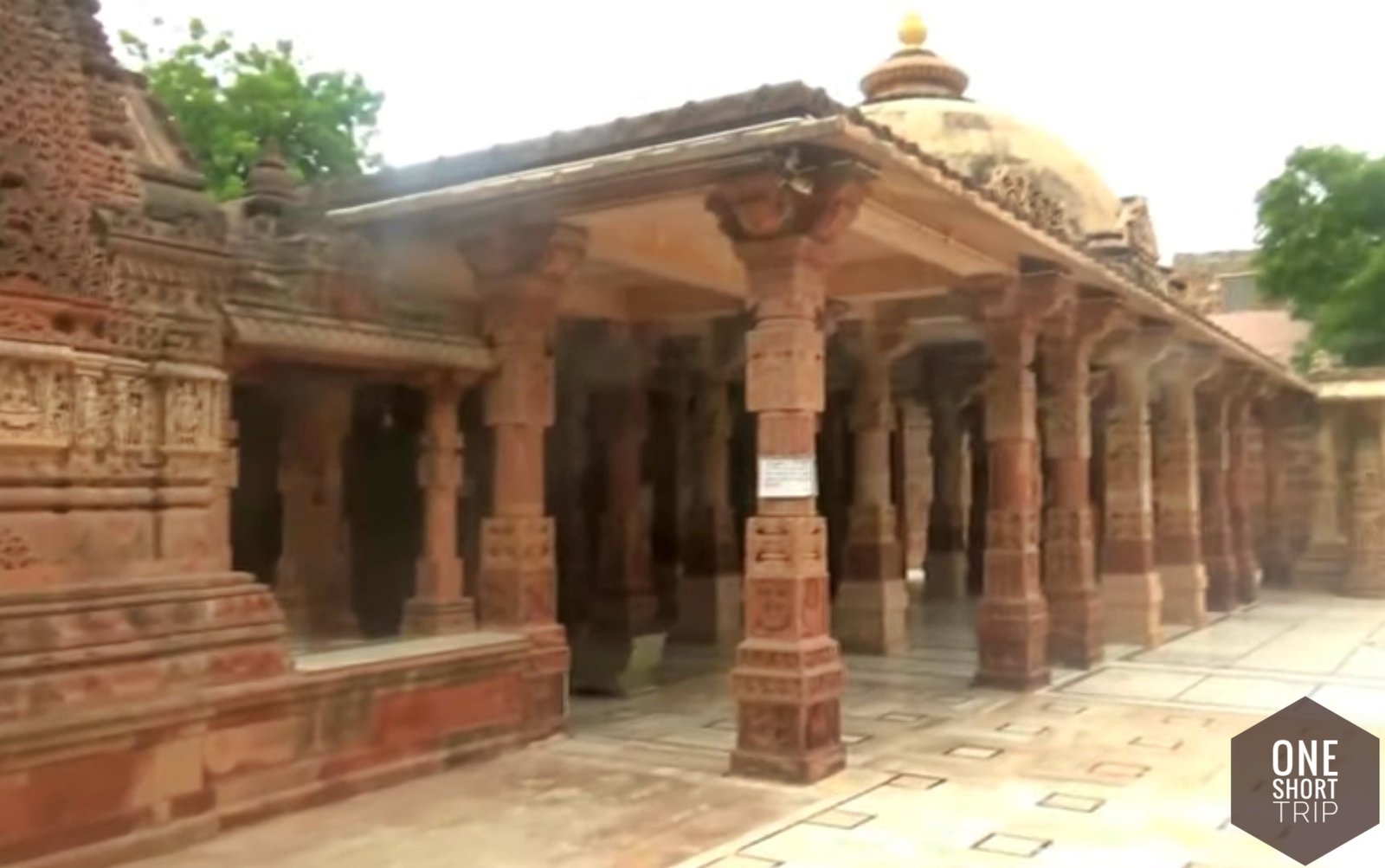
The stonework is where the age and importance of the temple become particularly visible. Architectural surfaces carry figures and decorative motifs associated with Jain religious imagery, together with celestial and protective figures and ornamental patterns. The carving is integrated into the structure rather than added as a separate layer of decoration.
The torana in particular contains representations of Tirthankaras, including figures shown in seated meditation and standing kayotsarga postures. These are not simply decorative figures: the different postures reflect important visual conventions within Jain religious art.
The Seven Subsidiary Shrines
The temple's plan includes subsidiary shrines surrounding the principal sanctuary. Architectural studies identify seven such shrines, arranged around the main temple and connected by the circumambulatory passage. This arrangement expands the temple from a single shrine into a more complex sacred composition.
The Mahavira Image and Jain Symbolism
At the spiritual centre of the temple is the image of Lord Mahavira. Jain temple imagery places emphasis on the Tirthankara as an enlightened teacher who has overcome the cycle of worldly existence. The visual language of the shrine therefore differs from temples where the central deity is represented primarily through stories of divine intervention.
The temple's sculptural programme extends beyond Mahavira himself. Images of other Tirthankaras, Jain deities, yakshas and yakshis and Vidyadevis form part of the broader iconographic programme. Some Vidyadevi figures are represented with musical instruments, adding movement and variety to an otherwise highly ordered religious setting.
A Temple That Records Centuries of Change
Perhaps the most interesting way to approach the Mahavira Temple is to see it as a historical document in stone. The original Pratihara-era core, later additions, restorations and changing decorative elements mean that different parts of the complex belong to different moments in its long life.
This layered character is precisely what makes Osian valuable for students of Indian architecture. Instead of presenting a single finished architectural style, the temple allows visitors to see how Jain sacred architecture developed through time while remaining anchored to its religious purpose.


Visiting the Osiyan Mahavir Swami Jain Temple
The Mahavira Temple is best experienced as part of a wider visit to Osian rather than as an isolated stop. The town preserves a group of historic temples representing different religious traditions, and walking between them gives a much clearer sense of why Osian became such an important sacred and commercial settlement in medieval western Rajasthan.
Rajasthan Tourism describes the Mahavira Jain Temple and Sachiya Mata Temple as functioning places of worship that continue to attract devotees. This is important for visitors: the complex should be approached as a living religious space first and a heritage attraction second.
Do Not Rush Through the Temple
The most rewarding way to see the temple is to pay attention to how its different parts relate to one another. Look at the transition from the entrance towards the interior, notice the carved pillars and examine the smaller details around the doorways and architectural members.
The temple's age is easier to appreciate when you look at it as an architectural sequence rather than searching for one spectacular feature. Some elements belong to the early structure while others represent later repairs and additions. The heritage documentation records repairs to the entrance hall in 956 and the addition of an ornamental torana in 1016, while the original sanctum has undergone later restoration.


Temple Etiquette and What Visitors Should Know
Because the Mahavira Temple is an active Shwetamber Jain temple, visitors should dress modestly and behave quietly inside the complex. Remove footwear where required, follow instructions from temple staff and avoid touching sculptures, pillars or other historic surfaces.
Photography rules can vary between different areas of the religious complex and may be enforced differently from ordinary sightseeing monuments. It is safest to ask before photographing interiors, worshippers or religious ceremonies rather than assuming that cameras are permitted everywhere.
Respect the Religious Character of the Site
Avoid loud conversations, eating inside sacred areas or interrupting devotees during worship. If a ceremony is taking place, allow worshippers priority and follow the instructions given by temple authorities.
Timings and Entry Information
There is no consistently published official tourist timetable for the Mahavira Temple that can be treated as a fixed year-round schedule. Since this is a functioning temple, worship, festivals and local religious arrangements can influence access. Visitors should therefore confirm the day's visiting arrangements locally before planning a tightly timed itinerary.
General temple access is commonly reported as free, although donations may be accepted. Rather than presenting an unverified ticket price, travellers should check at the temple if any special arrangements apply on the day of their visit.
How to Reach Osian from Jodhpur
Osian is approximately 65 kilometres from Jodhpur on the road towards Phalodi. The drive makes the town a practical half-day or full-day excursion from Jodhpur, particularly for travellers who want to see the temple landscape before continuing towards the western Rajasthan desert.
Regular bus services connect Osian with Jodhpur, while a private car or taxi gives travellers considerably more flexibility because the important temples are spread around the historic settlement. Heritage documentation also records Osian as being well connected by regular bus services.
By Road
For a Rajasthan road trip, Osian fits naturally between Jodhpur and the western desert destinations. A private vehicle is particularly useful if you want to combine the Mahavira Temple with several other historic temples and spend time exploring rather than simply stopping for one monument.
By Train
Osian has a railway station on the Jodhpur–Jaisalmer rail corridor, providing another way to reach the town. For a sightseeing-focused visit, however, road transport is generally more convenient for moving between the dispersed temple sites.


Explore Osian as a Temple Town
The biggest mistake on an Osian visit is to see only the Mahavira Temple and leave. The settlement contains a remarkable concentration of historic religious monuments. Rajasthan's Department of Archaeology and Museums lists the Jain Temple alongside five Hari-Hara temples, the Sun Temple, Shiv Temple, Piplad Mata Temple, Vishnu Temple, Sachiya Mata Temple and the historic Baori at Osian.
This concentration is what gives Osian its character. Instead of one monumental building surrounded by a modern town, you encounter remnants of a much older sacred landscape. Walking between the temples allows you to compare Jain and Hindu architectural traditions that developed in the same historical environment.
Sachiya Mata Temple and the Jain-Hindu Connection
Sachiya Mata Temple is one of the most important companion stops when exploring Osian. The temple remains an active centre of worship and forms part of the same historic religious landscape as the Mahavira Temple. The two sites also illustrate the religious diversity that developed in Osian over centuries.
For travellers interested in history, this is more revealing than treating the temples as unrelated sightseeing points. Osian's surviving monuments show how different religious communities established major places of worship within the same commercially important settlement.
When Is the Best Time to Visit Osian?
The cooler months from October to March are generally the most comfortable for exploring Osian. This is especially useful because the experience involves moving between outdoor temple areas, where the desert climate can make midday sightseeing uncomfortable during hotter months.
Winter mornings are particularly pleasant for combining temple exploration with photography of the surrounding desert landscape, although visitors should always check individual temple access arrangements before fixing their schedule.
How Much Time Should You Spend in Osian?
Allow at least 3 to 4 hours if your intention is to see the Mahavira Temple and several of Osian's other important monuments. A shorter stop works if you are only interested in one temple, but it misses the reason Osian is historically important: the concentration of temples from different traditions.
From Jodhpur, Osian can comfortably be planned as a half-day excursion. If you are travelling onward towards Phalodi or the desert region, it can also work as a heritage stop along a longer road journey.
Is Osian Mahavir Temple Suitable for Families and Senior Citizens?
Yes, particularly for travellers interested in history, religion and architecture. The temple does not require a strenuous trek, although visitors should expect barefoot walking and movement through traditional temple spaces.
For senior citizens, it is sensible to visit during the cooler part of the day and avoid planning too many outdoor temple stops around midday. Families travelling with children can make the experience more engaging by treating Osian as an architectural trail rather than a single temple visit.
What to Carry for an Osian Temple Visit
Carry drinking water, sun protection, comfortable clothing and footwear that can be removed easily. Sunglasses and a hat are useful while moving between monuments, particularly outside the winter months.
Keep valuables and unnecessary luggage to a minimum when entering active temples. Most importantly, do not assume that photography, footwear, food or other personal items are permitted in every part of the religious complex; follow the rules displayed or given by the temple authorities.
Why the Osian Mahavir Temple Is Worth Visiting
The Mahavira Temple is valuable because it allows visitors to see Jain architecture at a much earlier stage than the famous marble temples of Mount Abu. Its importance lies not only in the surviving carvings but in the historical story preserved by its structure: an early Jain temple that was repaired, expanded and adapted while remaining part of a living religious tradition.
Combined with Osian's Hindu temples, stepwell and desert setting, the Mahavira Temple becomes part of a much larger story about religion, trade, architecture and cultural exchange in medieval Rajasthan. That is what makes an Osian visit worthwhile for travellers who want to go beyond the better-known monuments of Jodhpur.