The Lake Born of a Lotus
Pushkar Lake owes its name and its sanctity to a well-known Hindu legend. Lord Brahma, troubled that he had no earthly place where he could be worshipped, was advised by Lord Shiva to slay the demon Vajranabha. As Brahma killed the demon, three lotus petals fell from his hand to the ground below, and at each spot a spring of water appeared. The Sanskrit words 'Pushpa' (flower) and 'Kar' (hand) combined to give the town and its lake the name Pushkar — literally, 'from the hand, a flower'.
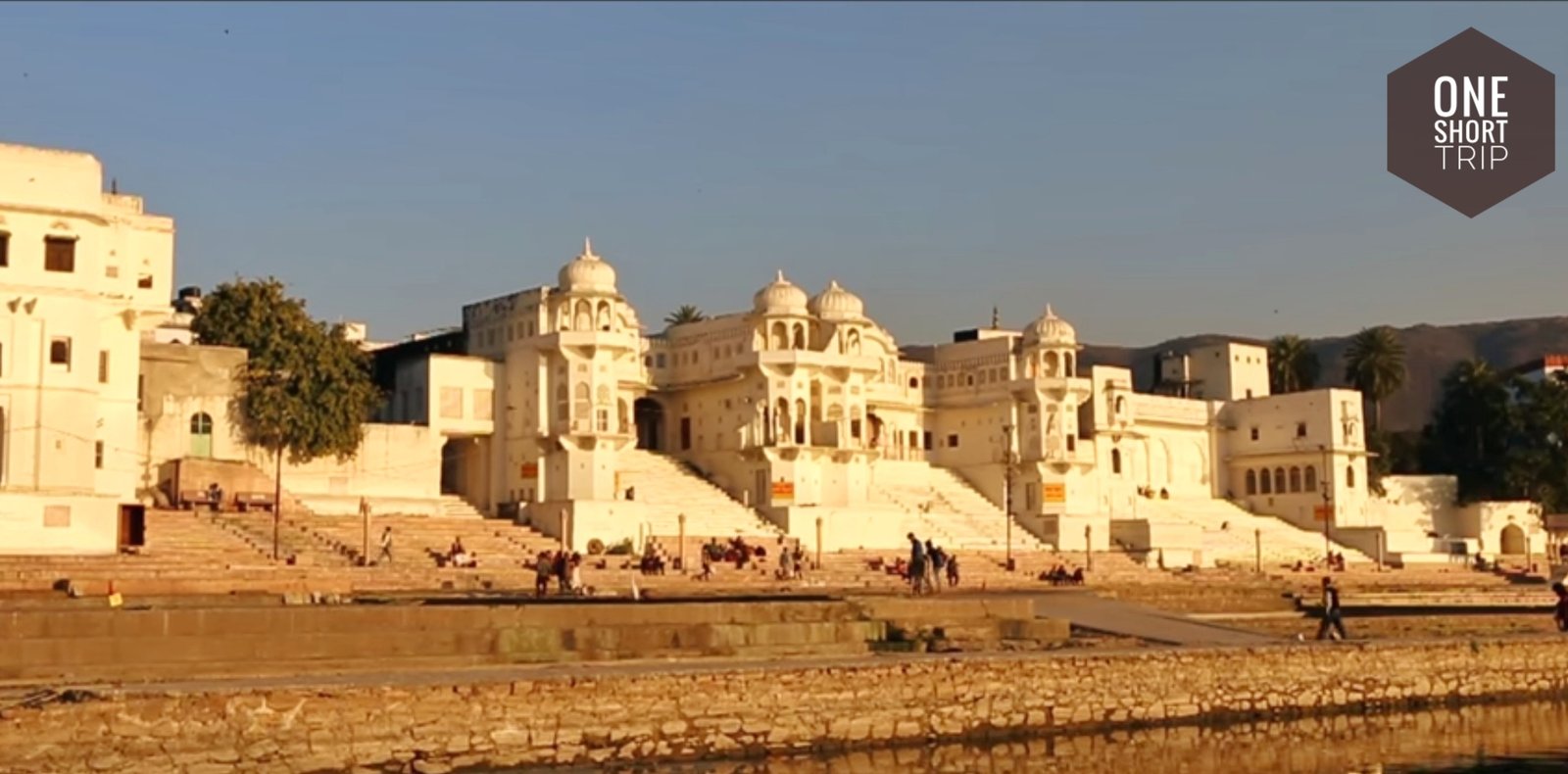
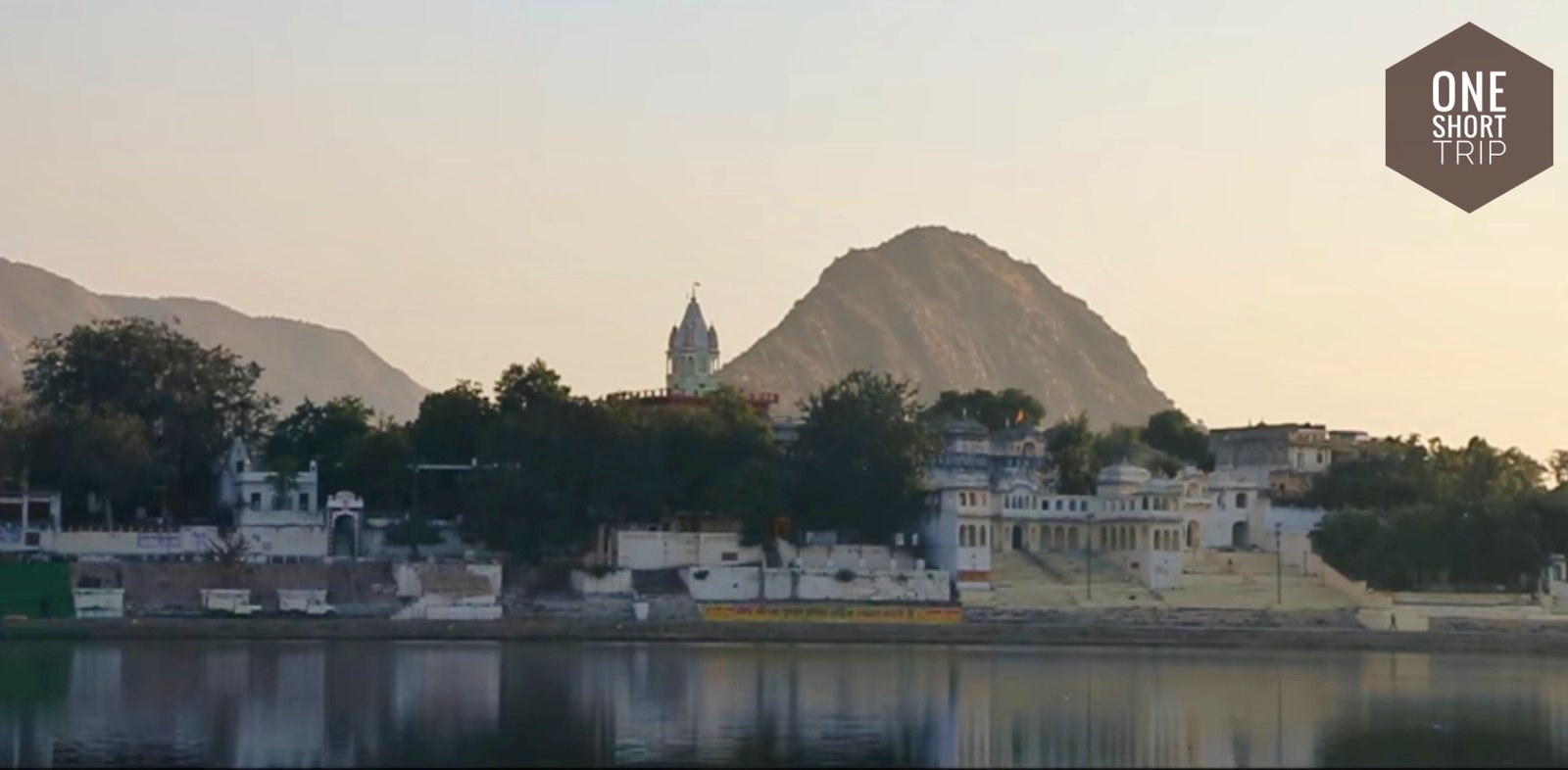
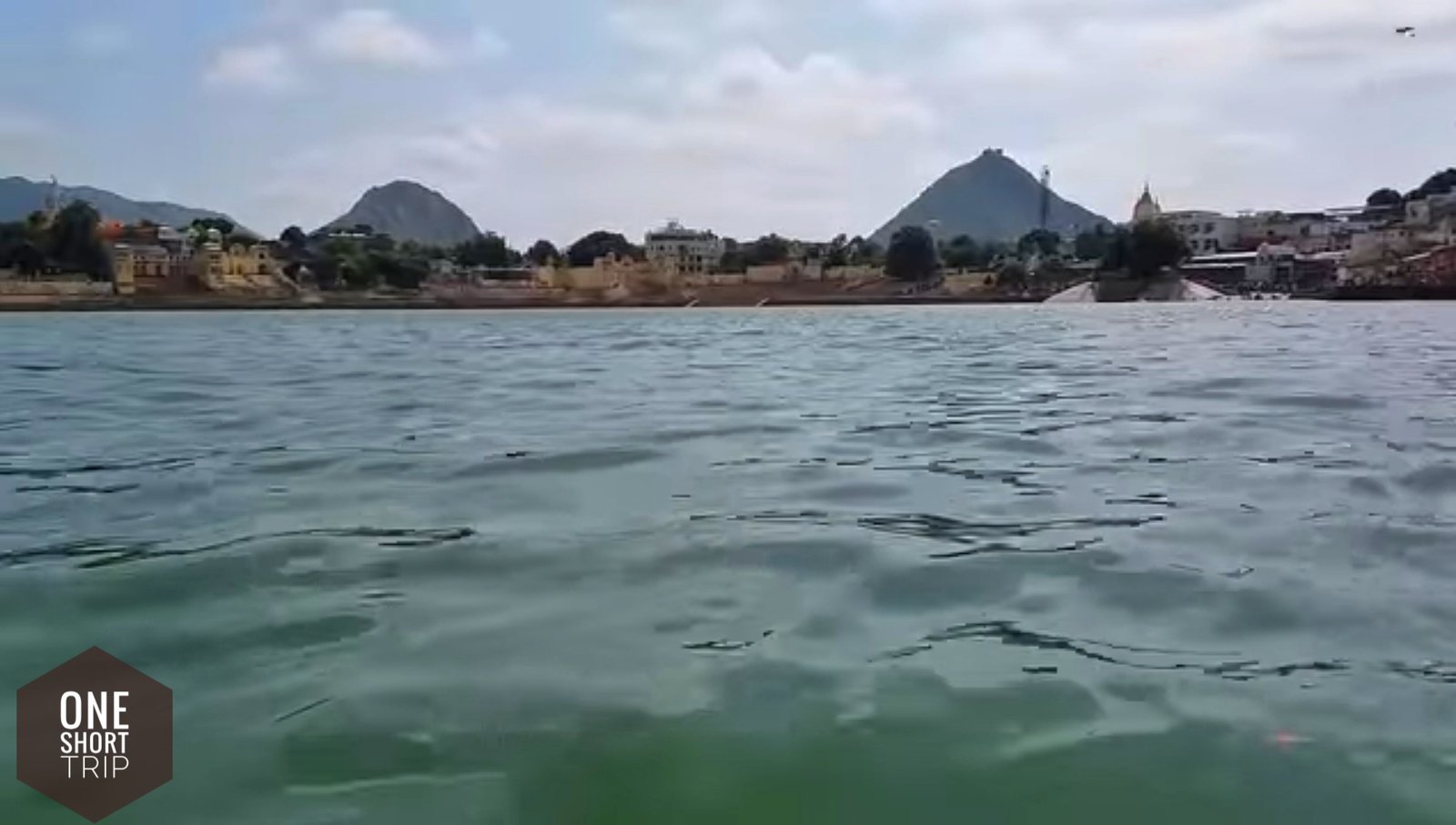
The sacred waters are actually made up of three linked lakes, known as Jyeshta Pushkar, Madhya Pushkar and Kanishta Pushkar, together forming the semi-circular lake seen today, roughly 9 to 10 metres deep at its centre. Surrounding the water are 52 bathing ghats, stone steps leading down to the lake where pilgrims perform ritual baths. Among the most significant are Gou Ghat, Brahma Ghat, Kapalmochan Ghat and Yag Ghat, each tied to its own legend and ritual significance. Some, such as Roop Tirth Ghat, are traditionally believed by pilgrims to have healing properties, particularly for skin ailments, and draw devotees seeking a cure alongside those performing routine rituals.
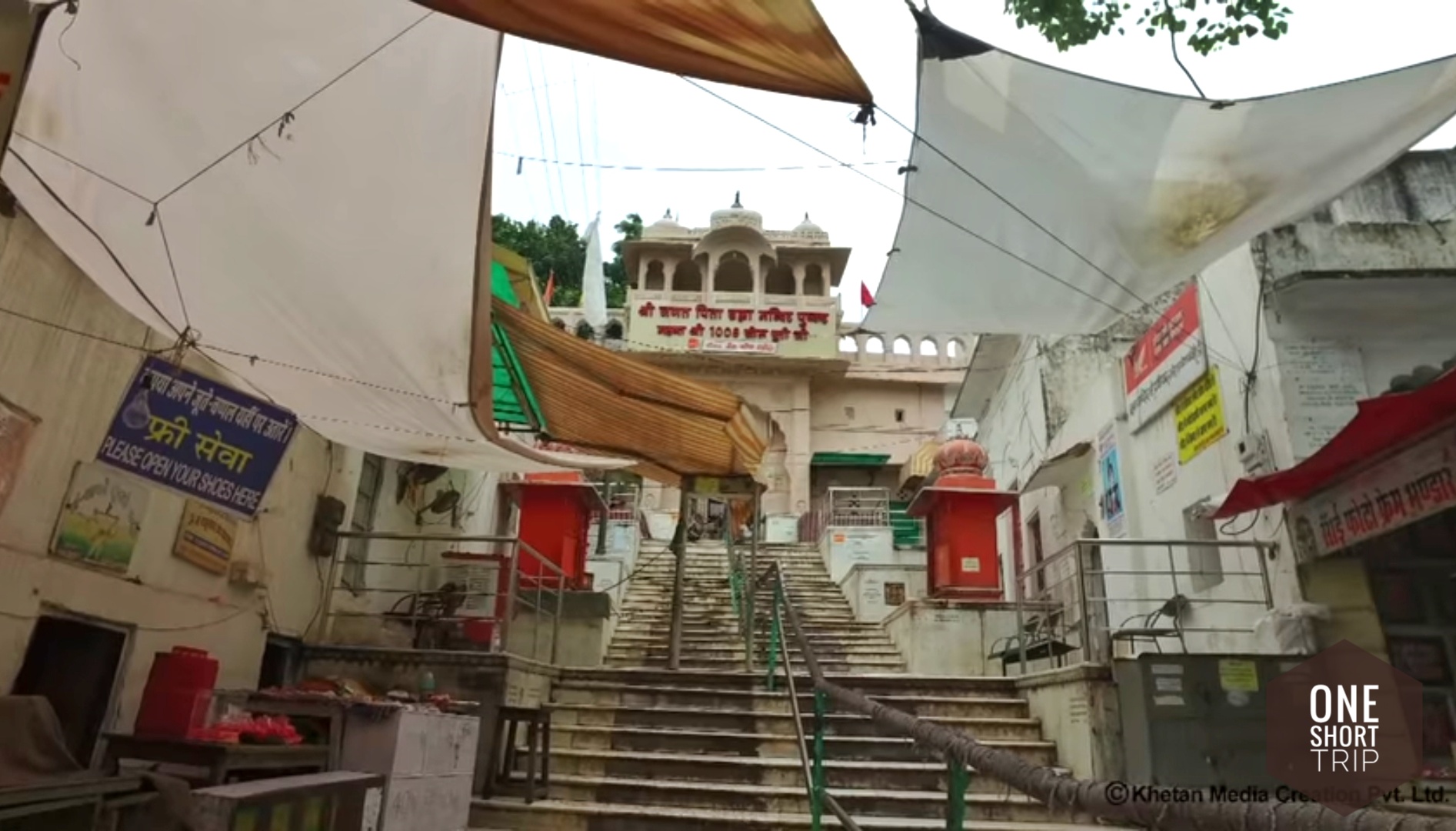
Because of its association with Brahma's own act of creation, Pushkar Lake has earned the title 'Thirtharaj', or king of pilgrimage sites, and is considered one of the holiest bodies of water in India. It is encircled by close to 500 temples, making the town one of the densest concentrations of shrines in the country. The lake sees its largest crowds during Kartik Poornima, the full moon in the Hindu month of Kartik (typically October or November), when tens of thousands of pilgrims arrive to bathe in its waters, believing it washes away sins and grants spiritual merit.
A Fragile Water Source
Despite its religious importance, Pushkar Lake has proven surprisingly vulnerable to the same water-scarcity pressures found across Rajasthan, with groundwater depletion and reduced monsoon inflow periodically threatening the lake's level over the past two decades. The near-total drying of the lake in 2009, just before a major fair, drew national attention to the issue and prompted a still-ongoing effort to stabilise water supply through pipeline replenishment from the Bisalpur Dam, an intervention environmentalists view as a temporary fix rather than a permanent solution to the underlying groundwater problem.
52 Ghats and a World-Famous Camel Fair
Around 52 ghats, or stepped bathing areas, ring Pushkar Lake, each historically built or sponsored by different Rajput rulers and noble families, and many still associated with specific regional communities. Hindu tradition holds that bathing here during Kartik Purnima, the full moon of the Hindu month of Kartik, cleanses sins and can be as spiritually significant as bathing in the Ganges. That same period each year hosts the Pushkar Camel Fair, one of the largest livestock fairs in the world, drawing tens of thousands of camels, horses, and cattle traders alongside a growing number of tourists for its camel races, folk performances, and open-air markets. In keeping with the town's sacred status, Pushkar has long enforced a ban on meat, eggs, and alcohol within municipal limits, a rule still broadly observed by restaurants and hotels catering to visitors.
Pushkar's ghats are also home to a lineage of hereditary priests known as pandas, who for generations have kept ledgers, called bahis, recording the family histories of pilgrims who bathe here — visits, names, and reasons for the journey are noted down at each return trip, creating a genealogical record some families trace back many generations, similar to the tradition kept by priests along the Ganges at Haridwar. The lake itself has not always been the reliable body of water it appears today: in 2009 it dried up almost completely, exposing long stretches of cracked lakebed just before the annual fair, a crisis blamed on falling groundwater levels and upstream farmers diverting inflows through check dams. Since then, periodic replenishment via pipeline from the Bisalpur Dam near Tonk has helped keep the lake at a usable level during major festivals, though hydrologists caution that recharging the surrounding groundwater, rather than pumping in water each year, is the more lasting fix.

Practical Notes
Ghats
52 stepped bathing ghats surround the lake, each with its own historical sponsor and community association.
Kartik Purnima
The most auspicious time to bathe in the lake, believed to cleanse sins; it coincides with the camel fair.
Pushkar Camel Fair
One of the world's largest livestock fairs, held annually around Kartik Purnima with camel races and folk festivities.
No Meat or Alcohol
Pushkar's municipal limits prohibit the sale of meat, eggs, and alcohol out of respect for its sacred status.
A Town Shaped by Its Lake
Nearly everything about Pushkar's layout and daily rhythm traces back to the lake at its center, with the town's markets, guesthouses and temples arranged in concentric rings around the water much as pilgrimage towns elsewhere in India have grown around their own sacred rivers or tanks. Walking the narrow lanes just beyond the ghats, visitors pass a dense mix of small shrines, flower and prasad sellers, and shops catering to both pilgrims and the steady flow of international backpackers the town has attracted for decades, giving Pushkar a distinctly layered character that blends devotion with a laid-back travel-town atmosphere.
Sunrise and Sunset by the Water
The lake's ghats are at their most atmospheric during the aarti ceremonies held at sunrise and sunset, when priests perform ritual offerings of fire and chanting along the water's edge, drawing both devout pilgrims and curious visitors to watch from the surrounding steps. These twice-daily ceremonies, along with the general practice of ritual bathing that continues throughout the day, mean the ghats rarely feel entirely quiet, offering visitors a continuous glimpse into the lake's living religious function rather than a fixed historical display.
Visiting Tips
Visitors are asked to remove footwear before stepping onto the ghats themselves, and modest dress is appreciated given the site's sacred status, particularly for those planning to bathe or participate in rituals. Local priests, or pandas, may approach visitors to perform a puja by the water in exchange for a donation; this is a long-standing custom rather than a scam, though the amount offered is generally left to the visitor's discretion. Combining a Pushkar Lake visit with the nearby Brahma Temple, just a short walk up from the ghats, is the standard way most visitors experience the town's twin centers of devotion in a single outing.
Nearby In Ajmer