Ragigudda Sri Prasanna Anjaneya Swamy Temple, Bengaluru
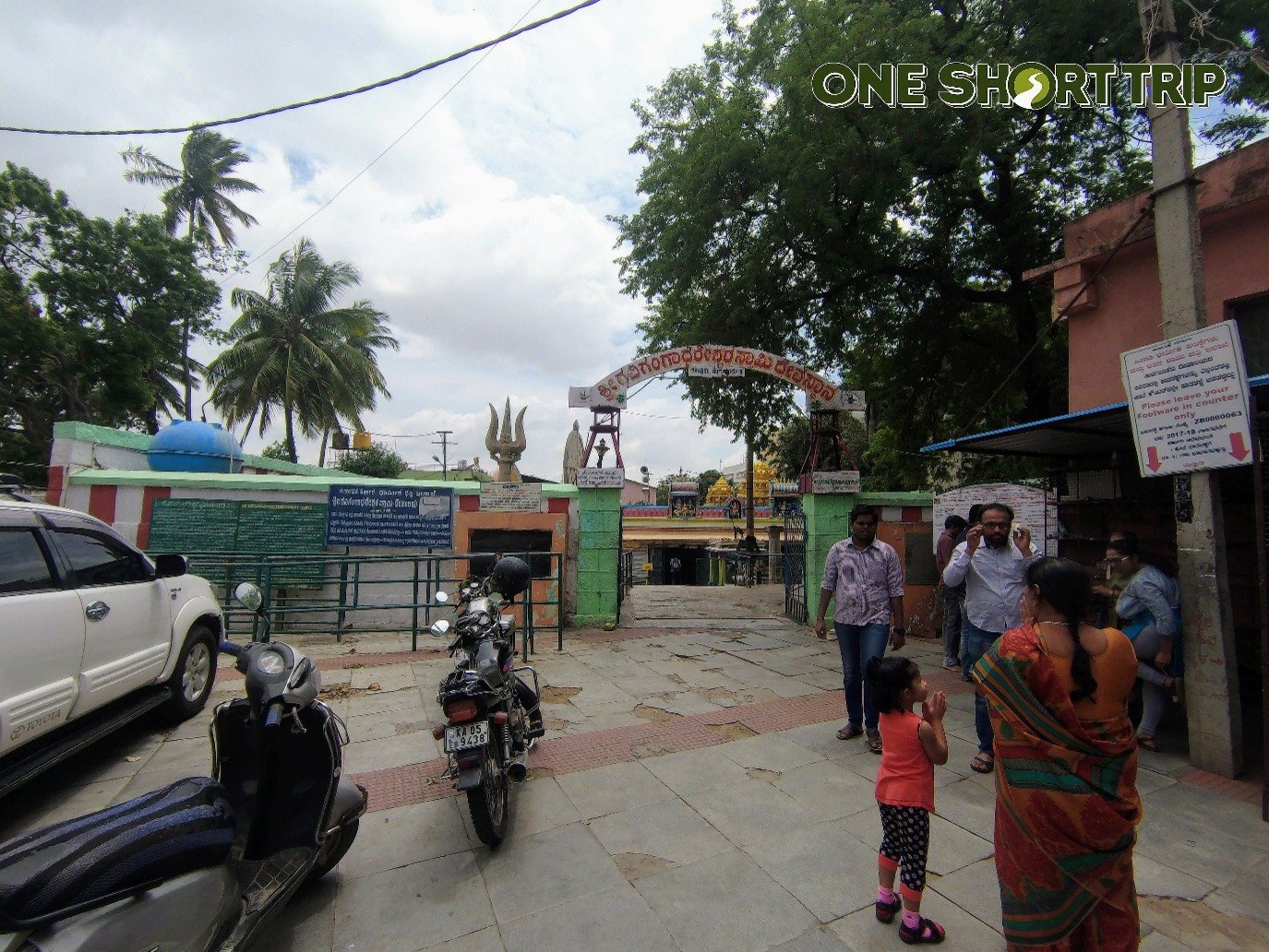
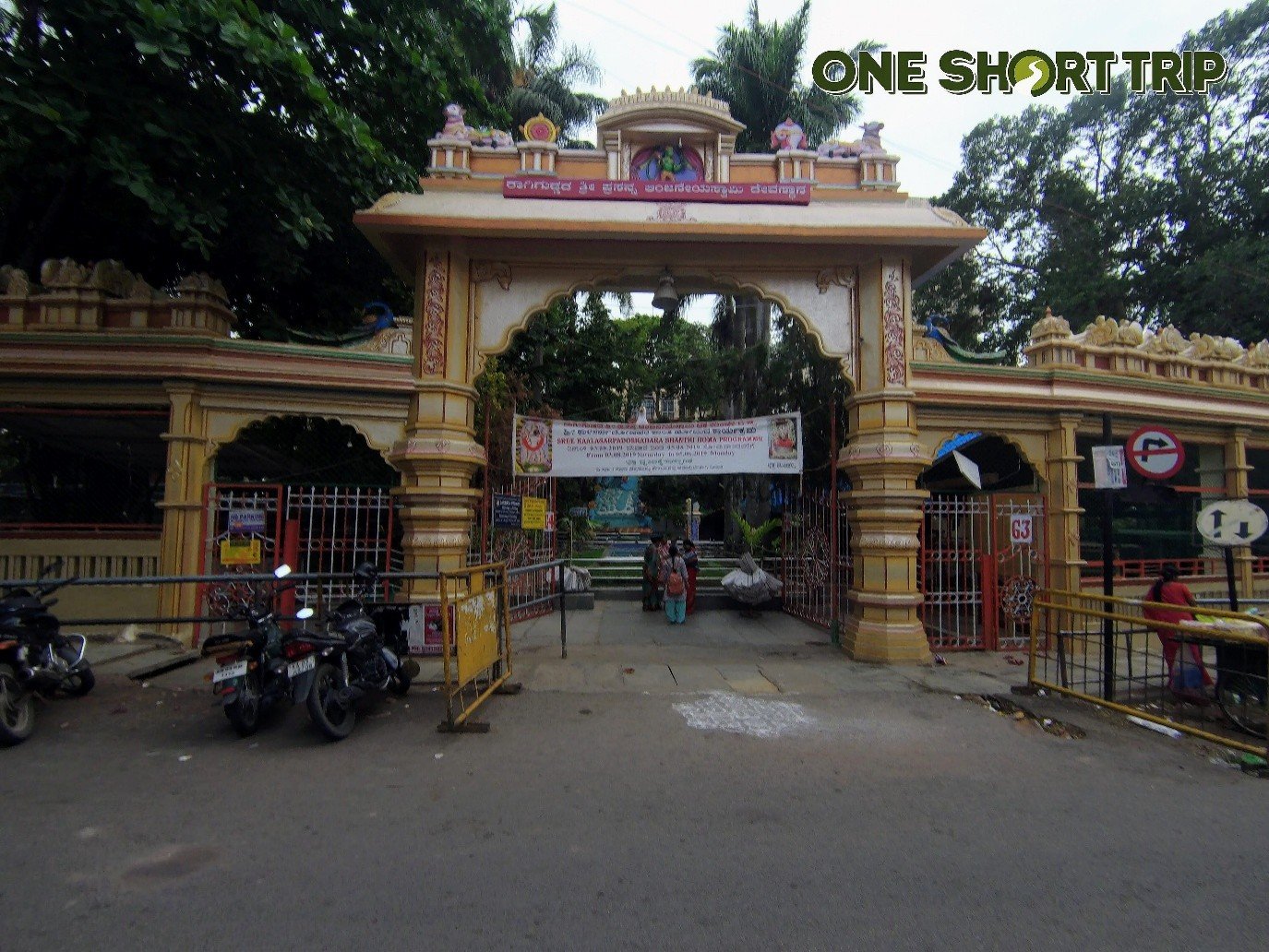
Ragigudda Sri Prasanna Anjaneya Swamy Temple is one of the prominent Hanuman temples in Bengaluru, located on a hillock in Jayanagar's 9th Block. Dedicated primarily to Sri Prasanna Anjaneyaswamy, the temple is known not only for its devotion to Lord Hanuman but also for its distinctive hilltop setting, Thrimurthy Sannidhi, natural rock formations, Hanuman Dhara, Pushkarni and several other shrines within its approximately five-acre complex.
Unlike a temple that can be explored only for a quick darshan, Ragigudda offers a broader spiritual and cultural experience. The complex brings together Lord Hanuman, Sri Seetha Rama Swamy, Ganesha, Bhagavathi, Sri Rajarajeshwari and the Navagrahas, along with spaces used for poojas, homas, cultural activities and community services.

Why is Ragigudda Temple famous?
Ragigudda Temple is especially famous for its association with Lord Hanuman and the unusual sacred landscape surrounding the shrine. The temple stands on a hillock known as Ragigudda, and the temple's traditional history connects the name with a heap of ragi, or finger millet, that is believed to have transformed into stone.
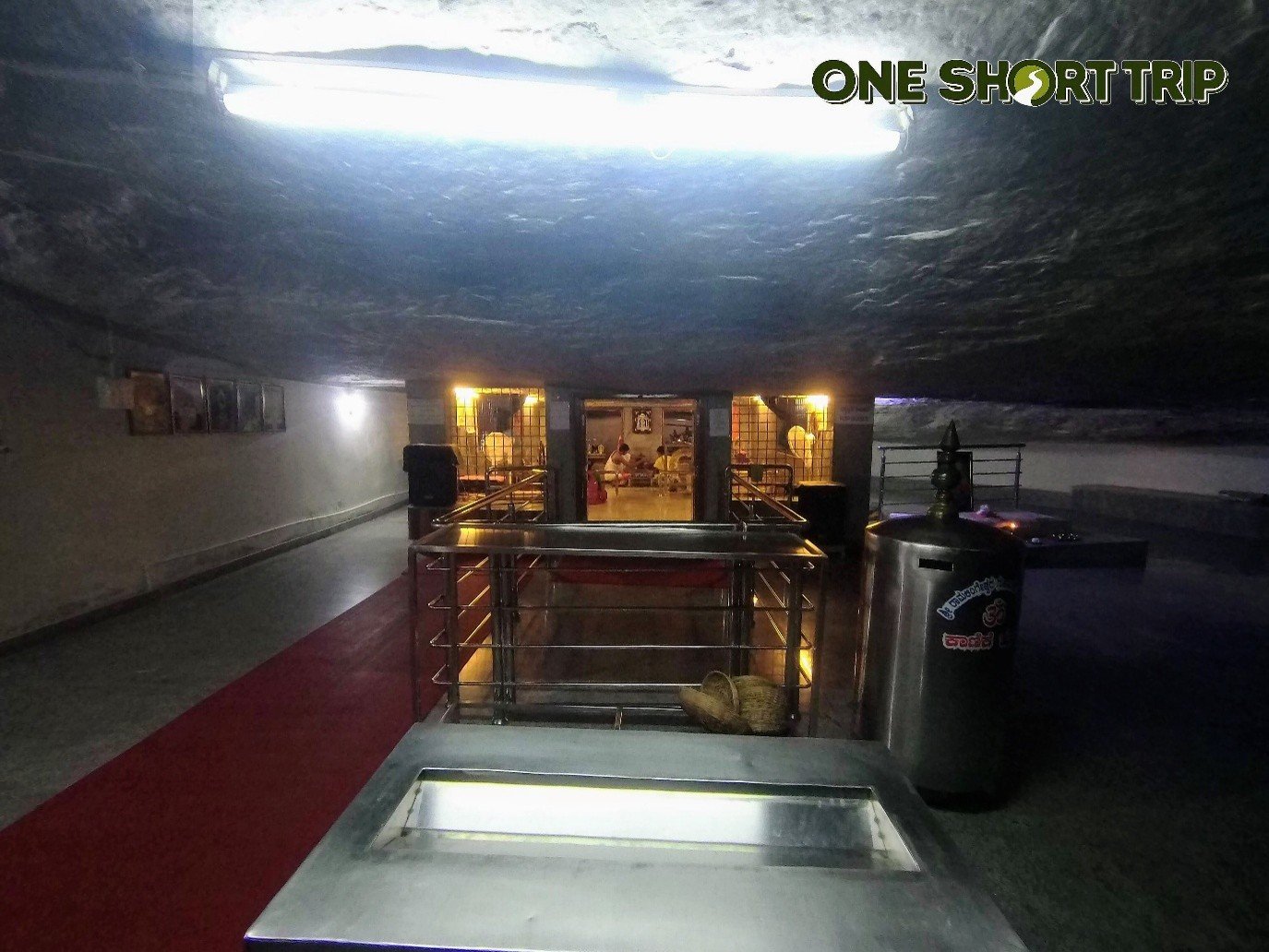
Another distinctive feature is the Thrimurthy Sannidhi, where Brahma, Vishnu and Maheshwara are represented on tall monolithic stone formations. The temple describes the carved Trimurthies as being on 32-foot-tall monolithic blocks, making this one of the most striking features of the complex.
The story behind the name Ragigudda
The name Ragigudda comes from two ideas: ragi, the finger millet traditionally grown and consumed in Karnataka, and gudda, meaning a hillock in Kannada.
According to the temple's traditional account, a large heap of ragi became stone, creating the sacred hillock. The story is associated with the appearance of the Trimurthies – Lord Brahma, Lord Vishnu and Lord Maheshwara – who are believed to have chosen to remain at the site in the form of three large stone pillars.
The legend gives the hillock a spiritual identity that continues to be an important part of how devotees understand Ragigudda today.
The legend of Sudharma and the sacred ragi hillock
A more detailed version of the local legend tells the story of Sudharma, a devout woman known for her generosity and faith. According to the traditional account, the Trimurthies appeared before her in human form and asked for alms.
Sudharma offered them newly harvested ragi as bhiksha. When she was later questioned about giving away the grain, she maintained that something offered as charity should not simply be taken back. The ragi is believed to have transformed into stone, forming the hillock.
The Trimurthies then revealed their divine identity and blessed Sudharma. The three divine beings are traditionally believed to have remained at the location in the form of stone pillars, giving the hillock its continuing spiritual significance.


History of Ragigudda Sri Prasanna Anjaneya Swamy Temple
The present temple is a relatively modern Bengaluru temple, with its beginnings dating to 1969. According to the temple's official history, the shrine developed through the efforts of a group of dedicated young people, supported by local residents and devotees.
What began as a small temple dedicated to Lord Hanuman gradually developed into a much larger religious complex. The temple was formally registered in 1972 and today occupies approximately five acres.
The development of Ragigudda reflects the growth of Bengaluru itself. A once-local place of worship evolved into an important spiritual, cultural and community institution while retaining its connection with the hillock and the traditions associated with it.
Lord Prasanna Anjaneyaswamy
The principal deity of Ragigudda is Sri Prasanna Anjaneyaswamy, a form of Lord Hanuman. Hanuman occupies a particularly important place in Hindu devotion as the devoted servant of Lord Rama and is traditionally associated with strength, courage, loyalty, devotion and selfless service.
The temple's own description presents Hanuman as the “Bhaktha of Bhakthas”, emphasizing his absolute devotion to Rama. Devotees visit the shrine seeking blessings for strength, success, well-being, fulfilment of sincere wishes and spiritual protection.
For many devotees, however, the appeal of Ragigudda is not limited to a particular wish or ritual. The temple provides a place for prayer, quiet reflection and devotion to Hanuman within a distinctive natural setting in the middle of Bengaluru.
Thrimurthy Sannidhi – one of Ragigudda's most distinctive features
The Thrimurthy Sannidhi is among the most remarkable parts of the temple complex. Brahma, Vishnu and Maheshwara are represented together on tall monolithic stone formations.
The temple describes these as beautifully carved Trimurthies positioned on 32-foot-tall monolithic blocks. Their presence connects the physical landscape of Ragigudda with the traditional legend behind the origin of the hillock.
For visitors interested in the architecture and symbolism of Bengaluru's temples, this is one of the features that makes Ragigudda particularly different from an ordinary Hanuman shrine.
The other deities at Ragigudda
Although Lord Hanuman is the principal deity, the temple complex includes several other important shrines. The official temple history identifies Sri Seetha Rama Swamy, Sri Ganesha, Bhagavathi, Sri Rajarajeshwari and the Navagrahas among the deities worshipped within the complex.
This collection of shrines allows devotees to experience several aspects of Hindu worship during a single visit, while the presence of Rama and Sita also reinforces the connection between Hanuman's devotion and the Ramayana tradition.
Sri Seetha Rama Swamy
The shrine dedicated to Sri Seetha Rama Swamy is an important part of the wider spiritual character of Ragigudda. The relationship between Rama and Hanuman is central to Hanuman's identity, and worship of Rama within the same temple complex adds another dimension to the devotional experience.
Devotees who come primarily for Hanuman darshan can therefore also offer prayers to Sri Rama and Sita during their visit.
Ganesha, Bhagavathi, Rajarajeshwari and Navagrahas
The temple's collection of additional shrines includes Lord Ganesha, Bhagavathi, Sri Rajarajeshwari and the Navagrahas. Each has its own place within the religious life of the complex.
The presence of these shrines also makes Ragigudda useful for devotees who wish to include multiple forms of worship in a single temple visit rather than visiting only the principal sanctum.
Hanuman Dhara
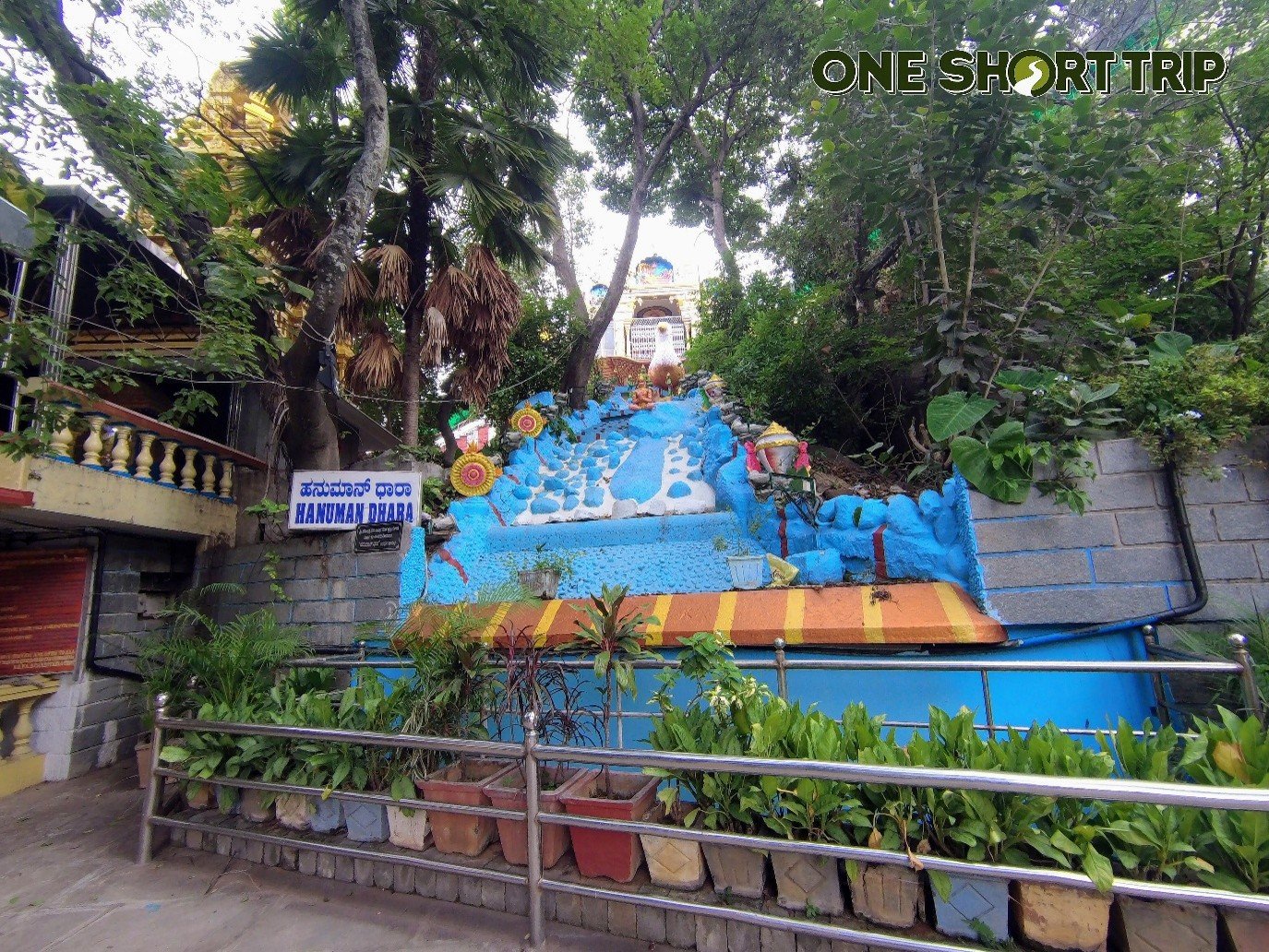
Hanuman Dhara is one of the more distinctive natural and landscaped areas within Ragigudda. The temple describes the area as having large rocks, mature trees and a water fountain created among the natural surroundings.
The combination of rocks, greenery and water gives this part of the temple a different atmosphere from the main shrine. According to the temple, Hanuman Dhara becomes particularly attractive in the evening when the area is illuminated.


Parna Kuteera
Parna Kuteera is designed with the atmosphere of a traditional hermitage. It is used for religious activities including yajnas, homas and special poojas.
The area also contains a small artificially created waterfall, adding to its peaceful surroundings. It is one of the places within Ragigudda where the temple's religious activities and landscaped environment come together.
Pushkarni
The temple complex also has a Pushkarni, or sacred water tank. The temple states that the Pushkarni provides water for the requirements of the temple.
Water bodies such as temple tanks traditionally form an important part of Hindu temple complexes, serving both practical and cultural purposes. At Ragigudda, the Pushkarni is part of the wider landscape rather than an isolated attraction.
Ragigudda Goshale
The temple complex includes a Goshale with more than 30 cows, according to the temple's official description. The cows' milk is used for abhishekam, while the remaining milk is served to children at the associated nursery.
The Goshale therefore forms part of the temple's wider approach to religious service and community welfare rather than being simply an enclosure for cattle.
Prasada and community dining
Food and prasada are an important part of the temple's devotional activities. The temple operates a dedicated Prasada Division and states that prasada is served to devotees in the morning and evening, with lunch served to devotees on Saturdays.
During major celebrations, the scale of food distribution becomes much larger, reflecting the temple's role as a gathering place for thousands of devotees.
Ragigudda as a cultural centre
The temple complex is not limited to religious worship. It includes an auditorium used for cultural activities and special poojas, as well as an open auditorium capable of accommodating large gatherings.
The open auditorium is particularly important during Hanuman Jayanti and large-scale poojas and homas. These facilities have helped Ragigudda develop into a place where religious, cultural and community activities take place alongside daily worship.
Ragigudda's social and charitable role
One of the less visible but important aspects of Ragigudda is its charitable work. The temple's charitable trust operates educational and healthcare initiatives alongside facilities connected with the temple.
The trust states that its school provides education up to S.S.L.C. in both Kannada and English medium and serves around 1,300 students. It also describes free coaching initiatives for P.U.C. and engineering students and the Sanjeevini Arogya Tapasana Kendra, which provides medical services and facilities for people in need.
The temple also operates a Kalyan Mandap intended to provide an affordable facility for families who require it. These activities demonstrate how Ragigudda functions not only as a place of worship but also as a community institution.
Hanuman Jayanti at Ragigudda
Hanuman Jayanti is the temple's major annual celebration. The temple traditionally observes the festival over an extended period, with special poojas, abhishekams and homas forming an important part of the celebrations.
The temple's official history states that Sri Hanumajjayanthi is celebrated for 12 days, with Mahaprasada served to devotees throughout the celebration. The temple's 2025 festival announcement likewise shows the scale of the celebration, with extended darshan hours and daily Mahaprasadam during the festival period.
The festival transforms Ragigudda into a major gathering place for devotees, with religious ceremonies, cultural activities and large-scale community participation.
Why Ragigudda is spiritually important
Ragigudda's spiritual identity comes from several elements coming together: devotion to Hanuman, the connection with Rama, the traditional story of Sudharma and the ragi hillock, and the presence of Brahma, Vishnu and Maheshwara in the Thrimurthy Sannidhi.
The temple therefore represents both bhakti and sacred landscape. Its hillock, rocks, water features and shrines create a setting in which the traditional stories associated with the site remain visible within a modern Bengaluru neighbourhood.
What makes Ragigudda Temple different?
- Dedicated to Sri Prasanna Anjaneyaswamy: Lord Hanuman is the principal deity.
- Ragigudda hillock: The name and sacred identity are linked to the traditional ragi hillock legend.
- Thrimurthy Sannidhi: Brahma, Vishnu and Maheshwara are represented on tall monolithic stone formations.
- Five-acre temple complex: The site extends well beyond the principal shrine.
- Hanuman Dhara: Rocks, mature trees and a water fountain create a distinctive natural setting.
- Parna Kuteera: A hermitage-like space used for yajnas, homas and special poojas.
- Multiple shrines: Rama, Ganesha, Bhagavathi, Rajarajeshwari and Navagrahas are also worshipped here.
- Goshale: The temple maintains a goshala with more than 30 cows.
- Cultural facilities: Auditoriums support religious and cultural programmes.
- Community service: Education, healthcare and other charitable activities form an important part of the institution.
Ragigudda Temple – Quick Information
| Temple Name | Ragigudda Sri Prasanna Anjaneya Swamy Temple |
| Location | Jayanagar 9th Block, Bengaluru, Karnataka |
| Main Deity | Sri Prasanna Anjaneyaswamy |
| Temple Established | 1969 |
| Registered | 1972 |
| Complex Area | Approximately 5 acres |
| Key Attraction | Thrimurthy Sannidhi |
| Other Highlights | Hanuman Dhara, Parna Kuteera, Pushkarni, Goshale and multiple shrines |
| Major Festival | Hanuman Jayanti |
Ragigudda Temple as part of a Bengaluru spiritual journey
For travellers exploring the religious side of Bengaluru, Ragigudda offers a particularly interesting combination of devotion, mythology, natural features and community life. It is different from simply visiting a standalone city temple because the hillock and the wider complex are integral to the experience.
The presence of Lord Hanuman alongside Rama, the Trimurthies and several other deities also makes the temple relevant to devotees following different forms of Hindu worship. Its cultural and charitable activities add another dimension to the history of the institution.
For anyone interested in Hanuman temples in Bengaluru, famous temples in South Bengaluru, Bengaluru's spiritual places or unique temples in Karnataka, Ragigudda deserves a place on the list.
Ragigudda Temple Timings
The regular Ragigudda Sri Prasanna Anjaneya Swamy Temple timings are divided into morning and evening sessions. The temple's official website currently lists the following regular darshan timings:
| Day | Morning | Evening |
|---|---|---|
| Monday – Friday | 8:00 AM – 11:30 AM | 5:00 PM – 8:00 PM |
| Saturday | 8:00 AM – 12:30 PM | 5:00 PM – 8:30 PM |
| Sunday | 8:00 AM – 12:30 PM | 5:00 PM – 8:30 PM |
These are the temple's regular timings. Special festivals, Hanuman Jayanti celebrations, poojas and other events may have extended or modified timings, so visitors travelling specifically for an event should check the latest announcement from the temple.
Best Time to Visit Ragigudda Temple
For devotees looking for a relatively comfortable and peaceful visit, the morning session is generally a good choice. It allows enough time for darshan and exploration of the temple complex before the day becomes busier.
The evening session is also worthwhile, particularly for visitors who want to experience the landscaped areas around Hanuman Dhara. The temple specifically highlights the evening lighting around this area as one of its attractions.
If your main purpose is to attend a special pooja or festival, however, the best time depends on that day's programme rather than the normal darshan schedule.


How Long Does a Visit to Ragigudda Temple Take?
A simple darshan can be relatively quick, but travellers who want to experience the temple properly should allow approximately 1 to 2 hours.
This gives you time to visit the main Anjaneyaswamy shrine, see the other important shrines and explore features such as the Thrimurthy Sannidhi, Hanuman Dhara, Parna Kuteera and Pushkarni. A seva, special pooja or festival visit may require additional time.
How to Reach Ragigudda Temple
Ragigudda Sri Prasanna Anjaneya Swamy Temple is located at 9th Block, Jayanagar, Bengaluru – 560069. Its South Bengaluru location makes it accessible from Jayanagar, JP Nagar, Banashankari, Bannerghatta Road and other parts of the city.
By Car or Taxi
The temple can be reached by private car, taxi or app-based cab. It is a practical option for families and visitors travelling with elderly members, particularly when the temple is combined with other South Bengaluru attractions.
Traffic conditions in Bengaluru can vary considerably by time of day, and travel time may increase during weekends, peak hours and major temple celebrations.
By Bus
The temple's official website lists bus connections serving the Jayanagar 9th Block area. Services are available from areas including Majestic, Market, Banashankari, Bannerghatta Road and JP Nagar.
Bus routes and service patterns can change, so it is advisable to check the latest BMTC information before starting the journey.
By Metro
Visitors coming from other parts of Bengaluru can use the Namma Metro network and continue the final portion of the journey by auto-rickshaw, taxi or bus. The most convenient interchange depends on your starting location and the current metro and feeder-bus network.
By Train
Travellers arriving in Bengaluru by train can continue towards Jayanagar using the city's metro, bus, taxi or auto-rickshaw network. The most suitable option depends on the railway station at which you arrive.
Parking Near Ragigudda Temple
Visitors travelling by private vehicle should allow some extra time for parking, particularly during weekends and major religious celebrations. Parking conditions around the temple can become more difficult when large numbers of devotees arrive.
If you are travelling with senior citizens or young children, arriving earlier can make the overall visit more comfortable.
Footwear at Ragigudda Temple
Footwear must be removed before entering the designated temple areas. The temple has a dedicated footwear stand and describes its system of keeping footwear separately in bags for devotees.
Visitors should avoid carrying unnecessary valuables and should follow the instructions provided at the footwear area and temple entrances.
Dress Code at Ragigudda Temple
Visitors should wear modest and respectful clothing appropriate for a Hindu temple. Traditional Indian clothing is welcome, although elaborate traditional dress is not necessary for an ordinary visit.
Comfortable clothing is preferable because the temple complex includes several areas that visitors may want to explore on foot.
Photography at Ragigudda Temple
Ragigudda has several visually interesting areas, including its temple architecture, rock formations, Hanuman Dhara and the Thrimurthy Sannidhi.
Photography and videography should always follow the temple's instructions. Visitors should not photograph restricted areas, sanctums or religious ceremonies where photography is not permitted, and should avoid using flash when it may disturb worship.
Temple Poojas and Sevas
Devotees who wish to make a specific offering can choose from several poojas and sevas at Ragigudda Temple. The temple publishes an official seva list covering offerings at the Anjaneyaswamy Sannidhi and other shrines.
Among the listed offerings are Vadamala Seva, Panchamrutha Abhisheka, Abhisheka Seva, Sarva Seva, Dina Seva, Laksharchane, Dhanvantari Pooja, Navagraha Homa, Chandika Homa and Alankara Seva.
The temple's published seva list also gives the applicable offering amounts. Since seva availability and arrangements can change, devotees planning a particular ritual should confirm the current details directly with the temple before visiting.
Vadamala Seva at Ragigudda
Vadamala Seva is one of the offerings specifically associated with Sri Anjaneyaswamy at Ragigudda. The temple's current seva list includes Vadamala Seva as well as Sarva Seva, which includes Vadamala.
Devotees interested in performing this offering should check the latest temple procedure and availability before their visit.
Prasada at Ragigudda Temple
The temple operates a dedicated Prasada Division. According to the temple, prasada is served during the morning and evening, while devotees are served lunch on Saturdays.
During major celebrations such as Hanuman Jayanti, the scale of food distribution is considerably larger, with Mahaprasada or Annasantarpane arranged for devotees.


Ragigudda Temple During Hanuman Jayanti
Hanuman Jayanti is the temple's biggest annual celebration and attracts substantially larger crowds than ordinary days. The celebration includes special poojas, abhishekams, homas, alankaras and large-scale devotional programmes.
The temple's 2025 Hanuma Jayanthi announcement shows how significantly the normal schedule can change during the festival, with darshan extending until 9:00 PM on selected days and Mahaprasadam being served daily during the celebration.
If you are visiting during Hanuman Jayanti, plan for longer queues, heavier crowds and additional time for the visit.
Facilities at Ragigudda Temple
The temple complex has several facilities designed to support devotees and religious activities. These include a footwear stand, prasada division, Pushkarni, Goshale, auditorium and open auditorium.
The temple also operates facilities connected with its wider charitable activities, including educational and healthcare services. These are part of the larger Ragigudda Trust rather than ordinary visitor attractions.
Is Ragigudda Temple Suitable for Senior Citizens?
Yes. Ragigudda can be included in a Bengaluru temple itinerary for senior citizens. Families should, however, allow sufficient time rather than trying to cover the complex quickly.
Visitors travelling with elderly family members may find a morning visit more comfortable, particularly during warmer weather or on days when large crowds are expected.
Is Ragigudda Temple Suitable for Children?
Yes. Children can visit the temple with their families. The combination of the temple, hillock setting, large stone formations and landscaped areas provides more to see than a single shrine.
Parents should keep young children close during crowded periods and ensure that they follow temple etiquette around the sanctums.
Ragigudda Temple for Families
Ragigudda works well as a family-friendly spiritual stop in Bengaluru because the visit can be paced according to the family's interests. Devotees can concentrate on darshan and pooja, while others can spend additional time exploring the different sections of the complex.
It can also be combined with other South Bengaluru attractions to create a half-day or full-day itinerary.
Temple Etiquette
- Remove footwear before entering designated temple areas.
- Dress modestly and respectfully.
- Maintain silence and decorum near the sanctums.
- Follow queues and instructions from temple staff.
- Do not touch idols or sacred objects unless permitted.
- Follow all photography and videography restrictions.
- Do not disturb ongoing poojas, homas or religious ceremonies.
- Keep children supervised in crowded areas.
- Dispose of waste responsibly.
- Follow special instructions issued during festivals and major events.
What to Carry for a Visit
A normal visit to Ragigudda does not require extensive preparation. Carry only essential items such as your phone, wallet, drinking water and any medicines you may need.
Comfortable clothing and footwear are useful because visitors may spend time walking around the larger temple complex. During hot weather, drinking water and sun protection can also be helpful.
Nearby Places to Visit from Ragigudda Temple
Ragigudda's location in South Bengaluru makes it convenient to combine the temple with several other attractions. The best combination depends on how much time you have available.
Banashankari Temple
Shree Banashankari Devi Temple is another important temple in South Bengaluru and can be included in a temple-focused itinerary along with Ragigudda.
Basavanagudi
The historic Basavanagudi neighbourhood is ideal for travellers interested in Bengaluru's traditional temple culture. The Dodda Ganapathi Temple and Bull Temple are among the important places that can be combined with other South Bengaluru temples.
Bugle Rock Park
Bugle Rock Park in Basavanagudi offers a green setting and is a useful addition to a heritage and temple-focused day in South Bengaluru.
Lalbagh Botanical Garden
Lalbagh Botanical Garden is one of Bengaluru's most important attractions and can be combined with Ragigudda when planning a broader South Bengaluru sightseeing route.
Jayanagar
Jayanagar itself is worth exploring for its traditional markets, shopping areas, restaurants and neighbourhood atmosphere. Visitors can combine temple darshan with a relaxed exploration of one of Bengaluru's best-known older neighbourhoods.


Suggested Ragigudda Temple Visit Plan
For a first visit, begin with darshan of Sri Prasanna Anjaneyaswamy and then explore the other important shrines within the complex. Continue towards the Thrimurthy Sannidhi and spend some time around Hanuman Dhara and Parna Kuteera.
If you have additional time, you can combine Ragigudda with Banashankari Temple, Basavanagudi, Bugle Rock or Lalbagh to create a wider South Bengaluru sightseeing and temple circuit.
Ragigudda Temple – 1 to 2 Hour Visit
If you have limited time in Bengaluru, a 1 to 2 hour visit is sufficient to experience the principal shrine and several of the major features of the temple complex.
This is suitable for travellers who are already exploring Jayanagar or South Bengaluru and want to add an important Hanuman temple to their itinerary.
Ragigudda Temple – Half-Day Plan
For a more relaxed experience, combine Ragigudda with other South Bengaluru temples and heritage attractions. A half-day route can include Ragigudda, Banashankari, Basavanagudi and Bugle Rock, depending on the day's timings and traffic.
This approach allows you to experience both the spiritual and traditional sides of Bengaluru rather than visiting each temple as an isolated stop.
Practical Tips for Visiting Ragigudda Temple
- Check the latest temple timings before travelling.
- Morning visits are generally convenient for devotees who prefer a calmer experience.
- Evening visits can offer a different atmosphere around Hanuman Dhara.
- Allow around 1–2 hours for a proper exploration.
- Allow extra time if you are attending a seva or special pooja.
- Expect significantly larger crowds during Hanuman Jayanti.
- Wear comfortable and respectful clothing.
- Carry only essential belongings.
- Follow temple instructions regarding photography.
- Families travelling with senior citizens should avoid rushing through the complex.
- Check current BMTC and Namma Metro information before travelling by public transport.
- If you are travelling specifically for a festival or seva, verify the latest schedule with the temple.
Ragigudda Temple – Quick Visitor Information
| Location | 9th Block, Jayanagar, Bengaluru – 560069 |
| Main Deity | Sri Prasanna Anjaneyaswamy |
| Weekday Timings | 8:00 AM–11:30 AM and 5:00 PM–8:00 PM |
| Weekend Timings | 8:00 AM–12:30 PM and 5:00 PM–8:30 PM |
| Recommended Duration | 1–2 hours |
| Major Festival | Hanuman Jayanti |
| Suitable For | Devotees, families, senior citizens and temple-tour travellers |
Final Visitor Advice
Ragigudda is best experienced without rushing. Although the main purpose of many visitors is darshan of Sri Prasanna Anjaneyaswamy, the temple complex has several other features worth exploring, from the Thrimurthy Sannidhi and Hanuman Dhara to Parna Kuteera and the other shrines.
For the most comfortable experience, check the latest timings before travelling, choose a suitable morning or evening session, allow enough time for the visit and follow the temple's instructions. During major festivals, plan for larger crowds and altered schedules.