One Short Trip

One Short Trip | 1
Temple

Veeranjaneya Swamy Temple

A 12-foot black granite Hanuman idol in Mulbagal, the historic "eastern door" of the Vijayanagara empire, tied by legend to the Pandavas.

Deity
Lord Veeranjaneya (Hanuman)
Location
Mulbagal, Kolar District
Era
Vijayanagara Period
Idol Height
12 ft, black granite

About Veeranjaneya Swamy Temple, Mulbagal

Right in Mulbagal town itself, just a couple of hundred metres from the town centre, stands the Veeranjaneya Swamy temple, dedicated to a fierce, twelve-foot form of Hanuman carved from black granite. The town's own name carries a clue to its historical importance: 'Mulbagal' comes from the Kannada 'Mudala Bagilu', meaning 'eastern gate', a nod to its position at the eastern edge of the old Vijayanagara empire. Unlike the Garuda and Ganesha temples a short drive away in Koladevi and Kurudumale, this one sits inside the town, making it an easy stop even for travellers short on time.

The current structure went up during the Vijayanagara period, though local tradition pushes the origins of worship at this spot back much further, to the time of the Mahabharata itself. Around the main sanctum, the temple complex has quietly accumulated a small cluster of subsidiary shrines over the centuries: modest shrines to Rama, Lakshmana and Sita that tradition credits to Sage Vashista, an idol of Venkateshwara said to have been installed by Bhrigu Maharshi, and a smaller shrine to Padmavathi alongside it. There are further shrines to Ranganatha, Lakshmi Narasimha and Chennakeshava within the same complex, and on one wall a small lizard is carved and covered with a brass shield, a detail with its own devotional significance that keeps regular visitors coming back to touch it.

The 'Veera' in the temple's name, meaning valiant or heroic, points to a specific artistic tradition within Hanuman worship. Where many temples depict Anjaneya in a gentler, more devotional pose with palms joined, a Veeranjaneya idol is typically shown in a more dynamic, warrior-like stance, emphasising his role as protector and destroyer of obstacles rather than purely as a devoted servant. That distinction matters to worshippers who come specifically seeking strength, courage or protection from difficulties, rather than general blessings, and it is part of why this particular form of Hanuman has such a dedicated following across the Mulbagal region.

Anjaneya temple at Mulbagal, Kolar district
The Anjaneya shrine at Mulbagal, part of the towns historic temple cluster. Image: Wikimedia Commons.

Mythological Importance of Veeranjaneya Swamy Temple, Mulbagal

The temple's central legend belongs to the Mahabharata, set in the Dwapara Yuga. While Bheema was travelling in search of the Sougandhika flower for Draupadi, he crossed paths with Anjaneya. Recognising the strength and divinity before him, Bheema bowed and asked for his help in the war that lay ahead. Anjaneya agreed, and took up residence in the flag mounted on Arjuna's chariot for the rest of the Mahabharata war, quietly protecting the Pandavas through every battle that followed.

The story does not end when the war does. Once the fighting was over, Arjuna climbed down from the chariot first, followed by Krishna, who then told Arjuna to remove the flag. The moment it came down, the chariot itself caught fire and burned to ash, and only then did Krishna reveal that Anjaneya's presence in that flag was the reason the chariot had survived the entire war intact. Overwhelmed with gratitude, Arjuna commissioned an idol of Anjaneya from the divine sculptor Maya and, on Krishna's instruction, installed it in a forest known as Kadalivana, decorating it with Kedage flowers, also called Kewda or Taale hoovu in Kannada. Over time, that forest, Kadalivana, became the town known today as Mulbagal.

Beliefs and Rituals of Veeranjaneya Swamy Temple, Mulbagal

A fair number of the pilgrims who stop here are actually on their way to or from Tirumala Tirupati and treat this as a waypoint, pausing to seek Anjaneya's blessing before continuing their journey. Saturdays bring special pooja, abhisheka and prasada distribution, while the month of Shravana and the celebration of Hanuman Jayanthi are the two occasions that draw the biggest crowds through the year.

The lizard carved into the temple wall, near the Venkateshwara shrine and shielded with a brass kavacha, has its own devoted following. Touching it is believed to protect a person from the ill effects associated with a lizard falling on their body, a fairly specific but deeply held belief among regular visitors. Like most temples of this age, Veeranjaneya Swamy has seen its share of renovation and rebuilding over the centuries, with additions layered on across different periods rather than a single unified construction.

For travellers, this temple's real advantage is location. Because it sits inside Mulbagal town rather than out in the surrounding countryside, it pairs naturally with the Garuda temple at Koladevi and the twin Ganesha and Someshwara temples at Kurudumale, all within a fifteen-kilometre radius. Most visitors treat Veeranjaneya Swamy as either their first or last stop on a loop through all four, since the town itself has enough small eateries and conveniences to make a good starting or finishing point for the day.

Temple Contact & Location

Website: No official website
Email: No official email address
Phone Number: 081592 46059
Address: V. Gangapura Gangamma temple Street, Mulbagal, Karnataka 563131

Accommodation: The temple has no rooms of its own, but since it sits inside Mulbagal town, hotels are only minutes away, and the same handful found across this cluster of temples take bookings online: Sai Nandhini A/C Lodge, Harsha Residency, Hotel Saidham, GK Hill View Resort and Thavaru Homestay.

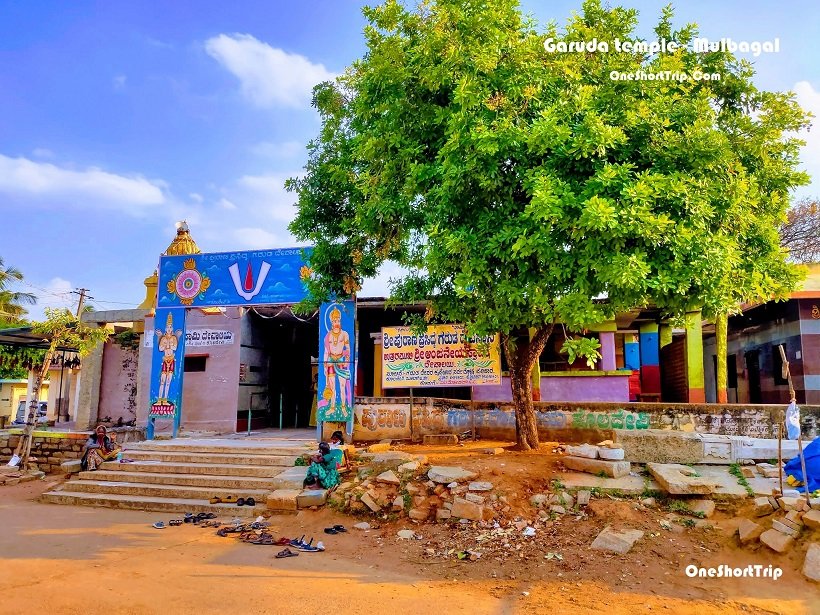
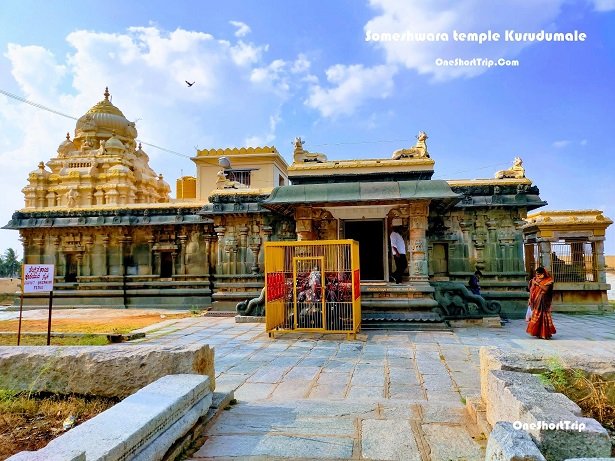
Places to Visit Nearby: Garuda Temple – Mulbagal, Someshwara Temple – Kurudumale, Kurudumale Ganesha Temple

Distance:
Bangalore to Veeranjaneya Swamy Temple Mulbagal – 95 kilometres
Kolar to Veeranjaneya Swamy Temple Mulbagal – 30 kilometres
Mulbagal to Veeranjaneya Swamy Temple Mulbagal – 200 Mts

How to Reach

By Bus: KSRTC and private buses run from Bangalore to Mulbagal for around ₹80, with direct services as well as Tirupati-bound buses that stop at Mulbagal Junction. From the bus stand, the temple is barely 200 metres away, an easy walk.

By Train: An express train connects Bangalore to Bangarapet Junction for about ₹85, and a taxi or auto from there covers the rest of the way for roughly ₹100. It is worth checking current timings and fares with Indian Railways or IRCTC before setting out.

By Air: Kempegowda International Airport is around 95 kilometres away, which typically means a two to two-and-a-quarter hour drive.

By Road: Driving from Bangalore, the route runs from Majestic (Kempegowda Bus Station) through Indiranagar, Krishnarajapuram, Konadasapura and Hoskote, on to Kolar, and then straight into Mulbagal town, where the temple sits just off the main street.

Why Veeranjaneya Swamy Temple Is Worth The Visit

🗿
12-Foot Granite Idol
A towering black-granite Anjaneya idol linked to a Mahabharata-era legend
🛣️
On The Tirupati Route
A popular stopover for pilgrims travelling to Tirumala Tirupati
🦎
The Sacred Lizard Carving
Touching the brass-covered lizard carving is believed to ward off ill effects
🗺️
Easy Kolar Circuit
Just minutes from Garuda, Someshwara and Kurudumale Ganesha temples

Frequently Asked Questions

How old is Veeranjaneya Swamy Temple?
The current structure dates to the Vijayanagara period, though the idol's origins are traced in legend to the Mahabharata era.
Is there an entry fee?
Normal entry is free; a special darshan ticket (₹20) is available on special days. The temple is open 6:00 AM–6:00 PM daily.
What is this temple known for?
Its 12-foot black-granite Anjaneya idol, its sacred lizard carving, and its location on the route to Tirumala Tirupati.
How far is it from Bangalore?
About 95 km from Bangalore, 30 km from Kolar, and just 200 metres from Mulbagal town centre.
Can I combine this with other Kolar-district temples?
Yes — Garuda Temple, Someshwara Temple and Kurudumale Ganesha Temple are all a short drive away.

Also In Kolar

Continue Exploring

Planning A Trip Here?

Get help planning your visit — call or WhatsApp us and we will help you book a tour.