One Short Trip

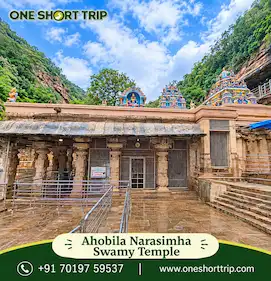
Ahobila Narasimha Temple entrance amidst the Nallamala Hills, Upper Ahobilam, Andhra Pradesh
Pilgrimage

Ahobila Narasimha Temple, Ahobilam

Discover the sacred cave shrine of Lord Ugra Narasimha in Upper Ahobilam, nestled among the dramatic rocky landscapes and forests of the Nallamala Hills in Andhra Pradesh.

Primary Deity
Lord Ugra Narasimha
Location
Upper Ahobilam, Nallamala Hills
Religious Significance
Principal Nava Narasimha Shrine
Temple Setting
Sacred Cave Shrine Amidst Rocky Hills
Explore the Sacred Heritage of Ahobilam

About Ahobila Narasimha Temple, Ahobilam

Located in Upper Ahobilam amid the rugged Nallamala Hills of Andhra Pradesh, Sri Ahobila Narasimha Swamy Temple is one of the most important pilgrimage shrines dedicated to Lord Narasimha. The presiding deity is worshipped in the fierce Ugra Narasimha form, representing the divine manifestation of Lord Vishnu as the half-man, half-lion incarnation.

The temple is situated inside a natural cave and is traditionally regarded as the main and earliest shrine among the nine Nava Narasimha temples of Ahobilam. Devotees visit this sacred place to worship the Lord who appeared to protect His devotee Prahlada and destroy the demon king Hiranyakashipu.

Ahobilam is closely associated with the Narasimha avatar described in Hindu tradition. The surrounding hills, caves, streams and forest paths form part of a sacred landscape connected with the Lord's manifestation. The name Ahobilam itself is traditionally associated with the awe-inspiring strength and valour of Lord Narasimha.

For pilgrims exploring Ahobilam, the Ahobila Narasimha Temple is an important starting point for understanding the spiritual significance of the Nava Narasimha Kshetram and the legends associated with the Nallamala Hills.

Ahobila Narasimha Temple – Quick Information

Temple Name
Sri Ahobila Narasimha Swamy Temple
Other Names
Ahobila Narasimha, Ugra Narasimha Temple
Location
Upper Ahobilam, Nallamala Hills
District
Nandyal District, Andhra Pradesh
Presiding Deity
Lord Ugra Narasimha
Consort
Goddess Chenchu Lakshmi
Religious Tradition
Sri Vaishnavism
Temple Setting
Natural Cave Shrine
Nava Narasimha Temples
Main and traditionally earliest shrine
Temple Region
Ahobilam Kshetram
Sacred Landscape
Nallamala Hills and forest region
Associated Devotee
Prahlada

Best time to visit: The cooler months from October to February are generally more comfortable for exploring Ahobilam. Temple darshan timings and access conditions should be confirmed locally before travelling.

What Is Ahobila Narasimha Temple Famous For?

Ahobila Narasimha Temple is famous for its powerful Ugra Narasimha form, its natural cave setting and its central place among the nine sacred Narasimha shrines of Ahobilam.

According to the traditional account, Lord Vishnu appeared as Narasimha to protect Prahlada and defeat Hiranyakashipu. Ahobilam is revered as the sacred landscape associated with this divine manifestation.

The Temple Is Particularly Known For

  • Its presiding deity, Lord Ugra Narasimha, the fierce form of Lord Vishnu.
  • Its natural cave shrine at Upper Ahobilam.
  • Its position as the main and traditionally earliest of the nine Nava Narasimha temples.
  • Its association with the protection of Prahlada and the defeat of Hiranyakashipu.
  • Its traditional belief as a self-manifest shrine of Lord Narasimha.
  • Its connection with Garuda's penance and the sacred hills of Ahobilam.
  • Its association with Goddess Chenchu Lakshmi and the Chenchu community.
  • Its importance within the wider Ahobilam pilgrimage and Sri Vaishnava tradition.

For devotees, darshan at Ahobila Narasimha Temple is an opportunity to worship the Lord in His powerful protective form and experience one of the most significant sacred places in the Ahobilam hills.

Where Is Ahobila Narasimha Temple Located?

Ahobila Narasimha Temple is located in Upper Ahobilam, within the Nallamala Hills of Andhra Pradesh. The shrine is situated in a natural cave surrounded by rocky hills and forest landscapes.

Upper Ahobilam is approximately 8 kilometres from Lower Ahobilam by the commonly described route. The main shrine is an important destination for pilgrims visiting the Nava Narasimha temples.

Temple Location

Sri Ahobila Narasimha Swamy Temple,
Upper Ahobilam, Nallamala Hills,
Ahobilam, Nandyal District,
Andhra Pradesh, India.

The journey to Upper Ahobilam takes visitors away from the main settlement and into the hill region. The surrounding terrain includes rocky slopes, forest stretches and sacred sites associated with the Narasimha traditions.

Visitors should check the latest local transport arrangements, temple access and road conditions before setting out, particularly during heavy rain or periods of restricted forest access.

What Is the Story of Ahobila Narasimha Temple?

The story of Ahobila Narasimha Temple is closely connected with the divine appearance of Lord Vishnu as Narasimha to protect His young devotee Prahlada from the tyranny of Hiranyakashipu.

The traditional account is part of the Narasimha avatar story found in Hindu scriptures, including the Bhagavata Purana. Ahobilam is revered as the sacred region associated with these divine events.

The Sacred Legend

The Appearance of Lord Narasimha to Protect Prahlada

According to Hindu tradition, Hiranyakashipu became hostile towards Lord Vishnu and sought to establish his own supremacy. After receiving a powerful boon from Lord Brahma, he believed that he could not be defeated by ordinary means.

However, his own son Prahlada became a devoted worshipper of Lord Vishnu. Despite repeated threats and attempts to turn him away from his faith, Prahlada continued to remember and praise the Lord.

Hiranyakashipu eventually challenged Prahlada and questioned whether Vishnu was present everywhere. When Prahlada affirmed that the Lord was present even within a pillar, Hiranyakashipu struck it in anger.

At that moment, Lord Vishnu manifested from the pillar in an extraordinary form: neither fully human nor fully animal. He appeared as Narasimha, with the body of a man and the head of a lion.

To overcome the protection granted by Brahma's boon, the Lord chose a form and moment beyond the conditions of ordinary death. He placed Hiranyakashipu on His lap at the threshold and destroyed him with His claws at twilight.

Prahlada was protected, and the Lord's appearance demonstrated the power of devotion and the assurance that the divine protects those who surrender to Him. This is the central legend associated with the Narasimha tradition at Ahobilam.

Why Is Lord Narasimha Worshipped in a Fierce Form Here?

The name Ugra Narasimha refers to the fierce and powerful form assumed by Lord Vishnu while destroying Hiranyakashipu. The form represents the destruction of evil and the protection of righteousness and devotion.

At Ahobila Narasimha Temple, devotees worship the Lord in this powerful aspect. The shrine's cave setting and its traditional association with the Narasimha manifestation add to its religious significance.

The fierce form is not understood only as anger or destruction. In the Narasimha tradition, the same divine power that destroys evil also offers protection and reassurance to sincere devotees.

What Is the Connection Between Ahobilam and Garuda?

Another important tradition associated with Ahobilam describes Garuda, the divine vehicle of Lord Vishnu, performing penance in the hills to receive a vision of Lord Narasimha.

According to the sacred account, the Lord appeared to Garuda and revealed His divine forms in the Ahobilam region. The hills are consequently also associated with the name Garudadri or Garudachalam.

This tradition is an important part of the sacred identity of Ahobilam and helps explain the presence of the nine Narasimha shrines across the surrounding hills.

What Is the Meaning of the Name Ahobilam?

Traditional accounts offer more than one explanation for the name Ahobilam. One popular interpretation connects it with the exclamation of the celestial beings who witnessed the extraordinary strength and valour of Lord Narasimha.

“Aho Veeryam Aho Shouryam Aho Baahu Parakramam”

A traditional expression praising the Lord's extraordinary strength, courage and divine power.

Another explanation associates the name with the sacred cave in which the Lord is believed to have manifested. Both interpretations are preserved in the religious traditions of Ahobilam.
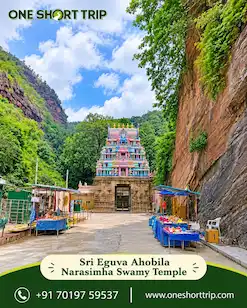
Ahobilam temple landscape surrounded by a green forest and rocky gorge in the Nallamala Hills
The rocky forest landscape surrounding the sacred Ahobilam temple region

What Is the History of Ahobila Narasimha Temple?

Ahobila Narasimha Temple is traditionally regarded as the earliest and principal shrine among the nine Narasimha temples of Ahobilam. Its religious history is closely connected with the Narasimha avatar, the sacred traditions of the Nallamala Hills and the development of Ahobilam as an important Vaishnava pilgrimage centre.

The temple is located in a natural cave, and the deity is traditionally believed to be self-manifest. A precise original construction date for the present shrine has not been established in the historical sources consulted for this guide.

The Traditional Origins of the Shrine

According to the Sthala Purana and local religious tradition, Ahobilam is the sacred region where Lord Narasimha manifested to protect Prahlada and destroy Hiranyakashipu.

The Ahobila Narasimha shrine is particularly revered as the main cave temple in Upper Ahobilam. The traditional belief that the deity is Svayambhu, or self-manifest, gives the shrine a special place in the faith of devotees.

Ahobilam in the Sri Vaishnava Tradition

Ahobilam holds an important position in the Sri Vaishnava tradition and is revered as one of the 108 Divya Desams associated with the hymns of the Alvars. The sacred region is praised in the devotional literature of the Tamil Vaishnava tradition, including the works of Thirumangai Alvar.

This literary and devotional heritage reflects the long-standing importance of Ahobilam as a centre of worship dedicated to Lord Vishnu and His Narasimha manifestation.

The Establishment of Ahobila Math

One of the major developments in the religious history of Ahobilam was the establishment of Sri Ahobila Math by Srimad Athivan Satakopa Jeeyar, traditionally dated to around 600 years ago.

According to the Math's traditional account, Lord Lakshmi Narasimha appeared to the Acharya and instructed him to come to Ahobilam. The Acharya received the ascetic order and the name Satakopa Jeeyar, and the Math became an important institution for preserving and spreading Sri Vaishnava teachings.

The Math's association with Ahobilam has contributed significantly to the religious identity of the region and the continuation of its Narasimha worship traditions.

Vijayanagara-Era Patronage

The wider Ahobilam temple complex received patronage during the Vijayanagara period. Historical records and inscriptions associated with the region indicate the importance of the temples under different rulers and local patrons.

This broader historical patronage forms part of Ahobilam's architectural and religious heritage. However, it should not be taken as proof that a particular ruler constructed the original Ahobila Narasimha cave shrine.

Historical Clarification

The shrine's traditional origin, its position among the Nava Narasimha temples and the later development of Ahobilam as a pilgrimage centre are distinct aspects of its history. A precise construction year or a confirmed individual builder for the present cave shrine has not been established in the sources used here.

Historical Timeline of Ahobila Narasimha Temple

TRADITIONAL ANTIQUITY
The Narasimha Manifestation

Ahobilam is revered as the sacred region associated with Lord Narasimha's appearance to protect Prahlada.

ALVAR TRADITION
Devotional Recognition

Ahobilam becomes part of the devotional heritage preserved in the Alvar tradition and Sri Vaishnava literature.

AROUND 600 YEARS AGO
Establishment of Sri Ahobila Math

Srimad Athivan Satakopa Jeeyar establishes the Math according to its traditional history.

15TH–16TH CENTURIES
Vijayanagara-Era Patronage

The wider Ahobilam temple region receives patronage during the Vijayanagara period.

CONTINUING TRADITION
Ongoing Worship and Pilgrimage

The shrine continues to be an important destination for devotees visiting the Nava Narasimha temples of Ahobilam.

Who Built Ahobila Narasimha Temple?

The original human builder of Ahobila Narasimha Temple has not been conclusively identified. The shrine is traditionally believed to be a self-manifest cave abode of Lord Narasimha rather than a temple whose foundation is attributed to a known historical ruler.

Was the Temple Created by Lord Narasimha?

According to local religious belief, the deity at Ahobila Narasimha Temple is Svayambhu, meaning self-manifest. Devotees believe that the Lord revealed Himself in the natural cave at Upper Ahobilam.

This is the traditional explanation of the shrine's sacred origin. It is a matter of religious belief and should be distinguished from a documented architectural construction record.

Which King Constructed the Present Shrine?

The available historical material does not establish a single king as the confirmed builder of the present Ahobila Narasimha cave shrine.

The wider Ahobilam temple region received patronage during the Vijayanagara period, but this broader history should not be used to assign the construction of this particular shrine to an individual ruler without supporting evidence.

Who Established Sri Ahobila Math?

Sri Ahobila Math was established by Srimad Athivan Satakopa Jeeyar, also known in the traditional account as the first Jeeyar of the Math.

The Math has played an important role in preserving Sri Vaishnava teachings, religious practices and the traditions associated with Lord Lakshmi Narasimha at Ahobilam.

In Summary

Ahobila Narasimha Temple is traditionally regarded as a self-manifest cave shrine. Its original human builder and precise construction date have not been conclusively established. Sri Ahobila Math, an important religious institution associated with the region, was established by Srimad Athivan Satakopa Jeeyar around 600 years ago.

Who Is the Main Deity of Ahobila Narasimha Temple?

The presiding deity of Ahobila Narasimha Temple is Lord Ugra Narasimha, a fierce manifestation of Lord Vishnu.

Narasimha is depicted in a form combining the body of a human being with the head of a lion. The deity represents the divine power that appeared to destroy Hiranyakashipu and protect Prahlada.
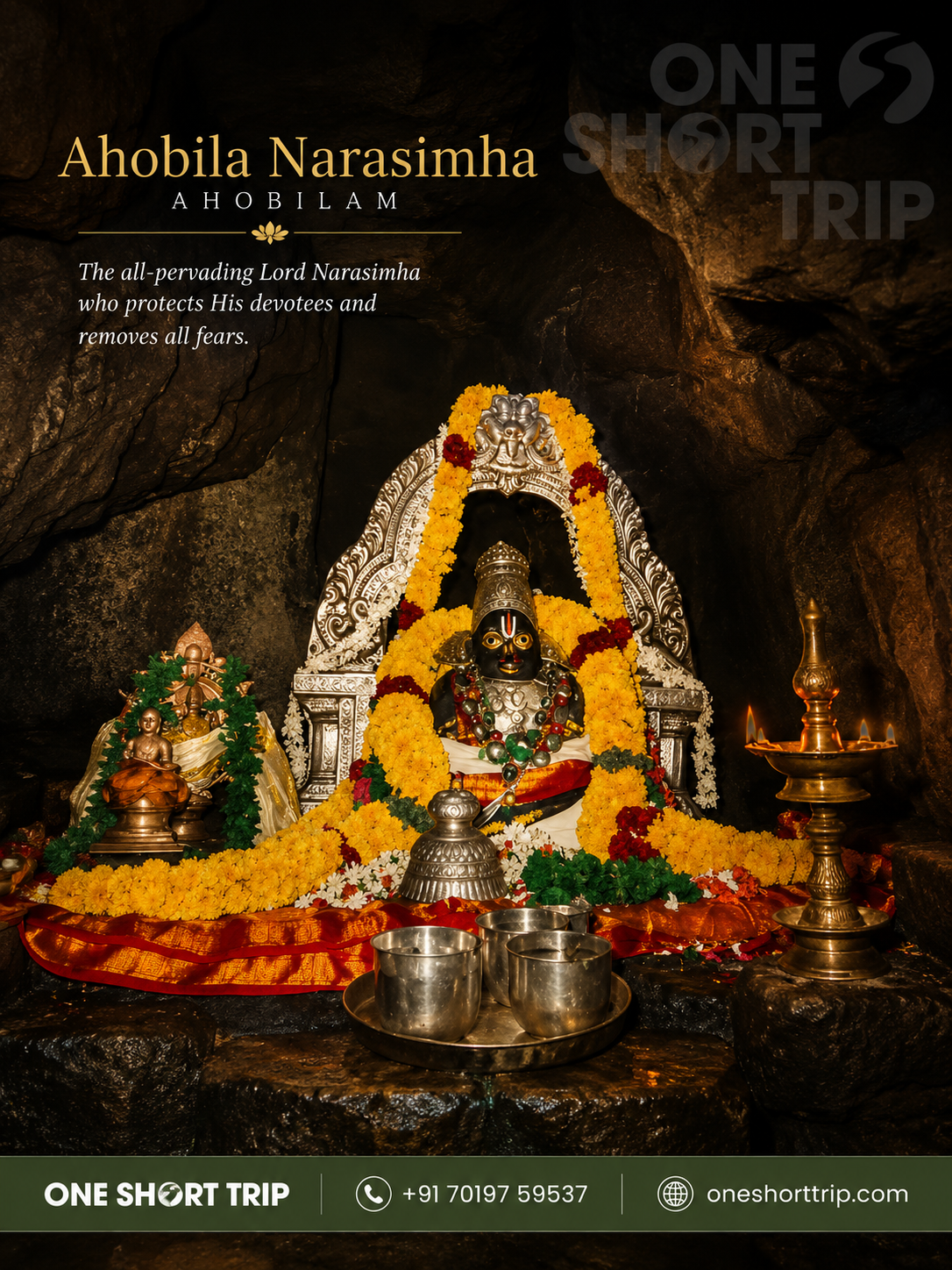
Lord Ahobila Narasimha, the Ugra Narasimha deity worshipped at Upper Ahobilam
Lord Ahobila Narasimha – the presiding deity of the main shrine at Upper Ahobilam

Why Is the Lord Called Ugra Narasimha?

The word Ugra means fierce, powerful or formidable. The name refers to the intense form assumed by Lord Narasimha when He appeared to defeat Hiranyakashipu.

In the Narasimha tradition, this fierce appearance represents the destruction of injustice and the protection of devotees. The Lord's power is understood as both protective and compassionate towards those who seek His refuge.

Who Is Chenchu Lakshmi?

Chenchu Lakshmi is a name associated with Goddess Lakshmi in the local traditions of Ahobilam. According to the regional legend, Goddess Lakshmi appeared in the form of a woman belonging to the Chenchu forest community and became associated with Lord Narasimha.

The story reflects the close relationship between the Narasimha tradition and the Chenchu people of the Nallamala region. The details of the legend are preserved through local religious and oral traditions.

What Is the Religious and Spiritual Significance of Ahobila Narasimha Temple?

Ahobila Narasimha Temple holds a central position in the spiritual landscape of Ahobilam. Its significance comes from the Narasimha avatar tradition, its natural cave setting, its association with Prahlada and its place among the nine sacred Narasimha shrines.

🦁

Ugra Narasimha Form

The deity represents the powerful manifestation of Lord Vishnu who destroyed evil and protected His devotee Prahlada.

⛰️

Sacred Cave Shrine

The natural cave setting is central to the identity of the shrine and its traditional association with the Lord's manifestation.

🙏

Protection of Prahlada

The shrine is connected with the story of the Lord protecting His young devotee and demonstrating the power of unwavering devotion.

🛕

Nava Narasimha Tradition

Ahobila Narasimha is traditionally regarded as the main and earliest shrine among the nine Narasimha temples of Ahobilam.

🕉️

Sri Vaishnava Heritage

The shrine forms part of Ahobilam's important place in Sri Vaishnava devotional and pilgrimage traditions.

🌿

Chenchu Community Tradition

The local tradition of Chenchu Lakshmi reflects the cultural and religious relationship between the shrine and the forest communities of Ahobilam.

Beliefs about the blessings and spiritual benefits of worship are matters of faith and may vary among devotees.

What Is the Connection Between Ahobila Narasimha Temple and the Nava Narasimha Temples?

Ahobila Narasimha Temple is the principal shrine in the Nava Narasimha tradition of Ahobilam. The name Nava Narasimha refers to the nine sacred forms of Lord Narasimha worshipped at different locations across the Lower and Upper Ahobilam region.

Each shrine has its own form, legend and sacred setting. Together, they represent different aspects of Lord Narasimha and form the basis of the well-known Nava Narasimha pilgrimage.

What Are the Nine Narasimha Temples of Ahobilam?

The nine shrines traditionally included in the Nava Narasimha pilgrimage are:

01 · UPPER AHOBILAM
Ahobila Narasimha
The principal Ugra Narasimha shrine
02 · UPPER AHOBILAM
Jwala Narasimha
Associated with the fierce manifestation and the slaying of Hiranyakashipu
03 · UPPER AHOBILAM
Malola Narasimha
The graceful form of the Lord with Goddess Lakshmi
04 · UPPER AHOBILAM
Kroda Narasimha
Also known as Varaha Narasimha
05 · UPPER AHOBILAM
Karanja Narasimha
Associated with the Karanja tree and Hanuman
06 · LOWER AHOBILAM
Bhargava Narasimha
Associated with the penance of Parashurama
07 · LOWER AHOBILAM
Yogananda Narasimha
Associated with teaching yoga to Prahlada
08 · LOWER AHOBILAM
Chatravata Narasimha
The shrine beneath a sacred Peepal tree
09 · FOREST REGION
Pavana Narasimha
The shrine on the banks of the Pavana River

The shrines are spread across different parts of the Ahobilam region. Some are reached by road, while others involve forest routes and trekking. Visiting all nine in one day may be difficult, particularly for senior citizens and visitors with mobility limitations.

Is Ahobila Narasimha the Main Nava Narasimha Temple?

Yes. It is traditionally regarded as the principal and earliest of the nine shrines.

The Ahobila Narasimha shrine is located in Upper Ahobilam and is an important starting point for pilgrims exploring the other Narasimha temples.

The Lower Ahobilam temple, where Lord Prahladavarada is worshipped, is an important additional shrine but is distinct from the nine Nava Narasimha temples.

If you are planning a pilgrimage to Ahobilam, visiting the main Ahobila Narasimha shrine provides an important introduction to the religious traditions and sacred landscape of the region.

Continue Exploring

Explore More About Ahobilam

Discover the other sacred Narasimha shrines, understand the routes between Lower and Upper Ahobilam, and plan your pilgrimage with our detailed Ahobilam travel guide.
How Far Is Ahobila Narasimha Temple from Lower Ahobilam?

Ahobila Narasimha Temple is located in Upper Ahobilam, in the Nallamala Hills of Andhra Pradesh. The main temple is approximately 8 kilometres from Lower Ahobilam, where visitors generally begin their pilgrimage to the Nava Narasimha shrines.

From Lower Ahobilam
Approx. 8 km

Ahobila Narasimha Temple is situated in Upper Ahobilam, around 8 kilometres from Lower Ahobilam.

Travel Access
Road and Hill Access

Visitors can travel towards Upper Ahobilam by road. Local access conditions and transport availability should be checked before departure.

Distance Between Lower and Upper Ahobilam

Ahobilam is traditionally divided into Lower Ahobilam and Upper Ahobilam. Lower Ahobilam serves as an important starting point for visitors exploring the nine Narasimha shrines. Ahobila Narasimha, regarded as the principal and earliest of these shrines, is situated in Upper Ahobilam.

The approximate road distance between Lower Ahobilam and the main Upper Ahobilam temple is 8 kilometres. The journey takes visitors into the forested Nallamala hill region. Actual travel time can vary depending on road conditions, local transport and access arrangements.

Distance from Other Nava Narasimha Shrines

The Nava Narasimha temples are spread across different parts of the Ahobilam hill region. Some shrines are accessible by road, while others involve walking through forest paths, rocky terrain or uphill trails. Do not assume that all nine temples can be reached by a single direct road journey.

Travel Tip

Check local road and forest access conditions before travelling to Upper Ahobilam. If you are planning to visit several Nava Narasimha shrines, arrange suitable local transport and allow enough time for walking and rest.

What Are the Temple Timings of Ahobila Narasimha Temple?

Ahobila Narasimha Temple is situated in Upper Ahobilam, within the forested Nallamala Hills. Visitors should confirm the current darshan timings and access arrangements before beginning their journey.

Temple schedules may vary during festivals, special worship occasions and other local events. Access to some of the hill shrines can also depend on local conditions and arrangements.

Important Timing Information

We are not publishing unverified opening and closing hours as confirmed temple timings. Please check the latest darshan schedule with the temple authorities or Ahobila Math before travelling.

How Can You Confirm the Temple Timings?

Before travelling to Upper Ahobilam, follow these steps:

01
Check with Ahobila Math

Refer to the latest visitor information and temple guidance provided by Ahobila Math.

02
Confirm Locally

Check the current darshan schedule with the temple authorities before setting out.

03
Check Festival Arrangements

Ask whether Brahmotsavam, Narasimha Jayanti or other special occasions affect the schedule.

04
Check Hill Access

Confirm road, forest and local transport conditions, particularly during the monsoon.

Important: Do not assume that the timings of Lower Ahobilam and Upper Ahobilam are identical. Confirm the schedule for Ahobila Narasimha Temple specifically.

When Is the Best Time to Visit Ahobila Narasimha Temple?

The best time to visit Ahobila Narasimha Temple depends on the weather, your preferred pilgrimage experience and whether you plan to explore other Nava Narasimha shrines. Since the temple is located in the Nallamala Hills, comfortable weather and suitable access conditions are important.

🌅

Early Morning

An early start is useful for visitors who want to complete darshan and explore nearby shrines during the day.

It can also help avoid the hotter hours, especially if your itinerary includes walking through the hill region. Check the temple opening time before departure.

🌤️

October to February

These months are generally more comfortable for travelling around the Ahobilam hill region.

The comparatively pleasant weather can make temple visits and outdoor movement easier.

🌺

Narasimha Jayanti

Narasimha Jayanti commemorates the appearance of Lord Narasimha and is an important occasion for devotees.

Visitors seeking a festival atmosphere should check the local celebration dates and arrangements in advance.

🌧️

Monsoon Season

The Nallamala region receives rainfall during the monsoon, which can affect rocky paths and forest access.

Check local conditions before planning treks or visits to remote shrines. Avoid attempting difficult trails during unsafe weather.

Which Months Are Comfortable for Visiting?

October to February

This period is generally a good choice for a pilgrimage to Ahobilam because the weather is comparatively pleasant. It is particularly suitable for visitors planning to explore more than one shrine in the hill region.

March to May

Temperatures can become high during summer. Start outdoor activities early, carry drinking water and avoid strenuous walking during the hottest part of the day.

June to September

Rainfall can make rocky trails slippery and affect access to some hill shrines. Check local weather and access conditions before planning your visit during this period.

What Are the Important Festivals Associated with Ahobila Narasimha Temple?

Ahobilam is an important pilgrimage centre dedicated to Lord Narasimha. Devotees visit the region during major Vaishnava festivals and special occasions associated with the worship of Lord Lakshmi Narasimha.

🌺

Narasimha Jayanti

Narasimha Jayanti marks the appearance of Lord Vishnu in his Narasimha incarnation to protect Prahlada and destroy Hiranyakashipu. Devotees observe the occasion with prayers and special worship.

🎉

Ahobilam Brahmotsavam

Brahmotsavam is an important temple festival associated with the worship of Lord Narasimha at Ahobilam. Special rituals and celebrations are held according to the temple calendar. Confirm the dates and programme for the year of your visit.

⭐

Swathi Nakshatra

Swathi Nakshatra is traditionally associated with Lord Narasimha worship. Devotees may observe special prayers and worship on this occasion. Confirm the temple's specific arrangements before visiting.

🙏

Vaikunta Ekadashi

Vaikunta Ekadashi is an important occasion in the Vaishnava calendar. Devotees visit Vishnu temples for prayers and special observances. Check the arrangements at Ahobilam for the relevant year.

🪔

Other Vaishnava Observances

Other important days in the Vaishnava calendar are observed by devotees through prayers and worship. The temple-specific programme may vary throughout the year.

Festival planning: Confirm the annual festival calendar and darshan arrangements with the temple or Ahobila Math. During major occasions, allow extra time for crowds, accommodation and local transport.

How to Reach Ahobila Narasimha Temple?

Ahobila Narasimha Temple is located in Upper Ahobilam in the Nandyal district of Andhra Pradesh, within the Nallamala Hills. Visitors generally travel to Ahobilam through nearby towns such as Allagadda and Nandyal before continuing towards Lower and Upper Ahobilam.

From Lower Ahobilam

Lower Ahobilam is an important starting point for the Nava Narasimha pilgrimage. Ahobila Narasimha Temple is situated in Upper Ahobilam, approximately 8 kilometres away. Visitors can continue towards the Upper Ahobilam area using available local transport or suitable private vehicles, subject to local road conditions.

🚗
Private Car
🚕
Taxi
🚙
Local Vehicle
🥾
Walking Trails

Local transport availability and access arrangements can change. Some of the other Nava Narasimha shrines require trekking or walking through uneven terrain, so check the route before planning additional visits.

How to Reach Ahobila Narasimha Temple from Bangalore?

Travellers from Bangalore can reach Ahobilam by road through Andhra Pradesh. A private car or hired vehicle offers flexibility for visiting Lower Ahobilam, Upper Ahobilam and other shrines in the region.

If you are travelling with family or senior citizens, consider breaking the journey with suitable rest stops. Check the road route and estimated travel time before departure, as the journey involves a considerable distance from Bangalore.

How to Reach by Train?

Visitors travelling by train can check suitable connections to railway stations serving the Nandyal and Kurnool region. From the selected railway station, continue towards Ahobilam by road using a taxi or other available transport.

Train connections and onward road transport should be checked together before booking. Do not assume that a direct train or frequent local transport is available to the temple.

How to Reach by Bus?

Travellers can look for bus connections to nearby towns such as Allagadda and Nandyal. From there, continue towards Ahobilam using available local bus services or hired road transport.

Bus frequency and onward connections may be limited depending on the time and day. Confirm the return journey as well, particularly if you are planning to visit Upper Ahobilam.

How to Reach by Air?

Visitors travelling from distant cities can check flights to airports serving the wider region, including Kurnool or other suitable airports depending on available flight connections.

An onward road journey is required to reach Ahobilam. Compare flight availability, airport location and road travel time before choosing this option.

Travel Recommendation

If you are travelling with senior citizens or planning to visit multiple Nava Narasimha shrines, arranging a suitable vehicle and confirming local access in advance can make the pilgrimage more comfortable. Keep time for rest and avoid rushing between hill temples.

How Much Time Is Required to Visit Ahobila Narasimha Temple?

The time required to visit Ahobila Narasimha Temple depends on your travel arrangements, darshan time and whether you plan to explore other shrines in Upper Ahobilam. A visit to the main temple is different from a full Nava Narasimha pilgrimage, which involves several locations and varying levels of walking.

Type of Visit Suggested Time
Darshan at Ahobila Narasimha Temple Allow 1–2 hours
Lower and Upper Ahobilam visit Allow half a day or more
Visit with selected nearby shrines Allow additional time
Full Nava Narasimha pilgrimage Plan a separate itinerary
Visit involving hill treks Allow extra time for walking and rest

These are suggested planning estimates, not official visit durations. Darshan queues, local transport, weather and access conditions can affect the time required. Visitors travelling with senior citizens or children should allow additional time for rest and movement.

What Should You Know Before Visiting Ahobila Narasimha Temple?

Ahobila Narasimha Temple is situated in a forested hill region. A little preparation can make your pilgrimage safer and more comfortable, particularly if you plan to visit additional Nava Narasimha shrines.

✓

Wear modest clothing: Choose clothing suitable for temple worship and follow any dress instructions issued by the temple.

✓

Remove footwear: Remove footwear before entering designated temple areas.

✓

Follow temple instructions: Respect instructions from temple staff and local authorities, especially regarding access to the hill shrines.

✓

Wear suitable footwear for trails: If your itinerary includes walking or trekking, use comfortable footwear with good grip. Remove it before entering temple areas.

✓

Carry drinking water: Keep sufficient water with you, particularly if you plan to visit shrines that involve walking.

✓

Check weather conditions: Rocky paths can become slippery during rainfall. Avoid trekking during unsafe weather.

✓

Respect the forest environment: Do not litter, disturb wildlife or venture away from permitted routes.

✓

Check photography restrictions: Confirm whether photography is permitted before taking pictures inside the temple.

✓

Confirm darshan timings: Check the current opening hours and access arrangements before travelling to Upper Ahobilam.

✓

Consider accessibility: Senior citizens and visitors with mobility difficulties should check walking distances, steps and terrain before including trekking shrines in their itinerary.

✓

Plan your return transport: Confirm local vehicle availability and your return journey, particularly if you are visiting Upper Ahobilam later in the day.

What Are the Places to Visit Near Ahobila Narasimha Temple?

Ahobilam is famous for its nine forms of Lord Narasimha, collectively known as the Nava Narasimha temples. These sacred shrines are located in different parts of the Nallamala Hills and surrounding area. Some are relatively accessible, while others involve trekking through forest paths and rocky terrain.

01 · Nava Narasimha Shrine

Malola Narasimha Temple

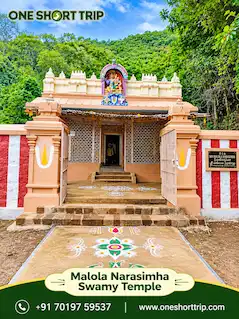
Malola Narasimha is one of the nine sacred forms worshipped at Ahobilam. The name is traditionally associated with Lord Narasimha in the company of Goddess Lakshmi. The shrine is an important stop for devotees exploring the Nava Narasimha pilgrimage.

Read our Malola Narasimha Temple guide →

02 · Nava Narasimha Shrine

Jwala Narasimha Temple

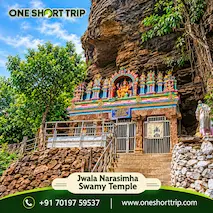
Jwala Narasimha is associated with the fierce form of the Lord and the episode of Hiranyakashipu's destruction. The shrine is located in the Upper Ahobilam hill region and is generally approached through a trekking route. Visitors should assess the trail and their fitness before planning this visit.

03 · Nava Narasimha Shrine

Kroda Narasimha Temple

Kroda Narasimha, also known as Varaha Narasimha, is one of the traditional Nava Narasimha forms. The deity is associated with the Varaha aspect of Lord Vishnu and is an important part of the Ahobilam pilgrimage.

04 · Nava Narasimha Shrine

Karanja Narasimha Temple

Karanja Narasimha is associated with the Karanja tree and is another important shrine in the Nava Narasimha tradition. Devotees include this temple as part of their wider pilgrimage around Ahobilam.

05 · Nava Narasimha Shrine

Bhargava Narasimha Temple

Bhargava Narasimha is associated with the sage Bhargava's penance and worship of Lord Narasimha. The shrine is located in the Ahobilam region and is one of the nine traditional forms.

06 · Nava Narasimha Shrine

Yogananda Narasimha Temple

Yogananda Narasimha represents the peaceful, meditative aspect of the Lord. The shrine is traditionally associated with Lord Narasimha blessing Prahlada after the destruction of Hiranyakashipu.

07 · Nava Narasimha Shrine

Chatravata Narasimha Temple

Chatravata Narasimha is traditionally associated with a sacred tree and is one of the nine Narasimha shrines of Ahobilam. Its peaceful setting forms part of the region's spiritual landscape.

08 · Nava Narasimha Shrine

Pavana Narasimha Temple

Pavana Narasimha is one of the nine sacred shrines and is traditionally associated with purification and the removal of sins. It is located in a more remote part of the Ahobilam region, and reaching it can involve a demanding journey.

Read our Pavana Narasimha Temple guide →

09 · Sacred Hill Landmark

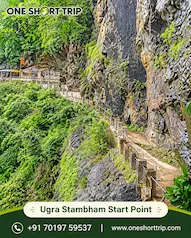
Ugra Stambha

Ugra Stambha is a prominent rocky hill landmark associated with the pillar from which Lord Narasimha is believed to have manifested. It holds special significance in the local sacred tradition of Ahobilam. Reaching the landmark involves a challenging uphill trek, so visitors should check local guidance and assess their fitness before attempting it.

The Nava Narasimha shrines are spread across different parts of the Ahobilam region. Some involve longer walks and difficult terrain. If you plan to cover several temples, arrange local transport, check trail conditions and allow enough time for darshan and rest.

Can You Visit Upper Ahobilam and Lower Ahobilam on the Same Day?

Yes. You can plan to visit both Upper Ahobilam and Lower Ahobilam on the same day. Ahobila Narasimha Temple is in Upper Ahobilam, while Lower Ahobilam is another important centre of worship in the Nava Narasimha pilgrimage. The amount you can cover depends on darshan timings, road access and the time required for walking between shrines.

Suggested Order of Visits

1
Begin at Lower Ahobilam

Start with the important temple area at Lower Ahobilam and confirm the day's local travel arrangements.

2
Travel Towards Upper Ahobilam

Continue towards Upper Ahobilam, approximately 8 kilometres away, using suitable road transport.

3
Visit Ahobila Narasimha Temple

Offer prayers at the principal cave shrine dedicated to Lord Ugra Narasimha.

4
Visit Selected Nearby Shrines

If time and access conditions permit, include selected nearby Nava Narasimha shrines. Check walking requirements before proceeding.

5
Return to Lower Ahobilam

Return using your arranged transport and keep sufficient time for the onward journey or overnight stay.

Important Planning Note

Visiting Upper and Lower Ahobilam on the same day is different from completing all nine Nava Narasimha shrines. Some shrines require longer walks or challenging treks. Do not attempt to fit the entire pilgrimage into a rushed schedule, particularly if travelling with senior citizens.

Suggested One-Day Ahobilam Temple Visit Plan

If you have one day at Ahobilam and want to visit the principal temples, consider the following flexible plan. It focuses on Lower Ahobilam, Upper Ahobilam and Ahobila Narasimha Temple rather than attempting all nine shrines in a single day.

Time Suggested Activity
Early Morning Begin at Lower Ahobilam and complete darshan at the selected temple.
Morning Travel towards Upper Ahobilam.
Late Morning Visit Ahobila Narasimha Temple and offer prayers.
Afternoon Lunch and rest. Avoid planning strenuous walks during the hottest hours.
Afternoon / Evening Visit another accessible shrine if time, temple timings and local access permit.
Evening Return to your accommodation or continue your onward journey.
Important Planning Note

This is a suggested sightseeing plan, not a fixed temple schedule. Actual timings and the order of visits may need to change depending on darshan availability, road conditions, local transport and the time required at each shrine.

If your main purpose is to complete the Nava Narasimha pilgrimage, plan a separate itinerary with sufficient time for trekking and rest. Some shrines are located in remote areas and should not be rushed into a one-day sightseeing plan.

Visitor Information

Frequently Asked Questions About Ahobila Narasimha Temple

Find answers to common questions about Ahobila Narasimha Temple, including its location, history, Ugra Narasimha form, temple timings, travel options and the Nava Narasimha temples of Ahobilam.

1. Where is Ahobila Narasimha Temple located?

Ahobila Narasimha Temple is located at Upper Ahobilam in the Nallamala Hills of Andhra Pradesh. It is approximately 8 km from Lower Ahobilam and forms part of the Nava Narasimha pilgrimage circuit in Nandyal district.

2. What is Ahobila Narasimha Temple famous for?

The temple is famous for its association with Lord Narasimha's fierce Ugra form and the sacred story of his manifestation to protect Prahlada. It is regarded as the principal and earliest of the nine Narasimha shrines at Ahobilam according to the Ahobila Mutt tradition.

3. Who built Ahobila Narasimha Temple?

The exact original builder and construction date of the cave shrine are not firmly established. The temple is traditionally regarded as a self-manifest shrine of Lord Narasimha. Ahobilam received patronage from different rulers and devotees over the centuries, but no single historical builder can be confidently identified for this shrine.

4. Is Ahobila Narasimha Temple one of the Nava Narasimha temples?

Yes. Ahobila Narasimha Temple is one of the nine sacred Narasimha shrines collectively known as the Nava Narasimha temples of Ahobilam. It is situated in Upper Ahobilam and is traditionally considered the principal shrine among them.

5. What is the story behind Ahobila Narasimha Temple?

According to the traditional sthala purana, the demon king Hiranyakashipu opposed his son Prahlada's devotion to Lord Vishnu. When Hiranyakashipu challenged Prahlada to show where Vishnu was present, the Lord emerged from a pillar in the form of Narasimha, half-man and half-lion, to protect Prahlada and destroy the demon king. Ahobilam is closely associated with this sacred manifestation.

6. Which God is worshipped at Ahobila Narasimha Temple?

The presiding deity is Lord Sri Narasimha, an incarnation of Lord Vishnu. At this shrine, he is worshipped in his fierce Ugra Narasimha form, associated with the protection of Prahlada and the destruction of evil.

7. What does the name Ahobilam mean?

Two traditional explanations are associated with the name Ahobilam. One links it to the expression "Ahobala", an exclamation of the Devas at the extraordinary strength of Lord Narasimha. Another connects the name with a great cave where Garuda is believed to have performed penance and received the Lord's darshan.

8. Is Ahobila Narasimha Temple located inside a cave?

Yes. The main shrine is situated in a natural cave formation at Upper Ahobilam. Its setting among the rocky terrain and forested Nallamala Hills gives the temple a distinctive atmosphere compared with many conventional temple complexes.

9. Why is Lord Narasimha worshipped here as Ugra Narasimha?

Ugra means fierce or powerful. The form represents Lord Narasimha's divine appearance to protect Prahlada and overcome the cruelty of Hiranyakashipu. Devotees worship this form as a symbol of divine protection, courage and the destruction of negative forces.

10. Is Ahobila Narasimha Temple the same as Jwala Narasimha Temple?

No. They are two separate shrines among the Nava Narasimha temples. Ahobila Narasimha is the principal cave shrine at Upper Ahobilam, while Jwala Narasimha is another important shrine traditionally associated with the episode of Lord Narasimha slaying Hiranyakashipu.

11. What is Ugra Stambham and is it inside Ahobila Narasimha Temple?

Ugra Stambham is a prominent rocky landmark in the Ahobilam hills, traditionally identified with the pillar from which Lord Narasimha manifested. It is a separate hill destination and not part of the Ahobila Narasimha cave sanctum. Reaching it involves a demanding trek through rocky terrain.

12. What are the temple timings of Ahobila Narasimha Temple?

Temple opening hours and darshan arrangements can vary. Visitors should confirm the latest timings with the temple authorities or local arrangements before travelling, particularly during festivals and special religious occasions.

13. Can I reach Ahobila Narasimha Temple by car?

Upper Ahobilam can generally be reached by road from Lower Ahobilam, which is approximately 8 km away. Visitors can travel by private vehicle or arrange local transport. Road conditions, vehicle access and local transport availability should be checked before the journey.

14. Can senior citizens visit Ahobila Narasimha Temple?

Senior citizens who are comfortable walking on uneven surfaces may be able to visit the main shrine, depending on their mobility and the prevailing access conditions. The cave setting and rocky surroundings may require extra care. Those with limited mobility should check the approach and available assistance locally before planning the visit.

15. How much time should I spend at Ahobila Narasimha Temple?

Allow approximately 30 minutes to one hour for a relaxed visit to the main shrine, depending on the crowd, darshan arrangements and time spent exploring the surroundings. This does not include travel from Lower Ahobilam or visits to the other Nava Narasimha temples.

16. What is the connection between Ahobilam and Prahlada?

Prahlada is central to the sacred history of Ahobilam. According to the traditional account, his unwavering devotion to Lord Vishnu led to the manifestation of Lord Narasimha, who protected him from Hiranyakashipu. The temples and sacred landmarks of Ahobilam are closely connected with this story.

17. What is the connection between Ahobilam and Chenchu Lakshmi?

Local Ahobilam tradition describes a connection between Lord Narasimha and Chenchu Lakshmi, associated with the Chenchu community of the Nallamala region. This is an important part of the wider religious and cultural heritage of Ahobilam and is not limited to the main Ahobila Narasimha shrine.

18. What is the history of Ahobila Math?

Ahobila Math is a prominent Vaishnavite religious institution traditionally established at Ahobilam around 600 years ago by Srimad Athivan Satakopan, also known as Adi Van Satakopa Jeeyar. The Math has played an important role in preserving and promoting the worship and traditions associated with Lord Narasimha.

19. Which places can I visit near Ahobila Narasimha Temple?

You can explore other Nava Narasimha shrines such as Malola Narasimha, Jwala Narasimha and Pavana Narasimha, along with important landmarks such as Ugra Stambham and Prahlada Mettu. Some destinations involve forest trails and steep or rocky climbs, so plan according to your fitness and available time.

20. Can I visit all nine Nava Narasimha temples in one day?

Visiting all nine temples in one day can be challenging because they are spread across Lower and Upper Ahobilam, and some require trekking through forested and rocky terrain. A more relaxed itinerary over two days is generally preferable, especially for families and senior citizens.

21. Is there an entry fee at Ahobila Narasimha Temple?

We do not have a reliably confirmed current official fee schedule for the shrine. Any special darshan, pooja or other charges should be checked with the temple authorities before your visit.

22. Is photography allowed inside Ahobila Narasimha Temple?

Photography rules may differ between the outer premises and the inner shrine. Follow the notices displayed at the temple and the instructions of temple staff. Avoid taking photographs in restricted areas.

23. Can I visit Ahobila Narasimha Temple without trekking to the other shrines?

Yes. You can plan a visit specifically to the main Ahobila Narasimha shrine at Upper Ahobilam without attempting the longer treks to the more remote shrines. Confirm road access and the final approach to the temple before travelling.

24. What is the best time of year to visit Ahobila Narasimha Temple?

The cooler months, generally from November to February, are often more comfortable for visiting Ahobilam and exploring its forested surroundings. Summer can be hot, while monsoon conditions may make rocky paths and trekking routes slippery. Check local weather and access conditions before planning outdoor visits.

Explore Ahobilam with One Short Trip

Plan Your Ahobilam Nava Narasimha Temple Visit with One Short Trip

Ahobilam is a sacred pilgrimage destination where the nine forms of Lord Narasimha are worshipped across the forested Nallamala Hills. From the principal cave shrine of Ahobila Narasimha to the hill temples and remote forest shrines, every destination is connected with the spiritual traditions of this region.

Visiting the Nava Narasimha temples requires careful planning because the shrines are spread across Lower and Upper Ahobilam. Some can be reached by road, while others involve walking or trekking through rocky and forested terrain.

Whether you are planning a family pilgrimage, a spiritual journey with senior citizens or a complete Nava Narasimha darshan, a thoughtfully arranged itinerary can help make the journey more comfortable and manageable.

At One Short Trip, we help travellers plan temple tours from Bangalore with practical travel arrangements and carefully planned itineraries. Our aim is to make spiritual journeys easier to organise, especially for families and older travellers.

Explore More About Ahobilam

Temple Location

Where Is Ahobila Narasimha Temple Located?

Sri Ahobila Narasimha Swamy Temple, also known as the Ugra Narasimha Temple, is located in Upper Ahobilam in the Nallamala Hills of Andhra Pradesh. It is one of the nine sacred Nava Narasimha shrines of Ahobilam and is traditionally regarded as the principal and earliest of these temples. The shrine is approximately 8 km from Lower Ahobilam.

📍
Sri Ahobila Narasimha Swamy Temple 4PFP+RP7, Allagadda Mandal, Ahobilam, Andhra Pradesh 518543, India
Get Directions

Planning A Trip Here?

Get help planning your visit — call or WhatsApp us and we will help you book a tour.