One Short Trip

Malola Narasimha Swamy Temple, Upper Ahobilam, Andhra Pradesh
Pilgrimage

Malola Narasimha Swamy Temple, Ahobilam

A sacred hill shrine in Upper Ahobilam, where Lord Narasimha is worshipped with Goddess Lakshmi in His peaceful and graceful Malola form, symbolising divine love, compassion and protection.

Primary Deity
Lord Malola Narasimha with Goddess Lakshmi
Location
Vedadri Hill, Upper Ahobilam
Religious Significance
One of the Nava Narasimha Shrines
Temple Access
Hill Path from Upper Ahobilam
Explore the Sacred Heritage of Ahobilam

About Malola Narasimha Swamy Temple, Ahobilam

Situated on Vedadri Hill in Upper Ahobilam, Andhra Pradesh, Malola Narasimha Swamy Temple is one of the nine sacred Nava Narasimha shrines. The temple is dedicated to Lord Narasimha in His graceful and peaceful form, accompanied by Goddess Lakshmi. Unlike the fierce form associated with the moment of the destruction of Hiranyakashipu, Malola Narasimha is worshipped as a compassionate and benevolent manifestation of the Lord.

The name Malola comes from the Sanskrit-derived words 'Ma', referring to Goddess Lakshmi, and 'Lola', meaning beloved. The name therefore expresses the Lord's loving association with Lakshmi. The shrine is also traditionally known as Markonda Lakshmi Kshetra.

Malola Narasimha has a special place in the history and worship tradition of Sri Ahobila Matha. According to the Matha's traditional account, the festival image of the Lord appeared to Sri Adivan Satakopa Jeeyar, its first pontiff. The utsava murti has since been carried by successive pontiffs during their religious tours and visits to devotees.

Located approximately two kilometres from the main Upper Ahobilam temple, Malola Narasimha is reached by following a hill path through the natural surroundings of the Nallamala region. Its peaceful setting and association with the Ahobila Matha make it an important stop for pilgrims exploring the Nava Narasimha temples.

Malola Narasimha Temple – Quick Information

Temple Name
Sri Malola Narasimha Swamy Temple
Other Name
Markonda Lakshmi Kshetra
Location
Vedadri Hill, Upper Ahobilam
Town and District
Ahobilam, Nandyal District, Andhra Pradesh
PIN Code
518543
Presiding Deity
Lord Malola Narasimha with Goddess Lakshmi
Religious Tradition
Sri Vaishnavism
Nava Narasimha Shrine
One of the Nine Narasimha Temples
Distance from Upper Ahobilam
Approximately 2 km from the main temple
Temple Access
Hill Path from Upper Ahobilam
Associated Institution
Sri Ahobila Matha
Traditional Form
Soumya – Peaceful and Graceful

Visitor note: The shrine is reached by a hill path from Upper Ahobilam. Wear comfortable footwear, carry drinking water and check local temple access and darshan arrangements before setting out.

What Is Malola Narasimha Temple Famous For?

Malola Narasimha Temple is famous for its peaceful form of Lord Narasimha seated with Goddess Lakshmi, its place among the Nava Narasimha shrines and its close association with Sri Ahobila Matha.

The name Malola means 'beloved of Lakshmi'. The deity is worshipped in a graceful form, traditionally described as Soumya Narasimha. This peaceful manifestation represents the Lord's loving and compassionate aspect.

The Temple Is Particularly Known For

  • Lord Narasimha worshipped alongside Goddess Lakshmi in a peaceful form.
  • The meaning of Malola as the beloved of Goddess Lakshmi.
  • Its position among the nine sacred Nava Narasimha shrines of Ahobilam.
  • Its location on Vedadri Hill in the Upper Ahobilam region.
  • Its traditional association with Sri Adivan Satakopa Jeeyar, the first pontiff of Ahobila Matha.
  • The travelling utsava murti of Malola Narasimha, worshipped by successive pontiffs of the Matha.
  • Its peaceful hill setting and connection with the spiritual heritage of Ahobilam.

For devotees, Malola Narasimha is an important form of the Lord to experience during a visit to Ahobilam. The shrine offers a different devotional atmosphere from the more fierce manifestations of Narasimha found at other locations in the hills.

Where Is Malola Narasimha Temple Located?

Malola Narasimha Swamy Temple is situated on Vedadri Hill, also referred to as Vedachala, in the Upper Ahobilam area of the Nallamala hills in Andhra Pradesh.

The shrine is approximately two kilometres from the main Upper Ahobilam temple of Ahobila Narasimha Swamy. It is reached by following a hill path through the rocky and forested landscape surrounding the Upper Ahobilam temples.

Temple Location

Sri Malola Narasimha Swamy Temple,
Vedadri Hill, Upper Ahobilam,
Nandyal District, Andhra Pradesh 518543, India.

Visitors travelling from Lower Ahobilam first need to reach the Upper Ahobilam area. From there, the Malola shrine is approached on foot. The final stretch is not a direct road journey to the temple entrance.

The hill location makes it useful to plan the visit along with the other Upper Ahobilam shrines. Allow time for walking, darshan and the return journey rather than treating the distance as an ordinary road transfer.

What Is the Story of Malola Narasimha Temple?

The story of Malola Narasimha is connected with the manifestation of Lord Narasimha and His divine relationship with Goddess Lakshmi. The shrine represents the peaceful and graceful aspect of the Lord, in contrast to the intense form associated with the destruction of Hiranyakashipu.

The name of the shrine itself expresses this relationship: Malola is understood as the Lord who is beloved of Goddess Lakshmi.

The Sacred Legend

The Graceful Form of Lord Narasimha with Goddess Lakshmi

According to the well-known Narasimha tradition, Lord Vishnu manifested as Narasimha to protect His devotee Prahlada and destroy the demon king Hiranyakashipu, who had troubled his son for his devotion to the Lord.

After the destruction of Hiranyakashipu, Narasimha's fierce form is traditionally described as Ugra, reflecting the intensity of the divine act. The different Nava Narasimha shrines at Ahobilam are associated with distinct manifestations and aspects of the Lord.

At Malola, the Lord is worshipped with Goddess Lakshmi in a peaceful and graceful form. Her presence is central to the identity of this shrine and to the meaning of its name.

The image of Lakshmi seated with Narasimha represents divine harmony, compassion and protection. For devotees, Malola is a reminder that the same Lord who protects dharma with great power is also worshipped in a loving and reassuring form.

What Does the Name Malola Mean?

The name Malola is traditionally explained through two words: Ma, referring to Goddess Lakshmi, and Lola, meaning beloved or dear. Malola therefore means the one who is beloved of Lakshmi.

This name reflects the form of the deity at the shrine, where Lord Narasimha is seen together with His consort. It is also why the temple is closely associated with the worship of Lakshmi Narasimha.

Why Is Malola Narasimha Worshipped in a Peaceful Form?

Narasimha is worshipped in several forms across Ahobilam. Some shrines emphasise the powerful and fierce manifestation of the Lord, while others represent His protective, meditative or graceful aspects.

At Malola, the presence of Goddess Lakshmi and the graceful appearance of the deity give the shrine its Soumya character. This makes it an especially meaningful stop for devotees who wish to worship the compassionate form of Lord Narasimha.

How Is Malola Connected with Sri Ahobila Matha?

One of the most distinctive traditions associated with Malola Narasimha concerns Sri Adivan Satakopa Jeeyar, the first pontiff of Sri Ahobila Matha.

According to the Matha's traditional account, the utsava murti, or festival image, of Malola Narasimha appeared to the first Jeeyar. The deity became closely associated with the Matha's spiritual mission and its tradition of taking the Lord to devotees in different places.

The travelling utsava murti of Malola Narasimha has traditionally accompanied successive pontiffs of Ahobila Matha during their religious tours. This tradition is an important part of the Matha's identity and its connection with devotees across India.
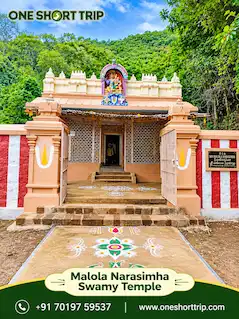
Malola Narasimha Swamy Temple on Vedadri Hill in Upper Ahobilam, Andhra Pradesh
Malola Narasimha Swamy Temple, Vedadri Hill, Upper Ahobilam

What Is the History of Malola Narasimha Temple?

Malola Narasimha Temple forms part of the traditional group of nine Narasimha shrines spread across the hills of Ahobilam. Its religious importance is closely connected with the worship of Lord Narasimha in His peaceful form and with the history of Sri Ahobila Matha.

Unlike some of the larger temple structures at Ahobilam, the available historical material consulted for this guide does not establish a precise original construction year, a named architect or a complete chronology of the Malola shrine's physical structure.

The most distinctive historical tradition associated with Malola is the appearance of its utsava murti to Sri Adivan Satakopa Jeeyar, the founder of Ahobila Matha.

The Tradition of Sri Adivan Satakopa Jeeyar

Sri Adivan Satakopa Jeeyar is revered as the first pontiff and founder of Sri Ahobila Matha. The Matha's traditional account connects the beginning of its spiritual mission with the divine blessing of Lord Narasimha at Ahobilam.

The utsava murti of Malola Narasimha is said to have appeared to the first Jeeyar. The deity was then taken along during his religious journeys, allowing devotees in different places to receive the Lord's darshan.

This tradition developed into a distinctive feature of Ahobila Matha. The successive pontiffs continued to worship and carry the festival image during their travels and visits to communities.

The Travelling Utsava Murti of Malola Narasimha

The utsava murti is the processional or festival image of a deity. In the tradition of Ahobila Matha, Malola Narasimha's festival image has a special role because it accompanies the pontiff on religious tours.

Through this practice, the Lord is taken to devotees who may not be able to travel to the hill shrine at Ahobilam. The tradition has helped establish a close devotional connection between the Matha, its pontiffs and Sri Vaishnava communities in different regions.

The travelling deity is not simply a historical feature of the Matha; it remains an important expression of its continuing religious tradition.

How Old Is Malola Narasimha Temple?

Malola Narasimha is part of the ancient religious landscape of Ahobilam, a major centre of Narasimha worship in the Nallamala hills. However, the exact date when the present Malola shrine was constructed has not been firmly established in the historical sources consulted for this guide.

It is therefore more accurate to describe the shrine as an important traditional pilgrimage centre than to assign it an unsupported construction date or dynasty.

Historical and Religious Timeline of Malola Narasimha

TRADITIONAL NAVA NARASIMHA HERITAGE
The Sacred Shrine at Vedadri

Malola is recognised as one of the nine traditional Narasimha shrines of Ahobilam.

SRI ADIVAN SATAKOPA JEEYAR
The Ahobila Matha Tradition Begins

According to the Matha's traditional account, the utsava murti of Malola Narasimha appeared to its first pontiff.

SUCCESSIVE PONTIFFS
The Travelling Deity Tradition

The festival image continued to be worshipped and carried by successive Jeeyars during their religious tours.

CONTINUING TRADITION
Worship at Ahobilam and Beyond

Malola Narasimha remains an important focus of worship at the hill shrine and in the religious activities of Ahobila Matha.

Who Built Malola Narasimha Temple?

The original builder of Malola Narasimha Temple has not been conclusively identified in the historical sources consulted for this guide. The shrine is part of the traditional Nava Narasimha pilgrimage landscape of Ahobilam, but a specific king, dynasty or architect cannot be confidently credited with constructing the present temple.

Is Malola Narasimha Temple Connected with Adivan Satakopa Jeeyar?

Yes. The temple has a strong traditional association with Sri Adivan Satakopa Jeeyar, the first pontiff of Sri Ahobila Matha. According to the Matha's account, the festival image of Malola Narasimha appeared to him and became the travelling deity associated with the institution.

This connection is central to the shrine's religious history, but it should not be confused with proof that the first Jeeyar constructed the physical temple building.

Who Established Sri Ahobila Matha?

Sri Adivan Satakopa Jeeyar is revered as the founder and first pontiff of Sri Ahobila Matha. The institution follows the Sri Vaishnava tradition and has played an important role in preserving and spreading the worship and teachings associated with Lord Narasimha and the Ahobilam pilgrimage.

What Is Known About the Temple's Construction History?

The available sources describe the shrine's location, deity, religious significance and association with Ahobila Matha. They do not provide enough reliable detail to establish:

  • The exact year in which the present shrine was built.
  • The name of the original architect or chief builder.
  • A complete sequence of historical renovations.
  • A confirmed list of royal patrons responsible for the present structure.
In Summary

Malola Narasimha Temple is an important traditional shrine within the Nava Narasimha group. Its best-known historical association is with Sri Adivan Satakopa Jeeyar and the travelling utsava murti of Malola Narasimha. The original builder and precise construction date of the present shrine have not been conclusively established.

Who Is the Main Deity of Malola Narasimha Temple?

The presiding deity of Malola Narasimha Temple is Lord Malola Narasimha Swamy, worshipped together with Goddess Lakshmi. The deity represents the peaceful and graceful form of Lord Narasimha, traditionally known as Soumya Narasimha.

The Lord is depicted seated with Goddess Lakshmi on His lap. This divine form is a visual expression of the relationship between Narasimha and Lakshmi and is central to the meaning of the name Malola.
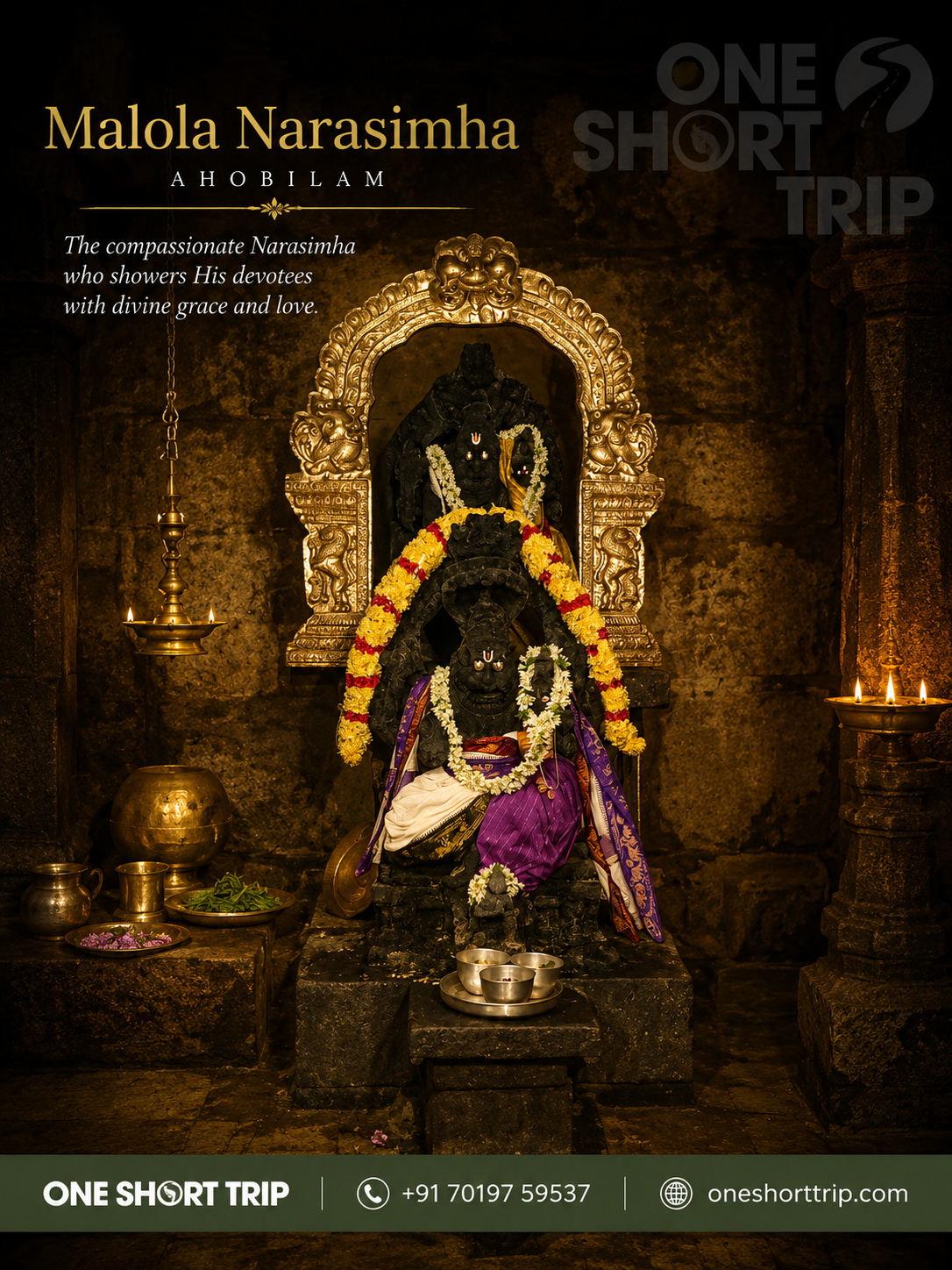
Lord Malola Narasimha Swamy with Goddess Lakshmi at Ahobilam
Sri Malola Narasimha Swamy, the graceful form of Lord Narasimha with Goddess Lakshmi

What Is Special About the Malola Narasimha Idol?

The distinctive feature of the deity is the presence of Goddess Lakshmi seated with Lord Narasimha. The Lord's graceful appearance gives the shrine its peaceful character and distinguishes it from shrines where Narasimha is represented in a more intense or fierce manifestation.

The traditional description of the deity emphasises His compassionate nature and the protective presence of Goddess Lakshmi. Devotees worship the divine couple for blessings, peace and spiritual well-being.

Why Is the Deity Called Lakshmi Narasimha?

Lord Narasimha is known as Lakshmi Narasimha when worshipped with Goddess Lakshmi. At Malola, this association is especially important because the name itself describes the Lord as beloved of Lakshmi. The shrine therefore represents the divine pair in a form associated with grace, harmony and protection.

What Is the Religious and Spiritual Significance of Malola Narasimha Temple?

Malola Narasimha Temple holds a special position in the religious traditions of Ahobilam. Its significance comes from its place among the Nava Narasimha shrines, its peaceful form of the Lord with Goddess Lakshmi and its close association with Sri Ahobila Matha.

🛕

One of the Nava Narasimhas

Malola is one of the nine traditional Narasimha shrines spread across the hills and surroundings of Ahobilam. Each shrine represents a distinct form or aspect of the Lord.

🙏

Peaceful Form of Narasimha

The Lord is worshipped in His Soumya form with Goddess Lakshmi, representing divine grace, compassion and protection.

🕉️

Connection with Ahobila Matha

The travelling utsava murti of Malola Narasimha is central to the religious tradition of Sri Ahobila Matha and its successive pontiffs.

⛰️

Sacred Hill Setting

The shrine is situated on Vedadri Hill in the Nallamala region, forming part of the distinctive landscape of the Upper Ahobilam pilgrimage.

For Sri Vaishnava devotees, the temple is an important place to worship Lord Narasimha and remember the spiritual tradition of Ahobila Matha. Beliefs about the blessings and spiritual benefits of worship are matters of faith and may vary among devotees.

What Is the Connection Between Malola Narasimha Temple and the Nava Narasimha Temples?

Malola Narasimha Temple is one of the nine sacred shrines collectively known as the Nava Narasimha temples of Ahobilam. These shrines are associated with different manifestations of Lord Narasimha and are spread across the Upper and Lower Ahobilam region.

The traditional Nava Narasimha list includes Ahobila, Jwala, Malola, Kroda or Varaha, Karanja, Bhargava, Yogananda, Chatravata and Pavana Narasimha. Malola represents the peaceful form of the Lord with Goddess Lakshmi.

What Are the Nine Nava Narasimha Shrines?

01
Ahobila Narasimha
The principal Upper Ahobilam shrine
02
Jwala Narasimha
Associated with the fierce manifestation of the Lord
03 · THIS SHRINE
Malola Narasimha
The peaceful form with Goddess Lakshmi
04
Kroda Narasimha
Also known as Varaha Narasimha
05
Karanja Narasimha
Associated with the Karanja tree
06
Bhargava Narasimha
Associated with Bhargava Rama's penance
07
Yogananda Narasimha
The Lord in a meditative form
08
Chatravata Narasimha
Associated with the Chatravata tree
09
Pavana Narasimha
The sacred Pavana shrine

Where Does Malola Narasimha Temple Come in the Nava Narasimha Pilgrimage?

Malola Narasimha is situated approximately two kilometres from the main Upper Ahobilam temple. It is one of the important hill shrines visited by pilgrims exploring the Upper Ahobilam group.

The route to Malola is different from the more demanding approach to Jwala Narasimha. However, it still involves walking on a hill path, so visitors should plan according to their fitness, footwear and the condition of the trail.

Pilgrimage Planning Note

The nine shrines are spread across different locations and do not form a single short walking circuit. Check local access conditions and allow sufficient time if you plan to visit several temples in one day.

Should You Visit Malola Narasimha Temple During an Ahobilam Trip?

Yes. Malola Narasimha is an important part of the Nava Narasimha pilgrimage and is especially meaningful for devotees interested in the peaceful Lakshmi Narasimha form and the traditions of Ahobila Matha.

If you are planning to visit the Upper Ahobilam temples, consider including Malola along with Ahobila Narasimha and other nearby shrines, depending on the time available and local trail conditions.

Visitors travelling with senior citizens or people who have difficulty walking should assess the hill path before starting. The final approach is on foot, and the route may not be suitable for everyone.

Continue Exploring

Explore More About Ahobilam

Discover the nine sacred Narasimha shrines, understand the difference between Upper and Lower Ahobilam, and plan your pilgrimage with our detailed Ahobilam travel guide.

How Far Is Malola Narasimha Temple from Upper Ahobilam Temple?

Malola Narasimha Swamy Temple is situated on Vedadri Hill, approximately 2 kilometres from the main Narasimha shrine at Upper Ahobilam. Unlike temples that can be reached directly by road, the final approach to Malola involves walking along a hill path.

From Upper Ahobilam
Approx. 2 km

The Malola shrine is nearly 2 kilometres from the main Upper Ahobilam temple, according to Andhra Pradesh Tourism information.

Final Approach
Hill Path

Visitors need to follow the hill path from the Upper Ahobilam area. The route may include uneven ground and steps.

Understanding the Route to Malola Temple

The journey begins at Upper Ahobilam, also known as Eguva Ahobilam. From the main Upper Ahobilam Narasimha temple, visitors continue towards the Malola shrine on Vedadri Hill. The shrine is located on a relatively level surface on the mountain peak.

The approximately 2-kilometre distance refers to the route from the main Upper Ahobilam temple area. Actual walking time depends on the trail conditions, the route being followed and your walking pace.

Can You Reach Malola Temple Directly by Road?

Road access is available to Upper Ahobilam from Lower Ahobilam. However, visitors should not assume that a vehicle can reach the Malola shrine itself. The final approach is on foot along the hill route.

Travel Tip

Check the current trail condition and access arrangements with local temple authorities before starting. Wear comfortable footwear with a good grip for the approach, and avoid rushing along uneven sections.

What Are the Temple Timings of Malola Narasimha Temple?

Visitors planning darshan at Malola Narasimha Swamy Temple should confirm the current shrine timings before travelling. The Malola shrine is part of the Upper Ahobilam hill-temple circuit, and its darshan availability may be affected by the daily worship schedule and local arrangements.

General timings published for Upper Ahobilam should not automatically be treated as confirmed timings for the Malola shrine. Check directly with the temple or local authorities for the latest information.

Important Timing Information

We are not publishing unverified morning and evening hours as confirmed Malola temple timings. Please verify the current darshan schedule and any access restrictions before beginning the hill walk.

How Can You Confirm the Temple Timings?

Before travelling, follow these steps:

01
Check with the Temple

Ask for the current darshan schedule specifically for Malola Narasimha Temple.

02
Confirm Local Access

Check whether the hill path is accessible and whether any local restrictions apply.

03
Check Festival Arrangements

Ask whether special worship, processions or festival arrangements affect darshan.

04
Start with Enough Time

Allow time for the walk, darshan, rest and the return journey to Upper Ahobilam.

Do not confuse the timings of Lower Ahobilam and the main Upper Ahobilam temple with those of Malola Narasimha Temple. Confirm the schedule for the specific shrine you intend to visit.

When Is the Best Time to Visit Malola Narasimha Temple?

The best time to visit Malola Narasimha Swamy Temple depends on the weather, your preferred darshan experience and your comfort with walking on a hill path. Since the shrine is located in the Nallamala hill region, it is sensible to plan the visit during daylight and avoid the hottest part of the day.

🌅

Morning Visit

Morning is generally a practical choice for walking to the Malola shrine, particularly during warmer months.

Start only after confirming darshan timings and local access conditions.

🌤️

Cooler Months

The cooler months are generally more comfortable for exploring the hill shrines of Ahobilam.

The period from November to February is often preferred for outdoor travel in this region.

🙏

Festival Periods

Festival periods offer an opportunity to experience the devotional traditions associated with Ahobilam and Lord Narasimha.

Expect more visitors and check local arrangements before travelling.

🌳

Daylight Hours

The hill approach is best planned during daylight, when the path and surrounding terrain are easier to observe.

Avoid starting late without confirming the return arrangements.

Which Months Are Comfortable for Visiting?

November to February

These months generally offer more comfortable conditions for travelling around Ahobilam and walking to its hill shrines. Weather can still vary, so check the forecast before departure.

During Summer

Summer conditions can make the hill walk tiring, especially during the hotter hours. Carry drinking water, wear suitable footwear and plan the approach during a cooler part of the day.

For senior citizens: The walk to Malola should not be treated as an entirely easy, flat temple visit. Anyone with mobility or balance difficulties should assess the route carefully and seek local guidance before attempting it.

What Are the Important Festivals Associated with Malola Narasimha Temple?

Malola Narasimha Temple is part of the wider Ahobilam pilgrimage tradition dedicated to Lord Lakshmi Narasimha. Devotees visiting the region may plan their journey around important Narasimha worship occasions and the annual celebrations associated with Ahobilam. The exact festival programme for the Malola shrine should be confirmed locally.

🦁

Narasimha Jayanti

Narasimha Jayanti commemorates the appearance of Lord Narasimha. It is an important occasion for devotees of the Lord, and Ahobilam is a significant pilgrimage destination associated with his worship.

🎉

Ahobilam Brahmotsavam

Brahmotsavam is among the major annual celebrations associated with the Ahobilam temple complex. The programme includes traditional worship and festive processions. Confirm which shrines and events are included in the year's schedule.

🌿

Paruveta Utsavam

Paruveta is a distinctive festival tradition associated with Ahobilam. The celebrations include the Lord's ceremonial visits to surrounding villages, reflecting the region's religious and cultural traditions.

⭐

Swathi Nakshatra Worship

Swathi is traditionally associated with Lord Narasimha. Special worship and observances connected with this star are followed by devotees at Narasimha temples. Confirm the specific arrangements at Malola before planning around this occasion.

🙏

Vaishnava Observances

Important occasions in the Sri Vaishnava calendar are observed through prayer, worship and devotional activities. The programme may differ between the shrines of Ahobilam.

Festival planning: Festival dates and shrine-specific rituals can change from year to year. Confirm the current Ahobilam festival calendar, Malola darshan arrangements and hill-path access before travelling.

How to Reach Malola Narasimha Temple?

Malola Narasimha Swamy Temple is located in the Nallamala hill region of Ahobilam, in Nandyal district, Andhra Pradesh. Visitors first need to reach Ahobilam village and then travel from Lower Ahobilam to Upper Ahobilam. The final approach to Malola is on foot from the Upper Ahobilam temple area.

From Lower Ahobilam

Lower Ahobilam is the main village area and the starting point for reaching Upper Ahobilam. The two areas are connected by a ghat road through the Nallamala hills. Visitors can enquire locally about available transport to Upper Ahobilam.

🚗
Private Car
🚕
Local Taxi
🚙
Local Jeep
🚌
Local Bus

Local transport availability and operating schedules can change. Confirm the arrangements at Lower Ahobilam before proceeding to Upper Ahobilam.

How to Reach Malola Temple from Bangalore?

Travellers from Bangalore can reach Ahobilam by road or by combining train and road transport. The road journey passes through Andhra Pradesh towards the Allagadda and Ahobilam region. The distance and travel time depend on the route selected and road conditions.

After reaching Lower Ahobilam, continue to Upper Ahobilam by available local transport. From there, follow the hill path to Malola Narasimha Temple.

How to Reach Malola Temple from Hyderabad?

Travellers from Hyderabad can reach Ahobilam by road or by train and connecting road transport. Nandyal is one of the nearest major railway access points for visitors travelling by train.

From Nandyal, continue towards Allagadda and then Lower Ahobilam. Arrange local transport for the ghat-road journey to Upper Ahobilam.

How to Reach by Train?

Nandyal is a commonly used railway access point for Ahobilam. Visitors arriving at Nandyal Railway Station can continue towards Allagadda and then travel to Lower Ahobilam by road.

Check the latest train schedules and connecting transport availability before planning your journey. The onward road journey and local transfer to Upper Ahobilam should be included in your travel plan.

How to Reach by Bus?

Bus services connect the Ahobilam region with nearby towns, including Allagadda and Nandyal. Visitors can travel to Lower Ahobilam using available regional bus connections.

From Lower Ahobilam, check the availability of local buses, jeeps or other transport to Upper Ahobilam. Do not assume that bus services operate frequently throughout the day.

Travel Recommendation

If you are travelling with family or senior citizens, plan the journey in stages: reach Lower Ahobilam, arrange transport to Upper Ahobilam and assess the final walking route to Malola. Confirm local transport and access arrangements in advance.

How Much Time Is Required to Visit Malola Narasimha Temple?

The time required to visit Malola Narasimha Temple depends on your starting point, walking pace, darshan arrangements and whether you are including other Nava Narasimha shrines in your visit.

Type of Visit Time Planning
Walk from Upper Ahobilam to Malola Allow time for the hill path
Darshan at Malola Temple Depends on temple arrangements
Malola with nearby Upper Ahobilam shrines Allow additional time
Visit during a festival Allow extra time for crowds
Visit as part of the Nava Narasimha pilgrimage Plan a larger pilgrimage schedule

These are planning guidelines, not official visit durations. The walking time can vary with the condition of the trail, weather and individual fitness. Visitors travelling with senior citizens or children should allow additional time for rest and movement.

What Should You Know Before Visiting Malola Narasimha Temple?

Malola Narasimha Temple is situated in a hill environment, and reaching the shrine involves more than an ordinary road-side temple visit. A little preparation can make the journey safer and more comfortable.

✓

Wear modest clothing: Choose clothing suitable for temple worship and the hill walk.

✓

Wear suitable footwear: Use comfortable footwear with a good grip for uneven and stepped sections. Follow temple instructions about where footwear must be removed.

✓

Follow the established path: Do not take shortcuts or venture onto unmarked sections of the hill.

✓

Carry drinking water: Keep sufficient water for the walk, particularly during warmer weather.

✓

Start during daylight: Plan the hill approach and return journey within daylight hours, following local advice.

✓

Respect the natural surroundings: Avoid littering, disturbing wildlife or damaging vegetation in the Nallamala hill region.

✓

Check photography restrictions: Confirm whether photography is permitted before taking pictures inside or around the shrine.

✓

Confirm darshan timings: Check the schedule specifically for Malola Narasimha Temple before starting from Lower Ahobilam.

✓

Consider mobility and fitness: Visitors with knee, balance or mobility difficulties should assess the hill path carefully before attempting the walk.

✓

Follow local guidance: Ask temple staff or local authorities about trail conditions, access restrictions and the safest route.

What Are the Places to Visit Near Malola Narasimha Temple?

A visit to Malola Narasimha Temple can be combined with other sacred destinations in Ahobilam. The region is especially known for the Nava Narasimha shrines, which represent nine forms of Lord Narasimha worshipped in the Nallamala hills.

01 · Main Upper Ahobilam Shrine

Ahobila Narasimha Temple

The main Upper Ahobilam shrine is dedicated to Lord Ahobila Narasimha. It is an important starting point for visitors exploring the hill shrines, including Malola Narasimha.

Read our Ahobilam Travel Guide →

02 · Nava Narasimha Shrine

Jwala Narasimha Temple

Jwala Narasimha is another important shrine in the Upper Ahobilam hill region. It is associated with the fierce manifestation of Lord Narasimha. The approach is more demanding than a regular temple visit, so check the route and local conditions before planning it.

Read our Jwala Narasimha Temple guide →

03 · Nava Narasimha Shrine

Kroda Narasimha Temple

Also known as Varaha Narasimha, this shrine is associated with the Varaha form of Lord Vishnu combined with Narasimha. It is one of the sacred shrines in the Upper Ahobilam group.

04 · Nava Narasimha Shrine

Karanja Narasimha Temple

Karanja Narasimha is another important shrine in the Ahobilam pilgrimage circuit. The deity is traditionally associated with a Karanja tree and is worshipped as one of the nine forms of Narasimha.

05 · Lower Ahobilam Shrine

Prahlada Varada Narasimha Temple

Located in Lower Ahobilam, this temple is dedicated to Lord Narasimha in his form as the one who blesses Prahlada. It is an important shrine for pilgrims beginning or completing their Ahobilam visit.

06 · Sacred Hill Region

Nallamala Hills

Ahobilam is situated in the Nallamala hill region, known for its forest landscape, rocky terrain and sacred Narasimha shrines. Visitors should follow local guidance and respect the natural environment while exploring the area.

If you plan to visit several shrines, allow enough time for walking, darshan and rest. Some Nava Narasimha temples involve more demanding routes than others. Plan the order according to your fitness, available transport and current access conditions.

Can You Visit Malola Narasimha Temple and Other Ahobilam Temples on the Same Day?

Yes. Malola Narasimha Temple can be included in a visit to other shrines at Upper Ahobilam. However, the number of temples you can comfortably cover depends on the walking routes, darshan availability and your physical fitness.

If your main purpose is to visit Malola, it is better to keep the schedule relaxed rather than trying to cover every Nava Narasimha shrine in a single day.

Suggested Order of Visits at Upper Ahobilam

1
Reach Upper Ahobilam

Travel from Lower Ahobilam to the Upper Ahobilam temple area using available local transport.

2
Visit the Main Ahobila Narasimha Shrine

Begin with darshan at the main Upper Ahobilam temple, subject to its current opening schedule.

3
Proceed Towards Malola Narasimha Temple

Follow the established hill path towards Malola. Check the route condition and allow enough time for the walk.

4
Offer Prayers at Malola Shrine

Spend time at the shrine of Lord Malola Narasimha with Goddess Lakshmi and follow the temple's worship instructions.

5
Return or Continue to Another Shrine

Return to Upper Ahobilam or continue to another nearby shrine only if the route, darshan schedule and your fitness permit.

Important Planning Advice

Jwala Narasimha and some of the other hill shrines involve more demanding walking routes. Do not combine them with Malola simply to complete more temples in less time. Ask locally about the safest route and current access conditions before extending your visit.

Suggested One-Day Ahobilam Temple Visit Plan

If you have one day at Ahobilam and want to include Malola Narasimha Temple, consider a relaxed plan focused on the main shrines. This is a suggested sequence, not a fixed schedule. Confirm darshan timings and local transport before starting.

Part of Day Suggested Activity
Morning Travel from Lower Ahobilam to Upper Ahobilam and visit the main Ahobila Narasimha shrine.
Morning Proceed along the hill path towards Malola Narasimha Temple.
Late Morning Complete darshan at Malola and allow time for the return walk.
Afternoon Take a lunch and rest break at a suitable location.
Afternoon Visit another accessible shrine only if time, darshan availability and your fitness permit.
Before Evening Return towards Lower Ahobilam according to local transport arrangements and temple access conditions.
Important Planning Note

This is a suggested one-day plan for selected Ahobilam shrines, not a guarantee that every temple will be open throughout the proposed visit. The actual order may need to change depending on darshan timings, weather, transport and trail conditions.

If your main purpose is to visit all nine Nava Narasimha shrines, plan a separate, carefully organised pilgrimage. Some shrines require longer walks or special local transport, so trying to cover everything in a rushed schedule may make the journey tiring.

Visitor Information

Frequently Asked Questions About Malola Narasimha Temple

Find answers to common questions about Malola Narasimha Swamy Temple, including its location, religious significance, hill approach, darshan timings, travel options and connection with the Nava Narasimha temples.

1. Where is Malola Narasimha Temple located?

Malola Narasimha Swamy Temple is located on Vedadri Hill near Upper Ahobilam in the Nandyal district of Andhra Pradesh. It is approximately 2 km from the main Upper Ahobilam temple area and is approached by a hill path.

2. What is Malola Narasimha Temple famous for?

The temple is famous for the peaceful form of Lord Lakshmi Narasimha, with Goddess Lakshmi seated beside Him. Malola is one of the nine sacred Narasimha shrines of Ahobilam and is closely associated with the religious tradition of Ahobila Matha.

3. Who built Malola Narasimha Temple?

A definitive historical record identifying the original builder or construction date of the Malola shrine is not readily established. The temple is strongly associated with the Ahobila Matha tradition and the worship of the Malola Utsava Murti by its pontiffs.

4. What does the name Malola mean?

Malola is traditionally explained as meaning "beloved of Lakshmi". In this name, "Ma" refers to Goddess Lakshmi and "Lola" means beloved. It reflects the divine presence of Lord Narasimha with Goddess Lakshmi.

5. What is the story behind Malola Narasimha Temple?

Malola represents the graceful and peaceful form of Lord Narasimha with Goddess Lakshmi. According to the devotional tradition associated with Ahobilam, this form reflects the Lord's compassionate presence with His consort. The shrine is also connected with the traditional account of the Malola Utsava Murti appearing to the first Jeeyar of Ahobila Matha.

6. Which God is worshipped at Malola Narasimha Temple?

The presiding deity is Lord Lakshmi Narasimha, an incarnation of Lord Vishnu, worshipped here in a peaceful form with Goddess Lakshmi.

7. Why is Lord Narasimha worshipped with Goddess Lakshmi at Malola?

Malola is associated with the peaceful and gracious form of Narasimha, accompanied by Goddess Lakshmi. This form is especially significant to devotees seeking the Lord's compassionate and protective blessings.

8. What are the timings of Malola Narasimha Temple?

We do not have a reliably confirmed current opening and closing schedule for the Malola shrine. Darshan arrangements may vary, so visitors should confirm the timings with the local temple authorities or Ahobila Matha before starting the hill journey.

9. Is Malola Narasimha one of the Nava Narasimha temples?

Yes. Malola Narasimha is one of the nine sacred Narasimha shrines collectively known as the Nava Narasimha temples of Ahobilam.

10. What are the nine Narasimha temples of Ahobilam?

The nine traditional shrines are Ahobila Narasimha, Jwala Narasimha, Malola Narasimha, Kroda or Varaha Narasimha, Karanja Narasimha, Bhargava Narasimha, Yogananda Narasimha, Kshatravata or Chatravata Narasimha and Pavana Narasimha.

11. How far is Malola Narasimha Temple from Upper Ahobilam?

Malola Narasimha Temple is approximately 2 km from the main Upper Ahobilam temple area. The approach involves a hill path, so the actual walking time depends on the route conditions and individual walking pace.

12. Can I reach Malola Narasimha Temple by car?

Vehicles can take visitors to the Upper Ahobilam area, subject to local access arrangements. The Malola shrine itself is approached from Upper Ahobilam by a hill path. Do not assume that a vehicle can reach the shrine entrance.

13. Can senior citizens visit Malola Narasimha Temple?

Senior citizens who are comfortable walking on uneven or stepped hill paths may be able to visit, depending on their mobility and the current route conditions. The approach can be challenging for people with knee problems, balance difficulties or limited walking ability. Check the local access conditions before planning the visit.

14. Can I visit Malola Narasimha Temple during Narasimha Jayanti?

Narasimha Jayanti is an important occasion for devotees of Lord Narasimha. Visitors interested in celebrating the occasion at Malola should confirm the shrine's specific festival programme, darshan arrangements and timings with the local authorities.

15. How much time should I allow to visit Malola Narasimha Temple?

The total time depends on the walking pace, route conditions, darshan availability and time spent at the shrine. Allow additional time for the uphill and downhill journey rather than planning only for the darshan itself. Confirm the current access arrangements locally.

16. What is the connection between Malola Narasimha and Ahobila Matha?

Malola has a special place in the tradition of Ahobila Matha. According to the Matha's traditional account, the Malola Utsava Murti appeared to Sri Adivan Satakopa Jeeyar, the first Jeeyar of the Matha. The pontiffs have traditionally carried and worshipped this deity during their religious tours.

17. Is Malola Narasimha Temple the same as Upper Ahobilam Temple?

No. The main Ahobila Narasimha shrine at Upper Ahobilam and Malola Narasimha Temple are separate shrines. Malola is located on Vedadri Hill, approximately 2 km from the main Upper Ahobilam temple area.

18. Is Malola Narasimha Temple also known as Markonda Lakshmi Kshetra?

Yes. Markonda Lakshmi Kshetra is a name associated with the Malola shrine in some descriptions of Ahobilam. The temple is also commonly referred to as Malola Lakshmi Narasimha Temple.

19. Which places can I visit near Malola Narasimha Temple?

You can plan visits to the main Ahobila Narasimha shrine, Jwala Narasimha Temple and other Nava Narasimha shrines around Ahobilam. The order should be planned according to route conditions, available time and your ability to manage the hill walks.

20. Can I visit Malola Narasimha Temple and the other Nava Narasimha temples on the same day?

It may be possible to cover several shrines in one day, but visiting all nine requires careful planning. Some shrines involve longer or more demanding approaches. Avoid treating the complete Nava Narasimha circuit as an easy one-day sightseeing trip, particularly when travelling with senior citizens or children.

21. Is there an entry fee at Malola Narasimha Temple?

We do not have a reliable current official confirmation of a general entry fee or separate darshan charges for the shrine. Check with the local temple authorities or Ahobila Matha for current arrangements.

22. Is photography allowed inside Malola Narasimha Temple?

Photography rules may differ between the temple surroundings and inner worship areas. Follow the notices and instructions given by temple authorities before taking photographs.

23. Can I visit Malola Narasimha Temple without trekking to Jwala Narasimha Temple?

Yes. Malola and Jwala are separate shrines with different approaches. You can plan a visit to Malola from Upper Ahobilam without including the Jwala Narasimha route. Check local access conditions before setting out.

24. What is the best time of year to visit Malola Narasimha Temple?

The cooler months are generally more comfortable for travelling around Ahobilam and walking on the hill paths. Avoid planning a demanding outdoor visit during the hottest part of the day. Weather and trail conditions can vary, so check locally before travelling.

Explore Ahobilam with One Short Trip

Plan Your Ahobilam Narasimha Temple Pilgrimage with One Short Trip

Ahobilam is one of the most important pilgrimage destinations associated with Lord Narasimha. Set amid the Nallamala hills, it is home to the nine sacred Nava Narasimha shrines, each connected with a distinct form and devotional tradition of the Lord.

From the main Ahobila Narasimha shrine to Malola Narasimha on Vedadri Hill and Jwala Narasimha along its more demanding hill route, visiting Ahobilam offers a meaningful experience of the region's spiritual heritage and natural surroundings.

Whether you are planning a family pilgrimage, a temple visit with senior citizens or a wider Nava Narasimha journey, it is important to consider walking distances, hill paths, darshan timings and adequate rest between visits.

At One Short Trip, we help travellers plan temple tours from Bangalore and other destinations with practical travel arrangements and thoughtfully planned itineraries.

Explore More About Ahobilam

Temple Location

Where Is Malola Narasimha Swamy Temple Located?

Malola Narasimha Swamy Temple is situated on Vedadri Mountain near Upper Ahobilam in the Nallamala Hills of Andhra Pradesh. Located nearly 2 km from the main temple of Upper Ahobilam, this sacred shrine is one of the Nava Narasimha temples. Lord Narasimha is worshipped here alongside Goddess Lakshmi in a graceful and peaceful form.

📍
Malola Narasimha Swamy Temple Vedadri Hill, Upper Ahobilam, Ahobilam, Nandyal District, Andhra Pradesh, India
Get Directions

Planning A Trip Here?

Get help planning your visit — call or WhatsApp us and we will help you book a tour.