

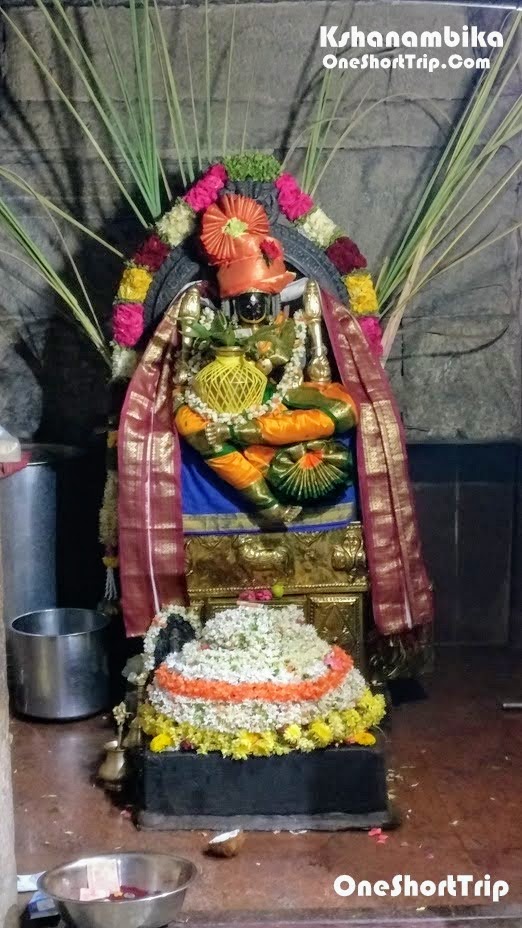
About Sri Kshanambika Temple, Srirangapatna
Sri Kshanambika Temple is one of the lesser-known historic shrines hidden within the heritage town of Srirangapatna, Karnataka. Located inside the old fort area, the temple is easy to overlook from the main road, yet its religious traditions, Sri Chakra worship and association with the Wodeyar period give it a significance far greater than its modest appearance suggests. The shrine is also closely connected with the worship of Vedhanayaki and Jyothirmaheshwara, bringing Devi and Shiva worship together within the same sacred setting.
The name Kshanambika comes from the Sanskrit word kshana, meaning a moment or an instant. Local devotional tradition therefore associates the goddess with the idea of swift grace and the fulfilment of sincere prayers. Devotees visit the shrine seeking relief from difficulties, the removal of obstacles and blessings for personal and family matters. This belief is devotional rather than something that can be historically verified, but it remains an important part of the temple's identity.
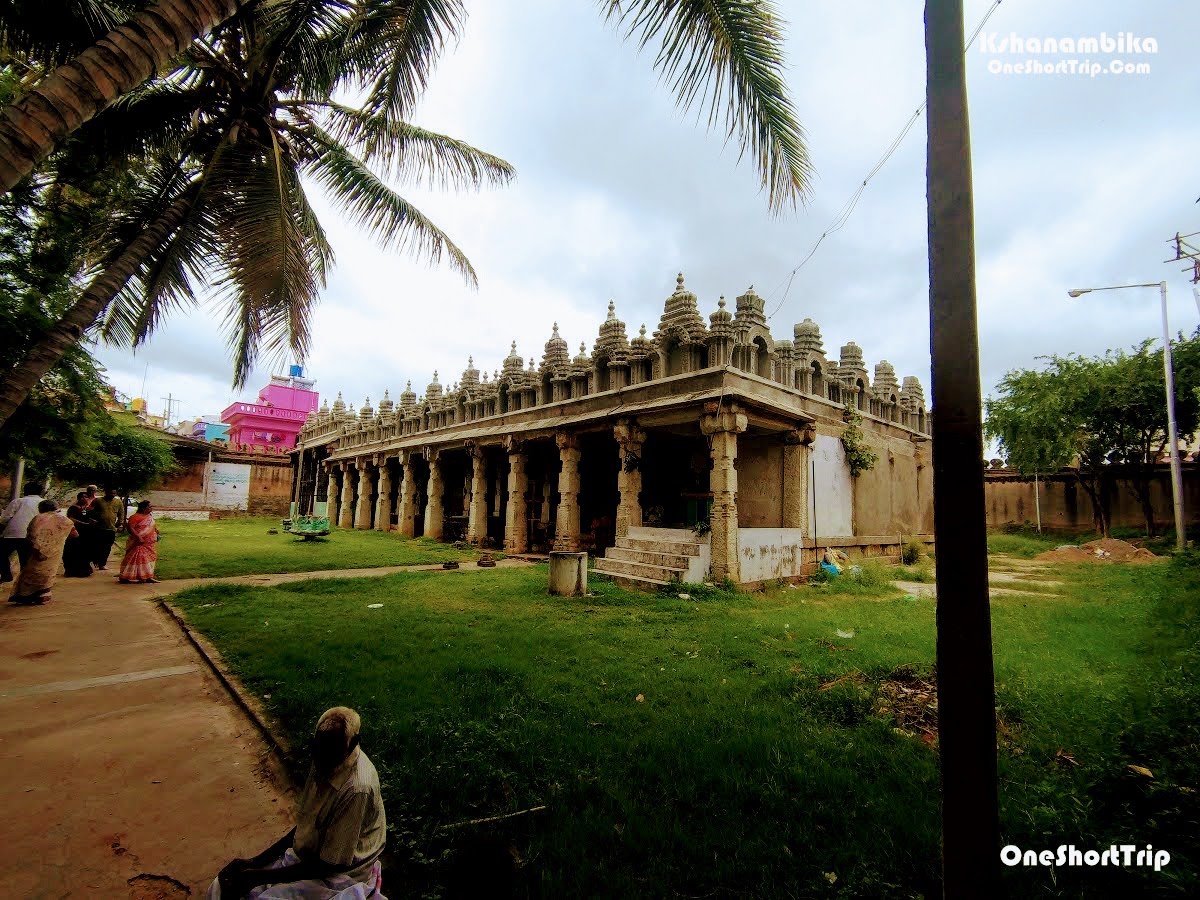
A Temple Built Around Shiva and Shakti
One of the distinctive features of this sacred complex is that it brings together Jyothirmaheshwara, a form of Lord Shiva, and Vedhanayaki, worshipped here as Kshanambika Devi. Rather than functioning simply as two unrelated shrines, the temple represents the complementary presence of Shiva and Shakti. For devotees following Shaiva and Devi traditions, this combination gives the site a broader spiritual character than a single-deity shrine.
The wider temple precinct has also been associated with other shrines and religious spaces, including a shrine of Dandapani Subramanyeshwara and a Girija Kalyana Mantapa. This makes the complex more than just the small entrance that first catches a visitor's attention. Once inside, the scale and arrangement of the precinct reveal a temple environment that has developed through several periods of religious activity and patronage.
The Sri Chakra — The Temple's Most Distinctive Feature
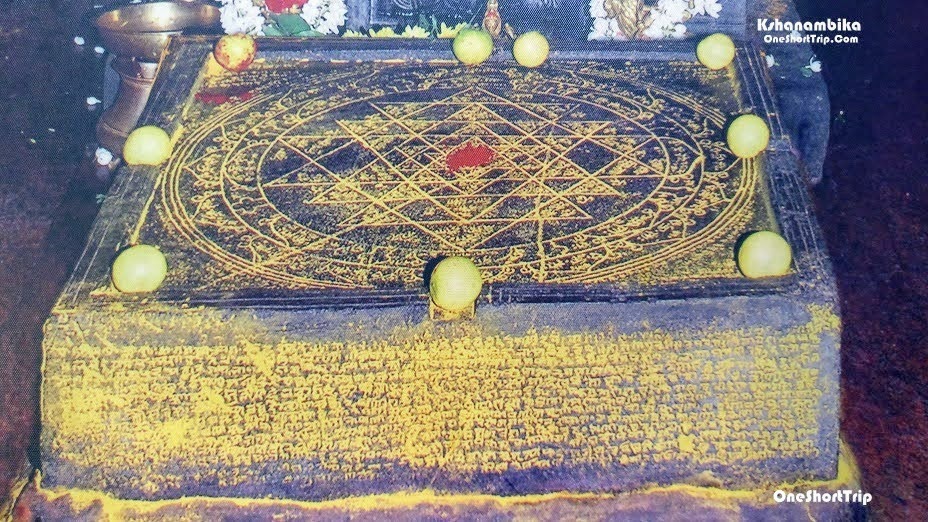
The most distinctive spiritual feature of Sri Kshanambika Temple is the Sri Chakra placed before the goddess. In Sri Vidya and Shakta traditions, the Sri Chakra, also known as Sri Yantra, is a sacred geometric representation associated with the Divine Mother and the union of Shiva and Shakti. The chakra at Kshanambika is particularly notable because it is traditionally described as having Beejaksharas, or sacred seed syllables, engraved into it.
Temple tradition attributes the consecration of this Sri Chakra to Adi Shankaracharya. This is an important part of the shrine's spiritual heritage, but it should be understood as a longstanding religious tradition rather than a conclusively established archaeological fact. Different modern accounts also differ on the date associated with Shankaracharya's visit, so the safest way to describe the connection is that the temple tradition holds that the Sri Chakra was consecrated by Adi Shankaracharya.
For devotees familiar with Sri Vidya worship, this detail is particularly significant. The temple is not visited only because of the image of the goddess; the sacred geometry of the Sri Chakra itself forms an important part of the devotional experience. This is one reason the shrine attracts visitors who specifically seek temples associated with Devi worship, yantra traditions and Shakta practices.
Why Is the Goddess Called Kshanambika?
The word Kshanambika is closely tied to the temple's devotional identity. Kshana means a moment, while Amba is a revered name for the Divine Mother. Devotees therefore understand Kshanambika as the Mother who responds with exceptional swiftness. This is also why the temple is sometimes compared with the better-known Sri Nimishamba Temple in the Srirangapatna region, whose name similarly conveys the idea of a goddess who responds within a very short time.
The comparison is useful, but the two temples should not be treated as the same shrine. Kshanambika has its own deity tradition, its own Sri Chakra worship and its own history within the Srirangapatna fort area. Visiting both provides an interesting glimpse into the different forms through which Devi worship is expressed in and around the historic island town.
The Wodeyar-Era Connection
The temple's present architectural identity is traditionally connected with Kalale Nanjaraja, a powerful Dalavayi, or military commander, associated with the Mysore Wodeyar court in the early eighteenth century. Accounts of the temple credit him with constructing or sponsoring the visible superstructure of the shrine. This places Kshanambika within the wider religious landscape shaped by Wodeyar-era patronage in the Mysore region.
Kalale Nanjaraja's association is especially interesting because temple patronage during the Mysore kingdom was not limited to the royal family itself. Administrators, commanders and other influential figures also supported religious institutions, renovations and temple construction. Such patronage helped preserve older sacred traditions while giving them new architectural forms.
Traditional accounts further associate Kalale Nanjaraja and his wife with representations within the temple. Details surrounding individual architectural elements should, however, be treated carefully because modern descriptions of the shrine do not always agree on every historical detail.
A Shrine That Was Nearly Forgotten
Perhaps the most unusual chapter in the story of Kshanambika Temple is its period of neglect. Unlike Srirangapatna's major monuments, which remained prominent landmarks throughout the town's turbulent political history, this smaller shrine is said to have disappeared beneath vegetation and gradually fallen out of regular public attention.
The temple was rediscovered and subsequently revived through restoration and renewed devotional activity. This history gives Kshanambika a character quite different from the grand monuments that dominate Srirangapatna tourism. It is a shrine whose present visibility is partly the result of people deliberately bringing an overlooked sacred site back into the local pilgrimage landscape.
Because of this restoration history, visitors should not expect the monumental scale of the Sri Ranganathaswamy Temple. Kshanambika's importance lies instead in the combination of living worship, Sri Chakra tradition, local memory and its connection with the historical religious landscape of Srirangapatna.
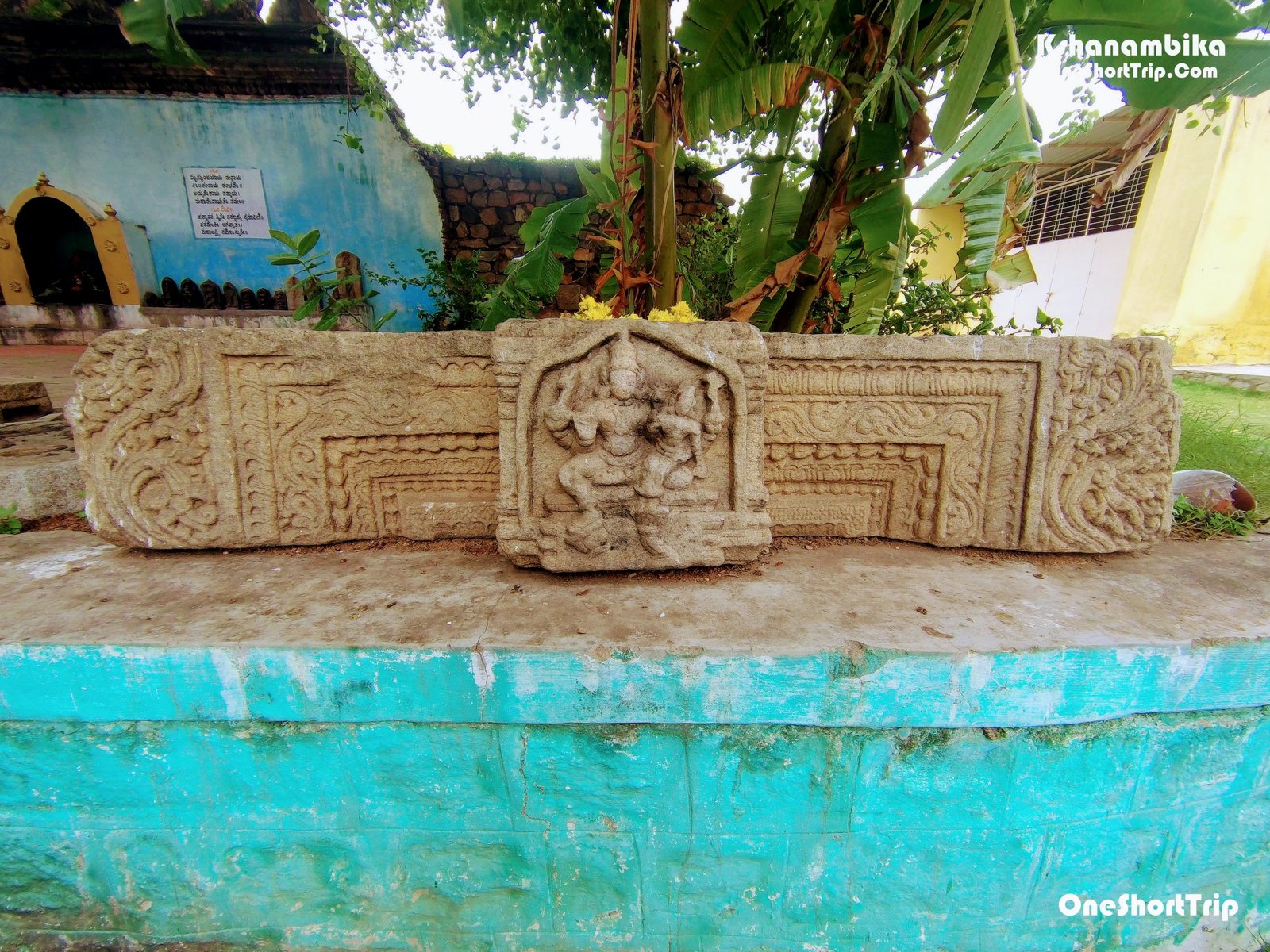
The Spiritual Meaning of the Temple
For a visitor, the most interesting aspect of Kshanambika Temple is the way several layers of South Indian religious tradition meet in one relatively compact space. There is the worship of Shiva as Jyothirmaheshwara, the worship of the goddess as Vedhanayaki and Kshanambika, and the Sri Chakra tradition that gives the Devi shrine a distinct Sri Vidya character.
The temple is therefore best understood not simply as an old goddess temple, but as a living sacred complex shaped by Shaiva, Shakta and local devotional traditions. The stories surrounding its origin and revival are just as important to its identity as the physical structure itself.
A Quiet Counterpart to Srirangapatna's Famous Monuments
Kshanambika Temple occupies an interesting position in Srirangapatna's tourism landscape. The town is best known for the Ranganathaswamy Temple, Tipu Sultan's monuments, Daria Daulat Bagh, Gumbaz and the historic fort. Those attractions naturally receive most of the attention. Kshanambika is different: it is a small, active place of worship that rewards visitors who are willing to explore beyond the headline attractions.
Its quieter atmosphere also makes it suitable for travellers interested in experiencing Srirangapatna as a living cultural landscape rather than simply moving from one famous monument to another. A visit can be especially meaningful when combined with other temples in the old town, allowing the different religious traditions of the island to be understood together.
Why Sri Kshanambika Temple Is Worth Visiting
Sri Kshanambika Temple may not have the towering gopura or monumental scale associated with Srirangapatna's most famous temples, but that is precisely what makes it interesting. Its story combines an old goddess tradition, a sacred Sri Chakra, the memory of Adi Shankaracharya in local tradition, Wodeyar-era patronage and a remarkable period of neglect followed by revival.
For travellers exploring temples in Srirangapatna, the shrine offers a different experience from the town's better-known monuments. It is intimate rather than monumental, devotional rather than purely historical, and best appreciated by taking a few quiet minutes to understand the traditions behind the shrine.
That combination is what makes Kshanambika worth including in a detailed Srirangapatna temple circuit — particularly for visitors interested in Devi temples, Sri Chakra worship, Shiva-Shakti traditions and lesser-known heritage sites of Karnataka.

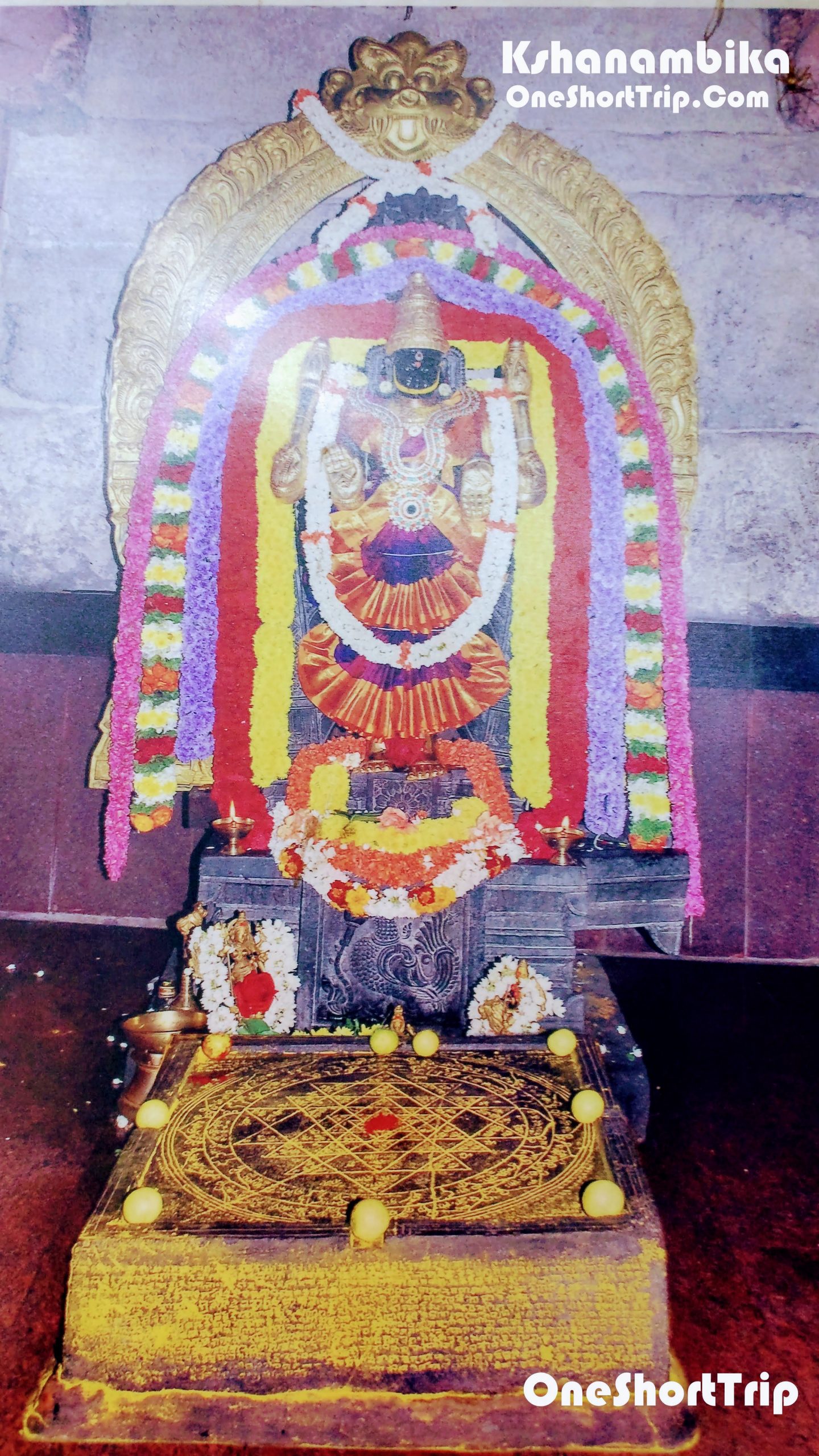
Visiting Sri Kshanambika Temple
Sri Kshanambika Temple is best approached as a quiet temple visit rather than as a conventional sightseeing attraction. The shrine is located within the historic part of Srirangapatna and its entrance can be easy to miss if you are travelling through the town for the first time. The modest entrance opens into a much larger temple enclosure, making the experience feel quite different from what the exterior initially suggests.
Once inside, allow some time rather than treating the temple as a quick photo stop. The main Kshanambika shrine, the Sri Chakra, the associated Shiva shrine and the surrounding enclosure together make the visit more interesting for travellers who enjoy understanding the religious character of a place rather than simply seeing its architecture.
Where Is Kshanambika Temple?
The temple is located in Srirangapatna, Mandya district, Karnataka, within the historic fort area of the island town. It is situated close to the old town's important monuments and can therefore be conveniently included in a Srirangapatna temple and heritage circuit.
One useful landmark when approaching the temple is the Jumma Masjid area and the old fort entrance. The entrance to Kshanambika is relatively understated, so visitors should look for the temple sign rather than expecting a large gateway immediately visible from the main road. Local descriptions also place the temple only a short distance from the Srirangapatna railway station.
How to Reach Sri Kshanambika Temple
By Road
Road travel is the easiest option for most visitors. Srirangapatna is well connected with Mysuru and Bengaluru, and the temple can be reached after entering the historic town. If you are driving, it is better to use the temple's exact map location rather than relying only on the name, because the entrance is not as prominent as the town's major tourist attractions.
By Train
Srirangapatna has its own railway station, making the town accessible by rail from the Mysuru and Bengaluru side. A current local listing places the temple roughly 400 metres from Srirangapatna railway station, although the practical walking route can vary.
From Mysuru
Kshanambika Temple makes an easy addition to a Mysuru–Srirangapatna day trip. The temple can be visited along with the Ranganathaswamy Temple, Tipu Sultan's Summer Palace, Daria Daulat Bagh, Gumbaz, Srirangapatna Fort and other historic sites around the island.
Temple Timings
Published timings for Sri Kshanambika Temple are not completely consistent across online listings. A recent local listing gives 9:00 AM–12:30 PM in the morning and 6:00 PM–8:30 PM in the evening, while another listing records a longer morning opening. Because this is an active local temple rather than a centrally managed tourist monument, timings may change according to pooja, festival days and local arrangements.
For a planned visit, confirm the day's darshan timing locally before travelling. This is particularly important if Kshanambika is the main reason for making the trip.
How Much Time Do You Need?
Most travellers can comfortably allow 30 to 60 minutes for the temple. This gives enough time for darshan, viewing the Sri Chakra, visiting the associated shrines and walking around the enclosure without rushing.
If you are particularly interested in Sri Vidya traditions, temple architecture or the history of lesser-known Srirangapatna shrines, you may want to spend longer. The temple's story is much richer than its relatively small scale suggests.
Best Time to Visit
For a comfortable Srirangapatna sightseeing trip, October to February is generally a pleasant period, with milder weather than the hotter months. Early mornings and evenings are particularly suitable if you want a quieter temple experience and are combining the visit with several other attractions.
Festival days can be a different experience. Navaratri and other Devi-related observances can bring additional devotees, special decoration and a more active ritual atmosphere. If you prefer peace and uninterrupted exploration, a normal weekday is usually a better choice.
Dress Code and Temple Etiquette
As Sri Kshanambika is an active place of worship, visitors should dress modestly. Comfortable traditional or conservative clothing is appropriate, particularly when visiting the inner shrine. Footwear should be removed wherever the temple requires it.
Avoid loud conversations, eating inside the temple, obstructing devotees during prayers or treating the shrine purely as a photography location. If a priest or temple volunteer gives instructions regarding movement, offerings or access to a particular area, follow them.
Photography at the Temple
Photography policies can differ between the outer enclosure and active worship areas. Visitors should therefore follow the signs and instructions at the temple rather than assuming that every part of the complex can be photographed.
If photography is permitted in an area, avoid using flash near devotees, priests or sacred objects. The Sri Chakra and sanctum should be treated primarily as objects of worship, not as photographic props.
Parking and Accessibility
Because the temple is situated within the older, more compact part of Srirangapatna, parking immediately at the entrance can be limited. Larger vehicles may find it easier to park at a suitable nearby location and walk the remaining distance rather than attempting to stop directly outside the narrow entrance.
The temple is considerably easier to visit than a hill temple because there is no major climb involved. However, older temple flooring, thresholds and uneven surfaces can still require attention. Senior citizens and visitors with mobility difficulties should take their time and avoid rushing through the enclosure.
Is Kshanambika Temple Suitable for Families?
Yes. The temple is suitable for families looking for a quieter religious stop in Srirangapatna. Children can be introduced to the idea of Sri Chakra worship and the different forms of Hindu temple tradition, while adults interested in history and spirituality will find plenty of context to explore.
For families with very young children, the main consideration is simply keeping them close within the temple enclosure and maintaining the quiet atmosphere expected at an active shrine.
Kshanambika and Nimishamba — What Is the Difference?
The two temples are often mentioned together because both are associated with the devotional idea of a goddess who responds swiftly to sincere prayers. However, they are separate temples with different traditions and locations.
Kshanambika is the smaller shrine within the historic fort area and is particularly distinguished by its Sri Chakra tradition. Nimishamba is the much more prominent temple on the banks of the Cauvery at Ganjam. Visiting both can be an interesting way to understand the different forms of Devi worship associated with Srirangapatna.
Nearby Places to Visit
Kshanambika Temple works particularly well as one stop within a broader Srirangapatna itinerary. Nearby attractions include the Sri Ranganathaswamy Temple, Tipu Sultan's Summer Palace, Daria Daulat Bagh, Gumbaz, Srirangapatna Fort, Jumma Masjid, Colonel Bailey's Dungeon and other remnants of the island's royal and military history.
The current Karnataka Tourism guide to Srirangapatna highlights the town's major temple and heritage attractions, making it practical to combine religious sites with the island's historical monuments during the same outing.
Recommended Srirangapatna Temple Circuit
If your main interest is temples, a useful circuit is Kshanambika Temple → Sri Ranganathaswamy Temple → other smaller historic shrines in the fort area → Sri Nimishamba Temple. This allows you to experience both the quieter local shrines and the major pilgrimage centre of Srirangapatna.
For a broader heritage day, combine Kshanambika with Daria Daulat Bagh, Gumbaz, Tipu Sultan's Summer Palace and the fort area. The result is a much more complete picture of Srirangapatna than visiting only its most famous monument.
What to Carry
You do not need special equipment for this temple visit. Carry water, comfortable footwear for the surrounding sightseeing, modest clothing and any personal essentials you need for the day. If you are combining several Srirangapatna attractions, sun protection can be useful, particularly outside the cooler months.
If you are visiting specifically for darshan, it is sensible to check the temple schedule before leaving rather than assuming that the shrine will remain open continuously throughout the day.
Why Include Kshanambika Temple in Your Srirangapatna Trip?
The appeal of Sri Kshanambika Temple lies in what it reveals about Srirangapatna beyond its famous monuments. It is a living shrine with a distinctive Sri Chakra tradition, a Shiva–Devi association and a story of rediscovery and revival. It also demonstrates how the island's religious landscape extends well beyond the large temples that appear in most tourist itineraries.
For travellers interested in hidden temples in Srirangapatna, Devi temples in Karnataka, Sri Chakra worship, historic temples near Mysuru and lesser-known religious places in Mandya district, Kshanambika is a worthwhile addition.
It does not require a separate half-day excursion. Instead, its greatest advantage is that it can be incorporated naturally into a Srirangapatna sightseeing route, giving you the opportunity to see a quieter and less-publicised side of this historic island town.