

Ajmer
A city of faith at the foot of the Aravallis — home to the revered Ajmer Sharif Dargah and the sacred lake town of Pushkar nearby.
Things To See
Explore Ajmer
Ajmer District, Rajasthan – Complete Travel Guide
Ajmer district is one of Rajasthan's most culturally diverse travel regions, bringing together Sufi spirituality, Hindu pilgrimage, Rajput history, Mughal architecture, Jain heritage, lakes, forts, traditional markets and the distinctive landscapes of the Aravalli hills. The district is best known for Ajmer Sharif Dargah and the nearby holy town of Pushkar, but there is much more to explore beyond these two famous destinations.
Located in central Rajasthan, Ajmer lies about 130 km southwest of Jaipur and around 14–17 km from Pushkar, making it one of the most convenient destinations to combine with Jaipur, Pushkar and other Rajasthan circuits. The region's rugged Aravalli backdrop, historic monuments and religious traditions give Ajmer a character that is distinctly different from the desert cities of western Rajasthan.
Why Is Ajmer District Famous?
Ajmer is primarily famous for the Ajmer Sharif Dargah, the revered shrine of Sufi saint Khwaja Moinuddin Chishti. The shrine attracts pilgrims and visitors from many faiths and is one of India's best-known Sufi pilgrimage destinations. Ajmer is also the gateway to Pushkar, famous for Pushkar Lake, the Brahma Temple and the annual Pushkar Fair.
Beyond pilgrimage, the district offers Adhai Din Ka Jhonpra, Taragarh Fort, Ana Sagar Lake, Ana Sagar Baradari, Ajmer Government Museum, Soniji Ki Nasiyan, Mayo College, Prithviraj Smarak, Nareli Jain Temple, Kishangarh Fort and the famous Kishangarh marble-art landscape. The district also provides access to nature destinations such as Foy Sagar and the Aravalli hills.
History of Ajmer
Ajmer's historical identity goes back to the Chauhan period. Rajasthan Tourism traces the city's foundation to Raja Ajaypal Chauhan in the 7th century, when it was known as Ajay Meru, broadly interpreted as the invincible hill. Ajmer later became an important centre of the Chauhan dynasty and was closely associated with the reign of Prithviraj Chauhan.
After the defeat of Prithviraj Chauhan by Muhammad Ghori in the late 12th century, Ajmer passed through the control of several ruling powers. The Mughals developed a particularly strong association with the city because of the Ajmer Sharif shrine. Emperor Akbar is known to have made pilgrimages to Ajmer, while Mughal rulers also contributed important structures within the Dargah complex.
Ajmer later came under British administration and developed into an important educational and administrative centre. Its historical layers can still be seen in its forts, mosques, temples, churches, colonial-era buildings, museums and educational institutions.
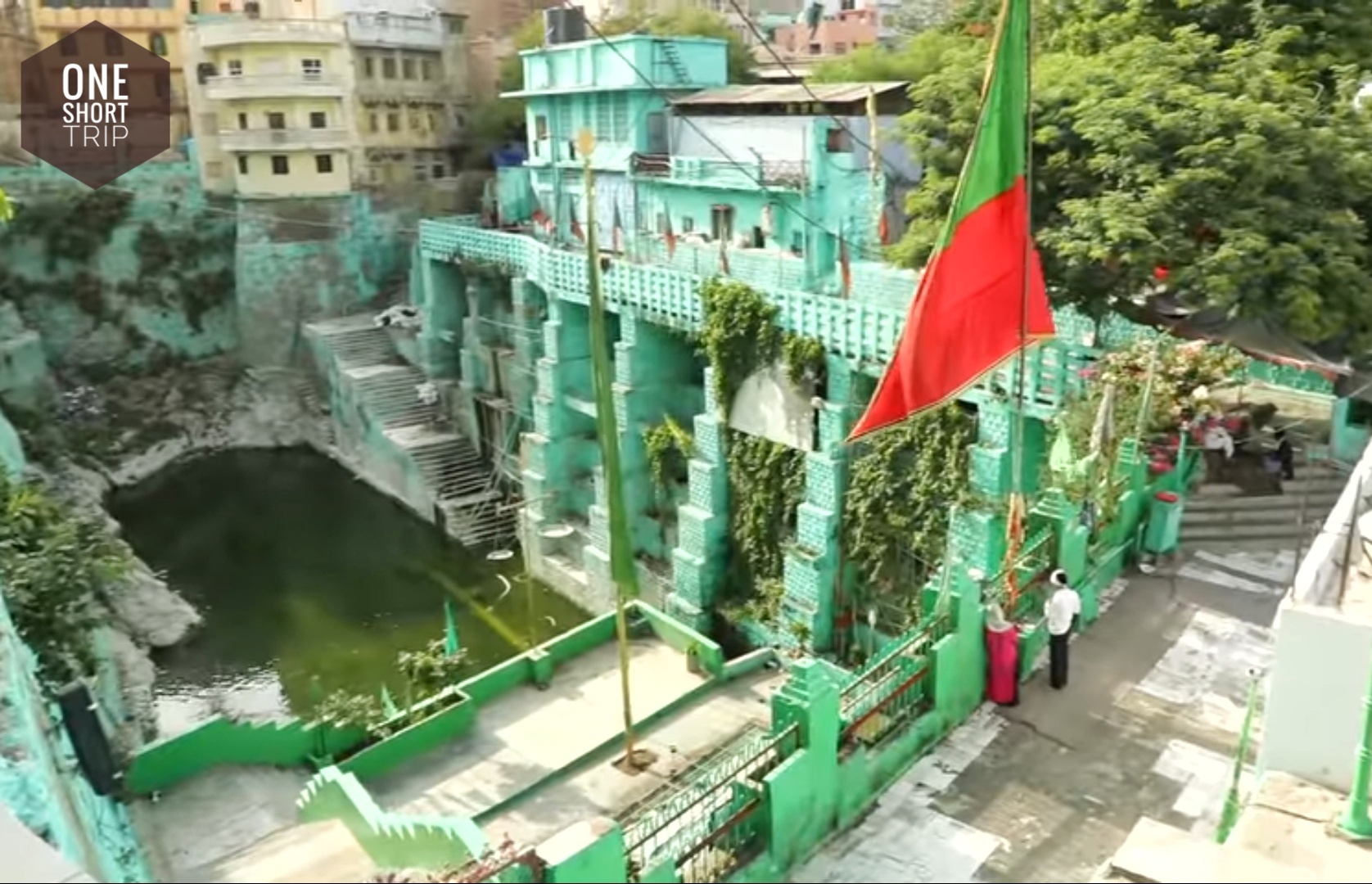
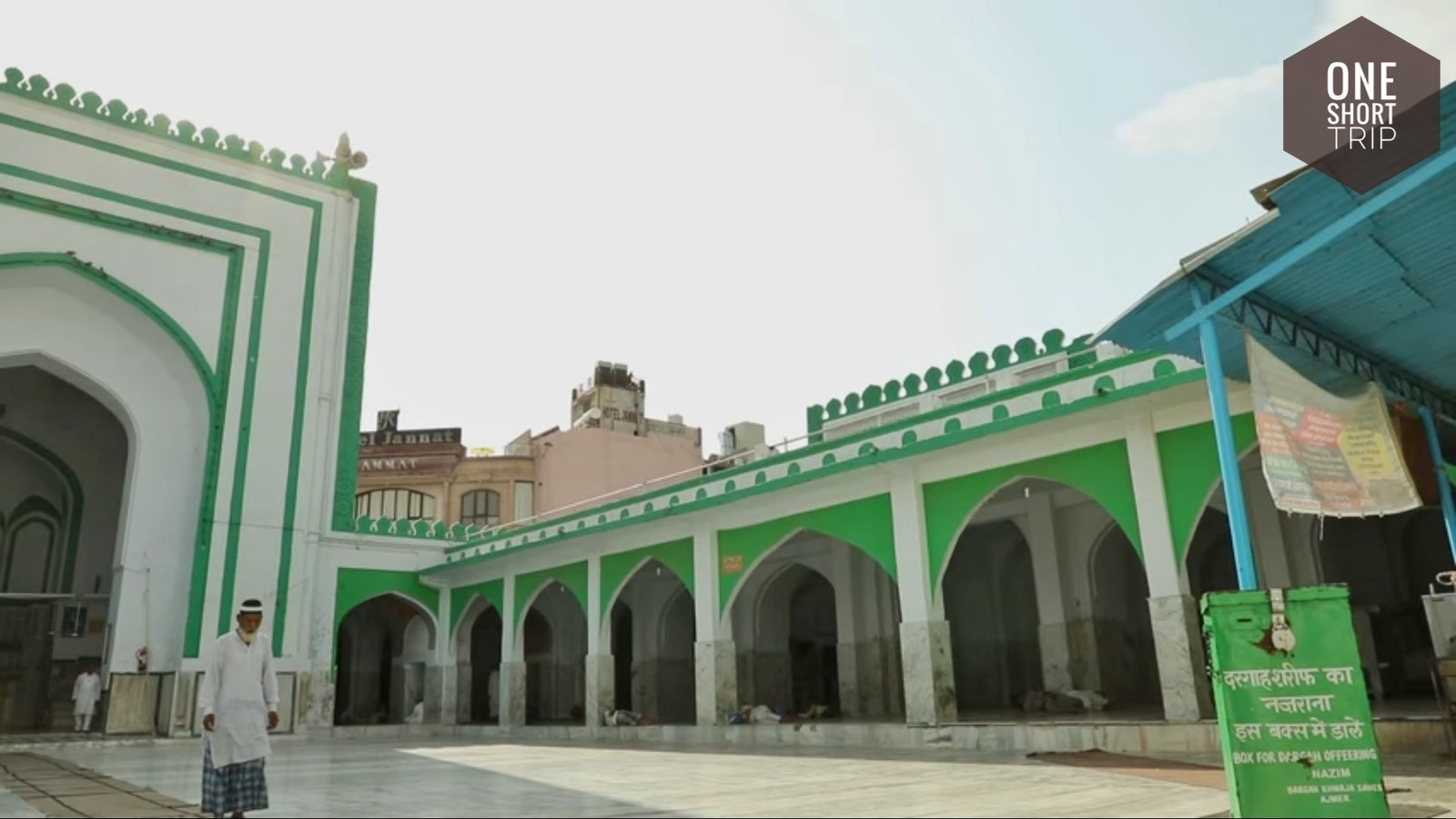
Ajmer Sharif Dargah
Ajmer Sharif Dargah is the spiritual heart of Ajmer. The shrine contains the tomb of Khwaja Moinuddin Chishti, the revered Sufi saint popularly known as Garib Nawaz. Khwaja Moinuddin Chishti arrived in Ajmer in the 12th century and spent the later part of his life preaching ideals associated with love, compassion and service.
The Dargah complex contains several historic gates, courtyards, mosques and other structures. The Nizam Gate, Shah Jahan Gate and Buland Darwaza are among its prominent gateways. The central shrine is richly decorated and surrounded by marble and silver elements. The complex also contains the famous large degs, or cooking cauldrons, associated with offerings made for devotees.
The annual Urs of Khwaja Moinuddin Chishti is one of Ajmer's most important religious events and brings very large numbers of pilgrims to the city. If you plan to visit during Urs, expect significantly heavier crowds than during an ordinary day.
Adhai Din Ka Jhonpra
Adhai Din Ka Jhonpra is one of Ajmer's most remarkable historic monuments and an important example of early Indo-Islamic architecture. Rajasthan Tourism states that the structure was originally associated with a Sanskrit college and was converted into a mosque under Sultan Ghori in 1198. It was later embellished during the reign of Iltutmish in 1213.
The monument is particularly notable for its carved pillars, arches, screens and the visual mixture of architectural traditions. Its unusual name is traditionally connected with a two-and-a-half-day event or construction legend, although different historical accounts explain the name differently.
Taragarh Fort
Taragarh Fort stands on a hill overlooking Ajmer and represents the city's Rajput military heritage. Rajasthan Tourism attributes its foundation to Raja Ajaypal Chauhan and highlights its massive gateway, defensive structures, water reservoirs and the historic Bhim Burj.
The fort's elevated location also provides broad views across Ajmer and the surrounding Aravalli landscape. Travellers interested in history and architecture should allow additional time because the hill setting and condition of the historic remains make this different from a polished palace museum.
Ana Sagar Lake
Ana Sagar Lake is one of Ajmer's most attractive urban landmarks. The historic artificial lake is surrounded by the Aravalli hills and provides a welcome contrast to the busy streets around the old city.
The lake is particularly attractive around sunrise and sunset. The waterfront and surrounding areas are suitable for a relaxed stop between visits to Ajmer's historic and religious attractions.
Ana Sagar Baradari and Daulat Bagh
The white marble Ana Sagar Baradari pavilions stand beside Ana Sagar Lake and add a distinctly Mughal character to the waterfront. Rajasthan Tourism identifies these pavilions with the pleasure-garden complex known as Daulat Bagh associated with Mughal emperors Jahangir and Shah Jahan.
The combination of marble pavilions, gardens, water and surrounding hills makes this one of the more peaceful sightseeing stops in Ajmer.
Ajmer Government Museum
The Ajmer Government Museum is an important stop for travellers interested in the archaeological and historical heritage of Rajasthan. Its collections include archaeological artefacts, stone sculptures, inscriptions and armour.
A museum visit can add useful historical context to the forts, temples and monuments seen around Ajmer, especially for travellers who want to understand the region beyond its pilgrimage identity.
Soniji Ki Nasiyan
Soniji Ki Nasiyan, also known as the Red Temple, is one of Ajmer's significant Jain attractions. Its most famous feature is the Swarna Nagri, or City of Gold, hall, which contains elaborate gold-plated representations associated with Jain religious tradition.
The temple provides a different architectural and cultural experience from Ajmer's Islamic and Rajput monuments and demonstrates the city's long-standing religious diversity.
Mayo College
Mayo College was founded in 1875 and became one of India's best-known institutions for the education of the sons of princely families. Its architecture is associated with the Indo-Saracenic style and forms an important part of Ajmer's colonial-era educational heritage.
Visitors should note that Mayo College is an active educational institution, so access to its campus and buildings is subject to institutional rules and permissions.
Prithviraj Smarak
Prithviraj Smarak commemorates the Chauhan ruler Prithviraj Chauhan. The memorial is situated on elevated ground and features a statue of Prithviraj on horseback, with the surrounding Aravalli landscape providing a broad backdrop over Ajmer.
Nareli Jain Temple
Nareli Jain Temple is a modern Jain pilgrimage and architectural complex on the outskirts of Ajmer. Its elevated setting and distinctive temple architecture make it an interesting addition for travellers exploring Ajmer's Jain heritage alongside Soniji Ki Nasiyan.
Pushkar – The Most Important Excursion from Ajmer
Pushkar is the most popular destination to combine with Ajmer. Located roughly 14–17 km from Ajmer, Pushkar is one of India's important Hindu pilgrimage towns and is centred around the sacred Pushkar Lake.
Pushkar is particularly famous for its Brahma Temple, one of the very few major temples dedicated to Lord Brahma, as well as its numerous temples and bathing ghats around Pushkar Lake. Rajasthan Tourism describes the lake as a major pilgrimage site surrounded by numerous ghats and temples.
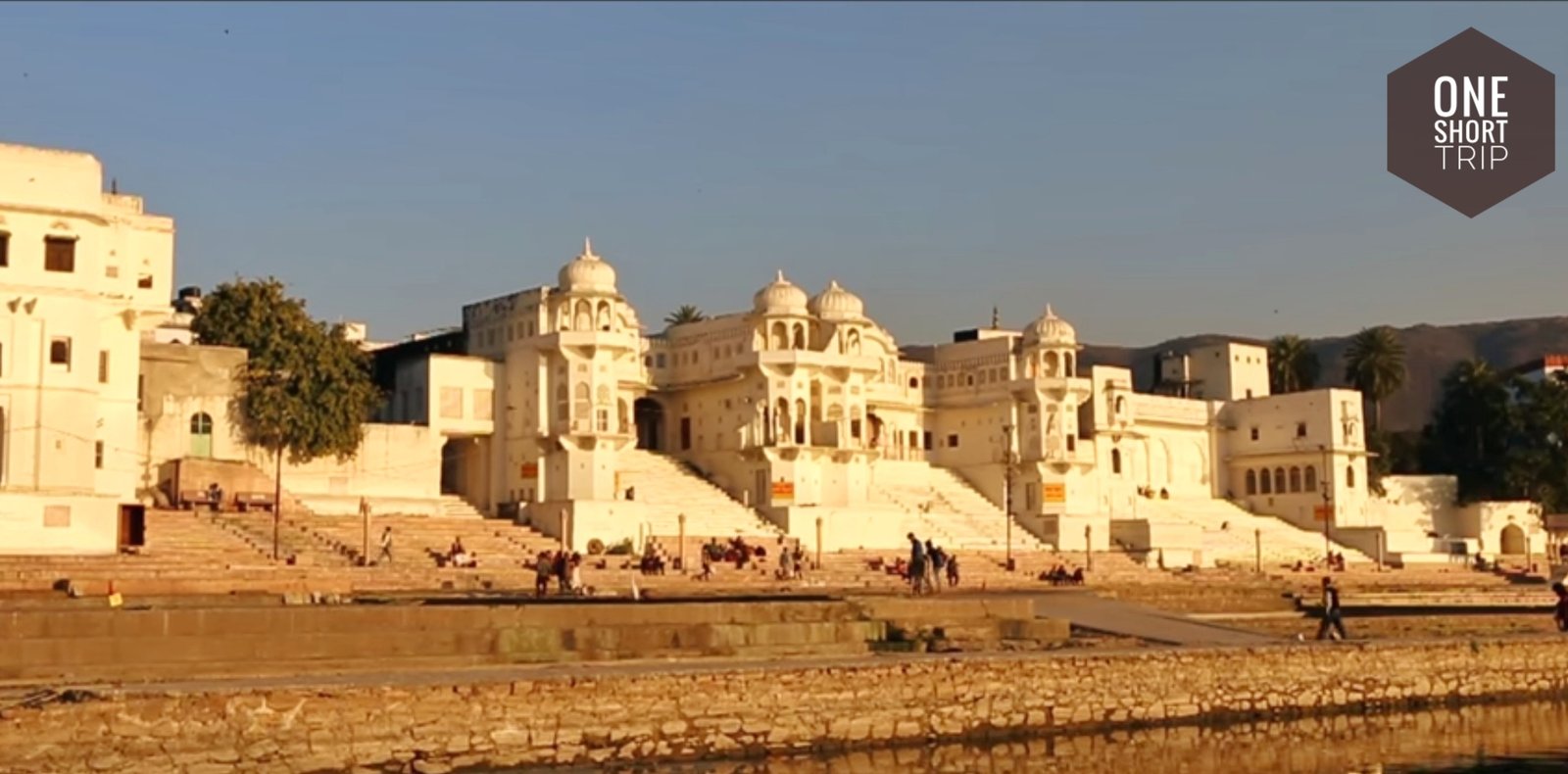
Pushkar Lake
Pushkar Lake is considered sacred in Hindu tradition and is surrounded by bathing ghats and temples. Visitors should respect the religious character of the ghats and follow local instructions when approaching the water.
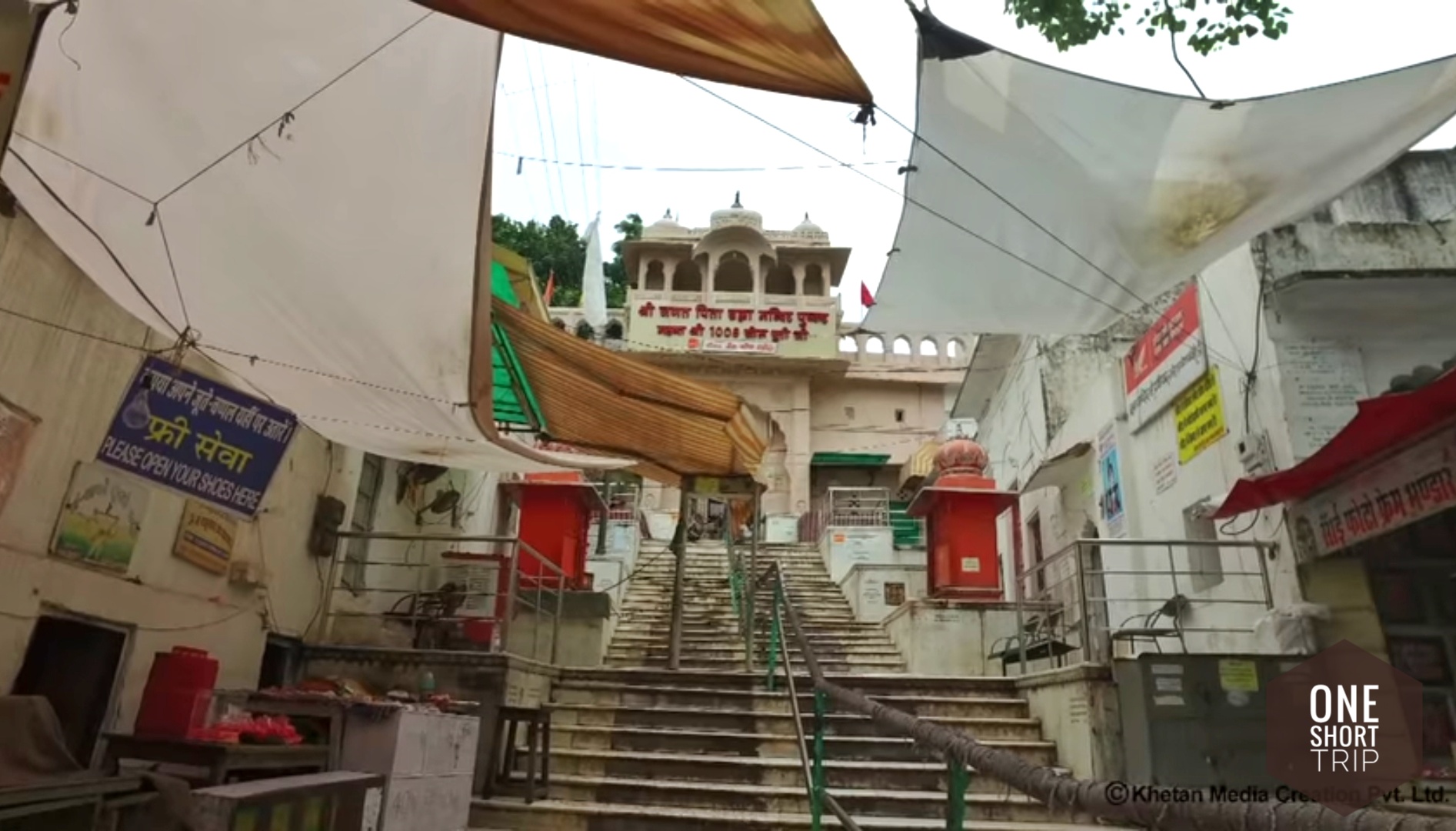
Brahma Temple
The Brahma Temple is one of Pushkar's defining landmarks. The temple is associated with Lord Brahma and is recognised by its distinctive red shikhara and swan symbolism. Current visitor timings can vary seasonally, so travellers should verify them before visiting.
Savitri Temple
Savitri Temple sits on Ratnagiri Hill overlooking Pushkar. The hilltop provides panoramic views over Pushkar Lake, the surrounding town and the Aravalli landscape. The attraction is particularly appealing around sunrise, although visitors should plan for the climb and check the current operating arrangements.
Pushkar Fair
The Pushkar Fair is one of Rajasthan's most famous cultural events. The annual gathering combines religious observances with livestock trading, traditional performances, markets and cultural activities. The town becomes exceptionally busy during the fair, so accommodation and transport should be planned well in advance.
Kishangarh
Kishangarh, located in Ajmer district, is historically associated with the Kishangarh princely state and is particularly famous for its art, marble industry and distinctive cultural heritage.
Kishangarh Fort
Kishangarh Fort is a historic fort containing structures such as the Durbar Hall, granaries, armouries and other palace-related buildings. Rajasthan Tourism highlights the fort's Durbar Hall and Phool Mahal, which features murals and frescoes.
Kishangarh School of Painting
Kishangarh is renowned for its miniature painting tradition, particularly the graceful artistic style associated with the famous Bani Thani image. This distinctive style is an important part of Rajasthan's artistic heritage.
Kishangarh Marble
Kishangarh is one of India's major marble trading and processing centres. The enormous marble market and surrounding industrial landscape are a notable part of the modern identity of the town.
Foy Sagar Lake
Foy Sagar Lake is an artificial lake near Ajmer created in 1892 during famine-relief efforts under an engineer named Foy. The lake is surrounded by the Aravalli landscape and is particularly attractive as a quiet scenic stop outside the busy city centre.
Ajmer's Religious Diversity
One of Ajmer's defining characteristics is the coexistence of different religious traditions. The city is known for the Ajmer Sharif Dargah, important Jain heritage such as Soniji Ki Nasiyan and Nareli Jain Temple, Hindu temples and nearby Pushkar's pilgrimage traditions. This combination gives Ajmer a cultural character that is unusual even within Rajasthan.
Food to Try in Ajmer
Ajmer's food reflects its location at the meeting point of Rajasthani, Mughal-influenced and North Indian culinary traditions. Visitors can explore local sweets, kachoris, samosas, traditional vegetarian Rajasthani dishes and food around the Dargah Bazaar.
Pushkar has a predominantly vegetarian food culture because of its religious importance. Travellers visiting both Ajmer and Pushkar can therefore experience noticeably different local food traditions within a short distance.
Shopping in Ajmer
Ajmer's markets around the Dargah are known for religious offerings, flowers, perfumes, textiles, caps, handicrafts, sweets and traditional items. Pushkar is popular for colourful textiles, jewellery, handicrafts, leather goods and souvenirs, while Kishangarh is closely associated with marble.
Best Time to Visit Ajmer District
October to February is generally the best period to visit Ajmer. Rajasthan Tourism specifically recommends this period because the weather is more comfortable for sightseeing, while summer temperatures can cross 40°C.
Winter is particularly suitable for combining Ajmer and Pushkar because travellers can comfortably spend time outdoors, explore monuments and walk through the older parts of the cities. Pushkar Fair dates can create a completely different travel experience, with very high visitor numbers.
How Many Days Are Enough for Ajmer District?
2 days are enough for a focused Ajmer–Pushkar trip. A comfortable two-day plan can include Ajmer Sharif Dargah, Adhai Din Ka Jhonpra, Ana Sagar, Soniji Ki Nasiyan and selected Ajmer monuments on one day, followed by Pushkar on the second day.
3 days are better for travellers who want to include Taragarh Fort, museums, Foy Sagar, Nareli, Kishangarh or additional heritage attractions without rushing.
Suggested Ajmer District Travel Circuits
1-Day Ajmer
Ajmer Sharif Dargah → Adhai Din Ka Jhonpra → Ana Sagar Lake → Ana Sagar Baradari → Soniji Ki Nasiyan → selected city attractions.
2-Day Ajmer–Pushkar
Day 1: Ajmer heritage and spiritual attractions. Day 2: Pushkar Lake → Brahma Temple → Pushkar ghats → Savitri Temple → local markets.
3-Day Heritage Circuit
Ajmer → Pushkar → Kishangarh, adding museums, forts, lakes and additional heritage sites according to available time.
Rajasthan Circuit
Jaipur → Ajmer → Pushkar → Jodhpur is one of the most practical ways to combine Ajmer with Rajasthan's major tourist cities.
How to Reach Ajmer
By Road
Ajmer has strong road connectivity with Jaipur, Pushkar, Delhi, Jodhpur, Udaipur and other Rajasthan destinations. It is particularly convenient for road trips because Pushkar is only a short drive away.
By Train
Ajmer Junction is an important railway station and is one of the easiest ways to reach the city. Rail services connect Ajmer with major cities across Rajasthan and India.
By Air
Travellers can consider Kishangarh Airport for flights serving the Ajmer region. Jaipur International Airport provides a much larger choice of flights and is another practical option, particularly for travellers building a wider Rajasthan itinerary.
Where to Stay in Ajmer
Ajmer has accommodation ranging from budget hotels and pilgrim-oriented stays to comfortable hotels suitable for families. Staying in central Ajmer is convenient for the Dargah and old-city attractions, while Pushkar offers a wider selection of heritage-style, boutique and resort-oriented accommodation.
For travellers combining both destinations, staying in either Ajmer or Pushkar works well. The better choice depends on whether the priority is pilgrimage and city sightseeing or a more relaxed Pushkar experience.
Ajmer Travel Tips
- Plan Ajmer Sharif Dargah separately from the rest of the sightseeing because the surrounding lanes can become extremely crowded.
- Dress respectfully when visiting religious places and follow the rules of each shrine.
- Wear comfortable footwear because several attractions involve walking and uneven surfaces.
- Start outdoor sightseeing early during warmer months.
- Carry water and sun protection, particularly when visiting forts or hilltop attractions.
- Check current opening hours and local restrictions before visiting individual monuments.
- Expect significantly larger crowds during Urs and the Pushkar Fair.
- Keep valuables secure in crowded markets and pilgrimage areas.
- Do not photograph restricted areas inside religious monuments.
- When visiting Pushkar Lake, respect the religious customs of the ghats.
Is Ajmer District Worth Visiting?
Ajmer district is worth visiting because it offers a side of Rajasthan that cannot be experienced through forts and desert landscapes alone. It brings together Sufi spirituality, Hindu pilgrimage, Jain heritage, Rajput history, Mughal architecture, colonial-era institutions, lakes, hilltop monuments and traditional markets within a relatively compact region.
For first-time visitors to Rajasthan, the combination of Ajmer and Pushkar is particularly rewarding. Ajmer provides the historical and spiritual depth of the city, while Pushkar adds sacred lakefronts, temples, colourful streets and one of Rajasthan's most famous cultural festivals.
Frequently Asked Questions
Where is Ajmer District located?+
Why is Ajmer famous?+
What are the best places to visit in Ajmer District?+
Is Pushkar part of Ajmer District?+
How far is Pushkar from Ajmer?+
What is Ajmer Sharif Dargah famous for?+
Who is buried at Ajmer Sharif Dargah?+
Can people of all religions visit Ajmer Sharif Dargah?+
What are the main gates of Ajmer Sharif Dargah?+
What is the Urs at Ajmer Sharif?+
What is Adhai Din Ka Jhonpra?+
Why is Adhai Din Ka Jhonpra called by that name?+
What is Taragarh Fort famous for?+
What is Ana Sagar Lake famous for?+
Who built Ana Sagar Lake?+
What can you see at Ana Sagar Baradari?+
What is Soniji Ki Nasiyan famous for?+
What is Nareli Jain Temple?+
What is Foy Sagar Lake famous for?+
What is Ajmer Government Museum known for?+
Why is Mayo College famous in Ajmer?+
Is Mayo College open to tourists?+
What is Kishangarh famous for?+
Is Kishangarh part of Ajmer District?+
What is the Bani Thani painting tradition?+
What is Pushkar famous for?+
Why is Pushkar Lake important?+
How many ghats are there at Pushkar Lake?+
Why is Pushkar associated with Lord Brahma?+
Is Pushkar vegetarian?+
What is the Pushkar Fair?+
When is the best time to visit Ajmer District?+
How many days are enough for Ajmer and Pushkar?+
Can Ajmer and Pushkar be covered in one day?+
Is Ajmer good for a family trip?+
Is Ajmer suitable for senior citizens?+
What should I wear when visiting religious places in Ajmer and Pushkar?+
How can I reach Ajmer by train?+
What is the nearest airport to Ajmer?+
Is Ajmer well connected by road?+
What local food should I try in Ajmer?+
What can I buy in Ajmer?+
Is Ajmer expensive to visit?+
Is Ajmer worth visiting on a Rajasthan trip?+
Can Ajmer be combined with Jaipur?+
What are the best places to visit near Ajmer?+
Is Ajmer good for a spiritual trip?+
Is Ajmer suitable for a history trip?+
Is Ajmer crowded?+
What should I be careful about in Ajmer's crowded areas?+
What is the best way to explore Ajmer District?+
Can I visit Ajmer and Pushkar with children?+
What is the main difference between Ajmer and Pushkar?+
Is Ajmer a good destination for a weekend trip?+
What makes Ajmer District different from other Rajasthan destinations?+
Planning A Trip Here?
Get help planning your visit — call or WhatsApp us and we will help you book a tour.