

About Srinivasa Temple
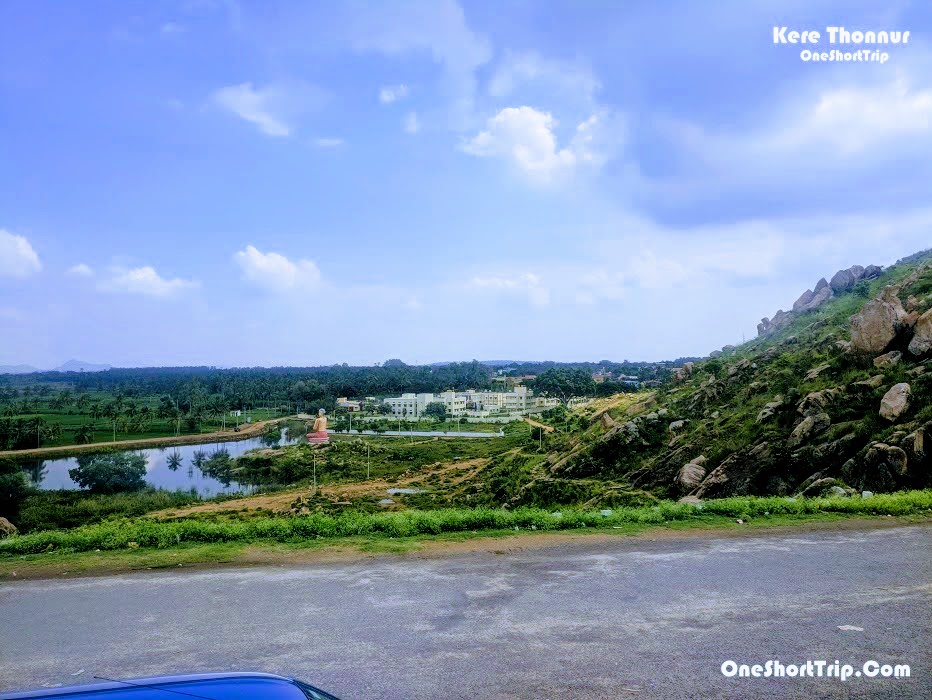
A Vaishnavite temple dedicated to Lord Srinivasa (Venkateshwara/Vishnu), located in the Thonnur temple cluster near Thonnur Lake, Mandya district. What sets this particular shrine apart from its three neighbours is its position: it sits atop Padmagiri, the rocky hill overlooking the lake, and the climb up rewards visitors with a wide view over Thonnur Lake and the surrounding countryside, along with a natural rock formation beside the temple that locals have long called Turtle Rock for its distinctive shape.
About the Place
This temple is part of the group of ancient shrines around Thonnur associated with Ramanujacharya's period; it features traditional Dravidian temple architecture with a sanctum, mantapa, and Gopura. Weekly worship here is more restrained than at the lakeside temples below: puja at Srinivasa Temple is traditionally held only on Saturdays, the day considered auspicious for Venkataramana across South India, which keeps the hilltop quieter through the rest of the week and adds a sense of occasion for those who time their visit accordingly.
Padmagiri Hill and the Turtle Rock
What makes Srinivasa Temple worth the modest climb, beyond the temple itself, is the setting. Padmagiri hill rises just enough above Thonnur Lake to give visitors a genuinely different vantage point on a landscape most people only see from ground level, and the natural rock formation locals call Turtle Rock sits close enough to the temple that it has become part of the site's identity rather than an incidental curiosity nearby. Rock formations that resemble animals or other recognisable shapes often accumulate their own small folklore over time in Indian temple towns, and Turtle Rock is no exception, though its exact origin story has faded compared to the more thoroughly documented history of the temple itself. What is clear is that the turtle, or kurma, holds its own significance in Vaishnavite tradition as one of Vishnu's ten principal avatars, which may explain why a turtle-shaped rock beside a Vishnu temple carries particular resonance for pilgrims familiar with the Dashavatara stories.
The hill's elevation also changes the character of a visit compared to the three lakeside temples in the Thonnur cluster. Where Yoga Narasimha, Sri Venugopalaswamy and Sri Nambinarayana sit at or near ground level close to the water, Srinivasa Temple asks a little more of its visitors, a short uphill walk rewarded with a wider view over the lake, its stone ghats, and the flat agricultural land beyond. For travellers working through all four temples in a single visit, saving Srinivasa for last, or for whichever point in the day offers the most comfortable light for the climb, tends to work well.
The Saturday Rhythm of Worship
The tradition of holding puja here primarily on Saturdays connects Srinivasa Temple to a much wider pattern of Venkataramana worship across South India, where Saturday is considered the deity's especially auspicious day, most famously observed at Tirumala's massive Saturday crowds but echoed in smaller form at Venkataramana and Srinivasa shrines throughout the region. That a modest hilltop temple in Mandya district follows the same weekly rhythm as one of India's largest pilgrimage sites says something about how deeply that Saturday association runs through Vaishnavite practice, regardless of a temple's size or fame. Visitors who happen to arrive on a Saturday will typically find a livelier, more attended atmosphere than on other days, when the hill tends to be markedly quieter.
That quieter weekday character has its own appeal for visitors who prefer a more contemplative, less crowded experience. A weekday climb up Padmagiri offers the same views and the same access to Turtle Rock, simply without the gathering that a Saturday visit might bring, and either timing has its own case to make depending on what a traveller is looking for from the stop.
Dravidian Architecture on a Hill Site
Building a Dravidian-style temple, with its characteristic sanctum, mantapa, and gopura tower, on an elevated rock outcrop rather than flat ground presented its own set of practical challenges to the builders who worked on Padmagiri, and the result reflects a slightly different relationship between structure and landscape than the lakeside temples in the Thonnur cluster enjoy. Where a flat site allows a temple complex to be laid out along fully symmetrical lines, hillside temples across South India frequently had to adapt their layout to the available rock surface, sometimes incorporating natural stone formations directly into the temple's boundary or approach. Whether Turtle Rock itself was treated as part of the sacred precinct by the temple's original builders or simply grew into local significance over the centuries is not entirely clear from surviving records, but its proximity to the sanctum suggests the two have been associated with each other for a very long time.
The gopura, or entrance tower, typical of Dravidian temple design serves as a visual marker from a distance, and on a hilltop site like this one, that function is amplified considerably. Pilgrims approaching Thonnur from any direction would likely have been able to spot the temple's silhouette against the sky well before reaching the base of Padmagiri, a kind of visual anchor for both religious and geographic orientation across the surrounding countryside, much as hill temples across Karnataka and Tamil Nadu have long served as landmarks for travellers navigating flatter terrain below.
Practical Notes for Visitors
The climb up Padmagiri is not strenuous by the standards of Karnataka's more serious trekking destinations, but it does involve uneven natural rock in stretches, so footwear with a reasonable grip is worth choosing over sandals or flip-flops. There is no ticketed entry and no formal visitor infrastructure at the top, in keeping with the low-key character of the entire Thonnur cluster, so visitors should not expect facilities like refreshment stalls or restrooms at the summit itself; these are more readily available back down near the lake.
Combining Srinivasa Temple with the other three Thonnur shrines and the lake makes for a full and varied half-day, mixing a modest hill climb with three ground-level temple visits and a walk along the lake's old stone ghats. Travellers pressed for time who can only manage one or two of the four temples often choose Srinivasa specifically for its view, since the vantage point over Thonnur Lake from Padmagiri is not something the other three sites can offer. Early morning or late afternoon light tends to make the most of that view, with the lake catching the changing colour of the sky at either end of the day.
Timings, Location & How to Reach
Places to Visit near: Thonnur Lake, Yoga Narasimha Swamy Temple, Sri Venugopalaswamy Temple, Sri Nambinarayana Temple.
How to reach: Same as Thonnur Lake — via the Mandya–Pandavapura–Thonnur road.
Why Srinivasa Temple Is Worth The Visit
Frequently Asked Questions
Planning A Trip Here?
Get help planning your visit — call or WhatsApp us and we will help you book a tour.