Ancient Shri Someshwara Swamy Temple, Kurudumale – A Hidden Shiva Shrine of Kolar
Away from the better-known giant Ganesha shrine of Kurudumale stands a quieter monument with a very different character. The Shri Someshwara Swamy Temple is a historic Shiva temple built in stone on a rocky setting, forming an important part of Kurudumale's ancient sacred landscape in Mulbagal taluk of Kolar district.
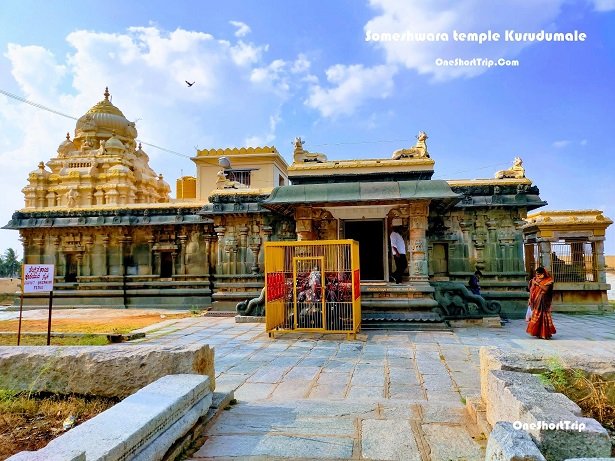
The temple is particularly interesting because its identity is not based on a single spectacular tower or enormous idol. Its appeal lies in the relationship between the natural rock, the stone-built shrine, its carved architectural elements and the layers of history that accumulated around Kurudumale. The Kolar district administration describes the Someshwara temple as a stone temple built on a boulder basement, with the principal Shiva Linga placed in the garbhagriha.


Where History and Sacred Tradition Meet
Kurudumale is an old temple settlement about 12 km from Mulbagal and is associated with a number of Hindu traditions and legends. The surrounding hill range is known as Koundinya Giri, and the village is particularly famous for two major shrines: the enormous Kurudumale Ganesha temple and the nearby Someshwara temple.
The Someshwara shrine represents the Shiva tradition within this sacred landscape. Its history is often connected with the Chola period, reflecting the wider influence of Chola rule and temple building in the Kolar region. However, the exact original construction date of this particular shrine is not firmly established in the current district information, so it is better understood as an old temple with Chola-period associations rather than assigning it an unsupported exact age.
A Shiva Temple Built Around the Rock
One of the most distinctive aspects of Someshwara Temple is its relationship with the rocky ground beneath it. Rather than appearing as a large temple complex spread across a perfectly level ceremonial platform, the shrine sits on a natural rocky base, giving the monument a strong sense of connection with the landscape.
The Kolar district administration specifically describes the temple as being built on a boulder basement. This is one of the details that separates the shrine from many larger South Indian temples where towering gateways and expansive courtyards dominate the visual experience. Here, the stone foundation and surrounding rock are themselves part of the temple's character.
Lord Someshwara in the Garbhagriha
The presiding deity is Someshwara Swamy, a form of Lord Shiva worshipped in the form of a Shiva Linga. The principal Linga is housed inside the garbhagriha, the innermost and most sacred chamber of the temple.
According to the current Kolar district description, the Shiva Linga is approximately 1.5 feet high. Its relatively modest scale contrasts with the much larger Ganesha image for which Kurudumale is famous, making Someshwara Temple a more intimate Shaiva place of worship.


The Mantapas and the Temple's Architectural Character
The temple is not simply a small sanctum around a Linga. Its architectural arrangement includes the spaces through which devotees approach and experience the shrine, with the stone-built structure leading towards the inner sanctum. The carved surfaces and pillars give the temple much of its visual identity.
The wider Kurudumale temple landscape also shows how different periods of South Indian architecture overlap at the site. The district administration notes that the nearby Ganesha temple has a later Vijayanagara character in its mukha mantapa and sukhavasi, while the Someshwara shrine retains its own older stone-built character. This makes the two temples especially interesting to visit together because they demonstrate different architectural layers within the same sacred settlement.
Carved Pillars and Stone Details
The beauty of Someshwara Temple becomes clearer when viewed at close range. The stone construction allows architectural elements to carry decorative work rather than relying on painted surfaces or modern ornamentation. Pillars, doorframes and other structural details contribute to the temple's historic character.
For visitors interested in heritage architecture, the temple is therefore best approached slowly. Instead of looking only at the main shrine, notice how the stonework changes between the entrance, halls and inner portions of the complex. These details help reveal the craftsmanship behind what can initially appear to be a comparatively simple rural temple.
The Parvati Shrine and Other Sacred Images
The temple complex also contains a shrine dedicated to Parvati, positioned in the north-western portion of the complex according to the Kolar district administration. This adds another dimension to the Shaiva character of the site, bringing Shiva and his divine consort into the same sacred environment.
The complex also preserves images from other temples that have fallen into disrepair. The district's description notes that some such deities have been brought here and kept within the temple premises. This means that the complex has value not only as a functioning sacred place but also as a repository of religious images associated with the surrounding region.
The Sacred Landscape of Kurudumale
Someshwara Temple should not be viewed in isolation. Kurudumale is a compact sacred landscape where different forms of Hindu worship and layers of architectural history exist within walking distance of one another. The enormous Ganesha shrine is the better-known attraction, but the Someshwara temple provides the Shiva-focused counterpart to that experience.
The Kurudumale Ganesha temple itself is associated with several powerful legends, including traditions involving Brahma, Vishnu and Maheshwara. These are religious traditions rather than archaeological evidence, but they help explain why the area has retained a strong sacred identity over generations.
Chola Connections Without Oversimplifying the History
Kurudumale lies within a part of Karnataka where Chola, Hoysala and Vijayanagara political and artistic influences overlapped. Several historical accounts associate the Someshwara shrine with the Chola period, while the nearby Ganesha temple displays later Vijayanagara-period architectural influence. This layered history is more useful than describing the entire Kurudumale complex as belonging to one dynasty.
The distinction also explains why visitors may notice different architectural languages within a relatively small geographical area. Kurudumale is a good example of how temples were maintained, expanded and reshaped as political powers changed, while the underlying sacred importance of the place continued.


A Temple for Those Who Enjoy Hidden Heritage
Someshwara Temple does not have the scale of Karnataka's most famous Hoysala or Vijayanagara monuments, and that is precisely what makes the visit appealing. It is a quieter heritage experience where the natural rock setting, stone construction and living Shaiva tradition can be appreciated without the overwhelming scale of a major pilgrimage complex.
It is particularly worthwhile for travellers who enjoy discovering lesser-known temples around Bengaluru and Kolar. Visiting Someshwara alongside the famous Kurudumale Ganesha temple also turns a short stop into a more complete exploration of the area's religious history.
Why Visit Someshwara Temple, Kurudumale?
The real attraction of Shri Someshwara Swamy Temple is the combination of ancient sacred tradition, stone architecture, natural rock setting and layered regional history. It offers a different experience from Kurudumale's enormous Ganesha shrine and gives visitors an opportunity to see the quieter Shaiva side of this historic temple village. If you are exploring Kolar's heritage beyond the most famous attractions, Someshwara Temple deserves to be included.
Temple Contact & Location


Website: No official website
Email: No official email address
Phone Number: KP Karthik – +91 9741004581
Address: Someshwara temple, Kurudumale, Mulbagal, Karnataka 563131
Accommodation: The temple has no rooms of its own, so anyone staying overnight will want to base themselves in Mulbagal town or Kolar city instead. A handful of hotels there take bookings online, including Sai Nandhini A/C Lodge, Harsha Residency, Hotel Saidham, GK Hill View Resort and Thavaru Homestay.
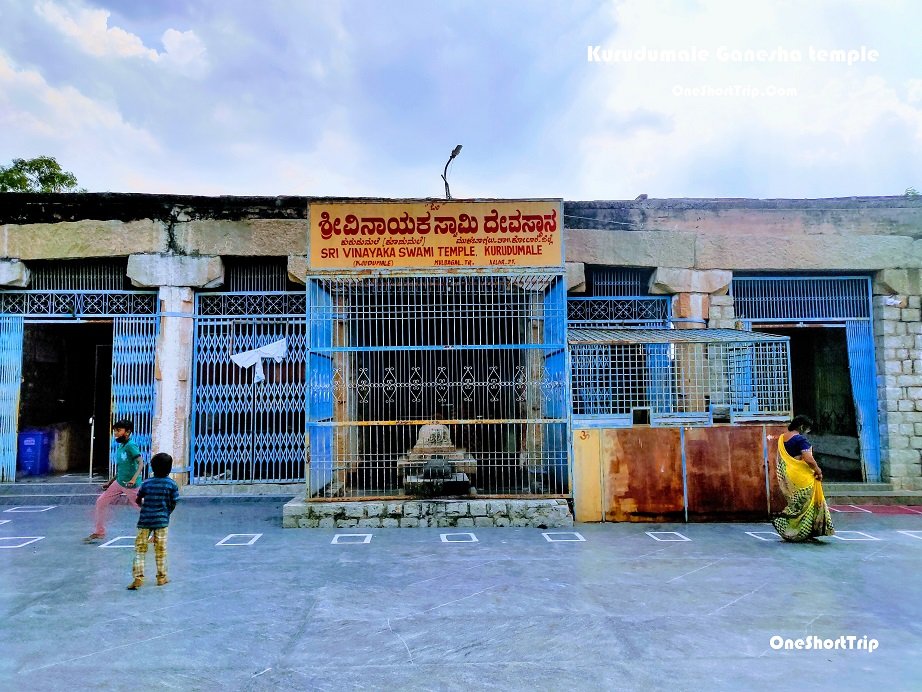
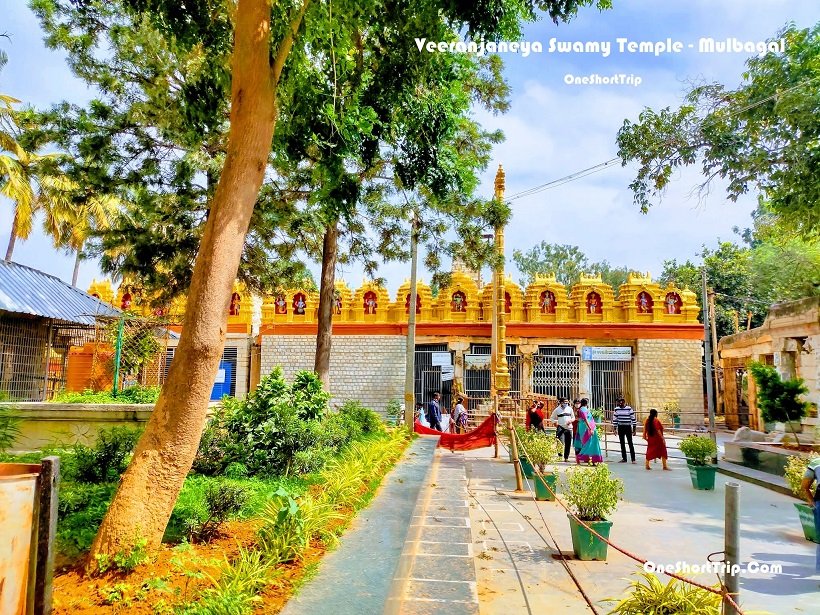
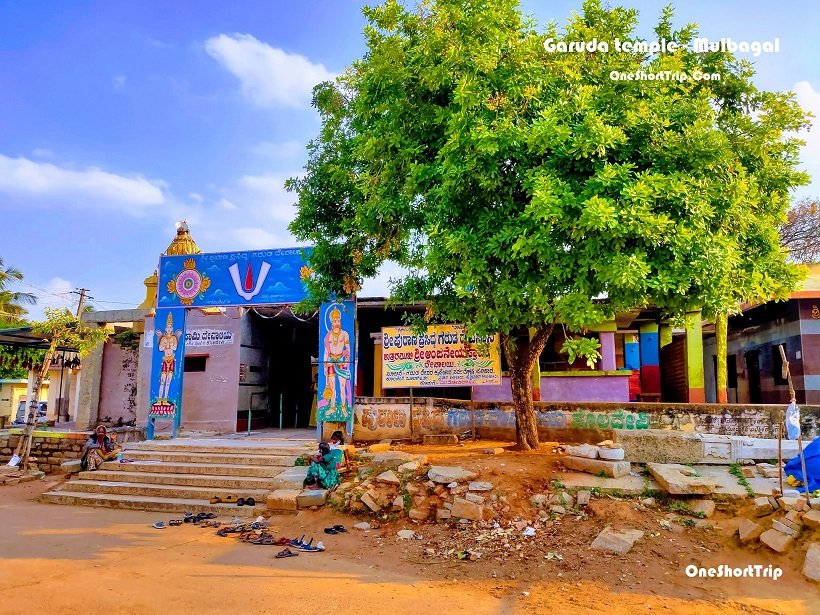
Near By Places to Visit: Veeranjaneya Swamy Temple – Mulbagal, Kurudumale Ganesha Temple, Garuda Temple – Mulbagal
Distance:
Bangalore to Someshwara Temple Kurudumale – 100 kilometres
Kolar to Someshwara Temple Kurudumale – 36 kilometres
Mulbagal to Someshwara Temple Kurudumale – 11 kilometres
Visiting Shri Someshwara Swamy Temple, Kurudumale
A visit to Shri Someshwara Swamy Temple in Kurudumale works best as a slow heritage and temple stop rather than a rushed sightseeing visit. The shrine is close to the famous Kurudumale Ganesha Temple, making it easy to experience both temples during the same outing.
The temple rewards visitors who take time to look beyond the main deity. The outer mantapa, carved pillars, Kalyana Mantapa, Vasantha Mantapa, smaller shrine spaces and Pushkarini together make the complex considerably more interesting than its relatively quiet appearance from outside suggests. The Kolar district administration specifically highlights the architectural quality of these spaces and the carved Ashta Dikpalaka figures associated with the mantapas.
What to See Inside the Temple
Begin with the main shrine of Someshwara Swamy and then spend a few minutes exploring the surrounding architectural spaces. The temple follows a sequence of sacred and gathering areas, including the garbhagriha, antarala, mukha mantapa and larger outer mantapa.
The Kalyana Mantapa and Vasantha Mantapa deserve particular attention. Their stonework demonstrates how functional spaces in historic temples could also become showcases of sculpture. The district administration describes the Vasantha Mantapa and Kalyana Mantapa as notable examples of Vijayanagara-period artistic influence within the complex.
Look Up at the Carved Ceilings
One of the easiest details to miss is above eye level. The ceiling elements of the mantapas contain carefully carved figures, including representations associated with the Ashta Dikpalakas, the eight guardians traditionally connected with the directions. The Kolar district's official description specifically draws attention to these carvings.
If you enjoy temple photography or heritage architecture, this is one of the places where a slower walk makes a noticeable difference. Instead of photographing only the entrance, look at the junctions between pillars, ceiling panels, doorframes and smaller sculptures.

The Temple Pushkarini
The temple complex also contains a Pushkarini, or sacred temple water tank. The Kolar district administration specifically describes it as a beautiful tank and notes its considerable depth.
Visitors should treat the Pushkarini as a sacred architectural feature rather than a recreational water body. Avoid entering the water or approaching unstable edges, particularly when travelling with children or elderly family members.
A Short Walk Around the Complex
Do not leave immediately after darshan. Walk around the temple perimeter where permitted and observe the relationship between the main shrine, mantapas and smaller sacred spaces. The Parvati shrine in the north-western part of the complex is another important feature noted in the official district description.
Because the temple remains a place of worship, the atmosphere can change depending on the time of day, puja activity and local religious occasions. Visitors should give priority to devotees and follow instructions from the temple staff.
Temple Timings
A fixed current timetable is not clearly published by the Kolar district administration for the Kurudumale Someshwara shrine. Older and local listings give different morning and evening schedules, so travellers should confirm the day's darshan timings locally, especially if the visit is planned around a specific puja.
For a relaxed sightseeing visit, morning is generally preferable. It is cooler, the temple surroundings are usually more comfortable to explore, and the light is better for appreciating the stone architecture.
How Long Do You Need?
Allow around 30–60 minutes for Someshwara Temple if you want to see the shrine, mantapas, carvings and surrounding features without rushing. A shorter darshan stop is possible, but heritage enthusiasts may want more time to study the pillars and sculptural details.
Since the famous Kurudumale Ganesha Temple is nearby, most travellers should plan the two together rather than making Someshwara Temple a separate journey.
How to Reach Someshwara Temple, Kurudumale
By road: Kurudumale is approximately 12 km from Mulbagal and is easiest to visit by car, taxi or local transport from Mulbagal. The village lies within Kolar district and is well suited to a road-trip itinerary from Bengaluru.
By bus: Travellers can reach Mulbagal by bus and continue towards Kurudumale using local transport. Because local services can vary, confirm the final connection at Mulbagal rather than relying on a fixed timetable.
By train: The practical approach for most visitors is to use a nearby railway station and continue by road. For a day trip from Bengaluru, however, driving is generally simpler because several attractions in the Mulbagal–Kolar region are spread out.
By air: Kempegowda International Airport, Bengaluru, is the nearest major airport. Kurudumale is better approached as part of a road journey after arriving in Bengaluru.
Best Time to Visit
October to February is generally the most comfortable period for a Kolar and Kurudumale temple trip because the weather is more pleasant for travelling between outdoor attractions. Early mornings remain particularly comfortable throughout much of the year.
Summer afternoons can become hot, so temple visits are better planned for the morning or later in the day. During festivals and important Shaiva occasions, expect larger crowds and allow additional time.
Is the Temple Suitable for Families and Senior Citizens?
Yes, Someshwara Temple can be included in a family heritage trip. There is no trek involved, and the main experience is centred around the temple complex rather than a long hike.
Senior citizens should nevertheless walk carefully around uneven stone surfaces and near the Pushkarini. If the temple is crowded, take extra care around entrances and mantapa areas. Families travelling with children should supervise them closely because historic temple tanks, steps and stone edges can be hazardous.
Dress and Temple Etiquette
Wear modest, comfortable clothing suitable for a traditional Hindu temple. Footwear should be removed wherever required before entering sacred areas. Avoid loud conversations, eating inside the temple and obstructing devotees during worship.
Photography should always follow the instructions displayed at the temple. Even when photography is permitted in open areas, avoid photographing devotees during private or sensitive religious moments.
Parking, Food and Facilities
Kurudumale is a small temple settlement rather than a major commercial tourist centre. Basic local facilities are available around the wider area, but travellers should not expect the range of restaurants, cafés or visitor infrastructure found in Bengaluru or Mysuru.
For a comfortable day trip, carry drinking water and plan meals around Mulbagal or Kolar. Parking arrangements can become tighter during festivals and busy temple days, so arrive earlier when possible.
Combine Someshwara Temple with Kurudumale Ganesha
The strongest reason to visit Someshwara Temple is its location within the larger Kurudumale sacred landscape. The famous Ganesha temple is only a short distance away, allowing travellers to experience two very different architectural and devotional traditions in the same stop.
The Kolar district administration identifies Kurudumale as being about 12 km from Mulbagal and highlights both its historic setting and major temples.
A Kurudumale–Kolar Day Trip from Bengaluru
For travellers starting from Bengaluru, Someshwara Temple can form part of a wider Kolar heritage circuit. A practical route can include Kurudumale Ganesha Temple → Someshwara Temple → Mulbagal → Kolaramma Temple → Someshwara Temple, Kolar, with additional time allowing for attractions such as Kotilingeshwara or Antaragange.
Karnataka Tourism currently recommends a temple circuit covering Kolaramma, Someshwara and Kurudumale, while also identifying Kurudumale and several other Kolar attractions as suitable additions to a district-wide itinerary.
Other Places to Visit Nearby
Kurudumale Ganesha Temple: The essential companion visit, famous for its enormous Ganesha idol and later architectural additions.
Avani: A historic temple village associated with Ramayana traditions and an important group of ancient temples.
Kotilingeshwara Temple: A major Shiva pilgrimage centre near Kolar known for its enormous Shiva Linga and thousands of smaller Lingas.
Kolaramma Temple: An important historic temple in Kolar town with Ganga and Chola-period associations and a distinct Dravidian architectural character.
Antaragange: A good addition for travellers who want to combine temple heritage with rocky landscapes, caves and trekking.
What Makes Someshwara Temple Worth Visiting?
Someshwara Temple is worth visiting because it offers something that the larger tourist monuments often cannot: a quieter encounter with living temple architecture and the layered history of Kolar. Its rocky foundation, carved stone interiors, mantapas, sacred water tank and continuing Shiva worship make it a meaningful stop for travellers interested in Karnataka's lesser-known temples. When combined with Kurudumale Ganesha, it becomes an especially rewarding addition to a Bengaluru–Kolar–Mulbagal day trip.