

Panchamukhi Anjaneya Temple near Mantralaya
Panchamukhi Anjaneya Temple is one of the most important pilgrimage places to visit near Mantralaya. Located at Panchamukhi, traditionally associated with Gaanadhal village in Raichur district of Karnataka, the temple stands across the Tungabhadra River from Mantralaya in a peaceful rocky landscape. The shrine is revered as the place where Sri Raghavendra Swamy is believed to have performed intense meditation and received a divine vision of Panchamukhi Anjaneya, the rare five-faced form of Lord Hanuman. For devotees travelling to the Sri Raghavendra Swamy Matha in Mantralaya, a visit to Panchamukhi Anjaneya Temple is often considered an important part of the pilgrimage.
The temple is not actually inside Mantralaya town. Mantralaya lies in Andhra Pradesh, while Panchamukhi is on the Karnataka side of the Tungabhadra. The road distance from Mantralaya is approximately 20 km, although the exact travel distance can vary depending on the route and river crossing used. This distinction is useful when planning a Mantralaya pilgrimage because the Panchamukhi visit requires a separate journey from the main Raghavendra Swamy temple complex.
Why Is Panchamukhi Anjaneya Temple Famous?
The greatest importance of Panchamukhi Anjaneya Temple comes from its connection with Sri Raghavendra Swamy and the rare five-faced form of Hanuman worshipped here. According to the traditional account followed by devotees, Raghavendra Swamy spent about twelve years in meditation at Panchamukhi before moving to Mantralaya. During this period of intense spiritual practice, Lord Hanuman is believed to have appeared before him in the Panchamukhi form.
The shrine is therefore not simply another Hanuman temple. It is associated with an important chapter in the spiritual life of one of the most revered saints of the Madhva tradition. Devotees visit the site to experience the sacred landscape connected with Raghavendra Swamy, offer prayers to Panchamukhi Anjaneya and continue their pilgrimage between Panchamukhi and Mantralaya.
The Story of Sri Raghavendra Swamy at Panchamukhi
The history of Panchamukhi is closely intertwined with the life of Sri Raghavendra Swamy. Traditional accounts state that the saint frequently visited the rocky surroundings of the region and chose a cave-like setting for prolonged meditation. It is believed that he remained here for approximately twelve years, undertaking deep spiritual practice before eventually establishing his connection with Mantralaya.
According to the local religious tradition, Raghavendra Swamy was blessed with a vision of Panchamukhi Hanuman during his meditation. Some accounts also associate this divine experience with manifestations of Lakshmi, Venkateshwara and Varaha. These traditions have helped make the rocky landscape around Panchamukhi an important part of the wider Raghavendra pilgrimage.

What Does Panchamukhi Mean?
The Sanskrit-derived word Panchamukhi means “five-faced”. Unlike the familiar single-faced representations of Hanuman, Panchamukhi Anjaneya is depicted with five divine faces. The tradition associates these faces with Hanuman, Narasimha, Garuda, Varaha and Hayagriva.
Each face represents a different divine power and direction. Hanuman represents devotion, courage and strength; Narasimha represents protection and the destruction of evil; Garuda is associated with power and freedom; Varaha represents protection and preservation; and Hayagriva is traditionally connected with knowledge and wisdom. Together, the five forms express the protective and all-encompassing nature attributed to Panchamukhi Hanuman.
The Five Faces of Panchamukhi Hanuman
| Face | Associated Form | Traditional Significance |
|---|---|---|
| Hanuman | Anjaneya | Devotion, courage, strength and protection |
| Narasimha | Man-Lion incarnation | Protection and removal of negative forces |
| Garuda | Divine eagle | Power, speed and freedom |
| Varaha | Boar incarnation of Vishnu | Protection, stability and preservation |
| Hayagriva | Horse-headed form of Vishnu | Knowledge, learning and wisdom |
The Panchamukhi form is also connected in Hindu tradition with the Ramayana story of Mahiravana. In one popular version of the legend, Mahiravana concealed five lamps burning in five different directions, and Hanuman assumed the five-faced form so that all five flames could be extinguished simultaneously. The story is one of the traditional explanations for the extraordinary five-faced representation of Hanuman, although the Panchamukhi shrine near Mantralaya is especially revered because of its separate connection with Sri Raghavendra Swamy.


The Cave, Rocks and Sacred Landscape
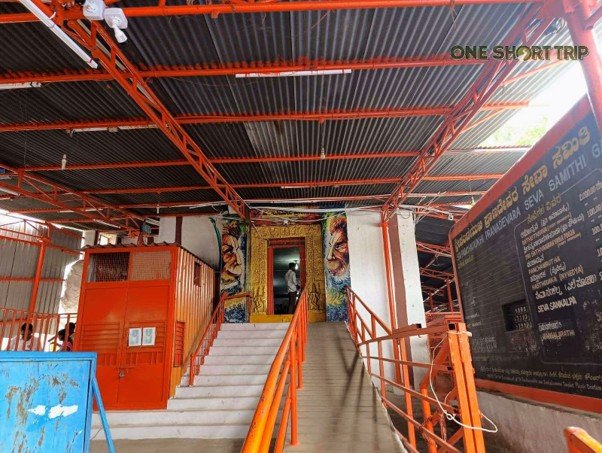
One of the most distinctive features of Panchamukhi Anjaneya Temple is its rocky setting. Rather than being a large urban temple complex, the shrine is closely connected with natural rock formations and a cave-like space on a hillock. The climb and the rocky surroundings contribute to the feeling that this is a place of meditation rather than simply a conventional temple destination.
Local traditions also point out unusual rock formations around the shrine, including formations described as resembling a bed and pillow. Devotees associate these natural features with the period of Raghavendra Swamy's meditation. The surrounding landscape, together with the nearby Tungabhadra and low rocky hills, gives Panchamukhi a very different atmosphere from the busier pilgrimage centre at Mantralaya.
Panchamukhi Anjaneya Temple Timings
Panchamukhi Anjaneya Temple generally follows split visiting hours on most days. Commonly reported timings are approximately 6:00 AM to 1:00 PM and 3:00 PM to 8:00 PM from Sunday to Friday. On Saturdays, the temple is commonly reported to remain open continuously from around 6:00 AM to 8:00 PM. Timings can change during festivals, special pujas and local religious occasions, so pilgrims should confirm the day's schedule locally before beginning the journey.
How to Reach Panchamukhi Anjaneya Temple from Mantralaya
Panchamukhi Anjaneya Temple is approximately 20 km from Mantralaya by road. The temple is located on the Karnataka side of the Tungabhadra River, while the main Mantralaya pilgrimage centre is in Andhra Pradesh. The two places are therefore connected geographically and spiritually, but they are not in the same town or state.
The easiest option for most pilgrims is a private car, taxi or local vehicle from Mantralaya. Buses and shared local transport may also be available depending on the day. Road conditions can vary, particularly on the final approach, so travellers should allow extra time rather than planning the visit as a very short stop. The final section involves the natural rocky terrain around the temple and may require climbing steps.
If you are planning a Mantralaya pilgrimage, it is practical to visit Panchamukhi along with other nearby spiritual sites rather than making multiple separate journeys. A taxi or private vehicle gives pilgrims greater flexibility to combine Panchamukhi with Bichali and return to Mantralaya on the same day.


Best Time to Visit Panchamukhi Anjaneya Temple
The cooler months from October to February are generally the most comfortable time to visit Panchamukhi. The rocky surroundings can become hot during the summer afternoons, making an early morning darshan much more pleasant. October through March is also widely considered the better season for exploring the wider Mantralaya region.
Devotees may also choose to visit during Hanuman Jayanti and other important Hindu festivals. These occasions can bring larger crowds and a more vibrant devotional atmosphere, but they also mean longer waiting times and heavier traffic. If your priority is a peaceful darshan, a regular weekday morning is usually a better choice.
What to See at Panchamukhi Anjaneya Temple
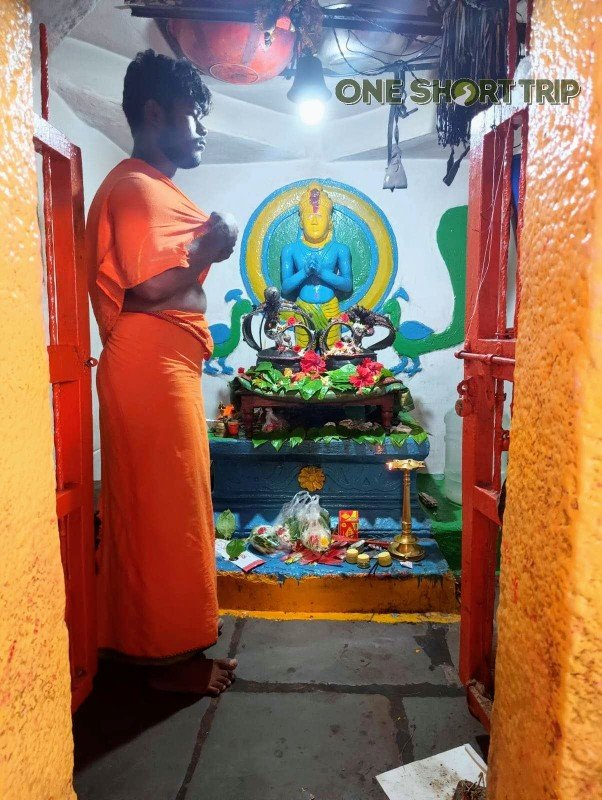
The principal attraction is the sacred Panchamukhi Anjaneya shrine and its unusual five-faced representation of Hanuman. Beyond the deity itself, visitors can experience the cave-like setting, rock formations, hillock and the peaceful natural environment surrounding the temple. The combination of mythology, Raghavendra Swamy's spiritual association and the landscape is what makes this pilgrimage stop distinctive.
Some visitors also explore the nearby sacred sites and natural features associated with local traditions. The area is best approached as a pilgrimage landscape rather than as a conventional sightseeing attraction, and visitors who take a little time to understand the legends often find the experience more meaningful.


Panchamukhi Anjaneya Temple and the Mantralaya Pilgrimage
The strongest reason to include Panchamukhi in a Mantralaya itinerary is its connection with Sri Raghavendra Swamy. Mantralaya is centred on the saint's Brindavana and the traditions surrounding his life and teachings, while Panchamukhi represents the place where he is believed to have undertaken prolonged meditation and experienced the divine presence of Panchamukhi Anjaneya.
For pilgrims, visiting both locations creates a more complete understanding of the spiritual geography of the region. Rather than treating Panchamukhi as simply a nearby temple, it can be seen as one of the important places connected with the journey of Raghavendra Swamy before his final establishment at Mantralaya.
Nearby Places to Visit
Panchamukhi can be combined with several important pilgrimage destinations in and around Mantralaya:
- Sri Raghavendra Swamy Matha, Mantralaya – the principal pilgrimage centre associated with Sri Raghavendra Swamy and his Brindavana.
- Manchalamma Temple – an important shrine traditionally associated with the spiritual history of Mantralaya.
- Bichali – another important place associated with Sri Raghavendra Swamy and a popular addition to a Mantralaya pilgrimage.
- Tungabhadra River – the river forms an important geographical and cultural part of the pilgrimage landscape.
Visitor Tips for Panchamukhi Anjaneya Temple
- Start early if you want a more comfortable journey and quieter darshan.
- Wear modest, comfortable clothing suitable for a Hindu pilgrimage.
- Wear footwear with a good grip because the approach includes steps and rocky surfaces.
- Senior citizens and visitors with knee or mobility difficulties should plan the climb carefully.
- Carry drinking water, especially during summer.
- Do not rush through the cave or sacred areas; follow instructions from temple staff and priests.
- Timings can change during festivals and special religious occasions, so confirm locally before travelling.
- Allow sufficient time for the return journey to Mantralaya rather than treating Panchamukhi as a quick roadside stop.
- Photography rules may differ around the sanctum and other sacred areas; follow local instructions.
- Combine Panchamukhi with Mantralaya and Bichali if you want to make the most of the pilgrimage circuit.
Why Panchamukhi Anjaneya Temple Is Worth Visiting
Panchamukhi Anjaneya Temple offers a combination that is difficult to find elsewhere: a rare five-faced form of Lord Hanuman, a sacred cave and rocky landscape, a powerful local tradition surrounding Sri Raghavendra Swamy and a direct connection with the wider Mantralaya pilgrimage. The journey from Mantralaya takes you away from the busy temple town into a quieter landscape where mythology, meditation and nature come together. For anyone visiting Mantralaya with an interest in the life of Raghavendra Swamy or Hanuman worship, Panchamukhi is a destination that deserves to be included in the itinerary.