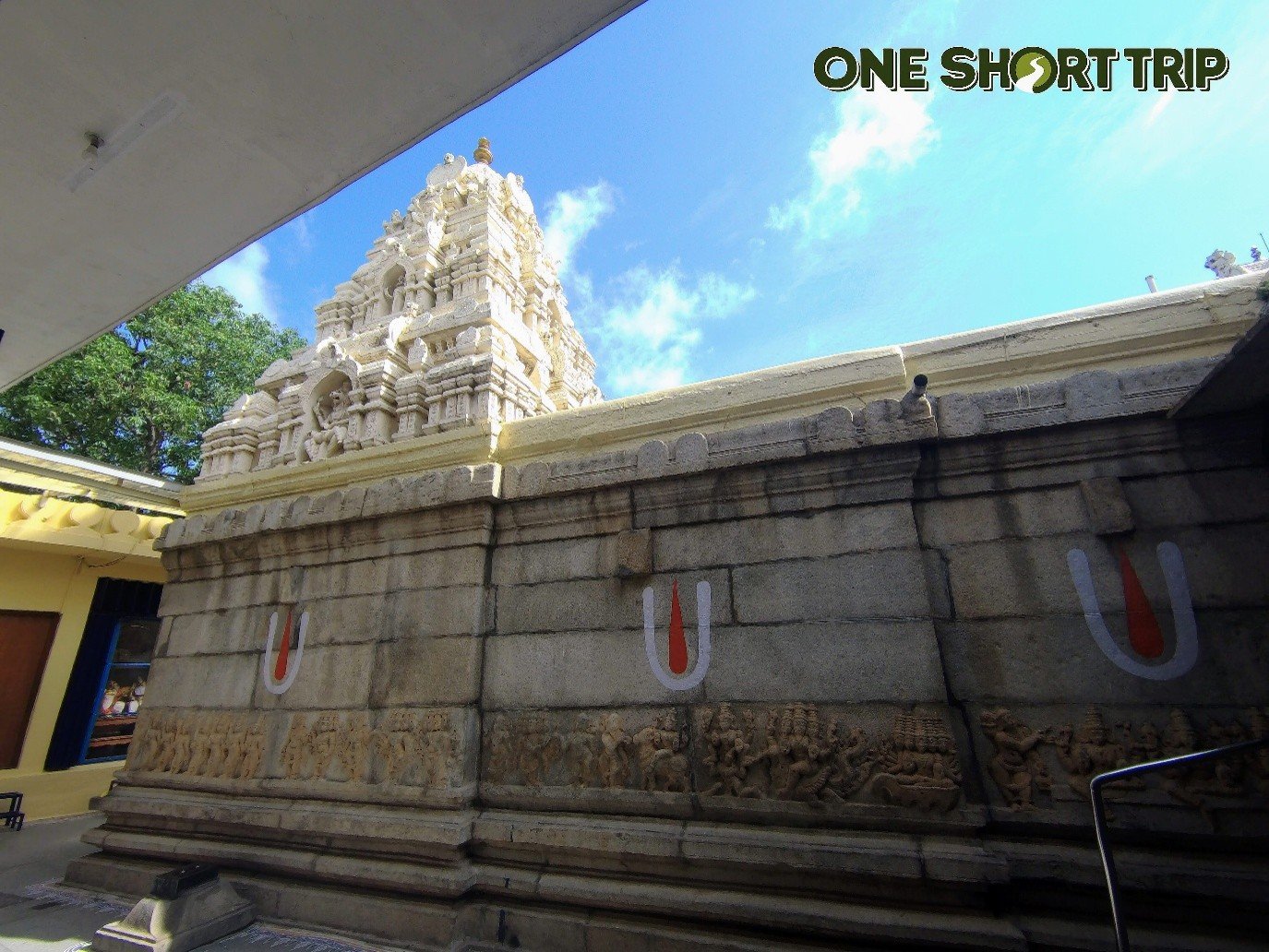
Kote Sri Prasanna Venkataramana Swamy Temple, Bengaluru – A Complete Guide
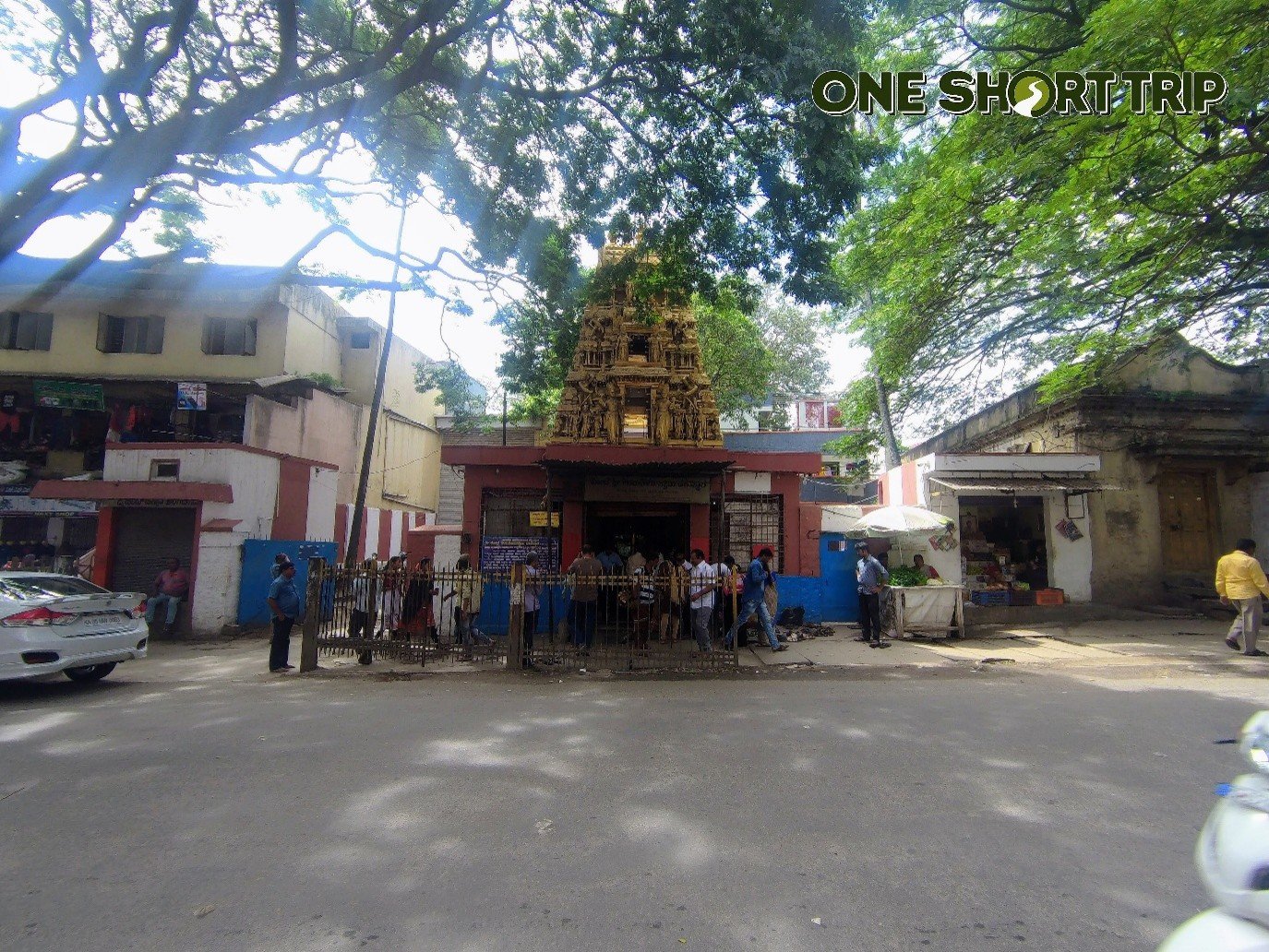
In the heart of old Bengaluru, close to KR Market and the historic Bengaluru Fort area, stands the beautiful Kote Sri Prasanna Venkataramana Swamy Temple. Dedicated to Lord Venkateshwara, a form of Lord Vishnu, this historic Vaishnavite temple is one of the important religious and heritage landmarks in central Bengaluru.
The word “Kote” means fort in Kannada, reflecting the temple’s connection with the old Bengaluru Fort precinct. The present temple dates to the 17th century and is associated with the Mysore Wodeyar period. Its architecture, religious importance and location beside other major heritage attractions make it an excellent place to include in a Bengaluru temple and heritage trail.
Why Is Kote Sri Prasanna Venkataramana Swamy Temple Famous?
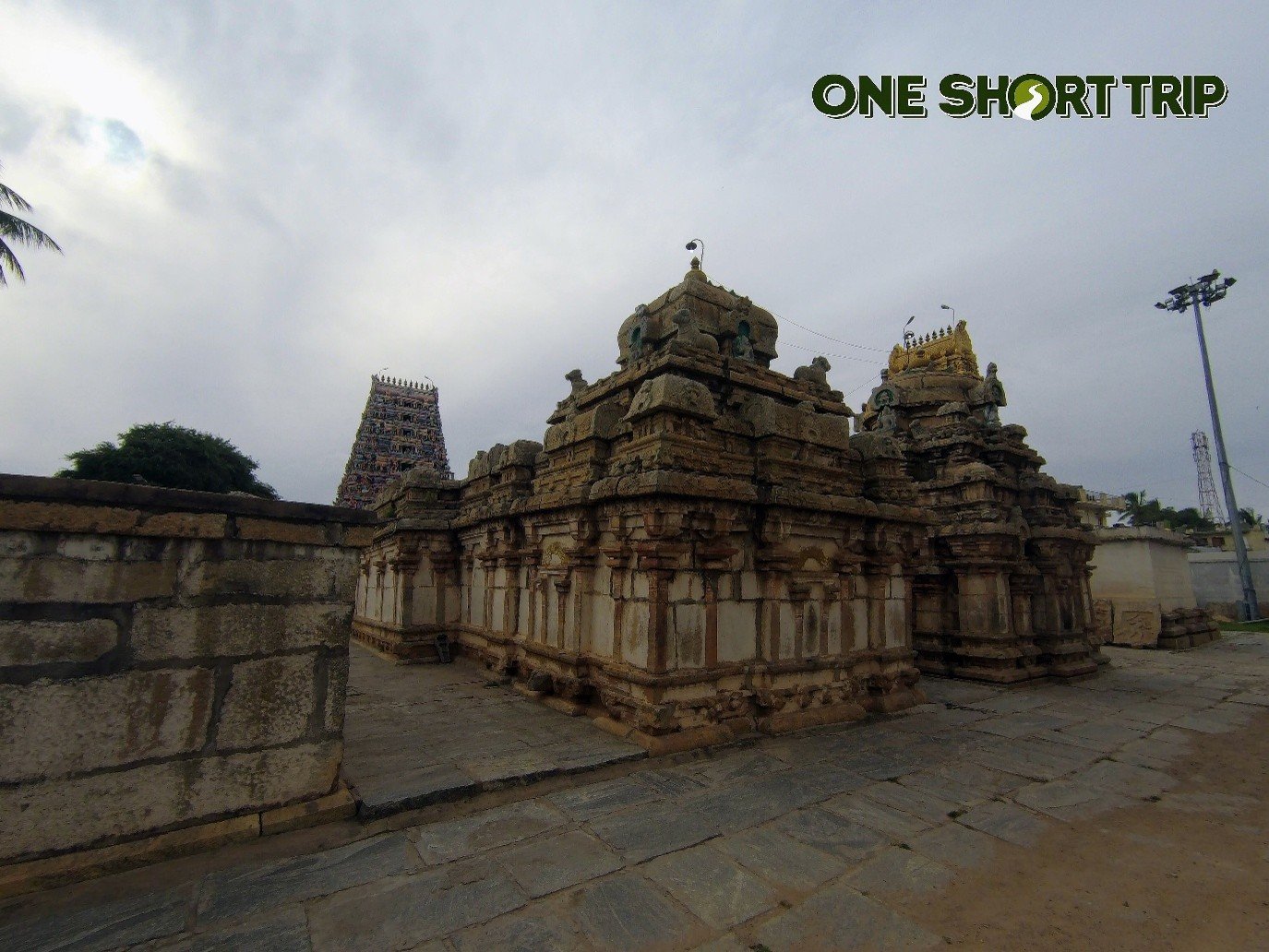
The temple is particularly known for its worship of Lord Venkataramana Swamy, its historic connection with the Wodeyar period and its impressive Dravidian and Vijayanagara-influenced architectural details. The granite pillars, carved figures and traditional temple layout give visitors an opportunity to experience a part of Bengaluru’s older religious heritage while still being surrounded by the busy streets of modern Bengaluru.
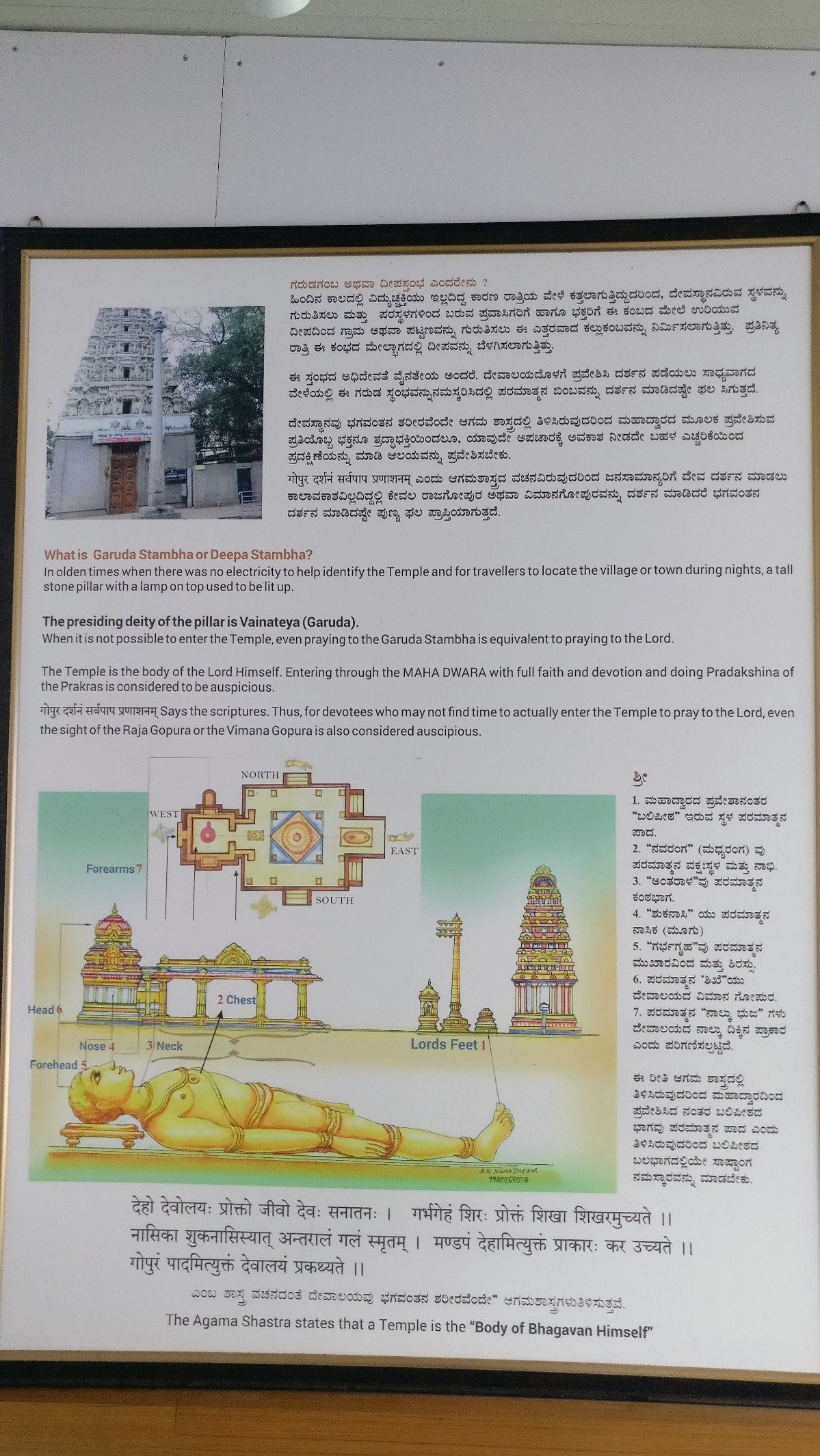
Another feature associated with the temple is the Garuda Stambha. A popular local historical tradition connects the pillar with the 1791 Siege of Bangalore, when a cannonball is said to have struck the pillar instead of reaching Tipu Sultan’s nearby palace. This story has become one of the temple’s best-known legends and adds another layer to its connection with Bengaluru’s turbulent Mysore-era history.
A Temple Dedicated to Lord Venkateshwara
The principal deity of the temple is Sri Prasanna Venkataramana Swamy, a form of Lord Vishnu worshipped as Venkateshwara. The temple remains an active place of worship rather than simply functioning as a historical monument.
For devotees, a visit is an opportunity to offer prayers, seek darshan and participate in traditional Vaishnavite worship. For travellers interested in Bengaluru’s history, the temple offers a different perspective on the city by bringing together religion, architecture and the legacy of the Mysore rulers in one location.
History of Kote Sri Prasanna Venkataramana Swamy Temple
The temple belongs to Bengaluru’s historic core and is generally dated to the late 17th century. It is associated with Chikka Devaraja Wodeyar and the expansion of Wodeyar influence over Bengaluru. Historical accounts differ on some details of the temple’s exact chronology, so it is safest to describe it as a 17th-century Wodeyar-period temple.
During the centuries that followed, Bengaluru passed through several important political periods, including the Mysore rulers, the era of Hyder Ali and Tipu Sultan, British administration and eventually modern Karnataka. The temple’s continued presence in the old city makes it an important link between Bengaluru’s religious traditions and its changing political history.
Dravidian and Vijayanagara-Influenced Architecture
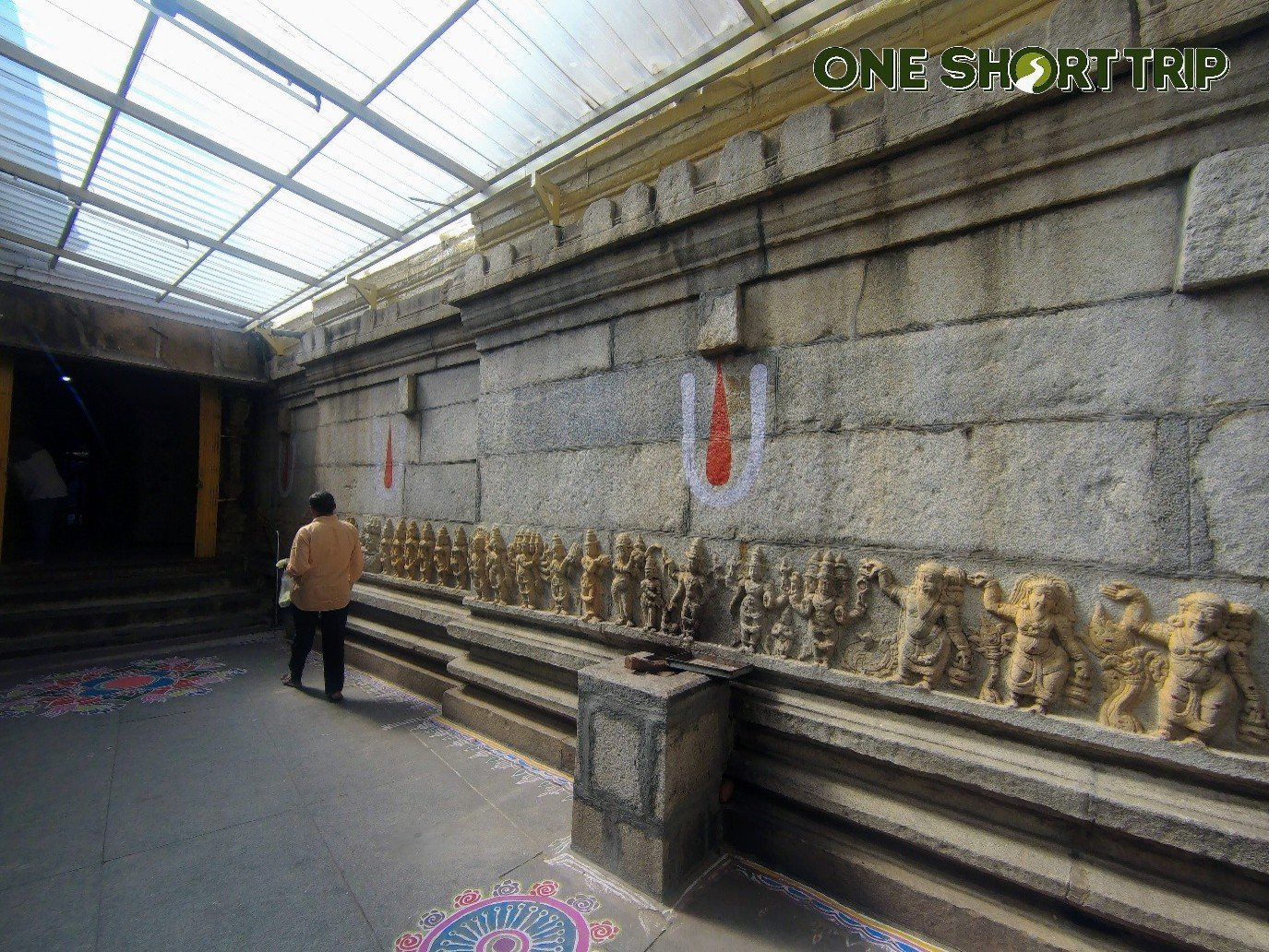
One of the biggest reasons to spend time inside the temple is its traditional architecture. The complex features a Rajagopuram, Navaranga Mantapa, granite pillars and detailed sculptural work. The pillars and walls display religious and decorative motifs that reward visitors who take time to look beyond the main sanctum.
The architectural character reflects the broader South Indian temple-building tradition, with influences associated with Dravidian and Vijayanagara craftsmanship. The temple therefore appeals not only to devotees but also to visitors interested in Bengaluru’s heritage, sculpture and traditional architecture.
The Garuda Stambha and Its Famous Legend
The Garuda Stambha is among the most talked-about features of Kote Venkataramana Temple. According to a long-standing local tradition, a cannonball fired during the 1791 Siege of Bangalore struck the Garuda pillar and was deflected rather than reaching the nearby palace.
The story should be understood as a historical tradition associated with the temple, rather than as an independently verified account of every detail. Nevertheless, the Garuda Stambha remains an important part of the temple’s identity and is worth looking for during a visit.
Shrines and Religious Significance
Along with the principal shrine of Lord Venkataramana, the temple complex includes worship spaces associated with other Vaishnavite deities and traditions. Devotees may encounter shrines connected with Goddess Lakshmi, Lord Hanuman, Garuda, Andal and the Alwars.
This makes the temple more than a single-deity shrine. It is a compact religious complex where visitors can experience several aspects of Vaishnavite worship while also appreciating the historic setting of the old Bengaluru city.
Why Visit Kote Venkataramana Temple?
- To offer darshan to Lord Venkataramana Swamy.
- To explore one of Bengaluru’s historic 17th-century temples.
- To admire traditional Dravidian and Vijayanagara-influenced architecture.
- To see the historic Garuda Stambha and learn about its famous local legend.
- To combine temple worship with Bengaluru Fort and Tipu Sultan’s Summer Palace.
- To experience an important religious landmark in the old KR Market area.
A Temple in the Heart of Old Bengaluru
The location is one of the temple’s biggest advantages for travellers. Kote Sri Prasanna Venkataramana Swamy Temple lies in the historic central Bengaluru area around KR Road, Kalasipalya and KR Market. This makes it easy to combine with several nearby heritage attractions in a single outing.
Rather than treating the temple as an isolated stop, visitors can include it as part of an Old Bengaluru heritage walk covering temples, palaces, markets and surviving portions of the city’s historic fort landscape.
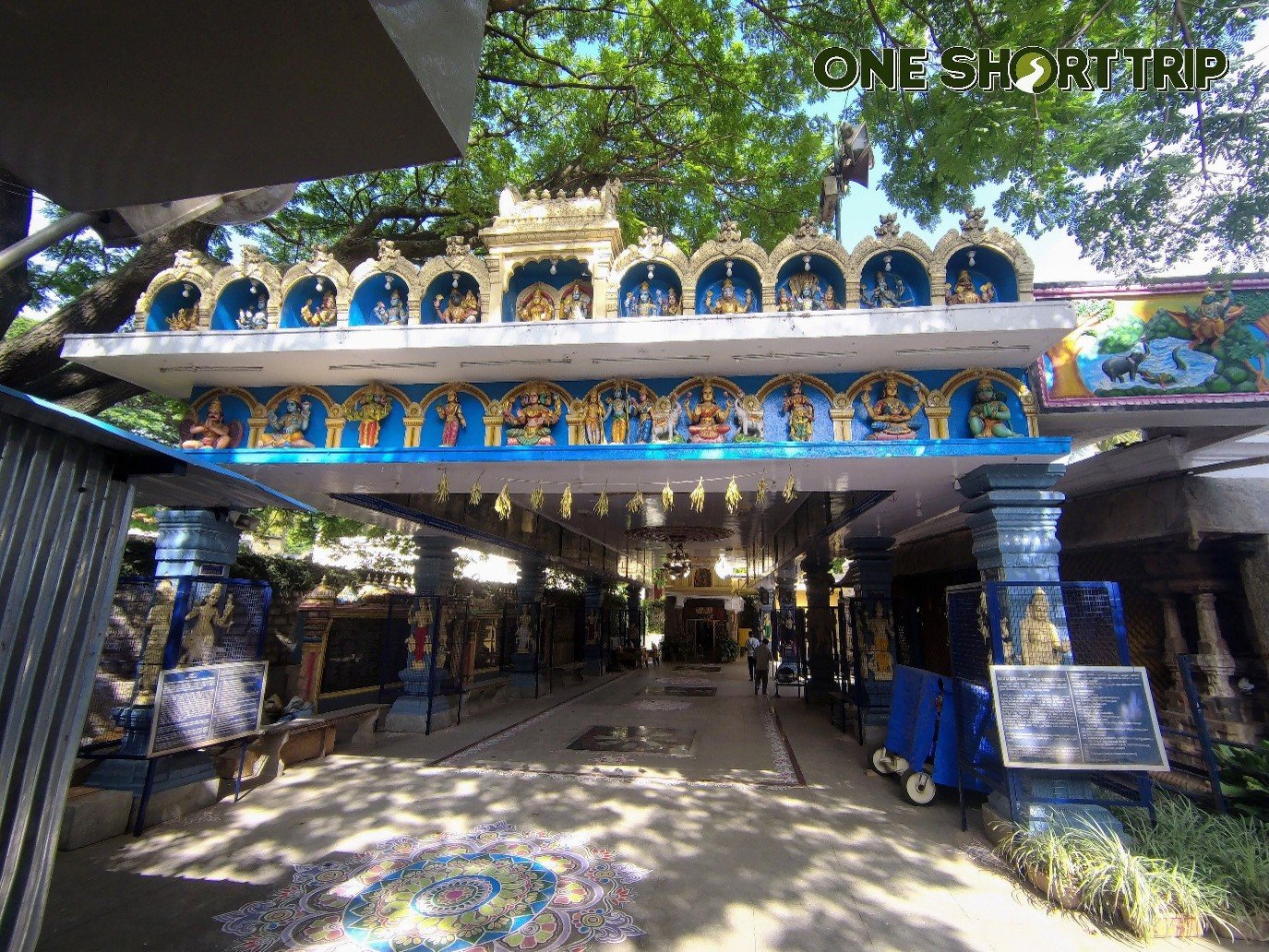
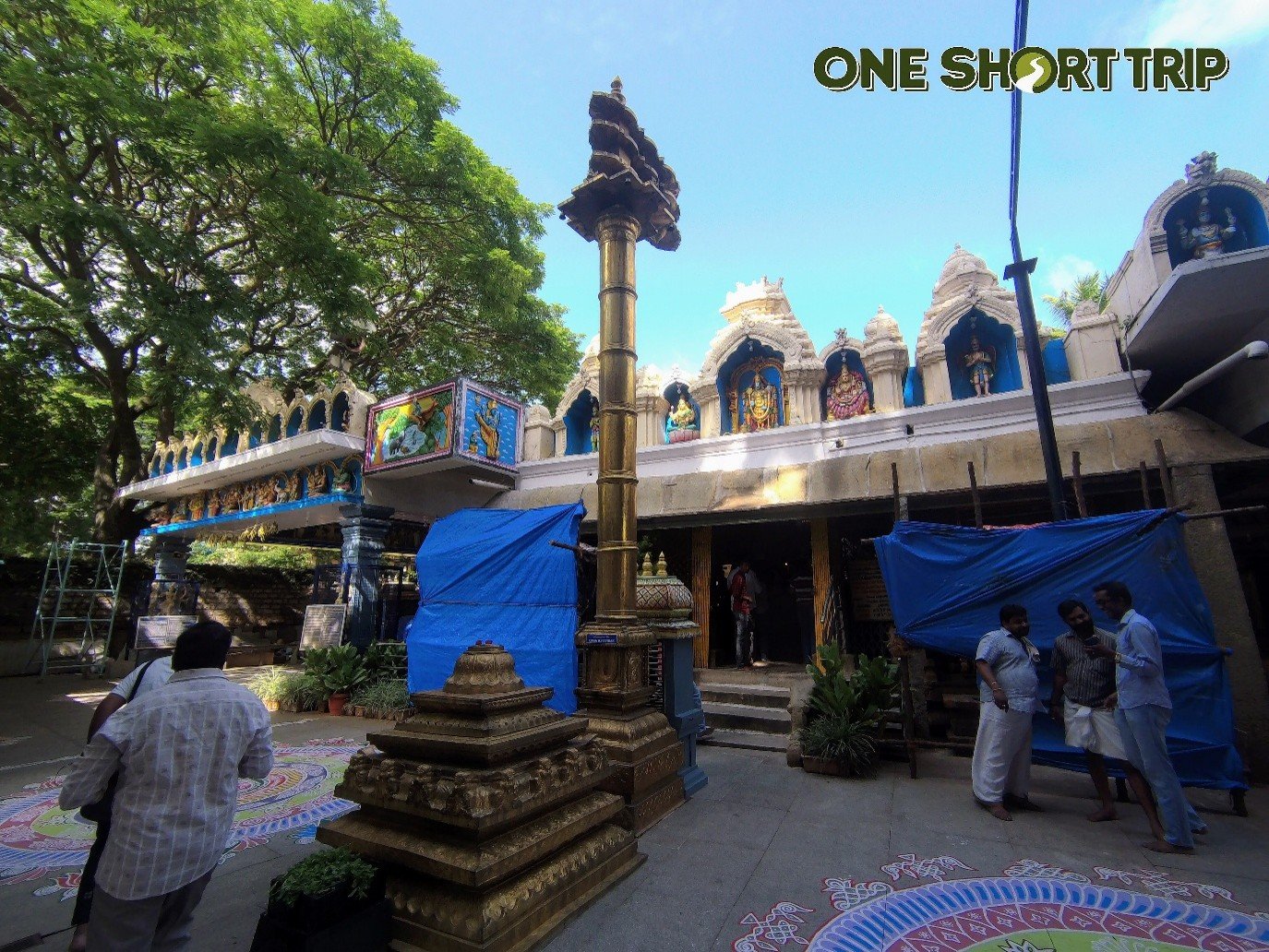
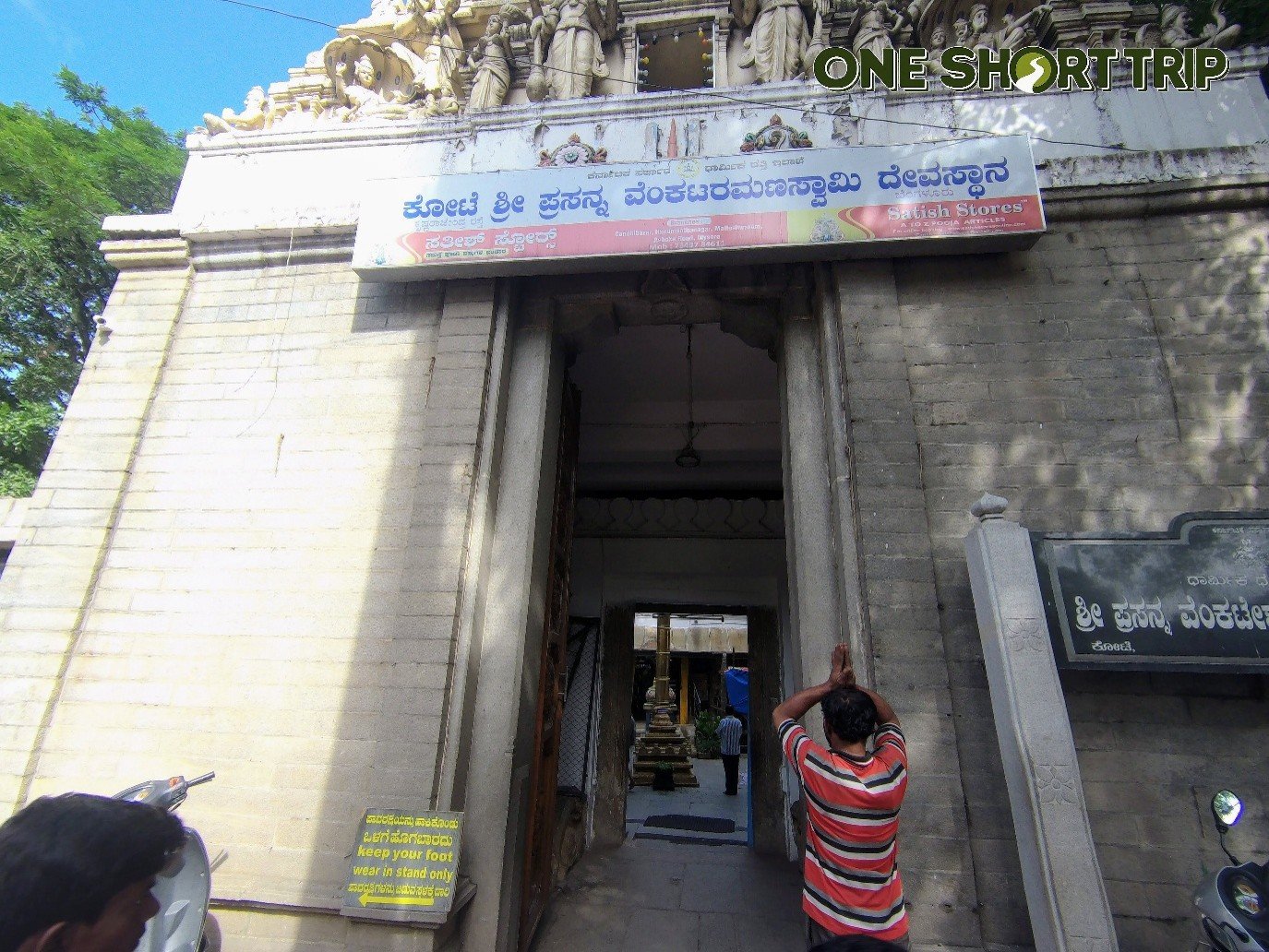
Visiting Kote Sri Prasanna Venkataramana Swamy Temple
Kote Sri Prasanna Venkataramana Swamy Temple is located on Krishna Rajendra Road in the Kalasipalya area of Bengaluru, close to the historic KR Market and Bengaluru Fort precinct. Its central location makes it convenient to combine with several important heritage attractions in the old city. The Karnataka government’s temple listing identifies it as the Kote Sri Venkateshwara Swamy Temple on K R Road.
Kote Venkataramana Temple Timings
The Karnataka HRCE listing currently publishes general darshan hours in morning and evening sessions. Other current local listings similarly show morning darshan around 8:00 AM to 12:00–12:30 PM, with evening hours beginning around 6:00 PM. Saturday hours may be longer. Since temple timings can change for festivals, special poojas and other religious occasions, it is best to confirm the schedule before travelling for a specific darshan or seva.
If you prefer a quieter visit, a weekday morning is generally a practical choice. Evenings, weekends and important Vaishnavite festivals can attract more devotees.
Best Time to Visit Kote Venkataramana Temple
The best time depends on what you want from the visit. For a peaceful darshan and more time to appreciate the architecture, choose a weekday morning. Early evening is another good option if you want to include the temple after exploring the surrounding heritage area.
Devotees planning their visit around festivals such as Vaikunta Ekadashi should expect larger crowds and should allow additional time for darshan.
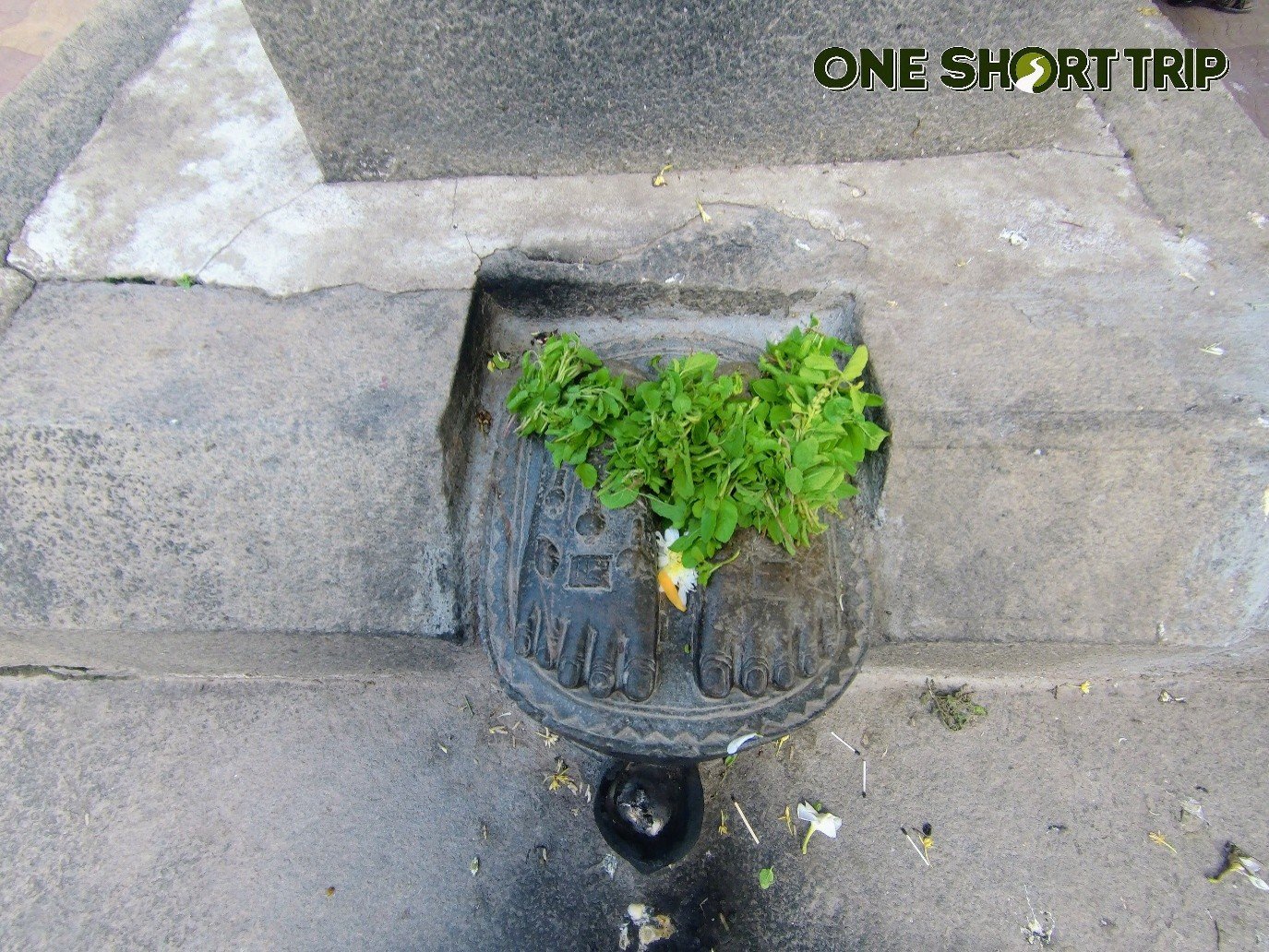
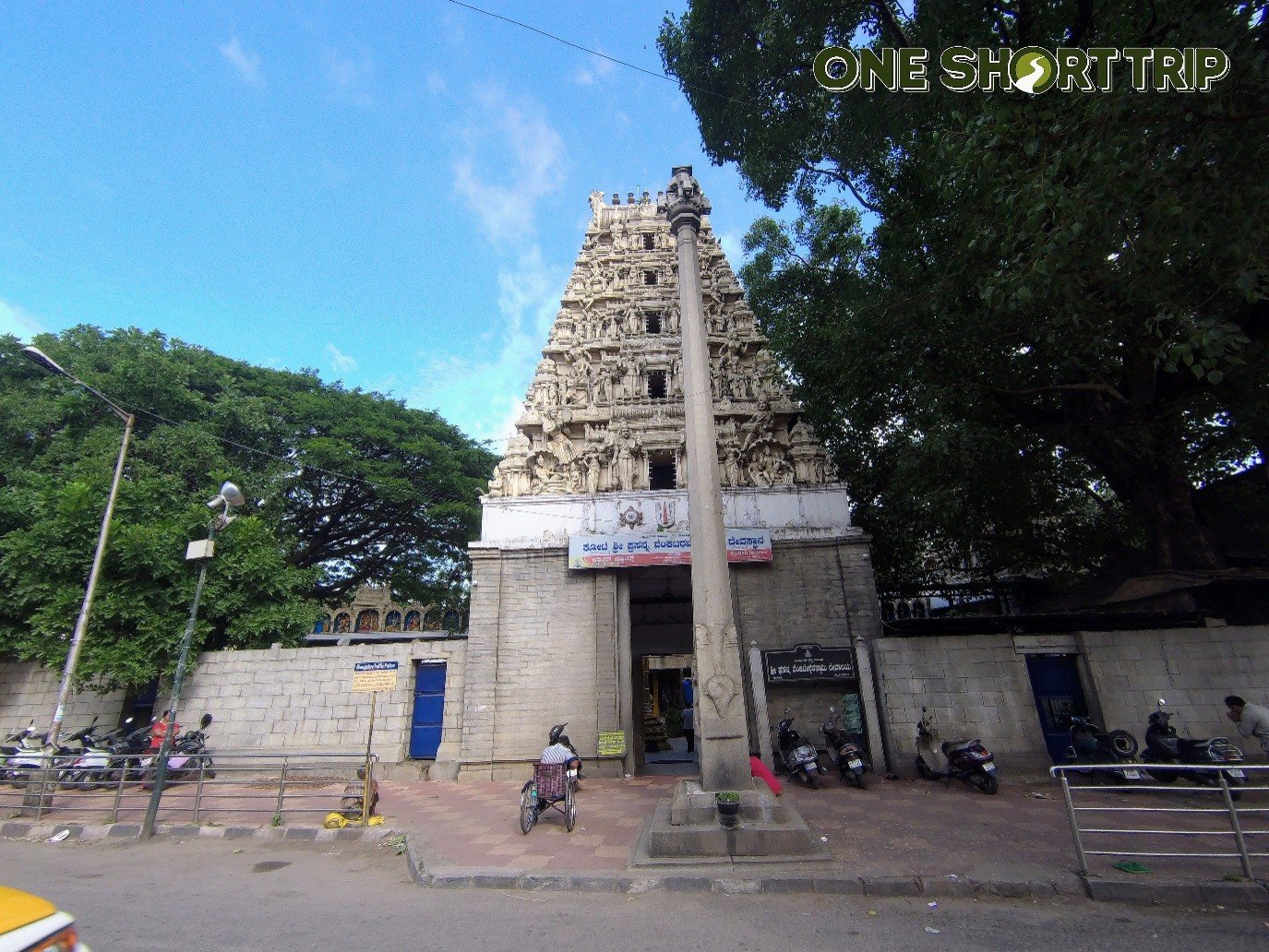
How to Reach Kote Sri Prasanna Venkataramana Swamy Temple
The temple is in central Bengaluru and is well connected by road and public transport.
By Metro
The temple is close to the Krishna Rajendra Market Metro Station, making the metro one of the convenient options for visitors travelling from other parts of Bengaluru. From the metro area, the temple can be reached on foot or by a short local auto-rickshaw ride depending on the exact starting point.
By Bus
Several BMTC bus services operate through the KR Market, Kalasipalya and surrounding central Bengaluru areas. Visitors can use KR Market or nearby stops as their destination and continue towards the temple by walking or taking a short auto ride.
By Car or Cab
The temple can be reached by car or taxi through KR Road and the Kalasipalya side of central Bengaluru. However, traffic around KR Market can be heavy, particularly during business hours and weekends. Parking can also be more challenging than at temples located in quieter parts of the city.
How Much Time Do You Need?
For a simple darshan, around 30 to 45 minutes is usually enough. If you are interested in the architecture, pillars, shrines and historical details, plan for approximately 45 minutes to 1 hour.
If you are combining the temple with Bengaluru Fort, Tipu Sultan's Summer Palace and KR Market, it is better to plan a few hours for the complete heritage circuit rather than rushing through each attraction.
Dress Code and Temple Etiquette
Visitors should wear modest and comfortable clothing suitable for a traditional Hindu temple. Avoid overly casual or revealing clothing, particularly when visiting with family or during religious occasions.
- Remove footwear before entering areas where required.
- Maintain silence and avoid disturbing devotees during prayers.
- Follow instructions from temple staff regarding queues and restricted areas.
- Do not enter areas marked for priests or temple services.
- Ask before photographing sensitive religious activities or rituals.
- Keep the temple premises clean and dispose of waste responsibly.
Nearby Places to Visit
One of the biggest advantages of visiting Kote Venkataramana Temple is the number of historic attractions located nearby.
Tipu Sultan's Summer Palace
The famous Tipu Sultan's Summer Palace is located immediately around the old Bengaluru Fort area and can easily be combined with the temple. Its wooden architecture and Indo-Islamic design provide an interesting contrast to the temple's South Indian architectural tradition.
Bengaluru Fort
The remains of Bengaluru Fort are another important stop in the area. The fort's history goes back to Kempegowda's original fortification and later developments under the Mysore rulers. Visiting the fort alongside Kote Venkataramana Temple gives a better understanding of the historical importance of this part of Bengaluru.
KR Market
KR Market is one of Bengaluru's best-known traditional markets. The busy market atmosphere is very different from the calm environment of the temple and offers a glimpse into the everyday character of old Bengaluru.
Nearby Heritage Temples
The old city also has several historic temples within a short distance, including temples in the Nagarathpete, Chamarajapete, Kalasipalya and Basavanagudi areas. This makes the Kote Venkataramana Temple a useful starting point for a wider Bengaluru temple trail.
Suggested Old Bengaluru Temple and Heritage Trail
If you have half a day available, you can create a convenient heritage-focused route around the temple:
- Kote Sri Prasanna Venkataramana Swamy Temple
- Tipu Sultan's Summer Palace
- Bengaluru Fort
- KR Market
- Nearby historic temples in the old Bengaluru area
- Basavanagudi heritage attractions, if time permits
This combination works particularly well for travellers who want to experience Bengaluru's religious heritage, royal history, traditional markets and historic architecture in one outing.
Useful Tips Before Visiting
- Check the latest temple timings before travelling, especially on festival days.
- Weekday mornings are a good choice for a calmer visit.
- Allow extra travel time because KR Market and surrounding roads can be busy.
- Public transport and metro can be convenient when avoiding central Bengaluru traffic and parking difficulties.
- Carry minimal belongings when visiting the temple.
- If travelling with senior citizens, plan the visit outside the busiest market periods where possible.
- Combine the temple with nearby heritage attractions to make better use of your time.
- Respect temple customs and follow instructions regarding photography and restricted areas.
Is Kote Sri Prasanna Venkataramana Swamy Temple Worth Visiting?
Yes, especially if you are interested in Bengaluru's temples, history and architecture. The temple offers more than a traditional darshan: its location in the historic KR Market and Bengaluru Fort area allows visitors to connect religious heritage with the city's royal and architectural past.
For devotees of Lord Venkateshwara, it is an important place of worship. For travellers, photographers and heritage enthusiasts, the temple provides an opportunity to see a surviving example of Bengaluru's older temple architecture in the middle of the modern city.
If you are planning a Bengaluru temple tour, a heritage walk through old Bengaluru, or a one-day sightseeing itinerary covering KR Market and the fort area, Kote Sri Prasanna Venkataramana Swamy Temple is a worthwhile stop to include.