About Birla Mandir, Jaipur
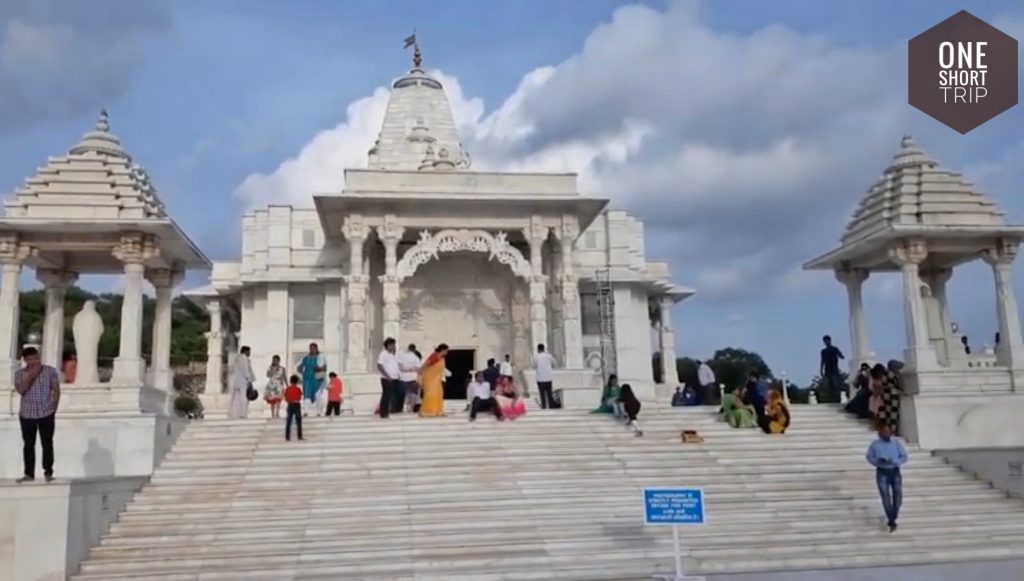
Standing in striking white marble at the foot of Moti Dungari Hill, Birla Mandir Jaipur is one of the city's most recognisable modern temples. Also known as Lakshmi Narayan Temple, this beautiful place of worship is dedicated to Lord Vishnu, worshipped here as Narayan, and Goddess Lakshmi, the goddess of wealth and prosperity. Its gleaming marble architecture creates a dramatic contrast with Jaipur's famous pink and sandstone buildings.
Unlike Jaipur's historic forts and palaces, which largely belong to the city's royal past, Birla Mandir is a comparatively modern landmark. The temple was commissioned by the Birla family and completed in 1988. Built on an elevated platform and surrounded by landscaped grounds, it has become both an important Hindu place of worship and a popular sightseeing attraction for visitors exploring Jaipur.
The temple is particularly impressive when viewed from a distance. Its white marble surfaces, soaring structure, multiple domes and carefully carved details make it stand out against the surrounding city. After sunset, illumination gives the temple an entirely different appearance, making an evening visit especially rewarding.


History of Birla Mandir Jaipur
Birla Mandir belongs to a much more recent chapter of Jaipur's architectural history. The temple was built by the Birla family, one of India's prominent industrial and philanthropic families, and was completed in 1988. Its creation introduced a large contemporary Hindu temple into a city better known internationally for its Rajput-era forts, palaces, gateways and observatories.
The temple's location is significant as well. It stands near Moti Dungari, a well-known hill and religious landmark in Jaipur. The elevated setting allows the white marble structure to dominate the surrounding landscape, while its gardens provide a peaceful buffer from the busy roads of the city.
Over time, Birla Mandir has developed a dual identity. For devotees, it is a functioning temple dedicated to Lakshmi and Narayan. For travellers, it is an important architectural and cultural attraction that demonstrates how traditional Indian religious ideas can be expressed through relatively modern construction.


Architecture of Birla Mandir
The most striking feature of Birla Mandir is its extensive use of white marble. The smooth stone gives the temple a bright, elegant appearance during the day and allows the building to glow dramatically when it is illuminated after dark. The structure combines a modern approach to temple construction with traditional Hindu architectural elements.
Intricate carvings cover different sections of the temple, with religious symbols, decorative motifs and representations connected with Hindu mythology. The craftsmanship becomes more noticeable when visitors walk around the exterior and look closely at the marble surfaces rather than viewing the temple only from the main entrance.
One of the temple's most distinctive architectural features is its three domes. They form a prominent part of the temple's skyline and are associated with the idea of India's religious diversity and secular character. This gives Birla Mandir an architectural identity that extends beyond its role as a traditional Hindu shrine.
The combination of white marble, open spaces, sculptural details and carefully designed proportions makes the temple particularly attractive to photographers and architecture enthusiasts. The surrounding gardens further enhance the visual appeal and create open viewpoints from which to appreciate the entire structure.
Lakshmi and Narayan: The Presiding Deities
The principal shrine at Birla Mandir is dedicated to Lord Vishnu and Goddess Lakshmi. Vishnu is worshipped as Narayan, while Lakshmi represents prosperity, abundance and good fortune. Together, Lakshmi and Narayan form the spiritual focus of the temple.
The central images of Lakshmi and Narayan are among the most important artistic features inside the temple. Rajasthan Tourism notes that the images are carved from a single piece of marble, adding to the craftsmanship and visual appeal of the shrine.
Visitors who come primarily for sightseeing should remember that Birla Mandir remains an active place of worship. The atmosphere inside is therefore quieter and more devotional than that of a conventional tourist monument. Visitors are expected to respect worshippers and follow the instructions provided within the temple complex.
Marble Carvings, Religious Figures and Inscriptions
The temple's walls and exterior surfaces contain detailed decorative work inspired by Hindu religious traditions. Mythological themes, divine figures and ornamental patterns appear throughout the structure, giving visitors plenty to examine beyond the main shrine.
The temple also incorporates inscriptions and references drawn from Indian spiritual literature. Religious quotations and philosophical ideas associated with texts such as the Bhagavad Gita and Upanishads contribute to the temple's broader cultural character.
This combination of sculpture, architecture and philosophy is one reason Birla Mandir appeals to more than devotees alone. Travellers interested in Indian culture, religious architecture and modern temple design can spend time appreciating the details throughout the complex.
Why Birla Mandir Is Different from Jaipur's Historic Monuments
Jaipur is famous for centuries-old architecture, including Amber Fort, City Palace, Hawa Mahal and Jantar Mantar. Birla Mandir offers a different experience. It represents a modern period of Indian temple construction while still drawing heavily from traditional religious symbolism and craftsmanship.
The contrast is particularly interesting for travellers planning a Jaipur sightseeing itinerary. A day spent exploring Rajput palaces and forts can be complemented by a visit to Birla Mandir, where white marble, contemporary construction and an active spiritual environment create a different atmosphere.
The temple is therefore worth including even if your primary interest is Jaipur's history. It adds another dimension to the city and shows how Jaipur's religious and architectural landscape has continued to evolve.
Inside Birla Mandir Jaipur
Walking into Birla Mandir feels noticeably different from exploring Jaipur's forts and palaces. The open marble structure, high ceilings and carefully maintained surroundings create a bright and peaceful setting. The main shrine of Lakshmi and Narayan forms the spiritual centre of the temple, while the surrounding architectural details invite visitors to slow down and look more closely.
The interior contains finely worked marble surfaces and religious imagery that reflect Hindu traditions. Natural light entering through the temple's open spaces adds to the calm atmosphere during the daytime. For visitors interested in architecture, it is worth spending a few minutes observing the workmanship rather than treating the temple simply as a quick photography stop.


Birla Mandir at Night
One of the best ways to appreciate Birla Mandir is after sunset. When the temple is illuminated, its white marble surfaces stand out against the darker surroundings and the building takes on a warm, almost glowing appearance. The domes and architectural outlines become particularly striking at night.
The evening atmosphere can also be more relaxing than the middle of a busy sightseeing day. Visitors can walk around the exterior, admire the illuminated temple and spend some quiet time in the surroundings. The temple's elevated position and open grounds make the evening setting especially attractive for photographs.
If you are planning a Jaipur sightseeing itinerary, an evening visit to Birla Mandir can therefore complement a day spent at the city's forts, markets and palaces. The change in lighting gives the same architecture a completely different character.
A Place of Worship and Daily Devotion
Birla Mandir is not simply a monument created for tourists. It continues to function as a Hindu temple where devotees come to pray to Lakshmi and Narayan. Daily worship gives the complex a living religious character that distinguishes it from Jaipur's preserved historic monuments.
Festivals dedicated to Vishnu, Lakshmi and other important Hindu traditions can bring a more devotional atmosphere to the temple. Diwali is particularly significant because of its association with Goddess Lakshmi, while Janmashtami and other Hindu festivals may also see special prayers and celebrations.
Visitors who arrive during worship should be prepared for temporary changes in access or movement within certain areas. The religious activities of the temple take priority, so sightseeing should always be planned around the instructions of temple staff and devotees.
Birla Mandir for Photography
The white marble exterior makes Birla Mandir one of the more photogenic temples in Jaipur. During the day, the bright stone contrasts beautifully with the blue sky, while evening illumination creates a completely different composition. The domes, arches, pillars, carvings and landscaped surroundings provide several natural viewpoints.
For the best exterior photographs, try viewing the temple from different sides rather than taking only a photograph from the main entrance. A wider view can capture the entire temple together with Moti Dungari Hill and the surrounding landscape.
Photography rules can differ between the exterior and areas used for worship. Visitors should follow any signs or instructions regarding cameras and mobile phones, and should avoid photographing devotees during prayer without permission.


Dress Code and Temple Etiquette
As Birla Mandir is an active place of worship, visitors should dress respectfully. Comfortable, modest clothing is appropriate for both men and women. Footwear may need to be removed before entering designated temple areas, so wearing easily removable footwear is convenient.
Visitors should maintain a quiet and respectful manner inside the temple. Avoid disturbing people who are praying, follow instructions from temple staff and do not touch religious objects unless permitted. During busy festival periods, additional arrangements may be in place.
The temple grounds are generally easier to explore than many of Jaipur's large historic monuments. Families and older travellers can therefore include Birla Mandir comfortably in a Jaipur sightseeing route, while allowing enough time for walking around the complex at a relaxed pace.
How to Reach Birla Mandir Jaipur
Birla Mandir Jaipur is located on Jawaharlal Nehru Marg, near Moti Dungari Hill and not far from central Jaipur. Its location makes it relatively easy to combine with other major attractions in the city.
The temple can be reached by taxi, auto-rickshaw, private vehicle and local transport from different parts of Jaipur. Visitors staying in central Jaipur can generally include it as part of a city sightseeing circuit rather than making a separate long journey.
If you are travelling by train, Jaipur Junction is the city's principal railway station and can be used as the starting point for a road journey to the temple. Jaipur International Airport is also connected to the city by road, making Birla Mandir accessible to travellers arriving by air.
How Much Time Do You Need?
Most visitors can see the main temple and its surroundings in around 45 minutes to 1 hour. If you are interested in architecture, photography or a peaceful visit, allowing around 1 to 1.5 hours gives you more time to explore without rushing.
An evening visit may take slightly longer if you want to wait for the temple to become illuminated. For travellers following a packed Jaipur itinerary, however, Birla Mandir remains an easy attraction to fit between other sightseeing stops.
Best Time to Visit Birla Mandir Jaipur
The cooler months from October to March are generally the most comfortable period for sightseeing in Jaipur. Temperatures are more pleasant for walking around the temple complex and combining the visit with other attractions across the city.
Early morning is a good choice for visitors who prefer a quieter atmosphere, while evening is ideal for those who want to see the temple illuminated. The summer months can be very hot in Jaipur, so visitors travelling between April and June may find early morning or evening more comfortable.
Places to Visit Near Birla Mandir Jaipur
Birla Mandir's central location makes it convenient to combine with several Jaipur attractions. Depending on the time available, you can build a half-day or full-day sightseeing route around the temple.
- Moti Dungari Ganesh Temple – A prominent temple situated on the nearby Moti Dungari Hill.
- Albert Hall Museum – A major Jaipur museum known for its Indo-Saracenic architecture and extensive collections.
- City Palace – One of Jaipur's most important historic royal complexes.
- Hawa Mahal – The iconic five-storey façade that has become a symbol of Jaipur.
- Jantar Mantar – The historic astronomical observatory and UNESCO World Heritage Site.
- Jaipur markets – Traditional shopping areas where visitors can look for handicrafts, textiles, jewellery and souvenirs.
Why Birla Mandir Should Be on Your Jaipur Itinerary
Birla Mandir offers a different side of Jaipur from the city's famous forts and palaces. Its brilliant white marble, detailed craftsmanship, peaceful gardens and active religious atmosphere make it an appealing stop for both pilgrims and tourists.
It is particularly worthwhile for travellers interested in Hindu temples, modern Indian architecture, photography and cultural experiences. The temple is also easy to combine with other Jaipur attractions because of its accessible location.
Whether you visit during the calm of the morning or see the white marble temple glowing after sunset, Birla Mandir provides a peaceful contrast to Jaipur's busy tourist landmarks. For anyone exploring the Pink City, it is a simple but rewarding addition to a well-planned Jaipur sightseeing itinerary.