One Short Trip

One Short Trip | 1
Temples & Pilgrimage

Sri Dwadasha Shiva Temple

A hilltop temple complex on Omkar Hills recreating all twelve sacred Jyotirlingas of Lord Shiva in one place, letting devotees complete a pilgrimage that would otherwise span the length of India.

Main Shrine
Lord Omkareshwara
Complex
All 12 Jyotirlingas of Shiva
Entry Fee
Free
Timings
7:00 AM–12:45 PM & 4:30–8:30 PM

About Sri Dwadasha Shiva Temple

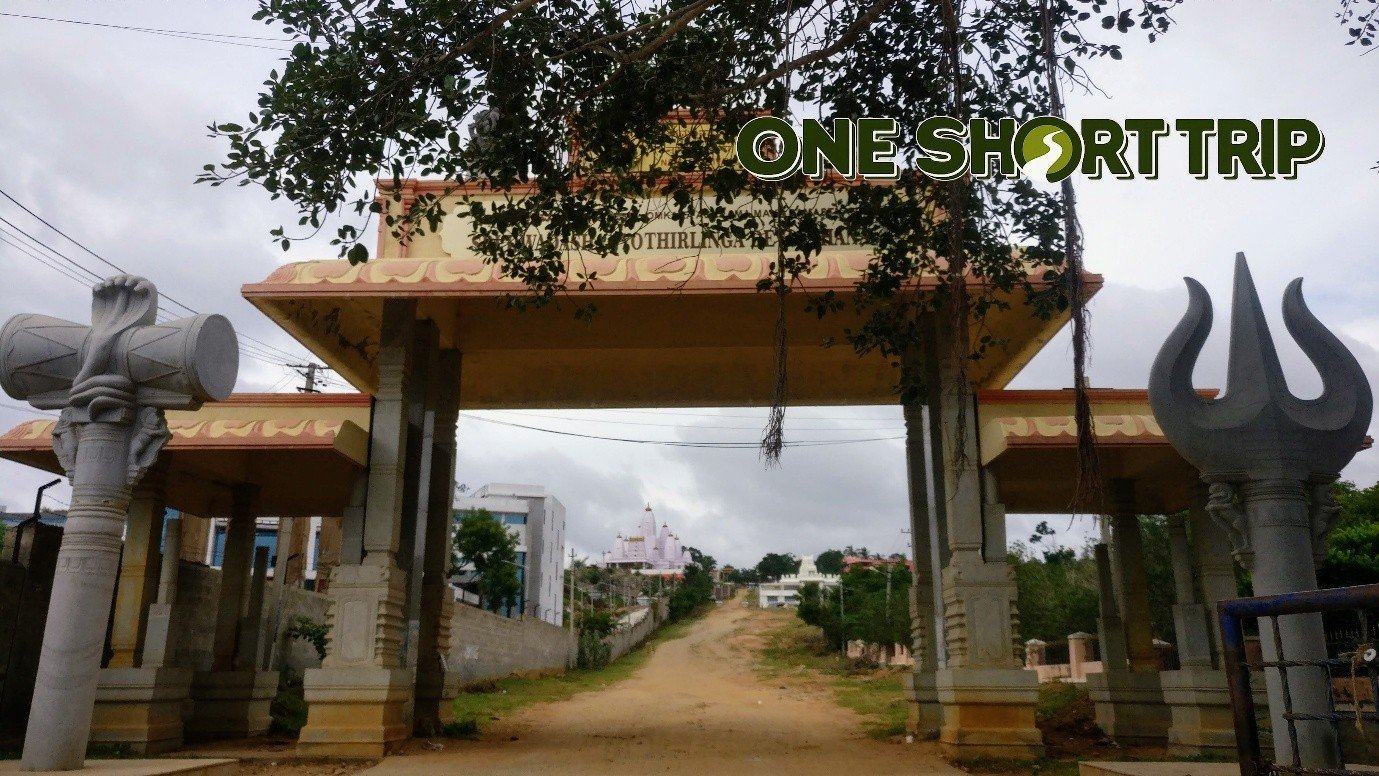
Perched atop Omkar Hills, one of the highest points in southwest Bengaluru, Sri Dwadasha Shiva Temple sits within Omkar Ashram, a spiritual centre established under the guidance of Brahmaleena Sadguru Sri Shivapuri Mahaswamiji. The idea behind the temple is disarmingly direct: recreate all twelve Jyotirlingas of Lord Shiva — normally scattered across states as far apart as Gujarat, Tamil Nadu, Uttarakhand and Jharkhand — within a single hilltop complex, so that devotees who can't undertake that long, demanding pan-India pilgrimage can still receive the same blessings closer to home.

In the decades since, the temple has grown into one of Bengaluru's most significant Shiva pilgrimage sites, drawing especially large crowds during Mahashivaratri and throughout the sacred month of Shravana. What sets it apart from a conventional single-sanctum temple is the sheer act of movement it invites — walking from one Jyotirlinga shrine to the next, each with its own distinct character, in a single unbroken pradakshina around the hilltop.

Fees, Timings & Getting There

Entry Fee
Free, with contributions welcomed toward special poojas, Rudrabhisheka and Annadanam.
Timings
7:00 AM–12:45 PM and 4:30 PM–8:30 PM on weekdays and Saturdays, and 7:00 AM–9:00 PM on Sundays.
Places to Visit Near
Big Banyan Tree, ISKCON Vaikuntha Hill, Banashankari Temple.
How to Reach
Kengeri or Challaghatta Metro Stations, followed by an auto or taxi.
Sri Bheemashankar Jyotirlinga shrine inside Sri Dwadasha Shiva Temple, Omkar Hills, Bengaluru

Twelve Shrines, One Hilltop

Each of the twelve Jyotirlingas here has been given its own individual sanctum and Vimana, deliberately styled after the architecture of the original temple it represents. Walking the complex means moving through a compressed tour of India's Shaivite pilgrimage geography — Somnath's coastal grandeur, Kedarnath's Himalayan austerity, Rameshwaram's southern intricacy — all arranged around a central shrine dedicated to Lord Omkareshwara. Wide granite pathways, landscaped gardens and open courtyards tie the whole hilltop together, and the layout genuinely rewards a slow, circular walk rather than a rushed single stop.

The Twelve Jyotirlingas Represented Here

The complex houses symbolic representations of Somnath in Gujarat, Mallikarjuna in Andhra Pradesh, Mahakaleshwar and Omkareshwar in Madhya Pradesh, Kedarnath in Uttarakhand, Bhimashankar and Trimbakeshwar in Maharashtra, Kashi Vishwanath in Uttar Pradesh, Vaidyanath in Jharkhand, Nageshwar in Gujarat, Rameshwaram in Tamil Nadu, and Grishneshwar in Maharashtra. Devotees who complete the circuit here believe the sincerity of the pradakshina matters as much as physically visiting each original site — a philosophy that has made this hilltop one of the more meaningful shortcuts in Indian pilgrimage tradition.

What Happens Inside Each Sanctum

Every shrine houses a carefully consecrated Shiva Linga, adorned daily with fresh flowers, bilva leaves, sandalwood paste and sacred ash. Through the day, priests perform Rudrabhisheka, Panchamrutha Abhisheka, Archana, Deeparadhana and Rudra Parayana across the complex, and the steady chant of "Om Namah Shivaya" tends to follow you from one shrine to the next. Combined with the hilltop breeze and the panoramic views of southwest Bengaluru below, the atmosphere leans more meditative than typically bustling temple energy.

Arrive Before 9:00 AM

For a peaceful darshan before the day's crowds arrive.

Complete the Full Pradakshina

Walk around all twelve Jyotirlinga shrines in sequence.

Wear Comfortable Footwear

There's a fair amount of walking within the hilltop complex.

Time It With Mahashivaratri

Arrive early — the complex draws large crowds that day.

How Much Time to Set Aside

A relaxed visit generally takes 1.5 to 2.5 hours. If you want to complete the full pradakshina, attend a pooja, meditate for a while and take in the hilltop views, plan for closer to 3 hours.

Getting Here

Kengeri and Challaghatta Metro Stations are the nearest stops, with autos and taxis available for the final stretch up the hill. Kempegowda International Airport is roughly 48 km away, KSR Bengaluru City Railway Station about 16 km, and private vehicles can drive right up to the hilltop, with parking available within the temple premises.

Extending the Visit

Omkar Hills sits in a genuinely rewarding pocket of southwest Bengaluru for a spiritual day trip — the Big Banyan Tree, Turahalli Forest, ISKCON's Vaikuntha Hill, Banashankari Temple and the Art of Living International Center are all within easy reach, letting you pair ancient devotion with some of the city's quieter green spaces in the same outing.

Why a Symbolic Pilgrimage Still Carries Real Weight

Some visitors arrive skeptical of the idea — can a symbolic Jyotirlinga really carry the same spiritual weight as the original? What tends to shift that skepticism, more often than not, is simply the walk itself: twelve distinct sanctums, twelve slightly different architectural languages, twelve unhurried moments of prayer, strung together on a single hilltop. Whatever one believes about the metaphysics involved, the cumulative experience of that unbroken circuit is difficult to dismiss as merely symbolic once you've actually done it.

A Founder's Vision for Accessible Devotion

What's easy to miss amid the temple's scale is the quietly compassionate reasoning behind its founding — the recognition that age, health, cost or distance keep countless devotees from ever visiting all twelve original Jyotirlingas in a lifetime. Bringing them together on one accessible hilltop wasn't conceived as a shortcut for the lazy, but as a genuine act of inclusion, extending a pilgrimage tradition that had, in practice, been reachable only for the wealthiest or most able-bodied devotees. That intention still shapes the atmosphere here today.

Why the Jyotirlinga Tradition Runs So Deep

To understand why this hilltop recreation resonates so strongly with devotees, it helps to know a little about the Jyotirlingas themselves. Each of the twelve is considered a distinct manifestation of Shiva as a column of infinite light, and Hindu tradition holds that visiting all twelve across a lifetime is one of the most significant Shaivite pilgrimages a devotee can undertake. That journey traditionally spans thousands of kilometres and multiple states, often taking dedicated pilgrims years to complete piece by piece. Recreating that entire arc on a single Bengaluru hillside doesn't erase the significance of the original sites, but it does something valuable in its own right — it keeps the tradition alive and accessible for a generation of devotees whose lives may never allow for that longer journey.

Shravana Evenings on the Hill

If there's one stretch of the year that captures this temple at its most atmospheric, it's the evenings during Shravana, the month traditionally considered most auspicious for Shiva worship. As dusk settles over Omkar Hills, the twelve shrines light up one by one, oil lamps flicker along the pathways, and the hilltop breeze carries chants between sanctums in a way that's genuinely hard to replicate at ground-level city temples. Regular visitors often say this is the version of the temple they come back for, even though Mahashivaratri technically draws the larger crowds.

Why visit

🛕
All 12 Jyotirlingas in One Complex
A rare chance to complete this pan-India pilgrimage in a single visit.
⛰️
A Hilltop Setting With Panoramic Views
Omkar Hills offers sweeping views of southwest Bengaluru.
🛕
Central Shrine to Lord Omkareshwara
Surrounded in a circular layout by the eleven other Jyotirlingas.
🆓
Completely Free to Visit
A short ride from Kengeri Metro Station.

Frequently Asked Questions

Why is Sri Dwadasha Shiva Temple famous?+
It houses symbolic representations of all twelve Jyotirlingas in one complex, letting devotees worship all of them in a single visit.
Where is the temple located?+
On Omkar Hills in Srinivasapura, Banashankari 6th Stage, southwest Bengaluru.
Is there an entry fee?+
No, entry is free for all devotees.
Is photography allowed?+
Generally permitted in the outer premises, subject to temple guidelines.
How much time is required?+
Around 1.5 to 2.5 hours for a comfortable visit.
Which is the main deity?+
The central shrine is dedicated to Lord Omkareshwara, surrounded by the remaining eleven Jyotirlinga shrines.

Planning A Trip Here?

Get help planning your visit — call or WhatsApp us and we will help you book a tour.