About Thiruparankundram Murugan Temple, Madurai
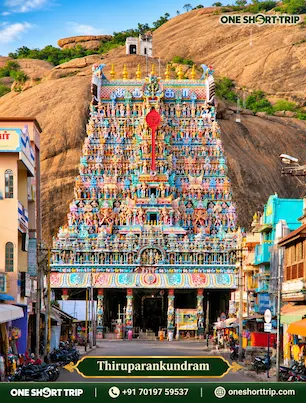
Thiruparankundram Murugan Temple, officially known as Arulmigu Subramaniya Swamy Temple, is one of Tamil Nadu's most sacred pilgrimage destinations dedicated to Lord Murugan. Located approximately 8 kilometres southwest of central Madurai, the temple is revered as the first of the six Arupadai Veedu, the sacred abodes of Lord Murugan.
Situated at the foot of Thiruparankundram Hill, this ancient temple is famous for its rock-cut sanctum, Pandya-period architecture and association with the divine marriage of Lord Murugan and Goddess Deivanai. Its sacred setting and centuries-old traditions make it an important destination for devotees and travellers interested in Tamil Nadu's spiritual heritage.
Travellers planning a Thiruparankundram Murugan Temple trip from Bangalore should allow approximately 440–470 kilometres of road travel, depending on their starting point and route. The journey generally requires around 7–9 hours of driving, excluding extended breaks. Allow at least 1–2 hours for a normal temple visit, with additional time during festivals.
Thiruparankundram is also a convenient starting point for exploring the six sacred Murugan abodes. It can be combined with Pazhamudircholai Murugan Temple, another Arupadai Veedu shrine near Madurai.
Thiruparankundram Murugan Temple – Quick Information
Distances, journey times and visit durations are estimates. Confirm the latest darshan timings and special-entry arrangements with the temple administration.
Why Is Thiruparankundram Murugan Temple Famous?
Thiruparankundram Murugan Temple is famous as the first Arupadai Veedu, the sacred place associated with Lord Murugan's marriage to Goddess Deivanai, and an important example of early rock-cut temple architecture in the Madurai region.
The temple's distinctive identity comes from its location at the base of a rocky hill. Its ancient sanctum was carved into the rock, while later additions introduced the architectural features commonly associated with large South Indian temples.
The Temple Is Particularly Known For
- Being the first of Lord Murugan's six Arupadai Veedu temples.
- The divine wedding of Lord Murugan and Goddess Deivanai.
- Its ancient Pandya-period rock-cut shrines.
- Its sacred location at the foot of Thiruparankundram Hill.
- Its association with Murugan's victory over Surapadman.
- Festivals such as Panguni Uthiram, Skanda Sashti and Karthigai.
- Its convenient location near Madurai city.
For devotees undertaking the complete pilgrimage, Thiruparankundram marks the beginning of the traditional sequence of the six Arupadai Veedu Murugan temples.
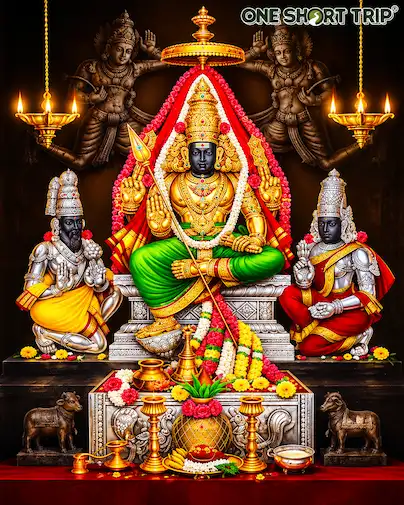
Where Is Thiruparankundram Murugan Temple Located?
Thiruparankundram Murugan Temple is located in Thiruparankundram, approximately 8 kilometres southwest of central Madurai in Tamil Nadu. The temple stands at the foot of Thiruparankundram Hill and is accessible by road from Madurai.
Arulmigu Subramaniya Swamy Temple,
Thiruparankundram,
Madurai District,
Tamil Nadu – 625005,
India.
Madurai Junction railway station, Madurai Airport and the city's road connections make the temple accessible to pilgrims arriving from Bangalore and other parts of Tamil Nadu.
What Is the Story of Thiruparankundram Murugan Temple?
The sacred story of Thiruparankundram centres on Lord Murugan's victory over the demon Surapadman and his subsequent marriage to Goddess Deivanai, the daughter of Indra. This divine wedding is the temple's most celebrated religious association.
The Divine Marriage of Lord Murugan and Deivanai
According to Hindu devotional traditions, the demon Surapadman and his forces created suffering among the celestial beings. Lord Murugan, the son of Shiva and Parvati, led the divine forces against them.
After a fierce battle, Murugan defeated Surapadman and restored righteousness. The victory is remembered during Skanda Sashti, one of the most important festivals associated with Lord Murugan.
Following the victory, Indra offered his daughter Deivanai in marriage to Lord Murugan as an expression of gratitude and devotion.
The divine wedding is traditionally believed to have taken place at Thiruparankundram in the presence of gods, sages and celestial beings.
This association makes the temple especially important to devotees who worship Murugan as the divine bridegroom. The sacred wedding is celebrated through temple traditions and festivals, particularly during Panguni Uthiram.
Why Is Thiruparankundram Considered the First Arupadai Veedu?
Thiruparankundram is traditionally listed first among the six sacred abodes of Lord Murugan. Its significance is closely associated with Murugan's marriage to Deivanai following his victory over Surapadman.
Each of the six abodes represents a different aspect of Murugan's sacred traditions. Thiruparankundram is especially associated with divine marriage, victory and grace.
What Is the History of Thiruparankundram Murugan Temple?
Thiruparankundram Murugan Temple has a long religious history and is particularly noted for its early medieval rock-cut architecture. Its important cave shrines are associated with the Pandya period, especially around the eighth century CE.
The sacred importance of Thiruparankundram is reflected in classical Tamil devotional literature. The hill is celebrated in the Tirumurukarruppatai, an early Tamil work associated with the worship of Lord Murugan.
What Makes the Pandya Rock-Cut Architecture Special?
The temple's ancient rock-cut shrines demonstrate an architectural method in which sacred spaces were carved directly into the existing rock formation rather than being assembled entirely from separate stone blocks.
These features reflect the artistic and architectural achievements associated with the Pandya rulers and the religious importance of the Madurai region during the early medieval period.
How Did the Temple Develop Over the Centuries?
The temple complex expanded beyond its original rock-cut sections through the addition of mandapams, gateways and other structures. These developments created the combination of cave architecture and later South Indian temple design visible today.
The temple continues to function as an important centre of Murugan worship, preserving religious practices associated with its ancient shrines.
Who Is the Main Deity of Thiruparankundram Murugan Temple?
The principal deity of Thiruparankundram Temple is Lord Murugan, worshipped as Subramaniya Swamy. The temple is particularly associated with Murugan and Goddess Deivanai.
The temple also contains important shrines associated with Lord Shiva, Goddess Durga, Lord Vinayagar and Lord Vishnu. This combination of deities is one of the distinctive religious features of the complex.
Devotees visit Thiruparankundram to offer prayers to Lord Murugan and seek blessings for wisdom, courage, family harmony and spiritual well-being. These spiritual associations form part of the temple's devotional traditions.
What Is the Religious Significance of Thiruparankundram Temple?
Thiruparankundram holds a special place in Murugan worship because of its association with the divine wedding of Murugan and Deivanai, its position among the six sacred abodes and its ancient religious traditions.
First Arupadai Veedu
Thiruparankundram is traditionally regarded as the first of the six sacred abodes dedicated to Lord Murugan.
Divine Marriage
The temple is associated with the sacred wedding of Lord Murugan and Goddess Deivanai.
Victory of Righteousness
The legend of Surapadman represents the triumph of divine wisdom and righteousness.
Ancient Sacred Heritage
Its rock-cut shrines and Tamil devotional traditions reflect the region's long history of Murugan worship.
For devotees, the temple is more than an architectural monument. It is a living place of worship where religious traditions, sacred stories and daily rituals continue to shape the pilgrimage experience.

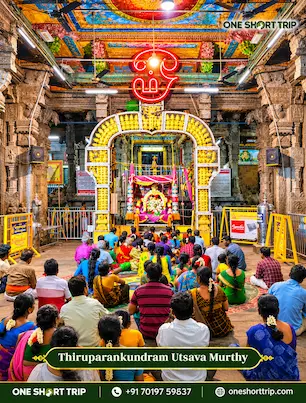
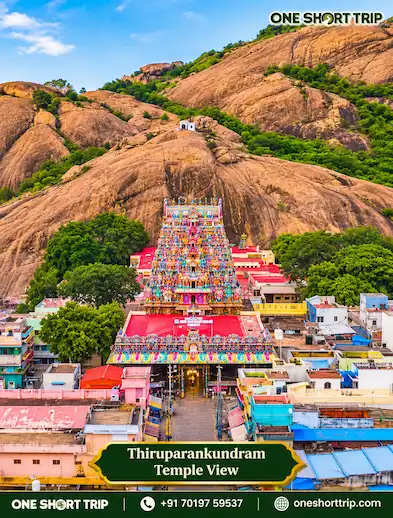
What Are the Darshan Timings at Thiruparankundram Murugan Temple?
Thiruparankundram Murugan Temple generally follows separate morning and evening darshan sessions, with an afternoon closure. Commonly published visiting hours are 5:30 AM to 1:00 PM and 4:00 PM to 9:00 PM, but visitors should verify the current schedule before travelling.
| Darshan Session | Indicative Timing |
|---|---|
| Morning Darshan | 5:30 AM – 1:00 PM |
| Afternoon Break | 1:00 PM – 4:00 PM |
| Evening Darshan | 4:00 PM – 9:00 PM |
These are indicative timings, not a newly verified official ritual timetable. Festival schedules and special darshan arrangements may differ. Check the official Tamil Nadu HR&CE temple website. Page prepared on 22 November 2026; official timing re-verification pending.
Which Festivals Are Celebrated at Thiruparankundram?
Major festivals include Panguni Uthiram, associated with the divine wedding of Murugan and Deivanai; Skanda Sashti, commemorating Murugan's victory over Surapadman; and Karthigai, an important occasion in Murugan worship.
During major festivals, devotees should expect heavier crowds, longer queues and possible changes to regular darshan arrangements.
How to Reach Thiruparankundram Murugan Temple from Bangalore?
Thiruparankundram can be reached from Bangalore by private vehicle, train or bus. Travellers using public transport generally travel to Madurai and continue to the temple by local transport.
How to Reach Thiruparankundram by Car?
A common road route is Bangalore → Hosur → Krishnagiri → Salem → Namakkal → Karur → Dindigul → Madurai → Thiruparankundram.
The road journey is approximately 440–470 kilometres, depending on the starting point and route. Allow around 7–9 hours of driving, with additional time for meals, rest stops and traffic.
Travelling by private vehicle provides flexibility for early morning darshan and visits to other temples around Madurai. Fuel, tolls, parking and food should be included in the travel budget.
How to Reach Thiruparankundram by Train?
Travellers can take a suitable train from Bengaluru to Madurai Junction and continue to Thiruparankundram by taxi, auto-rickshaw or available local transport.
The train journey commonly takes around 8–11 hours, depending on the service. Train availability, exact journey duration and ticket fares should be checked through IRCTC before booking.
How to Reach Thiruparankundram by Bus?
Intercity buses connect Bengaluru with Madurai. Depending on the service and traffic conditions, the journey may take approximately 8–11 hours.
After reaching Madurai, travellers can use local transport to reach the temple. Check the current bus fare, departure point and arrival time before booking.
What Should You Know Before Visiting Thiruparankundram Murugan Temple?
Visitors should plan around the temple's opening hours, wear respectful clothing and allow additional time during important festivals. Early morning visits are generally more comfortable, especially during warmer months.
Best Time for Darshan
Early morning is generally comfortable. Allow additional waiting time during festivals and holidays.
Dress Code
Wear modest clothing appropriate for a traditional South Indian temple and follow the instructions displayed at the entrance.
Parking
Use designated parking areas. Arrangements may change during festivals and periods of heavy traffic.
Photography
Photography may be restricted in sacred areas. Follow temple rules and obtain permission where required.
Food and Accommodation
Madurai offers a wider selection of restaurants and hotels, making it a convenient base for temple visits.
Temple Access
The main temple is situated at the foot of the hill. Visiting the temple is separate from climbing the surrounding hill.
How Much Time Is Needed for Thiruparankundram Darshan?
Allow approximately 1–2 hours for a normal visit, including time for entering the temple, darshan and exploring the accessible areas. Waiting times can be substantially longer during major festivals.
Where Should You Stay When Visiting Thiruparankundram?
Madurai is a practical accommodation base for travellers visiting Thiruparankundram. Staying in the city provides access to hotels, restaurants, railway connections and other important temples.
Which Temples Can You Visit Near Thiruparankundram?
Thiruparankundram can be combined with several important temples in and around Madurai. The most significant nearby Arupadai Veedu destination is Pazhamudircholai Murugan Temple.
Nearby Temples and Approximate Distances
- Meenakshi Amman Temple: Approximately 8–12 km.
- Koodal Azhagar Temple: Approximately 8–12 km.
- Pazhamudircholai Murugan Temple: Approximately 30–35 km.
- Azhagar Kovil: Approximately 30–35 km.
Distances are approximate road estimates and depend on the selected route.
Can You Visit Thiruparankundram and Pazhamudircholai on the Same Day?
Yes. Both temples are located in the Madurai region, making it practical to visit them on the same day when travel time, darshan queues and temple opening hours permit.
A possible itinerary is to visit Thiruparankundram in the morning and continue to Pazhamudircholai Murugan Temple later in the day. Other Madurai temples can be added depending on available time.
Explore All Six Arupadai Veedu Murugan Temples
Thiruparankundram is the first of the six sacred abodes of Lord Murugan. Explore the remaining five temples to understand their legends, spiritual significance and pilgrimage routes.
Read our complete Arupadai Veedu Murugan Temples Guide for the significance of all six abodes and pilgrimage planning information.
Planning an Arupadai Veedu Murugan Temple Tour from Bangalore?
Explore the six sacred abodes of Lord Murugan with ONE SHORT TRIP. Discover our Arupadai Veedu pilgrimage tour from Bangalore and enquire about the itinerary, travel arrangements and upcoming departures.
Explore Arupadai Veedu Tour PackageFor WhatsApp enquiries, use the contact option available on the tour package page.
Prepared by: ONE SHORT TRIP Travel Team
Page updated: 22 November 2026
Official temple information: Tamil Nadu Hindu Religious and Charitable Endowments Department . Verify current darshan hours, puja schedules, special entry and festival arrangements directly with the temple before travelling.