

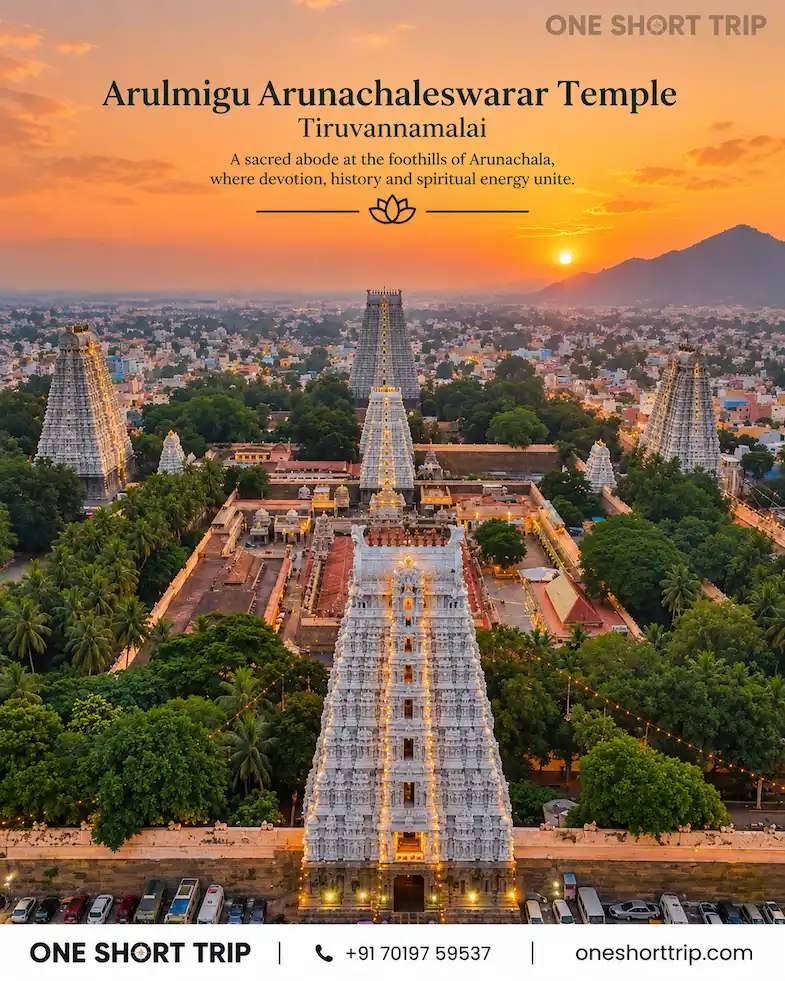
Arunachaleswarar Temple
Discover the sacred Shiva temple at the foothills of Arunachala Hill, famous for its spiritual significance, magnificent gopurams and Girivalam pilgrimage.
Arunachaleswarar Temple, Tiruvannamalai – History, Darshan and Complete Temple Guide
Arunachaleswarar Temple, popularly known as Annamalaiyar Temple, is one of the most revered Shiva temples in Tamil Nadu. Located at the eastern foothills of the sacred Arunachala Hill in Tiruvannamalai, the temple is dedicated to Lord Shiva as Arunachaleswarar and Goddess Parvati as Unnamulai Amman. It is an important pilgrimage destination for devotees who come here to seek divine blessings, experience the temple's spiritual atmosphere and participate in the ancient traditions associated with Arunachala.
The temple is one of the five sacred Pancha Bhoota Sthalams, representing the element Agni, or fire. According to Hindu tradition, Lord Shiva manifested here as an infinite column of flame, revealing his limitless divine nature. The sacred Arunachala Hill is worshipped as a manifestation of this divine presence, making the hill and the temple inseparable from the religious identity of Tiruvannamalai.
Spread across an extensive temple complex, Arunachaleswarar Temple is renowned for its magnificent Dravidian architecture, towering gopurams, spacious courtyards, sculpted pillars, historic mandapams and numerous shrines. Its present form reflects centuries of construction, expansion and patronage by different South Indian dynasties.
The temple is also closely connected with Girivalam, the sacred circumambulation of Arunachala Hill. Devotees traditionally walk approximately 14 kilometres around the hill, visiting the eight directional Shiva Lingams along the route. This pilgrimage is especially popular on Pournami, or full-moon days.
Another major attraction is the annual Karthigai Deepam festival. During this important celebration, a gigantic sacred flame is lit on the summit of Arunachala Hill, commemorating Lord Shiva's manifestation as the infinite column of fire. Thousands of devotees gather in Tiruvannamalai to witness this deeply significant occasion.
Whether you are planning a pilgrimage for darshan, exploring ancient temple architecture, undertaking Girivalam or attending Karthigai Deepam, this guide will help you understand the temple and plan a meaningful visit to Tiruvannamalai.
Quick Information About Arunachaleswarar Temple
Here are the important details to know before visiting Arunachaleswarar Temple, including its location, presiding deities, religious significance, darshan timings and contact information.
Temple Contact Details
Telephone: 04175-252438
Official website: Arunachaleswarar Temple – Tamil Nadu HR&CE
What Is Arunachaleswarar Temple Famous For?
Arunachaleswarar Temple is famous for its association with Lord Shiva as the element of fire, the sacred Arunachala Hill, the ancient Girivalam tradition and the grand Karthigai Deepam festival. It is also recognised for its historic Dravidian architecture and its importance in Tamil Saiva religious tradition.
One of the Five Pancha Bhoota Sthalams
The temple represents Agni, or fire, among the five sacred elemental manifestations of Lord Shiva. Each Pancha Bhoota Sthalam represents one of the five fundamental elements: earth, water, fire, air and space. Arunachaleswarar Temple is the Agni Sthalam, making it an important destination for devotees undertaking the Pancha Bhoota temple pilgrimage.
The Sacred Arunachala Hill
Arunachala Hill is considered a sacred manifestation of Lord Shiva. Devotees worship the hill itself and believe that circumambulating it through Girivalam is a meaningful act of devotion. The hill is central to Tiruvannamalai's spiritual identity and is closely connected with the temple's religious traditions.
The Karthigai Deepam Festival
Karthigai Deepam is one of the most important annual festivals in Tiruvannamalai. A massive sacred flame, known as Maha Deepam, is lit on the summit of Arunachala Hill. The flame symbolises Lord Shiva's infinite column of fire and attracts large numbers of pilgrims and visitors.
Girivalam Around Arunachala Hill
Girivalam is the traditional circumambulation of Arunachala Hill along a route of approximately 14 kilometres. Devotees undertake this pilgrimage throughout the year, particularly on Pournami. The route passes the eight directional Lingams, each associated with a particular direction.
Historic Dravidian Architecture
The temple is admired for its enormous complex, towering gopurams, sculpted pillars, mandapams, inscriptions and shrines. Its architectural development over many centuries reflects the contributions of several South Indian dynasties.
Important Centre of Tamil Saivism
Tiruvannamalai has a long association with Tamil Saiva devotional literature and spiritual traditions. The temple is connected with the worship and literary heritage of the Tamil Saiva saints and remains an important centre of Shiva worship.
Where Is Arunachaleswarar Temple Located?
Arunachaleswarar Temple is located in Tiruvannamalai town in Tamil Nadu, at the eastern foothills of the sacred Arunachala Hill. The temple is one of the town's most prominent landmarks and forms the centre of its religious and pilgrimage activities.
The eastern Rajagopuram is one of the most recognisable features of the temple. The surrounding streets connect the temple with the town's main transport facilities, local markets, accommodation areas and the Girivalam route.
Temple Address
Arulmigu Arunachaleswarar Temple
Sannathi Street,
Tiruvannamalai,
Tamil Nadu – 606601,
India.
How to Reach the Temple from the Town
Visitors arriving at Tiruvannamalai Bus Stand or Railway Station can use local autos, taxis or other available transport to reach the temple. Those travelling by private vehicle can follow local directions towards the temple entrances and designated parking areas.
Story and Legend of Arunachaleswarar Temple
The central legend associated with Arunachaleswarar Temple describes Lord Shiva appearing as an endless column of fire to reveal his infinite nature. This sacred story explains the connection between Shiva, Arunachala Hill and the temple's identity as the Agni Pancha Bhoota Sthalam.
The Divine Dispute Between Brahma and Vishnu
According to Hindu tradition, Lord Brahma and Lord Vishnu once disagreed about who was supreme. To resolve their dispute and reveal the truth about the limitless divine, Lord Shiva appeared before them as an enormous column of blazing light that extended beyond their sight.
Shiva challenged both deities to discover the limits of the column. Lord Vishnu took the form of a boar and travelled downwards in search of its base. Lord Brahma assumed the form of a swan and flew upwards in search of its summit.
Despite their efforts, neither could discover the beginning or end of the fiery manifestation. Vishnu acknowledged that he could not find its limit. Brahma, however, is traditionally said to have falsely claimed that he had reached the top.
Through this event, Lord Shiva revealed that the supreme divine reality was beyond the reach of pride, measurement and ordinary understanding.
How the Column of Fire Became Arunachala Hill
In the sacred tradition of Tiruvannamalai, the infinite column of fire later manifested as Arunachala Hill for the benefit of devotees. The hill is therefore worshipped as Lord Shiva himself rather than simply as a natural landscape.
This belief is the foundation of Girivalam. Devotees walk around the hill with reverence, keeping it to their right as they undertake the sacred circumambulation. The pilgrimage is followed throughout the year and is especially popular during Pournami.
The Connection with Karthigai Deepam
Karthigai Deepam commemorates Lord Shiva's manifestation as the infinite flame. During the festival, a large sacred fire known as Maha Deepam is lit on the summit of Arunachala Hill. Devotees gather across Tiruvannamalai to witness the flame and offer their prayers.
The sight of the sacred flame is one of the most significant experiences of the festival. It connects the ancient legend with the continuing religious life of the temple and the town.
History of Arunachaleswarar Temple
Arunachaleswarar Temple has a long and layered history that reflects the growth of South Indian temple architecture and Saiva religious traditions over many centuries. Its inscriptions and architectural features provide evidence of royal patronage, religious donations and successive phases of construction.
According to the official Tamil Nadu HR&CE temple history, the temple's early construction dates to the period of the early Chola rulers in the ninth century CE. The complex was subsequently expanded under later Chola, Hoysala and Vijayanagara-Nayak rulers.
Early Chola Period
The early Chola period is associated with the earliest historically documented phase of the temple's development. Inscriptions provide evidence of its importance as a religious institution and record aspects of the patronage and donations connected with the shrine.
The Chola rulers were major patrons of Shiva temples across Tamil Nadu. Their contributions to stone architecture, temple administration, religious endowments and sculpture helped establish the foundations of many important temple complexes.
Later Chola Period
The temple continued to develop during the later Chola period. Royal patronage and religious donations helped strengthen its position as an important centre of Shiva worship. The temple's inscriptions form an important part of the historical record of this development.
Pandya and Regional Ruler Contributions
The Pandya rulers and regional chiefs were also part of the wider historical story of Tiruvannamalai. Their period of influence contributed to the region's religious and cultural development. The history of the temple reflects the changing political and religious landscape of medieval Tamil Nadu.
Hoysala Period
The Hoysala rulers were among the dynasties associated with the later development of the temple. Their influence forms part of the architectural and historical evolution of the complex.
Vijayanagara and Nayak Periods
The Vijayanagara rulers made significant contributions to the monumental expansion of the temple. The large gopurams, mandapams and other structures reflect the importance of temple construction and religious patronage during this period. Later Nayak rulers and other patrons also contributed to its development.
Later Development and Preservation
Over the centuries, local patrons, religious communities, donors and temple administrators contributed to the maintenance and development of the complex. The present temple is the result of many generations of construction, renovation and religious activity.
Who Built Arunachaleswarar Temple?
Arunachaleswarar Temple was not built entirely by a single king or dynasty. Its construction and expansion took place over many centuries, beginning in the early Chola period and continuing under several South Indian rulers and patrons.
The official temple history associates its early construction with the early Chola rulers of the ninth century CE. Later Chola, Hoysala and Vijayanagara-Nayak rulers contributed to the temple's subsequent development. Other regional dynasties and patrons also formed part of its history.
| Dynasty or Patron | Contribution to the Temple's History |
|---|---|
| Early Cholas | Associated with the earliest documented construction phase in the ninth century CE. |
| Later Cholas | Contributed to the temple's continued development and religious patronage. |
| Pandyas | Part of the wider regional history of religious patronage and temple development. |
| Hoysalas | Associated with a later phase in the temple's historical development. |
| Regional Sambuvarayar rulers | Connected with the medieval political and religious history of Tiruvannamalai. |
| Vijayanagara rulers | Important patrons associated with the monumental expansion of the temple complex. |
| Nayak rulers and later patrons | Contributed to subsequent construction, maintenance and religious activities. |
The eastern Rajagopuram is traditionally associated with the Vijayanagara period and the patronage of Krishnadevaraya. Its imposing structure is one of the defining architectural features of the temple.
Who Are the Presiding Deities of Arunachaleswarar Temple?
The principal deities of Arunachaleswarar Temple are Lord Shiva as Arunachaleswarar, also known as Annamalaiyar, and Goddess Parvati as Unnamulai Amman. Their shrines form the spiritual centre of the temple complex and are visited by devotees throughout the year.
Lord Arunachaleswarar – Annamalaiyar
Lord Shiva is worshipped as Arunachaleswarar in the main sanctum of the temple. The name Annamalaiyar is closely connected with Annamalai, the Tamil name associated with the sacred hill. The deity represents the divine manifestation of Shiva as the infinite column of fire.
As the presiding deity of the Agni Pancha Bhoota Sthalam, Lord Arunachaleswarar is associated with the element of fire. Devotees offer prayers seeking divine grace, spiritual strength and liberation.
Goddess Unnamulai Amman
Goddess Unnamulai Amman is the divine consort of Lord Arunachaleswarar and is worshipped in a separate shrine within the temple complex. She is also known as Apeethakuchambal.
Devotees visit the Goddess's shrine to offer prayers and seek her blessings, compassion and protection. Her shrine is an essential part of the temple pilgrimage experience.
Other Deities and Shrines
The temple complex also contains several subsidiary shrines dedicated to different deities and revered figures in the Hindu tradition. These shrines form part of the temple's wider religious heritage and provide visitors with opportunities for additional worship during their visit.
Sacred Girivalam Route
Girivalam in Tiruvannamalai and the Eight Ashta Lingams
Girivalam is the traditional practice of walking around Arunachala Hill in Tiruvannamalai. The route is approximately 14 km long and connects several sacred places associated with the hill. Devotees undertake this circumambulation as an act of worship, particularly on full-moon days.
One of the important features of the Girivalam route is the presence of eight sacred Shiva shrines known as the Ashta Lingams. Each Lingam is traditionally associated with one of the eight directions and its guardian deity. Pilgrims visit these shrines to offer prayers as they walk around Arunachala Hill.
Important to know: The Ashta Lingams are separate shrines located around Arunachala Hill. They are not eight sanctums inside the main Arunachaleswarar Temple complex. They form part of the wider Girivalam pilgrimage circuit.
The Eight Ashta Lingams on the Girivalam Route
The eight Lingams are traditionally associated with the cardinal and intermediate directions. Each shrine has its own devotional significance and is an important stop for pilgrims exploring the sacred surroundings of Arunachala.
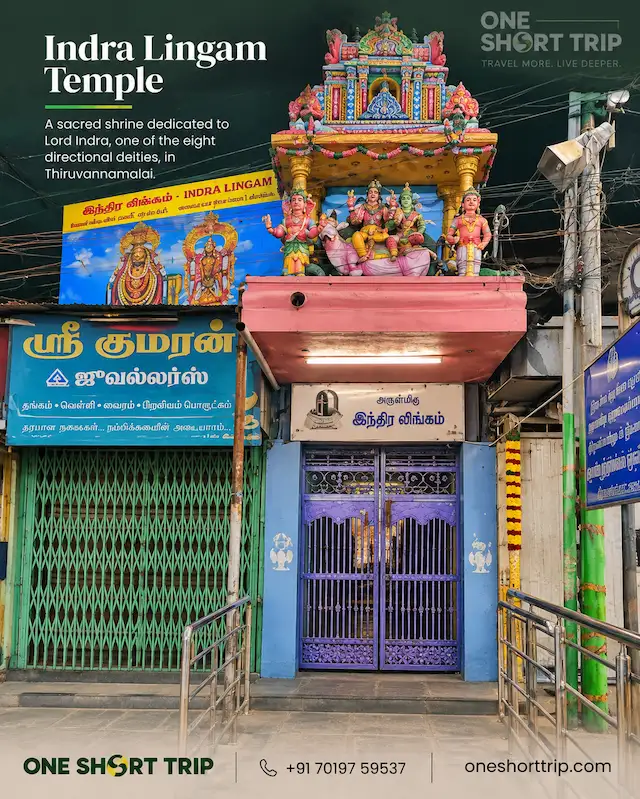
Indra Lingam
Indra Lingam is traditionally associated with the East direction and Indra, the guardian of the eastern direction. It is one of the eight sacred Lingam shrines visited by devotees during Girivalam around Arunachala Hill.
Explore Indra Lingam →
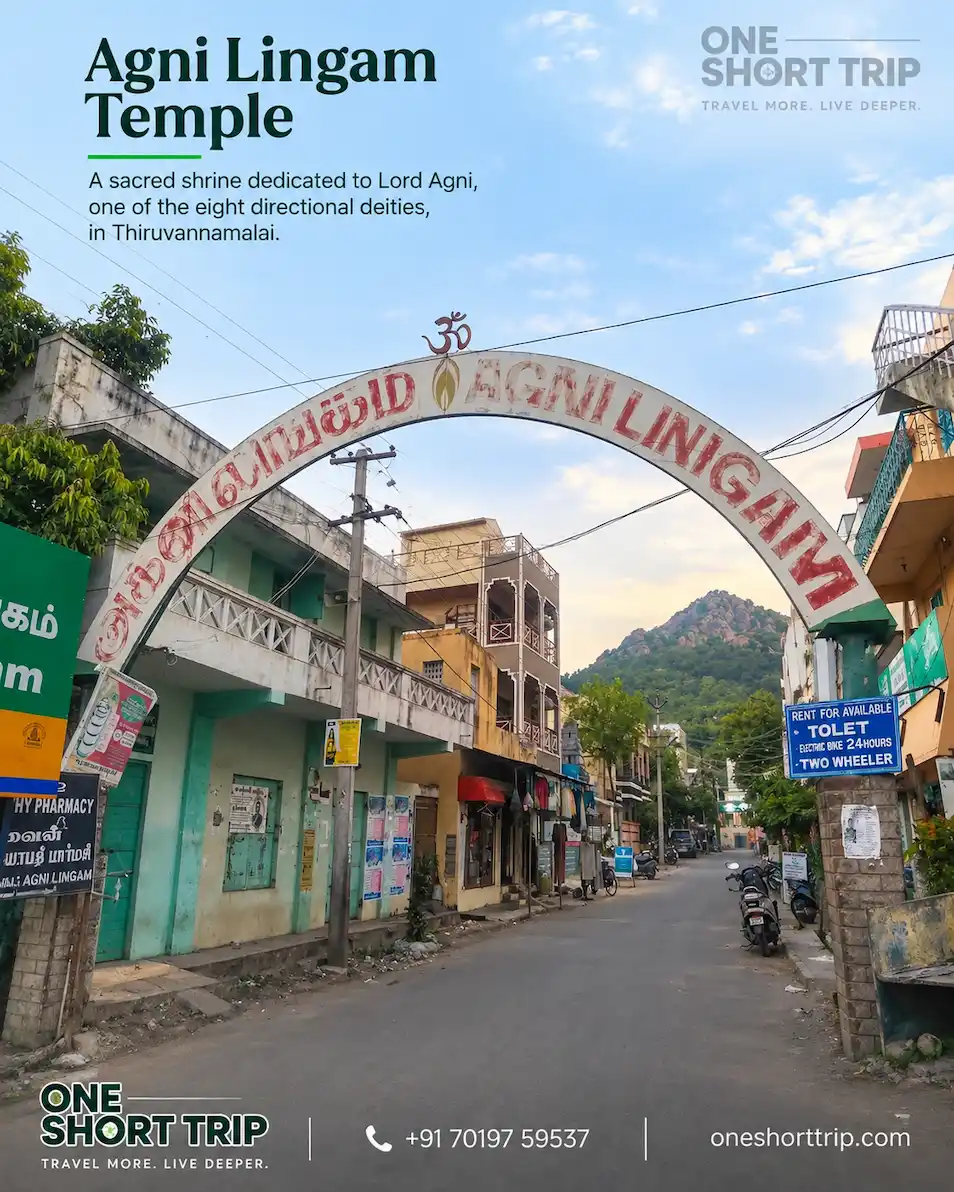
Agni Lingam
Agni Lingam is associated with the Southeast direction and Agni, the deity of fire. It is an important stop on the traditional Ashta Lingam circuit around Arunachala Hill.
Explore Agni Lingam →
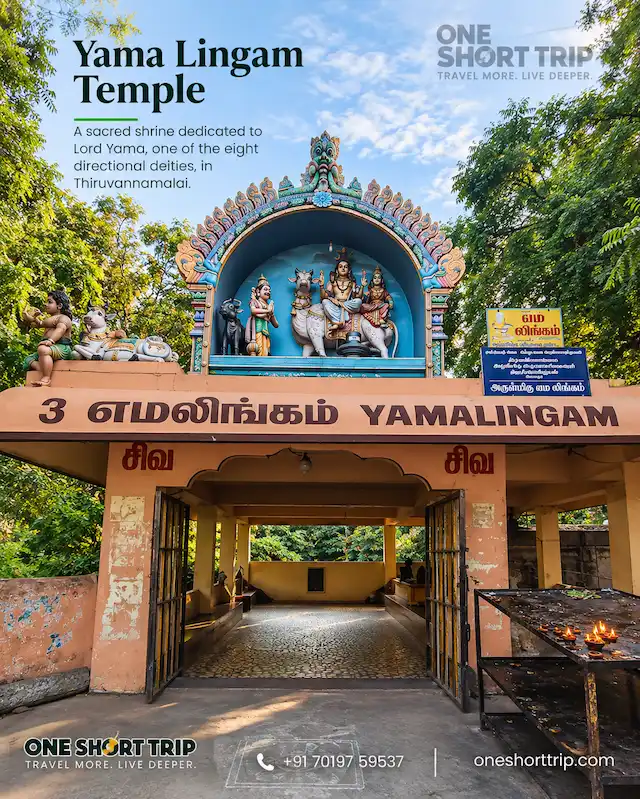
Yama Lingam
Yama Lingam is traditionally associated with the South direction and Yama. Devotees visit this shrine as part of the eight sacred Lingam temples around Arunachala Hill.
Explore Yama Lingam →
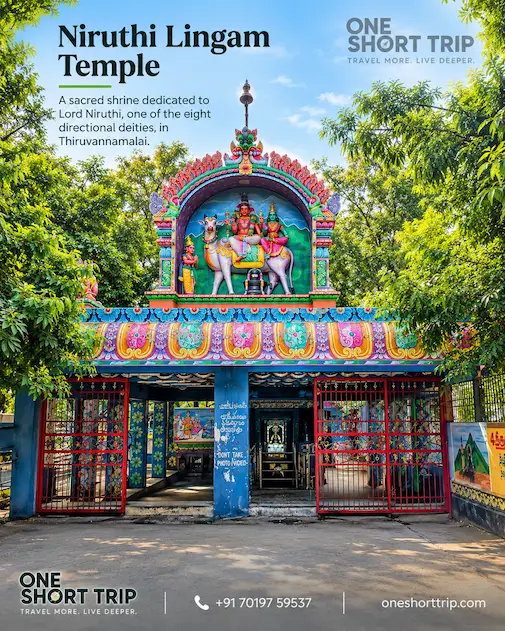
Niruthi Lingam
Niruthi Lingam is associated with the Southwest direction and its traditional guardian deity Niruthi. It forms part of the Ashta Lingam pilgrimage circuit followed by devotees during Girivalam.
Explore Niruthi Lingam →
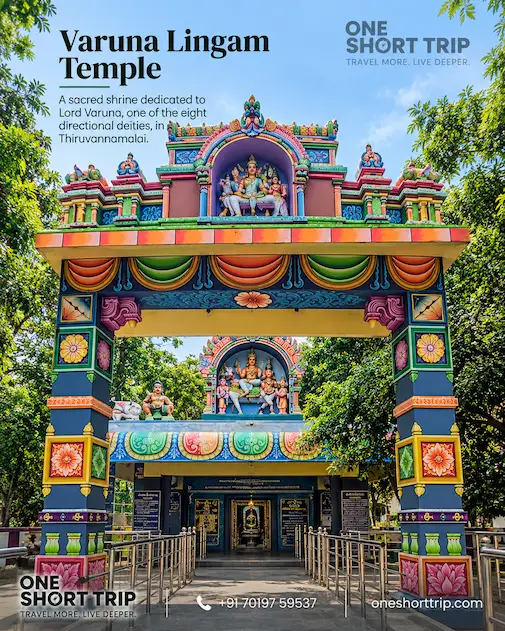
Varuna Lingam
Varuna Lingam is traditionally associated with the West direction and Varuna. This shrine is one of the eight sacred stops that devotees may visit while circumambulating Arunachala Hill.
Explore Varuna Lingam →
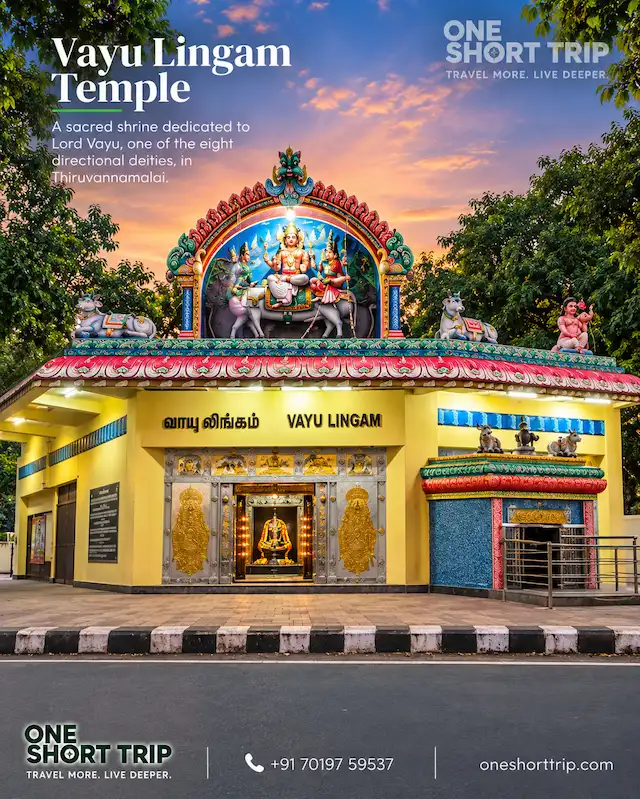
Vayu Lingam
Vayu Lingam is associated with the Northwest direction and Vayu, the deity of wind. It is an important shrine for pilgrims exploring the Ashta Lingams along the Girivalam route.
Explore Vayu Lingam →
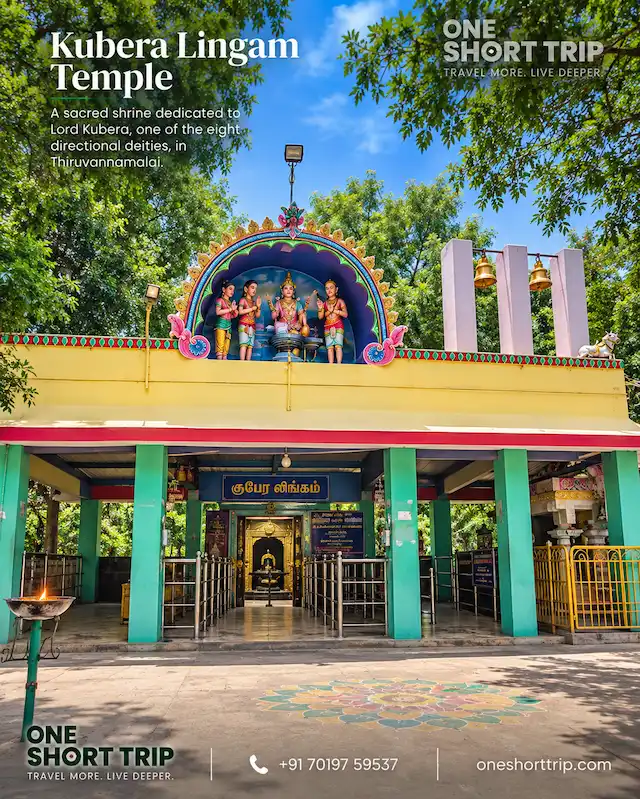
Kubera Lingam
Kubera Lingam is traditionally associated with the North direction and Kubera, who is regarded as the guardian of wealth. Devotees include this shrine among the eight Lingams visited during Girivalam.
Explore Kubera Lingam →
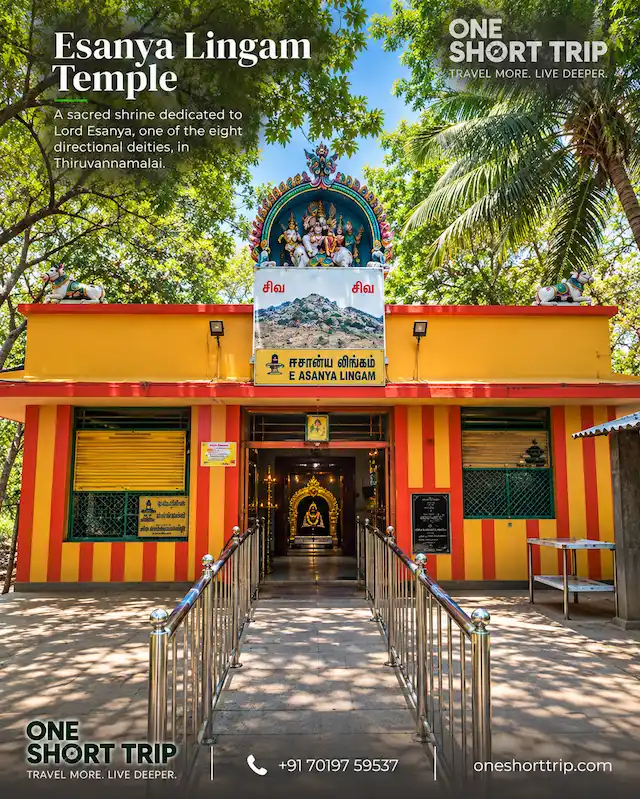
Esanya Lingam
Esanya Lingam is associated with the Northeast direction and Esanya, a form traditionally connected with Lord Shiva. It completes the group of eight sacred Lingam shrines around Arunachala Hill.
Explore Esanya Lingam →Things to Know Before Starting Girivalam
Girivalam is a long devotional walk. A little preparation can make the experience more comfortable, particularly for families, senior citizens and first-time visitors.
- The Girivalam route is approximately 14 km around Arunachala Hill.
- Many devotees prefer walking during cooler hours or on full-moon nights.
- Wear comfortable footwear suitable for a long walk, while observing any local temple or devotional practices.
- Carry sufficient drinking water and take rest breaks when required.
- Senior citizens and people with mobility limitations should assess the walking distance before starting.
- Traffic and pedestrian movement can become heavy on full-moon days and during major festivals.
- Allow additional time for darshan at the individual Lingam shrines.
When Is the Best Time for Girivalam?
Full-moon days are especially popular for Girivalam, attracting large numbers of devotees from different parts of the country. Many pilgrims prefer to begin their walk in the evening and continue through the night.
If you prefer a quieter experience, consider planning your visit outside major festival periods and particularly busy full-moon occasions. Weather, crowd levels and local arrangements should always be considered before beginning the walk.
Plan your Girivalam comfortably: The complete route involves considerable walking. Take your time, stay hydrated and plan according to your health and physical comfort. You do not need to rush through all eight shrines.
Why Visit Abhaya Anjaneya Swamy Temple?
Frequently Asked Questions About Arunachaleswarar Temple
Planning a visit to Arunachaleswarar Temple in Tiruvannamalai? Find answers to common questions about temple timings, darshan, Girivalam, the Ashta Lingams, festivals and travel planning.
1. Where is Arunachaleswarar Temple located?
Arunachaleswarar Temple is located in Tiruvannamalai, Tamil Nadu, at the foot of Arunachala Hill. The temple is situated on Sannathi Street and is one of the most important Shaivite pilgrimage destinations in South India.
2. What are the Arunachaleswarar Temple timings?
The general temple timings are 5:30 AM to 8:00 PM. Timings and access arrangements may vary on festival days and during special occasions. It is advisable to confirm the latest arrangements before travelling.
3. Which deity is worshipped at Arunachaleswarar Temple?
Lord Arunachaleswarar, also known as Annamalaiyar, is the presiding deity. Goddess Unnamulai Amman, also known as Apithakuchambal, is the divine consort worshipped in the temple.
4. Why is Arunachaleswarar Temple called the Agni Lingam?
Arunachaleswarar Temple represents Agni, the element of fire, among the five Pancha Bhoota Sthalams dedicated to Lord Shiva. Arunachala Hill is traditionally revered as a manifestation of Shiva in the form of an infinite column of fire.
5. What is Girivalam in Tiruvannamalai?
Girivalam is the traditional practice of walking around the sacred Arunachala Hill as an act of devotion. The circumambulation route is approximately 14 km long. Devotees generally walk barefoot, although individual comfort and health should be considered.
6. What are the eight Lingams of Tiruvannamalai?
The eight Lingams, collectively known as the Ashta Lingams, are separate shrines situated around Arunachala Hill. They are Indra Lingam, Agni Lingam, Yama Lingam, Niruthi Lingam, Varuna Lingam, Vayu Lingam, Kubera Lingam and Esanya Lingam. Devotees visit these shrines during Girivalam.
7. Is Arunachaleswarar Temple and Girivalam the same?
No. Arunachaleswarar Temple is the main Shiva temple in Tiruvannamalai, while Girivalam is the devotional circumambulation of Arunachala Hill. Visitors can have darshan at the main temple and also undertake Girivalam as separate parts of their pilgrimage.
8. When is the best time to visit Arunachaleswarar Temple?
The cooler months from October to March are generally more comfortable for visiting Tiruvannamalai and undertaking Girivalam. Festival periods, especially Karthigai Deepam, attract large numbers of devotees. Travellers seeking a quieter visit may prefer to plan outside major festival dates.
9. What is special about Karthigai Deepam at Tiruvannamalai?
Karthigai Deepam is one of the most important annual festivals of Arunachaleswarar Temple. A sacred Maha Deepam is lit on Arunachala Hill, symbolising Lord Shiva's manifestation as an infinite column of fire. Thousands of devotees visit Tiruvannamalai during this festival.
10. How far is Tiruvannamalai from Bangalore?
Tiruvannamalai is approximately 200–210 km from Bangalore by road, depending on the starting point and route. Travel time varies with traffic, road conditions and stops along the way.
11. Can I visit Arunachaleswarar Temple and the Ashta Lingams in one day?
It is possible to plan the main temple visit and visits to the Ashta Lingam shrines within a day, but the schedule depends on darshan queues, walking pace, transport and the time spent at each shrine. Allow sufficient time rather than rushing through the pilgrimage.
12. Is Arunachaleswarar Temple suitable for senior citizens?
Senior citizens can visit the main temple, but walking distances, steps, crowds and waiting times should be considered while planning. The full Girivalam route is approximately 14 km, so anyone with mobility or health concerns should assess their comfort before undertaking it.
13. Are Arunachaleswarar Temple and Adi Annamalai Temple different?
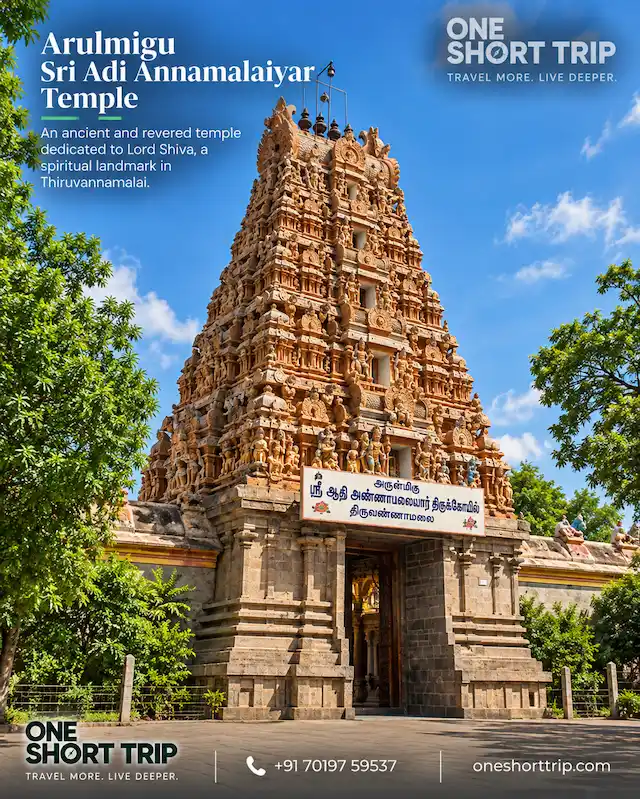
Yes. Arunachaleswarar Temple is the main temple in Tiruvannamalai, while Adi Annamalai Temple is a separate ancient temple located along the Girivalam route. Both are associated with the sacred Arunachala tradition.
14. Can I plan a Bangalore to Tiruvannamalai temple trip?
Yes. You can plan a road trip from Bangalore to Tiruvannamalai for Arunachaleswarar Temple darshan, Girivalam and visits to nearby sacred places. For route suggestions, sightseeing information and practical travel guidance, read our Tiruvannamalai Travel Guide .
You May Also Like
Planning A Trip Here?
Get help planning your visit — call or WhatsApp us and we will help you book a tour.