
One Short Trip

Sunrise aerial view of Palani Murugan Temple on Sivagiri Hill in Dindigul district, Tamil Nadu
Third Arupadai Veedu | Lord Murugan Pilgrimage

Palani Murugan Temple: Timings, History & How to Reach from Bangalore

Discover the third sacred abode of Lord Murugan on Sivagiri Hill in Palani, Tamil Nadu. Explore Dhandayuthapani Swamy Temple, its history, darshan timings, hill steps, rope car, winch service and travel options from Bangalore.

Primary Deity
Lord Murugan (Dhandayuthapani Swamy)
Location
Sivagiri Hill, Palani, Tamil Nadu
Religious Significance
Third Arupadai Veedu of Lord Murugan
Famous For
Navapashanam Tradition & Palani Panchamirtham

Arupadai Veedu Tour Packages from Bangalore

Planning to visit the Arupadai Veedu temples from Bangalore? One Short Trip runs guided Arupadai Murugan temple tours. Choose the tour that suits your group.

2 Days
Arupadai Murugan Express Tour

A short two-day Arupadai Murugan temple trip from Bangalore.

View 2-Day Arupadai Tour →
From Bangalore
Arupadai Murugan Temple Tour

A guided pilgrimage to the Arupadai Veedu Murugan temples from Bangalore.

View Arupadai Temple Tour →

Not sure which to pick? Send us your dates and group size on WhatsApp.

Explore the Third Arupadai Veedu of Lord Murugan

About Palani Murugan Temple, Tamil Nadu

Palani Murugan Temple, officially known as Arulmigu Dhandayuthapani Swamy Temple, is one of the six sacred Arupadai Veedu temples of Lord Murugan . Situated on Sivagiri Hill in Palani, Dindigul district, Tamil Nadu, it is traditionally recognised as the third abode of Lord Murugan.

Lord Murugan is worshipped here as Dhandayuthapani Swamy, a youthful ascetic holding a staff. Unlike his warrior form seen in some other temples, the deity at Palani represents renunciation, spiritual wisdom and freedom from worldly attachment.

The temple is closely associated with the famous divine fruit of wisdom legend, popularly remembered through the expression Pazham Nee. It is also renowned for the traditions surrounding Siddhar Bhogar, the Navapashanam idol, Kavadi worship and Palani Panchamirtham prasadam.

Pilgrims visit Palani throughout the year, with particularly large gatherings during Thaipusam and Panguni Uthiram. The hilltop location, ancient Tamil devotional traditions and distinctive form of Lord Murugan make Palani one of South India's important pilgrimage centres.

For travellers planning a pilgrimage from Bangalore, Palani can be included in a dedicated temple journey or a longer Arupadai Veedu itinerary. This guide covers the temple's religious significance, legends, history, darshan arrangements, hill access and practical travel planning.

Palani Murugan Temple – Quick Information

Official Name
Arulmigu Dhandayuthapani Swamy Temple
Other Names
Palani Murugan Temple, Palani Andavar Temple
Location
Sivagiri Hill, Palani, Tamil Nadu
District
Dindigul
PIN Code
624601
Presiding Deity
Lord Murugan – Dhandayuthapani Swamy
Sacred Abode
Third Arupadai Veedu
Temple Setting
Hilltop Shrine on Sivagiri
Deity's Form
Youthful Ascetic Holding a Staff
Famous Legend
Divine Fruit of Wisdom – Pazham Nee
Sacred Tradition
Siddhar Bhogar and Navapashanam
Famous Prasadam
Palani Panchamirtham
Major Festivals
Thaipusam and Panguni Uthiram
Hill Access
Steps, Elephant Path, Winch and Rope Car
Administration
Tamil Nadu HR&CE Department

Planning note: Temple opening hours, special darshan, rope car and winch operations can change during festivals, maintenance and special events. Confirm current arrangements before visiting.

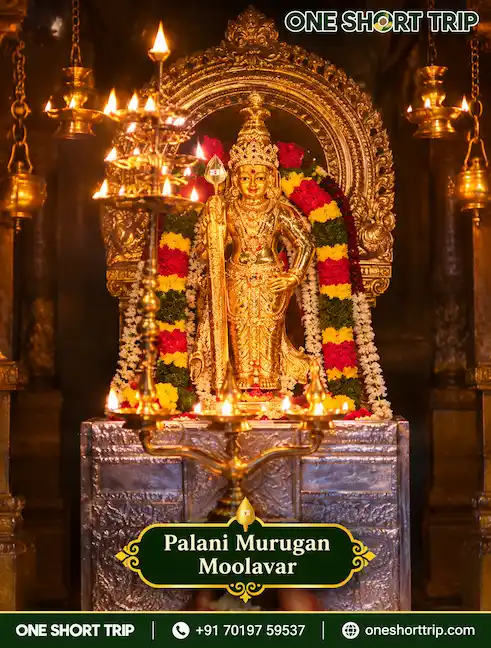
Palani Murugan Temple on Sivagiri Hill in Dindigul district, Tamil Nadu
Palani Murugan Temple, the third sacred Arupadai Veedu of Lord Murugan.
Palani Murugan Moolavar, Lord Dhandayuthapani Swamy worshipped as a youthful ascetic
Lord Dhandayuthapani Swamy, the presiding deity of Palani.

What Is Palani Murugan Temple Famous For?

Palani Murugan Temple is famous for being the third Arupadai Veedu, its hilltop setting, the divine fruit of wisdom legend, the traditional Navapashanam idol and its distinctive worship of Lord Murugan as Dhandayuthapani Swamy.

The temple's religious identity is closely connected with the idea that true wisdom is more valuable than material possessions. Lord Murugan's ascetic form expresses this teaching through simplicity and renunciation.

What Makes Palani Murugan Temple Special?

  • Its status as the third of the six sacred Arupadai Veedu temples.
  • The youthful ascetic form of Lord Dhandayuthapani Swamy.
  • The famous Pazham Nee legend associated with divine wisdom.
  • The traditional connection with Siddhar Bhogar and Navapashanam.
  • The hilltop pilgrimage experience on Sivagiri Hill.
  • The offering of Kavadi and other traditional vows.
  • Palani Panchamirtham, a temple prasadam with GI recognition.
  • The major festivals of Thaipusam, Panguni Uthiram and Vaikasi Visakam.

Palani is therefore important not only as a temple destination but also as a centre of Tamil devotional literature, religious customs and longstanding pilgrimage traditions.

Where Is Palani Murugan Temple Located?

Palani Murugan Temple is located on Sivagiri Hill in Palani town, Dindigul district, Tamil Nadu. The hilltop shrine overlooks the town and is a major landmark of the region.

Palani lies in western Tamil Nadu and is connected by road to Dindigul, Coimbatore, Pollachi and nearby towns. Pilgrims generally arrive at the foothill area before proceeding to the main hill temple.

Temple Address

Arulmigu Dhandayuthapani Swamy Temple
Sivagiri Hill, Palani
Dindigul District – 624601
Tamil Nadu, India

Is Palani Murugan Temple on a Hill?

Yes. The principal Dhandayuthapani Swamy Temple stands on Sivagiri Hill. Pilgrims can reach the shrine using the traditional steps or the elephant path. Winch and rope car services provide additional access when operational.

Walking up the hill is an important devotional practice for many visitors. Those travelling with children, elderly family members or people with limited mobility should check the availability of assisted transport before planning the ascent.

What Is Thiru Avinankudi Temple?

Thiru Avinankudi is an ancient Murugan temple situated at the foothills of Palani. It holds a special position in Tamil devotional tradition because the early work Thirumurugatruppadai refers to Avinankudi in its account of Murugan's sacred places.

Important distinction: The hilltop Dhandayuthapani Swamy Temple and the foothill Thiru Avinankudi Temple are separate shrines. Both belong to the wider sacred landscape of Palani.

Visitors with sufficient time can include both temples in their pilgrimage.

What Is the Story of Palani Murugan Temple?

The best-known legend of Palani Murugan Temple is the story of the divine fruit of wisdom. It explains why Lord Murugan left Mount Kailash and came to Palani, where he is worshipped in the form of a youthful ascetic.

The Sacred Legend

The Divine Fruit of Wisdom – Pazham Nee

According to Hindu tradition, Sage Narada once visited Lord Shiva and Goddess Parvati at Mount Kailash. He presented a special fruit, often described as the fruit of divine knowledge.

Both Lord Ganesha and Lord Murugan wished to receive the fruit. A challenge was proposed: the fruit would be given to the son who first completed a journey around the world.

Murugan Begins His Journey

Lord Murugan immediately mounted his peacock and set out to travel around the world.

He approached the challenge through determination, speed and physical effort, believing that completing the journey would earn him the sacred fruit.

Ganesha's Understanding of the World

Lord Ganesha interpreted the challenge differently. He recognised that his parents, Shiva and Parvati, represented the divine foundation of the universe.

Instead of travelling around the physical world, Ganesha respectfully circumambulated his parents.

Shiva and Parvati were pleased with his understanding and awarded him the fruit of wisdom.

Why Did Murugan Leave Kailash?

When Murugan returned and discovered that Ganesha had received the fruit, he became upset.

According to the legend, Murugan left Kailash and travelled south, eventually settling at Palani.

He renounced his ornaments and adopted the appearance of a young ascetic, holding only a staff.

Why Is Palani Called Pazham Nee?

In the popular Tamil telling of the legend, Shiva and Parvati explain to Murugan that he himself is the true fruit of wisdom.

This teaching is remembered through the expression "Pazham Nee", commonly interpreted as "You are the fruit."

The traditional explanation connects this expression with the name Palani. The story emphasises self-knowledge, humility and the realisation that spiritual wisdom cannot be measured by worldly achievement.

Religious context: The fruit of wisdom story is a sacred traditional account. It explains Palani's devotional significance rather than serving as a documented historical record.

What Is the Legend of Idumban and Palani Hill?

Another important tradition connects Palani with Sage Agastya and his disciple Idumban.

According to the legend, Sage Agastya instructed Idumban to carry two hills, traditionally identified as Sivagiri and Sakthigiri, towards the south.

Idumban carried the hills suspended from a pole across his shoulders, in a manner resembling the Kavadi carried by devotees today.

When he stopped to rest, he found that one of the hills could no longer be moved. A young boy stood upon it.

The boy was Lord Murugan. A confrontation followed, and Idumban was defeated. According to the tradition, Murugan later restored him and granted him a special place in the pilgrimage.

Why Do Devotees Carry Kavadi at Palani?

The Kavadi tradition is closely associated with the story of Idumban carrying the two hills.

Devotees carry decorated Kavadis or offerings such as milk as an expression of faith, gratitude, penance or fulfilment of a personal vow.

Many pilgrims also worship Idumban as part of their visit to Palani.
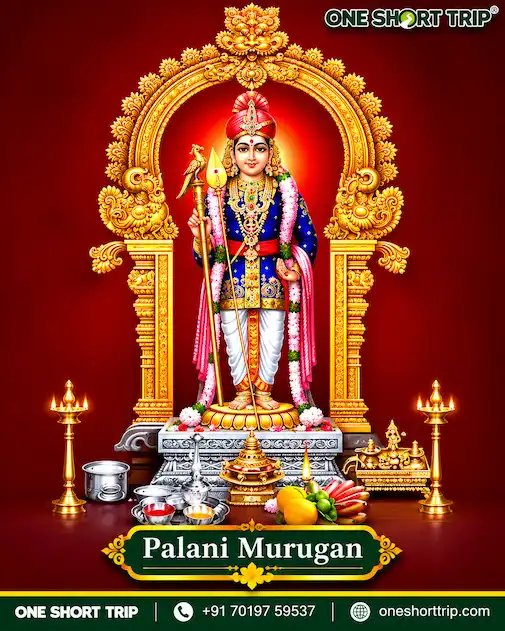
Palani Murugan devotional photograph associated with Dhandayuthapani Swamy Temple
Lord Murugan's sacred presence is central to Palani's devotional traditions.
Sunrise aerial view of Palani Murugan Temple on Sivagiri Hill in Tamil Nadu
Sunrise aerial view of Palani Murugan Temple on Sivagiri Hill.

What Is the History of Palani Murugan Temple?

Palani Murugan Temple has a long religious history connected with Tamil devotional literature, the traditions of Siddhar Bhogar and the patronage of South Indian rulers and devotees.

The temple's sacred origins are explained through mythology, while its architectural development reflects different historical periods and later renovations.

Ancient Tamil Literary Traditions

Palani's religious importance is closely associated with Thirumurugatruppadai, an early Tamil devotional poem attributed to Nakkirar.

The work describes sacred places associated with Lord Murugan and refers to Thiru Avinankudi, the ancient shrine at the foothills of Palani.

This literary connection is significant because it demonstrates the longstanding place of the Palani region in Tamil Murugan worship.

The Tradition of Siddhar Bhogar

One of the most distinctive traditions of Palani concerns Siddhar Bhogar, a revered figure in the Tamil Siddha tradition.

According to temple tradition, Bhogar created and consecrated the principal idol of Dhandayuthapani Swamy using a special combination of nine substances known as Navapashanam.

The tradition associates these substances with the Siddha understanding of alchemy and medicinal preparation.

A shrine dedicated to Bhogar is situated within the temple complex and remains an important part of Palani's religious heritage.

Historical clarification: The attribution of the idol to Bhogar and its Navapashanam composition are traditional religious accounts. They should not be presented as independently established archaeological or laboratory findings.

Royal Patronage and Temple Development

The history of the hilltop temple is associated with the Chera, Pandya and Nayak periods, as well as later contributions from devotees.

A traditional account connects the restoration of worship at the shrine with a Chera ruler who is said to have rediscovered the deity after receiving a divine vision.

The present temple complex reflects a long process of development rather than a single construction event whose precise original date is known.

Temple Architecture

Palani Temple follows the broader South Indian Dravidian temple tradition. Its principal features include the hilltop sanctum, surrounding corridors, mandapams and structures associated with ritual worship.

The sanctum houses Lord Dhandayuthapani Swamy in his distinctive ascetic form.

The hilltop setting is an important part of the temple's architecture and pilgrimage identity.

Modern Pilgrimage Facilities

Over time, facilities such as the winch railway and rope car have been introduced to make the hilltop shrine more accessible.

These facilities are particularly useful for elderly visitors, families and pilgrims who cannot comfortably climb the hill.

The temple continues to undergo maintenance and development under the Tamil Nadu Hindu Religious and Charitable Endowments administration.

Historical and Religious Timeline of Palani

ANCIENT DEVOTIONAL TRADITION
Thiru Avinankudi

The Palani region is associated with early Tamil literary traditions of Murugan worship.

SIDDHA TRADITION
Bhogar and Navapashanam

Temple tradition attributes the principal idol to Siddhar Bhogar.

ROYAL PATRONAGE
Development of the Hill Shrine

The temple's historical development is associated with South Indian royal patronage and successive additions.

MODERN PERIOD
Pilgrimage Infrastructure

Steps, hill routes, winch facilities and rope car services support access to the hilltop shrine.

2019
GI Recognition for Palani Panchamirtham

Palani Panchamirtham received Geographical Indication registration, recognising its association with Palani.

Who Built Palani Murugan Temple?

The original builder of Palani Murugan Temple cannot be identified conclusively from a single historical record.

The temple's origins are described through religious traditions, while its buildings developed over different periods.

Did Siddhar Bhogar Build Palani Temple?

Siddhar Bhogar is traditionally credited with creating and consecrating the Navapashanam idol of Lord Murugan.

However, this attribution does not establish that Bhogar constructed every part of the present temple.

Was Palani Temple Built by the Cheras?

A traditional account associates a Chera ruler with the rediscovery and restoration of worship at the shrine.

Later rulers and devotees contributed to the development and preservation of the temple.

In Summary

The Palani hill temple has ancient religious associations, including the Bhogar tradition and accounts of Chera patronage. Its present form developed through multiple periods of construction, renovation and continued worship. A precise original construction year is not securely established.

Who Is the Main Deity of Palani Murugan Temple?

The presiding deity of Palani Murugan Temple is Lord Murugan, worshipped as Dhandayuthapani Swamy.

The name Dhandayuthapani refers to the deity holding a staff, or dhandam. At Palani, Murugan is represented as a youthful ascetic who has renounced worldly possessions.

Why Is Murugan Holding a Staff?

The staff symbolises the ascetic form adopted by Murugan after the divine fruit of wisdom episode.

In devotional interpretation, the staff represents discipline, inner strength and the spiritual path.

Why Is Palani Murugan Worshipped as an Ascetic?

The ascetic form is connected with Murugan's renunciation after leaving Kailash.

His simple appearance teaches that spiritual fulfilment does not depend on ornaments, wealth or external recognition.

What Is the Navapashanam Idol?

According to the Bhogar tradition, the principal idol was fashioned using a special combination of nine substances known as Navapashanam.

Devotees regard the idol as sacred and associate it with the Siddha spiritual heritage of Tamil Nadu.

The exact composition and historical origin of the idol should not be treated as scientifically verified solely on the basis of the traditional account.

What Is Special About Palani Panchamirtham?

Palani Panchamirtham is a famous sweet prasadam associated with the worship of Lord Dhandayuthapani.

It is prepared using fruit-based ingredients and sweeteners according to the temple's established tradition.

The Government of India granted Palani Panchamirtham Geographical Indication registration in 2019. This recognition is associated with the product's geographical origin and established reputation.

GI recognition: Palani Panchamirtham is officially registered as a Geographical Indication product. The registered applicant is Arulmigu Dhandayuthapani Swamy Thirukkoil.

What Is the Religious and Spiritual Significance of Palani Murugan Temple?

Palani Murugan Temple holds a special position in Tamil Hindu tradition because it represents Lord Murugan as the embodiment of spiritual wisdom, renunciation and self-discipline.

Wisdom and Self-Knowledge

The Pazham Nee legend teaches that true knowledge comes from inner understanding rather than competition or material reward.

Renunciation and Simplicity

Murugan's ascetic appearance symbolises freedom from worldly attachment and the importance of spiritual discipline.

Kavadi and Devotion

Pilgrims carry Kavadi and undertake vows as expressions of gratitude, dedication and personal faith.

Tamil Siddha Heritage

The Bhogar tradition connects Palani with the wider spiritual and philosophical heritage of Tamil Siddhars.

Hill Pilgrimage

Climbing Sivagiri is a meaningful devotional act for many pilgrims who approach the shrine through prayer and effort.

Festival Worship

Thaipusam, Panguni Uthiram and other festivals bring devotees together through processions, offerings and communal worship.

Devotees visit Palani seeking Lord Murugan's blessings for wisdom, courage, peace and spiritual progress. Such beliefs are matters of personal religious faith.

What Is Palani Temple's Connection with the Six Arupadai Veedu?

Palani is traditionally recognised as the third of the six Arupadai Veedu, the sacred abodes associated with Lord Murugan.

Each abode is connected with a different aspect of Murugan's mythology, worship or spiritual teaching.

Palani is especially associated with renunciation and the realisation of divine wisdom.

How Is Palani Different from the Other Murugan Temples?

At Thiruparankundram, Murugan is associated with his marriage to Deivanai. Tiruchendur is linked with his victory over Surapadman.

Palani presents Murugan as a youthful ascetic, while Swamimalai celebrates his role as a divine teacher.

Thiruthani is associated with peace after conflict, and Pazhamudircholai with Murugan's presence alongside Valli and Deivanai.

Pilgrims travelling from Bangalore can explore these temples through a planned multi-day itinerary, allowing sufficient time for darshan, travel and rest.

Explore ONE SHORT TRIP's Arupadai Veedu Murugan Temple Tour Package from Bangalore.

How to Reach Palani Murugan Temple on the Hill?

The main Palani Murugan Temple is situated on Sivagiri Hill, above Palani town. Pilgrims can reach the hilltop shrine by climbing the steps, using the elephant path, or taking the temple's winch or rope car services when available.

The best option depends on your fitness, the weather, crowd levels and whether you are travelling with children or elderly family members.

Climbing the Temple Steps

The traditional staircase has approximately 690 steps. Many devotees prefer to climb as part of their pilgrimage. Allow time for rest, especially during warm weather.

Elephant Path

The elephant path provides an alternative walking route up the hill. It is generally more gradual than the steps but still requires walking uphill.

Winch Service

The winch railway carries passengers between the foothill area and the hill. Ticket availability, waiting times and operations depend on the day's arrangements.

Rope Car Service

The rope car is another option for reaching the hilltop. It may be suspended during unsuitable weather or maintenance. Check whether it is operating before arrival.

How Many Steps Are There at Palani Murugan Temple?

The traditional Palani hill staircase is commonly described as having approximately 690 steps. The time required to climb varies according to fitness, rest stops and crowds.

As a planning estimate, many visitors may need around 20–45 minutes for the climb, while others may require longer. This does not include darshan waiting time.

Which Is Better: Palani Rope Car or Winch?

Both services can reduce the physical effort of reaching the hill temple. The rope car offers an aerial journey, while the winch follows a railway track.

Neither service should be assumed to operate continuously throughout the day. Maintenance, weather, crowd management and festival arrangements can affect availability.

Important: A rope car or winch ticket is not automatically a special darshan ticket. Hill transport and temple darshan arrangements should be checked separately.

Can Senior Citizens Visit Palani Murugan Temple?

Yes. Senior citizens regularly visit Palani, but the hilltop setting requires advance planning. Check assisted transport, boarding access and current queue arrangements before visiting.

Travellers with significant mobility limitations should not assume that every part of the journey is step-free.

What Are the Darshan Timings of Palani Murugan Temple?

Palani Murugan Temple generally follows an early-morning to evening worship schedule. Published visitor schedules commonly describe opening around 5:45 AM and closing around 9:00 PM.

These hours are indicative only. The current official daily schedule has not been independently confirmed for this guide. Special pujas, festivals and administrative changes can affect access.

Indicative Daily Darshan Window
Information Planning Guidance
Morning opening Commonly published around 5:45 AM; verify officially
Evening closing Commonly published around 9:00 PM; verify officially
Regular worship Multiple pujas are performed during the day
Special darshan Subject to current temple arrangements
Festival timings May differ from ordinary days

What Are the Important Pujas at Palani Temple?

The temple follows a traditional daily worship programme that includes early-morning, daytime and evening rituals.

Important worship traditions include Viswaroopa Darshan, Vilaa Pooja, Sirukala Sandhi, Kaala Sandhi, Uchikala Pooja, Sayaraksha and Rakkala Pooja.

These names identify traditional worship periods, not a verified timetable for the date of your visit.

Is Special Darshan Available at Palani?

Palani Temple has offered different categories of darshan access. The availability, ticket prices and booking process should be confirmed through the official temple administration.

Avoid relying on outdated third-party ticket prices, particularly during major festivals.

Official verification: Check the Tamil Nadu HR&CE temple portal at hrce.tn.gov.in for current temple information. Confirm the day's darshan, puja and hill transport arrangements before travel.

When Is the Best Time to Visit Palani Murugan Temple?

The best time to visit Palani Murugan Temple is generally during the cooler months, especially from November to February. Early morning is often preferable for visitors planning to climb Sivagiri Hill.

🌅 Early Morning

A good option for pilgrims who want to avoid the strongest daytime heat. Check the temple's actual opening time and hill access arrangements.

🌇 Evening

An evening visit may be more comfortable than climbing during the afternoon. Check the last available winch or rope car service if needed.

🌤️ November to February

These months generally offer more comfortable conditions for sightseeing and climbing compared with peak summer.

🙏 Festival Days

Thaipusam and Panguni Uthiram offer a major devotional experience, but crowds and waiting times can be substantial.

Is It Advisable to Visit Palani During Summer?

Palani can become very hot during the summer months, particularly from March to May.

If visiting during this period, avoid climbing during the hottest hours, carry drinking water and allow additional rest time.

Which Days Are Usually Less Crowded?

Ordinary weekdays outside major festivals and public holidays may offer a more manageable visit than peak pilgrimage periods.

However, crowds can still increase on auspicious days, weekends and during the Tamil religious calendar.

What Are the Major Festivals Celebrated at Palani Murugan Temple?

Palani is one of Tamil Nadu's important centres of Murugan worship, and its major festivals attract large numbers of devotees.

Thaipusam

Thaipusam, celebrated during the Tamil month of Thai, is one of Palani's most significant annual festivals.

Devotees undertake vows, carry Kavadi, offer prayers and participate in major celebrations. Accommodation and transport should be planned well in advance.

Panguni Uthiram

Panguni Uthiram is another major pilgrimage occasion at Palani. The festival is associated with processions, offerings and large gatherings of devotees.

Vaikasi Visakam

Vaikasi Visakam celebrates Lord Murugan and is observed with special worship and devotional activities.

Skanda Sashti

Skanda Sashti commemorates Lord Murugan's victory over evil and is an important occasion in Murugan worship.

Karthigai and Other Sacred Days

Monthly Karthigai observances and other important days in the Tamil calendar also attract devotees to Palani.

Festival planning: Exact festival dates follow the Tamil calendar and vary each year. Check the current temple festival calendar before booking travel.

How to Reach Palani Murugan Temple?

Palani is accessible by road and rail from major cities in Tamil Nadu and neighbouring states. Visitors arriving in Palani town can continue to the temple's foothill entrance.

How to Reach Palani Murugan Temple from Bangalore?

Palani is approximately 450–500 km from Bangalore by road, depending on the route and starting point.

A private car journey may take approximately 8–10 hours under ordinary conditions, excluding substantial breaks and unexpected delays.

Bangalore to Palani – Road Journey

Approximately 450–500 km

Estimated driving time: 8–10 hours

Possible route: Bangalore → Hosur → Krishnagiri → Salem → Namakkal → Karur → Dindigul region → Palani. Actual navigation may suggest an alternative route depending on road conditions.

How to Reach Palani from Bangalore by Car?

Travelling by private car is convenient for families or groups planning to visit Palani along with other temples in Tamil Nadu.

Start early or consider an overnight journey with appropriate rest breaks. Check parking arrangements near the foothill area before arrival.

How to Reach Palani from Bangalore by Bus?

Travellers can look for suitable intercity bus connections to Palani or nearby transport hubs such as Dindigul.

Direct service availability varies. Check current KSRTC, TNSTC and other authorised operator schedules for your travel date.

How to Reach Palani by Train?

Palani Railway Station (PLNI) serves the town. It is situated on the railway network connecting the Dindigul and Pollachi regions.

Travellers from Bangalore should check whether a suitable direct train is available on their chosen date or whether a connection is required.

From Palani Railway Station, local taxis and auto-rickshaws can be used to reach the temple foothill area.

Which Is the Nearest Airport to Palani?

Coimbatore International Airport is one of the principal airports used for reaching Palani, at roughly 110–120 km by road.

Madurai Airport is another option, at approximately 120–140 km by road, depending on the route.

Airport choice should depend on flight availability, onward transport and total journey time.

Travel recommendation: For a pilgrimage starting in Bangalore, a planned overnight or multi-day trip is generally more comfortable than attempting a same-day return by road.

How Much Time Is Required to Visit Palani Murugan Temple?

The time needed for a Palani temple visit depends on the method of hill access, darshan queues and whether you plan to visit nearby shrines.

Type of Visit Suggested Time
Hill ascent by steps Approximately 20–45 minutes or longer, depending on fitness
Hill ascent by winch or rope car Depends on ticket queues and service availability
Temple darshan Allow approximately 1–2 hours or more on an ordinary day
Complete hill temple visit Allow approximately 2–4 hours or more
Hill temple and Thiru Avinankudi Allow roughly half a day, subject to queues
Major festival visit Allow substantial additional time

These are suggested planning estimates, not official waiting-time guarantees. Darshan queues can vary considerably.

What Should You Know Before Visiting Palani Murugan Temple?

Palani is a busy hill pilgrimage destination. A little preparation can make your visit more comfortable and help avoid unnecessary delays.

✓

Dress appropriately: Wear modest clothing suitable for temple worship and follow the current dress requirements.

✓

Check hill transport: Confirm rope car and winch operations before relying on them.

✓

Choose comfortable footwear: Suitable footwear is useful for walking outside the temple. Remove it where required for worship.

✓

Carry drinking water: Stay hydrated, especially when climbing during warmer months. Follow restrictions on items permitted inside the temple.

✓

Plan for senior citizens: Check assisted access, waiting times and the amount of walking involved.

✓

Respect photography rules: Do not assume photography is allowed inside the sanctum or other restricted areas.

✓

Protect your belongings: Carry only essentials and use authorised facilities where available.

✓

Expect festival crowds: Thaipusam and Panguni Uthiram can involve heavy queues and traffic changes.

✓

Purchase prasadam responsibly: Prefer official temple counters for Palani Panchamirtham.

✓

Keep the hill clean: Avoid littering and follow temple waste-disposal instructions.

What Are the Places to Visit Near Palani Murugan Temple?

A visit to Palani can be combined with nearby temples, religious landmarks and natural attractions. The following places are useful options depending on your available time.

Ancient Murugan Shrine

Thiru Avinankudi Temple

Thiru Avinankudi is an important Murugan temple at the foothills of Palani. It has ancient literary associations and is closely connected with the region's religious heritage.

Travel planning: Located in the Palani temple area; suitable for combining with hilltop darshan.

Sacred Shrine

Idumban Temple

Idumban is associated with the legend of carrying Sivagiri and Sakthigiri and with the Kavadi tradition.

Devotees often include Idumban worship in their Palani pilgrimage.

Sacred Water Body

Shanmuga River

The Shanmuga River is associated with the sacred geography and traditional pilgrimage customs of Palani.

Visitors should check local access and water conditions before approaching the river.

Nearby Hill Destination

Kodaikanal

Kodaikanal is a well-known hill station that can be combined with a longer Palani journey.

It is not a short temple-area stop. Allow additional driving time and preferably a separate day for sightseeing.

Regional Temple Destination

Dindigul and Nearby Temples

Dindigul and its surrounding region contain additional temples and heritage attractions that can be considered during a longer Tamil Nadu itinerary.

The suitability of these stops depends on your onward route.

Suggested priority: If your primary purpose is a Murugan pilgrimage, visit the hilltop Dhandayuthapani Swamy Temple and Thiru Avinankudi before adding distant sightseeing stops.

Can You Visit Palani Hill Temple and Thiru Avinankudi on the Same Day?

Yes. Palani Hill Temple and Thiru Avinankudi can normally be included in the same day's pilgrimage, provided you allow sufficient time for darshan, hill access and rest.

Suggested Order of Visits

Arrive at Palani Foothills

Reach the temple area, check current darshan and hill transport arrangements, and plan your ascent.

Proceed to the Hill Temple

Use the steps, elephant path, winch or rope car, according to your preference and availability.

Darshan of Dhandayuthapani Swamy

Offer prayers at the main hilltop shrine. Allow sufficient time for queues.

Return to the Foothills

Descend using an available route or service and take a short rest.

Visit Thiru Avinankudi Temple

Complete darshan at the ancient foothill Murugan shrine, subject to its current opening schedule.

Explore Other Nearby Shrines

Consider Idumban worship or other local stops if time and energy permit.

Festival advisory: On Thaipusam, Panguni Uthiram and other major occasions, queues can significantly affect the number of places you can cover in one day.

Suggested One-Day Palani Murugan Temple Visit Plan

If you are already staying in Palani or arriving early in the morning, the following itinerary provides a practical way to visit the principal temples.

Time Suggested Activity
Early Morning Arrive at Palani and check hill access arrangements
Morning Ascend Sivagiri and visit the Dhandayuthapani Swamy Temple
Late Morning Descend the hill, collect prasadam and take a rest
Afternoon Lunch and visit Thiru Avinankudi, subject to its opening hours
Late Afternoon Visit Idumban Temple or other nearby shrines if time permits
Evening Continue to your accommodation or next destination
Important Planning Note

This itinerary is a suggested visit sequence, not a fixed temple schedule. Actual darshan, hill transport and temple opening times may require changes.

Travelling from Bangalore? Because of the long road journey, it is preferable to arrive the previous evening or plan an overnight stay rather than attempt a rushed same-day return.

ONE SHORT TRIP

Planning a Palani Murugan Temple Trip from Bangalore?

Palani is the third sacred abode of Lord Murugan and an important stop on the Arupadai Veedu pilgrimage route.

ONE SHORT TRIP helps travellers explore the six sacred Murugan temples through a planned pilgrimage journey from Bangalore.

Explore the complete itinerary and check the available tour arrangements before planning your journey.

Explore Arupadai Veedu Tour from Bangalore

Read the complete Six Abodes of Lord Murugan guide

Palani Temple Visitor Information

Frequently Asked Questions About Palani Murugan Temple

Find answers to common questions about Palani Murugan Temple, including its history, Dhandayuthapani Swamy, Navapashanam, temple timings, hill steps, rope car, winch service, festivals and travel from Bangalore.

Where is Palani Murugan Temple located?

Palani Murugan Temple is located on Sivagiri Hill in Palani town, Dindigul district, Tamil Nadu, India. The hilltop shrine is dedicated to Lord Murugan as Dhandayuthapani Swamy.

What is Palani Murugan Temple famous for?

Palani is famous as the third of Lord Murugan's six sacred abodes, the Arupadai Veedu. It is known for the Dhandayuthapani Swamy shrine, the traditional Navapashanam idol association, Panchamirtham prasadam and the major Thaipusam pilgrimage.

Which God is worshipped at Palani Temple?

Lord Murugan is worshipped as Dhandayuthapani Swamy, an ascetic form holding a staff. This form is closely associated with the spiritual message of renunciation and self-knowledge.

Is Palani the third Arupadai Veedu?

Yes. Palani is traditionally recognised as the third of the six sacred abodes of Lord Murugan, following Thiruparankundram and Tiruchendur. The complete pilgrimage also includes Swamimalai, Thiruthani and Pazhamudircholai.

What is the story behind Palani Murugan Temple?

According to the traditional legend, Murugan became upset after Lord Ganesha received the sacred fruit of wisdom. Murugan withdrew to Palani, where the teaching associated with the words "Pazham Nee" expresses the idea that Murugan himself is the true fruit of wisdom.

What does Pazham Nee mean?

"Pazham Nee" is commonly interpreted as "You are the fruit." In the Palani legend, it conveys the spiritual teaching that Murugan himself embodies the highest wisdom. The explanation is part of the temple's devotional tradition.

Who made the Palani Murugan idol?

Temple tradition attributes the creation of the Dhandayuthapani Swamy idol to the Siddhar Bogar. The idol is traditionally associated with Navapashanam. These are religious and historical traditions; the precise original composition has not been independently established through publicly available scientific evidence.

What is Navapashanam at Palani Temple?

Navapashanam refers to a traditional combination of nine substances associated with the Palani deity's idol. Devotees regard the idol as sacred and connect it with Siddhar Bogar's spiritual knowledge.

Who built Palani Murugan Temple?

Palani is an ancient pilgrimage centre that developed through different historical periods and received patronage from various rulers and devotees. The original construction cannot reliably be attributed to one historically verified individual.

How many steps are there at Palani Murugan Temple?

The traditional hill staircase is commonly described as having approximately 690 steps. Visitors may climb the steps or consider the elephant path, winch or rope car, subject to availability.

How long does it take to climb Palani Hill?

The climb may take approximately 20–45 minutes for many visitors, but the actual time depends on fitness, weather, crowds and rest stops. Senior citizens and children may need longer.

Is a rope car available at Palani Temple?

Yes. Palani has a rope car facility for reaching the hilltop temple. However, operation depends on weather, maintenance and current temple arrangements. Check availability before travelling.

What is the winch service at Palani?

The winch is a rail-based hill transport facility used by pilgrims to reach the temple area. Tickets and waiting times depend on the day's operations.

Which is better at Palani: rope car or winch?

Both reduce the effort of climbing. The rope car provides an aerial journey, while the winch travels along a rail track. The better option depends on service availability, waiting time and individual accessibility needs.

What are the darshan timings of Palani Murugan Temple?

Commonly published visitor schedules indicate an opening around 5:45 AM and closing around 9:00 PM. These are indicative, not a confirmed current official schedule. Verify the day's timings through the Tamil Nadu HR&CE portal or temple administration.

Is special darshan available at Palani Murugan Temple?

Different darshan arrangements may be available at Palani. Current categories, charges, eligibility and ticket procedures should be confirmed through official temple channels. Hill transport tickets are separate from darshan arrangements.

Can senior citizens visit Palani Murugan Temple?

Yes. Senior citizens can visit Palani. The rope car and winch may reduce the physical effort of reaching the hill, but accessibility, queues and boarding arrangements should be checked in advance.

What is the best time to visit Palani Murugan Temple?

November to February is generally more comfortable for travel and climbing. Early mornings are often preferable to hot afternoons. Major festival days offer a devotional atmosphere but attract larger crowds.

Which festivals are famous at Palani?

Thaipusam and Panguni Uthiram are among the most important festivals at Palani. Vaikasi Visakam, Skanda Sashti and Karthigai-related observances are also significant.

What is Palani Panchamirtham?

Palani Panchamirtham is a famous temple prasadam made using ingredients such as banana, jaggery, honey and other traditional additions. Palani Panchamirtham has received a Geographical Indication registration in India. Visitors should purchase it from authorised outlets.

How far is Palani Murugan Temple from Bangalore?

Palani is approximately 450–500 km from Bangalore by road, depending on the starting point and selected route. Driving commonly requires around 8–10 hours or longer with breaks and traffic.

Which is the nearest railway station to Palani Temple?

Palani Railway Station (PLNI) serves the town. From the station, visitors can use local transport to reach the temple foothills. Check current train connections before booking.

Can I visit Palani Hill Temple and Thiru Avinankudi on the same day?

Yes. The hilltop Dhandayuthapani Swamy Temple and the ancient Thiru Avinankudi Temple at the foothills can normally be visited on the same day. Allow additional time during festivals and busy weekends.

Can I visit all six Arupadai Veedu Murugan temples from Bangalore?

Yes. A multi-day pilgrimage can cover Thiruparankundram, Tiruchendur, Palani, Swamimalai, Thiruthani and Pazhamudircholai. The temples are spread across Tamil Nadu, so a carefully planned route is recommended. Explore the ONE SHORT TRIP Arupadai Veedu tour.

Explore Palani with ONE SHORT TRIP

Plan Your Palani Murugan Temple Visit from Bangalore

Palani Murugan Temple is more than a hilltop shrine. It is one of the six sacred abodes of Lord Murugan and an important destination for devotees seeking blessings, spiritual understanding and a meaningful pilgrimage.

From the revered Dhandayuthapani Swamy shrine on Sivagiri Hill to the ancient Thiru Avinankudi Temple, Palani offers a distinctive combination of religious tradition, hilltop scenery and Tamil cultural heritage.

Whether you are travelling with family, planning a visit with senior citizens or hoping to complete the six Arupadai Veedu pilgrimage, choosing a suitable route and allowing enough time for darshan can make the journey more comfortable.

At ONE SHORT TRIP, we organise temple tours from Bangalore, including the Arupadai Veedu Murugan pilgrimage. Explore our itinerary to learn about the planned journey and booking options.

Explore All Six Arupadai Veedu Murugan Temples

Continue your pilgrimage planning with our individual temple guides, covering religious significance, visitor information and travel from Bangalore.

Read the Complete Arupadai Veedu Murugan Temples Guide →

Temple Location

Where Is Palani Murugan Temple Located?

Arulmigu Dhandayuthapani Swamy Temple, popularly known as Palani Murugan Temple, is situated on Sivagiri Hill in Palani, Dindigul district, Tamil Nadu. Dedicated to Lord Murugan in his ascetic form, the hilltop shrine is the third of the six sacred Arupadai Veedu temples. Visitors can reach the temple using the traditional steps, elephant path, winch or rope car, depending on current service availability.

Arulmigu Dhandayuthapani Swamy Temple Sivagiri Hill, Palani, Dindigul District, Tamil Nadu 624601, India
Get Directions

Planning A Trip Here?

Get help planning your visit — call or WhatsApp us and we will help you book a tour.