Vani Vilas Hospital, Bengaluru – A Landmark in the City's Medical and Architectural History
Vani Vilas Hospital, officially known as Vanivilas Women and Children Hospital, is one of Bengaluru's historic public healthcare institutions. Located on K.R. Road beside the older Victoria Hospital complex, the hospital has been part of the city's medical landscape since the 1930s. Today it continues to serve women and children, but its importance goes beyond healthcare: the original building is also a reminder of how public medicine, philanthropy, architecture and the Mysore royal administration came together in pre-independence Bengaluru.
The hospital was established specifically around maternity and child healthcare at a time when dedicated medical facilities for women and children were still limited. Its story is therefore closely connected with the development of organised public healthcare in Bengaluru and with the city's transformation from a princely-state capital into a modern urban centre.

Why Was Vani Vilas Hospital Built?
The origins of Vani Vilas Hospital go back to an earlier maternity hospital that was functioning in the city. By the 1920s, the need for a larger and purpose-built institution for maternity and child care had become increasingly apparent. A new hospital project was therefore taken up under the Mysore State administration, with support from the royal family and prominent citizens.
The foundation stone was laid on 26 August 1926 by Yuvaraja Kanteerava Narasimharaja Wadiyar. Maharaja Krishnaraja Wadiyar IV and Dewan Sir Mirza Ismail took a personal interest in the project during its construction. After several years of work, the completed hospital was inaugurated by Maharaja Krishnaraja Wadiyar IV on 8 March 1935.
The hospital was named after Maharani Kempananjammanni, the mother of Krishnaraja Wadiyar IV, who was popularly known by the honorific Vani Vilasa Sannidhana. The name therefore carries a connection to Mysore's royal household while the institution itself was intended to serve the wider public.
A Hospital Designed for Women and Children
Vani Vilas was conceived differently from a general hospital. Its primary purpose was maternity and child care, reflecting a growing recognition that women required dedicated medical facilities before, during and after childbirth. Children were subsequently provided with dedicated sections as the institution expanded.
This focus helped Vani Vilas develop into an important centre for obstetrics, gynaecology and paediatric care. Over the decades, additional wards, departments, training facilities and research services were added as Bengaluru's population grew. The hospital eventually became closely associated with medical education through its relationship with Bangalore Medical College and Research Institute.
The Architecture of Vani Vilas Hospital
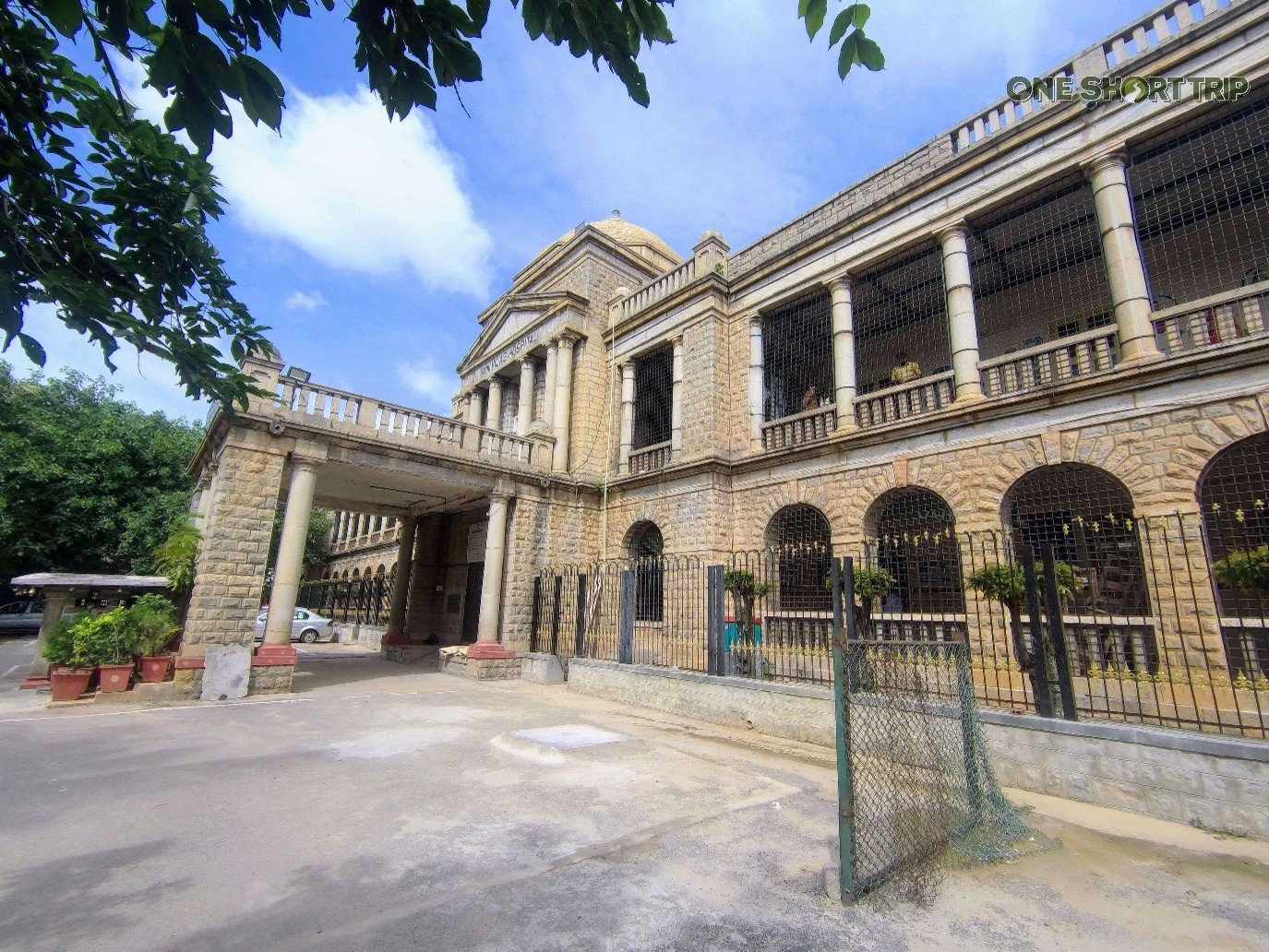
One of the most interesting aspects of Vani Vilas Hospital is that its architecture does not imitate the grand Victorian Gothic character of neighbouring Victoria Hospital. Instead, the building has a distinctly different visual personality, reflecting the architectural approach of the late Mysore State period.
The historic structure is characterised by a strong, symmetrical composition, a prominent central portico and domed elements, along with broad verandahs and large openings. The generous corridors and verandahs were not merely decorative: in an era before modern air-conditioning, careful planning for daylight, airflow and shaded circulation was an important part of hospital design.
The building is associated with architect S. H. Lakshminarasappa, executive engineer A. Tandoni Rao and contractor Chinnaswamy Mudaliyar. Their work produced an institution that feels distinctly different from the nearby colonial-era hospital buildings, making the surrounding medical precinct an interesting architectural contrast.


Vani Vilas and the Historic Medical Precinct of Bengaluru
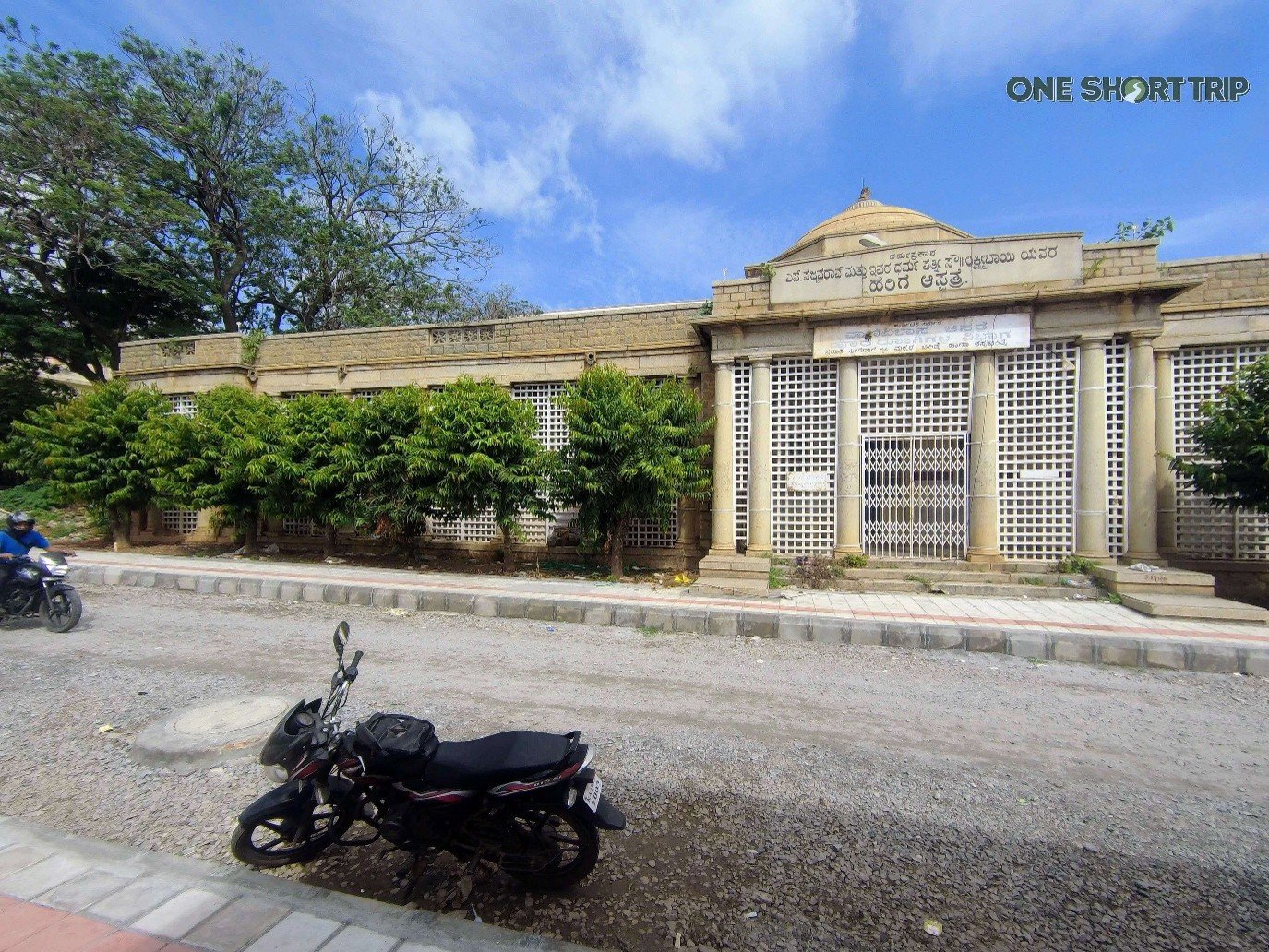
Vani Vilas becomes even more interesting when viewed together with the hospitals around it. Victoria Hospital, Vani Vilas Women and Children Hospital and Minto Ophthalmic Hospital form part of an unusually historic concentration of public medical institutions in the old city. Each emerged at a different point in Bengaluru's medical history and reflects a different architectural and administrative period.
Victoria Hospital represents the earlier colonial-era public hospital tradition, while Vani Vilas reflects the later Mysore State effort to develop specialised healthcare for women and children. Minto Hospital, meanwhile, became associated with specialist eye care. Together they tell a much larger story about the development of organised healthcare in Bengaluru.
This makes Vani Vilas particularly relevant for travellers interested in Bengaluru's lesser-known heritage. It is not a palace or monument built solely for display; its heritage survives within a functioning public institution whose original purpose was closely tied to everyday life and public welfare.
A Story of Public Healthcare and Philanthropy
The creation of Vani Vilas was also supported by the philanthropic culture of Bengaluru. Private donors and prominent families contributed to the expansion of maternity and child-care facilities, demonstrating that the development of public healthcare was not solely a government undertaking.
Over time, donor-supported additions became part of the hospital's physical history. The institution therefore represents several layers of Bengaluru's social development: royal patronage, state administration, medical education, philanthropy and the continuing demand for accessible healthcare.
Why Vani Vilas Hospital Matters Today
More than nine decades after its inauguration, Vani Vilas remains a working healthcare institution rather than a museum frozen in time. That continuity is what gives the building much of its character. The same site that was planned to improve maternity and child healthcare in the Mysore State continues to serve patients in modern Bengaluru.
For anyone exploring Bengaluru beyond its better-known palaces, markets and temples, Vani Vilas offers a different kind of heritage experience. Its architecture, royal-era origins and connection with the evolution of public healthcare make it an important part of the city's living history.
Visiting Vani Vilas Hospital, Bengaluru
Vani Vilas Hospital is different from most heritage places in Bengaluru. It is not a museum or a monument maintained exclusively for sightseeing. It remains a working government hospital, so visitors should approach the building as a living institution first and a heritage landmark second.
The best way to appreciate it is from the surrounding public areas and roads, taking time to notice the historic building, its proportions and its relationship with the neighbouring medical institutions. If you need to enter the hospital for medical care, follow the directions and restrictions given by hospital staff rather than treating the interior as a sightseeing area.
Where Is Vani Vilas Hospital?
Vani Vilas Hospital is on Krishnarajendra Road in the historic Fort and K.R. Market area of Bengaluru. The Government of Karnataka's Bengaluru Urban district directory lists the hospital at Krishnarajendra Road and provides the hospital contact number 080-26705206.
Its location is particularly useful for heritage travellers because the old city contains several important institutions and landmarks within a relatively compact area.
Vani Vilas and the Victoria Hospital Campus
Vani Vilas should be understood as part of Bengaluru's historic medical district rather than as a completely isolated building. The hospital is associated with the Victoria Hospital complex and the wider K.R. Road–Fort medical precinct.
This setting creates an unusual heritage trail. Within the same part of the city, different generations of medical architecture can be seen together, reflecting the transition from colonial-era institutions to the specialised public healthcare system developed under the Mysore State and later Karnataka governments.
Can Tourists Visit Vani Vilas Hospital?
There is no separate tourist-entry system or museum-style visiting schedule for Vani Vilas Hospital. It is an operating healthcare facility, and access to clinical areas is naturally controlled.
If your interest is architectural or historical, admire the exterior from appropriate public areas and avoid entering wards, treatment areas or restricted sections simply for sightseeing. This is especially important because patients, families and medical staff use the premises throughout the day.
Photography and Visitor Etiquette
There is an important difference between photographing a historic facade and photographing a functioning hospital. Avoid taking pictures of patients, children, hospital staff, treatment areas or private activity. If photography from inside the premises is restricted, follow the instruction without exception.
For heritage photography, the exterior architecture provides enough material to appreciate the building without interfering with hospital operations. A respectful approach also preserves the dignity of the people who rely on the hospital for care.
Hospital Services and Medical Role
Vani Vilas remains an important public healthcare institution under the Bangalore Medical College and Research Institute system. Government records continue to list specialist medical posts and departments associated with the hospital, showing that its role is very much contemporary as well as historical.
Current public healthcare listings associate the hospital with areas including obstetrics and gynaecology, paediatrics, neonatal care, general medicine and surgery. Exact departments, outpatient arrangements and service availability can change, so patients should confirm the required service directly with the hospital before travelling.
How to Reach Vani Vilas Hospital
By road: The hospital is on K.R. Road in central Bengaluru, close to K.R. Market and the historic Fort area. Road access is convenient, although traffic around the market and hospital precinct can be heavy.
By public transport: The K.R. Market area is one of the city's major public-transport hubs, making the hospital accessible by city buses and other local transport services.
By metro: K.R. Market Metro Station on the Namma Metro Green Line is the most useful metro reference point for the area. From there, the remaining journey can be completed on foot or by local transport depending on the exact hospital entrance being used.
By train: Bengaluru City Railway Station is the principal railway station serving central Bengaluru and can be connected to the hospital area by road or public transport.
Parking and Getting Around the Area
Because Vani Vilas is located in one of the busiest parts of central Bengaluru, visitors travelling by car should not assume that convenient dedicated tourist parking will be available immediately outside the historic building. Market traffic, hospital vehicles and pedestrian movement can make the area congested.
For a heritage visit, public transport or a short local ride is often more practical than trying to park directly beside the hospital.
Best Time to See the Building
For architectural observation or exterior photography, daytime is preferable because the building's massing, verandahs and decorative details are easier to appreciate in natural light. Early morning can also be more comfortable before the surrounding commercial area becomes busier.
There is no need to plan a long sightseeing session here. Around 20–30 minutes is sufficient for someone interested mainly in the exterior and historical context, while a broader Fort and K.R. Market heritage walk can take considerably longer.
Who Will Find Vani Vilas Interesting?
Vani Vilas is particularly rewarding for travellers interested in Bengaluru's lesser-known history, Mysore-era architecture, public institutions, medical history and urban development. It is also useful for students of architecture and anyone exploring the city beyond conventional tourist landmarks.
It is not, however, a conventional attraction designed for entertainment. The experience comes from understanding what the building represents and seeing how a historic institution continues to function in a rapidly changing city.
Nearby Places to Combine With Vani Vilas Hospital
Vani Vilas works best as part of a central Bengaluru heritage circuit rather than as a stand-alone destination. Depending on the route, the visit can be combined with Victoria Hospital, K.R. Market, Bengaluru Fort, Tipu Sultan's Summer Palace, the old City Market area, and other historic institutions around the Fort precinct.
A wider heritage route can also connect this area with landmarks around Basavanagudi, including the Bull Temple and other historic neighbourhoods. This approach gives visitors a much clearer picture of how Bengaluru developed from its old fortified core into the modern city.
Why Include Vani Vilas in a Bengaluru Heritage Guide?
The significance of Vani Vilas is not based on grandeur alone. Its real value lies in the story behind the building: a purpose-built institution created during the Mysore State period to address women's and children's healthcare, supported by royal patronage and eventually incorporated into Bengaluru's modern medical education and public-health network.
Seen in that context, Vani Vilas is a piece of living Bengaluru heritage. The building connects the city's royal-era past with the everyday healthcare needs of its present population, making it a worthwhile stop for travellers who want to understand the less-visible layers of Bengaluru's history.