One Short Trip

Steps leading to Bhargava Narasimha Swamy Temple in Ahobilam, Andhra Pradesh
Pilgrimage

Bhargava Narasimha Swamy Temple, Ahobilam

Discover one of the nine sacred Nava Narasimha shrines of Ahobilam, associated with the penance of Lord Parashurama and the holy Bhargava Theertham.

Primary Deity
Lord Narasimha
Location
Near Bhargava Theertham, Ahobilam
Religious Significance
Sixth of the Nava Narasimha Shrines
Sacred Association
Bhargava Rama (Lord Parashurama)
Explore the Sacred Heritage of Ahobilam

About Bhargava Narasimha Swamy Temple, Ahobilam

Bhargava Narasimha Swamy Temple is one of the nine sacred Nava Narasimha shrines located in the Ahobilam region of Andhra Pradesh. Situated on a hill near the sacred Bhargava Theertham, approximately 2 kilometres from Lower Ahobilam, this temple is associated with the penance of Bhargava Rama, better known as Lord Parashurama.

According to the traditional Sthala Purana, Bhargava Rama performed penance near the sacred pond to receive the darshan of Lord Narasimha. The Lord is worshipped here in a powerful form associated with the divine destruction of the demon king Hiranyakashipu.

The temple takes its name from Bhargava Rama, an incarnation of Lord Vishnu belonging to the lineage of Sage Bhrigu. The nearby sacred water body is known as Bhargava Theertham and is also traditionally called Akshaya Theertham.

Unlike the main Lakshmi Narasimha temple at Lower Ahobilam, Bhargava Narasimha is a smaller hill shrine surrounded by the natural landscape of the Nallamala region. Its forest approach, sacred pond and traditional connection with Parashurama make it a meaningful destination for devotees exploring the Nava Narasimha temples.

Bhargava Narasimha Temple – Quick Information

Temple Name
Sri Bhargava Narasimha Swamy Temple
Other Names
Bhargava Narasimha Temple, Bhargava Narasimha Shrine
Location
Near Bhargava Theertham, Ahobilam
District and State
Nandyal District, Andhra Pradesh
Distance from Lower Ahobilam
Approximately 2 km
Presiding Deity
Lord Narasimha
Nava Narasimha Order
Sixth Shrine in the Traditional Listing
Religious Tradition
Sri Vaishnavism
Sacred Association
Bhargava Rama (Lord Parashurama)
Sacred Water Body
Bhargava Theertham / Akshaya Theertham
Temple Setting
Hill Shrine in the Nallamala Region
Access
Forest Approach and Steps to the Shrine

Visitor note: The approach involves uneven terrain and steps. Check local access and transport conditions before visiting, particularly during the monsoon season.

What Is Bhargava Narasimha Temple Famous For?

Bhargava Narasimha Temple is famous for its association with Lord Parashurama's penance, the sacred Bhargava Theertham and its place among the nine forms of Lord Narasimha worshipped at Ahobilam.

The name Bhargava refers to Bhargava Rama, another name for Parashurama, who belongs to the lineage of Sage Bhrigu. According to the traditional Sthala Purana, he performed penance near the sacred pond to receive the divine darshan of Lord Narasimha.

The Temple Is Particularly Known For

  • Being one of the nine Nava Narasimha shrines of Ahobilam.
  • Its traditional association with the penance of Bhargava Rama (Parashurama).
  • The sacred pond known as Bhargava Theertham or Akshaya Theertham.
  • Its hilltop location near Lower Ahobilam.
  • The traditional depiction of Lord Narasimha overcoming Hiranyakashipu.
  • Its forest surroundings and stone steps leading towards the shrine.
  • Its importance as one of the significant pilgrimage stops in the Ahobilam region.

For devotees, the visit combines worship of Lord Narasimha with the sacred landscape associated with Parashurama. The nearby theertham is an important part of the temple's traditional identity.

Where Is Bhargava Narasimha Temple Located?

Bhargava Narasimha Temple is located on a hill near Bhargava Theertham in the Ahobilam region of Nandyal district, Andhra Pradesh. The shrine is approximately 2 kilometres from Lower Ahobilam.

The temple is set amid the natural landscape of the Nallamala region. Visitors approach the shrine through a forest-side route, followed by a flight of steps leading towards the temple.

Temple Location

Bhargava Narasimha Swamy Temple,
Near Bhargava Theertham,
Ahobilam, Nandyal District,
Andhra Pradesh, India.

Lower Ahobilam is the usual starting point for visiting this shrine. Depending on the condition of the approach route, visitors may need to arrange local transport or walk part of the distance before climbing the steps.

The temple can be included in a pilgrimage covering the Lower Ahobilam shrines and other Nava Narasimha temples. Confirm the latest local transport and access arrangements before setting out.

What Is the Story of Bhargava Narasimha Temple?

The story of Bhargava Narasimha Temple is closely connected with Bhargava Rama, better known as Lord Parashurama, and his devotion to Lord Narasimha.

According to the traditional Sthala Purana of Ahobilam, Parashurama performed penance near a sacred pond in this area. The pond came to be known as Bhargava Theertham because of its association with him.

The Sacred Legend

The Penance of Bhargava Rama

Bhargava Rama, or Parashurama, is traditionally regarded as the sixth incarnation of Lord Vishnu. He is known for his extraordinary strength, devotion and role in several important stories of Hindu tradition.

The Ahobilam Sthala Purana describes how Bhargava Rama came to this sacred region and performed penance near a pond in order to receive the darshan of Lord Narasimha.

His devotion is remembered through the name Bhargava Theertham, the sacred water body associated with his penance.

According to this tradition, Lord Narasimha blessed Bhargava Rama with His divine presence. The shrine is therefore worshipped as Bhargava Narasimha Swamy Temple.

Who Is Bhargava Rama?

Bhargava Rama is another name for Parashurama, one of the ten principal incarnations of Lord Vishnu in Hindu tradition. He is the son of Sage Jamadagni and Renuka and belongs to the lineage of Sage Bhrigu, from which the name Bhargava is derived.

Parashurama is traditionally depicted carrying an axe and is remembered for his warrior role and intense penance. His association with Ahobilam adds a distinctive dimension to the story of the Nava Narasimha shrines.

At Bhargava Narasimha, the tradition describes one incarnation of Lord Vishnu seeking the divine vision of another form of the same Supreme Lord.

Why Is the Sacred Pond Called Bhargava Theertham?

The pond near the temple is known as Bhargava Theertham because of its traditional association with the penance of Bhargava Rama.

It is also known as Akshaya Theertham. The word Akshaya is traditionally understood as that which does not diminish or perish. The name reflects the sacred significance associated with the water body in local religious tradition.

The theertham and the hill shrine together form the central sacred landscape of Bhargava Narasimha Temple. Visitors can observe the pond near the approach to the temple, subject to local access conditions.

How Is the Shrine Connected with the Narasimha Avatar?

Lord Narasimha is the fourth principal incarnation of Lord Vishnu in the commonly followed Dashavatara sequence. He appeared in a half-man, half-lion form to protect His devotee Prahlada and defeat the demon king Hiranyakashipu.

The traditional account of Bhargava Narasimha connects the shrine with the divine form of Narasimha that Parashurama wished to behold through his penance.

The temple's name, sacred pond and traditional legend are all connected with Bhargava Rama's devotion. These accounts belong to the religious Sthala Purana of Ahobilam.
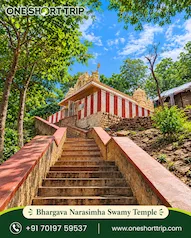
Stone steps leading up to Bhargava Narasimha Swamy Temple in Ahobilam
The steps leading towards Bhargava Narasimha Swamy Temple, Ahobilam

What Is the History of Bhargava Narasimha Temple?

Bhargava Narasimha Temple forms part of the ancient religious landscape of Ahobilam, a sacred centre associated with the worship of Lord Narasimha in nine different forms.

Its traditional history is preserved through the Sthala Purana, which explains the association between Bhargava Rama's penance, the sacred pond and the manifestation of Lord Narasimha.

A precise original construction date or a conclusively identified individual builder for the present shrine is not established by the reliable temple information used for this guide. It is therefore better to understand its history through its religious traditions and its place within the wider Ahobilam pilgrimage complex.

The Traditional Origins of the Shrine

The traditional origin of the shrine is linked with Bhargava Rama's penance near the sacred pond. The story explains why the deity is known as Bhargava Narasimha and why the nearby water body is called Bhargava Theertham.

This religious association is an important part of the Nava Narasimha tradition and distinguishes the temple from the other shrines in the Ahobilam region.

Bhargava Narasimha and the Nava Narasimha Tradition

Ahobilam is renowned for its nine sacred forms of Lord Narasimha, worshipped at different locations in the Nallamala Hills and surrounding area. These shrines are traditionally known together as the Nava Narasimha Kshetram.

Bhargava Narasimha is included as the sixth shrine in the traditional sequence published by Ahobila Mutt. Its association with Parashurama makes it one of the distinctive pilgrimage destinations within this group.

The Role of Ahobila Mutt

Ahobila Mutt has played an important role in preserving and promoting the religious traditions of Ahobilam and the worship of the Nava Narasimha deities.

The Mutt's descriptions of the nine shrines preserve the traditional accounts associated with each form of Lord Narasimha, including the story of Bhargava Rama and the sacred pond near this temple.

Traditional History of Bhargava Narasimha Temple

TRADITIONAL ORIGIN
Bhargava Rama's Penance

The Sthala Purana associates the sacred pond and shrine with the penance of Bhargava Rama, or Parashurama.

NAVA NARASIMHA TRADITION
Recognition as a Sacred Shrine

Bhargava Narasimha became recognised as one of the nine sacred forms worshipped in the Ahobilam region.

TEMPLE TRADITION
Preservation of the Shrine

The shrine and its associated theertham continued as part of the pilgrimage tradition of Ahobilam.

PRESENT DAY
A Nava Narasimha Pilgrimage Destination

Devotees continue to visit the shrine as part of their journey to the nine Narasimha temples of Ahobilam.

Historical Note

The traditional story of the shrine is well established in Ahobilam's religious literature. However, an exact construction date, a named architect or a verified sequence of structural renovations has not been established here. This guide does not assign unsupported dates or builders to the temple.

Who Built Bhargava Narasimha Temple?

The original builder of Bhargava Narasimha Temple has not been conclusively identified in the reliable temple information consulted for this guide.

Did Parashurama Establish the Temple?

According to the traditional Sthala Purana, Bhargava Rama performed penance near the sacred pond and received the darshan of Lord Narasimha. This is the religious origin associated with the shrine and explains its name.

This traditional account should not be treated as a documented architectural record identifying Parashurama as the historical builder of the present stone structure.

Is There a Known Historical King or Dynasty That Built It?

Ahobilam has a long history of religious patronage, but a specific king or dynasty cannot be confidently identified as the builder of this particular shrine based on the available temple information.

It is therefore more accurate to describe Bhargava Narasimha as an established shrine within the wider Ahobilam temple complex rather than assign it an unsupported construction date or royal patron.

Who Maintains the Religious Tradition of the Shrine?

Ahobila Mutt is closely associated with the religious traditions of Ahobilam and the worship of the Nava Narasimha deities. Its publications describe the locations and traditional legends of the nine shrines, including Bhargava Narasimha.

In Summary

The religious origin of Bhargava Narasimha Temple is traditionally connected with the penance of Bhargava Rama near Bhargava Theertham. The historical builder and exact construction date of the present shrine have not been conclusively established.

Who Is the Main Deity of Bhargava Narasimha Temple?

The presiding deity of Bhargava Narasimha Temple is Lord Narasimha, the half-man, half-lion incarnation of Lord Vishnu.

The deity is worshipped as Bhargava Narasimha because of the traditional association with Bhargava Rama's penance at this location. The form is connected with the divine destruction of Hiranyakashipu, the demon king who troubled Prahlada.

Traditional descriptions of the deity identify Lord Narasimha in the act of slaying Hiranyakashipu, with the divine weapons Shankha and Chakra also associated with the iconography. Prahlada is shown nearby in a posture of devotion in commonly published descriptions of the shrine.

Devotees visit the temple to offer prayers to Lord Bhargava Narasimha and remember the devotion of Parashurama. The deity's form is one of the distinctive manifestations worshipped among the nine Narasimha shrines of Ahobilam.
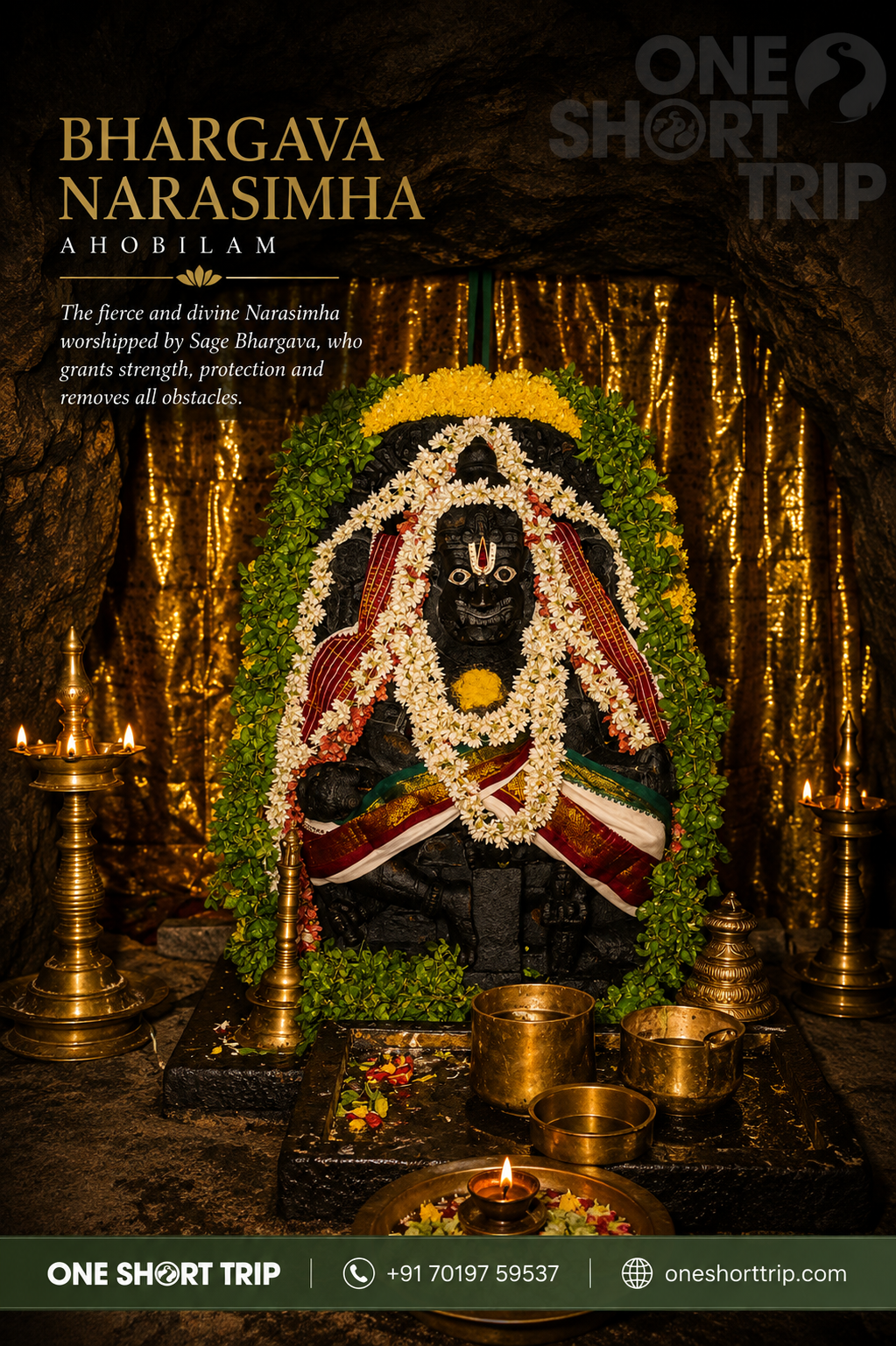
Bhargava Narasimha Swamy deity at Ahobilam
Bhargava Narasimha Swamy, one of the nine sacred forms of Lord Narasimha at Ahobilam

What Is the Religious and Spiritual Significance of Bhargava Narasimha Temple?

Bhargava Narasimha Temple holds an important place in the religious traditions of Ahobilam. Its significance comes from the association with Parashurama, the sacred Bhargava Theertham and the worship of one of the nine forms of Lord Narasimha.

🙏

Connection with Parashurama

The shrine is traditionally associated with the penance of Bhargava Rama, who sought the divine darshan of Lord Narasimha near the sacred pond.

💧

Bhargava Theertham

The nearby sacred pond, also called Akshaya Theertham, is an important part of the temple's religious identity and traditional story.

🦁

One of the Nava Narasimhas

Bhargava Narasimha is one of the nine sacred forms of Lord Narasimha worshipped across the Ahobilam region.

⛰️

Sacred Natural Setting

The hill shrine, forest surroundings and nearby theertham create a distinctive pilgrimage experience in the Nallamala region.

Beliefs about the spiritual benefits of worship and sacred water are matters of faith and may vary among devotees. Visitors should follow local guidance regarding access to the pond and temple.

What Is the Connection Between Bhargava Narasimha Temple and the Nava Narasimha Temples?

Bhargava Narasimha Temple is one of the nine sacred shrines collectively known as the Nava Narasimha Kshetram of Ahobilam. Each shrine represents a distinct form or traditional manifestation of Lord Narasimha.

These temples are spread across the Lower and Upper Ahobilam region. Some are located close to Lower Ahobilam, while others are situated in the hills and forest areas around Upper Ahobilam.

In the traditional sequence published by Ahobila Mutt, Bhargava Narasimha is listed as the sixth of the nine shrines.

The Nine Nava Narasimha Shrines of Ahobilam

1 · UPPER AHOBILAM
Ahobila Narasimha
The principal shrine, worshipped in the Ugra form
2 · UPPER AHOBILAM
Malola Narasimha
The form associated with Goddess Lakshmi
3 · UPPER AHOBILAM
Kroda (Varaha) Narasimha
The form associated with Varaha
4 · UPPER AHOBILAM
Jwala Narasimha
The fierce form associated with the destruction of Hiranyakashipu
5 · AHOBILAM REGION
Karanja Narasimha
The form associated with the Karanja tree
6 · LOWER AHOBILAM REGION
Bhargava Narasimha
Associated with Bhargava Rama's penance
7 · LOWER AHOBILAM REGION
Yogananda Narasimha
Associated with Lord Narasimha teaching yoga to Prahlada
8 · LOWER AHOBILAM REGION
Chatravata Narasimha
The form associated with a sacred tree
9 · AHOBILAM REGION
Pavana Narasimha
The sacred form associated with the Pavana stream

The nine shrines are located at different points around Ahobilam. Their traditional sequence is a religious listing and does not necessarily represent the most convenient geographical order for visiting them.

Should You Visit Bhargava Narasimha Temple During a Nava Narasimha Pilgrimage?

Yes. Bhargava Narasimha is one of the nine shrines and is an important stop for devotees wishing to complete the Nava Narasimha pilgrimage.

Since it is situated near Lower Ahobilam, it can be planned alongside other shrines in that part of the region. Visitors should allow sufficient time for the approach route and steps to the temple.

If you are travelling with senior citizens or people who have difficulty walking, consider arranging the route with a local guide or transport provider and avoid rushing between the shrines.

What Is Bhargava Theertham or Akshaya Theertham?

Bhargava Theertham is the sacred pond located near Bhargava Narasimha Temple. It is traditionally associated with the penance of Bhargava Rama, which is why the water body carries his name.

The pond is also known as Akshaya Theertham. The word Akshaya conveys the traditional idea of something that does not diminish. The name reflects the religious significance attributed to the water body in local tradition.
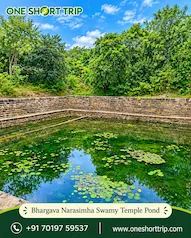
Sacred Bhargava Theertham pond near Bhargava Narasimha Temple in Ahobilam
Bhargava Theertham, also traditionally known as Akshaya Theertham

Why Is Bhargava Theertham Important?

The pond is important because it forms part of the traditional account of Parashurama's penance. It is one of the most recognisable features of the Bhargava Narasimha pilgrimage site.

Many devotees consider the theertham a sacred part of their visit. However, visitors should check whether access to the water is permitted and follow local instructions before entering or using it.

Can Devotees Take a Holy Dip in Bhargava Theertham?

The pond is traditionally regarded as a sacred theertham. Whether bathing or entering the water is permitted can depend on local conditions and temple guidance.

Do not assume that bathing facilities or unrestricted access are available. Follow instructions from the local temple authorities and avoid entering the water if conditions are unsafe.

What Is the Best Time to Visit Bhargava Narasimha Temple?

The cooler parts of the day are generally more comfortable for visiting Bhargava Narasimha Temple, particularly because the approach includes a forest-side route and steps leading to the shrine.

Early morning is a practical choice for many visitors. It can help reduce exposure to the midday heat and provide more comfortable conditions for walking.

Seasonal Travel Considerations

Winter Months

The cooler weather can make the approach and climb more comfortable for pilgrims. Carry water and suitable footwear for the walking sections.

Summer Months

Temperatures can be high in the region. Plan the visit early in the day, carry sufficient drinking water and avoid unnecessary exertion during the hottest hours.

Monsoon Months

Rain can make forest paths, uneven ground and stone steps slippery. Check local access conditions before travelling and avoid the climb if the route is considered unsafe.

Which Festivals Are Associated with Lord Narasimha?

Narasimha Jayanti is an important occasion for devotees of Lord Narasimha. The wider Ahobilam pilgrimage tradition also includes annual temple festivals and celebrations connected with the Nava Narasimha deities.

Festival dates and individual shrine arrangements can vary. Visitors planning a special pilgrimage should confirm the current calendar and arrangements with the temple authorities.

For a more comfortable visit, avoid assuming that all nine shrines will have identical opening arrangements or access conditions on festival days.

How Difficult Is the Climb to Bhargava Narasimha Temple?

The approach to Bhargava Narasimha Temple is different from visiting a shrine located directly beside a main road. The temple is situated on a hill near Bhargava Theertham, and visitors need to negotiate an approach route followed by steps leading towards the shrine.

The condition of the route can vary depending on the season and recent rainfall. Some sections may be uneven, and the steps can require additional effort for people with limited mobility.

Practical Tips Before the Climb

  • Wear comfortable footwear suitable for uneven paths.
  • Carry drinking water for the journey.
  • Start early to avoid the stronger midday heat.
  • Take your time while climbing the steps.
  • Check the approach route after rainfall.
  • Follow local advice regarding vehicle access and walking sections.
  • Avoid attempting the climb if you feel unwell or physically uncomfortable.

Can Senior Citizens Visit Bhargava Narasimha Temple?

Senior citizens who are comfortable walking and climbing steps may be able to visit the shrine, depending on their individual mobility and the current condition of the route.

However, the temple should not be treated as a fully step-free destination. Visitors with knee pain, balance difficulties, heart conditions or other mobility limitations should assess the physical effort involved and seek medical advice when appropriate before attempting the climb.

For family groups, it may be more comfortable to visit this shrine separately rather than rushing through several temples in one day.

How to Reach Bhargava Narasimha Temple from Bangalore?

Bhargava Narasimha Temple can be included in a pilgrimage from Bengaluru to Ahobilam. The journey involves reaching the Lower Ahobilam area first and then arranging the local approach to the hill shrine.

Ahobilam is located in Andhra Pradesh, in the Nallamala region. Visitors travelling from Bengaluru can plan their journey by road or combine train and road transport depending on their preferred travel arrangements.

By Road from Bengaluru

Travelling by road gives visitors flexibility to reach Ahobilam and explore the surrounding pilgrimage sites. The journey can be planned through the main highway connections towards Andhra Pradesh, followed by the local approach to Ahobilam.

Once at Lower Ahobilam, arrange local transport or follow local guidance for reaching the Bhargava Theertham approach. The final section may involve walking and climbing steps.

By Train

Visitors can consider rail travel to the nearest suitable railway station serving the Ahobilam region, followed by road transport to Lower Ahobilam.

Nandyal is one of the commonly used railway access points for travellers visiting Ahobilam. Train schedules and onward transport should be checked before confirming the trip.

By Bus

Bus services to the Ahobilam region may be available from nearby towns and transport centres. Depending on the service, travellers may need to change buses or arrange a local vehicle for the final journey.

For visitors travelling from Bengaluru, checking current bus availability and connections to Allagadda or Ahobilam is recommended.

Travel Planning Tip

Plan the journey to reach Lower Ahobilam with enough time for the local approach to Bhargava Narasimha Temple. Do not assume that a vehicle can reach the temple entrance itself. Confirm the latest route conditions and local transport arrangements before travelling.

Continue Exploring

Explore More About Ahobilam

Discover the other sacred Nava Narasimha shrines, learn about the history and legends of Ahobilam, and plan your pilgrimage through our detailed destination guides.
How Far Is Ahobila Narasimha Temple from Lower Ahobilam?

Sri Ahobila Narasimha Swamy Temple is situated in Upper Ahobilam, in the Nallamala Hills of Andhra Pradesh. The main cave shrine is approximately 8 kilometres from Lower Ahobilam, where the Prahlada Varada Swamy Temple and several pilgrim facilities are located.

From Lower Ahobilam
Approx. 8 km

The main Ahobila Narasimha shrine is located in Upper Ahobilam, connected to Lower Ahobilam by a hill road.

By Road
Hill Road Access

Visitors can generally travel by road from Lower Ahobilam to the main Upper Ahobilam temple. Check local road and vehicle access conditions before departure.

Distance and Route from Lower Ahobilam

The journey from Lower Ahobilam to Upper Ahobilam takes visitors through the Nallamala hill landscape. The main Ahobila Narasimha cave shrine is regarded as the principal and earliest of the Nava Narasimha shrines.

Do not confuse the road journey to the main Upper Ahobilam temple with the treks to other hill shrines. Places such as Jwala Narasimha and Ugra Stambha involve additional walking or trekking, and their access conditions can differ.

Is the Main Temple Accessible by Road?

The main Ahobila Narasimha Temple in Upper Ahobilam can generally be reached by road from Lower Ahobilam. However, visitors should expect a hill-road journey and may need to walk around the temple premises. The route to other Nava Narasimha shrines can involve uneven paths, steps and longer treks.

Travel Tip

Check the current road conditions and local vehicle access before travelling to Upper Ahobilam. If you are planning to visit Jwala Narasimha, Malola Narasimha or Ugra Stambha as well, allow additional time for walking and trekking.

What Are the Temple Timings of Ahobila Narasimha Temple?

Visitors planning darshan at Sri Ahobila Narasimha Swamy Temple should confirm the current opening and closing schedule before travelling. Temple timings may vary during festivals, special sevas and other religious occasions.

The main Ahobila Narasimha shrine is in Upper Ahobilam, while the Prahlada Varada Swamy Temple is in Lower Ahobilam. These are separate temple locations, so visitors should confirm the schedule for the specific shrine they intend to visit.

Important Timing Information

We are not publishing unverified morning and evening hours as confirmed timings for the Ahobila Narasimha cave shrine. Please check the latest darshan schedule with the temple administration before setting out.

How Can You Confirm the Temple Timings?

Before travelling, follow these steps:

01
Check Temple Information

Refer to the latest information shared by the Ahobilam temple administration or Ahobila Math.

02
Confirm Locally

Check the current darshan schedule at the temple or with the local temple office.

03
Check Festival Schedules

Ask whether Swathi Nakshatram, Brahmotsavam or other special occasions affect darshan arrangements.

04
Allow Extra Time

Keep additional time if your visit includes other Nava Narasimha shrines or trekking routes.

Important: Do not assume that the timings of Lower Ahobilam apply to the Ahobila Narasimha shrine in Upper Ahobilam. Confirm the schedule for each temple separately.

When Is the Best Time to Visit Ahobila Narasimha Temple?

The best time to visit Ahobila Narasimha Temple depends on the weather, your preferred travel experience and whether you want to attend a special religious occasion. The Nallamala Hills can be hot during summer, while the cooler months are generally more comfortable for exploring the region.

🌅

Early Morning

An early start is useful for visitors planning to explore Upper Ahobilam and its surrounding shrines.

It is especially helpful if your itinerary includes walking or trekking. Confirm the temple opening time before departure.

🌿

Post-Monsoon and Winter

The period after the monsoon and through the cooler months can offer a more comfortable setting for a pilgrimage in the Nallamala region.

Check local weather and trail conditions, as rain can affect paths and access to some remote shrines.

🙏

Swathi Nakshatram

Swathi Nakshatram is a special monthly occasion associated with Thirumanjanam for the Nava Narasimha deities.

Devotees interested in these observances should confirm the date, rituals and arrangements in advance.

🎉

Brahmotsavam

The annual Brahmotsavam brings a special festive atmosphere to Ahobilam, with religious ceremonies and processions.

Expect more devotees during major festival days. Arrange accommodation and transport in advance.

Which Months Are Comfortable for Visiting?

October to February

The cooler months are generally more suitable for exploring Ahobilam and planning outdoor visits. Conditions can vary, so check the local forecast before travelling, especially if your itinerary includes hill trails.

During Summer

Temperatures can rise considerably in the Nallamala region during summer. Start outdoor activities early, carry sufficient drinking water and avoid strenuous trekking during the hottest part of the day.

Monsoon travel note: Rain can make rocky paths, steps and forest trails slippery. Check local conditions before attempting treks to remote shrines or Ugra Stambha.

What Are the Important Festivals Associated with Ahobilam?

Ahobilam is an important pilgrimage centre dedicated to Lord Narasimha. Its religious calendar includes annual celebrations, special worship occasions and traditions connected with the Nava Narasimha temples. Festival dates and individual temple programmes should be confirmed before planning your journey.

🎉

Annual Brahmotsavam

Brahmotsavam is one of the major annual celebrations at Ahobilam. The festivities include traditional ceremonies, alankarams, vahana processions and other religious observances. The celebration period generally falls around February–March, although the exact dates change each year.

⭐

Swathi Nakshatram

Swathi Nakshatram is a significant monthly observance at Ahobilam. Thirumanjanam is performed for the Nava Narasimha deities on this occasion. Devotees wishing to attend should confirm the arrangements and dates in advance.

🏹

Paruveta Utsavam

Paruveta Utsavam is a distinctive Ahobilam tradition in which the processional deities participate in ceremonial events and visits to surrounding villages. The celebration is associated with the local Chenchu community and the wider religious traditions of the region.

🙏

Narasimha Jayanti

Narasimha Jayanti commemorates the appearance of Lord Narasimha. Devotees observe the occasion through prayers and worship dedicated to the Lord. Check the local temple programme for specific celebrations at Ahobilam.

🪔

Other Vaishnava Observances

Other religious occasions in the Vaishnava calendar may also be observed at Ahobilam. The exact rituals and temple schedules depend on the annual calendar and local arrangements.

Festival planning: Confirm the current year's dates, darshan arrangements and accommodation availability before travelling. Major celebrations can attract large numbers of devotees, so keep your travel schedule flexible.

How to Reach Ahobila Narasimha Temple?

Ahobila Narasimha Temple is located in Upper Ahobilam, in the Nandyal district of Andhra Pradesh. Ahobilam lies in the Nallamala Hills and is generally reached through Lower Ahobilam. Travellers from other cities can first reach a nearby railway station or town and continue by road.

From Lower Ahobilam

Lower Ahobilam is the main base for pilgrims visiting the Upper Ahobilam shrines. The main Ahobila Narasimha Temple is approximately 8 kilometres away by the hill road.

🚗
Private Car
🚕
Taxi
🚙
Local Vehicle
🥾
Walking Trails

The main Upper Ahobilam temple is generally accessible by road. However, several other Nava Narasimha shrines and hill landmarks require additional walking or trekking. Availability of local vehicles and access arrangements should be checked at Ahobilam.

How to Reach Ahobilam from Bangalore?

Travellers from Bangalore can plan a road journey towards Ahobilam through Andhra Pradesh. Another option is to travel by train to a suitable nearby railway station, such as Nandyal, and continue by road to Lower Ahobilam.

For families and senior citizens, a pre-arranged vehicle from Bangalore or a confirmed pickup from the railway station can make the journey more convenient. From Lower Ahobilam, continue to Upper Ahobilam for darshan at the main cave shrine.

How to Reach Ahobilam from Chennai?

Travellers from Chennai can reach the Nandyal or Kadapa region by suitable train connections and continue towards Ahobilam by road. Road travel is also possible, depending on the preferred route and current conditions.

Check the latest train and bus schedules before departure. From Allagadda or another suitable connecting town, arrange onward transport to Lower Ahobilam.

How to Reach by Train?

Nandyal is one of the railway access points used by visitors travelling to Ahobilam. Kadapa and Kurnool may also be considered depending on the train connections available from your departure city.

After reaching the selected railway station, continue by road towards Allagadda and Lower Ahobilam. Check the latest train schedules and arrange onward transport in advance, especially if you are arriving late in the day.

How to Reach by Bus?

Allagadda and Nandyal are useful connecting towns for bus journeys to Ahobilam. Bus services and connections may vary depending on the day and season.

From Allagadda or Nandyal, check for onward bus services to Lower Ahobilam. If suitable services are unavailable at your arrival time, consider arranging a local taxi or other confirmed transport.

Travel Recommendation

If you are travelling with family or senior citizens, consider arranging transport from your arrival station to Ahobilam in advance. Staying in or near Lower Ahobilam can also help you plan visits to Upper Ahobilam and the other Nava Narasimha shrines at a comfortable pace.

How Much Time Is Required to Visit Ahobila Narasimha Temple?

The time required to visit Ahobila Narasimha Temple depends on whether you are visiting only the main cave shrine or including other temples in Upper and Lower Ahobilam. A visit to the main shrine is different from a pilgrimage covering all nine Nava Narasimha temples.

Type of Visit Suggested Time
Main Ahobila Narasimha darshan Allow around 1–2 hours
Upper Ahobilam with nearby shrines Allow half a day or more
Upper and Lower Ahobilam temples Allow a full day
Visit including remote shrines and trekking Plan additional time
Complete Nava Narasimha pilgrimage Prefer a relaxed multi-day plan

These are suggested planning estimates, not official visit durations. Darshan queues, road conditions, local access arrangements and the time spent at each shrine can affect your schedule. Visitors travelling with senior citizens or children should allow additional time for rest.

What Should You Know Before Visiting Ahobila Narasimha Temple?

Ahobilam is a sacred pilgrimage destination set among the Nallamala Hills. A little preparation can make your visit to the Ahobila Narasimha shrine more comfortable, particularly if you plan to explore other temples or walking trails.

✓

Wear modest clothing: Choose clothing suitable for temple worship and follow local customs.

✓

Remove footwear: Follow the temple's instructions regarding footwear and designated areas.

✓

Follow temple instructions: Respect the instructions given by temple staff and local authorities.

✓

Maintain a peaceful atmosphere: Help preserve the devotional environment of the cave shrine and surrounding temples.

✓

Check photography restrictions: Confirm whether photography is permitted before taking pictures inside temple premises.

✓

Carry drinking water: Take sufficient water, particularly if you plan to visit hill shrines or undertake trekking.

✓

Avoid littering: Keep the temple surroundings and the Nallamala forest environment clean.

✓

Confirm darshan timings: Check the current schedule for Upper Ahobilam before travelling.

✓

Plan for festival crowds: Expect more visitors during Brahmotsavam, Swathi Nakshatram and other important occasions.

✓

Consider accessibility: The main Upper Ahobilam shrine is generally accessible by road, but other hill shrines may involve uneven paths, steps and trekking. Assess your comfort before planning these visits.

✓

Check local access conditions: Ask about forest routes, vehicle restrictions and trekking conditions before visiting remote shrines.

What Are the Places to Visit Near Ahobila Narasimha Temple?

Ahobilam is best known for the Nava Narasimha pilgrimage, a group of nine sacred shrines associated with different manifestations of Lord Narasimha. A visit to the main Ahobila Narasimha cave temple can be combined with selected shrines in Upper and Lower Ahobilam, depending on your available time and comfort with walking.

01 · Main Temple at Lower Ahobilam

Prahlada Varada Narasimha Temple

The Prahlada Varada Narasimha Temple is an important shrine in Lower Ahobilam. The presiding deity is worshipped in a gracious form associated with the blessing of Prahlada. It is an important stop for devotees exploring the wider Ahobilam pilgrimage.

02 · Nava Narasimha Shrine

Malola Narasimha Temple

Malola Narasimha is worshipped with Goddess Lakshmi in a graceful form. The name Malola is traditionally explained as the beloved of Lakshmi. The shrine is one of the important temples in the Upper Ahobilam region.

Read our Malola Narasimha Temple guide →

03 · Nava Narasimha Shrine

Jwala Narasimha Temple

Jwala Narasimha is associated with the fierce episode of Lord Narasimha slaying Hiranyakashipu. The shrine is located higher in the hills and is generally approached by a trekking route. Visitors should check the current trail conditions and access arrangements before planning this visit.

04 · Nava Narasimha Shrine

Kroda or Varaha Narasimha Temple

Kroda Narasimha is also known as Varaha Narasimha. In this form, the Lord is depicted with the face of a boar and is worshipped with Goddess Lakshmi. The shrine is located in the Upper Ahobilam area.

05 · Nava Narasimha Shrine

Karanja Narasimha Temple

Karanja Narasimha is associated with the Karanja tree, under which the deity is traditionally worshipped. The shrine is part of the Nava Narasimha pilgrimage and can be considered when planning a visit around Upper Ahobilam.

06 · Nava Narasimha Shrine

Pavana Narasimha Temple

Pavana Narasimha is one of the nine sacred forms worshipped in the Ahobilam region. The shrine is associated with the wider forest landscape and may require additional travel and local access planning. Confirm the route and current conditions before visiting.

Read our Pavana Narasimha Temple guide →

07 · Sacred Hill Landmark

Ugra Stambha

Ugra Stambha is a prominent hill landmark associated in local tradition with the pillar from which Lord Narasimha is believed to have appeared. Reaching this location involves a demanding uphill route. It should not be confused with the main Ahobila Narasimha cave shrine.

08 · Nava Narasimha Shrine

Bhargava Narasimha Temple

Bhargava Narasimha Temple is associated with Bhargava Theertham and the traditional penance of Parashurama. It is one of the shrines in the wider Ahobilam pilgrimage circuit.

09 · Nava Narasimha Shrines

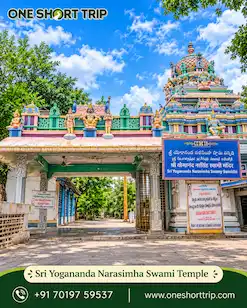
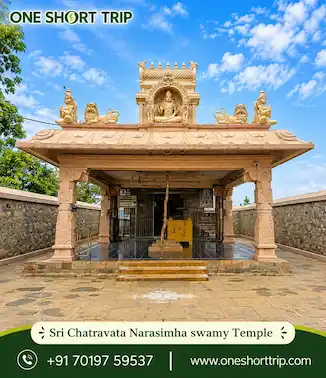
Yogananda and Chatravata Narasimha Temples

Yogananda Narasimha is associated with the tradition that Lord Narasimha taught Prahlada the principles of yoga. Chatravata Narasimha is traditionally worshipped beneath a peepal tree. Both shrines form part of the Lower Ahobilam pilgrimage area.

If you plan to visit several Nava Narasimha shrines, allow enough time for road travel, darshan, walking and rest. Some shrines are more remote than others, so the order of visits should be planned according to local access conditions and your group's comfort.

Can You Visit Ahobila Narasimha Temple and Lower Ahobilam on the Same Day?

Yes. You can plan to visit the main Ahobila Narasimha Temple in Upper Ahobilam and the Prahlada Varada Narasimha Temple in Lower Ahobilam on the same day. The two locations are connected by road, but you should allow enough time for travel, darshan and any additional shrines you wish to include.

Suggested Order of Visits

1
Begin at Upper Ahobilam

Start with darshan at the main Ahobila Narasimha cave shrine. Check the day's opening schedule before beginning your visit.

2
Visit Selected Nearby Shrines

If time and physical comfort permit, include nearby Upper Ahobilam shrines such as Kroda or Malola Narasimha.

3
Travel to Lower Ahobilam

Continue by road towards Lower Ahobilam. Allow time for the hill-road journey.

4
Visit Prahlada Varada Narasimha Temple

Offer prayers at the important Lower Ahobilam shrine dedicated to Lord Narasimha.

5
Continue with Other Lower Ahobilam Shrines

If time permits, visit selected nearby shrines such as Yogananda, Chatravata or Bhargava Narasimha.

Trekking Advisory

Do not try to combine every remote shrine and Ugra Stambha with a short temple visit. These locations can involve substantial walking and trekking. If your group includes senior citizens or children, choose the shrines according to their comfort and allow a relaxed schedule.

Suggested One-Day Ahobilam Temple Visit Plan

If you have one day at Ahobilam and want to experience its main pilgrimage sites without rushing, consider a plan focused on the principal Upper Ahobilam shrine and selected temples in Lower Ahobilam. The schedule below is a flexible outline, not a fixed temple timetable.

Time Suggested Activity
Early Morning Travel to Upper Ahobilam and begin with darshan at Ahobila Narasimha Temple, subject to opening hours.
Morning Visit selected nearby shrines such as Kroda or Malola Narasimha, depending on access and available time.
Late Morning Return towards Lower Ahobilam by road.
Afternoon Lunch and rest. Keep the afternoon schedule flexible according to temple opening hours.
Afternoon / Evening Visit Prahlada Varada Narasimha Temple and selected shrines in Lower Ahobilam.
Evening Return to your accommodation or continue your onward journey, depending on your travel arrangements.
Important Planning Note

This is a suggested sightseeing plan, not a confirmed temple schedule. Actual timings and the order of visits may need to change depending on darshan availability, road conditions, local transport and the time spent at each shrine.

If your main purpose is to visit all nine Nava Narasimha temples or Ugra Stambha, plan a separate, more detailed itinerary. Some shrines involve trekking and may not be suitable for every visitor. Avoid combining a demanding trekking schedule with a rushed one-day pilgrimage.

Visitor Information

Frequently Asked Questions About Bhargava Narasimha Temple

Find answers to common questions about Bhargava Narasimha Temple, including its location, legend, sacred pond, Nava Narasimha significance, travel options and visitor information.

1. Where is Bhargava Narasimha Temple located?

Bhargava Narasimha Temple is located near Bhargava Theertham in the Ahobilam region of the Nallamala Hills, in Nandyal district, Andhra Pradesh. It is approximately 2 kilometres from Lower Ahobilam.

2. What is Bhargava Narasimha Temple famous for?

The temple is famous for Lord Narasimha worship, its association with Bhargava Rama or Parashurama, and its location beside the sacred Bhargava Theertham. It is one of the nine important shrines collectively known as the Nava Narasimha Kshetras of Ahobilam.

3. Which God is worshipped at Bhargava Narasimha Temple?

The presiding deity is Lord Narasimha, an incarnation of Lord Vishnu. He is worshipped here in a fierce form associated with the destruction of the demon king Hiranyakashipu and the protection of his devotee Prahlada.

4. Why is the temple called Bhargava Narasimha Temple?

The name Bhargava is associated with Bhargava Rama, another name for Lord Parashurama. According to the sacred tradition of Ahobilam, Parashurama performed penance near the temple's sacred pond and sought the darshan of Lord Narasimha. The shrine is named after this association.

5. What is the story behind Bhargava Narasimha Temple?

According to the traditional sthala purana, Bhargava Rama or Parashurama performed penance in this part of Ahobilam near the sacred theertham. He sought the blessings and darshan of Lord Narasimha. This devotional account explains the temple's name and its spiritual association with Parashurama.

6. Is Bhargava Narasimha Temple one of the Nava Narasimha temples?

Yes. Bhargava Narasimha is one of the nine sacred Narasimha shrines of Ahobilam. In the traditional sequence of the Nava Narasimha temples, it is generally listed as the sixth shrine.

7. What is Bhargava Theertham?

Bhargava Theertham is the sacred pond associated with Bhargava Narasimha Temple. It is also referred to as Akshaya Theertham in some accounts. The pond is traditionally connected with the penance of Bhargava Rama and forms an important part of the shrine's sacred setting.

8. How far is Bhargava Narasimha Temple from Lower Ahobilam?

Bhargava Narasimha Temple is approximately 2 kilometres from Lower Ahobilam. The shrine is situated on a hill near Bhargava Theertham. The actual approach and time required depend on the local route and current conditions.

9. Is Bhargava Narasimha Temple in Upper or Lower Ahobilam?

Bhargava Narasimha Temple is located near Lower Ahobilam, approximately 2 kilometres away. It is a separate shrine from the main Ahobila Narasimha cave temple associated with Upper Ahobilam.

10. Who built Bhargava Narasimha Temple?

A reliable historical record identifying one specific builder of Bhargava Narasimha Temple has not been firmly established. Its traditional origin is associated with the penance of Bhargava Rama. The sacred legend should be understood separately from the documented construction history of the present shrine.

11. What does the Bhargava Narasimha idol look like?

The presiding deity is traditionally described as Lord Narasimha in a fierce form associated with the slaying of Hiranyakashipu. Temple descriptions commonly refer to the deity with divine attributes such as the conch and discus, with Prahlada associated with the sacred depiction.

12. Can I reach Bhargava Narasimha Temple by car?

You can travel by road towards the Bhargava Narasimha shrine from Lower Ahobilam, but the final approach may involve a walk and steps near the sacred pond. Road access and vehicle access close to the shrine can vary. Confirm the latest local arrangements before travelling.

13. Can senior citizens visit Bhargava Narasimha Temple?

Senior citizens can visit, but should consider the hill approach, steps and uneven sections that may be part of the route. Visitors with limited mobility, knee discomfort or difficulty walking should check the current access conditions locally and assess whether the approach is suitable before starting.

14. What are the timings of Bhargava Narasimha Temple?

Confirmed current opening and closing timings for this individual shrine are not reliably available in the information presented here. Temple schedules may change on festival days and other occasions. Contact the local temple authorities or check with Lower Ahobilam before planning your visit.

15. What is the best time to visit Bhargava Narasimha Temple?

The cooler months from November to February are generally more comfortable for visiting the Ahobilam hills. An early start can also help visitors avoid the stronger afternoon heat. During or after rainfall, check the condition of the approach before visiting.

16. How much time should I spend at Bhargava Narasimha Temple?

Allow sufficient time for the journey from Lower Ahobilam, the approach to the shrine, darshan and a visit to Bhargava Theertham. The total time depends on the route, walking pace, waiting time and local conditions. It is better not to plan the visit too tightly alongside other shrines.

17. Can I visit all nine Nava Narasimha temples in one day?

Visiting all nine shrines in one day can be difficult because they are spread across different locations and some require longer journeys or trekking through hilly terrain. The time required depends on road conditions, access, darshan schedules and individual walking ability. A carefully planned itinerary over more than one day is generally more comfortable.

18. Is Bhargava Narasimha Temple difficult to reach?

The shrine is relatively close to Lower Ahobilam, but the final approach includes a hill-side section and steps near the pond. The difficulty can vary with weather and ground conditions. Visitors should wear comfortable footwear and avoid rushing along the approach.

19. Which temples can I visit near Bhargava Narasimha Temple?

You can plan visits to other important shrines in the Ahobilam region, including Ahobila Narasimha, Malola Narasimha and Pavana Narasimha temples. These are separate Nava Narasimha shrines, and their routes and access conditions differ. Plan each visit according to available time and local guidance.

20. Can I visit Bhargava Narasimha Temple without visiting Upper Ahobilam?

Yes. Bhargava Narasimha Temple is a distinct shrine near Lower Ahobilam. You can plan a visit to it separately, subject to the local access and darshan arrangements. Visiting the Upper Ahobilam cave shrine is not a requirement for visiting Bhargava Narasimha Temple.

21. Is there an entry fee at Bhargava Narasimha Temple?

We have not found reliable current official information confirming a general entry fee or separate darshan charges for this shrine. Check with the local temple authorities for current arrangements before your visit.

22. Is photography allowed inside Bhargava Narasimha Temple?

Photography permissions may differ between the outer surroundings and the inner temple areas. Follow the notices and instructions given by temple authorities. Always seek permission before photographing the deity or restricted areas.

23. How can I travel to Bhargava Narasimha Temple from Bangalore?

Travellers from Bangalore can reach the Ahobilam region by road or plan a combination of train and road travel. From Lower Ahobilam, Bhargava Narasimha Temple is approximately 2 kilometres away. Allow additional time for the final approach to the hill shrine and confirm local transport arrangements before departure.

24. What should I carry when visiting Bhargava Narasimha Temple?

Carry drinking water, comfortable walking footwear, sun protection and any personal medication you may need. Wear modest clothing suitable for temple visits. Senior citizens and visitors who may find steps difficult should plan for assistance and check the route conditions before starting.

Explore Ahobilam with One Short Trip

Plan Your Bhargava Narasimha Temple Visit with One Short Trip

Ahobilam is one of the most important Narasimha pilgrimage destinations in South India. Set amidst the Nallamala Hills, this sacred region is associated with Lord Narasimha and the nine celebrated Nava Narasimha shrines.

Bhargava Narasimha Temple offers a special spiritual experience through its association with Bhargava Rama and the sacred Bhargava Theertham. Its location near Lower Ahobilam makes it a distinct stop when exploring the region's temple heritage.

Whether you are planning a pilgrimage with family, a temple visit with senior citizens or a journey to explore the Nava Narasimha shrines, it is important to consider travel time, walking distances and the different access conditions at each temple.

At One Short Trip, we help travellers plan spiritual tours from Bangalore and other destinations with practical travel arrangements and thoughtfully planned itineraries.

Explore More About Ahobilam

Temple Location

Where Is Bhargava Narasimha Temple Located?

Sri Bhargava Narasimha Swamy Temple is located near Bhargava Theertham in the sacred Ahobilam region of the Nallamala Hills, Andhra Pradesh. Situated approximately 2 kilometres from Lower Ahobilam, this shrine is associated with Bhargava Rama (Parashurama) and is one of the nine Nava Narasimha temples.

📍
Sri Bhargava Narasimha Swamy Temple 4MVP+R6F, Temple Stairs, Ahobilam, Andhra Pradesh 518543, India
Get Directions

Planning A Trip Here?

Get help planning your visit — call or WhatsApp us and we will help you book a tour.