Diguva Ahobilam Sri Lakshmi Narasimha Swamy Temple
Visit the revered Sri Lakshmi Narasimha Swamy Temple at Diguva Ahobilam, also known as Lower Ahobilam, an important centre of worship in the sacred Ahobilam Narasimha Kshetram of Andhra Pradesh.
About Diguva Ahobilam Sri Lakshmi Narasimha Swamy Temple
Situated at the foothills of the sacred Nallamala hills in Andhra Pradesh, Sri Lakshmi Narasimha Swamy Temple at Diguva Ahobilam is the principal temple of Lower Ahobilam. The presiding deity is worshipped as Sri Prahlada Varada Swamy, the compassionate form of Lord Narasimha who is revered as the one who blessed his devotee Prahlada. The temple is one of the most important centres of worship in the Ahobilam pilgrimage region.
The temple is distinct from the Nava Narasimha shrines located across Upper Ahobilam and the surrounding hills. While Upper Ahobilam is associated with the nine principal forms of Lord Narasimha, Diguva Ahobilam has its own prominent Lakshmi Narasimha shrine at the foot of the hills. The two areas are connected by a road, making Lower Ahobilam an important starting point for pilgrims exploring the wider kshetram.
Lord Narasimha is worshipped here in a peaceful and gracious form, with Goddess Lakshmi seated on his lap. This divine representation is associated with the Lord's protection of Prahlada and his blessings to devotees. The name Prahlada Varada reflects this tradition of divine grace and protection.
The temple is also important in the Sri Vaishnava tradition and is associated with the hymns of the Tamil Alvar saint Thirumangai Alvar. Its historic temple complex, sculptured pillars, mandapas and traditional worship make it a significant destination for devotees, families and travellers interested in the religious heritage of Andhra Pradesh.
Diguva Ahobilam Temple – Quick Information
Visit planning: Confirm current darshan timings, seva schedules, festival arrangements and local visitor facilities with the temple administration before travelling. Timings and arrangements may change on special occasions.
What Is Diguva Ahobilam Sri Lakshmi Narasimha Swamy Temple Famous For?
Diguva Ahobilam Sri Lakshmi Narasimha Swamy Temple is famous for its worship of Lord Narasimha as Sri Prahlada Varada Swamy, its importance in the Ahobilam pilgrimage and its historic temple architecture. It is the principal Lakshmi Narasimha shrine at Lower Ahobilam and an important place of worship for devotees visiting the sacred Nallamala hills.
The name Prahlada Varada means the Lord who grants blessings to Prahlada. The temple's presiding deity represents the compassionate form of Lord Narasimha, worshipped with Goddess Lakshmi. This peaceful form is especially meaningful to devotees who remember the Lord's protection of Prahlada.
The Temple Is Particularly Known For
- Being the principal Sri Lakshmi Narasimha Swamy shrine at Diguva Ahobilam.
- The presiding deity worshipped as Sri Prahlada Varada Swamy.
- The peaceful form of Lord Narasimha with Goddess Lakshmi.
- Its association with the story of Prahlada and Lord Narasimha.
- Its importance in the traditional Divya Desam heritage of Ahobilam.
- Its historic temple complex, prakaras and sculptured mandapas.
- The Sri Vaishnava tradition and the hymns of Thirumangai Alvar.
- Being the starting point for pilgrims exploring the wider Ahobilam temple region.
For many pilgrims, a visit to Diguva Ahobilam is an essential part of the Ahobilam journey. The main temple offers an opportunity to worship Lord Lakshmi Narasimha before travelling onwards to Upper Ahobilam and the other sacred shrines of the region.
Where Is Diguva Ahobilam Sri Lakshmi Narasimha Swamy Temple Located?
Diguva Ahobilam Sri Lakshmi Narasimha Swamy Temple is located at Lower Ahobilam in the Nallamala hill region of Nandyal district, Andhra Pradesh. The temple stands at the foothills and is the main Lakshmi Narasimha shrine in the lower part of the Ahobilam pilgrimage complex.
Ahobilam is traditionally divided into two main areas: Diguva Ahobilam, meaning Lower Ahobilam, and Yeguva Ahobilam, meaning Upper Ahobilam. The main Prahlada Varada Lakshmi Narasimha temple is at Lower Ahobilam, while the principal Ahobila Narasimha shrine and the other Nava Narasimha shrines are located in Upper Ahobilam and the surrounding hills.
Sri Lakshmi Narasimha Swamy Temple,
Diguva Ahobilam (Lower Ahobilam),
Ahobilam, Nandyal District,
Andhra Pradesh – 518543, India.
The temple is connected by road to Upper Ahobilam, where the other principal Narasimha shrines are located. This makes Lower Ahobilam a convenient base for visitors planning to explore the wider pilgrimage area.
Visitors should use the temple's verified map location for navigation and check local road conditions before travelling. The Upper Ahobilam hill shrines have different access requirements and should not be confused with the main Lower Ahobilam temple.
What Is the Story of Diguva Ahobilam Sri Lakshmi Narasimha Swamy Temple?
The religious significance of Diguva Ahobilam is closely connected with the story of Lord Narasimha and his devotee Prahlada. The traditional account describes how Lord Vishnu appeared in the extraordinary form of Narasimha to protect Prahlada and defeat the demon king Hiranyakashipu.
The Story of Lord Narasimha and Prahlada
According to Hindu tradition, Prahlada was a devoted follower of Lord Vishnu, even though his father Hiranyakashipu opposed his devotion. The demon king demanded that Prahlada worship him instead, but the young devotee remained steadfast in his faith.
When Hiranyakashipu challenged Prahlada to show where Vishnu existed, the young devotee declared that the Lord was present everywhere. The king struck a pillar, and Lord Vishnu emerged from it in the extraordinary form of Narasimha, part human and part lion.
Lord Narasimha defeated Hiranyakashipu and protected Prahlada, fulfilling the divine promise to safeguard his devotee. The episode is remembered as a powerful expression of faith, divine protection and the triumph of righteousness.
The Ahobilam region is deeply associated with this manifestation of the Lord. The main shrine at Diguva Ahobilam celebrates the compassionate aspect of Narasimha, worshipped as Prahlada Varada Swamy.
Why Is the Lord Called Prahlada Varada?
The name Prahlada Varada is traditionally understood as the Lord who granted blessings to Prahlada. It recalls the protection and grace shown by Lord Narasimha to his young devotee when he was threatened by Hiranyakashipu.
At Diguva Ahobilam, the deity is worshipped in a peaceful form with Goddess Lakshmi. This representation is distinct from the fierce manifestation of the Lord associated with the events at Upper Ahobilam.
Why Is Goddess Lakshmi Worshipped with Lord Narasimha?
Goddess Lakshmi is the divine consort of Lord Vishnu. In the Lakshmi Narasimha form, she is shown with the Lord, representing grace, compassion and divine protection.
The presence of Goddess Lakshmi gives the deity at Lower Ahobilam a peaceful and reassuring devotional character. Devotees worship Sri Lakshmi Narasimha Swamy seeking the blessings of the divine couple.
How Is Diguva Ahobilam Connected with Upper Ahobilam?
The wider Ahobilam kshetram is traditionally associated with the manifestation of Lord Narasimha and the protection of Prahlada. Its two principal temple areas are Lower Ahobilam and Upper Ahobilam.
Diguva Ahobilam has the main Prahlada Varada Lakshmi Narasimha shrine, while Upper Ahobilam is associated with the principal Ahobila Narasimha shrine and the other eight temples of the Nava Narasimha tradition. Together, they form an important pilgrimage landscape for devotees.
What Is the History of Diguva Ahobilam Sri Lakshmi Narasimha Swamy Temple?
Diguva Ahobilam is an important historic centre of Vaishnava worship in Andhra Pradesh. The temple's religious heritage is connected with the ancient Narasimha tradition of Ahobilam, the Sri Vaishnava devotional movement and the temple patronage of several South Indian dynasties.
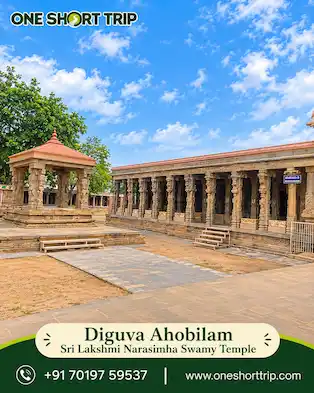
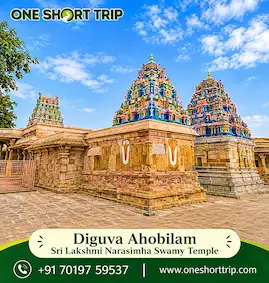
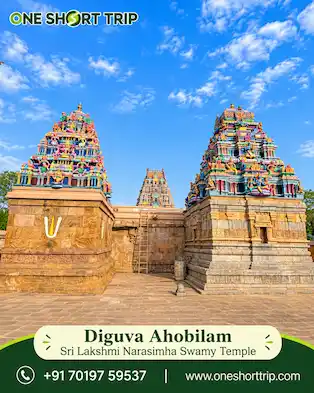
The Lower Ahobilam temple complex includes multiple prakaras, mandapas and shrines. Its architectural features reflect the development of temple building and religious patronage over different periods. The complex is particularly noted for its pillared halls and sculptural details.
It is important to distinguish the traditional religious origin of the shrine from the documented history of its present structures. The exact construction date of the original sanctum and the identity of a single builder should not be assumed without supporting historical evidence.
The Temple in the Sri Vaishnava Tradition
Ahobilam holds an important place in Sri Vaishnava religious heritage. The sacred region is traditionally counted among the 108 Divya Desams, and the Tamil Alvar saint Thirumangai Alvar is associated with devotional hymns praising the Lord of this kshetram.
This association makes Ahobilam significant not only for devotees of Lord Narasimha but also for pilgrims following the Divya Desam tradition. The temple's religious identity has been preserved through worship, devotional literature and the continuing activities of the Sri Vaishnava community.
Architectural and Historical Development
The Lower Ahobilam temple is notable for its historic layout, pillared halls and mandapas. Its architectural character includes features associated with Vijayanagara-period temple construction and later South Indian temple traditions.
Historical accounts of Ahobilam refer to contributions made by different rulers and patrons over time. Inscriptions and architectural studies provide evidence of additions and religious patronage during later medieval periods. These records should be understood as evidence of the temple complex's development rather than proof that one ruler built the entire present structure.
The Role of Sri Ahobila Math
Sri Ahobila Math is a major Sri Vaishnava religious institution established at Ahobilam by Srimad Athivan Satakopan, traditionally identified with Kidambi Srinivasacharya. Its history is closely connected with the worship of Lord Lakshmi Narasimha and the preservation of the religious traditions of Ahobilam.
The Math and its lineage of pontiffs have played an important role in the spiritual history of the kshetram. Its association with Ahobilam continues to be significant for devotees visiting the temples and participating in traditional worship.
The Divya Desam Heritage of Ahobilam
Ahobilam is traditionally recognised within the 108 Divya Desam heritage of Sri Vaishnavism. Its association with Thirumangai Alvar's devotional hymns gives the kshetram an important place in the Tamil Vaishnava tradition.
The Divya Desam identity refers to the sacred Ahobilam kshetram and its traditional worship. It should not be confused with the separate list of nine Nava Narasimha shrines located across the Ahobilam hills.
Understanding the Temple's History
The religious identity of the temple is rooted in the traditional story of Lord Narasimha protecting Prahlada and blessing his devotee.
Ahobilam is associated with the hymns of Thirumangai Alvar and its place in the traditional Divya Desam heritage.
The complex reflects different phases of temple development, including architectural features associated with Vijayanagara-period traditions.
The temple continues to serve as the principal Lakshmi Narasimha shrine of Lower Ahobilam and an important part of the wider Ahobilam pilgrimage.
The temple's traditional religious history, its Divya Desam association and its documented architectural development are different aspects of its heritage. A single construction year or individual builder for the entire present temple complex should not be stated without reliable historical evidence.
Who Built Diguva Ahobilam Sri Lakshmi Narasimha Swamy Temple?
The present Lower Ahobilam temple complex developed over different periods, and the available historical information does not establish one individual as the builder of the entire temple. Its architecture, inscriptions and religious history point to successive phases of patronage and additions.
Was the Temple Built by the Vijayanagara Kings?
The Lower Ahobilam temple displays architectural features associated with Vijayanagara-period temple construction. Historical records also refer to patronage and additions during the rule of several South Indian dynasties, including the Vijayanagara rulers.
However, this does not mean that the entire temple was constructed by one Vijayanagara king. The complex contains structures and architectural elements representing different periods of development.
What Is the Role of the Ahobila Math?
Sri Ahobila Math was established at Ahobilam by Srimad Athivan Satakopan, whose religious lineage has been closely associated with the worship of Lord Lakshmi Narasimha. The Math has played an important role in preserving the Sri Vaishnava traditions of the kshetram.
Its spiritual leadership and religious activities form an important part of Ahobilam's history. The Math's association with the temple should be understood as a religious and institutional connection rather than proof that it constructed every part of the present building.
Is There a Confirmed Construction Date?
A single definitive construction year for the entire Lower Ahobilam temple complex is not established in the historical information consulted for this guide. Different portions of the temple may belong to different phases of development.
For an accurate account, it is better to describe the temple as a historic complex with architectural and inscriptional evidence of successive patronage rather than assign it an unsupported date.
Diguva Ahobilam Sri Lakshmi Narasimha Swamy Temple has developed through different phases of religious patronage and construction. Its architecture reflects historic South Indian temple traditions, including Vijayanagara-period features. No single builder or exact construction date should be attributed to the entire complex without further evidence.
Who Is the Main Deity of Diguva Ahobilam Temple?
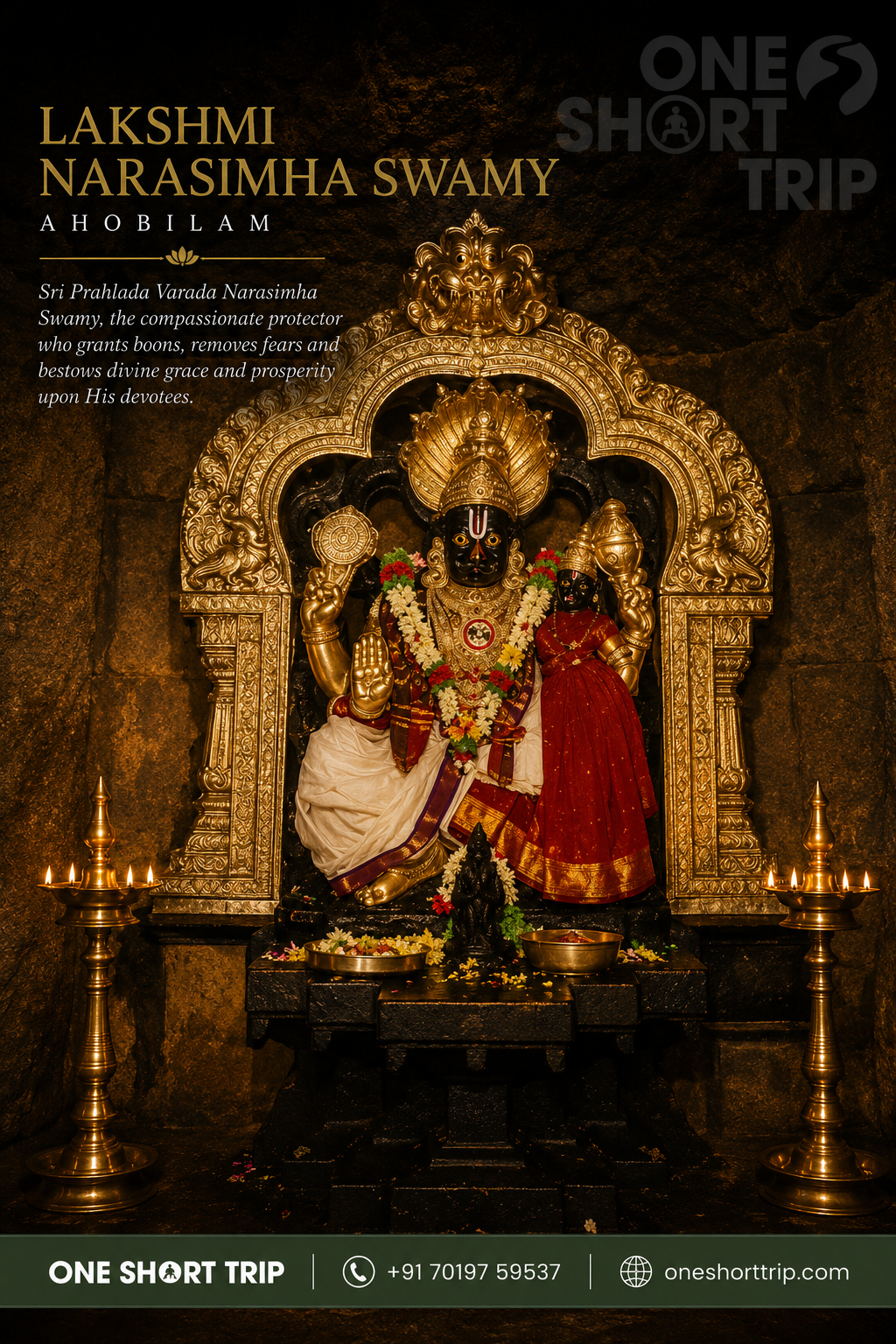
The presiding deity of Diguva Ahobilam Sri Lakshmi Narasimha Swamy Temple is Lord Vishnu in the form of Sri Lakshmi Narasimha Swamy. The Lord is also worshipped as Sri Prahlada Varada Swamy, a name that recalls his divine protection and blessings to Prahlada.
The deity is traditionally described in a peaceful seated form with Goddess Lakshmi on his lap. This representation is associated with the gracious and protective aspect of Lord Narasimha, in contrast to the fierce manifestation remembered in the story of Hiranyakashipu's defeat.
Why Is the Deity Called Prahlada Varada Swamy?
Prahlada Varada is a traditional name meaning the Lord who grants blessings to Prahlada. It remembers the story of the young devotee whose unwavering faith was protected by Lord Narasimha.
The name is especially appropriate for the peaceful form of the Lord worshipped at Lower Ahobilam. Devotees approach Sri Prahlada Varada Swamy seeking divine protection, grace and blessings.
Who Is Goddess Lakshmi in Lakshmi Narasimha Swamy?
Goddess Lakshmi is the divine consort of Lord Vishnu and is worshipped alongside Lord Narasimha in the Lakshmi Narasimha form. Her presence represents auspiciousness, compassion and divine grace.
At Diguva Ahobilam, the divine couple is worshipped as Sri Lakshmi Narasimha Swamy. The form is an important focus of devotion for pilgrims visiting the main Lower Ahobilam temple.
Is This the Same as Ahobila Narasimha of Upper Ahobilam?
No. The main deity at Diguva Ahobilam is Sri Prahlada Varada Lakshmi Narasimha Swamy. The principal shrine at Upper Ahobilam is dedicated to Ahobila Narasimha, a distinct form associated with the Nava Narasimha tradition.
Both shrines are important parts of the Ahobilam pilgrimage, but they are separate temples with distinct religious identities and locations.
What Is the Religious and Spiritual Significance of Diguva Ahobilam Temple?
Diguva Ahobilam Sri Lakshmi Narasimha Swamy Temple holds a special place in the religious traditions of Andhra Pradesh and Sri Vaishnavism. Its significance comes from the worship of Lord Prahlada Varada, the story of Prahlada, the presence of Goddess Lakshmi and the temple's association with the wider Divya Desam heritage of Ahobilam.
Prahlada Varada Swamy
The deity recalls Lord Narasimha's protection of Prahlada and is worshipped as the compassionate giver of blessings.
Lakshmi Narasimha Form
The presence of Goddess Lakshmi with Lord Narasimha represents divine grace, compassion and auspiciousness.
Divya Desam Heritage
Ahobilam is traditionally counted among the 108 Divya Desams and is associated with the hymns of Thirumangai Alvar.
Historic Temple Heritage
The temple's prakaras, mandapas and sculptured pillars reflect its long history of worship and architectural development.
Gateway to Ahobilam
Lower Ahobilam is an important starting point for pilgrims travelling to Upper Ahobilam and the other Narasimha shrines.
Sri Vaishnava Tradition
The temple is part of the important Sri Vaishnava religious landscape associated with Ahobila Math and its spiritual lineage.
The spiritual benefits of worship are matters of religious belief. Devotees visit the temple with faith and reverence, while the historic and cultural heritage of the complex makes it significant for visitors interested in South Indian temple traditions.
What Is the Connection Between Diguva Ahobilam and the Nava Narasimha Yatra?
Diguva Ahobilam is an important starting point for the wider Ahobilam pilgrimage, but its main Lakshmi Narasimha shrine is distinct from the nine Nava Narasimha temples. The nine principal forms are worshipped at separate shrines spread across Upper Ahobilam and the surrounding hills and forest areas.
Many pilgrims first visit Sri Prahlada Varada Lakshmi Narasimha Swamy at Lower Ahobilam and then continue to Upper Ahobilam to visit the other shrines. The terrain and access arrangements vary considerably between locations, so the pilgrimage should be planned according to available time and physical ability.
What Are the Nine Nava Narasimha Temples?
The nine shrines are spread across different parts of the Ahobilam hills. Some are more accessible by road, while others require walking or trekking over uneven terrain. Diguva Ahobilam's main Lakshmi Narasimha temple is an additional and essential part of the wider pilgrimage, but it is not counted as one of the nine Nava Narasimha shrines.
What Is the Difference Between Diguva and Yeguva Ahobilam?
Diguva Ahobilam means Lower Ahobilam and is located at the foothills. It is home to the principal Sri Lakshmi Narasimha Swamy or Prahlada Varada temple.
Yeguva Ahobilam means Upper Ahobilam and is located further into the hills. It contains the main Ahobila Narasimha shrine and serves as the starting area for visiting several of the other Nava Narasimha temples.
Diguva Ahobilam's Prahlada Varada Lakshmi Narasimha temple is separate from the nine Nava Narasimha shrines. Visitors planning to complete all nine should include the Lower Ahobilam temple as an additional visit.
Can You Visit Diguva and Yeguva Ahobilam on the Same Day?
Yes. Many pilgrims visit the main temple at Lower Ahobilam and then travel by road to Upper Ahobilam on the same day. The road journey between the two areas is commonly described as approximately eight kilometres, although the actual route and travel time should be checked locally.
However, visiting the main temple at Lower Ahobilam and travelling to Upper Ahobilam does not automatically mean that all nine Narasimha shrines can be covered in one day. Some of the hill shrines involve demanding walks and trekking, so additional time may be necessary.
Is Diguva Ahobilam Suitable for Senior Citizens?
The main temple at Lower Ahobilam is generally a more practical starting point for senior citizens than the remote hill shrines of Upper Ahobilam. It is located at the foothills and does not require the same kind of forest trekking associated with some of the other Narasimha temples.
However, visitors should check the steps, walking surfaces, distance from vehicle drop-off points and available assistance before travelling. Wheelchair access and other accessibility facilities should not be assumed without confirmation.
For older travellers and families, a relaxed visit to the Lower Ahobilam temple followed by a separate plan for Upper Ahobilam can make the pilgrimage more comfortable.
Explore More About Ahobilam
Discover the Nava Narasimha temples, the spiritual heritage of the Nallamala hills and practical travel information for planning your Ahobilam pilgrimage.
How Far Is Yogananda Narasimha Temple from the Main Ahobilam Temple?
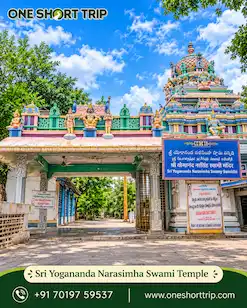
Sri Yogananda Narasimha Swamy Temple is located southeast of Lower Ahobilam, approximately 2 km from the main Lower Ahobilam temple area. It is one of the nine Nava Narasimha shrines of Ahobilam and is associated with the traditional account of Lord Narasimha teaching yoga to Prahlada.
The temple is situated southeast of Lower Ahobilam. The actual road distance and travel time depend on the starting point and route taken.
The shrine is generally approached from the Lower Ahobilam area. Confirm the last stretch, vehicle access and any walking requirements locally.
Distance from Lower Ahobilam
Lower Ahobilam is a convenient base for visiting Yogananda Narasimha Temple. The shrine is approximately 2 km southeast of the main Lower Ahobilam temple area, making it a practical addition to a local Ahobilam pilgrimage itinerary.
Visitors can ask local accommodation providers, transport operators or the Ahobila Mutt about the best approach on the day. Do not assume that every vehicle can reach the temple entrance or that no walking is required.
Distance from Upper Ahobilam
Upper Ahobilam is a separate temple area and the starting point for several of the hill shrines in the Nava Narasimha circuit. Visitors coming from Upper Ahobilam should first plan their return or onward journey towards Lower Ahobilam and then proceed to Yogananda Narasimha Temple.
The total journey depends on your starting point, road conditions and local transport. It is best to check the route locally rather than rely on a single distance estimate for the entire journey.
Yogananda Narasimha is much closer to Lower Ahobilam than the remote forest shrines. Still, confirm the final approach, vehicle access and walking requirements, particularly if travelling with senior citizens or visitors with mobility difficulties.
What Are the Temple Timings of Yogananda Narasimha Temple?
Visitors planning darshan at Sri Yogananda Narasimha Swamy Temple should confirm the current temple schedule before travelling. The shrine is located near Lower Ahobilam, but its darshan arrangements should not be assumed to be identical to those of the main Prahladavarada Narasimha Temple.
We are not publishing unverified morning or evening opening hours as confirmed temple timings. The schedule may vary according to temple arrangements, religious occasions and local circumstances. Check the latest information with the Ahobila Mutt or local temple authorities.
Yogananda Narasimha Temple is a separate shrine within the Ahobilam pilgrimage area. Confirm its darshan availability independently, especially if you are planning to visit several Nava Narasimha temples on the same day.
How Can You Confirm the Temple Timings?
Before travelling, follow these steps:
Ask about the current darshan arrangements at Yogananda Narasimha Temple.
Check the best approach from Lower Ahobilam and whether any walking is required.
Ask local drivers about the route, vehicle access and the nearest practical drop-off point.
Check the darshan schedules of the other temples you intend to visit that day.
Important: Do not confuse the timings of the main Prahladavarada Narasimha Temple at Lower Ahobilam with those of Yogananda Narasimha Temple. They are separate shrines, and their darshan schedules may differ.
When Is the Best Time to Visit Yogananda Narasimha Temple?
The best time to visit Yogananda Narasimha Temple depends on the weather, your travel schedule and the other shrines you plan to explore at Ahobilam. The cooler months are generally more comfortable for travelling around the region and visiting multiple temples in a day.
Morning Visit
A morning visit can be a practical choice when combining Yogananda Narasimha with other temples around Ahobilam.
Confirm darshan timings before setting out.
Cooler Months
The cooler part of the year is generally more comfortable for road travel and temple visits around the Nallamala region.
Weather and local temple schedules should still be checked.
Narasimha Jayanti
Narasimha Jayanti is an important occasion for devotees of Lord Narasimha and is observed across Narasimha temples.
Confirm the specific worship arrangements at Yogananda Narasimha Temple.
Monsoon Conditions
Rain can affect roads and walking surfaces around the Ahobilam region.
Check local conditions before travelling during or after heavy rainfall.
Which Months Are More Comfortable for Visiting?
October to February is generally a comfortable period to consider for an Ahobilam visit. The relatively cooler weather can make local travel and temple visits more pleasant, although conditions vary from day to day.
Summer conditions in the Nallamala region can be hot. Visitors should carry drinking water, wear comfortable clothing and avoid planning a demanding sightseeing schedule during the hottest part of the day.
Rainfall can make roads and outdoor walking areas slippery. Check local weather and road conditions before travelling, especially if your itinerary includes the hill shrines of Upper Ahobilam.
What Are the Important Festivals Associated with Yogananda Narasimha Temple?
Yogananda Narasimha Temple is part of the wider Nava Narasimha pilgrimage at Ahobilam. Devotees visit the region for its Narasimha worship traditions and important religious observances. Festival programmes may differ between individual shrines, so visitors should confirm whether special worship is arranged at Yogananda Narasimha Temple on their chosen date.
Narasimha Jayanti
Narasimha Jayanti commemorates the appearance of Lord Narasimha. It is an important occasion for devotees visiting Narasimha temples. Confirm the specific worship arrangements and darshan schedule at Yogananda Narasimha Temple before travelling.
Ahobilam Brahmotsavam
Brahmotsavam is among the important traditional celebrations associated with Ahobilam and its presiding deity. These celebrations form part of the region's wider religious heritage; confirm the programme and whether any events involve the Yogananda shrine.
Paruveta Festival Tradition
Paruveta is a distinctive festival tradition associated with Ahobilam and the Lord's connection with the Chenchu community. It reflects the region's local religious and cultural heritage. Check the current programme for event locations and dates.
Other Narasimha Worship Days
Devotees may also plan visits around auspicious days associated with Lord Vishnu and Lord Narasimha. Confirm the temple's actual schedule and any special worship arrangements before finalising your visit.
Festival planning: The observances listed above relate to the wider Ahobilam tradition. They should not be treated as a confirmed Yogananda-specific festival calendar. Check the latest programme with Ahobila Mutt before making travel arrangements.
How to Reach Yogananda Narasimha Temple?
Sri Yogananda Narasimha Swamy Temple is located southeast of Lower Ahobilam in the Nallamala region of Nandyal district, Andhra Pradesh. The shrine is approximately 2 km from the main Lower Ahobilam temple area and can be included in a local Ahobilam pilgrimage itinerary.
Unlike the remote forest shrines such as Pavana Narasimha, Yogananda Narasimha is approached from the Lower Ahobilam area. However, visitors should confirm the final road approach, vehicle access and any walking required before setting out.
From Lower Ahobilam
Lower Ahobilam is the most convenient reference point for reaching Yogananda Narasimha Temple. The shrine is approximately 2 km southeast of the main temple area. Visitors can arrange local road transport or ask for directions and the best approach from their accommodation.
The final approach and availability of local transport can vary. Confirm the route with your accommodation provider, local drivers or temple authorities.
How to Reach Yogananda Narasimha Temple from Bangalore?
Travellers from Bangalore can plan a road journey to Ahobilam in Andhra Pradesh. After reaching the Ahobilam area, visitors can arrange accommodation in or around Lower Ahobilam and plan the short local journey to Yogananda Narasimha Temple.
If you are travelling overnight, consider resting before beginning your temple visits. This makes it easier to explore the shrines at a comfortable pace, particularly when travelling with family or senior citizens.
How to Reach Ahobilam from Hyderabad?
Travellers from Hyderabad can plan a road or public transport journey towards the Nandyal region and continue to Ahobilam using available connections.
Check the latest transport schedules and onward connections before departure. Once you reach Lower Ahobilam, arrange local transport or directions for the Yogananda Narasimha shrine.
How to Reach by Train?
Nandyal is an important railway access point for travellers planning a visit to Ahobilam. From Nandyal, visitors need to arrange onward road transport to the Ahobilam area.
Check current train schedules, station connections and road transport availability before finalising your journey.
How to Reach by Bus?
Ahobilam can be reached by road from nearby towns, including Nandyal and Allagadda. Travellers using public transport should check the latest bus connections and the availability of onward local transport.
After reaching Lower Ahobilam, arrange local transport or confirm the walking route to Yogananda Narasimha Temple.
If you are travelling from Bangalore with family or senior citizens, avoid rushing through the Nava Narasimha circuit after a long journey. Stay in Ahobilam, confirm local transport and walking requirements, and plan enough time for darshan and rest.
How Much Time Is Required to Visit Yogananda Narasimha Temple?
The time required to visit Yogananda Narasimha Temple depends on your starting point, local transport, the final approach to the shrine and the time taken for darshan. Since the temple is approximately 2 km southeast of Lower Ahobilam, it can be included in a local pilgrimage plan without treating it as a remote forest expedition.
| Type of Visit | Planning Guidance |
|---|---|
| Journey from Lower Ahobilam | Approximately 2 km from the main temple area |
| Temple darshan | Allow time according to the local schedule |
| Visit with local transport | Allow for the approach and return journey |
| Visit with other Nava Narasimha temples | Plan a flexible itinerary with travel breaks |
| Visit with family or senior citizens | Allow additional time for comfort and rest |
These are planning guidelines, not official journey or darshan durations. The actual time depends on transport, the final walking approach and temple arrangements. Visitors combining several shrines should allow additional time for travel and rest.
What Should You Know Before Visiting Yogananda Narasimha Temple?
Yogananda Narasimha Temple is one of the important Nava Narasimha shrines of Ahobilam. Although it is relatively close to Lower Ahobilam, visitors should plan the local journey, confirm darshan arrangements and be prepared for the conditions at the temple. Keep these practical points in mind before travelling.
Confirm darshan timings: Check the current schedule with Ahobila Mutt or local temple authorities before travelling.
Confirm the local route: Ask for the best approach from Lower Ahobilam and check the nearest practical vehicle access point.
Wear comfortable footwear: Choose suitable footwear for the local approach and any walking required.
Carry drinking water: Take drinking water, particularly during warmer months and when visiting several temples.
Carry essential medicines: Keep personal medication and basic essentials with you, especially if you are travelling with older family members.
Respect temple traditions: Follow the temple's instructions regarding dress, worship, queues and conduct within the premises.
Avoid littering: Dispose of waste responsibly and help protect the natural surroundings of the Nallamala region.
Check weather conditions: Rain can affect roads and walking surfaces. Take care when travelling during or immediately after heavy rainfall.
Check photography rules: Ask whether photography is permitted inside the temple and follow any restrictions.
Assess mobility: Confirm the final walking approach and any steps or uneven surfaces before visiting with senior citizens or people with mobility difficulties.
Plan the return journey: Confirm local transport arrangements and avoid leaving the shrine until the last available travel option.
What Are the Places to Visit Near Yogananda Narasimha Temple?
Yogananda Narasimha Temple is one of the nine sacred Nava Narasimha shrines of Ahobilam. Visitors exploring this temple can also plan visits to other important Narasimha temples in the region. However, the shrines are spread across Lower Ahobilam, Upper Ahobilam and surrounding areas. Plan the order according to location, access, travel time and physical comfort.
Prahladavarada Narasimha Temple
Prahladavarada Narasimha Temple is the principal temple at Lower Ahobilam. The presiding deity is worshipped in the benevolent form of Lord Narasimha, who blesses Prahlada. It is an important place for devotees beginning or concluding their Ahobilam pilgrimage.
Malola Narasimha Temple
Malola Narasimha is one of the celebrated Nava Narasimha shrines. The name is associated with the Lord's form together with Goddess Lakshmi. It is an important stop for devotees exploring the sacred temples of Ahobilam.
Jwala Narasimha Temple
Jwala Narasimha is associated with the fierce manifestation of Lord Narasimha and the traditional account of the destruction of Hiranyakashipu. The shrine is in the Upper Ahobilam hill region and involves a more demanding approach than the Lower Ahobilam temples.
Kroda Narasimha Temple
Kroda Narasimha, also known as Varaha Narasimha, is one of the nine sacred forms worshipped at Ahobilam. The shrine is associated with the Lord's Varaha aspect and forms part of the traditional Nava Narasimha circuit.
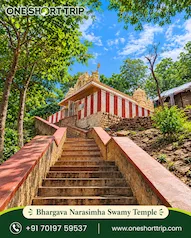
Bhargava Narasimha Temple
Bhargava Narasimha is another important shrine in the Nava Narasimha tradition. It is associated with the sacred Bhargava Tirtha and the traditional account of Parashurama's worship of Lord Narasimha.
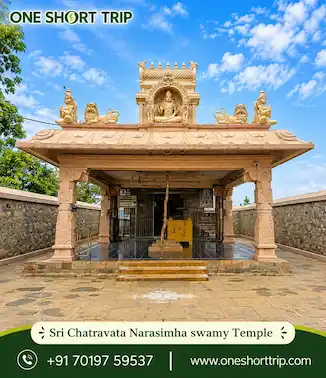
Chatravata Narasimha Temple
Chatravata Narasimha is one of the Nava Narasimha shrines and is traditionally associated with the Lord worshipped beneath a sacred tree. It is a meaningful stop for devotees exploring the different manifestations of Lord Narasimha at Ahobilam.
The Nava Narasimha shrines are spread across different parts of Ahobilam. Some Upper Ahobilam temples involve steep, uneven or strenuous routes. Do not assume that all nine shrines can be covered in one continuous outing. Confirm the route and accessibility of each temple, and allow adequate time for travel, darshan and rest.
Can You Visit Yogananda Narasimha Temple and Other Ahobilam Temples on the Same Day?
Yes, it can be included with other Ahobilam temple visits, depending on the day's darshan schedules and your transport arrangements. Yogananda Narasimha Temple is approximately 2 km southeast of Lower Ahobilam, making it a practical addition to a local pilgrimage plan.
However, visiting all nine Nava Narasimha shrines in one day can be demanding. Several temples are located in the Upper Ahobilam hill region and require additional travel or walking. For a comfortable pilgrimage, group nearby shrines together and allow enough time for the more difficult routes.
Suggested Order of Visits
Begin after checking the darshan schedule and arranging local transport for the day's visits.
Begin with the principal shrine at Lower Ahobilam and allow time for darshan.
Travel approximately 2 km southeast of the main Lower Ahobilam temple area and have darshan, subject to the temple schedule.
If time permits, consider Chatravata Narasimha or another shrine after checking its location and access.
Reserve adequate time for the hill shrines and check the walking difficulty before adding them to the same day's itinerary.
Yogananda Narasimha can be combined with other visits around Lower Ahobilam, but avoid creating a tightly packed schedule. Upper Ahobilam's hill shrines may require considerably more time and physical effort. A flexible itinerary is more comfortable, especially for families and older travellers.
Suggested One-Day Yogananda Narasimha Temple Visit Plan
If you have one day available for exploring the Lower Ahobilam area, you can include Yogananda Narasimha Temple along with other accessible shrines, subject to their darshan schedules. The following is a flexible sequence rather than a fixed timetable. Adjust the order according to local transport, temple timings and your group's comfort.
| Part of the Day | Suggested Activity |
|---|---|
| Morning | Begin from your Lower Ahobilam accommodation after confirming the temple schedules. |
| First Visit | Visit Prahladavarada Narasimha Temple, the principal shrine at Lower Ahobilam. |
| Next Visit | Proceed approximately 2 km southeast to Yogananda Narasimha Temple and have darshan. |
| Later in the Day | Consider another accessible shrine, such as Chatravata Narasimha, after confirming its route and darshan availability. |
| Afternoon | Take a meal and rest before deciding whether to continue with additional temple visits. |
| If Time Permits | Plan another shrine only if its location, access, darshan schedule and physical requirements are suitable for your group. |
This is a suggested planning sequence, not an official temple schedule. The actual visit depends on darshan timings, local transport, the final approach to each shrine and the time required at every temple.
For senior citizens and visitors with mobility difficulties, check the walking distance, steps and surface conditions before confirming the itinerary. Keep the schedule flexible and allow sufficient time for rest.
Frequently Asked Questions About Diguva Ahobilam Lakshmi Narasimha Temple
Find answers to common questions about Sri Lakshmi Narasimha Swamy Temple at Diguva Ahobilam, including its religious significance, Prahlada Varada Swamy, temple architecture, location, darshan and travel from Bangalore.
1. Where is Diguva Ahobilam Lakshmi Narasimha Temple located?
Sri Lakshmi Narasimha Swamy Temple is located at Diguva Ahobilam, also known as Lower Ahobilam, in the Nandyal district of Andhra Pradesh. It stands at the foothills of the Nallamala region and is one of the principal temples associated with the Ahobilam pilgrimage.
2. What is Diguva Ahobilam famous for?
Diguva Ahobilam is famous for its Sri Lakshmi Narasimha Swamy Temple, where the Lord is worshipped as Prahlada Varada Swamy. The temple is associated with the story of Prahlada and Lord Narasimha's divine protection. Its traditional architecture, multiple prakaras and mandapas also make it an important heritage site within the Ahobilam pilgrimage region.
3. Which God is worshipped at Diguva Ahobilam Temple?
The presiding deity is Lord Lakshmi Narasimha, an incarnation of Lord Vishnu. The Lord is worshipped here as Sri Prahlada Varada Swamy, traditionally understood as the Lord who blessed Prahlada. The deity is associated with a peaceful form of Narasimha, with Goddess Lakshmi seated on His lap.
4. Is Diguva Ahobilam Temple one of the nine Nava Narasimha temples?
Diguva Ahobilam's Prahlada Varada Temple is distinct from the traditional group of nine Nava Narasimha shrines. It is the principal Lakshmi Narasimha temple at Lower Ahobilam. The nine Nava Narasimha temples are associated with different forms and sacred locations across the wider Ahobilam region, particularly around Upper Ahobilam.
5. Why is the deity called Prahlada Varada Swamy?
The name Prahlada Varada refers to Lord Narasimha as the divine protector and benefactor of Prahlada. According to the well-known Puranic story, Prahlada remained devoted to Lord Vishnu despite the opposition of his father, Hiranyakashipu. Lord Vishnu appeared in the Narasimha form to protect His devotee and destroy evil. The name at Lower Ahobilam celebrates this divine blessing.
6. What is the difference between Diguva Ahobilam and Eguva Ahobilam?
Diguva Ahobilam means Lower Ahobilam and refers to the foothill temple area where Sri Prahlada Varada Lakshmi Narasimha Swamy is worshipped. Eguva Ahobilam means Upper Ahobilam and is associated with the main Ahobila Narasimha shrine and several of the Nava Narasimha temples. Both areas are important parts of the larger Ahobilam pilgrimage.
7. What is the religious significance of Diguva Ahobilam Temple?
The temple is an important place of worship for devotees of Lord Narasimha and is closely associated with the story of Prahlada. The peaceful form of Lakshmi Narasimha represents divine protection, compassion and grace. It is also part of the wider Ahobilam kshetram, which holds an important place in Sri Vaishnava tradition.
8. Is Ahobilam one of the 108 Divya Desams?
Yes. Ahobilam is revered among the 108 Divya Desams in Sri Vaishnava tradition. The sacred kshetram is associated with the hymns of Thirumangai Azhwar, who praised Ahobilam in ten verses of the Periya Thirumozhi. This recognition relates to the wider Ahobilam pilgrimage tradition rather than treating every individual shrine in the region as a separate Divya Desam.
9. What is special about the architecture of Diguva Ahobilam Temple?
The temple is known for its traditional South Indian temple architecture and noticeable Vijayanagara-style features. It has three prakaras, several mandapas and intricately carved pillars around its principal shrine. The temple complex also includes smaller shrines dedicated to other important deities of the Vaishnava tradition.
10. Which other shrines are present inside the Lower Ahobilam temple complex?
Apart from the main Lakshmi Narasimha shrine, the temple complex has smaller shrines associated with Goddess Lakshmi, Andal and the Azhwars. A shrine dedicated to Sri Venkateswara is also part of the wider temple precinct. These shrines add to the religious and architectural importance of Lower Ahobilam.
11. What are the darshan timings of Diguva Ahobilam Temple?
We do not have independently verified current daily opening and closing hours for the temple. Darshan timings may change on festival days, during special worship and due to temple administration arrangements. Visitors should check the latest schedule with the official Sri Ahobilam Devasthanam or Ahobila Mutt before beginning their journey.
12. How far is Diguva Ahobilam Temple from Bangalore?
Diguva Ahobilam is a road journey from Bangalore through the Andhra Pradesh region. The total distance and travel time depend on the selected route, traffic and road conditions. Travellers can plan their journey through towns such as Allagadda and Nandyal before reaching Lower Ahobilam. Check a live navigation route before departure for the most suitable directions.
13. How can I reach Diguva Ahobilam Temple?
Visitors can reach Lower Ahobilam by road using private vehicles, taxis or organised tour transport. Allagadda and Nandyal are useful towns for planning onward road connections. Public transport options may vary, so check current bus and train connections before travelling. From the Lower Ahobilam area, follow local directions to the temple entrance.
14. Can I reach Diguva Ahobilam Temple by private car?
Yes, Lower Ahobilam is the foothill temple area and can generally be approached by road. Visitors travelling by private car should use current navigation directions and follow local parking instructions near the temple. This is different from some of the Upper Ahobilam forest shrines, where access may involve additional transport or walking.
15. Is Diguva Ahobilam Temple suitable for senior citizens?
Lower Ahobilam is generally a more convenient starting point for senior citizens than the remote hill and forest shrines of Upper Ahobilam. However, the actual walking distance, steps, entrance arrangements and available facilities should be checked before visiting. Older travellers and people with mobility concerns should allow sufficient time and avoid combining too many demanding temple visits in one day.
16. How much time should I allow for darshan at Diguva Ahobilam Temple?
The time required depends on the number of devotees, the darshan schedule and whether you wish to explore the temple's smaller shrines and architectural features. It is sensible to keep a flexible time allowance rather than planning a very tight schedule, especially during weekends, holidays and festival periods.
17. Can I visit Diguva Ahobilam and Eguva Ahobilam on the same day?
Yes, many pilgrims plan visits to both Lower and Upper Ahobilam as part of the same pilgrimage. However, the Upper Ahobilam shrines are spread across different locations and some involve hill routes, walking or locally arranged transport. The time needed depends on which shrines you intend to visit, current access arrangements and your group's fitness. A relaxed itinerary may require more than one day.
18. Which temples can I visit near Diguva Ahobilam?
The wider Ahobilam region has several important Narasimha shrines, including Ahobila Narasimha, Malola Narasimha, Jwala Narasimha, Kroda or Varaha Narasimha, Yogananda Narasimha and Pavana Narasimha. These shrines are located in different parts of the region. You can also explore the Ahobilam travel guide to understand the temple locations and plan a suitable route.
19. Can I visit all nine Nava Narasimha temples from Diguva Ahobilam?
Diguva Ahobilam is a useful base for beginning the wider Ahobilam pilgrimage. The nine Nava Narasimha shrines are spread across Lower and Upper Ahobilam, including locations that may require additional road travel, local transport and walking. Visiting all nine requires careful planning around temple timings, route conditions and access arrangements. Allow adequate time rather than assuming every shrine can be covered comfortably in a single day.
20. Is there an entry fee at Diguva Ahobilam Temple?
We do not have verified current information confirming a general entry fee or specific darshan charges at the temple. Any special darshan arrangements, offerings or applicable charges should be checked with the temple administration before your visit.
21. Is photography allowed inside Diguva Ahobilam Temple?
Photography permissions may differ between the outer temple areas and the inner shrine. Follow the instructions displayed at the temple and those given by the temple staff. Do not photograph the deity or restricted areas where photography is not permitted.
22. What is the best time of year to visit Diguva Ahobilam?
The cooler months are generally more comfortable for a pilgrimage around Ahobilam, particularly if you also plan to visit the hill and forest shrines. The summer months can be hot, while heavy monsoon conditions may affect travel around the Nallamala region. Check the local weather and temple announcements before finalising your travel dates.
23. Can I visit Diguva Ahobilam Temple during Narasimha Jayanti?
Narasimha Jayanti is an important festival for devotees of Lord Narasimha and is observed with special religious significance across the Ahobilam region. Festival arrangements, special worship and darshan schedules may differ from regular days. Confirm the programme with the official temple administration before planning your visit.
24. What should I carry when visiting Diguva Ahobilam Temple?
Carry drinking water, comfortable clothing, suitable footwear for the approach to the temple, essential personal medicines and sun protection. If you are also visiting Upper Ahobilam, prepare separately for walking and outdoor conditions. Keep your belongings light and follow the temple's instructions regarding footwear, photography and items permitted inside the shrine.
Plan Your Diguva Ahobilam Lakshmi Narasimha Temple Visit with One Short Trip
Sri Lakshmi Narasimha Swamy Temple at Diguva Ahobilam is an important destination for devotees seeking the blessings of Prahlada Varada Swamy. The peaceful form of Lord Narasimha, the temple's traditional architecture and its connection with the story of Prahlada make this shrine a meaningful stop during an Ahobilam pilgrimage.
Lower Ahobilam is also a practical starting point for exploring the wider pilgrimage region. From here, devotees can plan visits to Upper Ahobilam and the different Nava Narasimha shrines, including Ahobila Narasimha, Malola Narasimha, Jwala Narasimha and other sacred temples. Each location has its own significance, and some require additional travel and walking.
Whether you are travelling with family, planning a pilgrimage with senior citizens or organising a spiritual journey from Bangalore, a well-paced itinerary can make the experience more comfortable. Allow enough time for darshan, travel between shrines, rest and meals instead of trying to cover too many places in a hurry.
At One Short Trip, we help travellers plan temple tours from Bangalore and other destinations with practical travel arrangements and thoughtfully planned itineraries. We aim to make pilgrimage journeys easier to organise, particularly for families and older travellers who prefer a comfortable travel schedule.
Explore More About Ahobilam
Where Is Yogananda Narasimha Swamy Temple Located?
Sri Yogananda Narasimha Swamy Temple is located southeast of Lower Ahobilam in the Nandyal district of Andhra Pradesh. This sacred shrine is one of the nine Nava Narasimha temples of Ahobilam and is approximately 2 kilometres from the Lower Ahobilam temple area. According to the traditional Sthala Purana, Lord Narasimha taught yogic postures to Prahlada at this sacred place. Visitors can plan a local road journey from Lower Ahobilam, but should confirm the final approach and walking arrangements locally.
You May Also Like
Planning A Trip Here?
Get help planning your visit — call or WhatsApp us and we will help you book a tour.