About Ahobilam
Ahobilam is one of the most sacred pilgrimage destinations dedicated to Lord Narasimha, located in the Nallamala Hills of Andhra Pradesh's Nandyal district. The place is especially known for the Nava Narasimha temples, nine sacred shrines representing different forms of Lord Narasimha. Set amid rocky hills, forest landscapes and natural streams, Ahobilam holds an important place in the Sri Vaishnava tradition and attracts devotees from across India.
The pilgrimage area is broadly divided into Lower Ahobilam and Upper Ahobilam. Lower Ahobilam is home to the main Lakshmi Narasimha Swamy Temple, while several of the Nava Narasimha shrines are situated in the Upper Ahobilam hills. Other sacred places include Ugra Stambham and the Bhavanasini River. Visiting Ahobilam can involve both conventional temple darshan and walking through rocky or forested terrain, depending on the shrines included in the journey.
Location
Ahobilam is located in Nandyal district, Andhra Pradesh, amid the forested landscapes of the Nallamala Hills.
Best Time to Visit
October to February is generally more comfortable for pilgrimage and outdoor exploration. Check local weather and trail conditions before travelling.
Ideal Trip Length
Three days and two nights can provide time for selected major shrines. Covering all nine temples may require additional planning and physical effort.
Why Is Ahobilam Famous?
Ahobilam is famous as the sacred land of Lord Narasimha, the powerful incarnation of Lord Vishnu who appeared to protect Prahlada and destroy the demon Hiranyakashipu. According to the traditional account, the Narasimha incarnation manifested at this sacred region. The hills, caves and shrines of Ahobilam are closely associated with this divine story and continue to attract devotees seeking the blessings of Lord Narasimha.
The most distinctive feature of Ahobilam is its Nava Narasimha pilgrimage, which includes nine forms of the deity worshipped at separate shrines. The region is also associated with the Ahobila Matha and the Sri Vaishnava tradition. Ugra Stambham, a sacred rocky landmark in the hills, is traditionally connected with the appearance of Lord Narasimha and is an important destination for pilgrims who undertake the challenging walk to reach it.
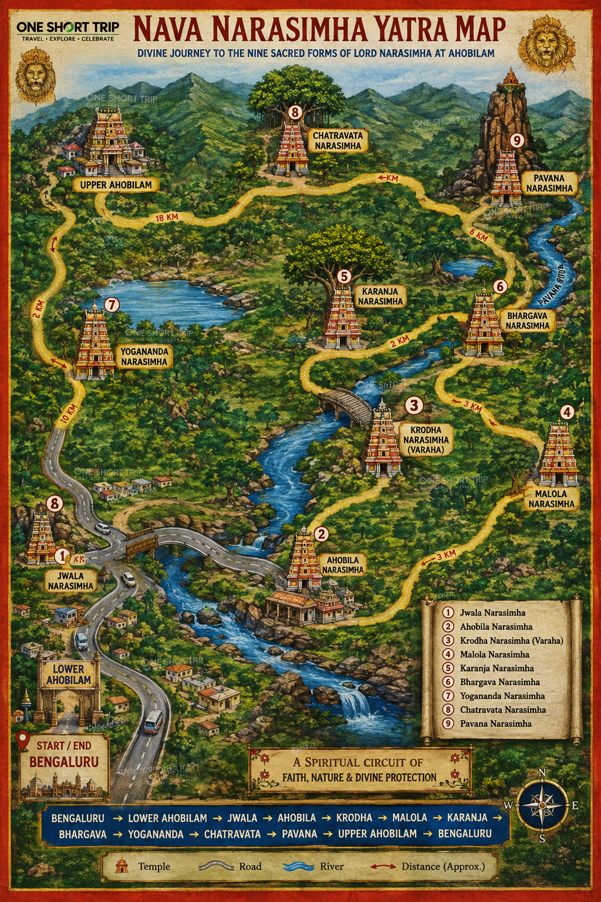
Nava Narasimha Temples
Nine sacred forms of Lord Narasimha worshipped at different shrines across Upper and Lower Ahobilam.
Prahlada's Sacred Land
Ahobilam is closely associated with the story of Prahlada and the divine appearance of Lord Narasimha.
Nallamala Hills and Ugra Stambham
A distinctive pilgrimage landscape of rocky hills, forest paths, sacred streams and the revered Ugra Stambham.
Best Places to Visit in Ahobilam
Ahobilam has several important temples and sacred landmarks associated with Lord Narasimha. The nine Nava Narasimha shrines are the main attraction, with other places such as the Diguva Ahobilam Lakshmi Narasimha Temple and Ugra Stambham adding to the pilgrimage experience. These destinations are spread across different parts of the region, so visitors should understand the location and physical requirements of each place before planning their visits.
Ahobila Narasimha Temple
The principal Upper Ahobilam shrine, traditionally associated with the fierce form of Lord Narasimha and the divine events described in the Puranic tradition.
Explore Temple Details →
Jwala Narasimha Temple
A significant Upper Ahobilam shrine associated with the fierce manifestation of Lord Narasimha. The approach involves a more demanding hill journey.
Explore Temple Details →
Malola Narasimha Temple
A revered shrine depicting Lord Narasimha with Goddess Lakshmi, representing a compassionate and graceful form of the deity.
Explore Temple Details →
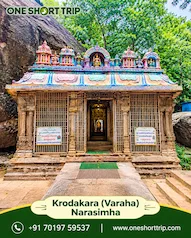
Kroda Varaha Narasimha Temple
A sacred shrine where Lord Narasimha is worshipped in the Varaha-associated form, with Goddess Lakshmi.
Explore Temple Details →
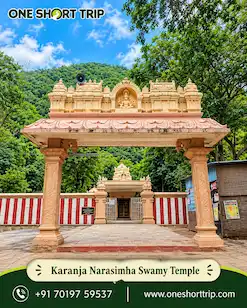
Karanja Narasimha Temple
A distinctive Nava Narasimha shrine associated with the Karanja tree and the worship of Lord Narasimha.
Explore Temple Details →
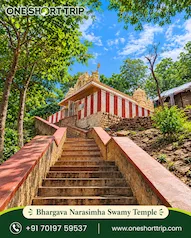
Bhargava Narasimha Temple
A shrine associated with Sage Bhargava, situated near a sacred water body and approached through a walking route.
Explore Temple Details →
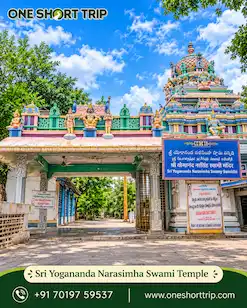
Yogananda Narasimha Temple
A shrine representing Lord Narasimha in a meditative form, traditionally associated with the teachings given to Prahlada.
Explore Temple Details →
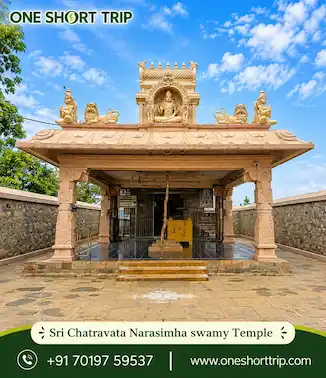
Chatravata Narasimha Temple
A Nava Narasimha shrine associated with a sacred tree and the worship of the Lord in a distinctive form.
Explore Temple Details →
Pavana Narasimha Temple
A sacred shrine associated with purification and the blessings of Lord Narasimha, located in the forested pilgrimage region.
Explore Temple Details →
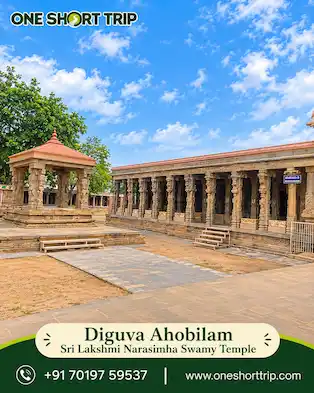
Diguva Ahobilam Lakshmi Narasimha Temple
An important temple in Lower Ahobilam, dedicated to Lord Lakshmi Narasimha and a major part of the local pilgrimage.
Explore Temple Details →
Ugra Stambham
A sacred rocky landmark in the Upper Ahobilam hills, traditionally associated with the appearance of Lord Narasimha. It is not counted among the nine temples.
Explore Ugra Stambham →
History and Spiritual Significance of Ahobilam
Ahobilam occupies a special place in Hindu religious tradition because of its association with Lord Narasimha and the story of Prahlada. According to the traditional account, Lord Vishnu appeared in the Narasimha form to protect his devotee Prahlada and defeat Hiranyakashipu. The sacred hills of Ahobilam are believed to be connected with this divine manifestation, making the region an important destination for devotees of Lord Vishnu.
The temples of Ahobilam developed as an important centre of Sri Vaishnava worship. The Ahobila Matha, traditionally associated with Sri Vaishnava acharyas, has played a significant role in preserving the religious and philosophical traditions connected with the region. The temples and their surrounding landscapes reflect centuries of pilgrimage, worship and patronage.
The temple complex and surrounding region also preserve architectural and cultural features associated with different periods of South Indian history. Today, Ahobilam continues to be an important pilgrimage destination for devotees who wish to visit the nine forms of Lord Narasimha and experience the spiritual heritage of the Nallamala Hills.
Narasimha Avatar Tradition
Ahobilam is traditionally associated with the divine appearance of Lord Narasimha to protect Prahlada and uphold dharma.
Sri Vaishnava Heritage
The region has a longstanding association with Sri Vaishnava worship and the religious traditions of Ahobila Matha.
Centuries of Pilgrimage
The temples, sacred landmarks and traditional worship practices preserve Ahobilam's importance as a major pilgrimage centre.
Nava Narasimha Temples – The Main Pilgrimage of Ahobilam
The Nava Narasimha temples are the central attraction of Ahobilam. Each shrine is dedicated to a distinct form of Lord Narasimha, and together they form a significant pilgrimage for devotees. The nine temples are located across the Lower and Upper Ahobilam areas, with different levels of accessibility. Some shrines can be reached more conveniently, while others involve longer walks, uneven paths or more demanding hill routes.
Pilgrims often plan their visits over multiple days rather than attempting to cover every shrine in a single day. The route, available transport, temple access and physical requirements should be considered before starting. Visitors who are interested in the complete pilgrimage can explore the individual temple guides to understand each shrine and plan their journey accordingly.
Ahobila Narasimha
The principal Upper Ahobilam shrine, associated with the fierce manifestation of Lord Narasimha.
Jwala Narasimha
A form associated with the intense and powerful manifestation of the Lord.
Malola Narasimha
The form of Lord Narasimha worshipped with Goddess Lakshmi.
Kroda Varaha Narasimha
A distinctive form combining the Varaha and Narasimha traditions.
Karanja Narasimha
A form of the Lord traditionally associated with the Karanja tree.
Bhargava Narasimha
A shrine associated with Sage Bhargava and the sacred water body nearby.
Yogananda Narasimha
The meditative form of Lord Narasimha, traditionally connected with Prahlada.
Chatravata Narasimha
A shrine associated with a sacred tree and the worship of the Lord in a distinctive form.
Pavana Narasimha
A sacred form associated with purification and the blessings of Lord Narasimha.
Understanding Upper Ahobilam and Lower Ahobilam
Ahobilam is broadly divided into two pilgrimage areas: Lower Ahobilam, also known as Diguva Ahobilam, and Upper Ahobilam, known as Eguva Ahobilam. Understanding this distinction is important when planning a visit because the temples are not all located in one compact complex. Travel between the areas and access to individual shrines can involve road journeys, local transport and walking.
Lower Ahobilam is generally the more convenient starting point for many visitors. Upper Ahobilam contains several important shrines set amid the hills and forest landscape. Some of these temples require more physical effort to reach, so visitors should plan their visits according to their available time, mobility and the prevailing access conditions.
Lower Ahobilam (Diguva Ahobilam)
The lower pilgrimage area includes the important Sri Lakshmi Narasimha Swamy Temple. It is a convenient starting point for pilgrims and visitors who prefer a less strenuous temple visit.
Explore Lower Ahobilam Temple →
Upper Ahobilam (Eguva Ahobilam)
The upper pilgrimage area includes several Nava Narasimha shrines, sacred natural features and Ugra Stambham. Some approaches involve rocky paths and demanding walks.
Read the Ahobilam Travel Guide →
Trekking and Hill Destinations in Ahobilam
The Nallamala Hills form an important part of Ahobilam's natural and spiritual setting. Several Upper Ahobilam temples are located amid rocky terrain and forested surroundings. The pilgrimage experience at these shrines can involve walking along uneven paths, climbing steps and crossing sections of natural terrain. The difficulty varies from one temple to another, and visitors should not assume that every shrine is easily accessible by vehicle.
Ugra Stambham is one of the most distinctive landmarks in the region and involves a particularly challenging approach. Visitors planning to reach it should assess their fitness, wear suitable footwear and follow local guidance. During and after the monsoon, rocky paths may become slippery, and access can be affected by weather or local restrictions.
Upper Ahobilam Trails
Walking routes connecting several sacred shrines through rocky and forested terrain. Difficulty varies by destination.
Ugra Stambham
A revered rocky landmark associated with Lord Narasimha. The approach is challenging and requires careful preparation.
Explore Ugra Stambham →
Nallamala Hills
A broad hill and forest landscape surrounding Ahobilam, adding to the natural beauty and spiritual atmosphere of the pilgrimage.
Nature and Wildlife Around Ahobilam
Ahobilam is surrounded by the natural landscapes of the Nallamala Hills, with rocky slopes, forest vegetation, streams and varied terrain. These surroundings are an important part of the region's identity and create a distinctive setting for the temples. The Bhavanasini River and other natural features are closely connected with local religious traditions and the pilgrimage experience.
The wider Nallamala region supports diverse wildlife and forest habitats. Visitors should remember that parts of the pilgrimage area are within or close to forest landscapes. Avoid disturbing wildlife, littering or leaving designated routes. Forest access and movement restrictions may apply, so check current local instructions before planning walks or exploring areas beyond the temple routes.
Places Near Ahobilam to Consider Visiting
Travellers with additional time may consider combining Ahobilam with selected pilgrimage and heritage destinations in the wider Nandyal and Kurnool region. These places are not part of the Ahobilam temple complex, and visiting them requires separate travel planning. Choose nearby destinations according to your available days rather than trying to cover every attraction in one journey.
Mahanandi
An important Shiva pilgrimage centre known for Mahanandiswara Temple, natural springs and its sacred temple tank.
Yaganti
A well-known pilgrimage destination featuring the Uma Maheswara Temple, a prominent Nandi sculpture and rocky surroundings.
Belum Caves
An extensive underground cave system known for its passages, chambers and limestone formations.
Nandyal
The district headquarters and an important town for transport, accommodation and access to regional attractions.
Srisailam
A major pilgrimage destination in the Nallamala Hills, home to Mallikarjuna Swamy Jyotirlinga and Goddess Bhramaramba. It requires a separate route and itinerary.
Kolanu Bharathi
A forest-side pilgrimage destination associated with the Saraswati Devi Temple and historic religious traditions.
How to Reach Ahobilam from Bengaluru
Ahobilam can be reached by road from Bengaluru and other major cities in South India. Road travel is a practical option for pilgrims because it provides flexibility to reach Lower Ahobilam, Upper Ahobilam and other nearby temples. The journey involves travelling through Andhra Pradesh, and the final approach to the pilgrimage area is through local roads. The actual distance and journey time depend on the starting point, route, traffic and road conditions.
Visitors travelling by train can consider rail connections to nearby towns such as Nandyal or other suitable railway stations, followed by onward road transport. For air travel, Orvakal Airport near Kurnool may be considered subject to current flight availability. Since Ahobilam does not have an airport or railway station within the temple area, the final part of the journey requires road transport.
By Road
A convenient choice for families and pilgrimage groups travelling from Bengaluru. Private vehicles and arranged transport offer flexibility for temple visits.
By Train
Nandyal and other suitable railway stations can be considered depending on available train services. Arrange onward road transport to Ahobilam.
By Air
Orvakal Airport near Kurnool is a regional option, subject to flight availability. Continue the journey to Ahobilam by road.
How Many Days Are Enough for Ahobilam?
The number of days required depends on how many temples you wish to visit and whether you plan to include the more challenging Upper Ahobilam routes. A shorter trip can cover selected important shrines, while a longer stay allows more time for the Nava Narasimha pilgrimage. Travellers should consider road journeys, temple schedules, walking time and rest periods when choosing their itinerary.
2 Days / 1 Night
Suitable for a focused pilgrimage covering selected accessible temples in Lower Ahobilam and nearby areas. It may not be enough for all nine shrines.
3 Days / 2 Nights
A practical duration for visiting several important shrines across Lower and Upper Ahobilam, depending on route conditions and the group's walking ability.
4 Days or More
Allows more time for the Nava Narasimha pilgrimage, additional sacred places and rest between demanding temple visits.
Best Time to Visit Ahobilam
October to February is generally considered a comfortable period for visiting Ahobilam. The relatively cooler weather can make temple visits and outdoor walks more manageable, particularly for pilgrims planning to visit the Upper Ahobilam shrines. These months are often suitable for combining darshan with exploration of the surrounding natural landscape.
Ahobilam's annual Brahmotsavam and other important religious occasions attract devotees from different parts of the country. Festival dates and arrangements can vary, so check the current temple calendar before travelling. Accommodation and transport may need to be arranged in advance during major celebrations.
Summer can bring high temperatures, making exposed walking routes and hill climbs more difficult. During the monsoon and immediately afterwards, rocky paths and forest trails may become slippery. Visitors should check local weather, temple access and forest restrictions before starting their journey.
Food and Dining in Ahobilam
Food options around Ahobilam are generally simpler than those available in larger towns. Visitors may find basic meals, vegetarian food and refreshments around the main temple areas, depending on the location and time of visit. For a wider choice of restaurants and eateries, travellers may need to plan meal stops in nearby towns.
When visiting Upper Ahobilam shrines or undertaking longer walks, it is advisable to carry sufficient drinking water and plan meals in advance. Food availability along forest routes should not be assumed. Visitors staying in local accommodation should confirm meal arrangements and timings directly before arrival.
Ahobilam for Families and Senior Citizens
Ahobilam can be a meaningful pilgrimage for families and devotees of different age groups. Lower Ahobilam offers an important starting point, with the Sri Lakshmi Narasimha Swamy Temple being a major attraction. Families can plan a comfortable visit by allowing sufficient time for darshan, meals and rest rather than attempting to cover too many temples in a short period.
Senior citizens should carefully consider the physical requirements of the Upper Ahobilam temples. Some shrines involve uneven rocky paths, steps, forest walks and demanding climbs. Ugra Stambham in particular requires a challenging approach and may not be suitable for visitors with limited mobility, balance difficulties or health conditions that restrict strenuous walking. It is not necessary for every pilgrim to attempt every route.
For families travelling with elderly members, a private vehicle, flexible itinerary and comfortable accommodation can make the journey easier. Plan accessible temple visits separately from demanding trekking routes, carry essential medicines and drinking water, and check current transport and temple access arrangements before departure.
Practical Travel Tips for Ahobilam
Understand the Two Areas
Plan separately for Lower Ahobilam and Upper Ahobilam. The temples are spread across different locations and do not form one compact complex.
Check Temple Access
Confirm current darshan timings, local transport availability and access to individual shrines before beginning your journey.
Carry Drinking Water
Carry adequate water, especially when visiting shrines that involve longer walks or exposed routes.
Wear Suitable Footwear
Use comfortable footwear for outdoor walking and rocky paths. Follow temple customs regarding footwear inside temple premises.
Respect Forest Rules
Follow local instructions, remain on permitted routes and avoid littering or disturbing wildlife in forest areas.
Plan for Senior Citizens
Choose temples according to walking ability and allow sufficient time for rest. Avoid strenuous routes if they are unsuitable for the visitor.
Is Ahobilam Worth Visiting?
Ahobilam is an important destination for devotees of Lord Vishnu, especially those wishing to experience the Nava Narasimha pilgrimage. Its nine sacred temples, association with the Narasimha Avatar and connection with the Sri Vaishnava tradition make it a spiritually significant place. The opportunity to visit different forms of Lord Narasimha across Lower and Upper Ahobilam makes the pilgrimage distinctive.
Beyond its religious importance, Ahobilam offers a memorable natural setting with the Nallamala Hills, rocky landscapes, forest surroundings and sacred water bodies. Some temple visits involve walking through these surroundings, giving the pilgrimage a combination of spiritual exploration and outdoor activity. The level of physical effort varies, so visitors can choose destinations according to their abilities.
For travellers from Bengaluru and other cities, Ahobilam can be planned as a focused temple visit or a multi-day pilgrimage covering the Nava Narasimha shrines. With thoughtful planning, sufficient rest and an understanding of the different temple routes, it can be a rewarding journey for individuals, families and pilgrimage groups.



 Nava Narasimha Temple
 Nava Narasimha Temple
 Nava Narasimha Temple
 Nava Narasimha Temple
 Nava Narasimha Temple
 Nava Narasimha Temple
 Nava Narasimha Temple
 Nava Narasimha Temple
 Nava Narasimha Temple
 Lower Ahobilam
 Sacred Landmark