One Short Trip

Swamimalai Murugan Temple, fourth Arupadai Veedu of Lord Murugan near Kumbakonam, Tamil Nadu
Tamil Nadu / Arupadai Veedu / Swamimalai Murugan Temple
Fourth Arupadai Veedu · Pilgrimage

Swamimalai Murugan Temple: Timings, History & How to Reach from Bangalore

Discover the fourth sacred abode of Lord Murugan near Kumbakonam, where Swaminatha Swamy is worshipped as the divine teacher of Lord Shiva. Explore temple timings, the Pranava mantra legend, 60 sacred steps and travel information from Bangalore.

Primary Deity
Lord Murugan (Swaminatha Swamy)
Location
Swamimalai, Near Kumbakonam, Tamil Nadu
Religious Significance
Fourth Arupadai Veedu of Lord Murugan
Temple Highlight
Pranava Mantra Legend & 60 Sacred Steps

Arupadai Veedu Tour Packages from Bangalore

Planning to visit the Arupadai Veedu temples from Bangalore? One Short Trip runs guided Arupadai Murugan temple tours. Choose the tour that suits your group.

2 Days
Arupadai Murugan Express Tour

A short two-day Arupadai Murugan temple trip from Bangalore.

View 2-Day Arupadai Tour →
From Bangalore
Arupadai Murugan Temple Tour

A guided pilgrimage to the Arupadai Veedu Murugan temples from Bangalore.

View Arupadai Temple Tour →

Not sure which to pick? Send us your dates and group size on WhatsApp.

Explore the Fourth Sacred Abode of Lord Murugan

About Swamimalai Murugan Temple, Tamil Nadu

Located near Kumbakonam in Thanjavur district, Tamil Nadu, Swamimalai Murugan Temple is one of the six sacred Arupadai Veedu temples dedicated to Lord Murugan. The temple is officially known as Arulmigu Swaminatha Swamy Temple and is traditionally regarded as the fourth abode of Lord Murugan.

Swamimalai is especially famous for the sacred legend in which Lord Murugan explains the meaning of the Pranava mantra, Om, to his father, Lord Shiva. Because Murugan assumes the role of spiritual teacher, he is worshipped here as Swaminatha Swamy.

The main sanctum stands on a raised hillock, reached by climbing approximately 60 steps. These steps are traditionally associated with the 60-year cycle of the Tamil calendar, giving the ascent a special religious significance.

Swamimalai is also known as Thiruveragam or Tiruverakam in Tamil devotional tradition. Its proximity to Kumbakonam makes it an important destination for pilgrims exploring the historic temples of the Cauvery delta.

Swamimalai Murugan Temple – Quick Information

Official Temple Name
Arulmigu Swaminatha Swamy Temple
Other Names
Swamimalai Murugan Temple, Swaminathaswamy Temple, Thiruveragam
Location
Swamimalai, near Kumbakonam
District and State
Thanjavur, Tamil Nadu, India
PIN Code
612302
Presiding Deity
Lord Murugan – Swaminatha Swamy
Religious Tradition
Hinduism – Murugan Worship
Arupadai Veedu Position
Fourth of the Six Sacred Abodes
Famous Legend
Murugan Teaching the Pranava Mantra to Shiva
Temple Steps
60 Steps Representing the Tamil Calendar Cycle
Nearest Major Town
Kumbakonam – Approximately 8 km
Temple Administration
Tamil Nadu Hindu Religious and Charitable Endowments Department

Best time to visit: Early morning or evening is generally preferable, subject to temple opening hours. November to February usually offers more comfortable weather for temple visits.

Swamimalai Murugan Temple Photos

The following photographs showcase Swamimalai Murugan Temple, its presiding deity and traditional temple architecture.
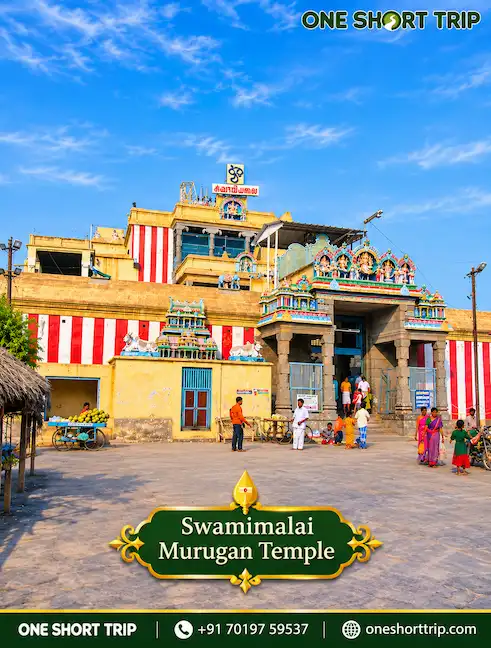
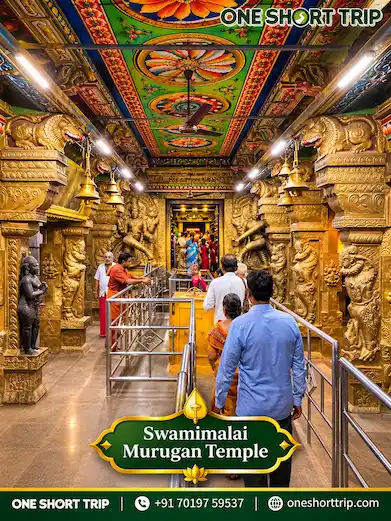
Swamimalai Murugan Temple, fourth Arupadai Veedu near Kumbakonam
Swamimalai Murugan Temple near Kumbakonam, the fourth sacred abode of Lord Murugan.
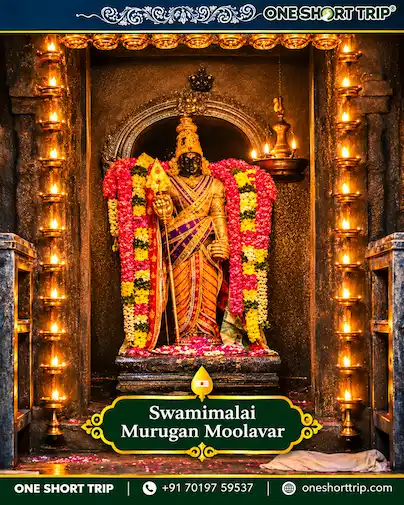
Swaminatha Swamy Moolavar at Swamimalai Murugan Temple
Lord Swaminatha Swamy, the presiding deity of Swamimalai Murugan Temple.
Devotional photograph of Lord Murugan associated with Swamimalai Temple
A devotional image of Lord Murugan associated with Swamimalai.
Traditional corridor of Swamimalai Murugan Temple in Tamil Nadu
Traditional temple corridor and architectural details at Swamimalai.

What Is Swamimalai Murugan Temple Famous For?

Swamimalai Murugan Temple is famous for its association with Lord Murugan as the divine teacher, its 60 sacred steps and its place among the six Arupadai Veedu temples.

The name Swaminatha is closely connected with the legend of Murugan imparting spiritual knowledge to Lord Shiva. This makes the temple an important symbol of wisdom, humility and the guru-disciple relationship.

The Temple Is Particularly Known For

  • Being the fourth of Lord Murugan's six Arupadai Veedu temples.
  • The legend of Murugan explaining the sacred Pranava mantra to Lord Shiva.
  • Lord Murugan's form as Swaminatha Swamy, the divine teacher.
  • The 60 steps associated with the Tamil calendar cycle.
  • The elevated sanctum and traditional South Indian temple architecture.
  • Its connection with classical Tamil devotional literature.
  • Its location near Kumbakonam and the sacred Cauvery delta.
  • Its importance during Murugan festivals, including Skanda Sashti and Vaikasi Visakam.

Where Is Swamimalai Murugan Temple Located?

Swamimalai Murugan Temple is located in Swamimalai town, Thanjavur district, Tamil Nadu, approximately 8 km from Kumbakonam.

The temple lies in the Cauvery delta region, an area known for its ancient temples, traditional arts and longstanding religious heritage.

Temple Address

Arulmigu Swaminatha Swamy Temple,
Swamimalai – 612302,
Thanjavur District, Tamil Nadu, India.

Visitors can reach Swamimalai from Kumbakonam by road using local buses, taxis or auto-rickshaws. Those travelling from Bangalore can include the shrine in a multi-day Kumbakonam pilgrimage or an Arupadai Veedu temple tour.

What Is the Story of Swamimalai Murugan Temple?

The central legend of Swamimalai describes how Lord Murugan became the spiritual teacher of Lord Shiva by explaining the meaning of the sacred Pranava mantra, Om.

This story is preserved in Hindu devotional tradition and forms the foundation of Swamimalai's religious identity.

The Sacred Legend

The Story of Murugan Teaching the Pranava Mantra

According to the traditional account, Lord Brahma once visited Kailasa, the sacred abode of Lord Shiva. During his visit, he encountered the young Lord Murugan.

Murugan asked Brahma to explain the meaning of the Pranava mantra, the sacred syllable Om. Although Brahma was associated with creation and sacred knowledge, he could not provide an explanation that satisfied Murugan.

Murugan questioned Brahma's ability to carry out his responsibilities without understanding the fundamental meaning of the sacred mantra. In the legend, Murugan detained Brahma and temporarily assumed his creative responsibilities.

The interruption caused concern among the gods, who approached Lord Shiva and requested his intervention.

Shiva approached Murugan and asked why Brahma had been detained. Murugan explained that Brahma could not properly explain the Pranava.

Lord Shiva then asked Murugan to explain its meaning. Murugan agreed, but said that the sacred teaching should be received with the humility of a disciple.

Shiva accepted the role of student, and Murugan imparted the Pranava teaching to him. The legend is often depicted with Murugan whispering the sacred knowledge into Shiva's ear.

Because Murugan became the teacher of Shiva, he came to be revered as Swaminatha Swamy, the teacher of the Lord.

Why Did Murugan Question Lord Brahma?

In the legend, Murugan's question tests Brahma's understanding of the sacred syllable Om. The episode emphasises that spiritual knowledge involves understanding rather than merely reciting sacred words.

Why Did Lord Shiva Become Murugan's Disciple?

Shiva's acceptance of the disciple's role illustrates the importance of humility in receiving knowledge. The story teaches that wisdom is not limited by age, status or family relationships.

Why Is Lord Murugan Called Swaminatha?

The name Swaminatha is traditionally explained through Murugan's role as the teacher of Shiva. Swamimalai is therefore particularly associated with Murugan as the divine guru.

Spiritual meaning: The Swamimalai legend emphasises humility, the pursuit of true knowledge and the importance of the teacher-disciple relationship. It is a sacred religious account, not a documented historical event.

What Is the History of Swamimalai Murugan Temple?

Swamimalai is an ancient centre of Murugan worship associated with the religious and literary heritage of Tamil Nadu. The sacred site is traditionally identified with Thiruveragam, one of the places praised in Tamil Murugan devotion.

The temple's religious identity developed through centuries of worship, literary references, royal patronage and renovation. However, a precise date for the establishment of the original shrine is not conclusively established.

Ancient Origins of Swamimalai

The religious significance of Swamimalai is linked with the Pranava legend and the worship of Murugan as a spiritual teacher. The place is traditionally associated with the sacred site of Thiruveragam.

Swamimalai in Tamil Devotional Literature

The Tirumurukatrupadai, a classical Tamil poem dedicated to Lord Murugan, describes sacred places associated with his worship. Thiruveragam is traditionally identified with Swamimalai.

The saint-poet Arunagirinathar also celebrated Murugan through his Tiruppugazh hymns, contributing to the continuing devotional importance of the shrine.

Chola Period and Temple Development

Swamimalai stands within the historic Chola region, where temple construction and patronage flourished. The temple is commonly associated with Chola-era development, although the original construction history requires careful distinction from later architectural additions.

Later Renovations and Continuing Worship

Like many longstanding South Indian temples, Swamimalai has undergone maintenance, renovation and religious consecration at different times. These activities have helped preserve the shrine as an active centre of Murugan worship.

Historical Overview of Swamimalai Temple

Traditional Antiquity
Pranava Legend

Swamimalai is associated with Murugan imparting the sacred Pranava teaching to Shiva.

Classical Tamil Tradition
Thiruveragam Association

The sacred site is traditionally identified with Thiruveragam in Tamil Murugan literature.

Medieval Temple Development
Temple Patronage and Architecture

The shrine developed within the historic temple culture of the Cauvery delta.

Tamil Bhakti Tradition
Devotional Hymns

Murugan's worship at Swamimalai is celebrated through Tamil devotional literature, including Tiruppugazh traditions.

Present Day
Active Pilgrimage Centre

Swamimalai continues to serve devotees as the fourth Arupadai Veedu and an important temple near Kumbakonam.

Historical clarification: The stages above describe broad religious and architectural history, not a verified sequence of dated construction events. Specific renovation years should be added only when supported by reliable temple or inscriptional records.

Who Built Swamimalai Murugan Temple?

The original builder of Swamimalai Murugan Temple has not been conclusively identified through the historical evidence considered for this guide.

Was Swamimalai Built by the Cholas?

Swamimalai lies in the historic Chola region, and traditional temple histories associate its development with Chola patronage. Some accounts mention Parantaka Chola I.

However, such attributions should not be treated as proof that a single ruler constructed the entire present temple complex.

Who Established the Sacred Shrine?

The temple's religious origin is explained through the Pranava legend of Lord Murugan and Lord Shiva. This sacred account explains its spiritual identity rather than identifying a historical architect or builder.

Who Maintains Swamimalai Temple Today?

The temple is administered under the Tamil Nadu Hindu Religious and Charitable Endowments Department. Official information about temple services and administration should be checked through the HR&CE portal.

In summary: Swamimalai is an ancient Murugan pilgrimage centre with longstanding Tamil devotional associations. Its original construction cannot be confidently credited to one historically verified builder.

Who Is the Main Deity of Swamimalai Murugan Temple?

The presiding deity is Lord Murugan, worshipped as Swaminatha Swamy. He is revered here as the divine teacher who imparted the meaning of the Pranava mantra to Lord Shiva.

The principal Murugan sanctum is located on the upper level of the temple, reached by climbing the sacred steps.

What Is Special About Swaminatha Swamy?

Swaminatha Swamy represents Murugan's role as a spiritual teacher. The deity's identity is closely connected with wisdom, knowledge and the Pranava teaching.

Which Other Deities Are Worshipped at Swamimalai?

The lower level of the temple complex includes shrines associated with Lord Shiva as Sundareswarar and Goddess Parvati as Meenakshi.

The arrangement is traditionally interpreted in connection with the Pranava legend, in which Murugan assumes the role of teacher.

What Is Special About Swamimalai Murugan Temple Architecture?

Swamimalai is notable for its elevated Murugan sanctum, traditional gateway towers, temple corridors and the 60-step approach to the main shrine.

Why Are There 60 Steps at Swamimalai?

The 60 steps are traditionally associated with the 60-year Tamil calendar cycle. Each year in this cycle has its own name, and the steps symbolically connect the ascent with the passage of time.

Why Is Murugan's Shrine Above the Other Shrines?

The elevated position of the Murugan sanctum is traditionally understood in relation to the Pranava legend, where Murugan becomes the spiritual teacher of Lord Shiva.

What Can Visitors See Inside the Temple?

Visitors can observe traditional South Indian temple architecture, devotional sculptures, gateway structures and corridors, subject to access restrictions and temple rules.

What Is the Religious and Spiritual Significance of Swamimalai Murugan Temple?

Swamimalai holds a special place in Murugan worship because it presents Lord Murugan as the source of spiritual knowledge. Its central message emphasises humility, learning and the importance of the guru.

🕉️

Pranava Mantra

The temple is associated with Murugan's teaching of the meaning of Om, a sacred syllable in Hindu traditions.

📖

Divine Knowledge

Murugan's role as Swaminatha Swamy symbolises wisdom, understanding and the importance of spiritual learning.

🙏

Guru and Disciple

The legend of Shiva receiving instruction from Murugan teaches humility and respect for true knowledge.

🛕

Arupadai Veedu

As the fourth sacred abode, Swamimalai is an important destination in the traditional six-temple Murugan pilgrimage.

Devotees may associate worship at Swamimalai with blessings for education, understanding and spiritual progress. Such benefits are matters of religious faith.

What Is the Connection Between Swamimalai and the Six Arupadai Veedu Temples?

Swamimalai is the fourth of the six sacred Arupadai Veedu temples dedicated to Lord Murugan. Each abode is associated with a distinct religious tradition or episode in Murugan's divine life.

Pilgrims visiting all six temples travel across different regions of Tamil Nadu. Swamimalai is particularly convenient to combine with other temples around Kumbakonam.

Continue Exploring

Explore All Six Arupadai Veedu Murugan Temples

Discover the six sacred abodes of Lord Murugan, their mythology, religious significance and practical travel information from Bangalore.

Explore the Complete Arupadai Veedu Guide

How Far Is Swamimalai Murugan Temple from Kumbakonam?

Swamimalai Murugan Temple is located approximately 8 km from Kumbakonam in Thanjavur district, Tamil Nadu. The temple is easily accessible by road and is a popular pilgrimage destination for visitors staying in Kumbakonam.

From Kumbakonam
Approx. 8 km

A short road journey from Kumbakonam town. Allow approximately 15–25 minutes under normal traffic conditions.

From Thanjavur
Approx. 40 km

Travel via the Kumbakonam region. Allow roughly 1–1.5 hours depending on your route and traffic.

How to Reach Swamimalai from Kumbakonam?

Visitors can hire a taxi or auto-rickshaw from Kumbakonam or use available local bus services. A private vehicle is convenient if you plan to visit several temples around Kumbakonam on the same day.

Is Swamimalai Temple Located on a Hill?

Yes. The main Swaminatha Swamy sanctum stands on an elevated artificial hillock. Devotees traditionally climb approximately 60 steps to reach the upper shrine.

Travel tip: The distance from Kumbakonam refers to the road journey to Swamimalai. The steps to the upper shrine are part of the temple visit itself. Visitors with mobility difficulties should check the current accessibility arrangements locally.

What Are the Darshan Timings of Swamimalai Murugan Temple?

Swamimalai Murugan Temple generally follows morning and evening worship sessions. Published visitor guides commonly report a morning opening around 6:00 AM and an evening closing around 9:00 PM, with a midday break.

However, these hours have not been independently confirmed against a current official temple schedule for this guide. Visitors should verify the actual opening, closing and puja timings before travelling.

Darshan Schedule – Planning Reference
Session Commonly Published Hours
Morning darshan Approximately 6:00 AM – 12:00 PM
Afternoon break Timings may vary
Evening darshan Approximately 4:00 PM – 9:00 PM

Verification status: Indicative hours only; not an officially verified timetable.

What Are the Important Pujas at Swamimalai Temple?

The temple follows traditional daily worship of Lord Swaminatha Swamy. Rituals are associated with the morning, midday, evening and night worship periods.

Specific puja names, start times, ticket arrangements and special worship availability should be confirmed with the temple administration. Festival days may follow a different schedule.

Is Special Darshan Available at Swamimalai Murugan Temple?

Special darshan or paid worship arrangements may be offered depending on the temple's current administrative procedures. Availability, charges and booking methods can change. Check the official HR&CE information before making plans.

Check Official Information

Visit the Tamil Nadu HR&CE website for temple administration and service information.

Confirm the Day's Schedule

Verify the current darshan and puja hours with the temple before departure.

Allow Extra Time

Festival crowds and special rituals may increase waiting times or alter access.

When Is the Best Time to Visit Swamimalai Murugan Temple?

The best time to visit Swamimalai Murugan Temple is generally during the cooler months from November to February. Early morning and evening are also preferable for visitors who want to avoid the hottest part of the day.

🌅

Early Morning

A good choice for a more comfortable climb to the upper shrine and a relaxed start to a Kumbakonam temple itinerary.

🌇

Evening

Evening visits can be pleasant after the afternoon heat. Confirm the temple's evening opening hours beforehand.

🌺

Festival Days

Major Murugan festivals offer a vibrant devotional atmosphere but may involve long queues and heavy crowds.

☀️

Summer Visits

During hotter months, avoid unnecessary walking in the afternoon and plan sufficient rest and hydration.

Which Months Have More Comfortable Weather?

November to February

These months generally offer more comfortable conditions for exploring Swamimalai and other temples in the Kumbakonam region.

Should You Visit During a Murugan Festival?

Festival visits are suitable for devotees who want to experience special celebrations. However, if your priority is a shorter queue and a flexible sightseeing schedule, a regular weekday outside major festivals may be more convenient.

What Are the Major Festivals Celebrated at Swamimalai Murugan Temple?

Swamimalai is an important centre of Lord Murugan worship. Several festivals associated with Murugan are celebrated throughout the Tamil religious calendar.

🌺

Vaikasi Visakam

Vaikasi Visakam is an important festival associated with Lord Murugan's divine manifestation. Devotees gather for worship and special observances.

🦚

Skanda Sashti

Skanda Sashti commemorates Lord Murugan's victory over evil. It is an important period of devotion, fasting and prayer in the Murugan tradition.

🙏

Thaipusam

Thaipusam is widely observed by Murugan devotees. Celebrations and worship arrangements differ between temples and should be checked for the year of travel.

🪔

Karthigai Deepam

Karthigai is an important period in Murugan worship, associated with lamps, prayers and devotional observances.

🌼

Monthly Krittika Observances

Krittika or Karthigai star days are regarded as auspicious for worshipping Lord Murugan. The temple may experience increased devotional activity.

Festival planning: Dates follow the Tamil religious calendar and vary each year. Confirm Swamimalai's specific festival programme and special darshan arrangements with the temple administration.

How to Reach Swamimalai Murugan Temple?

Swamimalai is conveniently reached through Kumbakonam, which has road and railway connections to several major cities. Travellers can continue from Kumbakonam to the temple by local road transport.

How to Reach Swamimalai Murugan Temple from Bangalore?

Swamimalai is approximately 400–450 km from Bengaluru by road, depending on the selected route and starting point.

A typical road journey may take 8–10 hours, excluding extended sightseeing stops and depending on traffic.

Suggested Road Route from Bangalore

Bengaluru → Salem → Namakkal → Trichy region → Thanjavur/Kumbakonam → Swamimalai

This is an illustrative route. Live navigation may recommend a different approach based on road conditions and traffic.

Because the journey is relatively long, travellers from Bengaluru may prefer a two-day or multi-day temple tour, particularly when combining Swamimalai with other Arupadai Veedu shrines.

How to Reach Swamimalai from Chennai?

Travellers from Chennai can reach Kumbakonam by road, train or bus and continue approximately 8 km to Swamimalai.

Road travel is generally around 280–320 km depending on the route. Allow sufficient time for traffic and breaks.

How to Reach Swamimalai by Train?

Kumbakonam Railway Station is the most convenient major railway station for visiting Swamimalai.

After arriving at Kumbakonam, visitors can use a taxi, auto-rickshaw or available local bus services to reach the temple.

Train services and connections from Bengaluru, Chennai and other cities should be checked through the official IRCTC website.

How to Reach Swamimalai by Bus?

Kumbakonam is served by regional and intercity bus connections. Travellers can reach Kumbakonam and use local road transport for the final journey to Swamimalai.

Check current routes and schedules before departure, especially if you are arriving late in the evening.

Which Airport Is Convenient for Swamimalai?

Tiruchirappalli International Airport is a practical airport option for the Kumbakonam region. Travellers can continue to Swamimalai by road from the airport.

🚗

By Car

Flexible for families and multi-temple visits.

🚆

By Train

Reach Kumbakonam and continue by road.

🚌

By Bus

Travel to Kumbakonam using available services.

✈️

By Flight

Fly to Tiruchirappalli and continue by road.

How Much Time Is Required to Visit Swamimalai Murugan Temple?

Most visitors can plan approximately 1–2 hours for a regular Swamimalai temple visit, including climbing the steps and having darshan. The actual duration depends on crowds, rituals and individual walking speed.

Type of Visit Suggested Time
Regular temple darshan 45–90 minutes
Relaxed visit with additional shrines 1–2 hours
Visit with senior citizens or children Allow additional time
Major festival visit Allow several hours if necessary
Swamimalai and Kumbakonam temples Half-day to full-day plan

These are practical planning estimates, not official darshan waiting times. The 60-step ascent may take longer for visitors who need frequent breaks.

What Should You Know Before Visiting Swamimalai Murugan Temple?

Planning ahead can help make your Swamimalai visit more comfortable, particularly if you are travelling with family members, children or senior citizens.

Wear appropriate clothing: Choose modest attire suitable for a Hindu temple.
Remove footwear: Follow the temple's designated footwear arrangements.
Prepare for the steps: The main Murugan shrine is reached by approximately 60 steps.
Check accessibility: Visitors with limited mobility should confirm available assistance and access arrangements.
Confirm darshan timings: Opening hours and puja schedules may change on special days.
Follow photography restrictions: Photography may be restricted in sacred areas, especially near the sanctum.
Carry drinking water: Stay hydrated while travelling, particularly during warmer months.
Plan for crowds: Major Murugan festivals and holidays may involve longer waiting times.
Respect temple customs: Follow instructions from temple staff and maintain a peaceful devotional atmosphere.
Keep the premises clean: Avoid littering and use designated waste-disposal facilities.
Allow enough travel time: If you are visiting several Kumbakonam temples, account for travel, meals and temple breaks.

What Are the Places to Visit Near Swamimalai Murugan Temple?

Swamimalai is located near Kumbakonam, one of Tamil Nadu's major temple towns. Visitors can combine their Murugan darshan with several historic Shiva, Vishnu and other important Hindu temples in the surrounding Cauvery delta region.

Near Swamimalai · Kumbakonam

Adi Kumbeswarar Temple

Adi Kumbeswarar Temple is one of Kumbakonam's principal Shiva temples. It is associated with the sacred mythology of the town and is an important stop on a Kumbakonam pilgrimage.

Kumbakonam

Sarangapani Temple

Sarangapani Temple is a major Vishnu temple and one of the 108 Divya Desams celebrated in Sri Vaishnava tradition. It is known for its impressive temple architecture.

Near Kumbakonam

Darasuram Airavatesvara Temple

The Airavatesvara Temple at Darasuram is a celebrated Chola-period monument and part of the UNESCO-listed Great Living Chola Temples. It is especially known for its stone carvings.

Near Kumbakonam

Oppiliappan Temple

Oppiliappan Temple is an important Vishnu shrine near Kumbakonam and one of the 108 Divya Desams. It is a popular addition to regional pilgrimage plans.

Near Kumbakonam

Thirunageswaram Rahu Temple

The Naganathaswamy Temple at Thirunageswaram is associated with Rahu worship and is one of the important Navagraha pilgrimage destinations in the region.

Kumbakonam Region

Mahamaham Tank

Mahamaham Tank is a sacred water tank in Kumbakonam, associated with the important Mahamaham festival. It is a notable religious landmark in the town.

Planning note: Distances between individual temples depend on the route and starting point. Check current navigation and each temple's opening hours before finalising your itinerary.

Can You Visit Swamimalai Murugan Temple and Kumbakonam Temples on the Same Day?

Yes. Swamimalai is close enough to Kumbakonam to combine Lord Swaminatha Swamy's darshan with selected temples in Kumbakonam on the same day.

The number of temples you can comfortably visit depends on the opening hours, travel time and queues at each location.

Suggested Order of Visits

1
Begin at Swamimalai Murugan Temple

Start with darshan of Lord Swaminatha Swamy, subject to the temple's morning opening time.

2
Visit Darasuram Airavatesvara Temple

Explore the historic Chola temple and its architectural details.

3
Continue to Kumbakonam

Travel into the town for lunch and visits to selected temples.

4
Visit Adi Kumbeswarar Temple

Offer prayers at one of Kumbakonam's major Shiva temples.

5
Visit Sarangapani Temple

Complete the day with a visit to the important Vishnu shrine, if the schedule permits.

Important Timing Consideration

Many temples in Tamil Nadu have a midday closure. Arrange the order of visits around their actual opening hours rather than following a rigid sightseeing timetable.

Suggested One-Day Swamimalai and Kumbakonam Temple Visit Plan

If you are staying in Kumbakonam, the following flexible itinerary can help you combine Swamimalai with some of the area's important temples.

Time Suggested Activity
Early Morning Travel from Kumbakonam to Swamimalai
Morning Swamimalai Murugan Temple darshan
Late Morning Visit Darasuram Airavatesvara Temple
Midday Lunch and rest in Kumbakonam
Afternoon / Evening Visit Adi Kumbeswarar Temple when open
Evening Visit Sarangapani Temple if time permits
Night Return to accommodation or continue onward
Important Planning Note

This is a suggested itinerary, not a fixed temple schedule. Adjust the order based on current darshan timings, temple closures, traffic and your preferred pace.

ONE SHORT TRIP

Planning an Arupadai Veedu Murugan Temple Tour from Bangalore?

Swamimalai is one of the six sacred abodes of Lord Murugan. Explore ONE SHORT TRIP's Arupadai Veedu pilgrimage itinerary from Bengaluru to learn more about the journey and available tour arrangements.

Explore Arupadai Veedu Tour Package

You can also explore our complete guide to the six Arupadai Veedu temples.

Visitor Information

Frequently Asked Questions About Swamimalai Murugan Temple

Find answers to common questions about Swamimalai Murugan Temple, including its significance as the fourth Arupadai Veedu, the story of Lord Murugan teaching Shiva, the 60 steps, darshan timings, travel from Bangalore and nearby attractions.

Where is Swamimalai Murugan Temple located?

Swamimalai Murugan Temple is located in Swamimalai near Kumbakonam, in Thanjavur district, Tamil Nadu. It is approximately 8 km from Kumbakonam and is one of the six sacred Arupadai Veedu temples of Lord Murugan.

What is Swamimalai Murugan Temple famous for?

Swamimalai is famous for the legend in which Lord Murugan explained the meaning of the sacred Pranava mantra, Om, to Lord Shiva. Murugan is therefore worshipped here as Swaminatha Swamy, the divine teacher.

Which Arupadai Veedu is Swamimalai?

Swamimalai is traditionally regarded as the fourth of the six Arupadai Veedu, the sacred abodes of Lord Murugan. It is especially associated with divine knowledge, wisdom and the role of Murugan as a spiritual teacher.

Which deity is worshipped at Swamimalai Murugan Temple?

The presiding deity is Lord Murugan, worshipped as Swaminatha Swamy or Swaminathaswamy. The name reflects his role as the divine teacher who imparted sacred knowledge to his father, Lord Shiva.

Why did Lord Murugan teach Lord Shiva at Swamimalai?

According to temple tradition, Murugan explained the deeper meaning of the Pranava mantra, Om, to Lord Shiva. The story illustrates that spiritual wisdom is not limited by age or family relationships and that the teacher is honoured for knowledge.

What is the meaning of Swaminatha?

Swaminatha is traditionally understood as the teacher or lord of the Lord. At Swamimalai, the name refers to Murugan becoming the guru of Lord Shiva by explaining the significance of the sacred syllable Om.

What is the story behind Swamimalai Murugan Temple?

The principal legend tells how Murugan questioned Lord Brahma about the meaning of Om. When Brahma could not satisfactorily explain it, Murugan challenged him. Later, Lord Shiva requested the explanation, and Murugan taught him the meaning of the Pranava mantra at Swamimalai.

How many steps are there at Swamimalai Murugan Temple?

Swamimalai Murugan Temple is traditionally associated with 60 steps leading to the elevated shrine of Lord Swaminatha Swamy. These steps symbolically represent the 60 years of the Tamil calendrical cycle.

Why are there 60 steps at Swamimalai Temple?

The 60 steps are traditionally associated with the 60-year cycle of the Tamil calendar. Their symbolism connects the ascent to the shrine with the passage of time and the pursuit of spiritual knowledge.

Is Swamimalai Murugan Temple situated on a hill?

Yes. The principal Swaminatha Swamy shrine stands on an elevated hillock reached by steps. Unlike the much larger hill temples at Palani or Thiruthani, the ascent at Swamimalai is comparatively short.

What are the darshan timings of Swamimalai Murugan Temple?

Commonly published schedules indicate morning darshan from approximately 6:00 AM to noon and evening darshan from approximately 4:00 PM to 9:00 PM. These hours are indicative rather than independently verified official timings. Confirm the current schedule through the temple or Tamil Nadu HR&CE before visiting.

Is there an entry fee for Swamimalai Murugan Temple?

General temple entry and any special darshan or puja charges are subject to the temple's current arrangements. We have not independently verified the latest official fee schedule, so visitors should confirm applicable charges before travelling.

How far is Swamimalai Murugan Temple from Kumbakonam?

Swamimalai Murugan Temple is approximately 8 km from Kumbakonam. The road journey generally takes around 15–25 minutes, depending on the starting point and traffic.

How far is Swamimalai Murugan Temple from Bangalore?

Swamimalai is approximately 400–450 km from Bengaluru by road, depending on the route. Travellers should generally allow around 8–10 hours for the journey, with additional time for traffic, meals and rest stops.

How can I reach Swamimalai Murugan Temple from Bangalore?

You can travel from Bengaluru by private car or suitable bus and train connections towards Kumbakonam. From Kumbakonam, continue approximately 8 km by taxi, auto-rickshaw or available local transport to Swamimalai.

Which is the nearest convenient railway station to Swamimalai Temple?

Kumbakonam Railway Station is a convenient major railway station for visiting Swamimalai. Visitors can continue from the station to the temple using local road transport.

Which airport is convenient for Swamimalai Murugan Temple?

Tiruchirappalli International Airport is a practical airport for travellers visiting the Kumbakonam and Swamimalai region. From the airport, visitors can continue by road.

Can senior citizens visit Swamimalai Murugan Temple?

Yes, senior citizens can visit Swamimalai. However, the main shrine is reached by approximately 60 steps. Visitors who have difficulty climbing should confirm the available accessibility arrangements and allow sufficient time for rest.

How much time is required for Swamimalai Murugan Temple darshan?

Allow approximately 1–2 hours for a comfortable visit, including the steps, darshan and time within the temple. On major festival days, waiting times may be considerably longer.

What is the best time to visit Swamimalai Murugan Temple?

November to February generally offers more comfortable weather. Early morning and evening are good choices for avoiding the hottest hours, while major festival days are better suited to devotees who prefer a lively devotional atmosphere.

What are the important festivals at Swamimalai Murugan Temple?

Important Murugan festivals include Vaikasi Visakam, Skanda Sashti, Thaipusam and Karthigai observances. Exact temple-specific celebrations and dates should be confirmed through the current festival calendar.

Which places can I visit near Swamimalai Murugan Temple?

Nearby attractions include Adi Kumbeswarar Temple, Sarangapani Temple, Darasuram Airavatesvara Temple, Oppiliappan Temple, Thirunageswaram Rahu Temple and Mahamaham Tank in the Kumbakonam region.

Can I visit Swamimalai and Kumbakonam temples on the same day?

Yes. Swamimalai is only about 8 km from Kumbakonam, making it possible to visit the Murugan temple and selected Kumbakonam temples on the same day. Plan around midday temple closures, darshan queues and local travel time.

Can Swamimalai be included in an Arupadai Veedu tour from Bangalore?

Yes. Swamimalai is the fourth sacred abode of Lord Murugan and can be included in a pilgrimage covering all six Arupadai Veedu temples. ONE SHORT TRIP offers an Arupadai Veedu temple tour itinerary from Bangalore for travellers planning this journey.

Explore the Six Abodes of Lord Murugan with ONE SHORT TRIP

Plan Your Swamimalai Murugan Temple Visit from Bangalore

Swamimalai Murugan Temple is more than a pilgrimage destination. It is the sacred place where Lord Murugan is revered as the divine teacher who explained the meaning of the Pranava mantra to Lord Shiva.

As the fourth of the six Arupadai Veedu temples, Swamimalai holds a special place in Murugan worship. Its 60 symbolic steps, elevated sanctum and proximity to the historic temples of Kumbakonam make it an important destination for devotees visiting Tamil Nadu.

Whether you are planning a family pilgrimage, travelling with senior citizens or hoping to visit all six sacred abodes of Lord Murugan, a well-planned itinerary can help you make the most of your journey.

At ONE SHORT TRIP, we organise temple tour packages from Bangalore, including the Arupadai Veedu Murugan Temple pilgrimage. Explore our itinerary to learn more about the journey and available travel arrangements.

Explore Arupadai Veedu Tour Package from Bangalore

Explore All Six Arupadai Veedu Murugan Temples

Continue your pilgrimage planning with our guides to each of Lord Murugan's six sacred abodes.

Temple Location

Where Is Swamimalai Murugan Temple Located?

Arulmigu Swaminatha Swamy Temple, popularly known as Swamimalai Murugan Temple, is located in Swamimalai, approximately 8 km from Kumbakonam in Thanjavur district, Tamil Nadu. It is the fourth of the six sacred Arupadai Veedu temples dedicated to Lord Murugan and is famous for the legend in which Murugan taught the meaning of the Pranava mantra to Lord Shiva.

📍
Arulmigu Swaminatha Swamy Temple Swamimalai, Kumbakonam Taluk, Thanjavur District, Tamil Nadu 612302, India
Get Directions

Planning A Trip Here?

Get help planning your visit — call or WhatsApp us and we will help you book a tour.