
One Short Trip

Aerial view of Tiruttani Murugan Temple, the fifth Arupadai Veedu of Lord Murugan in Tamil Nadu
Pilgrimage • Fifth Arupadai Veedu

Tiruttani Murugan Temple, Tamil Nadu

Discover the fifth sacred abode of Lord Murugan, a hilltop temple renowned for its 365 sacred steps, association with Murugan's divine peace, and spiritual significance in the Arupadai Veedu pilgrimage.

Primary Deity
Lord Murugan (Subramaniya Swamy)
Location
Tiruttani, Tiruvallur District, Tamil Nadu
Religious Significance
Fifth Arupadai Veedu of Lord Murugan
Temple Highlight
Hilltop Shrine with 365 Sacred Steps

Arupadai Veedu Tour Packages from Bangalore

Planning to visit the Arupadai Veedu temples from Bangalore? One Short Trip runs guided Arupadai Murugan temple tours. Choose the tour that suits your group.

2 Days
Arupadai Murugan Express Tour

A short two-day Arupadai Murugan temple trip from Bangalore.

View 2-Day Arupadai Tour →
From Bangalore
Arupadai Murugan Temple Tour

A guided pilgrimage to the Arupadai Veedu Murugan temples from Bangalore.

View Arupadai Temple Tour →

Not sure which to pick? Send us your dates and group size on WhatsApp.

Discover the Fifth Sacred Abode of Lord Murugan

About Thiruthani Murugan Temple, Tamil Nadu

Thiruthani Murugan Temple, also known as Arulmigu Subramaniya Swamy Temple or Thanigai Murugan Temple, is one of the six sacred Arupadai Veedu temples dedicated to Lord Murugan. It stands on a hill at Tiruttani in Tiruvallur district, Tamil Nadu, northwest of Chennai.

Revered as the fifth Arupadai Veedu, the temple is particularly associated with Lord Murugan's return to peace and tranquillity after his victory over the demon Surapadman. In devotional tradition, the hill is a place where the divine warrior's anger subsided.

The hilltop shrine is traditionally approached by 365 steps, often interpreted as representing the days of the year. A road also provides access uphill, making the temple an important pilgrimage destination for devotees travelling from Chennai, Bengaluru and other parts of South India.

Thiruthani is also closely associated with the divine marriage of Murugan and Valli, and with Tamil devotional literature praising Murugan as the lord of Thanigai.

Thiruthani Murugan Temple – Quick Information

Temple Name
Arulmigu Subramaniya Swamy Temple
Other Names
Thiruthani Murugan Temple, Thanigai Murugan Temple
Location
Tiruttani, Tiruvallur District, Tamil Nadu
Presiding Deity
Lord Murugan (Subramaniya Swamy / Thanigai Murugan)
Sacred Abode
Fifth of the Six Arupadai Veedu
Temple Setting
Hilltop Murugan shrine
Traditional Steps
365 steps
Religious Tradition
Tamil Hindu Murugan worship
Main Association
Murugan's peace after Surapadman
Divine Consorts
Valli and Deivanai
Nearest Major City
Chennai
Administration
Tamil Nadu Hindu Religious and Charitable Endowments Department

Temple opening hours, special darshan arrangements and festival schedules can change. Confirm current details with the temple administration before travelling.

What Is Thiruthani Murugan Temple Famous For?

Thiruthani Murugan Temple is famous as the fifth Arupadai Veedu, its hilltop sanctuary, the traditional 365 steps and the belief that Lord Murugan attained calm here after the battle with Surapadman.

The Temple Is Particularly Known For

  • Its status as the fifth sacred abode of Lord Murugan.
  • The tradition of Murugan's anger subsiding after his victory over Surapadman.
  • Its 365 hill steps, associated with the days of the year.
  • Its connection with Valli and Murugan's divine marriage traditions.
  • Devotional hymns by Tamil saints and poets, including Arunagirinathar.
  • Its importance during Aadi Krittigai, Thai Poosam and other Murugan festivals.
  • Its location within reach of Chennai and the Andhra Pradesh border.

For devotees, Thiruthani represents not only divine strength but also the transformation of conflict into serenity, devotion and inner peace.

Where Is Thiruthani Murugan Temple Located?

The temple is situated on a hill in Tiruttani town, Tiruvallur district, Tamil Nadu, India. The town lies northwest of Chennai, along the road and railway corridor connecting Chennai with parts of Andhra Pradesh.

Temple Location

Arulmigu Subramaniya Swamy Temple,
Tiruttani, Tiruvallur District,
Tamil Nadu, India.

Pilgrims can reach Tiruttani by road or rail and then proceed to the hill temple. Visitors may use the traditional stairway or the hill access road, subject to current local arrangements.

For travellers from Bengaluru, Thiruthani can form part of a planned Arupadai Veedu pilgrimage from Bangalore .

What Is the Story of Thiruthani Murugan Temple?

The sacred traditions of Thiruthani focus on Murugan's return to tranquillity after his battle with Surapadman and his association with Valli. These accounts belong to Hindu devotional mythology rather than independently dated historical events.

The Sacred Legend

Why Did Lord Murugan Come to Thiruthani After Defeating Surapadman?

According to a widely told tradition, Lord Murugan fought the demon Surapadman to restore dharma and protect the divine order. After the battle, Murugan came to the hill of Thiruthani, where his battle fury gave way to peace.

For this reason, Thiruthani is especially associated with serenity and the calming of anger. Devotees understand the story as a reminder that courage and victory find their highest purpose in wisdom and inner balance.

The name Thanigai is commonly connected in local devotional explanations with the idea of cooling or subsiding anger, although place-name interpretations vary among traditions.

How Is Thiruthani Connected with Valli?

Thiruthani also holds an important place in traditions surrounding Valli, one of Lord Murugan's divine consorts. Murugan's courtship and marriage to Valli are celebrated across Tamil devotional literature, and Thiruthani is one of the sacred places associated with their union.

Different tellings of the Valli story place individual episodes at different sites. It is therefore best to understand Thiruthani's connection as part of a wider sacred tradition rather than claim that every episode occurred at this single hill.

What Does the Story of Thiruthani Teach Devotees?

The temple's principal devotional message is the movement from struggle to calmness. Murugan is worshipped here as a compassionate protector whose strength is joined with restraint, wisdom and grace.

Religious context: Stories about Surapadman, Valli and Murugan are sacred traditions. Their spiritual meaning is central to the temple's identity, but they should not be treated as archaeological evidence of when the physical temple was constructed.


Tiruttani Murugan Temple, the fifth Arupadai Veedu in Tamil Nadu
Tiruttani Murugan Temple – Fifth Arupadai Veedu
Aerial view of Tiruttani Murugan Temple on its sacred hill in Tamil Nadu
Aerial View of Tiruttani Murugan Temple

What Is the History of Thiruthani Murugan Temple?

Thiruthani is an established centre of Tamil Murugan worship, celebrated in the devotional and pilgrimage traditions of South India. Its antiquity as a sacred place and the construction history of the buildings visible today are related but distinct questions.

Ancient Religious and Literary Heritage

The shrine is revered within the Arupadai Veedu tradition and is praised in Tamil Murugan devotional literature. Arunagirinathar, the celebrated poet-saint associated with the Tiruppugazh hymns, is particularly connected with the worship of Murugan at Thanigai.

Temple Development and Patronage

Like many major South Indian temples, Thiruthani has been shaped by successive phases of patronage, construction, repair and ritual continuity. The surviving complex should not be attributed to a single ruler without specific inscriptional or archival evidence.

Why Is the Original Construction Date Uncertain?

The temple's traditional sacred antiquity does not establish an exact year in which its present stone structures were built. Accounts that assign a precise founding date or one definitive builder require independent historical verification.

Historical Overview

Traditional Antiquity
Murugan's Sacred Hill

Thiruthani is revered as one of Murugan's six sacred abodes.

Tamil Devotional Heritage
Hymns and Pilgrimage

Poetic traditions, including those associated with Arunagirinathar, affirm the shrine's devotional importance.

Successive Historical Periods
Temple Expansion and Upkeep

Temple structures and worship practices developed through continuing patronage and maintenance.

Present Day
Active Pilgrimage Centre

The temple continues to welcome devotees and host important Murugan festivals.

Who Built Thiruthani Murugan Temple?

No single historically verified original builder can be confidently identified here. The temple is an ancient pilgrimage site in religious tradition, but the present complex reflects development across different periods.

Was the Temple Founded by Lord Murugan?

Murugan's presence at Thiruthani is explained through sacred legend and worship traditions. Such accounts describe why the hill is holy; they do not identify a historical architect or a dated construction project.

Which Kings or Dynasties Developed the Temple?

Royal and local patronage contributed to the growth of many temples in the Tamil region. Specific claims about which ruler built a particular Thiruthani shrine, gateway or mandapam should be checked against inscriptions and official temple records before publication as established fact.

In summary: Thiruthani is an ancient and important Murugan pilgrimage destination, but its original construction year and the builder of the entire present complex should not be stated as certain without reliable documentation.

Who Is the Main Deity of Thiruthani Murugan Temple?

The presiding deity is Lord Murugan, worshipped as Subramaniya Swamy or Thanigai Murugan. He is revered here in a peaceful and gracious aspect.

Murugan is also known by names such as Skanda, Kartikeya, Shanmukha and Kumara. The temple's devotional traditions honour his divine consorts Valli and Deivanai.

Visitors come for darshan, prayer and participation in worship connected with Murugan's protection, wisdom and compassion.
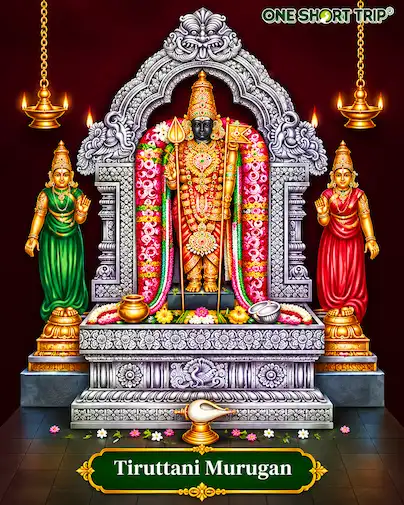

Lord Murugan shrine with attendants at Tiruttani Murugan Temple
Sacred Shrine of Lord Subramaniya Swamy
Temple courtyard and architecture at Tiruttani Murugan Temple in Tamil Nadu
Tiruttani Murugan Temple Courtyard

What Is the Religious and Spiritual Significance of Thiruthani Murugan Temple?

Thiruthani is one of the six most revered Murugan pilgrimage centres in Tamil tradition. Its spiritual identity combines divine courage, the calming of anger, devotion and the blessings of Murugan.

🛕

Fifth Arupadai Veedu

The temple is one of the six sacred abodes visited during a complete Murugan pilgrimage.

🙏

Peace After Victory

The story of Murugan's tranquillity after battle represents restraint and inner harmony.

⛰️

Sacred Hill and Steps

The 365-step ascent is traditionally linked with the days of the year and devotional effort.

🕉️

Tamil Bhakti Heritage

The shrine is celebrated through Tamil hymns and continuing Murugan worship.

Beliefs about the blessings or benefits of worship are matters of faith and may differ among devotees.

Why Are There 365 Steps at Thiruthani Murugan Temple?

The traditional stairway to Thiruthani Murugan Temple is described as having 365 steps, representing the days of a year. Many pilgrims regard climbing them as a symbolic act of offering the entire year to Lord Murugan.

The number gives the ascent a distinctive spiritual meaning, but visitors do not have to interpret it as a compulsory ritual. Those unable to climb should enquire locally about road access and available transport arrangements.

Is Climbing All 365 Steps Mandatory?

No. The steps are an important traditional approach to the shrine, but the hill also has road access. Availability of specific transport services and accessibility assistance should be checked before the visit.

How Does Thiruthani Fit into the Six Arupadai Veedu?

The traditional sequence includes Thiruparankundram, Tiruchendur, Palani, Swamimalai, Thiruthani and Pazhamudircholai. Thiruthani is the fifth abode, associated especially with peace following Murugan's victory.

Explore our complete Arupadai Veedu guide for the significance and locations of all six temples.

Continue Exploring

Plan Your Thiruthani and Arupadai Veedu Pilgrimage

Explore the six sacred abodes of Lord Murugan and plan a temple journey starting from Bengaluru with ONE SHORT TRIP.


How Far Is Tiruttani Murugan Temple from Tiruttani Town?

Tiruttani Murugan Temple is situated on a hill overlooking Tiruttani town in Tiruvallur district, Tamil Nadu. Visitors first reach the town and then proceed to the hilltop shrine using the traditional steps or the temple hill road.

The distance to the temple depends on your starting point in Tiruttani and whether you choose the walking route or road access.

By Temple Steps

365 Sacred Steps

The traditional staircase has 365 steps, symbolically associated with the days of the year. Devotees often climb the steps as an act of prayer.

By Hill Road

Road Access Available

A motorable road provides an alternative approach to the hilltop temple. Check current vehicle access and local transport arrangements before visiting.

How Can You Reach the Temple from the Foot of the Hill?

Pilgrims who prefer the traditional approach can climb the 365 steps. The ascent involves physical effort, particularly during hot weather.

Families with children, senior citizens and visitors with mobility difficulties may prefer the hill road. The availability of vehicles and the final walking distance may vary with local arrangements.

Travel Tip: If you plan to climb the steps, start during a cooler part of the day, carry drinking water and allow time for breaks. Avoid rushing the ascent.

What Are the Temple Timings of Tiruttani Murugan Temple?

Tiruttani Murugan Temple generally follows a daily worship schedule with morning and evening darshan periods. However, opening hours, pooja intervals and special darshan arrangements can change on festival days.

For accurate planning, visitors should confirm the current timings through the official temple administration or the Tamil Nadu Hindu Religious and Charitable Endowments Department.

Important Timing Information

Exact opening and closing hours have not been independently verified for this guide. Please check the latest official schedule before travelling rather than relying on potentially outdated timings.

How Can You Confirm Tiruttani Temple Timings?

Official Information

Check HR&CE

Refer to the Tamil Nadu HR&CE website for official temple information.

Darshan Schedule

Confirm Locally

Check current opening hours, afternoon intervals and worship arrangements.

Special Occasions

Festival Darshan

Verify any special arrangements for Krittigai, Skanda Sashti and other festivals.

Travel Planning

Allow Extra Time

Include time for hill access, queues, darshan and returning to the town.

Important: Regular darshan, special darshan and individual pooja timings may differ. Confirm availability and any applicable charges directly with the temple.

When Is the Best Time to Visit Tiruttani Murugan Temple?

The best time to visit Tiruttani Murugan Temple depends on whether you prefer a peaceful darshan, cooler weather or the devotional atmosphere of a major Murugan festival.

🌅

Early Morning

Early morning is generally a comfortable time for climbing the hill steps and visiting the temple before the day becomes hot.

Check the actual opening time before starting your ascent.

🌇

Evening

An evening visit can be more comfortable than a midday ascent, especially during warmer months.

Confirm the evening darshan schedule and hill transport arrangements.

🙏

Krittigai Days

Krittigai is especially significant in Murugan worship and attracts devotees seeking darshan and blessings.

Expect larger crowds than on ordinary weekdays.

🛕

Major Festivals

Aadi Krittigai, Skanda Sashti and other Murugan celebrations offer a vibrant devotional experience.

Plan additional time for queues and traffic.

Which Months Are Comfortable for Visiting?

November to February

These months are generally more comfortable for sightseeing and climbing the temple steps because daytime conditions are often milder than in peak summer.

During Summer

Summer temperatures can become uncomfortable, particularly on exposed steps. Avoid the hottest afternoon hours, stay hydrated and consider using the hill road.

What Are the Important Festivals Celebrated at Tiruttani Murugan Temple?

Tiruttani Murugan Temple is an important centre of Tamil Murugan worship. Several festivals throughout the Tamil calendar attract devotees from Tamil Nadu, Andhra Pradesh, Karnataka and other regions.

Major Murugan Festival

Aadi Krittigai

Aadi Krittigai is among the most important celebrations associated with Tiruttani Murugan Temple. Devotees visit to worship Lord Murugan, and the occasion is known for its strong devotional atmosphere and traditional offerings.

Festival of Murugan's Victory

Skanda Sashti

Skanda Sashti commemorates Lord Murugan's victory over Surapadman. It is observed through devotion, fasting and special worship in Murugan temples. Specific ceremonies at Tiruttani should be confirmed against the temple's annual calendar.

Monthly Sacred Occasion

Monthly Krittigai

Krittigai days are sacred to Lord Murugan. Many devotees choose these occasions for temple visits and prayer.

Important Tamil Festival

Thai Poosam

Thai Poosam is associated with Murugan devotion and is celebrated at Murugan temples. Pilgrims should check the temple's specific worship schedule and festival arrangements.

Tamil New Year

Tamil Puthandu

Tamil New Year is an auspicious occasion for temple worship. Devotees may visit Tiruttani to begin the new year with prayers to Lord Murugan.

Festival Planning: Festival dates follow the Tamil religious calendar and vary each year. Confirm the temple-specific programme, special darshan arrangements and traffic restrictions before travelling.

How to Reach Tiruttani Murugan Temple?

Tiruttani is accessible by road and rail. The temple is situated on a hill near Tiruttani town, making the town the main arrival point for pilgrims travelling from Chennai, Bengaluru and neighbouring regions.

How to Reach Tiruttani Murugan Temple from Bangalore?

Travellers from Bengaluru can reach Tiruttani by road, generally travelling through the southern Andhra Pradesh corridor towards Tiruttani. The exact route depends on the starting point, road conditions and navigation preferences.

Visitors planning to cover all six sacred abodes can include Tiruttani as part of a Murugan temple tour package from Bangalore .

Travel from Bengaluru

A private vehicle or organised pilgrimage tour can be convenient for families and groups. Check current road travel times and allow extra time for darshan and hill access.

How to Reach Tiruttani Murugan Temple from Chennai?

Tiruttani lies northwest of Chennai and is accessible through the Chennai–Tiruvallur–Tiruttani corridor. Visitors can travel by road or use available railway services.

After reaching Tiruttani town, continue towards the hill temple by the traditional steps or the road approach.

How to Reach Tiruttani Murugan Temple by Train?

Tiruttani Railway Station serves the town and provides a convenient arrival point for railway travellers. Check current train connections from your departure city before booking.

From the station, visitors can arrange local transport towards the temple hill.

How to Reach Tiruttani Murugan Temple by Bus?

Tiruttani is connected to surrounding towns by road transport. Bus availability and service frequency depend on the route and operating schedule.

From the local bus stand, pilgrims can continue towards the temple using available local transport.

How to Reach the Hilltop Temple?

🚶
365 Steps

Traditional walking approach

🚗
Hill Road

Alternative road access

🚕
Local Transport

Subject to availability

🚌
Public Transport

Check current services

Travel Recommendation: Families with senior citizens should check hill access arrangements before travelling. Road access can reduce the effort required compared with climbing all 365 steps.

How Much Time Is Required to Visit Tiruttani Murugan Temple?

The time needed for a visit depends on the queue, mode of hill access, whether you climb the steps and whether special worship is planned.

Type of Visit Suggested Planning Time
Short darshan with road access Allow approximately 1–2 hours
Temple visit with step climbing Allow approximately 2–3 hours
Relaxed visit with family Allow 2–3 hours or more
Festival or Krittigai visit Allow substantial extra time
Visit with nearby attractions Consider half a day or longer

These are suggested planning allowances, not official queue estimates. Actual darshan duration may be shorter or considerably longer depending on crowds and temple arrangements.

What Should You Know Before Visiting Tiruttani Murugan Temple?

A little preparation can make your pilgrimage to Tiruttani more comfortable, particularly if you plan to climb the sacred steps.

✓

Wear modest clothing: Choose attire appropriate for temple worship.

✓

Remove footwear: Follow the temple's instructions about where footwear must be removed.

✓

Carry drinking water: Stay hydrated, especially if climbing the hill steps.

✓

Avoid midday heat: Prefer cooler hours for the climb during warmer months.

✓

Respect photography restrictions: Photography may be restricted in sacred areas. Follow displayed instructions.

✓

Check darshan timings: Confirm the latest opening hours and special pooja schedules.

✓

Plan for festival crowds: Aadi Krittigai and other major occasions may involve longer queues.

✓

Consider accessibility: Senior citizens and visitors with mobility limitations should enquire about road access and transport options.

✓

Keep the surroundings clean: Avoid littering on the temple steps and around the hill.

✓

Follow temple staff instructions: Respect queue systems, worship procedures and any special restrictions.

What Are the Places to Visit Near Tiruttani Murugan Temple?

A visit to Tiruttani can be combined with other religious and cultural destinations in and around the town. The following places may be considered depending on your available time and travel route.

Sacred Water Body

Saravana Poigai

Saravana Poigai is a sacred temple tank associated with Tiruttani Murugan Temple. It forms part of the local religious landscape and is traditionally connected with the worship of Lord Murugan.

Hilltop Pilgrimage

Tiruttani Temple Hill and Sacred Steps

The temple hill itself is a major attraction. Visitors can experience the traditional 365-step approach, the hilltop setting and the devotional atmosphere surrounding the shrine.

Nearby Temple Town

Sholinghur

Sholinghur is known for its Narasimha pilgrimage traditions and hill temples. It may be considered as an additional spiritual destination when travelling through the region, subject to travel time and temple access arrangements.

Major Regional Pilgrimage

Tirupati and Tirumala

Tirupati and Tirumala in Andhra Pradesh are important Vaishnava pilgrimage destinations associated with Lord Venkateswara. They are not immediately beside Tiruttani, but travellers planning a longer temple journey may consider combining the destinations.

Historic Temple Destination

Kanchipuram

Kanchipuram is celebrated for its historic temples and religious heritage. It can be included in an extended Tamil Nadu temple itinerary, depending on the route and available time.

Planning Tip: Do not assume all these destinations can be covered comfortably in a short visit. Choose nearby stops based on your route, darshan priorities and travel time.

Can You Visit Tiruttani Murugan Temple Along with the Other Arupadai Veedu Temples?

Yes. Tiruttani is the fifth of the six sacred abodes of Lord Murugan. Devotees planning a complete Arupadai Veedu pilgrimage can include it with the other five temples across Tamil Nadu.

What Are the Six Arupadai Veedu Temples?

1
Thiruparankundram Murugan Temple

The first sacred abode, associated with Murugan's marriage to Deivanai.

2
Tiruchendur Murugan Temple

The second abode, celebrated for Murugan's victory over Surapadman.

3
Palani Murugan Temple

The third abode, associated with Murugan as Dhandayuthapani.

4
Swamimalai Murugan Temple

The fourth abode, associated with Murugan teaching the meaning of the Pranava mantra to Shiva.

5
Thiruthani Murugan Temple

The fifth abode, associated with Murugan's peace after his victory.

6
Pazhamudircholai Murugan Temple

The sixth abode, associated with Murugan, Valli, Deivanai and the sacred hill landscape near Madurai.

Read the complete Arupadai Veedu guide to understand the history, mythology and significance of all six temples.

Suggested One-Day Tiruttani Murugan Temple Visit Plan

If you have one day in Tiruttani, the following suggested plan allows time for hill access, darshan and a relaxed visit. This is a flexible sightseeing outline rather than a fixed temple schedule.

Time Suggested Activity
Early Morning Arrive in Tiruttani and proceed towards the temple hill.
Morning Climb the sacred steps or use the hill road, then have darshan of Lord Subramaniya Swamy.
Late Morning Spend time at the temple and descend towards the town.
Afternoon Have lunch and rest. Visit Saravana Poigai if accessible and suitable for your schedule.
Late Afternoon Explore the town or continue towards another planned pilgrimage destination.
Evening Begin your return journey or continue your extended temple tour.
Important Planning Note

The itinerary is indicative. Darshan queues, temple opening hours, weather, transport and festival crowds may change the order and duration of activities.

If you are travelling from Bengaluru on the same day, include the full road journey in your planning rather than treating this as a one-day round trip schedule.

ONE SHORT TRIP

Plan Your Arupadai Veedu Murugan Temple Tour from Bangalore

Planning to visit all six sacred abodes of Lord Murugan? ONE SHORT TRIP offers an Arupadai Veedu pilgrimage tour starting from Bengaluru, helping devotees explore the major Murugan temples of Tamil Nadu in a planned journey.

Discover the sacred significance of Thiruparankundram, Tiruchendur, Palani, Swamimalai, Thiruthani and Pazhamudircholai.

Visitor Information

Frequently Asked Questions About Tiruttani Murugan Temple

Find answers to common questions about Tiruttani Murugan Temple, including its history, mythology, 365 sacred steps, darshan timings, festivals, travel options and the Arupadai Veedu pilgrimage.

Where is Tiruttani Murugan Temple located?

Tiruttani Murugan Temple is located on a hill in Tiruttani town, Tiruvallur district, Tamil Nadu, India. It is one of the six sacred abodes of Lord Murugan, collectively known as Arupadai Veedu.

What is Tiruttani Murugan Temple famous for?

Tiruttani Murugan Temple is famous as the fifth Arupadai Veedu of Lord Murugan. It is associated with Murugan's peaceful state after his victory over Surapadman, his marriage to Valli in temple tradition, and the 365 sacred steps leading to the hilltop shrine.

Which God is worshipped at Tiruttani Temple?

The presiding deity is Lord Murugan, also worshipped as Subramaniya Swamy and Thanigai Murugan. He is revered as the divine son of Lord Shiva and Goddess Parvati.

Why is Tiruttani one of the six Arupadai Veedu temples?

Tiruttani is traditionally identified as the fifth of the six sacred abodes of Lord Murugan. It represents the peaceful aspect of Murugan following his victory over evil and holds an important place in Tamil devotional literature.

What is the story behind Tiruttani Murugan Temple?

According to temple tradition, Lord Murugan came to Tiruttani after defeating Surapadman and attained a state of peace. The hill is also associated with Murugan and Valli. These sacred traditions explain the temple's spiritual significance.

Why is Tiruttani associated with Lord Murugan's peace?

In traditional accounts, Tiruttani is the place where Murugan's anger subsided after the battle against Surapadman. The shrine therefore represents tranquillity, spiritual balance and divine grace.

How many steps are there at Tiruttani Murugan Temple?

There are traditionally 365 steps leading to Tiruttani Murugan Temple. The steps are symbolically associated with the 365 days of the year.

Is it compulsory to climb the 365 steps?

No. Devotees may choose to climb the traditional steps or use the hill road, subject to current vehicle access arrangements. The steps are a devotional tradition rather than a compulsory requirement for darshan.

Can Tiruttani Murugan Temple be reached by car?

Yes. A motorable road provides access towards the hilltop temple. Visitors should confirm current vehicle restrictions, parking arrangements and the remaining walking distance before travelling.

Can senior citizens visit Tiruttani Murugan Temple?

Yes. Senior citizens can visit Tiruttani Murugan Temple. Using the hill road may be more comfortable than climbing all 365 steps. Visitors with mobility difficulties should confirm accessibility arrangements in advance.

What are the darshan timings of Tiruttani Murugan Temple?

The temple follows daily worship and darshan schedules, but exact opening hours and pooja intervals should be confirmed through the official temple administration or Tamil Nadu HR&CE before travelling.

What is the best time to visit Tiruttani Murugan Temple?

Early morning or evening is generally more comfortable for a visit, especially for devotees planning to climb the steps. November to February usually offers milder weather than the peak summer months.

What are the important festivals celebrated at Tiruttani Temple?

Aadi Krittigai is one of the most important festivals associated with Tiruttani Murugan Temple. Other significant occasions include monthly Krittigai, Skanda Sashti, Thai Poosam and Tamil New Year. Confirm temple-specific festival programmes before visiting.

Is Tiruttani Temple crowded during Aadi Krittigai?

Yes. Aadi Krittigai attracts large numbers of Murugan devotees. Visitors should expect increased crowds, longer queues and possible changes to local traffic arrangements.

How much time is required to visit Tiruttani Murugan Temple?

Allow approximately one to three hours for a regular visit, depending on hill access, step climbing and darshan queues. Festival days may require substantially more time.

How do I reach Tiruttani Murugan Temple from Bangalore?

Travellers from Bengaluru can reach Tiruttani by road using suitable routes through southern Andhra Pradesh. Tiruttani can also be included in a planned Arupadai Veedu Murugan temple pilgrimage from Bangalore.

How do I reach Tiruttani Murugan Temple from Chennai?

Tiruttani can be reached from Chennai by road or available train services. After arriving in Tiruttani town, visitors can proceed towards the temple hill by local transport.

Which is the nearest railway station to Tiruttani Murugan Temple?

Tiruttani Railway Station serves the town. From the station, visitors can arrange local transport towards the hill temple. Check current train schedules and connections before travelling.

What is Saravana Poigai at Tiruttani?

Saravana Poigai is a sacred temple tank associated with Tiruttani Murugan Temple. It is part of the temple's traditional religious landscape and is connected with Murugan worship.

Who built Tiruttani Murugan Temple?

Tiruttani is an ancient centre of Murugan worship, with references in Tamil devotional traditions. Its temple complex developed through different historical periods, and it is not appropriate to attribute the entire present structure to a single builder without reliable historical evidence.

Is Tiruttani associated with Murugan's marriage to Valli?

Yes. Tiruttani is traditionally associated with Lord Murugan and Goddess Valli. The marriage narrative forms part of the wider sacred traditions surrounding Murugan's worship.

Is there an entry fee for Tiruttani Murugan Temple?

General entry arrangements and any charges for special darshan or particular services should be checked with the temple administration. Fees and available services may change.

Is photography allowed inside Tiruttani Murugan Temple?

Photography restrictions may apply within the temple, especially in the sanctum and other sacred areas. Visitors should follow displayed notices and instructions from temple authorities.

Can I visit all six Arupadai Veedu temples from Bangalore?

Yes. Devotees can plan a pilgrimage covering Thiruparankundram, Tiruchendur, Palani, Swamimalai, Thiruthani and Pazhamudircholai. ONE SHORT TRIP offers an Arupadai Veedu Murugan temple tour package starting from Bangalore.

Explore the Six Sacred Abodes with One Short Trip

Plan Your Arupadai Veedu Murugan Temple Tour from Bangalore

Tiruttani Murugan Temple is more than a hilltop shrine. It is one of the six sacred abodes of Lord Murugan, celebrated for its ancient devotional traditions, the 365 sacred steps and its association with divine peace.

For devotees planning to visit all six Arupadai Veedu temples, Tiruttani forms an important part of a spiritual journey through Tamil Nadu.

From Thiruparankundram and Tiruchendur to Palani, Swamimalai, Thiruthani and Pazhamudircholai, each sacred abode is associated with a different episode in the life and divine traditions of Lord Murugan.

Whether you are planning a family pilgrimage, travelling with senior citizens or hoping to complete the six sacred abodes in one journey, a thoughtfully planned itinerary can make your temple tour more comfortable.

At ONE SHORT TRIP, we organise temple tour packages from Bangalore, helping travellers explore important pilgrimage destinations with planned itineraries and travel arrangements.

Explore Arupadai Veedu Tour Package from Bangalore

Explore All Six Arupadai Veedu Murugan Temples

Temple Location

Where Is Tiruttani Murugan Temple Located?

Arulmigu Subramaniya Swamy Temple, popularly known as Tiruttani Murugan Temple or Thiruthani Murugan Temple, is located on a sacred hill in Tiruttani, Tiruvallur district, Tamil Nadu. Dedicated to Lord Murugan, this hilltop shrine is the fifth of the six Arupadai Veedu temples. The temple is famous for its 365 sacred steps and is an important pilgrimage destination for devotees travelling from Chennai, Bengaluru and other parts of South India.

Arulmigu Subramaniya Swamy Temple Tiruttani Temple Hill,
Tiruttani, Tiruvallur District,
Tamil Nadu, India
Get Directions

Planning A Trip Here?

Get help planning your visit — call or WhatsApp us and we will help you book a tour.