Pazhamudircholai Murugan Temple, Madurai
Discover the sixth sacred abode of Lord Murugan in the scenic Alagar Hills near Madurai, renowned for the legend of Avvaiyar, its spiritual significance and peaceful hill surroundings.
Arupadai Veedu Tour Packages from Bangalore
Planning to visit the Arupadai Veedu temples from Bangalore? One Short Trip runs guided Arupadai Murugan temple tours. Choose the tour that suits your group.
A short two-day Arupadai Murugan temple trip from Bangalore.
View 2-Day Arupadai Tour →A guided pilgrimage to the Arupadai Veedu Murugan temples from Bangalore.
View Arupadai Temple Tour →Not sure which to pick? Send us your dates and group size on WhatsApp.
About Pazhamudircholai Murugan Temple, Madurai
Located amid the green Alagar Hills near Madurai in Tamil Nadu, Pazhamudircholai Murugan Temple is revered as the sixth and final abode in the Arupadai Veedu pilgrimage. The temple is dedicated to Lord Murugan, also worshipped as Subramaniya Swamy, and is celebrated in Tamil devotional tradition for its wooded hill setting and association with the poet-saint Avvaiyar.
Unlike the coastal setting of Tiruchendur or the prominent hilltop pilgrimage at Palani, Pazhamudircholai is especially associated with a fertile grove and the natural landscape of the Alagar Hills. The temple is situated near the well-known Kallazhagar Temple at Azhagar Kovil, making the area important to both Murugan and Vishnu devotees.
One of the best-known stories connected with Pazhamudircholai describes Lord Murugan appearing as a young boy to test Avvaiyar's wisdom by asking whether she wanted hot or cold fruits. The encounter is remembered as a lesson in humility and the lifelong pursuit of knowledge.
For travellers exploring the six sacred abodes of Murugan, Pazhamudircholai offers a peaceful final stop near Madurai, combining temple worship, Tamil religious heritage and the scenery of the Alagar Hills.
Pazhamudircholai Murugan Temple – Quick Information
Travel note: Check current darshan timings, hill-road access and transport arrangements locally before visiting, especially during festivals.
What Is Pazhamudircholai Murugan Temple Famous For?
Pazhamudircholai is famous as the sixth Arupadai Veedu of Lord Murugan, its location among the wooded Alagar Hills, and the beloved Tamil legend of Avvaiyar's meeting with Murugan. The temple is also known for the worship of Murugan with Valli and Deivanai.
The Temple Is Particularly Known For
- Its place as the sixth and final sacred abode in the Arupadai Veedu tradition.
- The story of Lord Murugan testing the learned poet Avvaiyar with fruits.
- Its association with the fertile groves and natural beauty of the Alagar Hills.
- Worship of Lord Murugan alongside Valli and Deivanai.
- Its place in classical Tamil devotional traditions, including Tirumurugatrupadai.
- The nearby Noopura Gangai sacred spring.
- Its proximity to Azhagar Kovil and other Madurai pilgrimage sites.
The name is commonly associated with a grove abundant in ripe fruit, reflecting the natural setting celebrated in traditional descriptions of the sacred hill.

Where Is Pazhamudircholai Murugan Temple Located?
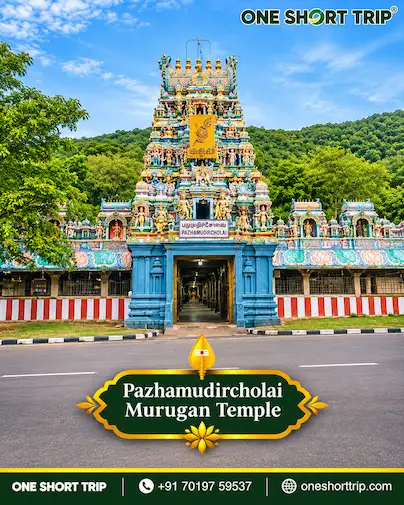
Pazhamudircholai Murugan Temple is located in the Alagar Hills (Azhagar Malai) near Azhagar Kovil, northeast of Madurai city in Tamil Nadu. The shrine is reached through the hill area above the Kallazhagar Temple.
Pazhamudircholai Murugan Temple,
Alagar Hills, Azhagar Kovil area,
Madurai District, Tamil Nadu, India.
Visitors generally travel from Madurai towards Azhagar Kovil and continue to the hill shrine using the permitted road or local transport arrangements. Access and parking may be regulated, so check the latest local instructions before travelling.
Because the temple is near Kallazhagar Temple, both shrines can often be included in the same Madurai-area pilgrimage itinerary, allowing sufficient time for darshan and travel between them.
What Is the Story of Pazhamudircholai Murugan Temple?
The best-known legend associated with Pazhamudircholai is the encounter between Lord Murugan and Avvaiyar, the respected Tamil poet remembered for her learning and wisdom. It is a devotional story about humility and the recognition that learning never truly ends.
Why Did Lord Murugan Ask Avvaiyar About Hot and Cold Fruits?
According to the popular Tamil tradition, Avvaiyar was travelling through a wooded area when she stopped to rest beneath a fruit tree. A young boy seated in the tree asked whether she wanted hot fruits or cold fruits.
Avvaiyar found the question unusual. Fruit from a tree was not normally described as hot or cold, but she answered that she wanted the cold fruits.
The boy shook the tree, causing fruits to fall to the ground. When Avvaiyar picked them up, she blew away the dust and soil. The boy playfully asked why she was blowing on the fruits if they were not hot.
Avvaiyar realised that the seemingly simple boy had challenged her understanding through a clever play on words. In the traditional telling, the boy revealed himself as Lord Murugan.
The story teaches that even a highly learned person must remain humble and open to new knowledge. Its connection with Pazhamudircholai is cherished in Tamil Murugan devotion.
What Does the Story of Avvaiyar and Murugan Teach?
The legend is not simply about fruit. It presents Murugan as a divine teacher who reveals the limits of intellectual pride. Avvaiyar's willingness to recognise her own misunderstanding makes the story an enduring lesson in humility, wisdom and lifelong learning.
Tradition and history: The encounter with Avvaiyar is a devotional legend. It should be presented as a traditional sacred story rather than a historically verified event.
Why Is Pazhamudircholai Called a Sacred Grove?
Pazhamudircholai is associated with a fertile, fruit-bearing landscape. Tamil devotional descriptions celebrate the natural abundance of the hill, where trees, vegetation and the surrounding landscape form part of the shrine's sacred identity.
This connection between nature and worship makes Pazhamudircholai distinct within the six sacred abodes. The wooded environment is not merely a backdrop; it is part of the traditional image of Murugan's presence at the hill.
What Is the History of Pazhamudircholai Murugan Temple?
Pazhamudircholai has an important place in Tamil religious literature and the long tradition of Murugan worship. Its sacred identity is associated with the Alagar Hills and the devotional descriptions of Murugan's abodes.
The Tirumurugatrupadai, an early Tamil devotional poem attributed to Nakkirar, is a key literary source in the tradition of Murugan's six abodes. Pazhamudircholai is recognised in the Arupadai Veedu tradition as the sixth abode.
It is important to distinguish the antiquity of the sacred site and its literary traditions from the age of the present temple buildings. A single verified original construction date or one definitive historical builder should not be asserted without specific archaeological or inscriptional evidence.
Ancient Tamil Literary Connections
The sacred landscape of Pazhamudircholai is closely connected with Tamil devotional poetry. The association with Murugan, hills, groves and natural abundance reflects the central role of landscape in classical Tamil religious imagination.
How Did the Temple Become Part of Arupadai Veedu?
The Arupadai Veedu tradition identifies six especially revered shrines of Murugan, each associated with distinctive stories and forms of devotion. Pazhamudircholai is the sixth, and its literary and religious associations have made it an essential stop for pilgrims completing the circuit.
Who Built Pazhamudircholai Murugan Temple?
The shrine has longstanding devotional importance, but the original builder of the entire present-day temple complex cannot be confidently identified from the information available here. The temple should not be assigned to a particular king or a precise construction year without reliable evidence.
Historical and Traditional Timeline
Pazhamudircholai is associated with Murugan devotion and the literary heritage of the Alagar Hills.
The site is revered as the sixth of the six sacred abodes of Lord Murugan.
The Avvaiyar fruit story becomes one of the best-known narratives associated with the shrine.
Devotees visit the hill temple and nearby sacred sites as part of Murugan and Madurai-area pilgrimage itineraries.
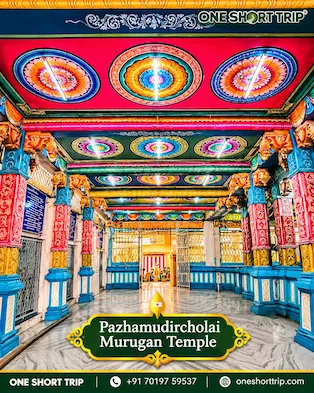
Who Is the Main Deity of Pazhamudircholai Murugan Temple?
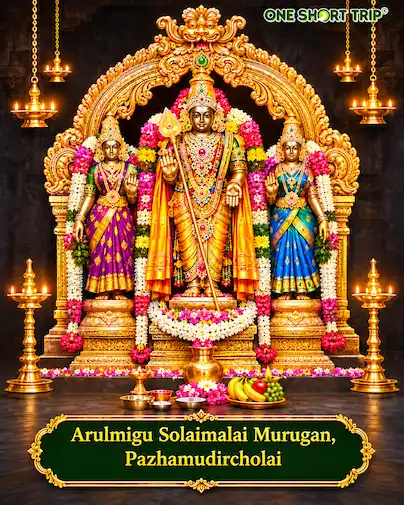
The presiding deity is Lord Murugan, also called Subramaniya Swamy, Kartikeya and Skanda in different traditions. Pazhamudircholai is particularly known for the worship of Murugan together with his divine consorts, Valli and Deivanai.
Murugan is revered as the son of Lord Shiva and Goddess Parvati, a divine warrior and a source of wisdom and grace. At Pazhamudircholai, his association with the Avvaiyar legend highlights his role as a teacher who dispels pride and encourages understanding.
What Is Special About Murugan with Valli and Deivanai?
Valli and Deivanai represent two important devotional traditions associated with Murugan. Their presence alongside the deity at Pazhamudircholai is one of the features that distinguishes the shrine in the minds of many pilgrims.
What Is the Religious and Spiritual Significance of Pazhamudircholai Temple?
Pazhamudircholai holds a special place in Murugan worship because it brings together the sixth Arupadai Veedu tradition, the teaching of humility through Avvaiyar's story, and the sacred natural landscape of the Alagar Hills.
Sixth Arupadai Veedu
The temple is an essential destination for devotees wishing to visit all six sacred abodes of Lord Murugan.
Wisdom and Humility
The Avvaiyar legend celebrates humility, curiosity and the understanding that knowledge is never complete.
Sacred Hill Landscape
The wooded Alagar Hills and fertile grove imagery are central to the shrine's devotional identity.
Murugan, Valli and Deivanai
Devotees worship Lord Murugan with his divine consorts and seek blessings through prayer and darshan.
Beliefs about the spiritual benefits of worship are matters of faith and may vary among devotees.
What Is the Connection Between Pazhamudircholai Temple and Noopura Gangai?
Noopura Gangai, also spelled Nupura Gangai, is a sacred spring in the Alagar Hills associated with the nearby Azhagar Kovil religious landscape. It is an important pilgrimage site for visitors to the hill area.
The spring has particular significance in local Vaishnava traditions connected with Lord Kallazhagar. Travellers visiting Pazhamudircholai may also wish to explore the spring where access is permitted and conditions are suitable.
Visitor note: Noopura Gangai is a separate sacred site, not the main sanctum of Pazhamudircholai Murugan Temple. Access may involve steps and local restrictions; check before including it in your itinerary.
Can You Visit Pazhamudircholai and Kallazhagar Temple Together?
Yes. Pazhamudircholai and Kallazhagar Temple are located within the same broader Alagar Hills pilgrimage area. Many visitors combine them in one trip, although actual travel time depends on hill-road access, queues and transport arrangements.
Explore All Six Arupadai Veedu Murugan Temples
Discover the six sacred abodes of Lord Murugan through ONE SHORT TRIP's detailed temple guides. Pazhamudircholai is traditionally the sixth and final abode in this pilgrimage.

How Far Is Pazhamudircholai Murugan Temple from Madurai?
Pazhamudircholai Murugan Temple is located in the Alagar Hills, approximately 25–30 km from central Madurai, depending on the starting point and road route. The temple lies above the Azhagar Kovil area, where the famous Kallazhagar Temple is situated.
Indicative road distance from central Madurai. Confirm your exact route using current navigation.
Continue from the Azhagar Kovil area towards the hill shrine using permitted local transport.
Distance from Madurai City
Visitors generally travel northeast from Madurai towards Azhagar Kovil. After reaching the foothill temple area, the journey continues towards Pazhamudircholai along the hill road.
The travel time depends on traffic, the availability of hill transport and restrictions that may apply during festivals or busy pilgrimage periods.
Distance from Kallazhagar Temple
Kallazhagar Temple is located at the foothills, while Pazhamudircholai Murugan Temple is situated farther up the Alagar Hills. The two temples are commonly combined in the same pilgrimage.
Although they are in the same religious landscape, visitors should not assume that both temples share the same opening hours or transport arrangements.
Travel tip: Check hill-road access and local transport before departure. The final approach may be subject to vehicle restrictions, particularly during crowded festival periods.
What Are the Temple Timings of Pazhamudircholai Murugan Temple?
Pazhamudircholai Murugan Temple generally follows morning and evening worship periods. However, opening hours, midday closures, special darshan arrangements and festival schedules can change.
Because the current temple-specific schedule has not been independently verified for this guide, visitors should confirm the latest timings directly with the temple or its official administration before travelling.
Please confirm the current morning opening time, afternoon break, evening reopening and closing time before your visit. Do not rely on the timings of nearby Kallazhagar Temple, as it is a separate shrine.
How Can You Confirm Pazhamudircholai Temple Timings?
Look for the latest temple announcements or Tamil Nadu HR&CE information where available.
Check the current darshan schedule with the temple administration before travelling.
Ask whether Skanda Sashti, Thaipusam or other celebrations affect the normal schedule.
Account for hill-road travel, queues, parking and local transport arrangements.
Important: The opening hours of Kallazhagar Temple, Noopura Gangai and Pazhamudircholai Murugan Temple may differ. Verify each location separately if visiting all three.
When Is the Best Time to Visit Pazhamudircholai Murugan Temple?
The best time to visit depends on whether you prefer a peaceful darshan, comfortable weather or the devotional atmosphere of a major Murugan festival.
Early Morning
Morning is generally a good choice for a more comfortable journey through the Alagar Hills. Confirm the temple opening time before setting out.
Evening
An evening visit can be pleasant when the weather is cooler. Check closing times and the availability of return transport from the hill.
Post-Monsoon Season
The hills can appear especially green after rainfall. Roads and walking surfaces may be slippery, so exercise caution.
Murugan Festival Days
Festivals such as Skanda Sashti and Thaipusam are important to Murugan devotees. Expect larger crowds and possible changes to access arrangements.
Which Months Are Comfortable for Visiting?
These months are generally more comfortable for sightseeing around Madurai and the Alagar Hills because temperatures are comparatively milder.
Madurai can experience intense summer heat. Plan temple visits during cooler hours, carry drinking water and avoid unnecessary exposure to the midday sun.
What Are the Important Festivals Associated with Pazhamudircholai Murugan Temple?
As one of the six sacred abodes of Lord Murugan, Pazhamudircholai is associated with important occasions in the Tamil Murugan devotional calendar. The exact ceremonies and dates observed at the shrine should be confirmed with the temple.
Skanda Sashti
Skanda Sashti is one of the major festivals dedicated to Lord Murugan. It commemorates his victory over the demon Surapadman in Hindu devotional tradition.
Thaipusam
Thaipusam is an important occasion for Murugan worship, marked by prayers, vows and devotional observances in many Murugan temples.
Vaikasi Visakam
Vaikasi Visakam is traditionally associated with Lord Murugan's divine appearance and is observed by devotees through worship and special prayers.
Monthly Karthigai
Karthigai star days are significant in Murugan worship. Devotees may choose these occasions for special prayers and darshan.
Panguni Uthiram
Panguni Uthiram is an important festival in Tamil Hindu tradition, particularly associated with divine marriages and the worship of Murugan.
Festival planning: These are important Murugan festivals, but this list is not a verified schedule of ceremonies at Pazhamudircholai. Confirm temple-specific events, darshan arrangements and transport restrictions before planning your trip.
How to Reach Pazhamudircholai Murugan Temple?
Pazhamudircholai Murugan Temple can be reached through the Azhagar Kovil area near Madurai. Visitors travelling from other cities generally reach Madurai first and continue by road towards the Alagar Hills.
How to Reach from Madurai?
From Madurai, travel towards Azhagar Kovil and continue towards the Pazhamudircholai hill shrine. The availability of private vehicle access, shuttle services and other transport may depend on current local regulations.
Before booking a vehicle, confirm whether it can travel to the upper temple area or whether you must change to an authorised local service.
How to Reach Pazhamudircholai Temple from Bangalore?
Travellers from Bangalore (Bengaluru) can reach Madurai by road, train or flight and continue towards Azhagar Kovil. By road, the journey is long enough that an overnight or multi-day pilgrimage is generally more practical than a same-day return.
For devotees planning to visit all six Arupadai Veedu temples, Pazhamudircholai can be combined with Thiruparankundram Murugan Temple, another sacred abode located in the Madurai area.
How to Reach Pazhamudircholai Temple from Chennai?
Travellers from Chennai can reach Madurai by road, rail or air. From Madurai, continue towards Azhagar Kovil and the Pazhamudircholai hill shrine using suitable local transport.
How to Reach by Train?
Madurai Junction is a major railway station serving the city. After arriving, visitors can arrange a taxi or use suitable local transport connections towards Azhagar Kovil.
Check the latest train schedules and the onward journey before departure.
How to Reach by Flight?
Madurai Airport is the nearest major commercial airport serving the region. Visitors arriving by flight can continue by road towards the Alagar Hills.
How to Reach by Bus?
Madurai is connected by bus services to numerous cities and towns. Local bus connections towards Azhagar Kovil may be available, but the onward journey to the hill shrine should be checked separately.
Families, senior citizens and visitors combining multiple temples should plan transport carefully. Check the last available return service from the hill and allow extra time for darshan.
How Much Time Is Required to Visit Pazhamudircholai Murugan Temple?
The time required depends on the crowd, your transport arrangement and whether you are also visiting Kallazhagar Temple or Noopura Gangai.
| Type of Visit | Suggested Time |
|---|---|
| Short temple darshan | 30–45 minutes, excluding travel and queues |
| Relaxed temple visit | 45–60 minutes, excluding travel and queues |
| Visit with Kallazhagar Temple | Allow approximately half a day for both destinations |
| Visit with Noopura Gangai | Allow additional time for access and walking |
| Visit during major festivals | Allow substantial extra time for crowds and transport |
These are suggested planning estimates, not official darshan durations. Actual time requirements can vary considerably during festivals and weekends.
What Should You Know Before Visiting Pazhamudircholai Murugan Temple?
A little preparation can make your visit to Pazhamudircholai more comfortable, particularly because the temple is situated in a hill environment.
Wear modest clothing: Choose attire appropriate for Hindu temple worship.
Remove footwear: Follow the temple's footwear rules before entering designated areas.
Confirm darshan timings: Check opening hours and possible midday closures before travelling.
Check hill transport: Confirm vehicle access, shuttle availability and return arrangements.
Carry drinking water: Keep hydrated, especially during the hotter months.
Respect the natural surroundings: Do not litter or disturb animals and vegetation in the hill area.
Follow photography restrictions: Photography may be restricted in sacred areas, particularly near the sanctum.
Prepare for festival crowds: Expect longer queues and possible traffic restrictions on important occasions.
Consider accessibility: Check walking distances, steps and transport access if travelling with senior citizens or visitors with limited mobility.
Check weather conditions: Hill roads and walking areas can become slippery during or after rain.
What Are the Places to Visit Near Pazhamudircholai Murugan Temple?
Pazhamudircholai can be combined with several important temples and attractions in and around Madurai. These places offer visitors a broader experience of the region's religious traditions, architecture and cultural heritage.
Kallazhagar Temple – Azhagar Kovil
Kallazhagar Temple is a celebrated Vishnu shrine situated at the foothills of the Alagar Hills. Dedicated to Lord Kallazhagar, a form of Vishnu, it is closely associated with the religious traditions of Madurai and the famous Chithirai festival.
Noopura Gangai
Noopura Gangai is a sacred spring in the Alagar Hills, particularly associated with the Kallazhagar temple tradition. Visitors may include it in their pilgrimage if access is permitted and conditions are suitable.
Thiruparankundram Murugan Temple
Thiruparankundram is the first of the six sacred abodes of Lord Murugan. It is especially associated with Murugan's marriage to Deivanai and is an important pilgrimage destination near Madurai.
Meenakshi Amman Temple
Meenakshi Amman Temple is one of the most celebrated temples in Tamil Nadu. Dedicated to Goddess Meenakshi and Lord Sundareswarar, it is famous for its towering gopurams, sculptural details and religious significance.
Koodal Azhagar Temple
Koodal Azhagar Temple is an important Vishnu temple in Madurai, known for its religious heritage and distinctive temple architecture.
Thirumalai Nayakkar Mahal
Thirumalai Nayakkar Mahal is a historic palace in Madurai, recognised for its grand arches, columns and Indo-Saracenic architectural influences. It can be included in a broader Madurai sightseeing itinerary.
If you are planning several temple visits in Madurai, allow enough time for travel and darshan. Pazhamudircholai's hill location makes it sensible to check transport arrangements before fixing the order of your visits.
Can You Visit Pazhamudircholai and Thiruparankundram Murugan Temples on the Same Day?
Yes. Both temples are located in the wider Madurai region, making it possible to visit the first and sixth Arupadai Veedu temples on the same day, provided you plan transport and darshan times carefully.
Suggested Order of Visits
Start with darshan at the first Arupadai Veedu, subject to temple opening hours.
Continue across the Madurai region towards the Alagar Hills.
Offer prayers at the important Vishnu shrine at the foothills, if its darshan schedule permits.
Continue to the sixth Arupadai Veedu and spend time in prayer.
Return to the city or continue with other sightseeing if time permits.
On major Murugan festival days, allow additional time for queues, traffic and hill-road transport. The suggested sequence may need to be reversed depending on opening hours.
Suggested One-Day Madurai Murugan Temple Visit Plan
If you have one day in Madurai and want to visit both Thiruparankundram and Pazhamudircholai, the following flexible itinerary provides a practical starting point.
| Time | Suggested Activity |
|---|---|
| Early Morning | Visit Thiruparankundram Murugan Temple |
| Morning | Travel towards Azhagar Kovil |
| Late Morning | Visit Kallazhagar Temple, subject to darshan timings |
| Midday | Lunch, rest and confirm hill transport availability |
| Afternoon | Visit Pazhamudircholai Murugan Temple when open |
| Late Afternoon | Consider Noopura Gangai if access and time permit |
| Evening | Return to Madurai or continue your journey |
This is a suggested itinerary, not a fixed temple schedule. Actual visiting order should be adjusted to the day's opening hours, hill-road access, travel conditions and darshan queues.
Travelling from Bengaluru? Consider an overnight or multi-day pilgrimage rather than attempting a rushed same-day return. A longer itinerary can also include other temples in the Arupadai Veedu circuit.
Frequently Asked Questions About Pazhamudircholai Murugan Temple
Find answers to common questions about Pazhamudircholai Murugan Temple, including its history, significance as the sixth Arupadai Veedu, Lord Murugan and Avvaiyar, temple timings, travel from Madurai and Bangalore, and nearby attractions.
Where is Pazhamudircholai Murugan Temple located?
Pazhamudircholai Murugan Temple is located in the Alagar Hills near Azhagar Kovil, approximately 25–30 kilometres from central Madurai, Tamil Nadu. It is situated in a scenic hill environment surrounded by greenery.
What is Pazhamudircholai Murugan Temple famous for?
The temple is famous as the sixth of the Arupadai Veedu, the six sacred abodes of Lord Murugan. It is also associated with the popular Tamil legend in which Murugan appears as a young boy and tests the wisdom of the poet Avvaiyar.
Which God is worshipped at Pazhamudircholai Temple?
The presiding deity is Lord Murugan, also known as Subramanya, Karthikeya and Skanda. The shrine is traditionally associated with Murugan alongside his consorts Valli and Deivanai.
Why is Pazhamudircholai called the sixth Arupadai Veedu?
Pazhamudircholai is traditionally recognised as the sixth and final sacred abode in the Arupadai Veedu pilgrimage circuit. The six abodes are important centres of Murugan worship celebrated in Tamil devotional tradition.
What is the story of Lord Murugan and Avvaiyar at Pazhamudircholai?
According to a popular Tamil legend, Lord Murugan appeared as a young boy sitting on a fruit tree and asked the learned poet Avvaiyar whether she wanted hot or cold fruits. His playful question revealed that even a great scholar has more to learn, teaching humility and the importance of continuous learning.
What does the name Pazhamudircholai mean?
Pazhamudircholai is commonly understood as a grove or wooded landscape abundant with ripe fruits. The name reflects the fertile, natural setting traditionally associated with Lord Murugan's sacred hill abode.
Is Pazhamudircholai Temple located on a hill?
Yes. The temple is situated in the Alagar Hills near Madurai. Visitors generally travel through the Azhagar Kovil area before continuing towards the hill shrine.
What are the timings of Pazhamudircholai Murugan Temple?
Temple darshan generally follows morning and evening worship periods, but the current opening hours, midday closure and festival schedules should be confirmed with the temple administration before travelling.
How far is Pazhamudircholai Temple from Madurai?
Pazhamudircholai Murugan Temple is approximately 25–30 kilometres from central Madurai by road, depending on your starting point and route. The journey includes travel towards Azhagar Kovil and the Alagar Hills.
How can I reach Pazhamudircholai Murugan Temple?
Reach Madurai first and travel towards Azhagar Kovil by car, taxi or suitable public transport. From the foothill area, continue to the hill shrine using the transport arrangements currently permitted by local authorities.
Can I reach Pazhamudircholai Temple by car?
Visitors can travel by car or taxi towards Azhagar Kovil. Access to the upper hill road may be regulated, so confirm whether private vehicles are permitted or whether an authorised local transport service is required.
Can senior citizens visit Pazhamudircholai Murugan Temple?
Yes, many families visit the temple with senior citizens. However, because the shrine is in a hill area, visitors should check vehicle access, walking distances, steps and available facilities before travelling.
How much time is required to visit Pazhamudircholai Temple?
Allow approximately 30–60 minutes for a normal temple visit, excluding travel and waiting time. During festivals, queues and hill transport arrangements can increase the total duration considerably.
What is the best time to visit Pazhamudircholai Temple?
November to February is generally more comfortable for visiting Madurai and the Alagar Hills. Early morning visits can also help avoid the strongest daytime heat, provided the temple is open.
Which festivals are important at Pazhamudircholai Murugan Temple?
Important occasions in Murugan worship include Skanda Sashti, Thaipusam, Vaikasi Visakam, Panguni Uthiram and monthly Karthigai days. Confirm the temple-specific festival programme and special darshan arrangements before visiting.
What is the connection between Pazhamudircholai and Kallazhagar Temple?
Kallazhagar Temple, also known as Azhagar Kovil, is a famous Vishnu temple located at the foothills of the Alagar Hills. Pazhamudircholai Murugan Temple is situated farther up the hills. Pilgrims frequently combine both shrines in one visit.
What is Noopura Gangai near Pazhamudircholai Temple?
Noopura Gangai is a sacred spring in the Alagar Hills associated with the religious traditions of Kallazhagar Temple. Visitors may include it in their pilgrimage, subject to current access conditions.
Can I visit Pazhamudircholai and Thiruparankundram on the same day?
Yes. Both temples are in the Madurai region. Thiruparankundram is the first Arupadai Veedu and Pazhamudircholai is the sixth. With suitable transport and enough time for darshan, both can be included in a one-day pilgrimage.
Which places can I visit near Pazhamudircholai Temple?
Nearby attractions include Kallazhagar Temple, Noopura Gangai and the Alagar Hills. A longer Madurai itinerary can include Thiruparankundram Murugan Temple, Meenakshi Amman Temple, Koodal Azhagar Temple and Thirumalai Nayakkar Mahal.
Is there an entry fee at Pazhamudircholai Murugan Temple?
General entry, special darshan, transport and other charges may be subject to different arrangements. Check the current fees with the temple administration rather than relying on outdated online information.
Is photography allowed inside Pazhamudircholai Temple?
Photography restrictions may apply within the temple, especially near the sanctum. Follow the notices and instructions issued by temple authorities.
How can I visit Pazhamudircholai Murugan Temple from Bangalore?
Travellers from Bangalore can reach Madurai by road, train or flight, then continue to Azhagar Kovil and Pazhamudircholai. An overnight or multi-day itinerary is generally more practical than attempting a same-day return by road.
Can Pazhamudircholai be included in an Arupadai Veedu pilgrimage?
Yes. Pazhamudircholai is the sixth sacred abode of Lord Murugan and an important destination in the Arupadai Veedu pilgrimage. Devotees can combine it with Thiruparankundram near Madurai and plan the remaining four temples as part of a longer Tamil Nadu journey.
Why is Pazhamudircholai spiritually significant?
Pazhamudircholai is revered as one of Murugan's six sacred abodes and is celebrated in Tamil devotional tradition. Its association with the Avvaiyar legend highlights wisdom, humility and the belief that divine grace can guide spiritual understanding.
Plan Your Pazhamudircholai Murugan Temple Trip from Bangalore
Nestled in the beautiful Alagar Hills near Madurai, Pazhamudircholai Murugan Temple is one of Tamil Nadu's most revered pilgrimage destinations. As the sixth sacred abode of Lord Murugan, it holds a special place in the hearts of devotees.
From the sacred hill shrine of Pazhamudircholai to the historic Kallazhagar Temple and nearby Noopura Gangai, the region offers a memorable combination of devotion, heritage and natural beauty.
Devotees can also visit Thiruparankundram Murugan Temple, the first Arupadai Veedu, during the same Madurai pilgrimage. Travellers wishing to explore all six sacred abodes can plan a longer journey covering the important Murugan temples across Tamil Nadu.
At ONE SHORT TRIP, we organise temple tours and pilgrimage journeys from Bangalore, helping travellers explore sacred destinations through thoughtfully planned itineraries and practical travel arrangements.
Explore the Six Sacred Abodes of Lord Murugan
Planning a Murugan Temple Pilgrimage from Bengaluru?
Explore the sacred abodes of Lord Murugan with ONE SHORT TRIP. Get in touch to enquire about upcoming temple journeys, available itineraries and travel arrangements from Bangalore.
Explore ONE SHORT TRIP Tours →Where Is Pazhamudircholai Murugan Temple Located?
Pazhamudircholai Murugan Temple is located in the scenic Alagar Hills near Azhagar Kovil, approximately 25–30 km from Madurai city in Tamil Nadu. Dedicated to Lord Murugan, this sacred hill shrine is revered as the sixth and final Arupadai Veedu. Surrounded by lush greenery, the temple is closely associated with the famous legend of Lord Murugan and the Tamil poet Avvaiyar.
You May Also Like
Planning A Trip Here?
Get help planning your visit — call or WhatsApp us and we will help you book a tour.