
Panna Meena ka Kund – A Historic Stepwell of Amer
Panna Meena ka Kund, also known as Panna Miyan ka Kund or Panna Miyan ki Baoli, is a historic stepwell in Amer, Jaipur, Rajasthan. Located close to the famous Amer Fort, this remarkable water structure is known for its carefully arranged staircases, geometric symmetry and connection with the traditional water-management system of historic Rajasthan.
While Amer Fort represents the royal and military side of the old Kachwaha capital, Panna Meena ka Kund offers a glimpse into the practical infrastructure that helped sustain life in the settlement. The stepwell was associated with collecting and storing water in a region where rainfall is seasonal and prolonged dry periods are common. Today, it is one of the most distinctive heritage attractions to add to an Amer sightseeing itinerary.
Panna Meena ka Kund at a Glance
Panna Meena ka Kund History
Panna Meena ka Kund is generally associated with the historic development of Amer during the period when Amer served as the capital of the Kachwaha rulers before the capital was shifted to Jaipur. Rajasthan government tourism material places the stepwell in the context of 16th-century Amer and describes it as a structure created to collect monsoon rainwater and provide a reservoir in a water-scarce landscape.
The exact history of its construction is less certain than the structure itself. Different local traditions associate the name with Panna Meena or Panna Miyan, and stories about its builder and purpose vary between sources. Rather than presenting one version as proven fact, it is better to understand these accounts as part of the oral history and folklore surrounding old Amer.
What is firmly established is the monument's importance as part of Amer's historic water architecture. The Rajasthan Department of Archaeology lists Panna Miyan Ka Kund among the protected monuments of Amber, confirming its heritage significance.
Why Was Panna Meena ka Kund Built?
The primary purpose of a stepwell was water storage and access. Rajasthan receives much of its annual rainfall during a relatively short monsoon period, followed by long dry periods. Structures such as stepwells helped communities capture and retain water and provided a practical way to reach the water as its level changed.
The deep, stepped design also created a naturally cooler environment below ground level. Historically, such spaces could serve more than a purely functional purpose: people came to collect water, rest in the shade and interact with others in the community. Panna Meena ka Kund therefore represents an important connection between water engineering, climate adaptation and everyday life in historic Amer.
Panna Meena ka Kund Architecture
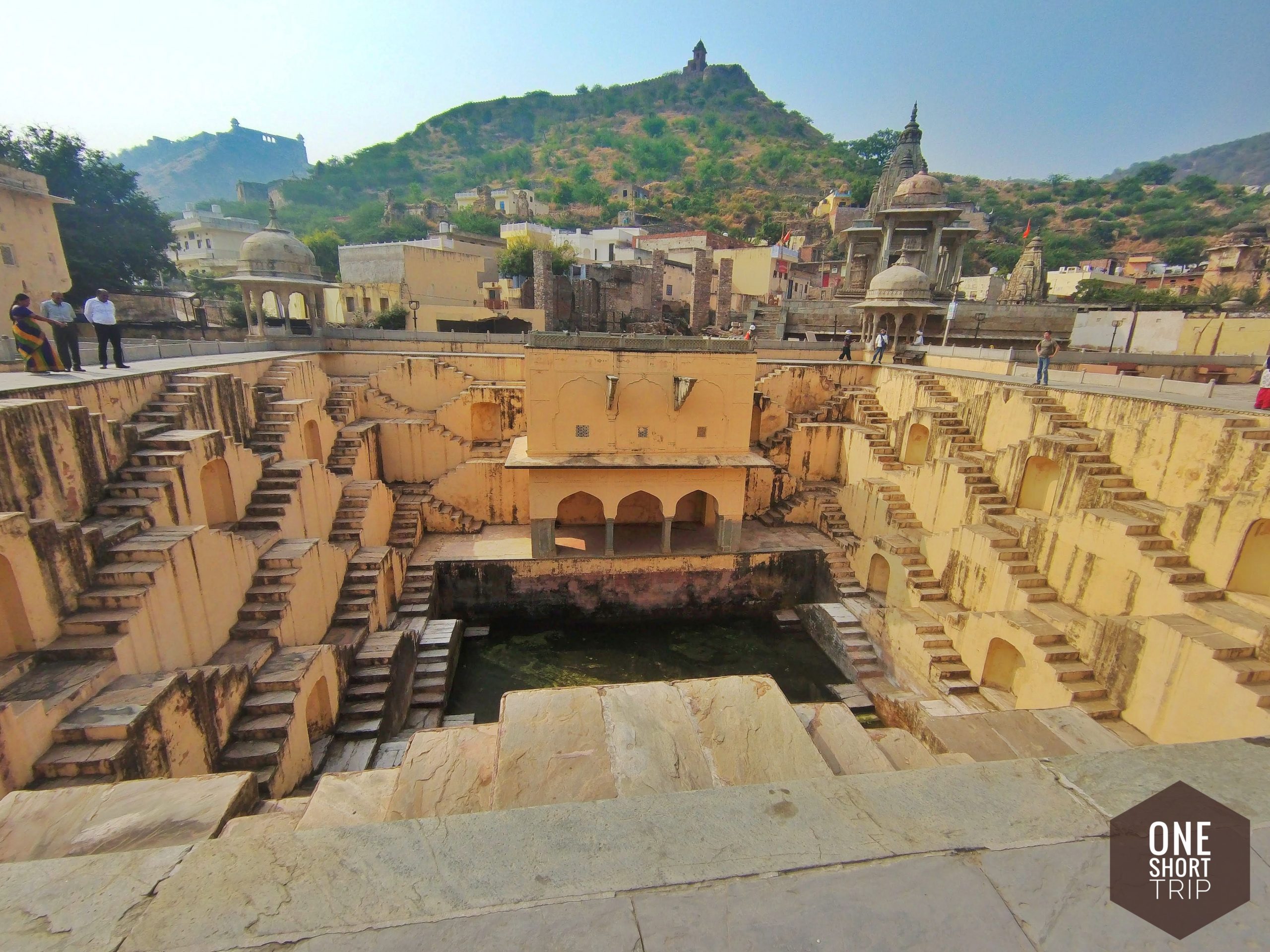
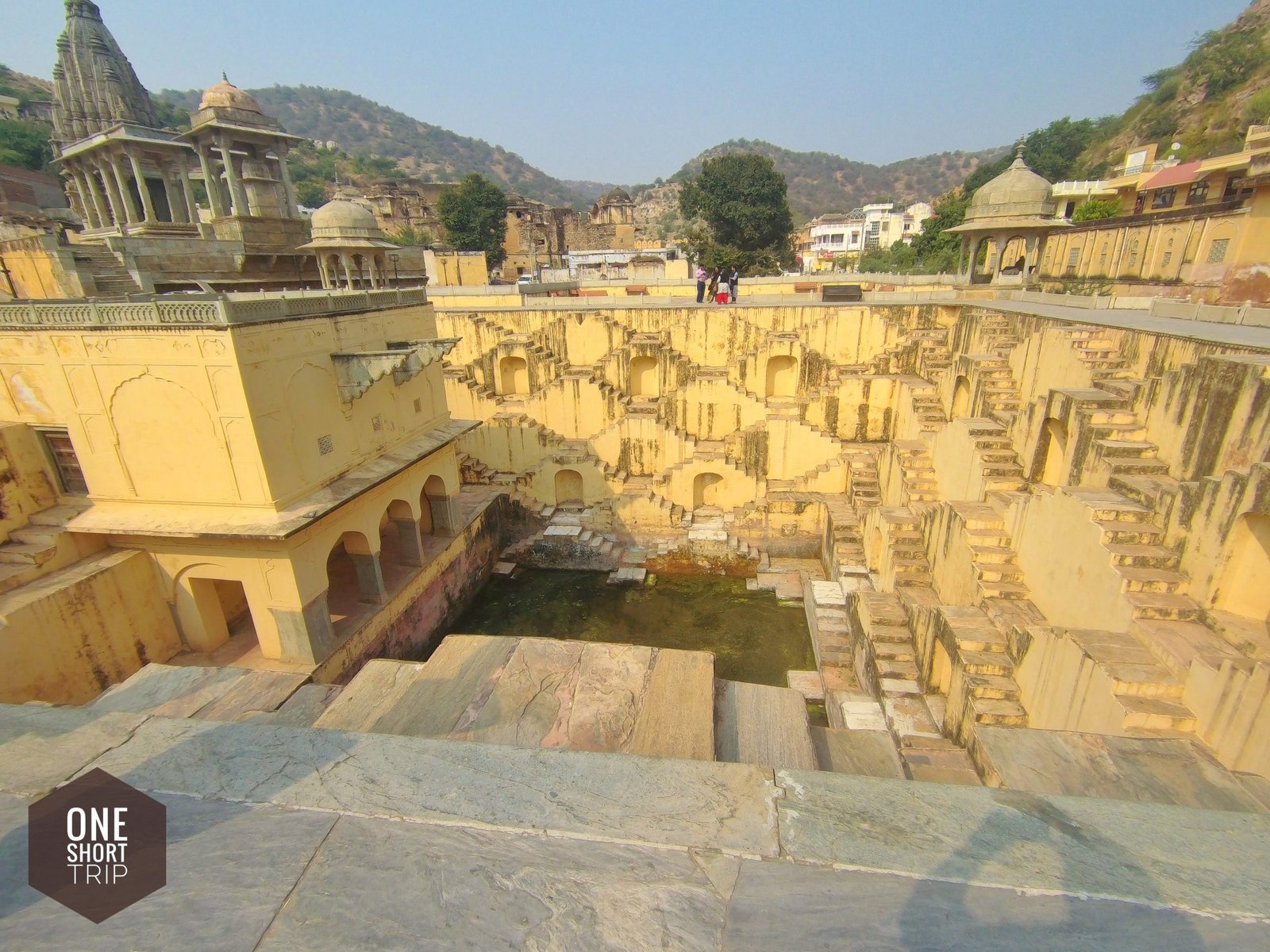
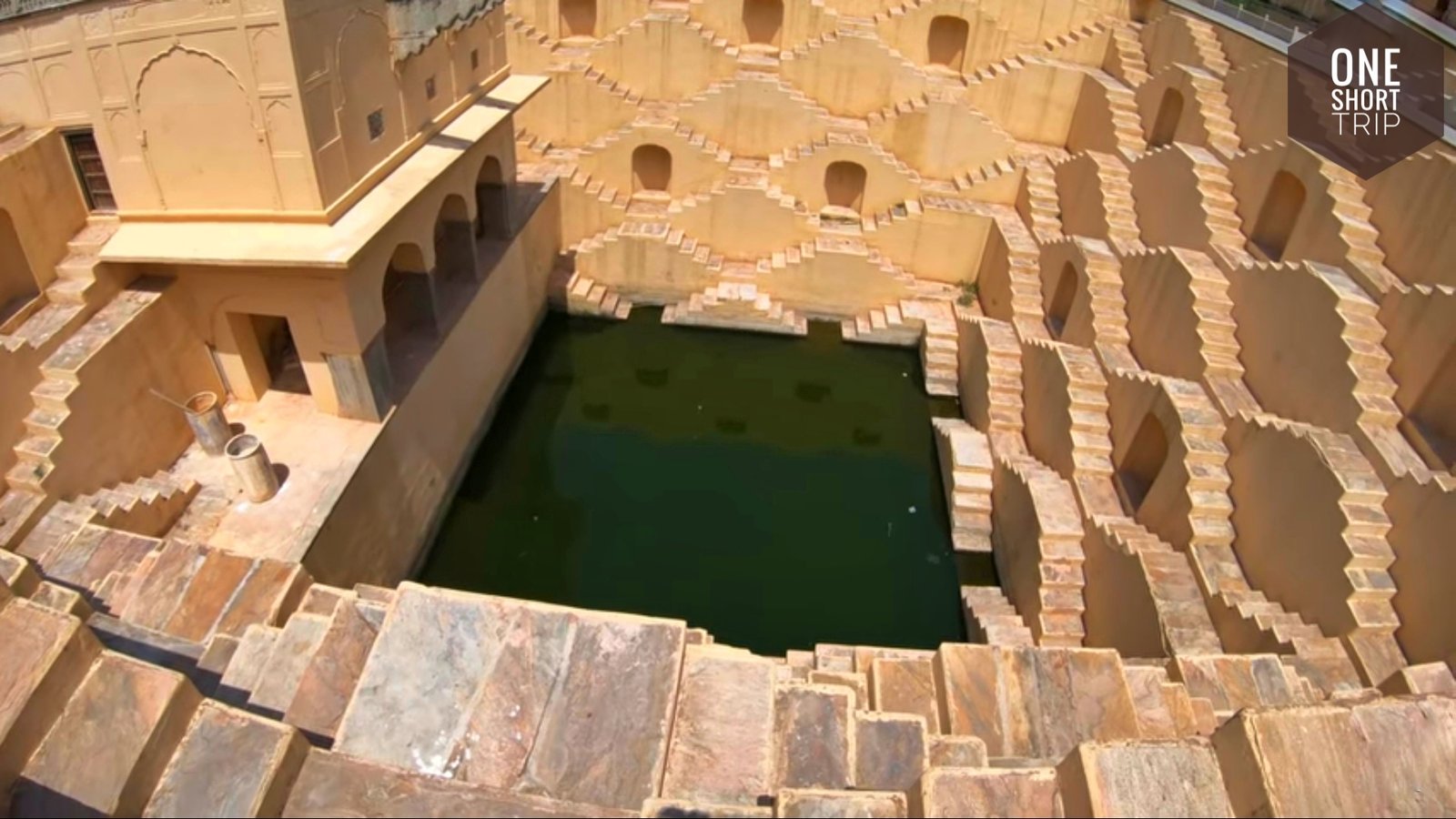
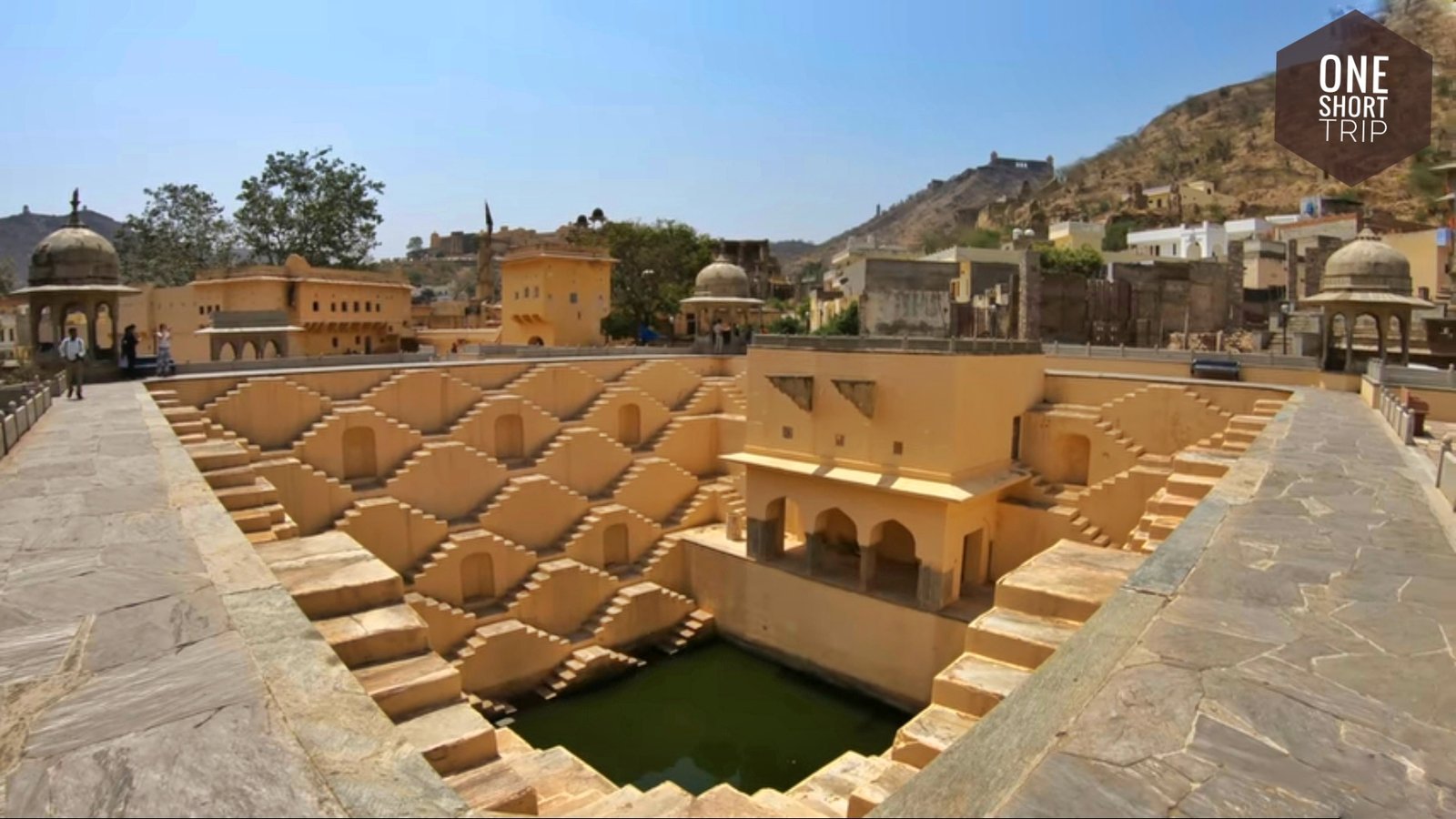
The defining feature of Panna Meena ka Kund is its geometric staircase system. Instead of a single staircase leading directly down to the water, the structure uses intersecting flights of steps that create a striking pattern of diagonal lines across the walls of the square-shaped kund.
An academic study of Indian stepwell architecture records Panna Meena ka Kund at approximately 14.25 metres in depth, with 56 steps and a measured total of 798 step units in its architectural analysis. These figures are considerably more reliable than the widely repeated online claims that describe the structure as 200 metres deep or containing thousands of steps.
The stepwell's four corners are also visually distinctive, with small pavilion-like architectural elements that complement the strong symmetry of the descending staircases. Together, the steps, walls, terraces and corner structures create the visual identity that makes the kund so recognisable.
What Makes the Staircase Design Special?
The staircases are arranged in a way that produces a repeating zig-zag pattern. From the upper edge of the kund, the lines appear to interlock and mirror one another, creating the visual effect for which Panna Meena ka Kund is famous.
The design was not simply created for decoration. A stepped reservoir had to remain usable as the water level changed. The staircase system provided access at different levels while making the deep water structure practical for the community.
This combination of engineering and visual order is one of the reasons the kund remains so interesting to architects, photographers, history enthusiasts and travellers today.
Why Is Panna Meena ka Kund Famous?
Panna Meena ka Kund is famous primarily for its extraordinary symmetry. The repeating staircases create a visual pattern that is very different from the decorative palace architecture found elsewhere in Jaipur.
Its proximity to Amer Fort has also made it one of the easiest heritage attractions to add to a Jaipur itinerary. Rajasthan Tourism specifically recommends making time for the kund when visiting Amer Fort.
For photographers, the combination of geometric steps, sandstone surfaces and changing light creates strong compositions. The monument has consequently become a popular setting for travel photography and visual content.
Panna Meena ka Kund Timings
Opening: Sunrise
Closing: Sunset
Visiting Period: Daylight hours
Incredible India lists Panna Meena ka Kund as open from sunrise to sunset. Current local listings commonly show approximately 7:00 AM to 6:00 PM, but these should be treated as practical approximate hours rather than a fixed official schedule throughout the year.
If you want to see the stepwell in softer light or avoid the strongest daytime heat, an early-morning visit is a particularly good choice.
Panna Meena ka Kund Entry Fee
Panna Meena ka Kund is generally visited without a separate entry ticket, and there is no conventional ticket counter like the one found at major paid monuments such as Amer Fort.
Remember that entry arrangements and ticket prices for nearby monuments are separate. If you are visiting Amer Fort, check the fort's current ticket requirements independently.
How Much Time Is Needed at Panna Meena ka Kund?
Most visitors can comfortably see Panna Meena ka Kund in around 20 to 40 minutes. The Rajasthan tourism master plan records an average visitor stay of around one hour, which may be more appropriate for travellers who want to take their time with photography or explore the surroundings.
You do not need to allocate a full morning or afternoon to the kund itself. Its greatest advantage is that it can be combined easily with Amer Fort and other attractions around Amer.
Can You Go Down the Steps at Panna Meena ka Kund?
Visitors should not expect to descend into the lower sections of the stepwell. Current visitor information indicates that access down the historic staircase is restricted for safety and preservation reasons.
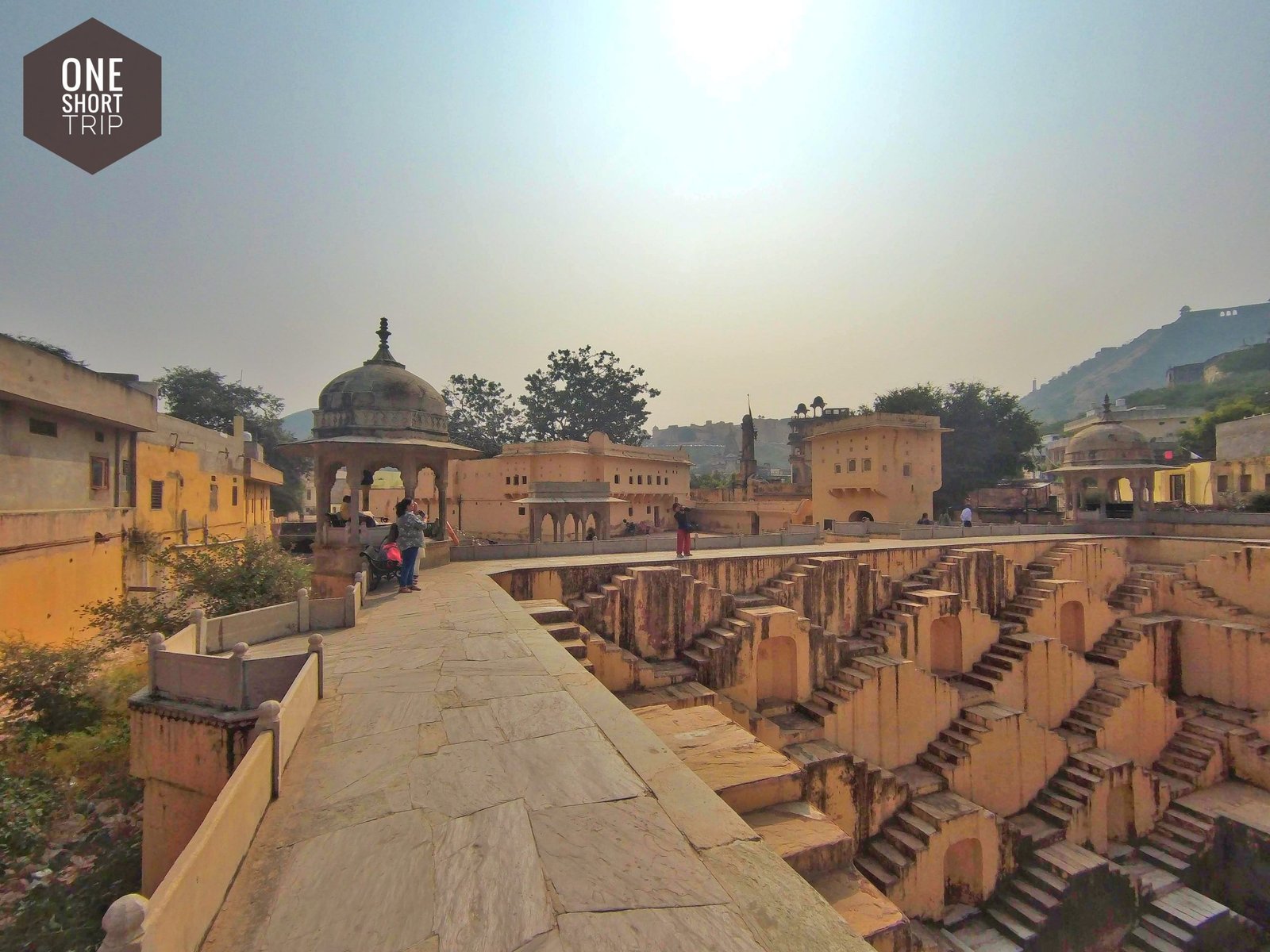
The monument can still be appreciated from the upper viewing areas, and these viewpoints actually provide some of the clearest perspectives of the geometric staircase pattern. Never cross a barrier or enter a restricted area for a photograph.
Best Time to Visit Panna Meena ka Kund
Best Time of Day
Early morning is one of the best times to visit Panna Meena ka Kund if you want comfortable temperatures, softer light and a quieter atmosphere. Morning light can also emphasise the shadows created by the intersecting staircases.
Best Season
October to March is generally the most comfortable period for outdoor sightseeing around Jaipur and Amer. The monsoon season can also be visually attractive because the surrounding landscape becomes greener, although weather and water conditions can vary.
Summer Visits
Summer sightseeing is possible, but Jaipur can become extremely hot. If visiting between April and June, try to arrive early, carry water and avoid spending extended periods outdoors around midday.
Panna Meena ka Kund for Photography
Panna Meena ka Kund is particularly popular with photographers because its architecture creates naturally strong lines, repetition and symmetry. The crisscrossing staircases produce different patterns depending on where you stand around the upper edge.
Morning and late-afternoon light can create stronger shadows across the steps. Rather than photographing only the entire structure, try looking for smaller geometric compositions formed by the repeating staircases and walls.
The safest photography is from the permitted upper areas. Do not enter restricted sections or climb over protective barriers to recreate photographs found online.
The Importance of Panna Meena ka Kund in Amer
Panna Meena ka Kund helps explain a less glamorous but essential part of life in historic Amer: water management. Before modern pipelines and municipal reservoirs, settlements depended on carefully designed systems to capture, store and access water.
The kund therefore complements the royal architecture of Amer Fort. The fort shows how rulers lived, defended the capital and displayed their wealth, while the stepwell demonstrates the infrastructure required to make life possible in the same dry environment.
This is what makes Panna Meena ka Kund more than simply a photogenic location. It is a surviving example of the practical architecture that supported an historic Rajasthani settlement.
Places to Visit Near Panna Meena ka Kund
Panna Meena ka Kund is particularly convenient because several important attractions can be combined into the same Amer sightseeing route.
Amer Fort
Amer Fort is the main attraction in the area and the natural companion to Panna Meena ka Kund. The historic palace-fort complex sits on the hills above Amer and is recognised as part of the UNESCO-listed Hill Forts of Rajasthan.
Jaigarh Fort
Jaigarh Fort stands above the Amer landscape and is known for its massive defensive architecture and military heritage. It can be added if you have enough time for a longer Amer sightseeing day.
Anokhi Museum of Hand Printing
The Anokhi Museum is located close to Panna Meena ka Kund and offers a completely different experience, focusing on traditional Indian hand-block printing and textile craft.
Jal Mahal
Jal Mahal lies along the Jaipur–Amer route and is an easy photographic stop when returning towards Jaipur city.
Nahargarh Fort
Nahargarh Fort can be considered as part of a longer Jaipur fort circuit, although it is better planned separately if you want enough time to explore Amer Fort and Jaigarh Fort properly.
How to Reach Panna Meena ka Kund
From Jaipur City
Panna Meena ka Kund is located in Amer, approximately 11 km from central Jaipur. The most convenient options are a private car, taxi, auto-rickshaw or local bus towards Amer.
From Amer Fort
The kund is roughly 1 km from Amer Fort and can be incorporated into the same sightseeing visit. Depending on your exact starting point, the walk can take around 10–15 minutes.
From Jaipur Railway Station
Jaipur Junction is the city's main railway station. From the station, visitors can continue towards Amer by taxi, auto-rickshaw or bus. Travel time varies depending on traffic.
From Jaipur International Airport
Travellers arriving at Jaipur International Airport can hire a taxi or arrange a private vehicle to Amer. Because the airport is on the southern side of Jaipur, allow additional travel time when planning an airport-to-Amer journey.
Panna Meena ka Kund Location
Location: Amer, Jaipur, Rajasthan
PIN Code: 302028
Nearest Major Landmark: Amer Fort
Nearest Airport: Jaipur International Airport
Nearest Railway Station: Jaipur Junction
How to Include Panna Meena ka Kund in a Jaipur Itinerary
The best way to visit Panna Meena ka Kund is to include it in an Amer-focused sightseeing route. Because the kund is close to Amer Fort, there is little reason to make a separate journey only for the stepwell.
- Start early from Jaipur.
- Visit Panna Meena ka Kund.
- Continue to Amer Fort.
- Explore the main palace and fort complex.
- Visit Jaigarh Fort if time permits.
- Return towards Jaipur via the Amer–Jaipur route.
- Stop at Jal Mahal or another Jaipur attraction if included in your itinerary.
Who Should Visit Panna Meena ka Kund?
- History and heritage enthusiasts
- Architecture students and enthusiasts
- Photography lovers
- Travellers exploring Amer Fort
- Families visiting Jaipur
- Couples interested in heritage photography
- Travellers interested in traditional water-management systems
- Visitors looking for a quieter attraction around Amer
Is Panna Meena ka Kund Suitable for Families and Senior Citizens?
Families can comfortably include Panna Meena ka Kund as a short heritage stop. Children should remain supervised around the edges and staircases, particularly because the lower portions of the structure are deep and access is restricted.
Senior citizens can enjoy the monument from the upper viewing areas, but uneven stone surfaces and the surrounding steps require caution. There is no need to attempt a difficult descent to appreciate the architecture.
Panna Meena ka Kund Safety Tips
- Stay within the areas permitted for visitors.
- Do not cross protective barriers.
- Do not attempt to descend into restricted areas.
- Keep children under supervision.
- Wear comfortable walking shoes.
- Take care on uneven stone surfaces.
- Carry drinking water during hot weather.
- Use sun protection during summer.
- Do not take photographs from dangerous edges.
- Follow instructions from local authorities and site staff.
What to Carry When Visiting Panna Meena ka Kund
- Drinking water
- Comfortable walking shoes
- Sunglasses and sunscreen during sunny weather
- Mobile phone or camera
- Power bank if you are spending the full day around Amer
- A hat or cap during summer
Panna Meena ka Kund Visiting Tips
- Visit early if you want softer light and a quieter experience.
- Combine the kund with Amer Fort rather than making a separate trip.
- Allow around 20–40 minutes for a normal visit.
- Photography enthusiasts can allow additional time.
- Do not rely on old photographs showing unrestricted access to the lower steps.
- Respect current safety and conservation restrictions.
- Carry water during the hotter months.
- Wear shoes with good grip.
- Keep valuables secure when walking around busy tourist areas.
Panna Meena ka Kund vs Chand Baori
Travellers interested in Rajasthan's stepwells often compare Panna Meena ka Kund with the much larger Chand Baori at Abhaneri. Both are famous for their geometric staircase designs, but the visitor experience is very different.
Chand Baori is a much larger monumental stepwell, while Panna Meena ka Kund is smaller and more conveniently located near Amer Fort. If you are already exploring Jaipur and Amer, Panna Meena ka Kund is an easy addition. Chand Baori requires a separate excursion towards Abhaneri.
For travellers interested specifically in the history of water architecture, visiting both can be rewarding because they demonstrate different approaches to the same fundamental challenge: storing and accessing water in Rajasthan's dry environment.
Is Panna Meena ka Kund Worth Visiting?
Yes, particularly if Amer Fort is already part of your Jaipur itinerary. Panna Meena ka Kund does not require several hours like Amer Fort, but it provides a completely different perspective on the history of the region.
Its geometric staircases, historic water-management purpose, protected-monument status and convenient location make it worthwhile for travellers interested in architecture, photography, history and lesser-known heritage attractions.
It is best thought of as a short but meaningful heritage stop rather than a standalone full-day attraction.
Planning a Jaipur and Amer Trip?
Panna Meena ka Kund is best experienced as part of an Amer sightseeing route. Combining the stepwell with Amer Fort and other nearby attractions allows you to explore more of Jaipur's historic landscape without spending unnecessary time travelling between distant parts of the city.
Call or WhatsApp: +91 70197 59537