

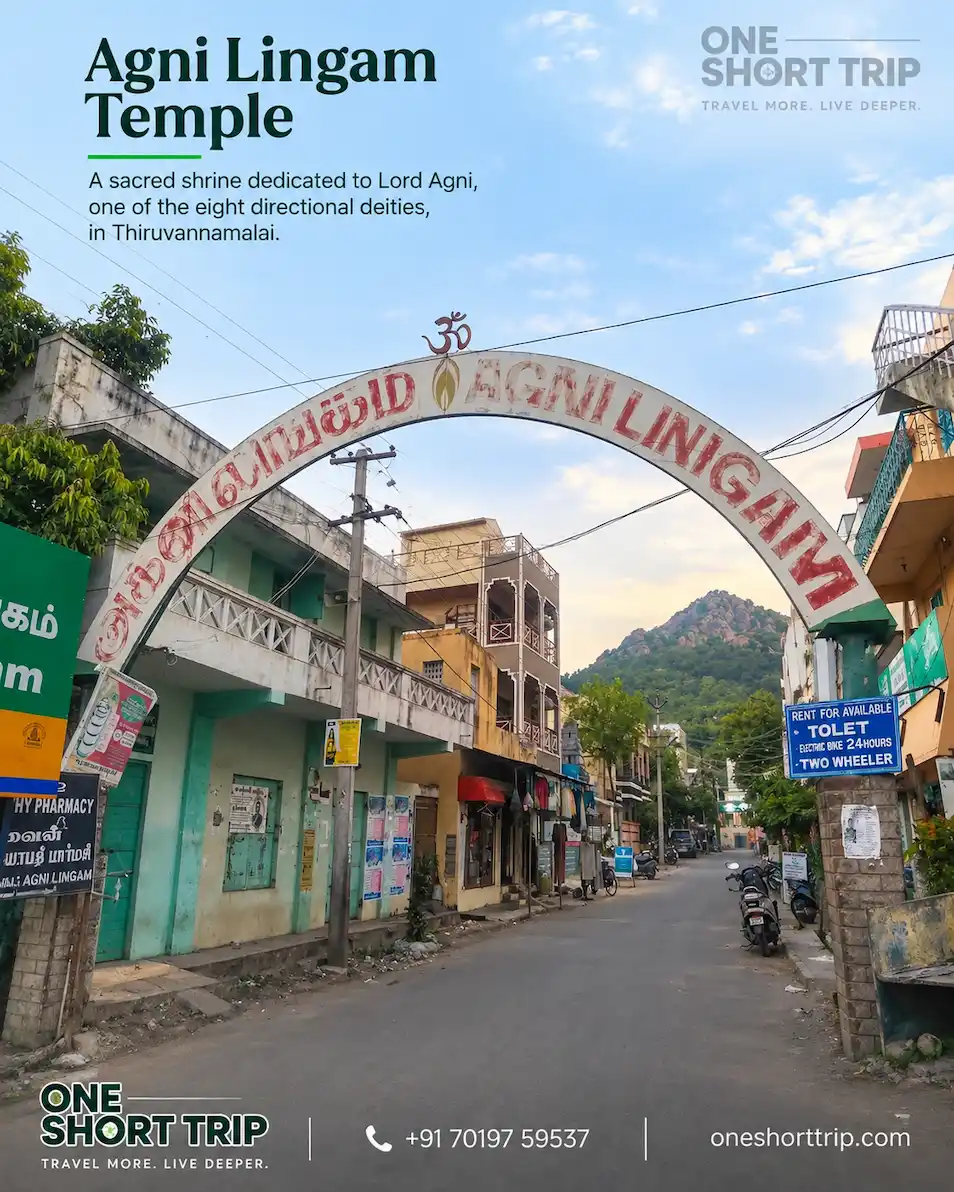
Agni Lingam Temple
Visit Agni Lingam, one of the eight sacred Ashta Lingams along the Girivalam path around Arunachala Hill in Tiruvannamalai, associated with the element of fire.
Agni Lingam, Tiruvannamalai – History, Story, Significance, Timings and Complete Travel Guide
Agni Lingam is one of the eight sacred Lingams situated along the Girivalam route around Arunachala Hill in Tiruvannamalai, Tamil Nadu. Traditionally associated with Agni, the Hindu deity of fire, this shrine represents the southeast direction and is recognised as the second Lingam in the Ashta Lingam pilgrimage sequence.
Tiruvannamalai is one of the most important Shaivite pilgrimage destinations in South India. The sacred Arunachala Hill and the famous Arunachaleswarar Temple are central to the town's religious identity. The eight Lingams positioned around the hill form an important part of the Girivalam tradition.
Agni Lingam has a distinctive position among these shrines. It is associated with the southeast direction and is traditionally the second Lingam visited during Girivalam. According to the Tiruvannamalai District Administration, it is situated near Chengam Road and Tamari Kulam and is the only one of the eight Lingams located on the right-hand side of the Girivalam path.
The shrine is also connected with the wider fire symbolism of Tiruvannamalai. Arunachala is revered as the manifestation of Lord Shiva in the form of fire, and the nearby Arunachaleswarar Temple is one of the Pancha Bhoota Sthalams representing Agni.
Important distinction: Agni Lingam is an individual shrine on the Girivalam route. Arunachaleswarar Temple is the principal Shiva temple of Tiruvannamalai and the Pancha Bhoota Sthalam associated with fire. Both are connected through the region's religious tradition, but they are not the same temple.
Agni Lingam Temple – Quick Information
The temple name, address and opening hours are based on the Tamil Nadu HR&CE listing. Timings may be subject to changes during special occasions and festivals. Confirm locally before travelling.
What Is Agni Lingam Famous For?
Agni Lingam is famous for its association with Agni, the deity of fire, and its position as the second of the eight sacred Lingams around Arunachala Hill. It is one of the important stops for devotees undertaking Girivalam in Tiruvannamalai.
In the traditional arrangement of the Ashta Lingams, each shrine represents one of the eight directions. Agni Lingam is associated with the southeast and follows Indra Lingam, which represents the east.
Why is Agni Lingam important?
- Second of the Ashta Lingams: It occupies the second position in the traditional Girivalam sequence.
- Association with Agni: The shrine is traditionally connected with the Hindu deity of fire.
- Southeast direction: It represents the southeast in the eight-direction arrangement.
- Unique location on the route: The District Administration identifies it as the only one of the eight Lingams situated on the right-hand side of the Girivalam path.
- Connection with Arunachala: Its fire association forms part of the wider religious significance of Tiruvannamalai.
Agni Lingam is an important part of the Ashta Lingam pilgrimage. Its significance comes from its association with fire, its directional position and its place along the sacred Girivalam route.
Where Is Agni Lingam Temple Located?
Agni Lingam Temple is located along the Girivalam route in Tiruvannamalai, Tamil Nadu. It is situated in the southeast direction around Arunachala Hill, near Chengam Road and Tamari Kulam.
According to the Tiruvannamalai District Administration, Agni Lingam is the second shrine in the traditional Girivalam sequence. It is also distinctive because it is the only one of the eight Lingams situated on the right-hand side of the Girivalam path, while the other seven are on the southern side of the route.
Why is its location different from the other Lingams?
The eight Lingams are distributed around Arunachala Hill according to their traditional directional positions. Agni Lingam occupies the southeast direction. Its position near Chengam Road makes it an identifiable stop for devotees following the circuit.
The District Administration also identifies Tamari Kulam as a nearby landmark. Visitors can use these local references when planning their journey, while checking current road access and directions before travelling.
Can you visit Agni Lingam without completing Girivalam?
Yes. You do not have to walk the entire Girivalam circuit to visit Agni Lingam. Visitors can plan a separate trip to the shrine using local transport or a private vehicle, subject to the current road and access arrangements.
Travel tip: If you are following the traditional Girivalam route, pay attention to the location of Agni Lingam. Its position on the right-hand side of the path is different from the other seven Lingams.
What Is the Story Behind Agni Lingam?
Agni Lingam is traditionally associated with Agni, the Hindu deity who personifies fire. In the Ashta Lingam tradition of Tiruvannamalai, Agni is connected with the southeast direction, and the shrine represents this directional association.
The official Tamil Nadu HR&CE description identifies Agni Lingam as the place where Agni Bhagavan worshipped Arunachaleswarar and received the grace of Lord Shiva.
Who is Agni in Hindu tradition?
Agni is one of the important deities in Hindu tradition and is associated with fire, sacred offerings and ritual worship. Fire has a significant place in Hindu ceremonies, including homams, yajnas and other forms of worship.
Agni is traditionally understood as a divine presence that connects offerings made during sacred rituals with the deities. This association gives the Agni Lingam shrine its distinctive religious identity.
Agni and Lord Shiva at Tiruvannamalai
Tiruvannamalai is deeply connected with the symbolism of fire through Arunachala. The sacred hill is revered as the manifestation of Lord Shiva in the form of an infinite column of light or fire in the traditional account of the Jyotirlinga manifestation.
The story of Lord Shiva appearing as an endless column of fire is associated with the wider religious significance of Arunachala. It is an important part of the spiritual identity of the region and is commemorated through the Karthigai Deepam festival.
About the temple legend: The official HR&CE listing confirms Agni's worship of Arunachaleswarar and the grace received. It does not provide a detailed narrative of the circumstances of that worship. The broader fire-column tradition belongs to the religious history of Arunachala and should not be presented as a separate, verified construction story for Agni Lingam.
What Is the History of Agni Lingam Temple?
Agni Lingam is part of the traditional network of eight Shiva Lingams located around Arunachala Hill in Tiruvannamalai. These shrines are associated with the eight directions and form an important part of the Girivalam pilgrimage followed by devotees.
Its religious identity is connected with Agni and the southeast direction. The official Tamil Nadu HR&CE temple listing identifies it as Arulmigu Agnilingam Temple and records the traditional belief that Agni Bhagavan worshipped Arunachaleswarar at this shrine.
Its place in the history of Tiruvannamalai
Tiruvannamalai has a long history of Shaivite worship. The Arunachaleswarar Temple, sacred Arunachala Hill and the Girivalam route have shaped the religious and cultural life of the region for generations.
The eight Lingams are an important part of this pilgrimage landscape. Agni Lingam is traditionally the second shrine in the sequence and is associated with the southeast direction.
What is known about the original construction?
The official temple listing confirms the shrine's identity, location and religious association. However, the listing does not establish a verified original construction date, a detailed architectural chronology or the name of the individual or dynasty responsible for building the present structure.
Historical accuracy: The history of Arunachaleswarar Temple should not automatically be treated as the construction history of Agni Lingam. A specific date or dynasty for the individual shrine should only be included when supported by direct historical or inscriptional evidence.
Who Built Agni Lingam Temple?
The original builder of Agni Lingam Temple has not been conclusively identified in the official temple information reviewed for this guide. The Tamil Nadu HR&CE listing does not name a particular king, ruler, dynasty or individual as the founder of the shrine.
Tiruvannamalai's wider temple history includes contributions from different rulers, patrons, devotees and religious communities over many generations. The region's history provides the background for understanding the importance of its shrines, but it does not establish who specifically constructed Agni Lingam.
Was Agni Lingam built by the Cholas or Pandyas?
The Cholas and Pandyas played important roles in the history of temples in Tamil Nadu, including the wider religious landscape of Tiruvannamalai. However, there is no verified evidence in the official Agni Lingam listing that attributes the construction of this individual shrine to either dynasty.
It would therefore be inaccurate to state that a particular dynasty built Agni Lingam without direct evidence from inscriptions, historical records or an authoritative temple source.
What is the difference between the shrine and the main temple?
Arunachaleswarar Temple is a major historic temple complex with a long record of royal patronage and architectural development. Agni Lingam is a separate shrine on the Girivalam route. The historical records of the main temple should not be used as proof of the original builder of Agni Lingam.
What visitors should know: Agni Lingam's religious significance is established through the Ashta Lingam tradition. Its precise original builder and construction date remain unverified in the official information used for this guide.
Who Is the Presiding Deity of Agni Lingam?
The presiding deity of Agni Lingam is Lord Shiva, worshipped in the form of a Shiva Lingam. The shrine is traditionally associated with Agni Bhagavan, the Hindu deity of fire.
The official Tamil Nadu HR&CE description states that Agni Bhagavan worshipped Arunachaleswarar and received the grace of Lord Shiva. This association forms the religious identity of the shrine.
Who is Agni Bhagavan?
Agni Bhagavan is the Hindu deity associated with fire. In Hindu religious traditions, fire is an important element in sacred rituals and offerings. Agni is traditionally regarded as the divine presence connected with the sacred fire used in ceremonies.
Why is Agni Lingam associated with the southeast?
The traditional Ashta Lingam arrangement associates each of the eight shrines with one of the eight directions. Agni is connected with the southeast, and Agni Lingam occupies this position in the pilgrimage circuit around Arunachala Hill.
Is Agni Lingam the same as the fire form of Arunachaleswarar?
They are connected through the religious symbolism of fire, but they refer to different aspects of the Tiruvannamalai pilgrimage.
- Agni Lingam: An individual Shiva shrine associated with Agni and the southeast direction on the Girivalam route.
- Arunachaleswarar Temple: The principal Shiva temple of Tiruvannamalai, revered as the Pancha Bhoota Sthalam representing the element of fire.
- Arunachala Hill: The sacred hill traditionally revered as the manifestation of Lord Shiva in the form of fire or divine light.
Agni Bhagavan is the divine figure associated with the shrine, while Lord Shiva is the presiding deity worshipped in the form of the Lingam.
What Is the Religious and Spiritual Significance of Agni Lingam?
Agni Lingam holds an important position in the Ashta Lingam tradition of Tiruvannamalai. The eight sacred Lingams are situated around Arunachala Hill and are associated with the eight directions. Agni Lingam represents the southeast and is traditionally the second shrine in the sequence.
Its connection with Agni Bhagavan gives the shrine a special association with fire, which is one of the central symbols in the religious identity of Tiruvannamalai.
The significance of fire in Hindu worship
Fire has an important role in Hindu religious practices. It is used in homams, yajnas, offerings and several traditional ceremonies. Agni is revered as the deity associated with this sacred element.
At Tiruvannamalai, the symbolism of fire has an even wider significance because Arunachala is traditionally revered as Lord Shiva's manifestation in the form of an infinite column of light or fire.
Agni Lingam in the Ashta Lingam pilgrimage
Devotees visiting the eight Lingams follow a traditional sequence around Arunachala Hill. Agni Lingam follows Indra Lingam and represents the southeast direction.
Visiting the shrine allows pilgrims to offer prayers to Lord Shiva as part of their wider Girivalam experience. The eight shrines together form an important part of the sacred geography of Tiruvannamalai.
| Lingam | Direction |
|---|---|
| Indra Lingam | East |
| Agni Lingam | Southeast |
| Yama Lingam | South |
| Niruthi Lingam | Southwest |
| Varuna Lingam | West |
| Vayu Lingam | Northwest |
| Kubera Lingam | North |
| Esanya Lingam | Northeast |
Why do devotees visit Agni Lingam?
- To worship Lord Shiva as part of the Ashta Lingam pilgrimage.
- To honour the traditional association of Agni with the southeast direction.
- To continue the traditional sequence of the eight Lingams during Girivalam.
- To experience the spiritual atmosphere of Arunachala Hill and Tiruvannamalai.
Devotional beliefs and personal experiences may differ among worshippers. Visitors can offer prayers according to their faith and follow the customary practices of the shrine.
What Is the Importance of Agni Lingam During Girivalam?
Girivalam is the sacred practice of walking around Arunachala Hill in Tiruvannamalai. The route is approximately 14 kilometres long and is followed by devotees throughout the year. Pournami, or the full-moon day, is particularly significant, when large numbers of pilgrims visit the town to undertake the walk.
The eight Lingams located along the route are important stops during this pilgrimage. Agni Lingam is traditionally the second shrine in the sequence, following Indra Lingam.
Why is Agni Lingam the second shrine?
The traditional Ashta Lingam arrangement follows the eight directions around Arunachala Hill. Indra Lingam represents the east, while Agni Lingam represents the southeast. This places Agni Lingam second in the established sequence.
What makes Agni Lingam different from the other seven Lingams?
The Tiruvannamalai District Administration highlights a distinctive feature of Agni Lingam: it is the only one of the eight Lingams located on the right-hand side of the Girivalam path. The other seven Lingams are situated on the southern side of the route.
Its position near Chengam Road and Tamari Kulam is another useful reference for pilgrims planning their journey.
The traditional sequence of the eight Lingams
| Traditional Order | Lingam | Direction |
|---|---|---|
| First | Indra Lingam | East |
| Second | Agni Lingam | Southeast |
| Third | Yama Lingam | South |
| Fourth | Niruthi Lingam | Southwest |
| Fifth | Varuna Lingam | West |
| Sixth | Vayu Lingam | Northwest |
| Seventh | Kubera Lingam | North |
| Eighth | Esanya Lingam | Northeast |
Walking Girivalam and visiting the eight Lingams
Devotees traditionally walk around Arunachala Hill in a clockwise direction, keeping the sacred hill on their right. The route passes the eight Lingams and other religious landmarks.
Some pilgrims complete the full circuit in one visit, while others visit the shrines separately depending on their time, physical comfort and travel arrangements.
Planning your Girivalam: The complete circuit is approximately 14 kilometres. If you plan to walk, carry drinking water, wear suitable footwear if preferred, take rest breaks and avoid unnecessary exertion during hot weather. During Pournami and festival days, allow additional time for crowds and traffic.
You can explore the individual shrines through our detailed guides to Indra Lingam, Yama Lingam, Niruthi Lingam, Varuna Lingam, Vayu Lingam, Kubera Lingam and Esanya Lingam.
For a wider overview of the town's pilgrimage attractions, visit our Tiruvannamalai Travel Guide.
How Far Is Agni Lingam from Arunachaleswarar Temple?
Agni Lingam is situated along the Girivalam route around Arunachala Hill. It can be visited separately from the main Arunachaleswarar Temple, or as part of a wider pilgrimage covering the eight sacred Lingams.
The distance depends on the starting point within Tiruvannamalai and the road taken. Visitors travelling from Arunachaleswarar Temple can reach the Agni Lingam area using local transport or a private vehicle. If you are planning to visit on foot, check the current pedestrian route and road conditions before starting.
Can you visit Agni Lingam and Arunachaleswarar Temple together?
Yes. Both are important parts of a Tiruvannamalai pilgrimage and can be included in the same visit. A practical plan is to visit the main Arunachaleswarar Temple first, followed by Agni Lingam and other nearby shrines, depending on your available time and the temple opening hours.
Travel planning tip: Do not rely only on the distance shown by a route planner. Girivalam traffic, one-way arrangements, festival crowds and road restrictions can affect the actual travel time.
Agni Lingam Temple Timings
According to the Tamil Nadu Hindu Religious and Charitable Endowments Department, Agni Lingam Temple is open in the morning and evening. Visitors should plan their darshan around these hours.
What is the best time for darshan?
Early morning is generally a comfortable time to visit Agni Lingam, particularly if you are planning to explore several shrines along the Girivalam route. The evening session is another option for visitors who prefer to travel after the daytime heat.
Is Agni Lingam open during the afternoon?
The published regular schedule shows a break between 12:00 PM and 4:00 PM. Visitors should avoid planning their darshan during this period unless special arrangements have been announced.
Important: Temple schedules can change during festivals, special poojas and other religious occasions. Confirm the latest timings locally before setting out, especially if you are travelling a long distance.
What Is the Best Time to Visit Agni Lingam, Tiruvannamalai?
Agni Lingam can be visited throughout the year. However, the weather, crowd levels and religious calendar can influence the comfort of your visit. If you are planning to explore the eight Lingams or complete Girivalam, choosing a suitable season and time of day is especially important.
October to February – A Comfortable Season
The cooler months are generally more comfortable for temple visits and outdoor sightseeing in Tiruvannamalai. This period is suitable for visitors who want to explore the main temple, the eight Lingams and nearby spiritual attractions.
Karthigai Deepam usually falls during this broader period, although the exact festival dates change each year according to the Tamil calendar.
March to May – Summer Season
Tiruvannamalai can experience high temperatures during summer. If you are visiting during these months, plan outdoor activities early in the morning or later in the evening.
Visitors intending to walk the full Girivalam circuit should take extra care with hydration, sun protection and rest breaks.
June to September – Monsoon Season
The monsoon period can bring rain and wet road conditions. The weather may make walking more comfortable at certain times, but sudden showers can affect travel plans and the Girivalam experience.
Check the local weather forecast before travelling, particularly if you are planning a long walk around Arunachala Hill.
Which time of day is best?
- Early morning: Suitable for temple visits and outdoor sightseeing before the day becomes hot.
- Late afternoon: A good option for visiting during the evening temple session.
- Pournami night: Important for devotees undertaking the traditional full-moon Girivalam, but expect large crowds.
For a relaxed visit with family and senior citizens, avoid the busiest festival periods unless you specifically wish to experience the large-scale pilgrimage atmosphere.
Festivals Associated with Agni Lingam and Tiruvannamalai
Agni Lingam is part of the wider religious landscape of Tiruvannamalai. The town's major celebrations are closely associated with Arunachaleswarar Temple, Arunachala Hill and the traditional practice of Girivalam.
Karthigai Deepam
Karthigai Deepam is the most celebrated festival associated with the fire symbolism of Tiruvannamalai. It is observed during the Tamil month of Karthigai, generally falling in November or December.
The festival commemorates the traditional belief that Lord Shiva appeared as an infinite column of fire. A huge ceremonial flame is lit on Arunachala Hill as part of the celebration, and devotees from different parts of India visit Tiruvannamalai to witness the occasion.
The festival is closely connected with the fire symbolism represented by Arunachala and the Pancha Bhoota tradition of Arunachaleswarar Temple.
Pournami Girivalam
Pournami, or the full-moon day, is one of the most important occasions for devotees visiting Tiruvannamalai. Large numbers of pilgrims undertake the approximately 14-kilometre Girivalam around Arunachala Hill.
The eight Lingams, including Agni Lingam, are important stops along this traditional pilgrimage route. The full-moon period attracts substantial crowds, so visitors should plan their transport, accommodation and darshan accordingly.
Maha Shivaratri
Maha Shivaratri is an important festival dedicated to Lord Shiva. Devotees visit Shiva temples, offer prayers and participate in night-long worship and other religious observances.
Tiruvannamalai attracts devotees during this occasion because of the importance of Arunachaleswarar Temple and the sacred Arunachala Hill.
Other important temple occasions
Various religious celebrations and special poojas take place at Arunachaleswarar Temple throughout the year. The exact schedules and arrangements may vary according to the Tamil calendar and temple administration.
Festival planning: Karthigai Deepam and Pournami periods can bring heavy crowds, traffic restrictions and higher demand for accommodation. Make travel arrangements well in advance if you plan to visit during these occasions.
How to Reach Agni Lingam Temple, Tiruvannamalai?
Agni Lingam is located on the Girivalam route in Tiruvannamalai. The town is accessible by road and rail, and visitors can use local transport or a private vehicle to reach the shrine.
How to Reach Agni Lingam from Bangalore?
Tiruvannamalai is a popular road-trip destination from Bangalore for devotees visiting Arunachaleswarar Temple and the eight Lingams.
The road journey from Bangalore is approximately 200–220 kilometres, depending on the route and starting point. Travel time can vary with traffic, road conditions, breaks and the route selected. A practical journey plan should allow around 4.5–6 hours rather than relying on the shortest estimated driving time.
One commonly used approach is through Hosur, Krishnagiri, Uthangarai and Chengam before reaching Tiruvannamalai. Your final route should be checked on the day of travel.
These are planning estimates. Actual distance and travel time depend on your pickup location, route and traffic.
How to Reach by Road
Tiruvannamalai is connected to several towns and cities in Tamil Nadu and neighbouring states by road. Visitors can travel by private car, taxi, tourist vehicle or state-run and private buses, depending on their starting location.
Once you reach Tiruvannamalai, Agni Lingam can be accessed from the Girivalam road. Local auto-rickshaws and taxis may be used for the last part of the journey.
How to Reach by Train
Tiruvannamalai has a railway station serving the town. Visitors can check available train services from their departure city and plan onward local transport to the Girivalam route.
Train frequency and direct connectivity vary by origin. Check the current railway timetable before finalising your journey.
How to Reach by Air
Chennai is a major airport option for visitors travelling from other parts of India. From Chennai, Tiruvannamalai can be reached by road or by a suitable combination of rail and road transport.
After reaching Tiruvannamalai, use local transport or a private vehicle to reach Agni Lingam.
For a comfortable family pilgrimage: A private vehicle gives you greater flexibility to visit Arunachaleswarar Temple, Agni Lingam and the other shrines at your own pace. It can be especially convenient for families, senior citizens and groups.
How Much Time Is Needed to Visit Agni Lingam?
The time required to visit Agni Lingam depends on whether you are visiting only the shrine or including it as part of a larger Girivalam pilgrimage.
For a Visit to Agni Lingam Alone
If you are visiting only Agni Lingam, allow approximately 20–40 minutes for reaching the shrine, offering prayers and continuing your journey. This is a planning estimate, not an official darshan duration. Waiting time may increase during weekends, Pournami and festival periods.
For Agni Lingam and the Main Arunachaleswarar Temple
If you plan to visit both Agni Lingam and Arunachaleswarar Temple, allow a larger time window. The main temple complex has multiple shrines and significant architecture, so visitors often spend considerably longer there than at an individual Lingam shrine.
For All Eight Lingams
Visiting all eight Lingams requires additional travel and time. If you are walking the complete Girivalam circuit, the route is approximately 14 kilometres. The time required depends on walking speed, rest breaks, darshan queues, crowd levels and weather.
Visitors travelling with senior citizens or young children should avoid a rushed schedule. Plan enough time for rest, meals, drinking water and comfortable movement between shrines.
Visitor Guidelines and Facilities at Agni Lingam
Agni Lingam is an active place of worship. Visitors should respect the religious practices of the shrine and follow any instructions given by temple staff.
Important Things to Know Before Visiting
- Check the temple's opening hours before starting your journey.
- Dress modestly and respectfully when visiting the shrine.
- Follow the instructions of temple staff and local authorities.
- Keep the temple premises clean and avoid littering.
- Do not disturb ongoing prayers, rituals or other devotees.
- Ask for permission before photographing restricted areas or religious activities.
- During Pournami and festival days, allow additional time for traffic and crowds.
- If you are undertaking Girivalam, carry water and take adequate rest breaks.
Is Agni Lingam suitable for senior citizens?
Senior citizens who are comfortable with short walks and temple visits may include Agni Lingam in their Tiruvannamalai pilgrimage. Visiting the shrine separately by vehicle can be more convenient than walking the complete Girivalam route.
Those with mobility limitations should check the current approach, steps and access conditions before travelling. The complete Girivalam walk may be physically demanding, especially during hot weather or crowded periods.
Are parking and restroom facilities available?
Facilities around individual shrines on the Girivalam route may differ. Do not assume that dedicated parking, restrooms, drinking-water points or other visitor facilities are available directly beside Agni Lingam.
Visitors travelling by private vehicle should check local parking arrangements and use authorised parking areas. For meals, restrooms and other requirements, it is advisable to plan around the main temple area and established facilities in Tiruvannamalai.
Are there food and accommodation options nearby?
Tiruvannamalai town has accommodation and food options for pilgrims. Visitors can choose from budget stays, lodges and hotels depending on their requirements. During Karthigai Deepam and Pournami, accommodation demand can be high, so advance booking is recommended.
Important for families: If you are travelling with elderly family members, plan a vehicle-based visit to the shrines wherever possible and avoid attempting the entire Girivalam route without considering everyone's comfort and fitness.
Places to Visit Near Agni Lingam Temple
A visit to Agni Lingam can be combined with several important spiritual and sightseeing attractions in Tiruvannamalai. The town is especially known for its historic Shiva temple, sacred hill, ashrams and the traditional Girivalam route.
Arunachaleswarar Temple
Arunachaleswarar Temple is the principal Shiva temple of Tiruvannamalai and one of the important Pancha Bhoota Sthalams representing the element of fire. Its towering gopurams, spacious corridors, shrines and religious traditions make it a major pilgrimage destination.
Indra Lingam
Indra Lingam is the first shrine in the traditional Ashta Lingam sequence and represents the east direction. It is an important stop before Agni Lingam for devotees following the traditional pilgrimage order.
Yama Lingam
Yama Lingam represents the south direction and is the third shrine in the traditional sequence. It can be included in a wider visit to the eight Lingams.
Sri Ramanasramam
Sri Ramanasramam is associated with the life and teachings of Bhagavan Sri Ramana Maharshi. Devotees and spiritual seekers visit the ashram for its peaceful atmosphere, meditation spaces and connection with the sage.
Virupaksha Cave
Located on Arunachala Hill, Virupaksha Cave is a significant spiritual site associated with Sri Ramana Maharshi. Reaching the cave involves an uphill walk, so visitors should consider their fitness and the weather before planning the visit.
Skandashramam
Skandashramam is another spiritual destination on Arunachala Hill associated with Sri Ramana Maharshi. The approach involves walking uphill, and visitors should allow sufficient time for the climb and return.
Seshadri Swamigal Ashram
Sri Seshadri Swamigal Ashram is an important spiritual centre in Tiruvannamalai. It is visited by devotees who wish to learn about and pay their respects to Sri Seshadri Swamigal.
Sathanur Dam
Sathanur Dam is a popular sightseeing destination in Tiruvannamalai district, located approximately 30 kilometres from Tiruvannamalai city. The reservoir, gardens and crocodile farm make it an option for visitors who have additional time for sightseeing.
Can you cover these places in one day?
The main temple, a few Lingams and nearby ashrams can be combined into a carefully planned day. Virupaksha Cave and Skandashramam require additional walking, while Sathanur Dam is better treated as a separate outing.
For a more complete destination guide, explore our Tiruvannamalai Travel Guide.
Suggested One-Day Tiruvannamalai Temple Visit Itinerary
If you are visiting Tiruvannamalai for one day, you can plan a combination of the main Arunachaleswarar Temple, Agni Lingam and selected spiritual attractions. The schedule below is a flexible suggestion, not a fixed route for completing all eight Lingams.
| Suggested Time | Visit Plan |
|---|---|
| 6:00 AM – 8:30 AM | Visit Arunachaleswarar Temple and offer prayers. |
| 8:30 AM – 9:30 AM | Have breakfast and take a short break. |
| 9:30 AM – 11:00 AM | Visit Indra Lingam and Agni Lingam, subject to travel time and darshan conditions. |
| 11:00 AM – 12:30 PM | Visit Sri Ramanasramam or Seshadri Swamigal Ashram, subject to their visiting arrangements. |
| 12:30 PM – 3:30 PM | Lunch and rest. |
| 4:00 PM – 6:00 PM | Visit selected nearby Lingams or enjoy a peaceful evening around Tiruvannamalai. |
| 6:00 PM onwards | Return to your accommodation or begin your return journey, depending on your travel plan. |
Can you visit all eight Lingams in one day?
It is possible for some visitors to visit all eight Lingams in one day using a vehicle, provided they plan the route carefully and account for opening hours, road access, traffic and darshan time. However, this should not be confused with completing the traditional 14-kilometre Girivalam walk.
Walking the full circuit requires several hours and may take longer during Pournami and festival periods. Visitors who wish to complete the walk should plan it as the main activity rather than trying to combine it with a packed sightseeing schedule.
Suggested two-day plan for a relaxed visit
Day One – Main Temple and Girivalam Shrines
Visit Arunachaleswarar Temple, Indra Lingam, Agni Lingam and other selected shrines. If you wish to complete Girivalam, dedicate sufficient time to the full circuit and keep the rest of the day flexible.
Day Two – Spiritual and Local Sightseeing
Visit Sri Ramanasramam, Seshadri Swamigal Ashram and, if suitable, Virupaksha Cave or Skandashramam. Visitors who prefer a road-based sightseeing outing can consider Sathanur Dam instead.
For senior citizens and families: A two-day plan is generally more relaxed than trying to cover every shrine and attraction in a single day. Adjust the walking portions and sightseeing stops according to the group's comfort.
Frequently Asked Questions About Agni Lingam, Tiruvannamalai
Where is Agni Lingam located?
Agni Lingam is located on the Girivalam route around Arunachala Hill in Tiruvannamalai, Tamil Nadu. It is associated with the southeast direction and is situated near Chengam Road and Tamari Kulam.
What is Agni Lingam famous for?
Agni Lingam is famous for its association with Agni Bhagavan, the deity of fire. It is the second of the eight sacred Lingams in the traditional Girivalam sequence and represents the southeast direction.
Who is the presiding deity of Agni Lingam?
Lord Shiva is worshipped as the presiding deity in the form of the Lingam. The shrine is traditionally associated with Agni Bhagavan.
What are the Agni Lingam Temple timings?
The published regular timings are 6:00 AM to 12:00 PM and 4:00 PM to 8:00 PM. Special occasions may have different arrangements.
Is Agni Lingam the second Ashta Lingam?
Yes. Agni Lingam is traditionally the second shrine in the Ashta Lingam sequence, following Indra Lingam.
Which direction does Agni Lingam represent?
Agni Lingam represents the southeast direction in the traditional eight-direction arrangement around Arunachala Hill.
Why is Agni Lingam different from the other Lingams?
According to the Tiruvannamalai District Administration, Agni Lingam is the only one of the eight Lingams located on the right-hand side of the Girivalam path. The other seven are situated on the southern side of the route.
What is the distance of Agni Lingam from Bangalore?
The road distance from Bangalore is approximately 200–220 kilometres, depending on the starting point and route. The journey may take around 4.5–6 hours, depending on traffic and road conditions.
Can I visit Agni Lingam without doing Girivalam?
Yes. You can visit Agni Lingam separately using local transport or a private vehicle. Completing the entire Girivalam circuit is not necessary to visit this shrine.
Can I visit Agni Lingam and Indra Lingam on the same day?
Yes. Both shrines can be included in the same visit. Indra Lingam is traditionally first in the sequence, followed by Agni Lingam.
Can I visit all eight Lingams by car?
Yes. Visitors can plan a vehicle-based visit to all eight shrines, subject to local road access and traffic arrangements. The vehicle route is different from completing the traditional Girivalam walk.
How long does it take to complete Girivalam?
The Girivalam route is approximately 14 kilometres. The time required varies according to walking speed, rest breaks, darshan queues, weather and crowd conditions. Allow several hours for the full walk.
Which is the best month to visit Agni Lingam?
October to February is generally more comfortable for outdoor sightseeing and temple visits. Karthigai Deepam and Pournami are important religious occasions, but they also attract large crowds.
Is Agni Lingam crowded during Pournami?
Tiruvannamalai attracts large numbers of pilgrims during Pournami because of the full-moon Girivalam tradition. Expect heavier traffic and longer waiting times around the pilgrimage route.
Is Agni Lingam associated with Karthigai Deepam?
Agni Lingam is associated with Agni and the southeast direction. Karthigai Deepam is the major Tiruvannamalai festival connected with the wider fire symbolism of Arunachala and Lord Shiva.
Are senior citizens able to visit Agni Lingam?
Senior citizens who are comfortable with the approach and walking conditions can include the shrine in their visit. A private vehicle or local transport may make the visit easier than walking the full Girivalam route.
Are food and accommodation available in Tiruvannamalai?
Yes. Tiruvannamalai has hotels, lodges, restaurants and other accommodation options for pilgrims. During major festivals and Pournami, it is advisable to reserve accommodation in advance.
What other temples can I visit near Agni Lingam?
You can visit Arunachaleswarar Temple and other Ashta Lingam shrines, including Indra Lingam, Yama Lingam, Niruthi Lingam, Varuna Lingam, Vayu Lingam, Kubera Lingam and Esanya Lingam.
Plan a Peaceful Tiruvannamalai Temple Trip with One Short Trip
Explore the sacred Arunachaleswarar Temple, visit Agni Lingam and the other Ashta Lingams, and experience the spiritual atmosphere of Arunachala Hill with a well-planned trip from Bangalore.
Whether you are travelling with family, senior citizens or a group of devotees, One Short Trip can help plan a comfortable journey with suitable transport, a practical sightseeing schedule and time for darshan.
Contact our team to discuss your travel dates, group size and preferred trip arrangements.
One Short Trip – Thoughtfully Planned Journeys, Meaningful Experiences.
You May Also Like

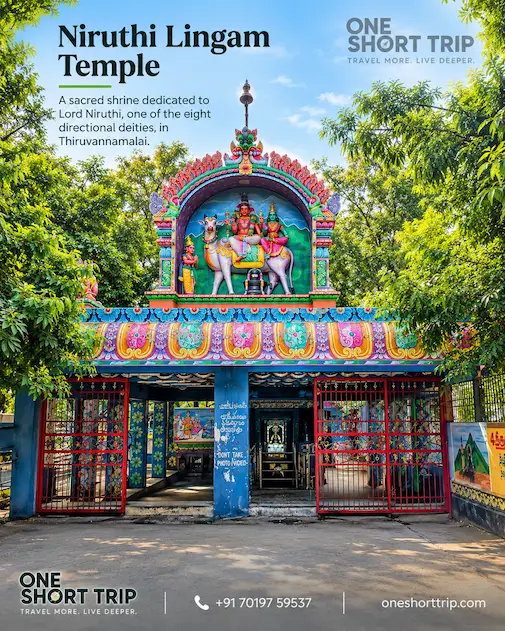

Planning A Trip Here?
Get help planning your visit — call or WhatsApp us and we will help you book a tour.