

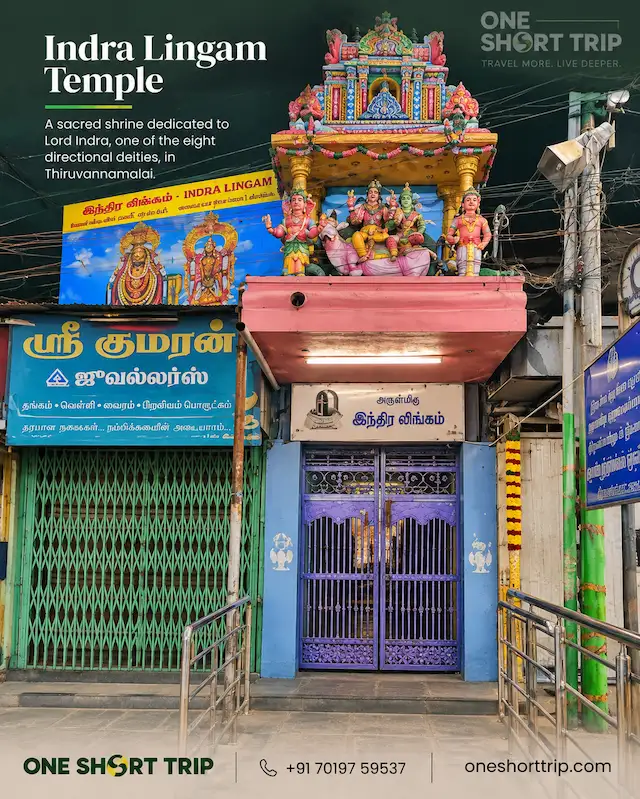
Indra Lingam Temple
Discover Indra Lingam, one of the eight sacred Ashta Lingams along the Girivalam path around Arunachala Hill in Tiruvannamalai.
Indra Lingam, Tiruvannamalai – History, Story, Significance, Timings and Complete Travel Guide
Indra Lingam is one of the eight sacred Lingams located along the Girivalam route around Arunachala Hill in Tiruvannamalai, Tamil Nadu. It is traditionally associated with Lord Indra, the king of the Devas, and is regarded as the first Lingam encountered when devotees begin the Ashta Lingam pilgrimage in the prescribed direction.
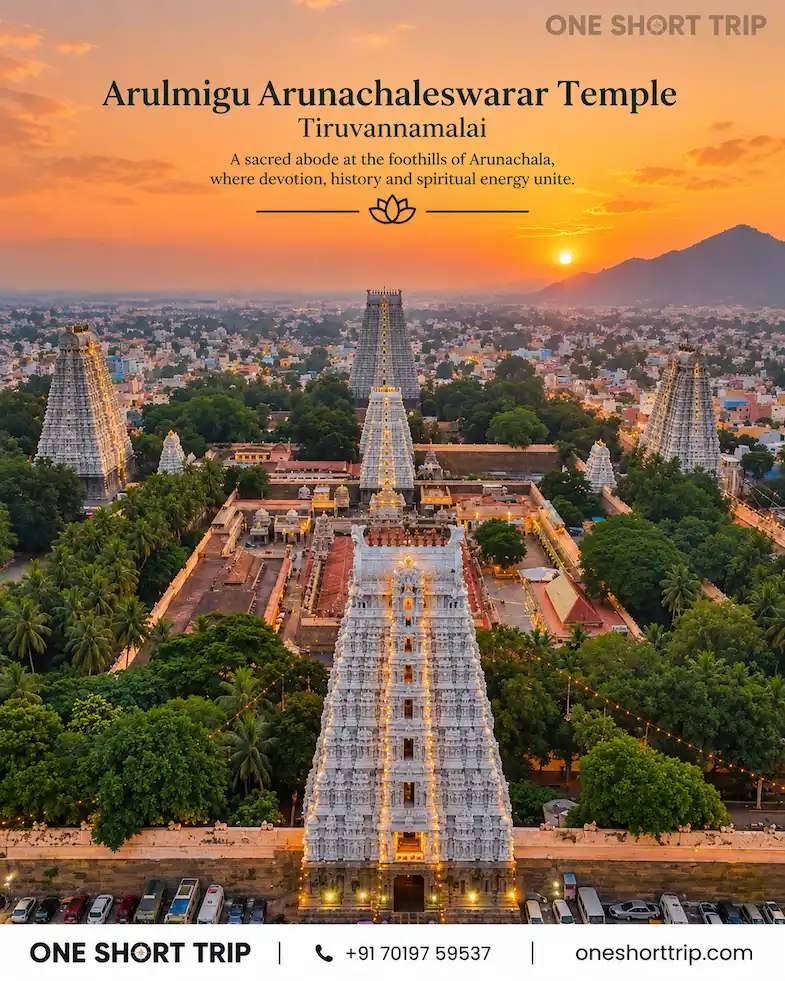
Tiruvannamalai is one of the most important Shaivite pilgrimage destinations in South India. At the centre of this sacred landscape stands Arunachaleswarar Temple, dedicated to Lord Shiva as Arunachaleswarar. The eight Lingams situated around Arunachala Hill form an important part of the spiritual experience of Girivalam.
Indra Lingam holds a special place in this pilgrimage tradition. Devotees visit the shrine to offer prayers to Lord Shiva and begin their journey through the eight sacred Lingams. Whether you are visiting Tiruvannamalai for darshan, a full-moon Girivalam, or a temple tour, understanding the significance and location of Indra Lingam can help you plan your visit better.
Important: The official Tamil Nadu Hindu Religious and Charitable Endowments Department identifies this shrine with Indra's worship of Arunachaleswarar. Detailed historical information about its original construction and builder is not clearly documented in the official listing.
Indra Lingam Temple – Quick Information
Temple timings are based on the official department listing. Timings and access arrangements may vary during special occasions and festivals. Confirm locally before travelling.
What Is Indra Lingam Famous For?
Indra Lingam is famous for being the first of the eight sacred Lingams associated with the Girivalam pilgrimage around Arunachala Hill. It is traditionally connected with Lord Indra, who is believed to have worshipped Lord Shiva at this sacred place.
The shrine is an important stop for devotees who undertake Girivalam, the traditional circumambulation of Arunachala Hill. Pilgrims visit the eight Lingams situated in the eight directions and offer prayers at each shrine as part of their spiritual journey.
Why devotees visit Indra Lingam
- First of the Ashta Lingams: It marks the beginning of the traditional eight-Lingam sequence.
- Association with Lord Indra: The shrine is connected with the belief that Indra worshipped Lord Arunachaleswarar.
- Part of Girivalam: It is one of the important stops for devotees circumambulating Arunachala Hill.
- Shaivite worship: Devotees offer prayers to Lord Shiva and seek divine blessings.
- Pilgrimage significance: It forms part of the wider spiritual landscape of Tiruvannamalai.
Indra Lingam is not simply a sightseeing stop. Its importance comes from its place in the sacred Ashta Lingam tradition and its association with the worship of Lord Shiva.
Where Is Indra Lingam Temple Located?
Indra Lingam Temple is located in Tiruvannamalai town in Tamil Nadu, along the Girivalam route that circles the sacred Arunachala Hill. It is situated in the eastern direction and is recognised as the first shrine in the traditional sequence of the eight Ashta Lingams.
The shrine is part of the larger pilgrimage landscape surrounding Arunachaleswarar Temple. Devotees visiting the main temple often include the Ashta Lingams in their Tiruvannamalai pilgrimage.
Understanding its location on the Girivalam route
Girivalam is the practice of walking around Arunachala Hill, following the established route in a clockwise direction. The full circuit is approximately 14 kilometres. Indra Lingam is associated with the eastern direction and is traditionally the first of the eight Lingams in the sequence.
Visitors travelling by car or other vehicles should use a current navigation application to identify the correct approach road and parking arrangements. Traffic restrictions and road conditions can change, especially during Pournami and major festival days.
Travel tip: If you are visiting all eight Lingams, plan your route in advance. On crowded days, allow additional time for traffic, parking and darshan.
What Is the Story Behind Indra Lingam?
The religious identity of Indra Lingam is associated with Lord Indra's worship of Lord Arunachaleswarar. The official Tamil Nadu HR&CE description identifies the shrine as the place where Indra worshipped Arunachaleswarar and received the grace of the Lord.
In Hindu tradition, Indra is regarded as the king of the Devas and the guardian of the eastern direction. His association with the eastern Lingam forms part of the traditional understanding of the eight sacred Lingams around Arunachala Hill.
Indra and the eastern direction
The Ashta Lingam tradition associates each of the eight Lingams with a particular direction and a divine figure. Indra is connected with the east, which is why Indra Lingam occupies the eastern position in the traditional arrangement.
Devotees visiting the shrine remember this association and offer prayers to Lord Shiva. The shrine's importance is therefore connected with both the worship of Arunachaleswarar and the spiritual significance of the Ashta Lingam pilgrimage.
About the legend: The official temple listing confirms Indra's worship and the grace of Arunachaleswarar, but it does not provide a detailed narrative explaining the circumstances of the worship. It is better to distinguish this documented temple tradition from expanded stories that may appear in later retellings.
What Is the History of Indra Lingam Temple?
Indra Lingam is part of the long-standing religious tradition associated with Arunachala Hill and the Girivalam pilgrimage in Tiruvannamalai. The eight Lingams have an important place in the devotional geography of the town, with each shrine associated with one of the cardinal or intermediate directions.
The tradition of visiting these eight shrines forms an important part of the pilgrimage experience for devotees who undertake Girivalam. Indra Lingam occupies the eastern position and is traditionally visited first in the Ashta Lingam sequence.
What is known about its historical background?
The official Tamil Nadu HR&CE temple listing confirms the shrine's identity as Arulmigu Indralingam Temple and records its association with Indra's worship of Arunachaleswarar. However, the listing does not provide a verified date for the original construction of the shrine or a detailed chronology of its development.
Tiruvannamalai has a rich history of Shaivite worship, temple patronage and pilgrimage. The larger Arunachaleswarar Temple complex has an extensive historical and architectural record. However, the history of the main temple should not automatically be treated as the construction history of every individual shrine along the Girivalam route.
Historical accuracy: A specific construction century, dynasty or renovation date for Indra Lingam should not be stated without reliable historical or inscriptional evidence directly connected to this shrine.
Who Built Indra Lingam Temple?
The original builder of Indra Lingam Temple has not been conclusively identified in the official temple information reviewed for this guide. There is no verified construction record in the official listing that names a particular king, dynasty, ruler or individual as the founder of the shrine.
Tiruvannamalai's religious institutions developed over many generations through the contributions of rulers, local communities, devotees and temple patrons. This broader history provides the setting for understanding the importance of the Ashta Lingam shrines, but it does not establish who specifically built Indra Lingam.
Was it built by a particular dynasty?
It would be inaccurate to attribute the construction of Indra Lingam Temple to a particular dynasty without direct supporting evidence. The historical details of the individual shrine should be treated separately from the better-documented history of Arunachaleswarar Temple.
The shrine's religious importance is primarily associated with its traditional connection to Lord Indra and its place in the Ashta Lingam pilgrimage.
What visitors should know: The temple's traditional significance is established, but its exact construction date and original builder remain unverified in the official information used for this page.
Who Is the Presiding Deity of Indra Lingam?
The presiding deity of Indra Lingam is Lord Shiva, worshipped in the form of a Shiva Lingam. The shrine is associated with Lord Indra, who is traditionally believed to have worshipped Arunachaleswarar at this sacred place.
In Shaivite worship, the Shiva Lingam represents Lord Shiva in a sacred symbolic form. Devotees offer prayers, perform worship according to temple customs and seek the blessings of the deity.
Why is the shrine associated with Lord Indra?
Indra is traditionally regarded as the guardian of the eastern direction. The Ashta Lingam arrangement around Arunachala Hill associates the eastern shrine with Indra, giving the Lingam its name and religious identity.
This association is also reflected in the official Tamil Nadu HR&CE description of the temple, which refers to Indra worshipping Arunachaleswarar and receiving the Lord's grace.
The shrine is dedicated to Lord Shiva. Lord Indra is the divine figure associated with the temple's traditional identity; he is not the presiding deity in place of Shiva.
What Is the Religious and Spiritual Significance of Indra Lingam?
Indra Lingam has religious significance because it forms part of the Ashta Lingam tradition of Tiruvannamalai. The eight Lingams are situated in different directions around Arunachala Hill and are traditionally visited by devotees undertaking Girivalam.
The shrine's association with Indra connects it with the eastern direction. For devotees, visiting Indra Lingam is an opportunity to offer prayers to Lord Shiva and participate in a pilgrimage tradition that has been followed by generations of worshippers.
Its place in the Ashta Lingam tradition
The eight Lingams are not independent of the larger spiritual significance of Arunachala. They form part of the sacred landscape surrounding the hill, which is deeply connected with Lord Shiva and the Arunachaleswarar Temple.
The traditional sequence begins with Indra Lingam in the east and continues through the other seven Lingams around the hill.
| Lingam | Direction |
|---|---|
| Indra Lingam | East |
| Agni Lingam | Southeast |
| Yama Lingam | South |
| Niruthi Lingam | Southwest |
| Varuna Lingam | West |
| Vayu Lingam | Northwest |
| Kubera Lingam | North |
| Esanya Lingam | Northeast |
Why devotees include Indra Lingam in their prayers
- To worship Lord Shiva as part of the Ashta Lingam pilgrimage.
- To honour the traditional association between Indra and the eastern direction.
- To begin the traditional sequence of the eight Lingams during Girivalam.
- To experience the spiritual atmosphere of Arunachala Hill and Tiruvannamalai.
Devotional beliefs and personal experiences may differ among worshippers. Visitors can follow the customary practices of the shrine and offer prayers according to their own faith.
What Is the Importance of Indra Lingam During Girivalam?
Girivalam is the sacred practice of walking around Arunachala Hill in Tiruvannamalai. The circuit is approximately 14 kilometres long and is followed by devotees throughout the year. Many pilgrims undertake Girivalam on Pournami, the full-moon day, when large numbers of devotees gather in Tiruvannamalai.
The eight Ashta Lingams located along the route are important stops during this pilgrimage. Indra Lingam is traditionally the first shrine in the sequence and represents the eastern direction.
The eight Lingams along the Girivalam route
The traditional arrangement of the eight Lingams follows the directions around Arunachala Hill. Each shrine is associated with a divine figure and occupies a particular directional position.
| Traditional Order | Lingam | Direction |
|---|---|---|
| First | Indra Lingam | East |
| Second | Agni Lingam | Southeast |
| Third | Yama Lingam | South |
| Fourth | Niruthi Lingam | Southwest |
| Fifth | Varuna Lingam | West |
| Sixth | Vayu Lingam | Northwest |
| Seventh | Kubera Lingam | North |
| Eighth | Esanya Lingam | Northeast |
Why is Indra Lingam visited first?
Indra Lingam occupies the eastern position in the traditional Ashta Lingam arrangement. As devotees begin the Girivalam sequence, this shrine is recognised as the first of the eight Lingams.
Visiting the shrines allows pilgrims to combine the practice of circumambulating Arunachala Hill with worship at the sacred Lingams along the route. Some devotees visit all eight shrines during one Girivalam, while others visit them separately depending on their time, physical comfort and travel arrangements.
Planning your Girivalam: The complete circuit is approximately 14 km. If you are walking, plan for suitable footwear, drinking water, rest breaks and additional time during Pournami and festival days. Senior citizens and visitors with mobility concerns should choose a comfortable travel arrangement.
You can explore the individual shrines through our detailed guides to Agni Lingam, Yama Lingam, Niruthi Lingam, Varuna Lingam, Vayu Lingam, Kubera Lingam and Esanya Lingam.
For a broader understanding of the town's pilgrimage attractions, visit our Tiruvannamalai Travel Guide.
How Far Is Indra Lingam from Arunachaleswarar Temple?
Indra Lingam is located along the Girivalam route around Arunachala Hill in Tiruvannamalai. It is part of the same pilgrimage landscape as the famous Arunachaleswarar Temple, making it convenient to include both shrines in a Tiruvannamalai temple visit.
The distance and travel time between the main temple and Indra Lingam can vary depending on the starting gate, the road taken and local traffic conditions. Visitors travelling by car or auto-rickshaw should check the route using a current navigation application before starting.
Can you visit Indra Lingam without doing Girivalam?
Yes. You do not have to complete the entire Girivalam circuit to visit Indra Lingam. Devotees can travel directly to the shrine, offer prayers and return to their accommodation or continue to other temples in Tiruvannamalai.
If you are planning to visit all eight Lingams, it is better to organise the journey as a complete Girivalam or a planned vehicle-based temple circuit rather than treating each shrine as an isolated visit.
Travel tip: During Pournami, Karthigai Deepam and other major occasions, roads around Arunachala Hill can become crowded. Allow extra time for reaching the shrine and finding parking.
Indra Lingam Temple Timings and Darshan
Indra Lingam Temple is listed by the Tamil Nadu Hindu Religious and Charitable Endowments Department with morning and evening darshan sessions. Visitors should plan their visit around these timings to avoid reaching the shrine during its afternoon closure.
What is the best time for darshan?
Early morning is a convenient time for devotees who want to visit Indra Lingam before exploring other temples or beginning Girivalam. The evening session is another option for visitors who prefer to complete their sightseeing during the day and offer prayers later.
Are the timings different on Pournami and festival days?
The regular timings listed by HR&CE should be treated as a general reference. During Pournami, Karthigai Deepam and other important occasions, local arrangements and crowd conditions may affect access and waiting time. Confirm the latest schedule locally before your visit.
Important: The temple is listed as open from 6:00 AM to 12:00 PM and 4:00 PM to 8:00 PM. Do not assume that darshan is available continuously throughout the day.
What Is the Best Time to Visit Indra Lingam Temple?
Indra Lingam can be visited throughout the year. However, the most comfortable time depends on the weather, your travel schedule and whether you want to visit only the shrine or complete the full Girivalam circuit.
October to February – A comfortable period for temple visits
The cooler months are generally more comfortable for exploring Tiruvannamalai and visiting the Ashta Lingams. This period is suitable for travellers who want to combine temple darshan, local sightseeing and walking around Arunachala Hill.
March to May – Plan around the heat
Summer temperatures can make outdoor sightseeing and the 14-kilometre Girivalam circuit tiring, particularly during the afternoon. If travelling during these months, plan temple visits early in the morning or later in the evening. Carry drinking water and take sufficient rest.
June to September – Check the weather
The monsoon period can bring rain and changing road conditions. Check the weather forecast before travelling, especially if you are planning to walk around the hill or visit several shrines in one day.
Is Pournami a good time to visit?
Pournami, or the full-moon day, is one of the most significant occasions for Girivalam in Tiruvannamalai. Devotees from different parts of Tamil Nadu and neighbouring states visit the town to walk around Arunachala Hill and worship at the sacred shrines.
The atmosphere is spiritually vibrant, but crowds, traffic and waiting times can be considerably higher. Visitors who prefer a quieter darshan may find an ordinary weekday more convenient.
Our suggestion: For a relaxed visit to Indra Lingam and the other temples, choose a weekday outside major festival periods. For the traditional Girivalam experience, consider Pournami while preparing for larger crowds.
What Are the Important Festivals and Occasions at Indra Lingam?
Indra Lingam is part of the sacred pilgrimage circuit of Tiruvannamalai. The shrine receives devotees who visit the eight Lingams throughout the year, particularly during Pournami and the major religious occasions associated with Arunachala Hill and Arunachaleswarar Temple.
Pournami – Full Moon Girivalam
Pournami is among the most important days for devotees undertaking Girivalam. Pilgrims walk around Arunachala Hill, visiting the eight Lingams along the route. Indra Lingam is traditionally the first shrine in the sequence.
Large numbers of devotees gather in Tiruvannamalai on full-moon days. Visitors should plan their transport, accommodation and darshan schedule in advance.
Karthigai Deepam
Karthigai Deepam is one of the most important annual festivals of Tiruvannamalai. The festival is associated with Lord Arunachaleswarar and the sacred fire form of Arunachala. The lighting of the Maha Deepam on Arunachala Hill is the central attraction for devotees.
The festival draws pilgrims from across India. If you plan to visit Indra Lingam during this period, expect significant crowds and possible traffic restrictions around the town.
Pradosham
Pradosham is an important observance for devotees of Lord Shiva. It occurs twice in each lunar month and is traditionally associated with prayers and worship of Shiva. Devotees visiting Tiruvannamalai may include the Shiva shrines in their pilgrimage on these days.
Other important occasions
- Shivaratri: An important observance dedicated to Lord Shiva.
- Monthly full-moon days: Popular occasions for Girivalam.
- Margazhi: A significant devotional month in the Tamil calendar.
- Other Shiva-related observances: Devotees may visit the Ashta Lingams as part of their wider pilgrimage.
Festival-specific rituals and schedules at Indra Lingam should be confirmed with the temple administration. The major festival celebrations of Tiruvannamalai are centred on the wider Arunachaleswarar pilgrimage tradition.
How to Reach Indra Lingam Temple from Tiruvannamalai and Bangalore
Indra Lingam is located in Tiruvannamalai, Tamil Nadu. Travellers can reach the town by road, bus or train and then use local transport to reach the shrine.
From Bangalore to Tiruvannamalai
Tiruvannamalai is a popular road-trip destination from Bangalore. The road journey is approximately 200 kilometres, depending on the starting point and route. A commonly used route is:
Bangalore → Hosur → Krishnagiri → Chengam → Tiruvannamalai
The journey generally takes around 4.5 to 5 hours in normal traffic, but actual travel time depends on traffic, road conditions, stops and the starting location in Bangalore.
By private car or taxi
Travelling by private car is a convenient option for families, senior citizens and groups who want to visit Arunachaleswarar Temple and the eight Lingams at their own pace. It also makes it easier to combine the temple visit with nearby ashrams and other attractions.
By bus
Travellers can use government and private bus services connecting Bangalore with Tiruvannamalai. Check the current departure point, service timings and availability before booking. From the Tiruvannamalai bus stand, local transport can be used to reach Indra Lingam.
By train
Train services can be considered depending on the available schedule and departure station. Travellers should check current railway connections to Tiruvannamalai or nearby railway stations and plan the onward road journey accordingly.
Reaching Indra Lingam from Tiruvannamalai town
Once you reach Tiruvannamalai, you can use an auto-rickshaw, taxi or private vehicle to travel to the shrine. If you are already undertaking Girivalam, you can visit Indra Lingam as part of the traditional route.
For Bangalore travellers: A private vehicle is especially useful if your plan includes all eight Lingams, Arunachaleswarar Temple and nearby spiritual attractions. During Pournami and Karthigai Deepam, allow additional travel time.
How Much Time Is Required to Visit Indra Lingam?
The time required to visit Indra Lingam depends on the crowd, the time of arrival and whether you are visiting only this shrine or covering the other Ashta Lingams as well.
What can affect your visit duration?
- Number of devotees waiting for darshan.
- Whether you visit during Pournami or a major festival.
- Time spent on prayers and worship.
- Traffic and parking arrangements.
- Whether you are walking or travelling by vehicle.
- Whether you are visiting other temples along the Girivalam route.
These durations are planning estimates rather than fixed temple service times. During crowded periods, waiting and travel time can increase considerably.
If you are travelling with senior citizens or children, avoid planning a very tight schedule. Keep sufficient time for rest, meals and comfortable darshan.
Visitor Guidelines and Facilities at Indra Lingam Temple
Indra Lingam is a place of worship and forms part of an important pilgrimage route. Visitors should respect temple customs, maintain cleanliness and follow instructions given by temple staff.
What should you keep in mind?
- Dress respectfully: Choose modest and comfortable clothing suitable for visiting a place of worship.
- Follow temple customs: Observe the practices and instructions displayed at the shrine.
- Maintain cleanliness: Avoid littering around the temple and the Girivalam route.
- Respect other devotees: Be patient during queues and avoid blocking entrances.
- Check photography rules: Follow any restrictions on photography or mobile phone use inside the shrine.
- Carry essentials: Keep drinking water, personal medication and other necessary items with you.
- Plan parking: Use permitted parking areas and avoid obstructing the Girivalam path.
Is Indra Lingam suitable for senior citizens?
Senior citizens who are comfortable with short walks and standing for darshan may be able to visit the shrine. The level of walking required depends on where the vehicle can be parked and the local access arrangements.
Those with mobility concerns should check the approach and available assistance before travelling. Completing the entire Girivalam circuit is a separate physical commitment and may not be suitable for everyone.
Are food, toilets and parking facilities available?
Facilities may be available in the surrounding town and along parts of the Girivalam route, but their exact availability and condition can vary. Do not assume that every facility is located directly beside the shrine.
Visitors should plan meals, drinking water, rest stops and vehicle parking in advance, particularly during crowded festival periods.
For families: Carry drinking water, keep children close in crowded areas and plan sufficient rest breaks if visiting multiple Lingams.
Places to Visit Near Indra Lingam Temple
A visit to Indra Lingam can be combined with several important spiritual and historical attractions in Tiruvannamalai. If you have additional time, consider exploring the main Shiva temple, other Ashta Lingams and the spiritual centres around Arunachala Hill.
Arunachaleswarar Temple
One of the most important Shiva temples in Tamil Nadu, Arunachaleswarar Temple is dedicated to Lord Shiva as Arunachaleswarar and Goddess Unnamulai Amman. It is closely connected with the sacred Arunachala Hill and the spiritual identity of Tiruvannamalai.
Agni Lingam
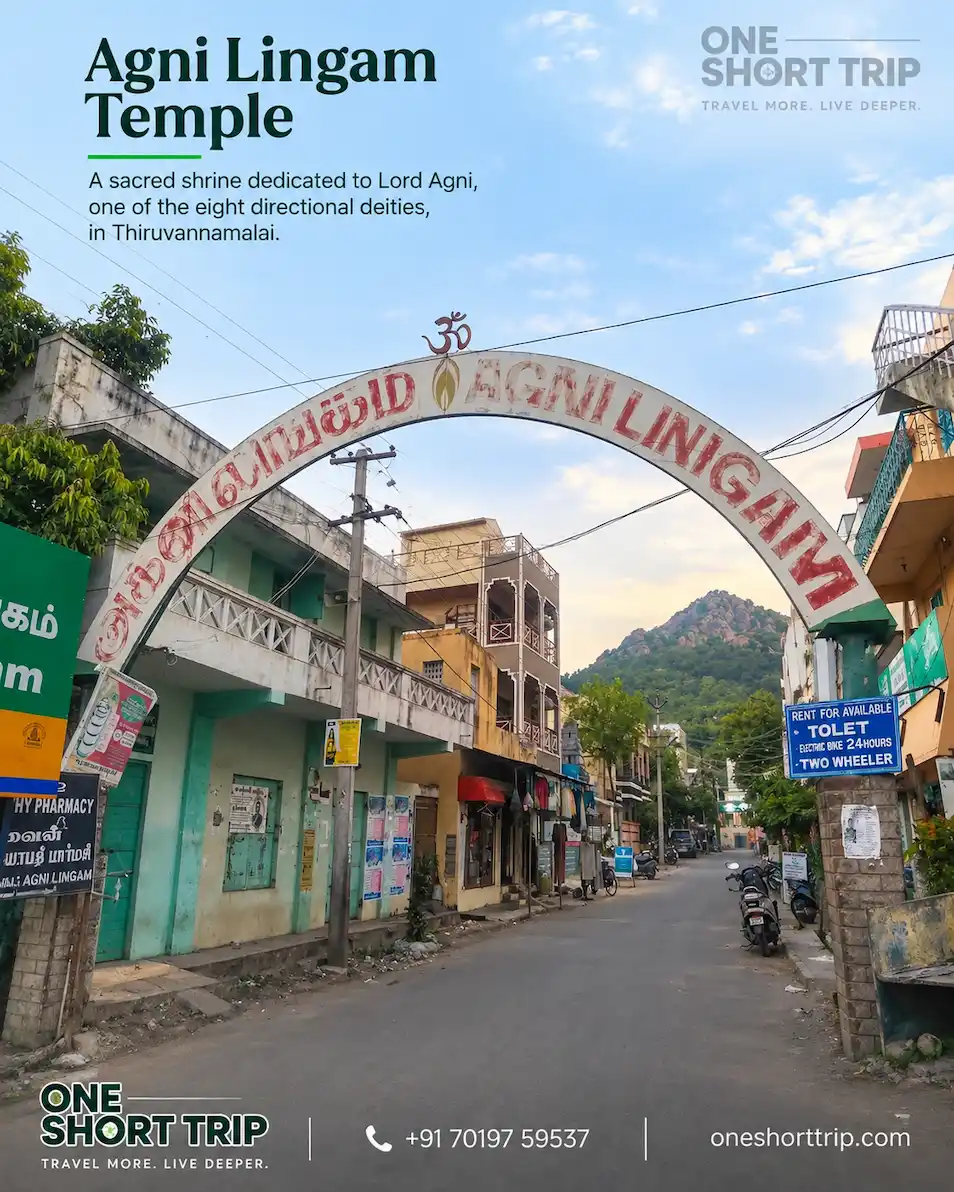
Agni Lingam is the second shrine in the traditional Ashta Lingam sequence and is associated with the southeast direction. Devotees include it in their Girivalam pilgrimage around Arunachala Hill.
Yama Lingam
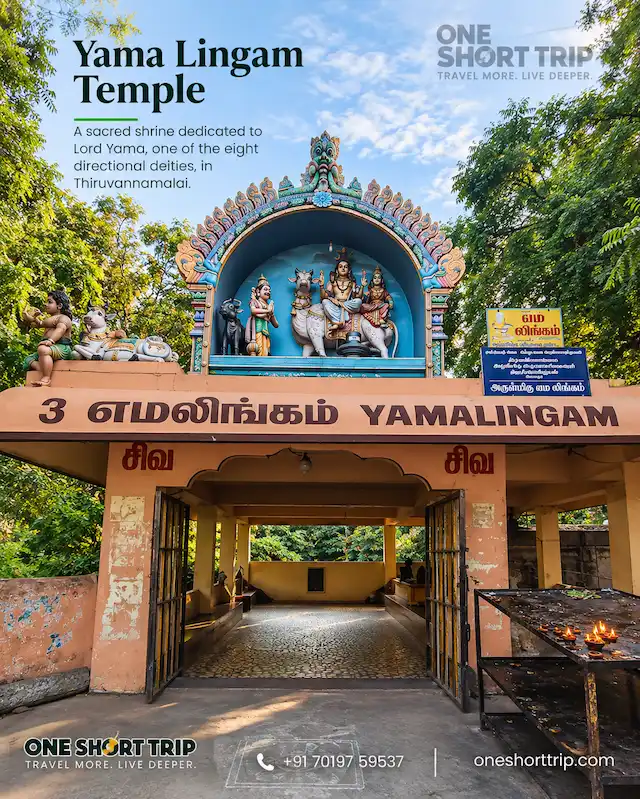
Yama Lingam is associated with the southern direction and is the third shrine in the traditional eight-Lingam sequence. It is another important stop for devotees undertaking Girivalam.
Sri Ramanasramam
Located on the Chengam Road side of Tiruvannamalai, Sri Ramanasramam is associated with Bhagavan Sri Ramana Maharshi. Devotees and visitors come here for meditation, reflection and to experience its peaceful spiritual atmosphere.
Seshadri Swamigal Ashram
This spiritual centre is associated with Sri Seshadri Swamigal, a revered saint of Tiruvannamalai. Visitors often include the ashram in a wider pilgrimage around Arunachala.
Yogi Ramsuratkumar Ashram
Dedicated to Yogi Ramsuratkumar, this ashram is another important spiritual destination in Tiruvannamalai. It can be included in a visit focused on the town's saints and spiritual heritage.
Other Lingams to include in your visit
If you are interested in the complete Ashta Lingam pilgrimage, you can also explore the remaining shrines:
For more information about the town, its temples and travel arrangements, read our Tiruvannamalai Travel Guide.
Can You Visit All Eight Lingams in Tiruvannamalai in One Day?
Yes. It is possible to visit all eight Ashta Lingams in one day, provided you plan your route and allow sufficient time for darshan and travel between the shrines. Many devotees include all eight Lingams as part of their Girivalam pilgrimage.
The traditional Girivalam circuit around Arunachala Hill is approximately 14 kilometres. Walking the entire route while stopping at each Lingam requires physical effort and a suitable amount of time.
Walking Girivalam or visiting by vehicle?
Walking Girivalam
This is the traditional pilgrimage experience. Devotees walk around Arunachala Hill in a clockwise direction and visit the Lingams along the route.
- Suitable for those comfortable with a long walk.
- Allows time for prayer at each shrine.
- Requires water, rest breaks and suitable footwear.
- Can take considerably longer during crowded periods.
Vehicle-Based Temple Visit
Travelling by car or other suitable vehicle can be more convenient for families, senior citizens and visitors with limited time.
- Reduces the amount of walking required.
- Can be planned around individual temple stops.
- Requires attention to local traffic and parking rules.
- May take longer during Pournami and festival days.
What should you consider before planning the circuit?
- Start early to make better use of the day.
- Check the opening and closing timings of the shrines.
- Allow enough time for darshan at every Lingam.
- Carry water and plan suitable meal and rest breaks.
- Expect traffic and crowds during Pournami.
- Consider the physical comfort of senior citizens and children.
Our recommendation: If you are visiting with family or senior citizens, a planned vehicle-based temple circuit may be more comfortable than walking the entire 14-kilometre route. Choose the option that suits the group's health, time and travel preferences.
Suggested One-Day Tiruvannamalai Temple Visit
If you are planning a one-day visit to Tiruvannamalai, you can combine Indra Lingam with Arunachaleswarar Temple and other spiritual attractions. The following is a suggested schedule. Actual timings should be adjusted according to temple opening hours, traffic, crowd conditions and your starting point.
| Suggested Time | Visit Plan | What to Do |
|---|---|---|
| 6:00 AM – 7:00 AM | Indra Lingam | Begin the day with darshan at the first Ashta Lingam. |
| 7:00 AM – 8:00 AM | Other nearby Lingams | Continue to the next shrines if following the traditional sequence. |
| 8:00 AM – 9:00 AM | Breakfast | Take a break and have breakfast in town. |
| 9:00 AM – 11:30 AM | Arunachaleswarar Temple | Visit the main temple and allow time for darshan. |
| 11:30 AM – 1:00 PM | Lunch and rest | Take a break before the afternoon. |
| 1:00 PM – 3:30 PM | Rest or local sightseeing | Keep this period flexible, especially during the main temple's afternoon closure. |
| 3:30 PM – 5:30 PM | Spiritual attractions | Visit an ashram or continue to any remaining Lingams, subject to their timings. |
| After 5:30 PM | Return journey or evening darshan | Complete your visit based on your departure schedule. |
Can this itinerary cover all eight Lingams?
This is a flexible sightseeing plan, not a guaranteed schedule for completing all eight shrines. If your main objective is to visit every Lingam, plan the route specifically around the Ashta Lingam circuit and allow sufficient time for each stop.
During Pournami and Karthigai Deepam, the schedule may need substantial changes because of traffic restrictions and large crowds. An overnight stay in Tiruvannamalai can make the experience more relaxed.
For a relaxed pilgrimage: Consider staying one night in Tiruvannamalai if you want to visit the main temple, all eight Lingams and the spiritual attractions without rushing.
Frequently Asked Questions About Indra Lingam, Tiruvannamalai
Here are answers to common questions about Indra Lingam Temple, its history, spiritual significance, darshan timings and how to plan a visit.
Where is Indra Lingam Temple located?
Indra Lingam Temple is located in Tiruvannamalai, Tamil Nadu, along the Girivalam route around Arunachala Hill. It is associated with the eastern direction and is the first Lingam in the traditional Ashta Lingam sequence.
What is Indra Lingam famous for?
Indra Lingam is famous for being the first of the eight sacred Lingams around Arunachala Hill. It is traditionally associated with Lord Indra and forms an important stop during Girivalam.
Who is the presiding deity of Indra Lingam?
The presiding deity is Lord Shiva, worshipped in the form of a Shiva Lingam. The shrine is traditionally associated with Lord Indra.
Why is Indra Lingam associated with Lord Indra?
Indra is traditionally regarded as the guardian of the eastern direction. The official Tamil Nadu HR&CE description states that Indra worshipped Arunachaleswarar and received the Lord's grace.
What are the darshan timings of Indra Lingam Temple?
The official HR&CE listing gives the timings as 6:00 AM to 12:00 PM and 4:00 PM to 8:00 PM. Visitors should confirm any festival-day changes before travelling.
Is Indra Lingam the first Lingam in Girivalam?
Yes. Indra Lingam is traditionally the first of the eight Lingams in the Girivalam sequence and is associated with the eastern direction.
Can I visit Indra Lingam without doing the full Girivalam?
Yes. You can travel directly to Indra Lingam and offer prayers without completing the entire circuit around Arunachala Hill.
How long is the Girivalam route?
The Girivalam circuit around Arunachala Hill is approximately 14 kilometres. The time required depends on walking speed, rest breaks, darshan queues and crowd conditions.
Can I visit all eight Lingams in one day?
Yes. It is possible to visit all eight Lingams in one day with proper planning. You can walk the traditional Girivalam route or plan a vehicle-based visit, subject to local traffic and parking arrangements.
What is the distance from Bangalore to Indra Lingam?
Tiruvannamalai is approximately 200 kilometres by road from Bangalore, depending on the starting point and route. From Tiruvannamalai town, local transport can be used to reach Indra Lingam.
What is the best time to visit Indra Lingam?
October to February is generally more comfortable for temple visits and outdoor travel. Early morning and evening are convenient times to avoid the stronger afternoon heat.
Is Pournami a good day to visit Indra Lingam?
Pournami is an important day for Girivalam, and many devotees visit the Ashta Lingams. The spiritual atmosphere is special, but the town can be very crowded. Plan transport and accommodation in advance.
Is Indra Lingam open during Karthigai Deepam?
Indra Lingam is part of the Tiruvannamalai pilgrimage route. However, access arrangements and timings may be affected by festival crowds and local administration. Check the latest information before visiting.
Who built Indra Lingam Temple?
The original builder of Indra Lingam has not been conclusively identified in the official temple information used for this guide. A specific king or dynasty should not be attributed without supporting historical evidence.
How old is Indra Lingam Temple?
A verified construction date or precise age for the individual shrine is not established in the official listing consulted for this guide. Its religious identity is connected with the traditional Ashta Lingam pilgrimage.
Is Indra Lingam suitable for senior citizens?
Senior citizens who are comfortable with the approach to the shrine and standing for darshan may be able to visit. Those with mobility concerns should check local access and parking arrangements. The full Girivalam walk requires considerably more physical effort.
Can families visit Indra Lingam with children?
Yes. Families can include Indra Lingam in their Tiruvannamalai temple visit. During crowded periods, keep children close and allow extra time for travel and darshan.
Are there other temples near Indra Lingam?
Yes. Arunachaleswarar Temple and the other seven Ashta Lingams are important places to include in a Tiruvannamalai pilgrimage. Sri Ramanasramam, Seshadri Swamigal Ashram and Yogi Ramsuratkumar Ashram are also among the town's spiritual attractions.
Is there an entry fee for Indra Lingam Temple?
The official temple listing consulted for this guide provides the temple's identity and timings but does not establish a general entry fee. Check with the temple administration for any current special arrangements or services.
Can I take photographs inside Indra Lingam Temple?
Photography rules may vary by area within the temple. Follow the signs and instructions of temple staff, and avoid photographing restricted areas or disturbing devotees during worship.
Plan Your Tiruvannamalai Temple Visit with One Short Trip
Tiruvannamalai is a meaningful destination for devotees of Lord Shiva. From Arunachaleswarar Temple and Indra Lingam to the complete Ashta Lingam circuit, the town offers a memorable pilgrimage experience.
Whether you are planning a short temple visit, a full Girivalam experience or a family pilgrimage covering the important spiritual attractions of Tiruvannamalai, One Short Trip can help you organise a comfortable journey from Bangalore.
Travel with your family, friends or group and explore the sacred places of Tiruvannamalai at a comfortable pace.
One Short Trip – Making Every Journey Meaningful.
You May Also Like
Planning A Trip Here?
Get help planning your visit — call or WhatsApp us and we will help you book a tour.